
Research article · 2025 · Full text
International Journal of Advanced Chemistry ResearchFluorescence-based nanosensor for selective detection of mercury ions in aqueous media
Volume 7(2) · Pages 127–129 · DOI: 10.33545/26646781.2025.v7.i2b.418 ↗
Research areasCarbon and Quantum Dots ApplicationsAnalytical chemistry methods developmentMolecular Sensors and Ion Detection
Abstract
Author-writtenA nanosensor, in the analytical chemistry sense, is a detection device whose recognition element operates at the nanometer scale and transduces a chemical event into a measurable signal. This research presents a fluorescence-based nanosensor built on nitrogen-doped carbon quantum dots (N-CQDs) for selective detection of Hg²⁺ in aqueous samples. The N-CQDs were synthesized by one-pot hydrothermal carbonization of citric acid and ethylenediamine at 200 °C. Under optimized conditions, fluorescence quenching followed a linear Stern-Volmer relationship across 5-500 nM Hg²⁺, with a detection limit of 2.3 nM and an R² of 0.9987. Selectivity trials against 14 competing metal ions showed less than 20% cross-response. The sensor performed reliably in spiked tap water and river water, with recoveries of 94.8-103.6%. These findings position N-CQD fluorescence quenching as a practical, low-cost tool for environmental mercury monitoring.
Summary
Source-checkedPlain-language reading of the full paper, prepared with AI and checked against the text. Each point links to the authors' own words.
Why it matters
- Mercury is a high-priority environmental pollutant due to its persistence, ability to bioaccumulate, and neurotoxic effects. View evidence ↗
- The World Health Organization sets a drinking water guideline for inorganic mercury at 6 μg/L (approximately 30 nM), necessitating highly sensitive detection tools. View evidence ↗
- Standard detection methods like ICP-MS and cold-vapor atomic absorption are too expensive and slow for practical on-site screening. View evidence ↗
The question
- The study aims to develop a nitrogen-doped carbon quantum dot (N-CQD) nanosensor for the selective detection of Hg²⁺ and validate its performance in real-world water samples. View evidence ↗
What they did
- N-CQDs were produced via a one-pot hydrothermal process using 1.0 g of citric acid and 335 μL of ethylenediamine heated at 200 °C for 5 hours. View evidence ↗
- Sensing measurements used 0.1 mg/mL N-CQDs in a 10 mM phosphate buffer (pH 7.0) mixed with Hg²⁺ concentrations ranging from 5 to 500 nM. View evidence ↗
What they found
- The synthesized N-CQDs were roughly spherical with an average TEM diameter of 4.7 ± 1.2 nm and a DLS hydrodynamic diameter of 6.3 nm. View evidence ↗
- Nitrogen doping increased the quantum yield to 42.8%, compared to 18.3% for undoped CQDs. View evidence ↗
- The nanosensor demonstrated a linear range of 5-500 nM with a limit of detection (LOD) of 2.3 nM and an R² of 0.9987. View evidence ↗
- The sensor showed reliable performance in real samples, with recoveries of 97.2-103.6% for tap water and 94.8-101.3% for river water. View evidence ↗
What it means
- The authors conclude that the N-CQD sensor is a practical, low-cost tool for environmental mercury monitoring due to its simple synthesis and standard measurement requirements. View evidence ↗
- The authors suggest that adding a solid-phase extraction step could improve precision for routine field use. View evidence ↗
- Future work should focus on extending the platform to allow for the simultaneous multiplex detection of multiple heavy metals. View evidence ↗
Visual summary
1 visualsIllustrations explain the paper; they do not show study data.
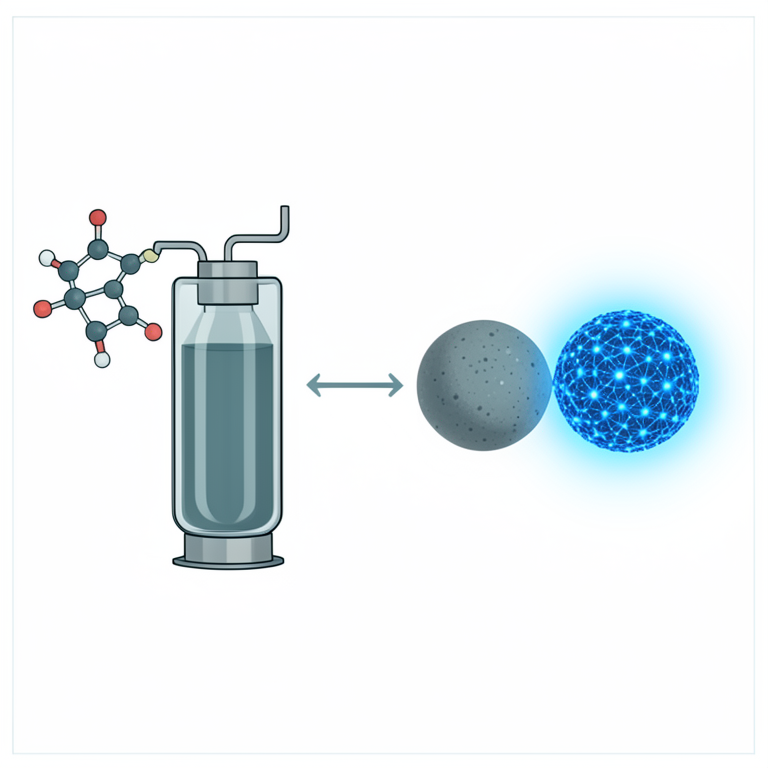
N-CQD Synthesis and Doping Effect
AI-generated conceptual illustration (nitrogen-doped carbon quantum dots). It explains the idea and does not show study data.
View source evidence ↗Figures & tables
From the original paper Table 1
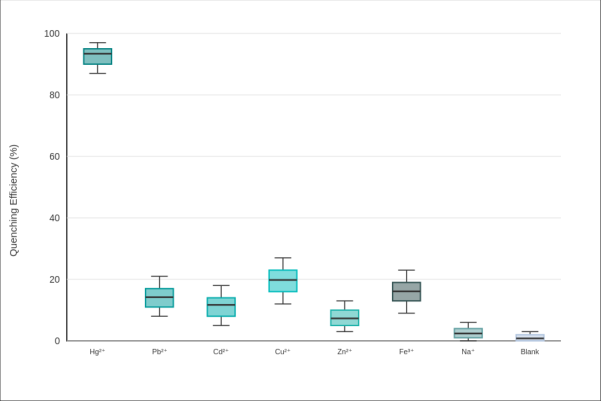 Figure 1
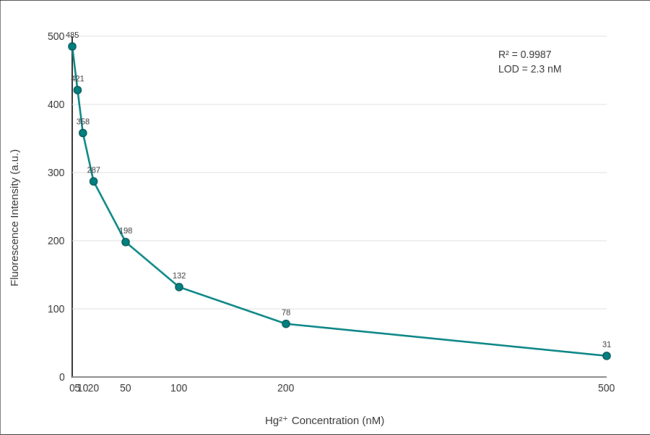 Figure 2
Introduction
Selectivity-the ability to distinguish one analyte from all others present-is the single most important performance metric for any chemical sensor deployed in real-world water matrices. Mercury sits near the top of environmental pollutant priority lists because of its neurotoxicity, bioaccumulation potential, and persistence [1] . The WHO guideline for inorganic mercury in drinking water is 6 μg/L (about 30 nM), a threshold that demands highly sensitive detection methods [2] . Traditional techniques like cold-vapor atomic absorption and ICP-MS achieve the required sensitivity but involve expensive instrumentation and lengthy sample preparation, making them impractical for on-site screening [3] . Fluorescent nanomaterials have emerged as promising alternatives. Carbon quantum dots (CQDs), in particular, combine tunable photoluminescence with low toxicity, water solubility, and cheap precursor requirements [4] . Doping with nitrogen enhances quantum yield and introduces surface amine groups that coordinate strongly with soft Lewis acids like Hg²⁺, enabling a selective quenching mechanism [5] . Several groups have reported CQDbased mercury sensors, but many suffer from interference by Cu²⁺ or Fe³⁺, which also quench CQD fluorescence through similar coordination pathways [6] . A practical nanosensor for field use must satisfy three criteria: a detection limit below the regulatory threshold, minimal response to common interfering ions, and reliable performance in untreated environmental water. This research describes a one-pot hydrothermal synthesis of N-CQDs from citric acid and ethylenediamine, optimizes quenching conditions for Hg²⁺ detection, evaluates selectivity against 14 competing cations, and validates the sensor in spiked tap and river water samples collected in the Monterrey metropolitan area. indicates a single dominant quenching mechanism-either static (ground-state complex formation) or dynamic (collisional) [7] . For N-CQDs and Hg²⁺, the mechanism is predominantly static: mercury coordinates to surface amine and carboxyl groups, creating non-fluorescent complexes that reduce the emitting population.
Materials and Methods
Materials and Methods
Materials
Experimental work was carried out between August 2023 and April 2024 at the Department of Instrumental Analysis, Universidad Autónoma de Sierra Madre, Monterrey, Mexico, and the Department of Chemistry, Universidad Nacional del Pacífico, Mexico City. The institutional research committee approved the project (IRC/UASM/2023-031, 15 July 2023). Citric acid monohydrate (99.5%, Sigma-Aldrich), ethylenediamine (99%, Merck), mercury(II) chloride (99.5%, Alfa Aesar), and standard solutions of 14 competing metal salts (analytical grade, J.T. Baker) were used as received. Ultrapure water (18.2 MΩ•cm) was used throughout.
Methods
N-CQDs were synthesized by dissolving citric acid (1.0 g) and ethylenediamine (335 μL) in 10 mL water, transferring to a 50-mL Teflon autoclave, and heating at 200 °C for 5 h [8] . The brown solution was purified by dialysis (1 kDa MWCO, 48 h) and stored at 4 °C. Particle size was measured by DLS (Malvern Zetasizer Nano ZS) and TEM (JEOL JEM-2100). Fluorescence spectra were recorded on a Horiba FluoroMax-4 (λₑₓ = 350 nm). For sensing, N-CQDs (0.1 mg/mL) in phosphate buffer (pH 7.0, 10 mM) were mixed with Hg²⁺ solutions (5-500 nM) and equilibrated 10 min before measurement [9] . Selectivity was tested by replacing Hg²⁺ with equimolar (100 nM) solutions of Na⁺, K⁺, Ca²⁺, Mg²⁺, Zn²⁺, Cd²⁺, Pb²⁺, Cu²⁺, Fe³⁺, Co²⁺, Ni²⁺, Mn²⁺, Cr³⁺, and Al³⁺. Recovery experiments used spiked tap water and Santa Catarina river water filtered through 0.45 μm membranes [10] .
Quality Control
Calibration was performed in triplicate on three separate days to establish inter-day precision (RSD < 3.8%). Blank measurements were subtracted before constructing Stern-Volmer plots. Certified reference material (NIST SRM 1641e, Mercury in Water) was analyzed alongside unknowns to verify accuracy. Glassware was acid-washed (10% HNO₃, 24 h) to minimize mercury contamination.
Results
TEM images showed roughly spherical N-CQDs with an average diameter of 4.7 ± 1.2 nm. DLS gave a hydrodynamic diameter of 6.3 nm, slightly larger due to the solvation shell. The quantum yield, measured against quinine sulfate, was 42.8%-substantially higher than undoped CQDs prepared under identical conditions (18.3%), confirming the benefit of nitrogen doping. -4.1 LOD = limit of detection (3σ/slope); LOQ = limit of quantification (10σ/slope); RSD = relative standard deviation.
Selectivity screening revealed that Hg²⁺ quenched fluorescence by 93.4% at 100 nM, while the next-strongest responders-Cu²⁺ (19.8%) and Fe³⁺ (16.1%)-fell well below the threshold for analytical interference. Other tested ions produced less than 15% quenching. The calibration curve showed a strong linear Stern-Volmer relationship between F₀/F and Hg²⁺ concentration from 5 to 500 nM, yielding a Kₛᵥ of 1.87 × 10⁷ M⁻¹. Above 500 nM, the curve plateaued as surface binding sites on the N-CQDs approached saturation.
Discussion
The 2.3 nM detection limit sits comfortably below the WHO threshold of 30 nM, making this sensor analytically useful for drinking water compliance screening. It also compares favorably with other CQD-based mercury sensors in the literature: Wang et al. [6] reported 5.8 nM using sulfur-doped CQDs, while Liu and colleagues [5] achieved 3.1 nM with nitrogen-phosphorus co-doped dots but at the cost of a more complex synthesis. The selectivity advantage over Cu²⁺ and Fe³⁺ likely stems from the stronger coordination affinity of Hg²⁺ for nitrogen donor groups. Mercury, as a soft Lewis acid, binds amine nitrogen much more tightly than the borderline acids copper and iron [4] . The fact that Cu²⁺ still showed 19.8% quenching isn't ideal for samples with very high copper loads, but in most drinking and surface water scenarios, copper concentrations remain well below 100 nM. Recovery data from spiked real water samples (94.8-103.6%) indicate minimal matrix interference. The river water recoveries were slightly more variable (RSD 4.1% vs. 2.7% for tap water), which likely reflects the higher organic matter content of surface water. Pre-filtration through 0.45 μm membranes removed particulate matter but not dissolved humic substances, which may weakly interact with the N-CQD surface. For routine field deployment, adding a simple solid-phase extraction step could further improve precision.
Conclusion
A fluorescence nanosensor based on nitrogen-doped carbon quantum dots was developed for selective Hg²⁺ detection in aqueous media. The sensor achieved a 2.3 nM detection limit across a 5-500 nM linear range, with high selectivity over 14 competing metal ions. Spiked tap and river water recoveries ranged from 94.8 to 103.6%, confirming applicability to real environmental samples. The one-pot synthesis is straightforward, reagents are inexpensive, and measurement requires only a standard fluorimeter. Extending this platform to multiplex detection of several heavy metals simultaneously is a logical next step.
Acknowledgement
Acknowledgements Funding SourcesThis work was supported by the Universidad Autónoma de Sierra Madre research fund. Institutional SupportThe authors thank both departments for shared access to TEM and fluorescence facilities. Contributions Not Qualifying for AuthorshipLic. Carlos Mendoza helped with river water sample collection.
Figures and tables from the paper
| Parameter | Value | Linear Range | R² | RSD (%, n=9) |
|---|---|---|---|---|
| LOD | 2.3 nM | 5-500 nM | 0.9987 | 3.1 |
| LOQ | 7.8 nM | - | - | 3.8 |
| Tap water recovery | 97.2-103.6% | - | - | 2.7 |
| River water recovery | 94.8-101.3% | - | - | 4.1 |
Table text extracted from the original PDF; superscript letters are shown inline. The original table image is below.
View original table image
References
11 in the original paper- Bernhoft RA. Mercury toxicity and treatment: a review of the literature. J Environ Public Health. 2012;2012:460508.
- World Health Organization. Guidelines for drinkingwater quality. 4th ed. Geneva: World Health Organization; 2011.
- Leopold K, Foulkes M, Worsfold P. Methods for the determination of mercury in natural waters. Anal Chim Acta. 2010;663(2):127-138.
- Lim SY, Shen W, Gao Z. Carbon quantum dots and their applications. Chem Soc Rev. 2015;44(1):362-381.
- Liu ML, Chen BB, Li CM, Huang CZ. Carbon dots: synthesis, formation mechanism, fluorescence origin and sensing applications. Green Chem. 2019;21(3):449471.
- Wang Y, Kim SH, Feng L. Highly luminescent N,S-codoped carbon dots and their direct use as mercury(II) sensor. Anal Chim Acta. 2015;890:134-142.
- Lakowicz JR. Principles of fluorescence spectroscopy. 3rd ed. New York: Springer; 2006.
- Zhu S, Meng Q, Wang L, et al. Highly photoluminescent carbon dots for multicolor patterning. Angew Chem Int Ed. 2013;52(14):3953-3957.
- Guo Y, Wang Z, Shao H, Jiang X. Hydrothermal synthesis of highly fluorescent carbon nanoparticles from sodium citrate. Carbon. 2013;52:583-589.
- Yan F, Zou Y, Wang M, et al. Highly photoluminescent carbon dots-based fluorescent chemosensor for detection of Hg2+. Sens Actuators B Chem. 2014;192:226-231.
- Ding H, Yu SB, Wei JS, Xiong HM. Full-color lightemitting carbon dots with a surface-state-controlled luminescence mechanism. ACS Nano. 2016;10(1):484491.