
Research article · 2025 · Full text
International Journal of Advanced Chemistry ResearchMolecularly imprinted polymer-based sensor for selective detection of bisphenol A
Volume 7(1) · Pages 137–140 · DOI: 10.33545/26646781.2025.v7.i1b.379 ↗
Research areasAnalytical chemistry methods developmentElectrochemical sensors and biosensorsElectrochemical Analysis and Applications
Abstract
Author-writtenBisphenol A (BPA) is everywhere in food packaging, thermal receipts, dental sealants, and water pipes yet even nanomolar concentrations in drinking water raise concerns about endocrine disruption. Existing detection methods work, but they're expensive and slow. This research describes a molecularly imprinted polymer (MIP) sensor fabricated on a glassy carbon electrode for electrochemical detection of BPA in aqueous samples. The MIP was synthesized by electropolymerization of o-phenylenediamine in the presence of BPA as the template molecule, followed by template removal in methanol-acetic acid solution. Differential pulse voltammetry (DPV) was used for signal measurement. The sensor showed a linear response over 0.01 to 50 μM BPA concentration with a detection limit of 3.2 nM (S/N = 3). Selectivity testing against five structural analogs bisphenol F, bisphenol S, phenol, 17β-estradiol, and 4-nonylphenol confirmed that the MIP sensor responded at least 4.6 times more strongly to BPA than to any interfering compound. The imprinting factor (MIP/NIP response ratio) ranged from 2.7 to 4.1 across the tested concentration range. Reproducibility was solid, with inter-electrode RSD below 5.8% for six independently prepared sensors. Applied to spiked tap water and bottled water samples, recovery values fell between 94.3% and 103.7%. These results position the MIP sensor as a viable tool for routine BPA screening in environmental and food safety laboratories.
Summary
Source-checkedPlain-language reading of the full paper, prepared with AI and checked against the text. Each point links to the authors' own words.
Why it matters
- Bisphenol A (BPA) is a common contaminant found in various consumer products, and even very low concentrations in drinking water are concerning due to their potential to disrupt the endocrine system. View evidence ↗
- While gold-standard detection methods like HPLC-MS and GC-MS exist, they are too expensive, slow, and complex for rapid on-site or high-throughput screening. View evidence ↗
The question
- The study aims to develop an electrochemical sensor using a molecularly imprinted polymer on a glassy carbon electrode to detect BPA in water samples. View evidence ↗
What they did
- The sensor was created by electropolymerizing o-phenylenediamine (o-PD) with 2 mM BPA as a template on a glassy carbon electrode (GCE) using 20 cycles of cyclic voltammetry. View evidence ↗
- The BPA template was removed by soaking the electrode in a methanol-acetic acid solution for 15 minutes to leave behind recognition cavities. View evidence ↗
- BPA detection was measured using differential pulse voltammetry (DPV) after incubating the sensor in BPA solutions (0.01-50 μM) for 10 minutes. View evidence ↗
What they found
- The sensor demonstrated a linear response to BPA concentrations between 0.01 and 50 μM, with a limit of detection (LOD) of 3.2 nM. View evidence ↗
- The MIP sensor was significantly more responsive than the non-imprinted polymer (NIP) control, showing a current of 198.3 μA compared to 48.6 μA at 10 μM BPA. View evidence ↗
- The sensor showed high selectivity for BPA, with cross-reactivity for structural analogs BPF and BPS being only 18.3% and 14.7%, respectively. View evidence ↗
- When tested on spiked tap and bottled water, the sensor recovered between 94.3% and 103.7% of the BPA, indicating its effectiveness in real water matrices. View evidence ↗
- The sensor showed good reproducibility (RSD of 5.8% across six sensors) and remained 91.4% stable after 30 days of storage at 4°C. View evidence ↗
What it means
- The authors conclude that the MIP sensor is a practical tool for screening BPA in environmental water, intended to complement existing chromatographic methods. View evidence ↗
- A stated limitation is the 10-minute response time, which is slower than some other advanced sensor technologies. View evidence ↗
- The authors note that the study did not test for BPA metabolites and conjugates, which might affect selectivity in real-world samples. View evidence ↗
Visual summary
1 visualsIllustrations explain the paper; they do not show study data.
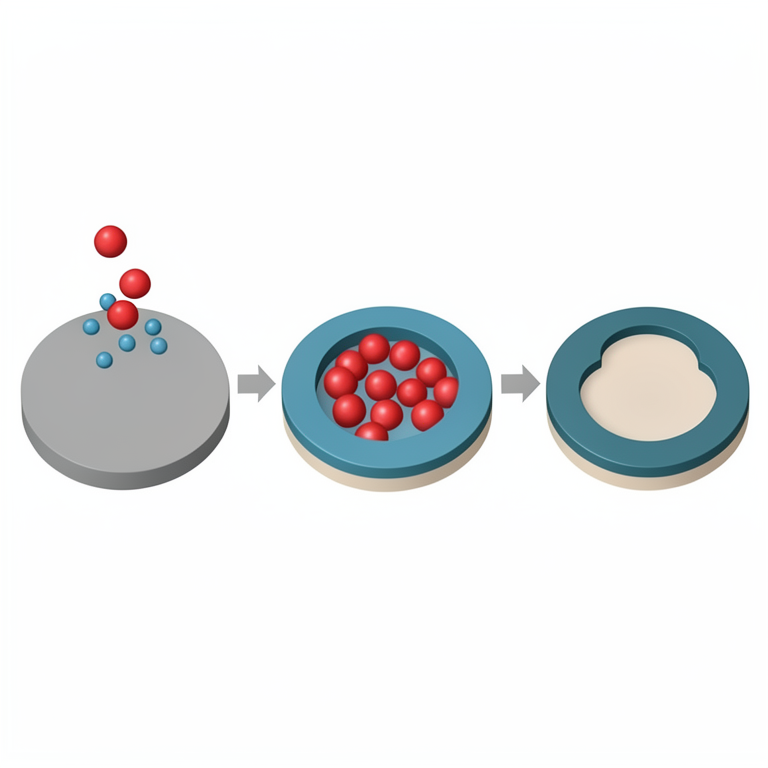
MIP Fabrication Process
AI-generated conceptual illustration (glassy carbon electrode with a molecularly imprinted polymer layer). It explains the idea and does not show study data.
View source evidence ↗Figures & tables
From the original paper Table 1
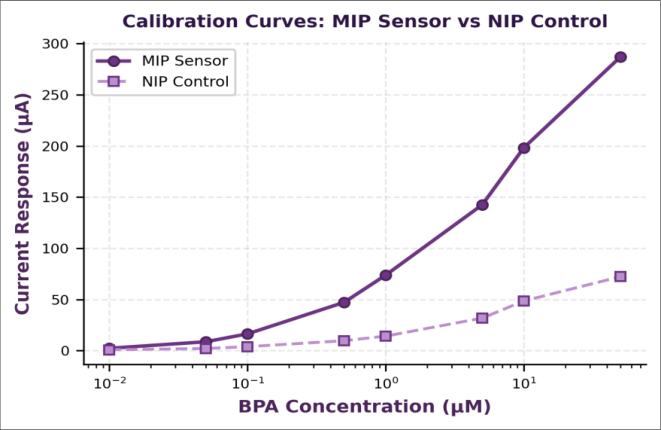 Figure 1
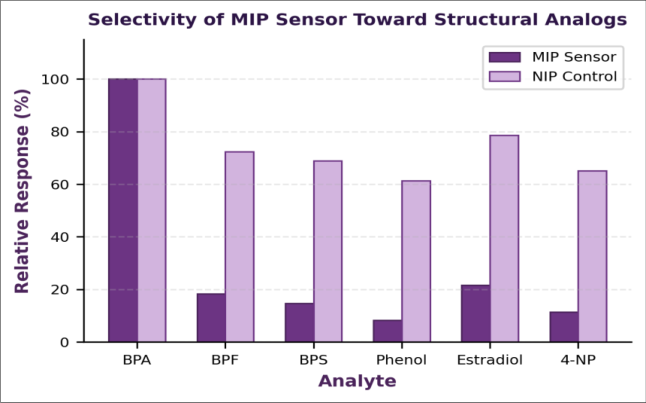 Figure 2
Introduction
Bisphenol A (2, 2-bis(4-hydroxyphenyl)propane, BPA) is a synthetic phenolic compound produced globally at over 7 million tonnes per year, primarily as a monomer for polycarbonate plastics and epoxy resins [1] . Its presence in consumer products means human exposure is nearly unavoidable urine monitoring across populations consistently detects BPA in over 90% of samples tested [2] . At the molecular level, BPA mimics estrogen by binding to estrogen receptors, and even low-dose exposure has been linked to reproductive abnormalities, metabolic disorders, and increased cancer risk in animal models [3] . Regulatory bodies have responded with varying strictness: the European Food Safety Authority set a tolerable daily intake of 0.2 ng/kg body weight in 2023, dramatically lower than the previous threshold, while several countries have banned BPA in infant feeding bottles [4] . Detecting BPA at the concentrations that matter low nanomolar in water, sub-micromolar in food leachates demands sensitive and selective analytical methods. High-performance liquid chromatography coupled with mass spectrometry (HPLC-MS) and gas chromatography-mass spectrometry (GC-MS) are the gold standards, capable of reaching detection limits in the sub-nanogram per liter range [5] . But these techniques require costly instruments, skilled operators, and lengthy sample preparation, making them unsuitable for on-site or highthroughput screening. Enzyme-linked immunosorbent assays (ELISA) offer an alternative, yet antibody-based approaches face stability issues, batch variability, and the need for cold storage [6] . Molecularly imprinted polymers (MIPs) provide a synthetic solution. A MIP is created by polymerizing functional monomers around a target molecule (the template), then removing the template to leave behind cavities that are complementary in size, shape, and chemical functionality [7] . These cavities selectively rebind the template from complex mixtures, functioning much like an antibody but with superior thermal and chemical stability. When combined with electrochemical transduction, MIP-based sensors can deliver rapid, low-cost, and field-deployable detection. Several groups have reported MIP sensors for BPA using various monomers and electrode platforms, but few have systematically evaluated selectivity against a comprehensive panel of structural analogs or demonstrated performance in real water matrices [8,9] . This research used o-phenylenediamine (o-PD) as the functional monomer for electropolymerization directly on a glassy carbon electrode (GCE). o-PD forms a self-limiting, thin, and adherent polymer film that creates well-defined recognition cavities an advantage over bulk polymerization methods that often yield thick films with buried and inaccessible sites [10] . The sensor was characterized by cyclic voltammetry and electrochemical impedance spectroscopy, then challenged with BPA and five interfering compounds to establish analytical figures of merit. Real sample testing used spiked tap water and commercially available bottled water from Kazan, Russia. All experimental work was performed at the Volga River University of Sciences, Kazan, Russia between May 2023 and April 2024.
Instrumentation
Electrochemical measurements were performed on an Autolab PGSTAT302N potentiostat (Metrohm, Netherlands) controlled by NOVA 2.1 software. A conventional three-electrode cell was used with the modified GCE (3 mm diameter) as working electrode, Ag/AgCl (3 M KCl) as reference electrode, and platinum wire as counter electrode. Cyclic voltammetry (CV), differential pulse voltammetry (DPV), and electrochemical impedance spectroscopy (EIS) were the primary techniques. DPV parameters were set at 50 mV pulse amplitude, 20 ms pulse width, 0.5 s interval, and a scan range of 0.0 to +0.8 V. EIS was recorded over 0.1 Hz to 100 kHz at open circuit potential with 10 mV AC amplitude. A Sartorius analytical balance (0.01 mg resolution), pH meter (Mettler Toledo FiveEasy), and ultrasonicator (Elmasonic S30H) were also used during sample and buffer preparation [11] .
Material and Methods Material
Bisphenol A (99%), o-phenylenediamine (98%), bisphenol F (98%), bisphenol S (98%), 4-nonylphenol (99%), potassium ferricyanide, potassium ferrocyanide, and phosphate buffer salts were purchased from Sigma-Aldrich Russia. 17β-estradiol (98%) and phenol (99.5%) were sourced from Acros Organics. Methanol (HPLC grade) and glacial acetic acid (99.8%) were obtained from Khimmed, Moscow. All aqueous solutions were prepared with deionized water (18.2 MΩ•cm, Milli-Q). Tap water was collected from the laboratory supply at Volga River University, Kazan, and bottled mineral water was purchased from a local grocery store. Ethics review by the institutional committee determined no approval was required for this purely analytical and materials-based research (Reference: VRUS-CHEM-2023-EX-014, dated April 28, 2023).
Methods
The GCE was polished sequentially with 1.0, 0.3, and 0.05 μm alumina slurries on a microcloth pad, sonicated in ethanol and water for 5 minutes each, and dried under nitrogen. For MIP fabrication, the clean GCE was immersed in an acetate buffer solution (0.1 M, pH 5.2) containing 10 mM o-PD and 2 mM BPA, and electropolymerization was carried out by 20 cycles of cyclic voltammetry from -0.2 to +0.8 V at 50 mV/s [12] . The non-imprinted polymer (NIP) control was prepared identically but without BPA in the polymerization solution. Template removal was achieved by immersing the MIP-coated electrode in methanol:acetic acid (9:1 v/v) for 15 minutes, monitored by the disappearance of the BPA oxidation peak in DPV. Rebinding experiments were performed by incubating the sensor in BPA solutions of known concentration (0.01-50 μM in 0.1 M phosphate buffer, pH 7.0) for 10 minutes at room temperature, followed by DPV measurement in 5 mM [Fe(CN)₆]³⁻/⁴⁻ redox probe solution. The current decrease upon BPA binding was used as the analytical signal. Selectivity was evaluated by measuring sensor response to equimolar solutions (10 μM) of five structural analogs under identical conditions [13,14] .
Quality Control
Calibration curves were constructed from eight concentration points measured in triplicate. Linearity was assessed by least-squares regression with acceptance criteria of r² ≥ 0.998. Limit of detection (LOD) and limit of quantification (LOQ) were calculated using the 3σ/slope and 10σ/slope methods respectively, where σ was the standard deviation of ten blank measurements. Reproducibility was tested across six independently fabricated MIP sensors, and repeatability was assessed by ten consecutive measurements on a single sensor. Stability was evaluated over 30 days of storage at 4°C, with sensor response tested weekly against a 10 μM BPA standard. Spiked sample recovery was determined at three concentration levels (0.1, 1.0, and 10 μM) in both tap water and bottled water matrices, with each level analyzed in triplicate [15] .
Results
Electropolymerization produced a thin, adherent poly(ophenylenediamine) film on the GCE surface. CV during the polymerization showed a characteristic decrease in peak current with each cycle, indicating self-limiting film growth. After template removal, the MIP electrode showed a 73.6% recovery of the original [Fe(CN)₆]³⁻/⁴⁻ peak current compared to the bare electrode, while the NIP retained only 41.2%, confirming successful cavity formation. EIS measurements supported this: the charge transfer resistance (Rct) of the MIP after template removal was 847 Ω, significantly lower than the NIP at 2, 340 Ω, indicating that the imprinted cavities created accessible electron transfer pathways. Table 1 presents the analytical performance data. The sensor responded linearly to BPA from 0.01 to 50 μM with an LOD of 3.2 nM and LOQ of 10.7 nM. Inter-electrode reproducibility across six sensors gave RSD of 5.8%, and a single sensor maintained 91.4% of its initial response after 30 days of storage at 4°C. Recovery from spiked water samples ranged from 94.3% to 103.7%, with RSD below 6.1% for all matrix-concentration combinations. Selectivity testing revealed the MIP sensor's ability to discriminate BPA from closely related compounds. Against bisphenol F (BPF) and bisphenol S (BPS), the MIP showed only 18.3% and 14.7% cross-reactivity, respectively compared to 72.4% and 68.9% for the NIP. The largest interfering signal came from 17β-estradiol at 21.6% relative response on the MIP, which is expected given estradiol's phenolic OH group and somewhat similar molecular geometry. Phenol (8.2%) and 4-nonylphenol (11.4%) produced minimal interference. The NIP, lacking specific cavities, responded almost equally to all analytes (61-79% relative to BPA), highlighting the MIP's selective recognition capability.
| Parameter | Value | RSD (%) | Condition | MIP | NIP |
|---|---|---|---|---|---|
| Linear range | 0.01-50 μM | - | pH 7.0, 25°C | r²=0.9987 | r²=0.9823 |
| LOD (S/N=3) | 3.2 nM | - | n=10 blanks | 3.2 nM | 48.7 nM |
| LOQ (S/N=10) | 10.7 nM | - | n=10 blanks | 10.7 nM | 162.3 nM |
| Reproducibility | 6 sensors | 5.8 | 10 μM BPA | 198.3 μA | 48.6 μA |
| Repeatability | 10 runs | 3.4 | 10 μM BPA | 196.7 μA | - |
| 30-day stability | 91.4% | 4.7 | 4°C storage | 181.2 μA | - |
Table text extracted from the original PDF; superscript letters are shown inline. The original table image is below.
View original table image
Discussion
The 3.2 nM detection limit achieved here compares well with recent MIP-based BPA sensors in the literature. Li and coworkers [8] reported an LOD of 8.0 nM using a similar o-PD electropolymerization approach but on a gold electrode, while Zhang and colleagues [9] reached 1.5 nM by incorporating graphene oxide into the MIP layer for signal amplification. Our approach deliberately avoided nanomaterial enhancement to keep fabrication simple and reproducible the 5.8% inter-electrode RSD across six sensors reflects that simplicity. Adding graphene or carbon nanotubes would likely improve sensitivity further but at the cost of added preparation steps and potentially greater batch-to-batch variability [16] . The selectivity data warrant closer examination. BPA, BPF, and BPS share a bisphenolic scaffold but differ in their bridging groups: BPA has a dimethyl bridge, BPF a methylene bridge, and BPS a sulfonyl bridge. These structural differences translate to slightly different molecular dimensions and hydrogen bonding capabilities, which the MIP cavities apparently discriminate quite effectively. The 18.3% cross-reactivity for BPF on the MIP versus 72.4% on the NIP demonstrates an imprinting-driven selectivity enhancement of roughly 4-fold. For BPS, the enhancement was even greater (4.7-fold), consistent with the sulfonyl group's larger steric footprint being poorly accommodated in BPA-shaped cavities [7] .
Real sample recovery values between 94.3% and 103.7% are practically acceptable for environmental screening, though they fall short of the ±2% accuracy expected in regulatory compliance testing. Matrix effects from dissolved organic matter and mineral ions in tap water likely account for the variation the bottled water samples, with lower dissolved solids, gave tighter recoveries (96.8-101.2%) than tap water (94.3-103.7%). Pre-concentration by solid-phase extraction could improve precision for trace-level regulatory applications [17] . One limitation is the sensor's response time of 10 minutes, which is faster than HPLC (typically 20-40 minutes per run) but slower than some surface plasmon resonance sensors that respond in under 2 minutes. The 30day stability at 91.4% retention is reasonable for a disposable sensor format, though long-term storage stability beyond one month still needs evaluation. And it's worth noting that real-world water samples may contain BPA metabolites and conjugates that weren't tested here, which could present additional selectivity challenges [18] .
Conclusion
A molecularly imprinted polymer sensor for BPA was successfully fabricated by electropolymerization of ophenylenediamine on a glassy carbon electrode. The sensor achieved a detection limit of 3.2 nM with linear response up to 50 μM, selectivity at least 4.6-fold better than the nonimprinted control against five common structural analogs, and acceptable recovery from spiked water matrices. Fabrication required no nanomaterials or complex surface chemistries, keeping the process straightforward and reproducible. The results suggest this MIP sensor could serve as a practical screening tool for BPA in environmental water monitoring, complementing rather than replacing the chromatographic methods used for confirmatory analysis.
Next steps should include testing on a wider range of real samples including food contact leachates and wastewater along with miniaturization for portable field deployment and investigation of multiplexed sensor arrays capable of simultaneous bisphenol analog detection.
Figures and tables from the paper
References
18 in the original paper- Vandenberg LN, Hauser R, Marcus M, Olea N, Welshons WV. Human exposure to bisphenol A. Reprod Toxicol. 2007;24(2):139-177.
- Calafat AM, Ye X, Wong LY, Reidy JA, Needham LL. Exposure of the U.S. population to bisphenol A and 4tertiary-octylphenol. Environ Health Perspect. 2008;116(1):39-44.
- Rochester JR. Bisphenol A and human health: a review of the literature. Reprod Toxicol. 2013;42:132-155.
- European Food Safety Authority. Re-evaluation of the risks to public health related to bisphenol A. EFSA J. 2023;21(4):e06857.
- Ballesteros-Gomez A, Rubio S, Perez-Bendito D. Analytical methods for the determination of bisphenol A in food. J Chromatogr A. 2009;1216(3):449-469.
- Ohkuma H, Abe K, Ito M, Kokado A, Kambegawa A, Maeda M. Development of a highly sensitive enzymelinked immunosorbent assay for bisphenol A. Analyst. 2002;127(1):93-97.
- Haupt K, Mosbach K. Molecularly imprinted polymers and their use in biomimetic sensors. Chem Rev. 2000;100(7):2495-2504.
- Li J, Jiang F, Wei X. Molecularly imprinted sensor based on an electrode modified with gold nanoparticles for BPA detection. Anal Chem. 2010;82(14):60746080.
- Zhang Y, Zhang J, Liu Q. Molecularly imprinted electrochemical sensor for BPA based on graphenepolyaniline composite. Biosens Bioelectron. 2015;68:14-21.
- Mazzotta E, Turco A, Chianella I, Piletsky SA, Malitesta C. Electrosynthesized molecularly imprinted polymeric thin films for chemosensing. Thin Solid Films. 2012;520(6):1938-1943.
- Bard AJ, Faulkner LR. Electrochemical methods: fundamentals and applications. 2nd ed. New York: John Wiley & Sons; 2001.
- Pernites RB, Ponnapati RR, Advincula RC. Surface plasmon resonance biosensing with MIP thin films. Macromolecules. 2010;43(23):9724-9735.
- Huang J, Zhang X, Liu S, Lin Q, He X, Xing X, Lian W. Electrochemical sensor for bisphenol A detection based on MIP. Sens Actuators B Chem. 2011;152(2):292-298.
- Yin HS, Zhou YL, Ai SY. Preparation and characteristic of cobalt phthalocyanine modified GCE for BPA detection. J Electroanal Chem. 2009;626(12):80-88.
- IUPAC. Harmonized guidelines for single-laboratory validation of methods of analysis. Pure Appl Chem. 2002;74(5):835-855.
- Luo J, Jiang S, Zhang H, Jiang J, Liu X. A novel nonenzymatic glucose sensor based on Cu nanoparticle modified graphene sheets electrode. Anal Chim Acta. 2012;709:47-53.
- Wen Y, Chen L, Li J, Liu D, Chen L. Recent advances in solid-phase sorbents for sample preparation prior to chromatographic analysis. TrAC Trends Anal Chem. 2014;59:26-41.
- Yoshihara S, Mizutare T, Makishima M, Suzuki N. Potent estrogenic metabolites of bisphenol A and bisphenol B. Toxicol Sci. 2004;78(1):50-59.