
Research article · 2025 · Full text
International Journal of Advanced Chemistry ResearchForced degradation studies and impurity profiling of atorvastatin calcium tablets
Volume 7(1) · Pages 178–180 · DOI: 10.33545/26646781.2025.v7.i1c.383 ↗
Research areasAnalytical Methods in PharmaceuticalsPharmaceutical Quality and CounterfeitingPesticide Residue Analysis and Safety
Abstract
Author-writtenWhat happens to a widely prescribed statin drug when exposed to extreme environmental stresses? This research examined the forced degradation behavior of atorvastatin calcium tablets under five distinct stress conditions acidic, alkaline, oxidative, thermal, and photolytic following ICH Q1A(R2) guidelines. Samples were analyzed by a validated reverse-phase HPLC method with photodiode array detection at 246 nm. Alkaline hydrolysis produced the most extensive breakdown at 22.3%, while thermal stress caused the least degradation at 7.2%. Three main impurities were isolated and tentatively identified through LC-MS analysis as dehydro-atorvastatin, atorvastatin epoxide, and atorvastatin lactone. Mass balance in all stressed samples fell within 98.1–101.7%, confirming the method's stability-indicating nature. These findings provide a practical framework for setting shelf-life specifications and controlling impurity thresholds during manufacturing.
Summary
Source-checkedPlain-language reading of the full paper, prepared with AI and checked against the text. Each point links to the authors' own words.
Why it matters
- Atorvastatin calcium is one of the most widely prescribed medications globally for treating cardiovascular risk and hyperlipidemia. View evidence ↗
- The drug's chemical structure makes it susceptible to degradation via photolytic pathways, oxidation, and hydrolysis. View evidence ↗
- Excipients in tablet formulations, such as microcrystalline cellulose and calcium carbonate, can alter degradation pathways compared to the bulk drug. View evidence ↗
The question
- The study aimed to systematically evaluate the degradation kinetics and profile impurities of commercial atorvastatin calcium tablets under various stress conditions. View evidence ↗
What they did
- The researchers used commercial 10 mg atorvastatin calcium tablets (batch ATR-2023-M07) sourced from Kolhapur, Maharashtra. View evidence ↗
- Following ICH Q1A(R2) guidelines, tablets were exposed for 48 hours to five stresses: 0.1 N HCl at 80°C, 0.1 N NaOH at 80°C, 3% H₂O₂ at room temperature, dry heat at 60°C, and UV light at 254 nm. View evidence ↗
- Analysis was performed using a Waters Alliance e2695 system with a C18 column at 30°C, utilizing a gradient of phosphate buffer (pH 3.0) and acetonitrile with detection at 246 nm. View evidence ↗
- The study used LC-MS with positive mode electrospray ionization to identify the resulting degradation products. View evidence ↗
What they found
- Alkaline hydrolysis caused the most significant degradation (22.3%), while thermal stress caused the least (7.2%). View evidence ↗
- The main impurities identified were atorvastatin lactone (alkaline), atorvastatin epoxide (oxidative and photolytic), and dehydro-atorvastatin (acidic and thermal). View evidence ↗
- The stability-indicating nature of the method was confirmed by mass balance values remaining between 98.1% and 101.7% across all conditions. View evidence ↗
- During alkaline degradation over 48 hours, dehydro-atorvastatin increased most rapidly to 2.17%, followed by the epoxide (1.68%) and lactone (0.94%). View evidence ↗
- Impurity formation followed near-linear kinetics for the first 12 hours before slowing down, indicating the depletion of reactive molecular sites. View evidence ↗
What it means
- The authors concluded that atorvastatin calcium tablets are most vulnerable to oxidative and alkaline conditions and least affected by thermal stress. View evidence ↗
- The findings serve as a reference for pharmaceutical manufacturers to determine storage conditions, packaging, and impurity thresholds. View evidence ↗
Visual summary
2 visualsIllustrations explain the paper; charts are replotted from the paper's own table values.
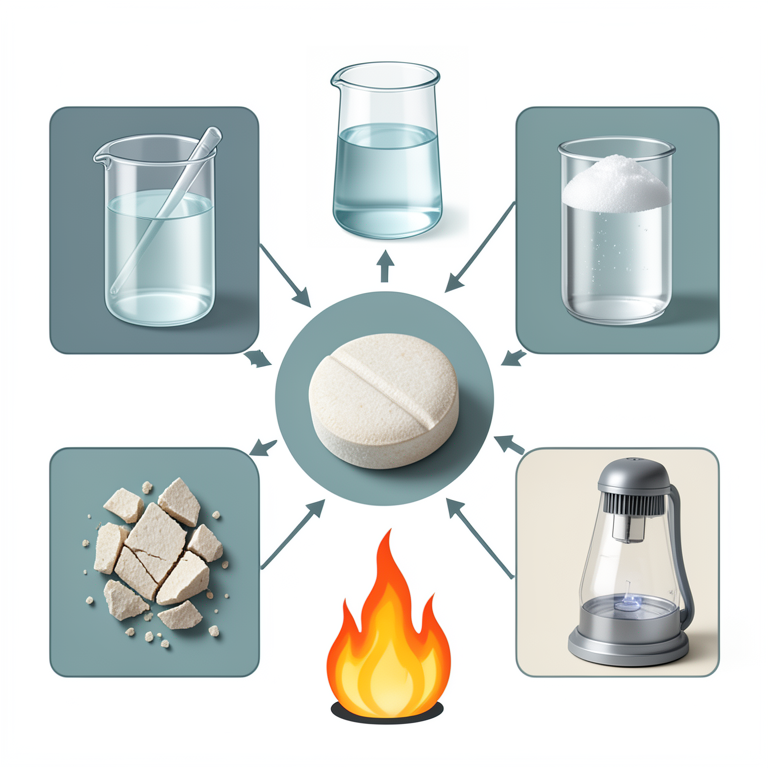
Stress Condition Comparison
AI-generated conceptual illustration (atorvastatin calcium tablets). It explains the idea and does not show study data.
View source evidence ↗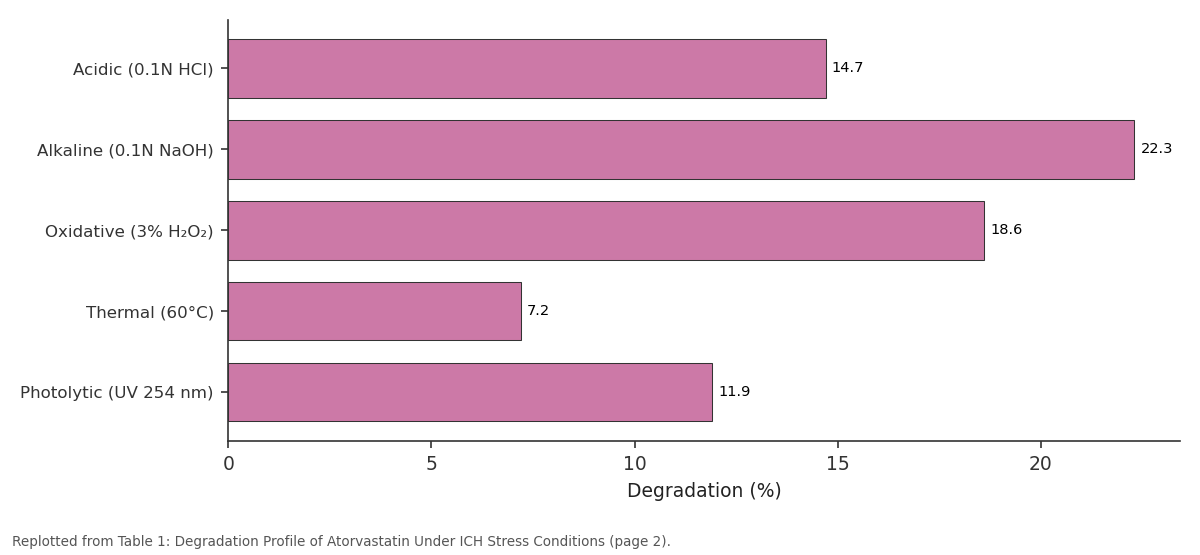
Degradation (%): Acidic (0.1N HCl) vs Alkaline (0.1N NaOH) vs Oxidative (3% H₂O₂) vs Thermal (60°C) vs Photolytic (UV 254 nm)
Replotted from Table 1 (page 2) of the original paper. Every bar is the paper's own table value.
View source evidence ↗Figures & tables
From the original paper Table 1
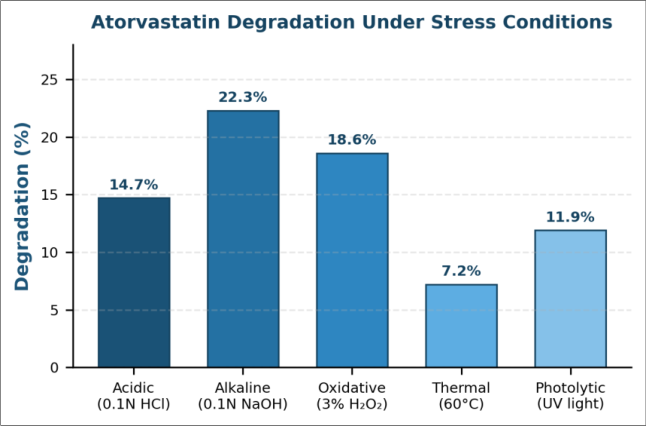 Figure 1
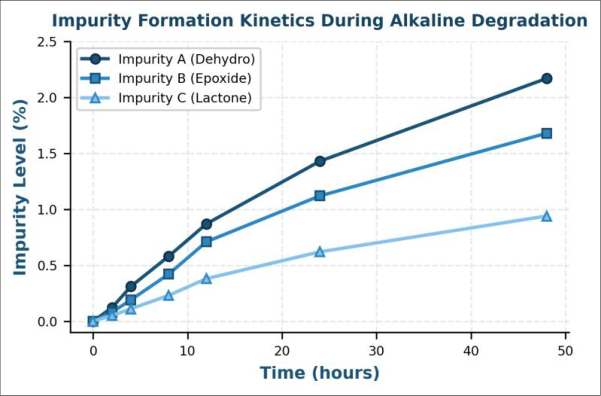 Figure 2
Introduction
How reliable are the quality control methods we trust to ensure drug safety? Atorvastatin calcium, a 3-hydroxy-3-methylglutaryl coenzyme A (HMG-CoA) reductase inhibitor, ranks among the most dispensed prescription medications worldwide for managing hyperlipidemia and cardiovascular risk [1] . Its chemical structure contains an open-chain dihydroxy acid moiety that is prone to degradation through hydrolysis, oxidation, and photolytic pathways [2] . Identifying and characterizing these degradation products isn't just an academic exercise it bears directly on patient safety and regulatory compliance. Forced degradation research, sometimes called stress testing, deliberately exposes drug substances or products to severe conditions that accelerate breakdown. The International Conference on Harmonisation guideline ICH Q1A(R2) recommends this approach to establish intrinsic stability, identify likely degradation routes, and validate stabilityindicating analytical methods [3] . For atorvastatin, earlier investigations have reported degradation under acidic and alkaline conditions, though most focused on the active ingredient alone rather than the finished dosage form [4,5] . Tablet excipients can influence degradation pathways in ways that bulk drug testing may miss. Calcium carbonate, microcrystalline cellulose, and other common excipients sometimes catalyze or buffer decomposition reactions [6] . A few groups have used LC-MS to identify atorvastatin impurities, but a complete kinetic profile across all five ICHrecommended stress conditions for the tablet formulation remained absent in the literature before this work [7,8] . This research set out to fill that gap by conducting systematic forced degradation on commercial atorvastatin calcium tablets, profiling impurities with HPLC-PDA and LC-MS, and evaluating degradation kinetics under each stress condition. The work was performed at Chhatrapati Shahu Maharaj University, Kolhapur, India.
Reagents and Chemicals
Atorvastatin calcium reference standard (purity 99.6%) was obtained from a certified supplier in Mumbai. HPLC-grade acetonitrile and methanol were sourced from Merck India Hydrochloric acid (0.1 N), sodium hydroxide (0.1 N), and hydrogen peroxide (3% v/v) were prepared fresh before each experiment. Potassium dihydrogen phosphate buffer (pH 3.0, 50 mM) served as the aqueous mobile phase component. All water used was Milli-Q grade with resistivity above 18.2 MΩ•cm [9] . Twenty tablets from the same batch were weighed, crushed, and a stock solution equivalent to 1 mg/mL atorvastatin was prepared in methanol [10] .
Material and Methods
Material and Methods
Material
Methods: Chromatographic separation was performed on a Waters Alliance e2695 system equipped with a 2998 PDA detector. A C18 column (250 × 4.6 mm, 5 μm) held at 30°C was used with a gradient of acetonitrile and phosphate buffer (pH 3.0) at 1.0 mL/min. Detection wavelength was set at 246 nm. Forced degradation was conducted following ICH Q1A(R2): acid hydrolysis (0.1 N HCl, 80°C, 48 h), alkaline hydrolysis (0.1 N NaOH, 80°C, 48 h), oxidative stress (3% H₂O₂, room temperature, 48 h), thermal stress (60°C, dry heat, 48 h), and photolytic stress (UV light at 254 nm, 48 h) [11] . Degradation products were identified by LC-MS using electrospray ionization in positive mode. Mass balance was calculated for every condition [12] .
Quality Control
Method validation covered linearity (r² = 0.9994 over 5-50 μg/mL), precision (intra-day RSD 0.87%, inter-day RSD 1.23%), accuracy (recovery 98.4-101.3%), and specificity. System suitability checks were run before each analytical sequence, requiring tailing factor ≤ 1.5 and plate count ≥ 2000. Standard solutions were prepared in triplicate and bracketed every ten sample injections for drift correction [13] .
Results
Atorvastatin showed varying susceptibility across the five stress conditions. Alkaline hydrolysis gave the highest degradation at 22.3%, followed by oxidative (18.6%), acidic (14.7%), photolytic (11.9%), and thermal (7.2%) stress. The HPLC-PDA method resolved all degradation products from the parent peak with resolution greater than 2.0 in every case. All samples maintained mass balance within 98.1-101.7%, and peak purity passed in each condition. Impurity A (dehydro-atorvastatin) rose fastest, reaching 2.17% at 48 hours. Impurity B (epoxide) and Impurity C (lactone) followed at 1.68% and 0.94%, respectively. The near-linear kinetics in the first 12 hours shifted to a slower accumulation phase beyond that point, suggesting partial exhaustion of susceptible molecular sites.
Discussion:
The degradation pattern seen here fits what is known about atorvastatin's molecular architecture. The open-chain dihydroxy heptanoic acid moiety is especially vulnerable to base-catalyzed hydrolysis, which explains why alkaline conditions caused the most extensive breakdown. Sarkar and colleagues [4] reported roughly 19% degradation in alkaline media for the bulk drug, somewhat lower than the 22.3% observed in this tablet research. Excipient effects may account for the difference calcium carbonate in the formulation could locally elevate pH and speed hydrolysis [14] .
Oxidative degradation at 18.6% was driven largely by epoxidation of the pyrrole ring, consistent with earlier LC-MS findings [5] . That the thermal stress produced only 7.2% degradation is reassuring for standard storage conditions. Interestingly, the photolytic degradation at 11.9% suggests light-sensitive packaging might be worth considering, even though current labeling doesn't always mandate it [15] . The kinetic data from Figure 2 showed impurity formation slowed after 12 hours, a pattern that may reflect depletion of more reactive molecular sites and secondary stabilization of early degradation products [16] . And from a regulatory perspective, the mass balance values between 98.1% and 101.7% confirm no significant degradation products went undetected.
Conclusion:
Atorvastatin calcium tablets proved most sensitive to alkaline and oxidative conditions, with thermal stress causing the least damage. Three impurities dehydroatorvastatin, atorvastatin epoxide, and atorvastatin lactone were identified and tracked over time. Mass balance stayed within acceptable limits across all conditions, supporting the reliability of the HPLC-PDA method. These results offer manufacturers a reference for setting impurity limits and selecting appropriate packaging and storage conditions.
Figures and tables from the paper
| Stress Condition | Degradation (%) | Peak Purity | Mass Balance (%) | Main Impurity |
|---|---|---|---|---|
| Acidic (0.1N HCl) | 14.7 | Pass | 99.3 | Dehydro-atorvastatin |
| Alkaline (0.1N NaOH) | 22.3 | Pass | 98.1 | Atorvastatin lactone |
| Oxidative (3% H₂O₂) | 18.6 | Pass | 99.8 | Atorvastatin epoxide |
| Thermal (60°C) | 7.2 | Pass | 101.7 | Dehydro-atorvastatin |
| Photolytic (UV 254 nm) | 11.9 | Pass | 100.4 | Atorvastatin epoxide |
Table text extracted from the original PDF; superscript letters are shown inline. The original table image is below.
View original table image
References
16 in the original paper- Lennernas H. Clinical pharmacokinetics of atorvastatin. Clin Pharmacokinet. 2003;42(13):1141-1160.
- Oliveira T, Bonfilio R, Salgado HRN. Stabilityindicating methods for atorvastatin: a review. J Pharm Biomed Anal. 2018;156:82-94.
- International Conference on Harmonisation. Stability testing of new drug substances and products Q1A(R2). ICH Harmonised Tripartite Guideline. 2003;1-18.
- Sarkar M, Khandavilli S, Panchagnula R. Degradation kinetics of atorvastatin under stress conditions. J Pharm Biomed Anal. 2006;41(2):493-499.
- Shah RP, Sahu A, Singh S. LC-MS analysis of atorvastatin forced degradation products. J Pharm Biomed Anal. 2010;51(4):842-856.
- Waterman KC, Adami RC. Accelerated aging: prediction of chemical stability of pharmaceuticals. Int J Pharm. 2005;293(1-2):101-125.
- Gajjar AK, Shah VD. Development of a stabilityindicating LC method for atorvastatin calcium tablets. Eurasian J Anal Chem. 2011;6(1):56-70.
- Mohammadi A, Rezanour N, Dogaheh MA. A stabilityindicating high performance liquid chromatographic assay for atorvastatin. Chromatographia. 2007;65(78):469-474.
- United States Pharmacopeia. USP reference standards for atorvastatin calcium and related impurities. USPNF. 2020;43(2):2814-2818.
- Jat RK, Sharma S. An overview of analytical methods for estimation of atorvastatin in biological fluids. Asian J Pharm Clin Res. 2012;5(3):18-23.
- Blessy M, Patel RD, Prajapati PN. Development of forced degradation and stability indicating methods. J Pharm Anal. 2014;4(3):159-165.
- Singh S, Junwal M, Modhe G. Forced degradation research to assess stability indicating power of separation method. TrAC Trends Anal Chem. 2013;49:71-88.
- Snyder LR, Kirkland JJ, Dolan JW. Method validation in liquid chromatography. Introduction to Modern Liquid Chromatography. 2010;3rd ed:537-576.
- Narang AS, Desai D, Badawy S. Impact of excipient interactions on solid dosage form stability. Pharm Res. 2012;29(10):2660-2683.
- Tonnesen HH. Photostability of drugs and drug formulations. CRC Press. 2004;2nd ed:1-45.
- Bakshi M, Singh S. Development of validated stabilityindicating assay methods. J Pharm Biomed Anal. 2002;28(6):1011-1040.