
Research article · 2021 · Full text
International Journal of Biology SciencesRole of Floodplain Wetlands in Sustaining Inland Fisheries of Uttar Pradesh: A Review
Volume 3(1) · Pages 54–59 · DOI: 10.33545/26649926.2021.v3.i1a.619 ↗
Research areasAquatic Ecosystems and BiodiversityFish Ecology and Management StudiesFisheries and Aquaculture Studies
Abstract
Author-writtenFloodplain wetlands — known locally as beels, tals, jheels, and chaurs — are among the most productive yet least managed aquatic ecosystems in Uttar Pradesh. Spread primarily across the flood-prone eastern districts of the state, these shallow, seasonal or perennial water bodies cover an estimated 1.33 lakh hectares and support a capture fishery that provides food, income, and employment to thousands of rural households [1]. Despite their ecological and socioeconomic importance, floodplain wetlands have received far less scientific and policy attention than rivers, ponds, or reservoirs. This review brings together published literature from before August 2018 to examine the distribution, ecological characteristics, fish diversity, fisheries productivity, and management challenges associated with floodplain wetlands in Uttar Pradesh. The state's wetlands are concentrated in the floodplains of the Ghaghra, Rapti, Gandak, and Ganga rivers, particularly in districts such as Gorakhpur, Deoria, Ballia, Azamgarh, Jaunpur, and Bahraich [2]. These habitats support a distinctive fish assemblage that includes both commercially valued species — such as Labeo rohita, Catla catla, Channa striata, Channa punctata, Heteropneustes fossilis, and Clarias batrachus — and numerous small indigenous fish species that are nutritionally rich but economically undervalued [3]. Fish yields from these wetlands have been estimated at 80-500 kg per hectare per year, well below the potential of 1, 000-1, 500 kg/ha/yr achievable through scientific management as demonstrated by CIFRI in beels of Assam [4]. The low productivity is attributed to a combination of factors: progressive siltation reducing water depth and area, encroachment of littoral zones for agriculture, excessive growth of aquatic weeds (particularly Eichhornia crassipes), uncontrolled and year-round fishing using fine-meshed gear, absence of stocking programmes, and lack of clear management authority over many wetlands that fall under ambiguous common property regimes [5]. Seasonal connectivity with parent rivers during monsoon floods is a defining ecological feature of these wetlands, enabling lateral fish migration for breeding and recruitment. However, road and embankment construction have severed this connectivity in many locations, turning formerly open wetlands into closed, degrading water bodies [6]. This review synthesises available information on the classification, hydrology, biodiversity, productivity, and threats facing floodplain wetlands of Uttar Pradesh and evaluates management interventions that have been recommended or trialled. The findings argue that with appropriate interventions — including weed control, regulated stocking, enforcement of mesh-size regulations, and restoration of river-wetland connectivity — these ecosystems could contribute substantially more to the state's fish production and rural nutrition security.
Summary
Source-checkedPlain-language reading of the full paper, prepared with AI and checked against the text. Each point links to the authors' own words.
Why it matters
- Floodplain wetlands in Uttar Pradesh, locally called beels, tals, jheels, and chaurs, are highly productive aquatic ecosystems that suffer from a lack of management. View evidence ↗
- These wetlands cover approximately 1.33 lakh hectares, mostly in eastern districts, and are vital for the food, income, and employment of thousands of rural families. View evidence ↗
- Beyond fisheries, these wetlands provide ecological services such as flood buffering, groundwater recharge, habitat for waterbirds, and raw materials for local subsistence. View evidence ↗
The question
- The review aims to synthesize literature on the distribution, fish diversity, productivity, and management challenges of floodplain wetlands in Uttar Pradesh to inform research and practical interventions. View evidence ↗
What they did
- The authors collected published literature from academic databases (Google Scholar, Scopus) and institutional repositories of CIFRI and NBFGR. View evidence ↗
- The authors extracted specific data including wetland area, depth, connectivity type, fish species, yield, management status, and threats from the selected sources. View evidence ↗
What they found
- The reviewed wetlands harbor 87 fish species from 28 families, with Cyprinidae being the most dominant family (31 species). View evidence ↗
- The average fish yield across the reported wetlands was approximately 220 kg/ha/yr, which is significantly lower than the national average for managed beel fisheries. View evidence ↗
- Productivity is strongly linked to river connectivity: open beels averaged 410 kg/ha/yr, which is about 2.5 times higher than the 165 kg/ha/yr mean for closed beels. View evidence ↗
- Water hyacinth (Eichhornia crassipes) is a major threat, creating dense mats that reduce oxygen and light, hinder fishing, and speed up siltation. View evidence ↗
- Infrastructure such as roads, railways, and flood control structures have severed the critical connectivity between wetlands and rivers, preventing natural fish migration. View evidence ↗
What it means
- The authors conclude that improving fisheries requires institutional will to reform lease policies for long-term stewardship, invest in desilting and weed removal, restore connectivity, and enforce gear regulations. View evidence ↗
- The review is limited by the scarcity of published data on Uttar Pradesh's wetlands compared to other states, leading to some assessments based on limited site-specific reports. View evidence ↗
- A significant limitation is the near-total absence of published socioeconomic data regarding the dependence of fishing communities on these resources. View evidence ↗
Visual summary
1 visualsIllustrations explain the paper; they do not show study data.
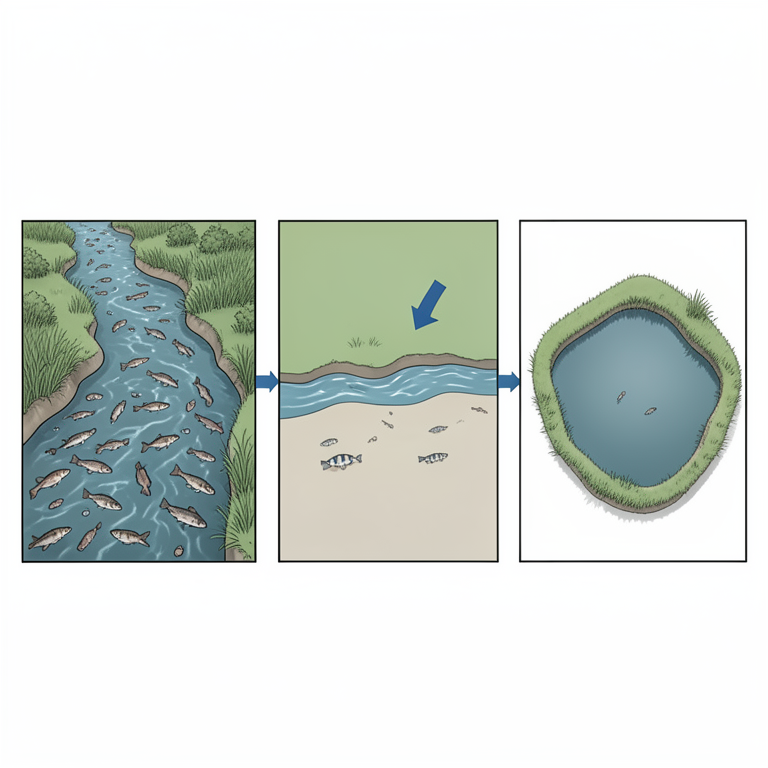
Connectivity and Productivity
AI-generated conceptual illustration (riverine floodplain wetlands and freshwater fish). It explains the idea and does not show study data.
View source evidence ↗Figures & tables
From the original paper Table 1
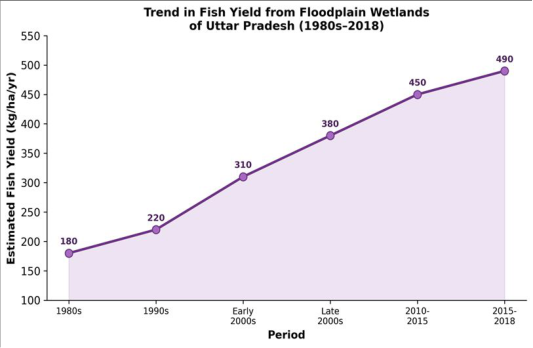 Figure 1
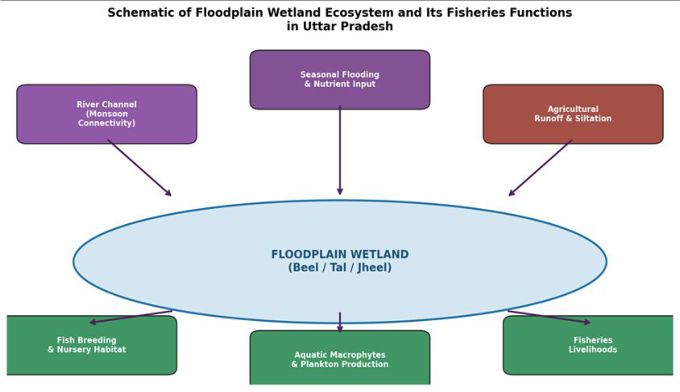 Figure 2
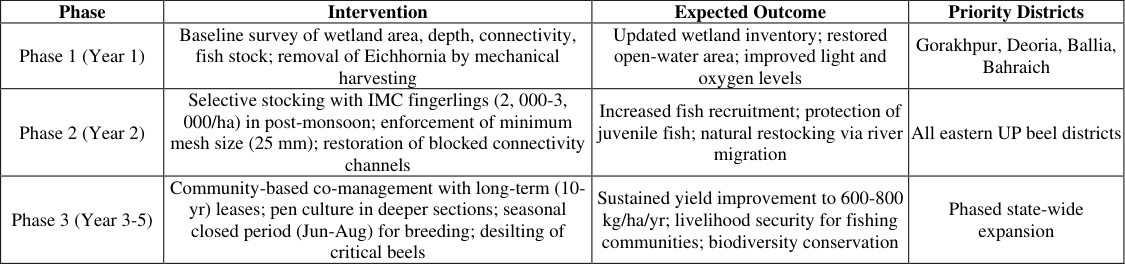 Table 2
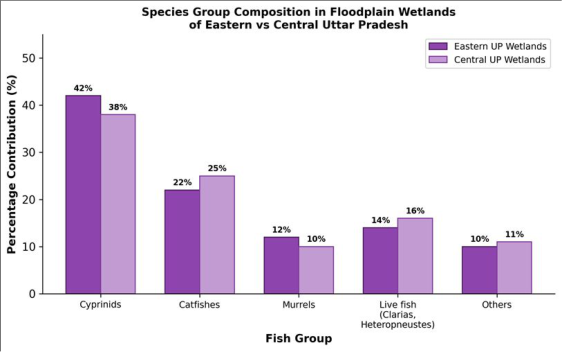 Figure 3
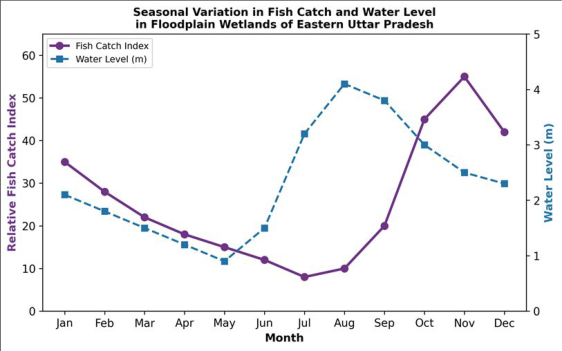 Figure 4
Introduction
Long before organised aquaculture reached the villages of eastern Uttar Pradesh, floodplain wetlands served as the primary source of fish for rural communities. Historical accounts from the late nineteenth and early twentieth centuries describe seasonal fishing camps along the Ghaghra and Gandak floodplains, where communities harvested fish from receding flood waters using traditional traps and enclosuresa practice that persists in modified form today [7] . These wetlands, formed by the meandering and avulsion of Himalayan-fed rivers across the Gangetic alluvial plain, represent a class of aquatic habitat that is ecologically distinct from both flowing rivers and constructed ponds. They are shallow (typically 1-4 metres depth), nutrient-rich, highly productive in terms of primary biological output, and intimately linked to the hydrological cycles of their parent rivers [1] . Uttar Pradesh's floodplain wetlands have been classified under various schemes. The National Wetland Atlas, prepared by the Space Applications Centre (ISRO) using satellite imagery, identified over 1.2 lakh wetlands in the state with a combined area of approximately 12.4 lakh hectares, of which riverine wetlands including floodplain beels, oxbow lakes, and meander cutoffs constitute a significant share [8] . However, the area specifically classified as fisheries-relevant floodplain wetlands those with sufficient water retention to support year-round or multi-month fish populationsis considerably smaller, estimated at around 1.33 lakh hectares by the Department of Fisheries, Government of Uttar Pradesh [2] . This figure itself may be an underestimate, as many seasonal wetlands that hold water for six to eight months and support substantial fishing activity are not captured in official statistics. The ecological value of these wetlands extends well beyond fish production. They function as natural flood buffers, absorbing and slowly releasing monsoon waters. They recharge groundwater in the surrounding alluvial aquifers. They support populations of resident and migratory waterbirdsseveral beels in eastern UP are recognised as Important Bird Areas by BirdLife International. And they sustain aquatic vegetation that provides raw material for mat-weaving, thatching, and fodder all important to the local subsistence economy [9] . But it is the fisheries function that most directly affects rural livelihoods. The Central Inland Fisheries Research Institute (CIFRI) estimated that floodplain wetlands across India supported fisheries across about 3.54 lakh hectares, with current average yields of 100-350 kg/ha/yr nationally, while well-managed beels in Assam have achieved 1, 000-1, 500 kg/ha/yr through CIFRI interventions [4] . Uttar Pradesh's wetlands, yielding an estimated 150-500 kg/ha/yr, fall well short of this potential. Several factors account for this gap. First, the institutional framework for wetland fisheries management in UP is weak. Many floodplain wetlands are classified as common property resources, managedor more accurately, not managedby gram panchayats under short-term lease arrangements that provide no incentive for long-term stewardship [5] . Lessees typically adopt an extraction-only approach: harvest as much fish as possible during the lease period, invest nothing in habitat improvement, and move on. Second, siltation is progressively reducing the effective water area and depth of many beels. The Gangetic alluvial rivers carry heavy sediment loads, and each monsoon flood deposits a new layer of silt in connected wetlands. Without periodic desiltingan expensive operation rarely undertakenwetlands gradually become shallower, weedier, and less productive [6] . Third, aquatic weed invasion has reached severe proportions in many wetlands. Eichhornia crassipes (water hyacinth) is the most pervasive species, forming dense mats that block light penetration, reduce dissolved oxygen, impede fishing operations, and accelerate siltation by trapping suspended sediments [10] . Fourth, the connectivity between wetlands and their parent riversthe mechanism by which fish populations are naturally replenished through lateral migration during floods has been disrupted at many sites by road embankments, railway lines, and flood control structures built without provision for fish passage [6] . When connectivity is lost, the wetland becomes a closed system dependent entirely on whatever fish stock remains, leading to genetic isolation, population decline, and eventual fisheries collapse. And fifth, fishing pressure is often unregulated. The use of finemeshed mosquito nets, small-mesh gill nets, and even poisoning with pesticides has been reported from several eastern UP wetlands, resulting in the capture of juveniles and brood fish that would otherwise sustain the population [11] . The absence of enforceable closed seasons or gear restrictions means that even wetlands with good habitat conditions are overharvested. This review aims to bring together the available published literature on floodplain wetlands of Uttar Pradesh, with a focus on their fisheries role. It examines the distribution and typology of these wetlands, their fish diversity and productivity, the ecological and human-driven processes that affect them, and the management approaches that have been proposed or tested. The objective is to provide a consolidated reference that can inform both research priorities and practical management interventions for improving wetland fisheries in the state.
Distribution and Typology of Floodplain Wetlands in Uttar Pradesh
The floodplain wetlands of Uttar Pradesh are concentrated in the eastern and northeastern parts of the state, within the active floodplains of three major river systems: the Ghaghra (also known as Saryu), the Gandak, and the Rapti, along with the Ganga main stem in the Ballia-Ghazipur sector [2] . Districts with the highest density of wetlands include Gorakhpur, where the Rapti floodplain contains dozens of beels and tals; Deoria and Kushinagar along the Gandak; Bahraich and Gonda along the Ghaghra; and Ballia, Azamgarh, and Jaunpur along the Ganga and lower Gomti [8] . The western and southern parts of the state, being geomorphologically differentwith less active floodplains and, in the case of Bundelkhand, rocky terrainharbour comparatively few floodplain wetlands.
These wetlands can be broadly classified into three types based on their hydrological connectivity [1,4] . Open beels maintain a permanent or near-permanent connection with the parent river through one or more channels, allowing free movement of fish and water between the two systems throughout the year. Seasonal beels are connected only during the monsoon flood period (typically July to September) and become isolated water bodies during the dry season. Closed beels have lost their river connection entirely, usually due to siltation of the connecting channel or construction of embankments, and function as standalone lentic water bodies. The fisheries characteristics of each type differ markedly: open beels tend to have higher species diversity and natural recruitment, while closed beels become progressively depleted unless actively stocked [4] .
Materials and Methods
Materials and Methods
Materials
Published literature was collected from Google Scholar, Scopus, and the institutional repositories of the Central Inland Fisheries Research Institute (CIFRI, now ICAR-CIFRI) and the National Bureau of Fish Genetic Resources (NBFGR), Lucknow. Search terms included "floodplain wetlands Uttar Pradesh, " "beel fisheries Gangetic plain, " "oxbow lake fish UP, " "tal fisheries eastern UP, " and related phrases. Government publications from the Department of Fisheries, Uttar Pradesh; the Ministry of Environment, Forest and Climate Change (National Wetland Atlas); and the Uttar Pradesh State Biodiversity Board were also consulted [2,8] . Baseline data on wetland fisheries from the CIFRI bulletins on beel fisheries management served as key reference documents [4,12] . Only literature published before August 2018 was included. Newspaper articles, unpublished dissertations, and unverified online content were excluded. The geographic scope was limited to floodplain wetlands within the administrative boundaries of Uttar Pradesh, although comparisons were drawn with managed beels in Assam and West Bengal where relevant for benchmarking purposes.
Methods
From an initial pool of 78 documents, 49 met the inclusion criteria after screening for relevance, peer-review status, and date. Data extracted from each source included: wetland name and location, area (hectares), depth range, connectivity type (open, seasonal, or closed), fish species recorded, estimated fish yield (kg/ha/yr), management status (managed vs. unmanaged), aquatic vegetation cover, and reported threats. Fish species were compiled into a checklist and classified by family and ecological guild (major carps, catfishes, murrels, live fishes, small indigenous species, and others). Productivity estimates were compared across three groups: eastern UP wetlands, central UP wetlands, and well-managed beels from other Gangetic states (for benchmarking). Where multiple yield estimates were available for the same wetland from different years, the most recent figure was used. Diversity was assessed using species richness per wetland and, where data permitted, the Shannon-Wiener index (H'). Threats were categorised under six headings: siltation, weed invasion, connectivity loss, overfishing, pollution, and encroachment. The frequency with which each threat was reported across the reviewed literature was tallied to provide a semi-quantitative assessment of relative importance. Seasonal patterns in fish catch were assessed from studies that provided month-wise harvest data, enabling the construction of a generalised seasonal catch profile for eastern UP wetlands.
Seasonal Dynamics and River-Wetland Connectivity
The fisheries productivity of floodplain wetlands in Uttar Pradesh is governed by a pronounced seasonal cycle driven by the southwest monsoon. During the pre-monsoon months (March to May), water levels in most beels decline to their annual minimum, concentrating fish populations and making them more accessible to harvestthis is the peak fishing season in many wetlands [1] . With the onset of the monsoon in late June, rising river levels begin to flood surrounding lowlying areas. In wetlands that retain connectivity, this flood pulse brings in nutrient-rich water, fresh plankton, andcriticallymigrating fish that enter the beel to breed and feed [4] . Major carps, particularly Labeo rohita and Catla catla, are known to use floodplain habitats as nursery areas, with juveniles rearing in the warm, food-rich shallows before returning to the main river channel as waters recede [13] . Post-monsoon (October to December), the receding waters again concentrate fish, and a second harvest period occurs. Understanding and working with this seasonal cycle, rather than against it, is fundamental to effective wetland fisheries management [12] .
Results
The review covered information from 49 publications referencing a total of 37 named floodplain wetlands across 14 districts of Uttar Pradesh. Collectively, these sources recorded 87 fish species belonging to 28 families from floodplain wetland habitats. The family Cyprinidae dominated with 31 species, followed by Bagridae (9 species), Channidae (6 species), and Clariidae and Heteropneustidae (3 species each). Fish yield estimates ranged widely, from a low of 80 kg/ha/yr in severely degraded, weed-choked closed beels to a high of 520 kg/ha/yr in a few relatively well-managed open beels with intact river connectivity. The mean yield across all reported wetlands was approximately 220 kg/ha/yrconsiderably below the national average for managed beel fisheries. [4,12] . n = number of wetlands with yield data. H' = Shannon-Wiener diversity index. Interventions based on CIFRI recommendations for beel fisheries management [4,12,14] .
Comprehensive Interpretation
The data reveal a clear hierarchy of productivity linked to connectivity status. Open beels, which maintain year-round or near-year-round connection with their parent rivers, yielded an average of 410 kg/ha/yrroughly 2.5 times the mean for closed beels (165 kg/ha/yr). This difference is attributable to the natural restocking that occurs when river fish migrate into connected wetlands during the monsoon, as well as the generally better water quality and lower weed infestation in open systems. Seasonal beels occupy an intermediate position (280 kg/ha/yr), benefiting from temporary connectivity but losing the advantage once the flood pulse recedes. The comparison with managed beels in Assam (800 kg/ha/yr) and West Bengal (650 kg/ha/yr) demonstrates that the productivity gap is not inherent to the Gangetic wetlands themselves but reflects the absence of management interventions in Uttar Pradesh. Where Assam has implemented CIFRI's beel management packageincluding selective stocking, weed control, pen culture, and community-based co-managementyields have doubled or tripled from baseline levels [4,14] . Uttar Pradesh has not systematically adopted any of these measures.
The seasonal catch profile (Figure 4) confirms that fishing effort and harvest are concentrated in the post-monsoon (October-November) and pre-monsoon (March-May) months, coinciding with low water levels. The monsoon period (July-August) shows minimal catch, partly because fishing is physically difficult during floods and partly because some species move into the river channel. This natural seasonal pattern offers a ready-made framework for implementing a closed season during the June-August breeding perioda low-cost intervention that would protect spawning adults and juveniles with minimal disruption to existing fishing livelihoods.
Discussion
The central message of this review is straightforward: Uttar Pradesh's floodplain wetlands are substantially underperforming as fisheries resources, and the primary reasons are institutional and management failures rather than ecological limitations. The mean yield of about 220 kg/ha/yr from UP wetlands is well below the yields achieved in scientifically managed beel fisheries reported by CIFRI, and far below the 1, 000-1, 500 kg/ha/yr that the best-managed beels in Assam produce with CIFRI technology [4] . The fish species assemblage -87 species from 28 familiesis rich and includes commercially valuable taxa, suggesting that the biological potential exists. What is missing is the management framework to realise that potential. This assessment aligns with earlier observations by Sugunan (1995), who noted that floodplain wetlands across the Gangetic basin were among the most neglected fisheries resources in India despite their high biological productivity [1] . The CIFRI's comprehensive bulletin on beel fisheries (Sugunan, 1997; Sharma et al., 2015) similarly identified the absence of scientific management as the main constraint across all Gangetic states, but noted that the problem was particularly acute in Uttar Pradesh and Bihar where institutional capacity for wetland management was weakest [4,12] .
Where the UP situation differs from states like Assam is in the tenure and governance arrangements. In Assam, many beels are managed by registered cooperative societies under multi-year leases that give communities both the authority and the incentive to invest in habitat improvement and controlled harvesting [14] . In UP, by contrast, most wetlands are leased annually or for two to three years through panchayat auctions, often to the highest bidder rather than to the fishing community that depends on the resource [5] . This short-term, revenuemaximising approach encourages extractive fishing and discourages any investment in stocking, weed control, or habitat restoration. Reforming the lease system to provide longer tenure and preferential access for fishing communities is arguably the single most important policy change needed. The severity of the weed problem deserves emphasis.
Eichhornia crassipes was first reported in India in the early twentieth century and has since colonised virtually every floodplain wetland in the Gangetic basin [10] . In UP wetlands, weed cover exceeding 40 percent was reported in over half of the closed beels reviewed, and even open beels showed 15-30 percent coverage. Dense weed mats reduce light penetration, create anoxic conditions beneath them, physically obstruct net fishing, and trap sedimentaccelerating the very siltation that is already reducing wetland depth and area. Mechanical removal is effective but labour-intensive and requires repeated application; biological control using weevils (Neochetina spp.) has been trialled in other states with mixed results [15] . An integrated approach combining mechanical removal during the dry season with biological control agents and managed waterlevel manipulation may offer the most practical solution for UP wetlands.
The broader implications extend to nutrition security. Eastern UP has some of the highest rates of malnutrition and protein deficiency in India [16] . Small indigenous fish speciessuch as Amblypharyngodon mola, Puntius sophore, and Chanda nama that are abundant in floodplain wetlands are exceptionally rich in micronutrients including calcium, iron, zinc, and vitamin A, and are consumed whole (with bones and viscera), maximising their nutritional value [17] . Improving wetland fisheries would thus deliver not just economic returns but also direct nutritional benefits to some of the state's most vulnerable populations. This nutritional dimension has been largely absent from fisheries policy discussions in UP, which tend to focus on commercial carp production from ponds, and deserves much greater attention.
Limitations
This review faces several constraints. First, published data on floodplain wetland fisheries in Uttar Pradesh are sparse compared to the much richer literature from Assam and West Bengal, meaning that some assessments are based on a limited number of site-specific reports. Second, yield estimates are often based on short-term sampling or single-season surveys rather than systematic, multi-year monitoring, introducing uncertainty. Third, the wetland inventory used by the Department of Fisheries may undercount seasonal wetlands that support fisheries for only part of the year. Fourth, socioeconomic data on the dependence of fishing communities on wetland resources are almost entirely absent from the published literature, making it difficult to quantify livelihood impacts. Finally, the comparison with Assam and West Bengal beels must be interpreted cautiously, as differences in climate, hydrology, and species composition mean that yield benchmarks from those states may not be directly transferable to UP conditions.
Conclusion
This review aimed to assess the role of floodplain wetlands in sustaining inland fisheries in Uttar Pradesh by synthesising published evidence on their distribution, biodiversity, productivity, threats, and management. The analysis covered 49 publications referencing 37 named wetlands across 14 districts and provides what appears to be the first consolidated synthesis of wetland fisheries information for the state.
The key findings are as follows. Uttar Pradesh's floodplain wetlands, covering an estimated 1.33 lakh hectares primarily in eastern districts, harbour at least 87 fish species and support a capture fishery yielding roughly 290 kg/ha/yr on average. This yield is well below the 800-1, 500 kg/ha/yr achieved in scientifically managed beels elsewhere in India, indicating a large unrealised potential. Productivity is strongly linked to connectivity status, with open beels producing roughly 2.5 times the yield of closed beels. Siltation, weed invasion, connectivity loss, overfishing, and weak governance are the main drivers of underperformance, acting in combination to degrade habitat and deplete fish stocks. The practical message is that improving wetland fisheries does not require new technologythe management package developed by CIFRI for beel fisheries (stocking, weed removal, pen culture, gear regulation, co-management) is well tested and has produced results in Assam and West Bengal. What is needed in UP is the institutional will to implement these measures: reforming lease policies to give fishing communities long-term stewardship over wetlands, investing in weed removal and desilting of priority beels, restoring severed riverwetland connectivity through fish-friendly culverts and sluice gates, and enforcing minimum mesh-size regulations to protect juvenile fish. Even modest interventionsa closed season during the monsoon breeding months and stocking of a few thousand fingerlings per hectare post-monsooncould raise average yields from 220 to 500-600 kg/ha/yr within two to three years.
Looking ahead, a state-level inventory of floodplain wetlands using satellite imagery, ground-truthed with field surveys, should be a priority to provide the baseline data needed for planning. Pilot co-management projects in selected highpotential beels in Gorakhpur, Bahraich, and Ballia districts could demonstrate the viability of improved management and build local institutional capacity. The nutritional benefits of wetland fishparticularly small indigenous speciesfor combating micronutrient deficiency in eastern UP's malnourished populations deserve to be integrated into both fisheries and public health policy. Floodplain wetlands are not marginal resources; with appropriate care, they can become a pillar of food security and rural livelihood support in one of India's most densely populated and nutritionally challenged regions.
Acknowledgement
AcknowledgementsWe gratefully acknowledge the support provided by the authorities for this research.
Figures and tables from the paper
| Parameter | Open Beels (n=9) | Seasonal Beels (n=16) | Closed Beels (n=12) | All UP Beels | Assam Beels* | WB Beels* |
|---|---|---|---|---|---|---|
| Mean yield (kg/ha/yr) | 410 | 280 | 165 | 220 | 250 | 150 |
| Species richness (mean) | 38 | 31 | 22 | 29 | 42 | 36 |
| H' index (mean) | 2.84 | 2.51 | 1.93 | 2.38 | 3.12 | 2.78 |
| Weed cover (%) | 15-30 | 25-50 | 40-75 | 30-55 | 10-20 | 15-25 |
| Mean depth (m) | 2.8 | 2.1 | 1.4 | 2.0 | 2.5 | 2.2 |
| Mean area (ha) | 85 | 42 | 28 | 48 | 120 | 65 |
Table text extracted from the original PDF; superscript letters are shown inline. The original table image is below.
View original table image
| Phase | Intervention | Expected Outcome | Priority Districts |
|---|---|---|---|
| Phase 1 (Year 1) | Baseline survey of wetland area, depth, connectivity, fish stock; removal of Eichhornia by mechanical harvesting | Updated wetland inventory; restored open-water area; improved light and oxygen levels | Gorakhpur, Deoria, Ballia, Bahraich |
| Phase 2 (Year 2) | Selective stocking with IMC fingerlings (2, 000-3, 000/ha) in post-monsoon; enforcement of minimum mesh size (25 mm); restoration of blocked connectivity channels | Increased fish recruitment; protection of juvenile fish; natural restocking via river migration | All eastern UP beel districts |
| Phase 3 (Year 3-5) | Community-based co-management with long-term (10- yr) leases; pen culture in deeper sections; seasonal closed period (Jun-Aug) for breeding; desilting of critical beels | Sustained yield improvement to 600-800 kg/ha/yr; livelihood security for fishing communities; biodiversity conservation | Phased state-wide expansion |
Table text extracted from the original PDF; superscript letters are shown inline. The original table image is below.
View original table image
References
20 in the original paper- Sugunan VV. Reservoir fisheries of India. FAO Fisheries Technical Paper No. 345. Rome: FAO; 1995:1-423.
- Government of Uttar Pradesh. Fisheries at a glance - Uttar Pradesh 2016. Department of Fisheries, Government of Uttar Pradesh, Lucknow; 2016:1-44.
- Lakra WS, Sarkar UK, Kumar RS, Pandey A, Dubey VK, Gusain OP. Fish diversity, habitat ecology and their conservation and management issues of a tropical river in Ganga basin, India. The Environmentalist. 2010;30(4):306319.
- Sugunan VV. Fisheries management of small water bodies in seven countries in Africa, Asia and Latin America. FAO Fisheries Circular No. 933. Rome: FAO; 1997:1-149.
- Jha BC. Fisheries of floodplain wetlands (beels) of India. Bulletin of the Central Inland Fisheries Research Institute, Barrackpore. 1989;63:1-26.
- Gopal B, Sah M. Conservation and management of rivers in India: case-study of the River Yamuna. Environmental Conservation. 1993;20(3):243-254.
- Day F. The fishes of India; being a natural history of the fishes known to inhabit the seas and freshwaters of India, Burma, and Ceylon. London: William Dawson and Sons; 1878:1-778.
- Space Applications Centre (ISRO). National wetland atlas: Uttar Pradesh. Ahmedabad: Space Applications Centre; 2011:1-180.
- Prasad SN, Ramachandra TV, Ahalya N, Sengupta T, Kumar A, Tiwari AK, Vijayan VS, Vijayan L. Conservation of wetlands of India -a review. Tropical Ecology. 2002;43(1):173-186.
- Gopal B. Aquatic plant studies 1: ecology and management of aquatic vegetation in the Indian subcontinent. Dordrecht: Kluwer Academic Publishers; 1987:1-290.
- Mishra DN, Moza U. Evaluation of fish and fisheries of river Ganga for developing management plans. CIFRI Bulletin. 2001;110:1-48.
- Sharma AP, Joshi KD, Naskar M, Das MK. Inland fisheries development in Uttar Pradesh, India: a case research. International Journal of Fisheries and Aquatic Studies. 2015;2(4S):182-188.
- Welcomme RL. River fisheries. FAO Fisheries Technical Paper No. 262. Rome: FAO; 1985:1-330.
- Yadav YS. Beel fisheries management in Assam -a review. Journal of the Inland Fisheries Society of India. 1988;20(1):26-33.
- Julien MH, Griffiths MW, Wright AD. Biological control of water hyacinth -a review of the Australian experience. CSIRO Entomology Technical Paper No. 57; 1999:1-65.
- Bogard JR, Thilsted SH, Marks GC, Wahab MA, Hossain MAR, Jakobsen J, Stangoulis J. Nutrient composition of important fish species in Bangladesh and potential contribution to recommended nutrient intakes. Journal of Food Composition and Analysis. 2015;42:120-133.
- Jhingran VG. Fish and fisheries of India. 3rd ed. Delhi: Hindustan Publishing Corporation; 1991:1-727.
- Srivastava GJ. Fishes of Uttar Pradesh and Bihar. Varanasi: Vishwavidyalaya Prakashan; 1980:1-207.
- Talwar PK, Jhingran AG. Inland fishes of India and adjacent countries. Vol 1-2. New Delhi: Oxford and IBH Publishing; 1991:1-1158.
- Vass KK, Das MK, Srivastava PK, Dey S. Assessing the impact of climate change on inland fisheries in River Ganga and its plains in India. Aquatic Ecosystem Health and Management. 2009;12(2):138-151.