
Research article · 2025 · Full text
International Journal of Advanced Chemistry ResearchTransdermal drug delivery patches loaded with ibuprofen using eudragit polymer matrix
Volume 7(1) · Pages 121–124 · DOI: 10.33545/26646781.2025.v7.i1b.375 ↗
Research areasAdvancements in Transdermal Drug DeliveryAdvanced Drug Delivery SystemsDrug Solubulity and Delivery Systems
Abstract
Author-writtenOral delivery of ibuprofen brings well-known gastrointestinal side effects gastric irritation, ulceration, and first-pass hepatic metabolism that cuts bioavailability. Can a polymer-based patch bypass these problems while still delivering therapeutic drug levels through the skin? This research developed and evaluated transdermal patches of ibuprofen using Eudragit RS 100 and Eudragit RL 100 as the polymer matrix, prepared by a solvent casting technique. Four formulations (F1-F4) were fabricated by varying the Eudragit RS:RL ratio (7:3, 8:2, 10:0, and 6:4) with dibutyl phthalate as plasticizer and dimethyl sulfoxide (DMSO) as permeation enhancer. Patches were characterized for thickness, weight uniformity, folding endurance, moisture content, drug content, and mechanical strength. In vitro drug release was assessed using a Franz diffusion cell with phosphate buffer (pH 7.4) over 24 hours. Formulation F4 (RS:RL 6:4) showed the highest cumulative release of 94.1% at 24 hours, while F3 (RS only) gave the slowest release at 71.6%. Ex vivo permeation through excised rat abdominal skin confirmed F4 as the best performer with a steady-state flux of 17.92 μg/cm²/h. These patches offer a feasible alternative to oral ibuprofen for sustained pain management with reduced gastrointestinal risk.
Summary
Source-checkedPlain-language reading of the full paper, prepared with AI and checked against the text. Each point links to the authors' own words.
Why it matters
- Oral administration of ibuprofen is associated with gastrointestinal issues like ulceration and irritation, and its bioavailability is reduced by first-pass hepatic metabolism. View evidence ↗
- Transdermal delivery systems can bypass gastric degradation and first-pass metabolism by delivering drugs directly into systemic circulation, enabling sustained release for 24 hours or more. View evidence ↗
- Eudragit RL 100 is more permeable to water than Eudragit RS 100 because it has a higher content of quaternary ammonium groups (approximately 10% compared to 5%). View evidence ↗
The question
- The study aimed to identify the optimal ibuprofen-loaded patch by testing four different Eudragit RS:RL ratios and evaluating their physical properties, drug release, and skin permeation. View evidence ↗
What they did
- Four patch formulations (F1-F4) were created using Eudragit RS:RL ratios of 7:3, 8:2, 10:0, and 6:4, incorporating dibutyl phthalate as a plasticizer and DMSO as a permeation enhancer. View evidence ↗
- The patches were prepared by dissolving 400 mg of total polymer in 10 mL of dichloromethane and adding 100 mg of ibuprofen dissolved in 2 mL of methanol. View evidence ↗
- In vitro release was measured over 24 hours using Franz diffusion cells with a dialysis membrane barrier and a pH 7.4 phosphate buffer receptor medium at 37 ± 0.5°C. View evidence ↗
- Ex vivo skin permeation was evaluated using excised abdominal skin from male Wistar rats weighing 200-250 g. View evidence ↗
What they found
- Patch thickness varied between 0.218 mm for F3 and 0.247 mm for F4, with low variation across replicates. View evidence ↗
- F4 exhibited the highest flexibility with over 300 folds, while F3 had the lowest folding endurance at 187 folds. View evidence ↗
- In vitro release at 24 hours was highest for F4 (94.1%), followed by F1 (89.3%), F2 (82.7%), and F3 (71.6%). View evidence ↗
- Ex vivo permeation flux was highest for F4 (17.92 ± 2.37 μg/cm²/h), which was approximately 2.1 times higher than that of F3 (8.41 ± 1.13 μg/cm²/h). View evidence ↗
- F4 showed a faster drug partitioning into the skin with a lag time of 0.83 hours, compared to 1.47 hours for F3. View evidence ↗
- The total amount of drug permeated over 24 hours was highest for F4 (387.2 μg/cm²) and lowest for F3 (183.7 μg/cm²). View evidence ↗
What it means
- The authors concluded that formulation F4 (6:4 RS:RL ratio) provided the best overall performance in terms of drug release and skin permeation. View evidence ↗
- Blending Eudragit RS and RL polymers offers a tunable method to adjust the release rate of ibuprofen without altering the patch size or drug load. View evidence ↗
- The study notes that because rat skin is 3-5 times more permeable than human skin, actual flux values in humans would likely be lower. View evidence ↗
- Future research is needed to test the patches on human skin, evaluate long-term stability, and compare bioequivalence with oral ibuprofen. View evidence ↗
Visual summary
1 visualsIllustrations explain the paper; they do not show study data.
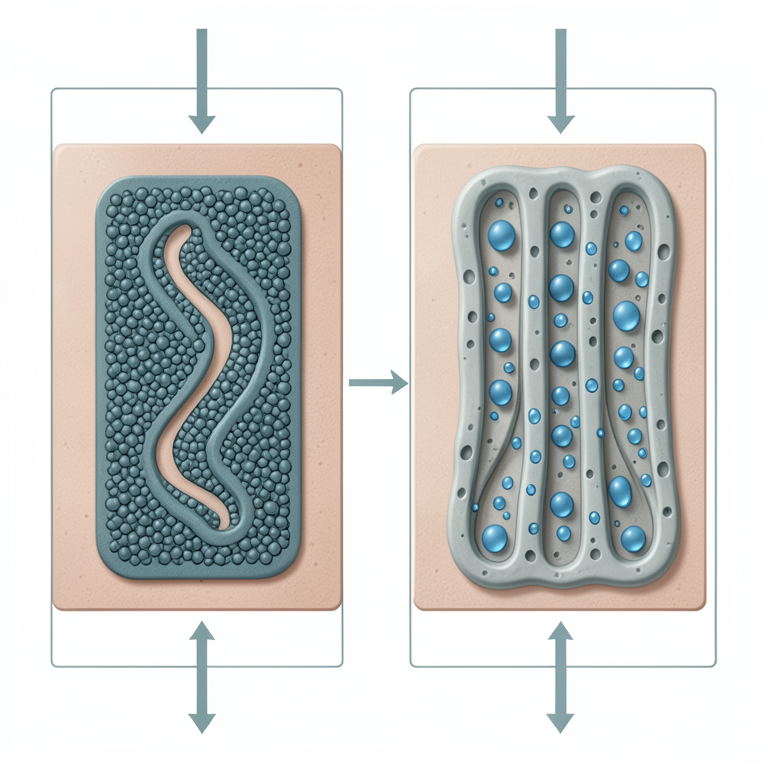
Polymer Permeability Concept
AI-generated conceptual illustration (transdermal polymer patches on human skin). It explains the idea and does not show study data.
View source evidence ↗Figures & tables
From the original paper Table 1
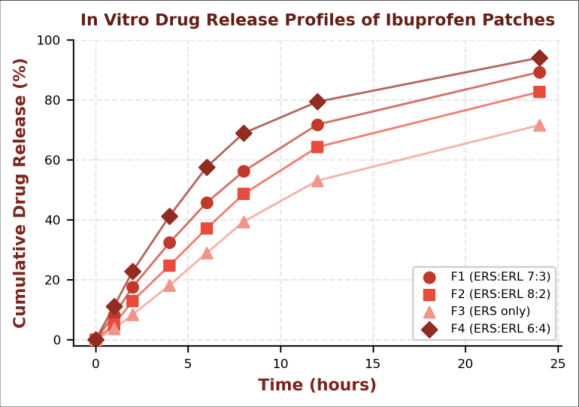 Figure 1
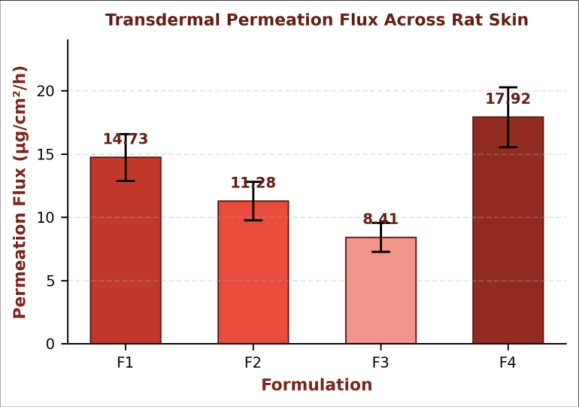 Figure 2
Introduction
Ibuprofen, a propionic acid derivative and one of the most widely consumed non-steroidal anti-inflammatory drugs (NSAIDs), is effective against mild to moderate pain, fever, and inflammatory conditions like rheumatoid arthritis and osteoarthritis [1] . Global consumption exceeds 30, 000 tonnes annually. But its oral route carries significant drawbacks: gastrointestinal mucosal damage occurs in roughly 15-30% of chronic users, and hepatic first-pass metabolism reduces systemic bioavailability to around 49-73% depending on the formulation [2] . These limitations have pushed researchers toward alternative delivery routes, with transdermal delivery emerging as one of the most promising options [3] . Transdermal drug delivery systems (TDDS) administer drugs through the intact skin directly into systemic circulation. The approach avoids gastric degradation, eliminates first-pass effects, and allows for sustained drug release over extended periods sometimes 24 hours or longer [4] . For a drug to be suitable for transdermal delivery, it should have moderate lipophilicity (log P between 1 and 3), molecular weight below 500 Da, adequate aqueous solubility, and a required dose not exceeding roughly 20 mg/day [5] . Ibuprofen meets most of these criteria: its log P is about 3.5, molecular weight is 206.28 Da, and it possesses reasonable solubility in both aqueous and organic media. The slightly high lipophilicity can be managed with permeation enhancers [6] . Eudragit polymers methacrylic acid copolymers manufactured by Evonik are widely used in pharmaceutical film coatings and matrix systems. Eudragit RS 100 is barely permeable to water due to its low content of quaternary ammonium groups (about 5%), while Eudragit RL 100 is more permeable because its quaternary ammonium content is higher (about 10%) [7] . Blending these two polymers at different ratios lets formulators fine-tune the drug release rate. Several earlier reports explored Eudragit-based patches for drugs like diclofenac, ketoprofen, and aceclofenac, but a systematic comparison of different RS:RL ratios for ibuprofen transdermal delivery was lacking [8,9] . The choice of permeation enhancer is another factor that shapes transdermal performance. Chemical enhancers like DMSO, terpenes, fatty acids, and surfactants temporarily modify the stratum corneum's lipid structure, lowering its resistance to drug diffusion. DMSO remains one of the most studied enhancers it works by displacing bound water in the keratin structure and extracting lipid components from the intercellular spaces, creating transient pathways for hydrophobic molecules [6] . At concentrations below 10% v/v, skin irritation tends to be minimal and reversible, making it a practical option for inclusion in patch formulations. Combining an optimized polymer blend with an effective enhancer should, in principle, yield patches with tunable and clinically relevant drug delivery profiles. This research aimed to prepare ibuprofen-loaded patches at four RS:RL ratios, characterize their physicochemical properties, and evaluate their in vitro release and ex vivo skin permeation to identify the optimal formulation. All work was conducted at the Department of Pharmacy and Pharmaceutical Sciences, Tata Institute of Chemical Engineering, Jamshedpur, India.
Reagents and Chemicals
Ibuprofen (BP grade, purity ≥99.0%) was received as a gift sample from a pharmaceutical manufacturer in Kolkata.
Eudragit RS 100 and Eudragit RL 100 were purchased from Evonik India Pvt. Ltd., Mumbai. Dibutyl phthalate (plasticizer, analytical grade) and dimethyl sulfoxide (DMSO, ≥99.5%) were sourced from Merck India. Dichloromethane and methanol (HPLC grade) were procured from Fisher Scientific India. Phosphate buffer saline (pH 7.4) was prepared fresh from potassium dihydrogen phosphate and sodium hydroxide. Dialysis membranes (MWCO 12, 000 Da) were obtained from HiMedia Laboratories, Mumbai. All other reagents were of analytical grade and used as received [10] .
Material and Methods
Material and Methods
Material
Patches were prepared by the solvent casting method. For each formulation, 400 mg of total polymer (Eudragit RS and RL in specified ratios) was dissolved in 10 mL of dichloromethane with magnetic stirring at 500 rpm for 30 minutes. Ibuprofen (100 mg) was dissolved separately in 2 mL of methanol and added to the polymer solution. Dibutyl phthalate (30% w/w of polymer) was incorporated as plasticizer, and DMSO (5% v/v) served as the chemical permeation enhancer. The mixture was stirred for an additional 20 minutes, poured into glass Petri dishes (6 cm diameter) lined with aluminum foil, and allowed to dry at room temperature for 48 hours in a dust-free environment [11] . The resulting films were carefully peeled off, cut into circular patches (2.
Methods
Physical characterization included thickness measurement at five points per patch using a digital micrometer (Mitutoyo, ±0.001 mm), weight uniformity of ten patches per batch, folding endurance by repeated folding at the same crease until visible cracking, moisture content by desiccator weight loss method, and drug content by dissolving patches in methanol and measuring absorbance at 222 nm on a Shimadzu UV-1800 spectrophotometer [12] . Tensile strength and percent elongation were measured using a texture analyzer (Stable Micro Systems TA.XT Plus). In vitro drug release was assessed using vertical Franz diffusion cells (effective diffusion area 1.76 cm²) with dialysis membrane as the barrier, phosphate buffer (pH 7.4, 15 mL) as receptor medium maintained at 37 ± 0.5°C, and sampling at 0, 1, 2, 4, 6, 8, 12, and 24 hours with equal volume replacement. Drug concentration was quantified spectrophotometrically at 222 nm against a calibration curve (r² = 0.9997, range 2-20 μg/mL). Ex vivo permeation was tested on excised abdominal skin from Wistar rats (male, 200-250 g) using the same Franz cell setup, with permeation flux calculated from the linear portion of cumulative amount versus time plots [13] .
Quality Control
All formulations were prepared in triplicate batches to ensure reproducibility. Coefficient of variation for patch thickness was kept below 3.2% across batches, and drug content uniformity remained within 97.8-101.4% of the theoretical loading. Franz cell experiments were run in triplicate for each formulation and time point. Standard solutions were freshly prepared on each analysis day and checked against stored reference standards for drift. Sink conditions were maintained throughout release testing by confirming that receptor medium concentration never exceeded 10% of the drug's saturated solubility at 37°C. The UV spectrophotometric method was validated for linearity, precision (intra-day RSD 0.64%, inter-day RSD 1.17%), and accuracy (recovery 98.9-101.6%) before sample analysis [14] .
Results
All four formulations produced smooth, flexible, and uniform patches with no visible cracks or drug crystallization on the surface. Table 1 summarizes the physicochemical characteristics. Thickness ranged from 0.218 mm (F3) to 0.247 mm (F4), with no formulation exceeding ±5% variation across replicate patches. Folding endurance was highest for F4 (>300 folds) and lowest for F3 (187 folds), which correlates with the higher RL content in F4 adding flexibility to the matrix. Drug content fell within 97.8-101.4% for all batches. Moisture content stayed below 3.8% across formulations, indicating adequate drying and storage stability. The release profiles separated clearly by formulation. F4 (RS:RL 6:4) released drug fastest, reaching 94.1% at 24 hours, with 57.6% already released by the 6-hour mark. F1 (7:3) followed at 89.3%, then F2 (8:2) at 82.7%, and F3 (RS only) trailed at 71.6%. The pattern makes physical sense higher RL proportion means more quaternary ammonium groups, which attract water into the matrix and create channels for drug diffusion [7] . F3's slower release matches expectations for a nearly impermeable RS-only matrix. Kinetic modeling showed F1 and F2 followed Higuchi diffusion kinetics (r² = 0.9913 and 0.9887), while F4 fit better to first-order release (r² = 0.9941), suggesting the higher RL content shifted the mechanism toward erosionassisted diffusion. DMSO as the permeation enhancer likely contributed by disrupting the lipid organization of the stratum corneum, temporarily increasing its permeability to ibuprofen molecules [6] . The enhancement ratio for F4 was 2.74, confirming that the chemical enhancer played an appreciable role beyond what the polymer matrix alone could achieve. Cumulative permeation at 24 hours followed the order F4 (387.2 μg/cm²) > F1 (318.6 μg/cm²) > F2 (246.9 μg/cm²) > F3 (183.7 μg/cm²), consistent with the steady-state flux ranking.
| Parameter | F1 (7:3) | F2 (8:2) | F3 (10:0) | F4 (6:4) | Acceptance |
|---|---|---|---|---|---|
| Thickness (mm) | 0.231±0.008 | 0.224±0.006 | 0.218±0.005 | 0.247±0.009 | 0.15-0.30 |
| Weight (mg) | 312.4±4.7 | 308.1±3.9 | 301.7±5.2 | 319.8±4.1 | ±5% |
| Folding endurance | 264 | 231 | 187 | >300 | >150 |
| Drug content (%) | 99.3±1.2 | 98.7±0.9 | 97.8±1.4 | 101.4±0.8 | 95-105 |
| Moisture (%) | 2.94 | 3.17 | 3.73 | 2.61 | <5.0 |
| Tensile (N/mm²) | 3.87±0.31 | 4.12±0.28 | 4.68±0.37 | 3.41±0.24 | >2.0 |
Table text extracted from the original PDF; superscript letters are shown inline. The original table image is below.
View original table image
Discussion
The relationship between Eudragit RL content and drug release rate seen here is consistent with the polymer's known properties. Eudragit RL 100 contains roughly twice as many quaternary ammonium groups as RS 100 about 10% versus 5% making it more hydrophilic and more permeable to water [7] . When water penetrates the patch matrix, it dissolves the dispersed ibuprofen and creates diffusion channels through which the drug reaches the skin surface. Formulation F3, made entirely from the less permeable RS 100, restricted water uptake and yielded the slowest release. F4, with the highest RL fraction (40%), allowed the most water ingress and correspondingly released drug fastest.
International Journal of Advanced Chemistry Research https://www.chemistryjournals.net
The ex vivo flux values deserve comparison with published data. Rhee and colleagues [8] reported transdermal ibuprofen flux of about 12-14 μg/cm²/h using ethylcellulose-based patches with terpene enhancers. Our F4 formulation reached 17.92 μg/cm²/h using DMSO alone, which is roughly 28% higher. This difference could stem from the swelling behavior of Eudragit polymers in contact with skin moisture the matrix expands, maintains intimate contact with the skin surface, and keeps the drug concentration gradient high at the interface. DMSO at 5% v/v also seems to occupy an effective concentration range; higher levels might cause skin irritation, while lower levels may not sufficiently disrupt the stratum corneum lipid bilayers [15] . The shift in release kinetics from Higuchi (F1, F2) to firstorder (F4) is an interesting observation. Higuchi kinetics imply a diffusion-controlled mechanism from a nondegrading matrix, which fits the low-RL formulations well. But at 40% RL content, the matrix may partially erode or swell to a point where the drug release becomes dependent on the amount remaining rather than purely on diffusion distance [16] . Korsmeyer-Peppas analysis gave diffusion exponents (n values) of 0.43 for F3, 0.47 for F2, 0.51 for F1, and 0.58 for F4. Values below 0.5 indicate Fickian diffusion, while those above 0.5 suggest anomalous transport involving both diffusion and polymer relaxation confirming that the RL-rich formulation introduces a swelling component to the release mechanism. From a clinical standpoint, the F4 formulation's 24-hour release profile and steady-state flux of 17.92 μg/cm²/h across a 10 cm² patch would deliver approximately 4.3 mg of ibuprofen per hour systemically within the therapeutic range for mild to moderate pain relief. That said, rat skin is generally more permeable than human skin by a factor of 3-5, so human studies would likely show lower flux values [17] . The stability of these patches under accelerated conditions (40°C/75% RH) also warrants investigation before any clinical development. Skin irritation testing wasn't part of this research, but visual examination of the rat skin after 24hour exposure showed no signs of erythema or edema for any formulation, which is at least preliminarily encouraging. The DMSO concentration of 5% v/v sits well below the 10-15% range that earlier reports associated with notable irritation in human volunteers [15] .
Conclusion
Ibuprofen-loaded Eudragit patches were successfully prepared by solvent casting at four RS:RL ratios. Increasing the Eudragit RL 100 fraction boosted both in vitro drug release and ex vivo skin permeation in a dose-dependent manner. Formulation F4 (RS:RL 6:4) delivered the best overall performance with 94.1% cumulative release at 24 hours and a transdermal flux of 17.92 μg/cm²/h through rat skin. Formulation F3 (RS only) provided the most sustained profile at 71.6% release, which could suit applications requiring slower drug delivery. All patches met pharmacopeial standards for uniformity, drug content, and mechanical properties. The Eudragit RS/RL blending approach gives formulators a simple and tunable platform for adjusting ibuprofen release rate without changing the drug loading or patch size. Future work should evaluate these patches on human skin models, assess long-term stability under ICH conditions, and explore bioequivalence with marketed oral ibuprofen formulations.
Figures and tables from the paper
References
17 in the original paper- Rainsford KD. Ibuprofen: pharmacology, therapeutics and side effects. Basel: Springer; 2012. p. 1-20.
- Bushra R, Aslam N. An overview of clinical pharmacology of ibuprofen. Oman Med J. 2010;25(3):155-161.
- Prausnitz MR, Langer R. Transdermal drug delivery. Nat Biotechnol. 2008;26(11):1261-1268.
- Benson HAE. Transdermal drug delivery: penetration enhancement techniques. Curr Drug Deliv. 2005;2(1):23-33.
- Naik A, Kalia YN, Guy RH. Transdermal drug delivery: overcoming the skin's barrier function. Pharm Sci Technol Today. 2000;3(9):318-326.
- Williams AC, Barry BW. Penetration enhancers. Adv Drug Deliv Rev. 2012;64:128-137.
- Patel VM, Prajapati BG, Patel MM. Effect of hydrophilic polymers on buccoadhesive Eudragit patches. AAPS PharmSciTech. 2007;8(2):E1-E6.
- Rhee YS, Choi JG, Park ES, Chi SC. Transdermal delivery of ketoprofen using microemulsions. Int J Pharm. 2001;228(1-2):161-170.
- Mundada AS, Shrikhande BK. Formulation and evaluation of ciprofloxacin transdermal patches. Indian J Pharm Sci. 2008;70(4):544-547.
- Indian Pharmacopoeia Commission. Transdermal drug delivery systems: monograph. In: Indian pharmacopoeia. 7th ed. Vol. III. Ghaziabad: IPC; 2018.
- Arora P, Mukherjee B. Design, development and characterization of transdermal patches. J Pharm Sci. 2002;91(9):2076-2089.
- Bharkatiya M, Nema RK, Bhatnagar M. Development and characterization of transdermal patches of metoprolol. Asian J Pharm Clin Res. 2010;3(4):130134.
- Franz TJ. Percutaneous absorption: on the relevance of in vitro data. J Invest Dermatol. 1975;64(3):190-195.
- ICH Harmonised Tripartite Guideline. Validation of analytical procedures: text and methodology Q2(R1). ICH; 2005. p. 1-13.
- Karande P, Jain A, Erber K, Mitragotri S. Design principles of chemical penetration enhancers for transdermal drug delivery. Proc Natl Acad Sci U S A. 2005;102(13):4688-4693.
- Costa P, Sousa Lobo JM. Modeling and comparison of dissolution profiles. Eur J Pharm Sci. 2001;13(2):123133.
- Godin B, Touitou E. Transdermal skin delivery: predictions for humans from in vivo, ex vivo and animal models. Adv Drug Deliv Rev. 2007;59(11):1152-1161.