
Research article · 2026 · Full text
International Journal of Biology SciencesBiology of Thrips (Pseudodendrothrips mori Niwa) and effect of its infestation on mulberry and rearing performance of silkworm Bombyx mori L: A review
Volume 8(4) · Pages 41–46 · DOI: 10.33545/26649926.2026.v8.i4a.618 ↗
Research areasSilkworms and Sericulture ResearchInsect-Plant Interactions and ControlInsect Pest Control Strategies
Abstract
Author-writtenSericulture is a vital agro-based enterprise in India, where mulberry silk constitutes the major share of total raw silk production. The productivity and profitability of sericulture largely depend on the quality and quantity of mulberry leaves, as the silkworm, Bombyx mori L., is monophagous and derives nearly 70 per cent of silk proteins from mulberry foliage. Among the various pests infesting mulberry, the mulberry thrips, Pseudodendrothrips mori Niwa, has emerged as one of the most destructive sap-feeding insects, capable of causing substantial quantitative and qualitative losses. This review consolidates information on the biology, ecology, nature of damage, biochemical alterations in mulberry and the consequent effects on silkworm rearing performance. The pest is characterized by a short life cycle of approximately 20-21 days, high reproductive potential and peak incidence during summer months, facilitating rapid population build-up. Thrips feeding results in reduced leaf area, leaf weight, moisture content and photosynthetic pigments, leading to impaired carbohydrate accumulation and protein synthesis. Significant depletion of nitrogen and essential mineral nutrients further deteriorates leaf nutritional quality. These biochemical disruptions adversely affect silkworm physiology, reducing larval weight, effective rate of rearing, tissue biochemical constituents and metabolic enzyme activities. Ultimately, cocoon weight, shell weight, filament length and reelability are markedly reduced, causing serious economic losses to farmers. The review highlights the critical need for effective management of P. mori to sustain mulberry leaf quality, improve silkworm performance and ensure stable cocoon productivity in sericulture systems.
Summary
Source-checkedPlain-language reading of the full paper, prepared with AI and checked against the text. Each point links to the authors' own words.
Why it matters
- Sericulture is a critical agricultural industry in India, with mulberry silk providing the majority of the country's raw silk production. View evidence ↗
- The silkworm Bombyx mori L. depends exclusively on mulberry leaves, obtaining approximately 70% of its silk proteins from this foliage. View evidence ↗
- Pseudodendrothrips mori Niwa is one of the most damaging sap-feeding pests of mulberry, causing significant losses in both the quantity and quality of the leaves. View evidence ↗
The question
- The objective of this review is to synthesize knowledge regarding the biology and ecology of P. mori, the damage it causes, the resulting biochemical changes in mulberry, and how these affect silkworm rearing. View evidence ↗
What they did
- The authors conducted a review of existing literature to consolidate data on the pest's life cycle, its impact on host plant biochemistry, and the subsequent effects on silkworm productivity. View evidence ↗
What they found
- In laboratory settings (29 ± 3°C and 70 ± 5% relative humidity), the life cycle of P. mori is completed in approximately 20-21 days. View evidence ↗
- High pest densities of 70-100 individuals per leaf can lead to nearly 100% leaf damage and yield losses reaching 43%. View evidence ↗
- Depending on the variety, thrips infestation can reduce mulberry leaf weight by 12-37% and leaf area by 22-28%. View evidence ↗
- Thrips infestation reduces leaf moisture content by approximately 8% to 14%, depending on the severity and the variety of mulberry. View evidence ↗
- In susceptible mulberry varieties, thrips infestation leads to a reduction in leaf protein content of approximately 10-12%. View evidence ↗
- Silkworms fed on thrips-damaged leaves show significant productivity losses, including shell weight reductions of nearly 40% and filament length reductions of over 200 meters. View evidence ↗
- Feeding on infested leaves significantly reduces silkworm body weight, with the effect becoming most prominent from the fourth instar stage. View evidence ↗
- Larvae reared on infested foliage show significant decreases in protein, lipid, carbohydrate, and glycogen levels within their hemolymph, silk glands, and fat bodies. View evidence ↗
What it means
- The authors conclude that integrated management, using resistant varieties, balanced nutrition, and eco-friendly controls, is essential to protect leaf quality and ensure stable cocoon production. View evidence ↗
Visual summary
1 visualsIllustrations explain the paper; they do not show study data.
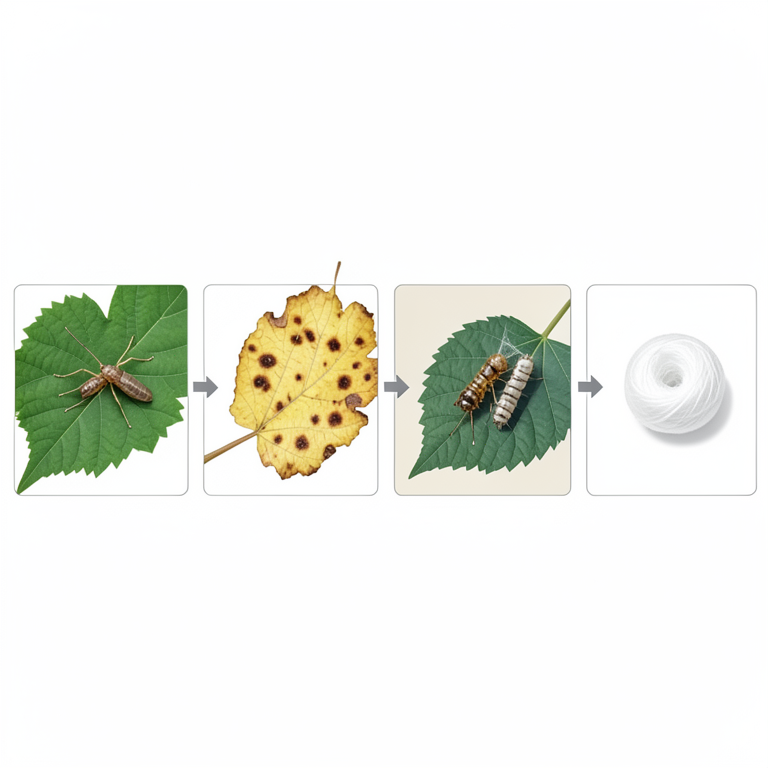
Cascading Effects of Thrips Infestation
AI-generated conceptual illustration (Mulberry leaves, thrips insects (Pseudodendrothrips mori), silkworms (Bombyx mori), and silk cocoons). It explains the idea and does not show study data.
View source evidence ↗Introduction
Sericulture is a vital agro-based enterprise in India, where mulberry silk constitutes the major share of total raw silk production. The productivity and profitability of sericulture largely depend on the quality and quantity of mulberry leaves, as the silkworm, Bombyx mori L., is monophagous and derives nearly 70 per cent of silk proteins from mulberry foliage. Among the various pests infesting mulberry, the mulberry thrips, Pseudodendrothrips mori Niwa, has emerged as one of the most destructive sap-feeding insects, capable of causing substantial quantitative and qualitative losses. This review consolidates information on the biology, ecology, nature of damage, biochemical alterations in mulberry and the consequent effects on silkworm rearing performance. The pest is characterized by a short life cycle of approximately 20-21 days, high reproductive potential and peak incidence during summer months, facilitating rapid population build-up. Thrips feeding results in reduced leaf area, leaf weight, moisture content and photosynthetic pigments, leading to impaired carbohydrate accumulation and protein synthesis. Significant depletion of nitrogen and essential mineral nutrients further deteriorates leaf nutritional quality. These biochemical disruptions adversely affect silkworm physiology, reducing larval weight, effective rate of rearing, tissue biochemical constituents and metabolic enzyme activities. Ultimately, cocoon weight, shell weight, filament length and reelability are markedly reduced, causing serious economic losses to farmers. The review highlights the critical need for effective management of P. mori to sustain mulberry leaf quality, improve silkworm performance and ensure stable cocoon productivity in sericulture systems.
Sericulture is an integral part of rural economy in an agrarian country like India which stands second largest in silk production in the globe next to the China. India has unique credibility of producing all four known commercial silks viz., mulberry, tasar, muga and eri. Among which major share of raw silk production is from mulberry silk. The silkworm, Bombyx mori L. is monophagous which is solely depends on mulberry for its growth and development. The silkworm synthesizes 70 per cent of total silk from proteins derived from mulberry leaves reflecting the importance of leaf quality and productivity in mulberry (Nitish et al., 2026) [19] . Silkworsm nutrition involves complex biochemical and physiological processes in which major biomolecules such as proteins, carbohydrates and lipids contribute significantly to metabolism and development (Sannappa, 2019 and Ito et al., 1959) [26,10] . Therefore, cocoon productivity and profitability are mainly determined by quality and quantity of mulberry leaves. Although mulberry leaves provide a complete diet, their quality and productivity are influenced by several biotic and abiotic factors. Among these, diseases (24 %), insect pests (18 %), weeds (7 %) and other factors (51%) significantly reduce leaf yield and quality (Govindaiah et al., 2005) [9] . Mulberry is a fast-growing perennial plant that is highly susceptible to about 300 insect and non-insect pests, among which sap-feeding insects cause substantial damage to leaf quality (Narayanaswamy et al., 1996). Thrips, particularly Pseudodendrothrips mori Niwa, are among the most dominant and economically important sap-sucking pests of mulberry worldwide (Mound, 1999 and Bharati et al., 2018) [14, 2] . Among sap feeders, thrips causes the highest incidence (42.25 %), followed by mealy bugs (20.50 %), leaf hoppers (20.28 %) and scale insects (1.65 %) (Anonymous, 1993) [1] . These pests feed on fully expanded leaves and tender buds, causing stippling, silvering and drying of leaves, along with the presence of brownish excreta on the underside (Dayana et al., 2022) [3] . In India, especially in the southern states, mulberry thrips have caused severe damage to sericulture (Venugopala et al., 1983) [29] . They can reduce mulberry yield by 20-40 per cent by decreasing leaf area and weight and also reduce leaf moisture content, thereby negatively affecting leaf quality. Thrips infestation alters the biochemical composition of leaves by disturbing host metabolism, which may lead to changes in protein synthesis and mobilization as part of plant defense and repair mechanisms (Etebari et al., 1998 and Sathyaprasad et al., 2002) [4,27] . Feeding silkworms with thrips-infested mulberry leaves adversely affects their growth and survival. It results in poor larval development, increased susceptibility to diseases, higher mortality and the production of flimsy cocoons with low silk content, ultimately causing economic losses to farmers (Sakthivel et al., 2010) [24] . Since cocoon productivity is directly dependent on the quality and quantity of mulberry leaves, effective management of thrips is essential for sustainable sericulture.
Biology and Ecology of Pseudodendrothrips mori
The mulberry thrips, Pseudodendrothrips mori Niwa (Order: Thysanoptera; Family: Thripidae), is one of the most destructive sap-feeding pests of mulberry and plays a significant role in limiting leaf productivity and quality in sericultural regions. It belongs to the suborder Terebrantia and is characterized by its minute size, slender body and rasping-sucking type mouthparts. Adults are small insects measuring approximately 0.8-1.0 mm in length, pale yellow to whitish in color, with narrow wings fringed with fine hairs. The female is slightly larger than the male and possesses a well-developed, saw-like ovipositor, which enables her to insert eggs individually into the tender leaf tissues, particularly on the ventral surface. The species is capable of both sexual and parthenogenetic reproduction, a feature that greatly enhances its population build-up under favorable environmental conditions. Each female lays approximately 30-50 bean-shaped, whitish eggs during her lifespan. Under controlled laboratory conditions of about 29 ± 3°C temperature and 70 ± 5 per cent relative humidity, the life cycle of P. mori is completed in nearly 20-21 days (Geetha et al., 2015) [7] . The incubation period lasts around 5-6 days, after which the nymphs emerge (Rangaswami et al. (1976) [22] , Lim et al. (1990) [11] , Naik (1997) [17] , Reddy and Narayanaswamy (2001) [23] and Patil et al. (2013) [20] . The first instar nymph is initially transparent to creamy white with prominent red compound eyes and remains actively feeding for about three days. This stage is followed by the second instar nymph, which lasts approximately three to four days and is pale yellow to milky white in color. Both nymphal stages are highly active feeders and remain predominantly on the underside of leaves, where they lacerate epidermal cells and suck out plant sap. After completing the feeding stages, the insect enters non-feeding transitional stages, namely the prepupa and pupa. The prepupal stage lasts about one day and is characterized by reduced feeding activity and the appearance of short wing pads. The pupal stage extends for two to three days and usually occurs in the soil or leaf debris, where the insect remains inactive before transforming into the adult stage. Adult longevity varies between 10-14 days in males and 15-20 days in females, allowing sufficient time for mating and oviposition. The rapid completion of the life cycle, combined with high reproductive potential and the ability to reproduce parthenogenetically, enables P. mori to produce multiple overlapping generations in a year. The pest occurs throughout the year but exhibits peak incidence during the summer months, particularly from April to May, when high temperatures and low relative humidity favour its multiplication. Its population declines during the rainy season. The insect can also survive on alternate host plants such as Ficus, Tridax procumbens, Camellia sinensis and Leersia hexandra, which serve as reservoirs during unfavourable periods. The biological attributes of short developmental duration, high fecundity, adaptability to warm climatic conditions and rapid dispersal capacity make Pseudodendrothrips mori a persistent and economically important pest in mulberry cultivation. A thorough understanding of its developmental stages and seasonal dynamics is therefore essential for timely and effective pest management interventions in sericulture systems.
Nature of Damage and Yield Loss
Mulberry thrips, Pseudodendrothrips mori, inflict damage primarily through their rasping and sucking type mouthparts. Both nymphs and adults lacerate the epidermal cells on the ventral surface of leaves and extract plant sap, thereby disrupting cellular integrity and normal physiological processes. During feeding, salivary secretions are injected into the tissues, which coagulate the sap and result in the formation of characteristic silvery streaks and patches. As the damaged tissues lose moisture and chlorophyll, these silvery areas gradually turn brown, necrotic and depressed. In cases of severe infestation, the affected leaves exhibit curling, deformation and hardening, eventually leading to premature senescence and abscission. Quantitative assessment of damage indicates that increasing thrips population density directly correlates with severity of leaf injury and yield reduction. When population levels exceed 70-100 individuals per leaf, leaf damage may approach nearly 100 per cent, accompanied by yield losses of up to 43 per cent. Furthermore, comparative evaluations across popular mulberry varieties have revealed that thrips infestation can reduce leaf weight by 12-37 per cent and decrease leaf area by approximately 22-28 per cent, depending on varietal susceptibility (Muthuswami et al., 2010) [16] . The reduction in leaf weight and area is primarily attributed to loss of cellular contents, impaired photosynthetic tissues and accelerated tissue desiccation. Such substantial quantitative losses not only diminish foliage availability for silkworm feeding but also compromise overall plant vigor and productivity, thereby posing a serious threat to sustainable sericulture.
Biochemical Alterations in Mulberry Due to Thrips Infestation Photosynthetic Pigments
Thrips infestation induces profound biochemical disturbances in mulberry foliage, particularly affecting photosynthetic pigments that are essential for plant productivity. Several studies have documented a significant decline in total chlorophyll, chlorophyll-a, chlorophyll-b and carotenoid contents in thrips-infested leaves compared to healthy foliage (Mahadeva, 2011) [13] . The reduction in chlorophyll content is primarily attributed to the direct laceration of epidermal and mesophyll tissues by the rasping-sucking mouthparts of Pseudodendrothrips mori, which disrupts chloroplast structure and function. Mechanical injury to chloroplast membranes interferes with pigment stability and photosystem integrity, while salivary secretions injected during feeding may inhibit chlorophyll biosynthesis pathways and accelerate pigment degradation (Satya Prasad et al., 2002) [21] . In addition, oxidative stress generated at the feeding sites can further enhance chlorophyll breakdown. Carotenoids, which play a protective role against photooxidative damage, also decline significantly in infested leaves, indicating compromised photoprotective mechanisms. The cumulative reduction in photosynthetic pigments directly lowers photosynthetic efficiency, thereby decreasing carbohydrate synthesis and overall assimilate accumulation in the plant. Such impairment in primary metabolism ultimately diminishes leaf nutritive quality and plant productivity, adversely affecting mulberry yield and its suitability for silkworm feeding.
Moisture Content and Water Relations
Thrips infestation significantly alters the water relations of mulberry leaves by damaging the epidermal tissues and disrupting normal physiological processes. Both nymphs and adults of Pseudodendrothrips mori lacerate the leaf surface while feeding, which increases transpiration and enhances water loss from injured tissues. As a result, a marked reduction in leaf moisture content has been recorded in thrips-infested foliage across different mulberry varieties.
Studies have shown that moisture reduction ranges from approximately 8 to 14 per cent depending on varietal susceptibility and severity of infestation (Muthuswami et al., 2010) [16] . The loss of moisture is primarily attributed to the breakdown of cuticular integrity and accelerated evapotranspiration at the damaged sites. In addition to reduced moisture content, infested leaves also exhibit a decline in moisture retention capacity, which directly affects post-harvest leaf storage and shelf life. Since mulberry leaves with higher moisture content are more palatable and easily digestible to silkworm larvae, the reduction in moisture adversely influences larval ingestion efficiency and nutrient assimilation. Lower moisture levels impair digestion, slow growth and ultimately affect cocoon productivity. Thus, alterations in water relations due to thrips feeding not only compromise leaf quality but also have cascading effects on silkworm performance and sericultural output (Geetha et al., 2015) [7] .
Protein and Nitrogen Dynamics
Thrips infestation causes significant alterations in nitrogen metabolism and protein content of mulberry leaves, thereby reducing their nutritional quality. Quantitative analyses of healthy and thrips-infested foliage have revealed a protein reduction of approximately 10-12 per cent across susceptible mulberry varieties (Muthuswami et al., 2010) [16] . This decline in protein content is primarily attributed to the sap-sucking feeding behavior of Pseudodendrothrips mori, which directly removes nitrogenous compounds from plant tissues. Additionally, the feeding activity may stimulate proteolytic enzyme action either within plant tissues or through pest-derived enzymes, resulting in accelerated breakdown of leaf proteins. Damage to photosynthetic tissues and disruption of primary metabolism can further inhibit protein biosynthesis, thereby compounding the reduction. Concurrently, measurable depletion in nitrogen levels has been reported in infested leaves, reflecting disturbance in nutrient assimilation and transport processes Mahadeva and Shree (2014) [12] . Since nitrogen is a fundamental component of amino acids and proteins, its reduction directly affects the synthesis of silk proteins in silkworms. Approximately 70 per cent of silk fibroin and sericin are derived from mulberry leaf proteins; therefore, diminished nitrogen and protein content in infested leaves limits silk protein biosynthesis, adversely influencing cocoon weight, shell weight and overall silk yield (Dayana et al., 2022) [3] . Thus, thrips-induced disruption of protein and nitrogen dynamics represents a critical biochemical pathway through which leaf quality deterioration translates into reduced sericultural productivity.
Carbohydrates and Sugars
Thrips infestation markedly affects carbohydrate metabolism in mulberry leaves, leading to a significant decline in total carbohydrates and soluble sugar content. Comparative biochemical analyses between healthy and infested foliage have demonstrated measurable reductions in total sugars and carbohydrate fractions across different mulberry varieties (Muthuswami et al., 2010) [16] . The primary cause of this reduction is the impairment of photosynthetic efficiency due to chlorophyll degradation and structural damage to chloroplasts, which directly limits carbon fixation and assimilate production. Furthermore, feeding injury to mesophyll tissues disrupts normal starch synthesis and mobilization processes, altering carbohydrate metabolism and reducing the conversion of photosynthates into soluble sugars. Sap extraction by Pseudodendrothrips mori also removes readily available carbohydrates, thereby compounding the depletion. Soluble sugars in mulberry leaves serve as an important feeding stimulant, often referred to as the "biting factor" which encourages active feeding behavior in silkworm larvae. A reduction in sugar concentration diminishes leaf palatability and affects ingestion efficiency. Moreover, carbohydrates constitute the primary energy source for larval metabolism and silk protein synthesis; hence, decreased sugar levels impair energy availability and physiological performance in silkworms. Consequently, thrips-induced alterations in carbohydrate and sugar dynamics not only compromise leaf nutritional quality but also adversely influence larval growth, cocoon parameters and overall sericultural productivity (Dayana et al., 2022).
Mineral Nutrient Imbalance
Thrips infestation not only affects primary metabolites such as proteins and carbohydrates but also induces significant alterations in the mineral nutrient composition of mulberry leaves. Comparative analyses between healthy and infested foliage have demonstrated measurable depletion in key macronutrients, particularly nitrogen (N), phosphorus (P) and potassium (K), across several mulberry varieties (Mahadeva and Shree, 2014) [12] . Nitrogen reduction is closely associated with the direct removal of sap and disruption of nutrient assimilation processes, while phosphorus and potassium decline may result from impaired translocation and altered metabolic activity within damaged tissues. In addition to macronutrients, variations in certain micronutrients have also been observed, indicating that thrips feeding disturbs overall nutrient balance in the plant. The depletion of essential mineral elements has far-reaching physiological consequences. Nitrogen deficiency directly reduces amino acid and protein synthesis, phosphorus limitation affects energy transfer reactions and nucleic acid metabolism and potassium imbalance interferes with stomatal regulation, enzyme activation and carbohydrate transport. Such disturbances compromise the plant's metabolic efficiency and weaken inherent defense mechanisms, making the plant more susceptible to further biotic and abiotic stresses. Ultimately, mineral nutrient imbalance caused by Pseudodendrothrips mori infestation deteriorates leaf nutritional quality and diminishes its suitability for silkworm feeding, thereby negatively impacting sericultural productivity (Etebari and Bizhannia, 2006) [5] .
Role of Phenols and Tannins in Mulberry Resistance to Thrips
Phenolic compounds and tannins are important secondary metabolites that contribute to the natural defense mechanisms of plants against insect pests. In mulberry, these compounds play a crucial role in determining the level of resistance or susceptibility of different varieties to pest infestation, including thrips. Phenols are known to act as protective biochemical compounds that interfere with the feeding behavior, digestion and development of herbivorous insects. Higher phenolic content in plant tissues often reduces palatability and affects the growth and survival of insect pests. Similarly, tannins, which belong to the group of polyphenolic compounds, can bind with proteins and digestive enzymes in the insect gut, thereby reducing nutrient availability and impairing digestion (Mahadeva and Shree, 2014) [12] . Studies on mulberry have indicated that variations in phenol and tannin content among different genotypes may influence their tolerance to insect infestation. Resistant or tolerant varieties often exhibit relatively higher levels of phenolic compounds, which help restrict pest feeding and population development. The feeding activity of Pseudodendrothrips mori can stimulate biochemical defense responses in mulberry leaves, resulting in the accumulation of phenolic compounds as part of the plant's protective mechanism.
These compounds not only contribute to plant resistance but also play a role in minimizing further damage caused by herbivorous insects (Naik et al., 2000) [18] . However, from the perspective of sericulture, excessively high phenolic and tannin contents may adversely affect the nutritional quality of mulberry leaves. High levels of these compounds can interfere with protein digestibility and nutrient absorption in silkworm larvae, which may ultimately affect larval growth and cocoon production. Therefore, an optimum balance of phenolic and tannin content is essential to ensure both plant defense against pests and adequate nutritional quality for silkworm rearing. Understanding the relationship between secondary metabolite content and pest resistance in mulberry can help in the identification and development of tolerant mulberry varieties, thereby contributing to sustainable pest management and improved cocoon productivity.
Impact on Silkworm Physiology and Biochemistry Silkworm tissue Biochemistry
Feeding silkworm larvae with thrips-infested mulberry leaves induces pronounced metabolic disturbances, reflecting the deterioration in leaf nutritional quality. Biochemical analyses of hemolymph, silk gland and fat body tissues have demonstrated significant reductions in protein, lipid, carbohydrate and glycogen contents in larvae reared on infested foliage compared to those fed with healthy leaves. The decline in protein levels is closely associated with reduced nitrogen and amino acid availability in the diet, which directly limits silk protein synthesis in the silk glands. Similarly, decreased lipid reserves indicate impaired energy storage and altered membrane metabolism, while reductions in carbohydrate and glycogen content suggest compromised energy metabolism and diminished substrate availability for physiological processes. Since glycogen serves as an essential energy reserve during growth and metamorphosis, its depletion adversely affects larval vigor and subsequent cocoon formation. In addition to quantitative reductions in biochemical constituents, significant alterations in key metabolic enzyme activities such as succinate dehydrogenase (SDH), lactate dehydrogenase (LDH) and glutamate dehydrogenase (GDH) have been reported in larvae fed with thrips-infested leaves (Naik and Indra, 2012). Variations in SDH activity indicate disruption in mitochondrial oxidative metabolism and tricarboxylic acid (TCA) cycle functioning, while changes in LDH activity reflect shifts in anaerobic glycolysis and stress-induced metabolic adjustments. Altered GDH activity suggests disturbance in amino acid catabolism and nitrogen metabolism. These enzymatic fluctuations collectively point toward metabolic imbalance and elevated physiological stress in silkworm larvae consuming nutritionally compromised leaves. Thus, thrips-induced biochemical deterioration of mulberry foliage translates into measurable metabolic stress in silkworms, ultimately impairing growth performance and silk productivity (Dayana et al., 2022) [3] .
Larval Growth and Survival
The deterioration in mulberry leaf quality caused by Pseudodendrothrips mori infestation has a direct and measurable impact on larval growth and survival of Bombyx mori. Experimental evaluations have demonstrated that larvae fed on thrips-infested leaves exhibit a significant reduction in body weight, particularly from the fourth instar onwards, when nutritional demand is at its peak (Dayana et al., 2022) [3] . The reduction becomes more pronounced during the fifth instar stage, where maximum biomass accumulation and silk gland development normally occur. The lower larval weight is primarily attributed to reduced ingestion efficiency, diminished nutrient assimilation and impaired metabolic activity resulting from decreased protein, carbohydrate and moisture content in infested foliage. In addition to reduced growth, the effective rate of rearing (ERR) declines drastically in batches fed with thripsdamaged leaves (Geetha et al., 2015) [7] . Increased larval mortality has been observed under such feeding conditions, indicating that nutritionally compromised leaves fail to meet the physiological requirements necessary for optimal larval development. The mortality rate is particularly higher when susceptible mulberry varieties are used as feed, suggesting varietal differences in tolerance to thrips-induced biochemical deterioration (Etebari and Bizhannia, 2006) [5] . Reduced moisture retention capacity and nutrient imbalance in infested leaves further aggravate feeding stress, leading to weakened larvae that are less capable of sustaining normal growth. Consequently, thrips infestation indirectly compromises silkworm survival and productivity by impairing larval development, lowering rearing efficiency and increasing mortality, thereby posing a serious challenge to sustainable sericulture.
Cocoon and Silk Traits
The biochemical and nutritional deterioration of mulberry leaves caused by Pseudodendrothrips mori infestation ultimately manifests in significant reductions in cocoon and silk quality parameters. Silkworm larvae reared on thripsinfested foliage produce cocoons with markedly lower cocoon weight and shell weight compared to those fed on healthy leaves (Dayana et al., 2022) [3] . The decline in cocoon weight is largely attributed to reduced larval growth and diminished silk gland development resulting from inadequate protein and carbohydrate availability. Shell weight, which directly reflects silk yield, is also substantially reduced due to limited fibroin and sericin synthesis. In addition, filament length and reelability percentage are adversely affected, indicating compromised silk quality and reeling efficiency. Quantitative assessments have recorded filament length reductions exceeding 200 meters and shell weight reductions approaching 40 per cent in silkworms fed with thrips-damaged leaves (Etebari and Bizhannia, 2006) [5] . Such reductions are closely linked to nutritional imbalance and metabolic stress experienced during the larval stages. Since cocoon weight, shell weight and filament length are key determinants of commercial silk value, these losses translate directly into reduced market returns for farmers. Therefore, thrips-induced decline in mulberry leaf quality not only affects biological performance of silkworms but also has serious economic implications for sericulture enterprises.
Conclusion
Pseudodendrothrips mori Niwa is a highly destructive and economically important pest of mulberry, causing both quantitative and qualitative losses in sericulture. Its short life cycle, high fecundity and parthenogenetic reproduction enable rapid population build-up, especially during summer. Thrips feeding results in severe reductions in leaf area, leaf weight and overall foliage productivity. More importantly, infestation leads to significant biochemical alterations, including depletion of chlorophyll, moisture, proteins, carbohydrates, sugars and essential mineral nutrients, thereby reducing leaf nutritional quality. The deterioration of mulberry leaves directly affects silkworm performance. Larvae fed on infested foliage exhibit metabolic stress, reduced biochemical reserves and altered enzyme activity, leading to decreased larval weight, survival and effective rate of rearing. Consequently, cocoon weight, shell weight, filament length and reelability are significantly reduced, resulting in economic losses to farmers. Effective and sustainable management of P. mori through integrated approaches, including resistant varieties, balanced nutrition and eco-friendly pest control measures, is therefore essential to maintain mulberry leaf quality and ensure stable cocoon productivity in sericulture systems.
References
30 in the original paper- Anonymous A. Central Sericulture Research and Training Institute. Mysore; 1993:39.
- Bharati V, Parvatagoudar, Rayar SG. Studies on management of mulberry thrips (Pseudodendrothrips mori Niwa) through non-chemical approaches. J Farm Sci. 2018;31(4):447-451.
- Dayana TB, Bai MR, Jebamalar DD, Suji TT. Effect of thrips (Pseudodendrothrips mori Niwa) infested mulberry leaves on biochemical and economic parameters of silkworm Bombyx mori L. Uttar Pradesh J Zool. 2022;43(24):564-568.
- Etebari K, Jalali J, Taksokhan M. First report on mulberry thrips Pseudodendrothrips mori Niwa in Iran. J Entomol. 1998;18:26.
- Etebari K, Bizhannia AR. Effects of thrips infested mulberry leaves on silkworm growth and cocoon parameters. Caspian J Environ Sci. 2006;4(1):31-37.
- Geetha T, Mahalingam CA, Murugan N. Biology of mulberry thrips under Tamil Nadu conditions. Int J Adv Sci Res. 2015;5(2):19-26.
- Geetha T, Mahalingam CA, Murugan N. Impact of thrips infested mulberry leaves on silkworm rearing. Int J Adv Sci Res. 2015;5(3):81-84.
- Geetha T, Mahalingam CA, Murugan N. Alteration in biochemical components by thrips in mulberry. Adv Environ Biol. 2016;10(8):153-158.
- Govindaiah G, Sharma VS, Rajdurai DP, Nishita NV. Mulberry crop protection. Bengaluru: Central Silk Board; 2005:459.
- Ito T, Horie Y. Carbohydrate metabolism of the midgut of silkworm Bombyx mori. Arch Biochem Biophys. 1959;80(1):174-186.
- Lim S, Kim Y, Lee S, Rhee I, Lim J, Lim B. Sericulture training manual. FAO Agric Serv Bull. Rome; 1990:111.
- Mahadeva A, Shree MP. Post-infestational changes in nutritive elements of mulberry foliage. Int J Bioassays. 2014;3(7):3171-3175.
- Mahadeva A. Influence of thrips infestation on biochemical constituents of mulberry leaves. Int J Plant Anim Environ Sci. 2011;1(3):57-63.
- Mound LA. Leaf-feeding Thysanoptera from Australia and New Caledonia. Aust J Entomol. 1999;38(4):257273.
- Mudejagadish Naik MN, Pala Indira PI. Enzyme activity in silkworm fed with thrips infested mulberry leaves. Uttar Pradesh J Zool. 2012;33(1):9-15.
- Muthuswami M, Subramanian S, Krishnan R, Thangamalar A, Indumathi P. Damage caused by thrips in mulberry varieties. Karnataka J Agric Sci. 2010;23(1):146-148.
- Naik SL. Bio-ecology of thrips infesting mulberry [thesis]. Bangalore: University of Agricultural Sciences; 1997:77.
- Naik SL, Reddy DNR, Sannappa B. Effect of feeding thrips infested mulberry leaves on silkworm growth. Karnataka J Agric Sci. 2000;13(1):190-193.
- Nitish Kumar LS, Sugeetha G, Mahadeva J. Comparative evaluation of biochemical constituents in mulberry varieties. Int J Adv Biochem Res. 2026;10(1S):727-733.
- Patil J, Ashoka J, Bheemanna M, Sreenivas AG, Naganagoud A. Bio-ecology of mulberry thrips. J Ent Res. 2013;37(4):325-329.
- Prasad KS, Sreedhar S, Singhvi NR, Kodandaramaiah J, Sen AK. Post infestation biochemical changes in mulberry leaves. Plant Arch. 2002;2(1):85-88.
- Rangaswami G, Narasimhanna MN, Kasiviswanathan K, Sastry CR. Manual on sericulture: mulberry cultivation. FAO Agric Serv Bull. Rome; 1976:150.
- Reddy DNR, Narayanaswamy KC. Thrips fauna and bio-ecology in mulberry. Proc Natl Semin Mulb Seri Res. 2001:853-860.
- Sakthivel N, Qadri SMH. Impact of insecticides and botanicals on predatory coccinellids in mulberry. J Biopestic. 2010;3(1):85-87.
- Sakthivel N, Narendra Kumar JB, Dhahirabeevi N, Devamani M, Teotia RS. Mulberry pests: current status and management. Mysore: CSRTI; 2019:1-2.
- B. Biochemical composition of eri silkworm reared on fortified castor leaves. Indian J Pure Appl Biosci. 2019;7(6):184-191.
- Sathyaprasad K, Sreedhar S, Singhvi NV, Kodandaramaiah J, Sen AK. Post infestation biochemical changes in mulberry leaves. Plant Arch. 2002;2(1):85-88.
- Umeshkumar NNS, Muthegouda MP, Boraiah G. Changes in biochemical constituents of mulberry affected by tukra. Indian J Seric. 1990;29(1):93-100.
- Venugopala S, Krishnaswami S. Population of mulberry thrips in relation to weather factors. Indian J Seric. 1983;21:46-52.
- Yey B, Guz F. Chemical control of mulberry thrips. Sericologia. 1990;30(3):389-392.