
Research article · 2026 · Full text
International Journal of Biology SciencesSilk-Based composites and their applications: A comprehensive review
Volume 8(4) · Pages 01–07 · DOI: 10.33545/26649926.2026.v8.i3b.611 ↗
Research areasSilk-based biomaterials and applicationsElectrospun Nanofibers in Biomedical ApplicationsSilkworms and Sericulture Research
Abstract
Author-writtenSilk is a very special kind of material that comes from nature. Silk is very strong, can be used in the body without causing problems, can break down easily and can be combined with other materials in different ways. This review explains about silk-based composite materials and it covers where they come from, how they are made and what they can be used for. Silk fibroin is a type of protein that comes from silkworms and some spiders. It is the main part of the material that makes these composites strong and flexible. By combining silk with other materials such as plastics, ceramics, metals, nanomaterials and hydrogels it can create new systems that have specific features and functions looks the use of different materials and technologies to solve problems in different fields. Some of the applications are related to health such as making artificial organs, delivering medicines, healing wounds and making devices that can be put inside the body.
Summary
Source-checkedPlain-language reading of the full paper, prepared with AI and checked against the text. Each point links to the authors' own words.
Why it matters
- Silk is a natural material valued for its strength, biocompatibility, biodegradability, and versatility in combining with other materials. View evidence ↗
- Silk fibroin is a superior biomaterial compared to many synthetic polymers, featuring a high tensile strength of nearly 740 MPa in single fibers and extensibility up to 35%. View evidence ↗
- The need for advanced materials in industrial, environmental, and biomedical sectors has led to the development of silk-based composites to optimize silk's properties. View evidence ↗
The question
- The review aims to examine the origins, fabrication methods, and diverse applications of silk-based composite materials. View evidence ↗
What they did
- Silk-based composites are created by integrating silk with secondary phases including metals, ceramics, plastics, hydrogels, and nanomaterials. View evidence ↗
- Fabrication typically begins with dissolving silk fibers; for Bombyx mori, this involves degumming to remove sericin via alkaline boiling and using chaotropic substances like lithium bromide for dissolution. View evidence ↗
- Electrospinning is used to produce silk-based nanofibers by using an electric field to stretch a silk solution into a nonwoven sheet. View evidence ↗
What they found
- Spider dragline silk from Nephila clavipes and Araneus diadematus exhibits tensile strengths up to 1,400 MPa and 30-40% extensibility, making it tougher than high tensile steel or Kevlar by weight. View evidence ↗
- Composites of silk with calcium phosphate, bioglass, or hydroxyapatite support bone defect healing and osteoblast differentiation. View evidence ↗
- Silk composites containing silver nanoparticles show strong antibacterial effects against Gram-positive and Gram-negative bacteria and promote fibroblast growth. View evidence ↗
- Silk-based membranes and hydrogels (using graphene oxide or polyacrylamide) are highly effective at adsorbing heavy metals like mercury, chromium, cadmium, and lead. View evidence ↗
- Alkali-treated silk fiber epoxy composites provide tensile and flexural strengths comparable to glass fiber composites but with lower weight and environmental impact. View evidence ↗
- Electronic devices like sensors, diodes, and OLEDs on silk substrates perform similarly to those on rigid substrates while being biodegradable. View evidence ↗
What it means
- The authors conclude that silk proteins offer an unrivaled combination of processability, biodegradability, biocompatibility, and mechanical strength among natural materials. View evidence ↗
- A major limitation is the scalability and high cost of recombinant spider silk and wild silkworm silk compared to synthetic polymers. View evidence ↗
- The hydrophilicity of silk proteins can cause composites to soften in humid or wet environments, limiting their non-biomedical use. View evidence ↗
Visual summary
1 visualsIllustrations explain the paper; they do not show study data.
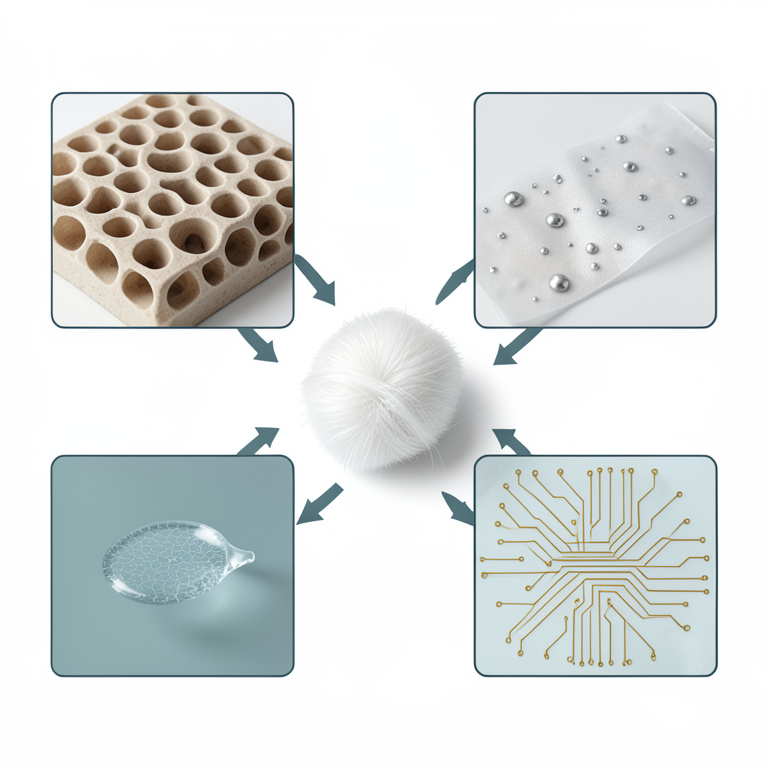
Silk Composite Application Ecosystem
AI-generated conceptual illustration (Silk protein composites). It explains the idea and does not show study data.
View source evidence ↗Figures & tables
From the original paper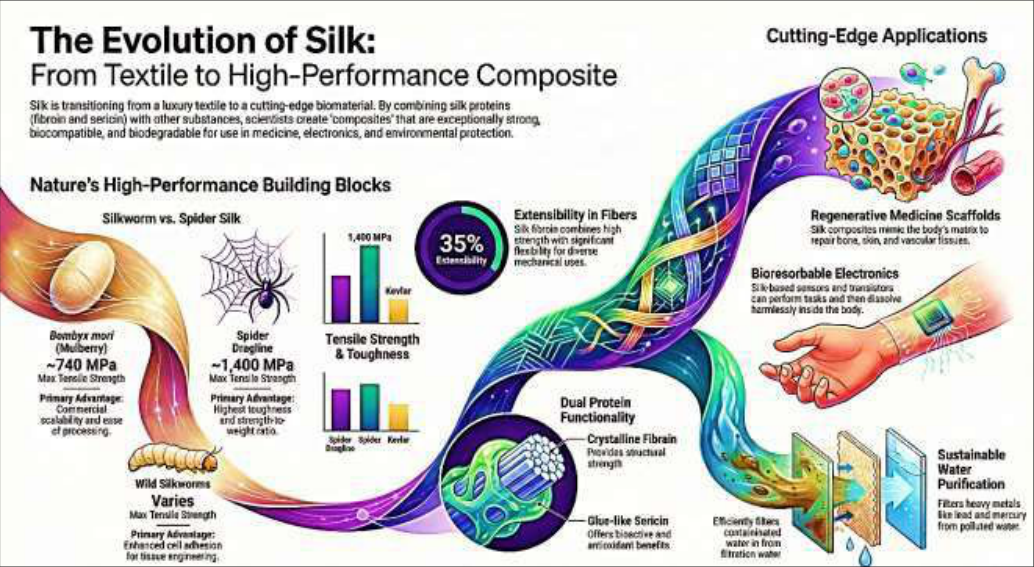 Figure 1
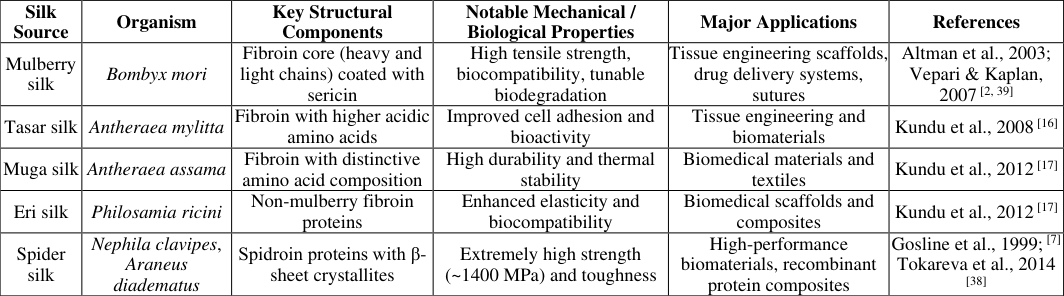 Table 1
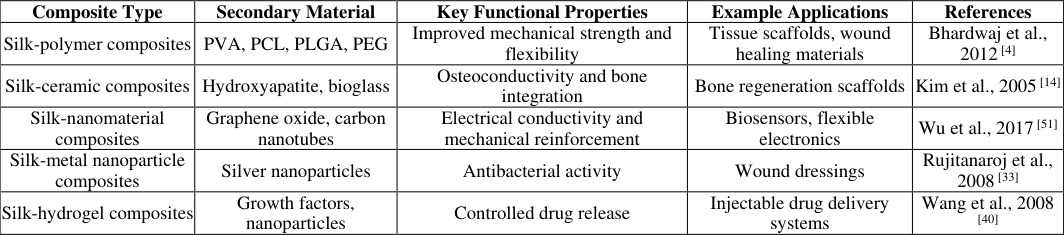 Table 2
Introduction
Silk is a natural protein-based fibre produced by various arthropods most notably the domesticated silkworm Bombyx mori and several species of spiders. For millennia, silk has been prized for its lustrous appearance with tensile strength and smooth texture serving as a luxury textile across diverse civilizations. However, in the past three decades there has been a fundamental shift in silk is perceived by the scientific community. specifically, silk fibroin is recognized as an outstanding biomaterial with properties that few synthetic polymers can match high tensile strength approaching 740 MPa in single fibers extensibility of up to 35% outstanding biocompatibility and an inherent ability to be processed into a variety of morphologies including films, fibers, foams, hydrogels and micro-and nanoparticles (Altman et al., 2003; Kaplan et al., 1998) [2,12] . The growing demand for advanced functional materials in biomedical, environmental and industrial sectors has driven researchers to explore composite systems that harness the strengths of silk while compensating for its limitations. Silk-based composites are engineered by combining silk fibroin or sericin with secondary phases ranging from synthetic polymers such as polyethylene glycol and polylactic acid to inorganic materials including hydroxyapatite, titanium dioxide, graphene and carbon nanotubes to produce hybrid materials with synergistic properties unattainable by either component alone. (Omenetto & Kaplan, 2010; Hardy & Scheibel, 2010) [28,8] . The range of silk-based composite applications is broad and continues to expand (Fig 1 .). In tissue engineering, silk composites serve as scaffolds that mimic the extracellular matrix supporting cell adhesion with proliferation and differentiation for the regeneration of bone, cartilage, skin, nerve and vascular tissue (Rockwood et al., 2011) [31] . In drug delivery, the controlled release of therapeutics from silk-based vehicles offers unprecedented precision (Seib & Kaplan, 2013) [25] . Beyond biomedicine silk composites have found utility in electronic skin optical waveguides, water purification membranes, sustainable packaging materials and as reinforcing agents in structural composites (Tao et al., 2014; Yucel et al., 2011) [36,31] .
Sources and Structural Characteristics of Silk 2.1 Bombyx mori Silk
The most commercially significant silk is produced by the domesticated mulberry silkworm Bombyx mori. A single cocoon yields a continuous filament of approximately 1,000 -1,500 meters in length. Each filament is composed of a fibrous core protein and fibroin sheathed in a glue like protein called sericin. Fibroin itself consists of two chains a heavy chain (~390 kDa) and a light chain (~26 kDa) connected by a single disulfide bond. The heavy chain is the primary structural element characterized by a repetitive sequence of glycine and serine residues that self-assemble into antiparallel β-sheet crystallites embedded within an amorphous matrix. (Zhou et al., 2001; Vepari & Kaplan, 2007) [50,39] . The crystalline β-sheet domains confer the high tensile strength and stiffness of silk fibroin while the amorphous regions provide flexibility and extensibility. This hierarchical organization from molecular β-sheets to nanofibril bundles to macroscopic fibers is responsible for the remarkable mechanical performance of silk. The crystallinity of silk fibroin can be modulated through processing conditions such as temperature, humidity, organic solvents and mechanical strain enabling fine control over the properties of silk based materials (Jin & Kaplan, 2003) [10] .
Wild Silkworm Silk
In addition to Bombyx mori a variety of wild silkworms generate silk that has unique physical and chemical characteristics. Among the most extensively researched are Antheraea mylitta (tasar silk), Antheraea assama (muga silk), Philosamia ricini (eri silk) and Antheraea pernyi (Chinese oak silkworm). Typically, wild silks have a higher content of acidic amino acids like aspartic acid and glutamic acid which enhance their cell adhesion properties to a greater extent than Bombyx mori fibroin this feature is particularly beneficial for applications in tissue engineering (Kundu et al., 2008) [16] . Furthermore, wild silk strands usually show higher extensibility, and their sericin components have notably different amino acid profiles from those of Bombyx mori sericin affecting their immunogenicity and bioactivity (Patra et al., 2015) [29] .
Spider Silk
Spider silk is often regarded as the most remarkable natural fiber available, merging incredible strength with outstanding toughness. The dragline silk from Nephila clavipes and Araneus diadematus has been the subject of extensive research, showing tensile strengths reaching as high as 1,400 MPa and an extensibility ranging from 30% to 40% which provides it with toughness that exceeds that of both Kevlar and high tensile steel when compared by weight (Gosline et al., 1999) [7] . The proteins that compose spider silk is identified as spidroins are produced by genes belonging to the Major Ampullate Spidroin (MaSp) group which is similar to the fibroin found in Bombyx mori, spidroins feature repetitive structural patterns polyalanine segments that create β-sheets alongside glycine-heavy areas that enhance elasticity. The scarcity of spider silk, stemming from the cannibalistic and territorial behaviors of these arachnids, has driven the need for alternative production methods through recombinant techniques. Spidroins have been successfully generated in various organisms which including bacteria, yeast, plants, mammalian cells and genetically modified silkworms each demonstrating different levels of success in mimicking the mechanical properties of natural silk (Scheibel, 2004; Tokareva et al., 2014) [34,38] . The production of recombinant silk proteins presents thrilling possibilities for crafting engineered composites with customizable mechanical and biological characteristics. [2,39] Tasar silk Antheraea mylitta Fibroin with higher acidic amino acids
Improved cell adhesion and bioactivity
Tissue engineering and biomaterials Kundu et al., 2008 [16] Muga silk Antheraea assama Fibroin with distinctive amino acid composition High durability and thermal stability Biomedical materials and textiles Kundu et al., 2012 [17] Eri silk Philosamia ricini Non-mulberry fibroin proteins
Enhanced elasticity and biocompatibility
Biomedical scaffolds and composites Kundu et al., 2012 [17] Spider silk
Nephila clavipes, Araneus diadematus
Spidroin proteins with βsheet crystallites
Extremely high strength (~1400 MPa) and toughness High-performance biomaterials, recombinant protein composites Gosline et al., 1999; [7] Tokareva et al., 2014 [38]
Processing and Fabrication of Silk-Based Composites 3.1 Dissolution and Regeneration
The creation of silk-based composites generally starts with the dissolution of natural silk fibers. In the case of Bombyx mori fibroin this process includes degumming eliminating sericin through boiling in weak alkaline solutions followed by dissolving in chaotropic substances like lithium bromide or a combination of calcium chloride and water with subsequent dialysis in water to yield a regenerated silk fibroin (RSF) solution (Rockwood et al., 2011) [31] . RSF acts as a multifunctional precursor for most silk-based composite production. By integrating RSF with other materials either before or during processing, it is possible to create composite like films, fibers gels and particles.
Electrospinning
Electrospinning is a commonly utilized method for creating nanofibers composed of silk and other materials. This technique involves the use of an electric field to expel a silk solution from the end of a needle, resulting in a charged jet that stretches and narrows into very fine fibers collected as a nonwoven sheet. Silk fibroin can be electrospun independently or mixed with other polymers such as polyethylene oxide (PEO), poly (lactic-co-glycolic acid) (PLGA), polyvinyl alcohol (PVA), collagen and chitosan to enhance its ability to spin and modify the characteristics of the fibers (Jin et al., 2002; Bhardwaj & Kundu, 2010) [11,3] . Mats made from electrospun silk composites possess a large surface area, high porosity and a structure that closely mimics the extracellular matrix making them appropriate for use as scaffolds in tissue engineering and as wound care materials.
Freeze-Drying and Scaffold Fabrication
Freeze-drying is also known as lyophilization of silk fibroin solutions or mixtures results in three-dimensional structures that are extremely porous and contain interconnected networks of pores. By adjusting the freezing rate and temperature dimensions and design of the pores can be modified. Scaffolds created by freeze drying silk in collaboration with hydroxyapatite and gelatin or carbon nanotubes have shown enhanced mechanical characteristics and compatibility with cells for applications in bone and cartilage tissue engineering (Gharivi, M et al).
Hydrogel Formation
Silk fibroin undergoes sol-gel transition via β-sheetmediated physical crosslinking producing hydrogels without the need for toxic chemical crosslinkers. Gelation can be induced by vortexing and sonication changes in pH or temperature or addition of organic solvents. Silk hydrogel composites incorporating growth factors and nanoparticles or cells have been extensively explored for injectable drug delivery and minimally invasive tissue engineering (Wang et al., 2008) [40] . The mechanical properties of silk hydrogels can be tuned over a wide range from tens of pascals to hundreds of kilopascals by adjusting silk concentration, gelation conditions and composite composition.
Silk-Reinforced Polymer and Ceramic Composites
Silk fibers have been utilized as reinforcing materials within polymer matrices similar to composites reinforced with glass or carbon fibers. Composites made with silk fiber reinforced epoxy, polyester and biopolymer matrices have been evaluated for their strength resistance to impact that ability to dampen vibrations (Cheung et al., 2009) [5] . Surface modification on silk fibers with silane coupling agents like alkali treatment or plasmas hugely strengthens the interfacial bonding strength between the silk and polymer matrix. Similarly, silk ceramic composites have been developed for bone tissue engineering and coatings for orthopedic implants more specifically silk with hydroxyapatite (HA) to impart the HA potential to support bone outgrowth that silk offers in terms of its strength as well as compatibility with biological systems. (Kim et al., 2005) [14] . The different types of composites are presented in the table 2. [4] Silk-ceramic composites Hydroxyapatite, bioglass Osteoconductivity and bone integration Bone regeneration scaffolds Kim et al., 2005 [14] Silk-nanomaterial composites
| Composite Type | Secondary Material | Key Functional Properties | Example Applications | References |
|---|---|---|---|---|
| Silk-polymer composites | PVA, PCL, PLGA, PEG | Improved mechanical strength and flexibility | Tissue scaffolds, wound healing materials | Bhardwaj et al., 2012 [4] |
| Silk-ceramic composites | Hydroxyapatite, bioglass | Osteoconductivity and bone integration | Bone regeneration scaffolds | Kim et al., 2005 [14] |
| Silk-nanomaterial composites | Graphene oxide, carbon nanotubes | Electrical conductivity and mechanical reinforcement | Biosensors, flexible electronics | Wu et al., 2017 [51] |
| Silk-metal nanoparticle composites | Silver nanoparticles | Antibacterial activity | Wound dressings | Rujitanaroj et al., 2008 [33] |
| Silk-hydrogel composites | Growth factors, nanoparticles | Controlled drug release | Injectable drug delivery systems | Wang et al., 2008 [40] |
Table text extracted from the original PDF; superscript letters are shown inline. The original table image is below.
View original table image
Graphene oxide, carbon nanotubes
Electrical conductivity and mechanical reinforcement Biosensors, flexible electronics Wu et al., 2017 [51] Silk-metal nanoparticle composites Silver nanoparticles Antibacterial activity Wound dressings Rujitanaroj et al., 2008 [33] Silk [25,24] . The incorporation of bone morphogenetic proteins (BMPs) and vascular endothelial growth factors (VEGFs) into silk composite scaffolds further enhances their regenerative capacity.
Cartilage tissue engineering has benefited from glycosaminoglycan (GAG), collagen and chondroitin sulfate composites that mimic the biochemical and mechanical microenvironment of native cartilage promoting chondrogenic differentiation of mesenchymal stem cells (MSCs) (Wang et al., 2008) [40] . For skin tissue engineering electrospun silk or collagen and silk or poly(ε-caprolactone) (PCL) composite mats have shown accelerated wound closure and epidermal regeneration in preclinical models (Bhardwaj et al., 2012) [4] . Vascular tissue engineering with tubular elastin, PCL and polyurethane composites has yielded grafts with burst pressures and suture retention strengths meeting clinical requirements (Lovett et al., 2011) [31] .
Drug Delivery Systems
The ability of silk fibroin to encapsulate diverse drug classes like small molecules, proteins nucleic acids and nanoparticles with high loading efficiency and release them in a controlled sustained manner makes it an attractive carrier platform. Drug release from silk matrices occurs through diffusion and enzymatic biodegradation and the rates of which can be tuned by adjusting β-sheet crystallinity and composite composition (Seib & Kaplan, 2013) [25] . Silk fibroin nanoparticles prepared by nanoprecipitation or desolvation methods have been loaded with anticancer agents such as doxorubicin, paclitaxel and tamoxifen achieving tumor targeted delivery and reduced systemic toxicity in animal models (Wongpinyochit et al., 2015) [43] . Silk hydrogel composites incorporating growth factors such as BMP-2 fibroblast growth factor (FGF) and insulin have been investigated as local delivery depots following orthopedic surgery or wound care. Instead of a single heavy dose that the body might process too quickly then silk structures allow for a steady gradual release of healing molecules. (Wang et al., 2008) [40] suggests this "slow and steady" approach is far better at helping tissues repair themselves.
Wound Dressings
Wound dressings must fulfill multiple functions that provide a moist wound environment, absorb excess exudate protect against the infection and ideally promote wound healing. Silk based composite wound dressings have been developed to meet these requirements. Electrospun silk or silver nanoparticle composites exhibit potent antibacterial activity against both Gram-positive and Gram-negative bacteria while promoting fibroblast migration and proliferation (Rujitanaroj et al., 2008) [33] . Silk or chitosan composite films combine the antimicrobial properties of chitosan with the mechanical strength of silk and have demonstrated efficacy in chronic wound models. Sericin is historically discarded as a processing byproduct has gained recognition as a bioactive component that promotes skin cell proliferation and exhibits antioxidant and anti-inflammatory properties when incorporated into composite wound dressings (Kundu et al., 2016) [19] .
Implantable Devices and Biosensors
The optical transparency which mechanical flexibility and biocompatibility of silk fibroin films make them attractive substrates for implantable electronic and optical devices. Silk based bioresorbable electronics including transistors, antennas, sensors and drug delivery platforms have been demonstrated in animal models. Where, the devices perform their intended function and then dissolve harmlessly after a programmed period (Tao et al., 2014) [36] . Silk optical waveguides capable of transmitting light through tissue have been fabricated for phototherapy and optogenetic applications (Huby et al., 2013) [9] . In the field of biosensing, silk fibroin composite films functionalized with enzymes or antibodies or aptamers have been developed for the detection of cancer biomarkers and environmental pollutants with high sensitivity and specificity.
Environmental Applications 5.1 Water Purification
The increasing burden of water pollution by heavy metals and pathogens has driven the search for efficient sustainable adsorbent and membrane materials. Silk based composites have emerged as promising candidates for water remediation. Silk sericin or polyacrylamide hydrogel composites and silk fibroin or graphene oxide membranes have demonstrated exceptional adsorption capacities for heavy metals such as lead, cadmium, chromium and mercury as well as cationic and anionic dyes (Zhao et al., 2015; Li et al., 2019) [49,21] . The abundant amino hydroxyl and carboxyl functional groups on silk protein chains provide numerous binding sites for pollutant molecules and regeneration of spent adsorbents using mild acidic or basic solutions is feasible without significant loss of capacity over multiple cycles. Silk-based nanofiltration membranes have been fabricated by cross-linking silk fibroin with polyethyleneimine or glutaraldehyde achieving high water flux and effective rejection of divalent ions and organic micropollutants. The inherent biodegradability of silk ensures that end of life disposal of these membranes does not introduce persistent pollutants into the environment a critical advantage over conventional polymer-based membranes (Deng et al., 2020) [6] .
Agricultural Applications
Silk-based composites have found innovative applications in the agricultural sector particularly as controlled release carriers for agrochemicals and as soil conditioners. Silk fibroin encapsulation of pesticides, herbicides and fertilizers enables slow sustained release that reduces the frequency of applications which minimizes leaching into groundwater and decreases environmental toxicity to non-target organisms (Zhang et al., 2018) [48] . Silk sericin has been investigated as a plant growth promoter and biostimulant with demonstrated efficacy in enhancing germination rate, root elongation and crop yield of various agricultural plants.
Electronic and Photonic Applications 6.1 Flexible Electronics
The emergence of flexible and wearable electronics has created demand for substrate materials that are mechanically compliant, biocompatible and amenable to precise patterning. Silk fibroin films meet these requirements exceptionally well. Transistors diodes, organic lightemitting devices (OLEDs) and sensors fabricated on silk substrates have demonstrated comparable performance to those on conventional rigid substrates with the additional advantage of biodegradability (Rogers et al., 2010; Kim et al., 2010) [32,18] . Silk composite films incorporating metallic nanowires or carbon nanotubes or conductive polymers serve as stretchable electrodes and interconnects in electronic skin applications with capable of detecting temperature pressure and chemical signals (Wu et al., 2013) [44] .
Optical and Photonic Devices
Silk fibroin is optically transparent across the visible spectrum with low scattering losses enabling its application in passive and active photonic structures. Silk-based diffraction gratings, holograms and photonic crystals have been fabricated by nano-imprinting and soft lithography (Lawrence et al., 2008) [20] . Doped silk composite films incorporating fluorescent nanoparticles and quantum dots or rare earth elements have been developed for luminescent applications in anti-counterfeiting imaging and lighting. Silk based optical waveguides capable of guiding light over centimeter scale distances have been demonstrated for in vivo phototherapy and biosensing (Huby et al., 2013) [9] .
Structural and Mechanical Applications
The high specific strength and toughness of silk fibers make them attractive reinforcements in lightweight structural composites. Silk fiber reinforced polymer matrix composites have been evaluated as sustainable alternatives to glass fiber composites in applications such as automotive panels, sports equipment and construction elements (Cheung et al., 2009) [5] . Studies have demonstrated that alkali-treated silk fiber or epoxy composites exhibit specific tensile and flexural strengths competitive with glass fiber composites at reduced weight and environmental impact. The energy absorbing capacity of silk-reinforced composites attributable to the hierarchical fiber fracture mechanism is particularly valuable in impact resistant structures. Silk has also been incorporated into cement and geopolymer matrices as a reinforcing fiber improving fracture toughness and crack resistance. Bio inspired structural materials that mimic the nacre-like architecture of laminated silk or clay nanocomposites have been fabricated by sequential assembly achieving outstanding stiffness toughness combinations that challenge synthetic nacre analogy (Yao et al., 2010) [45] .
Food Packaging Applications
Consumer demand for sustainable biodegradable food packaging has spurred research into biopolymer-based films and coatings. Silk fibroin and sericin offer excellent film forming properties with optical clarity and gas barrier characteristics suitable for food packaging (Teramoto et al., 2004) [37] . Silk composite films with antimicrobial agents such as silver nanoparticles and zinc oxide nanoparticles or natural antimicrobial extracts have demonstrated efficacy in extending the shelf life of fresh produce like meat and fish. The inherent biodegradability of silk based packaging films ensures that they do not contribute to the global plastic waste crisis and their amino acid rich composition makes them potentially compostable as soil nutrients.
Challenges and Limitations
Despite the remarkable versatility of silk based composites with several challenges limit their widespread adoption. The scalability of silk production particularly recombinant spider silk remains a significant bottleneck. Although Bombyx mori silk is produced on a commercial scale, the supply of wild silkworm silk and the cost of purified recombinant silk proteins remain high relative to synthetic polymers (Scheibel, 2004) [34] . Variability in silk composition and properties across different breeds and geographic sources introduces batch to batch inconsistencies that are challenging to control in composite fabrication. The hydrophilic nature of silk proteins makes silk composites susceptible to moisture induced softening and limiting their utility in wet or humid environments outside biomedical contexts (Hardy & Scheibel, 2010) [10] . The immunogenicity of residual sericin in silk based materials has been a historical concern though extensive degumming and purification largely mitigate this issue for fibroin based composites. Regulatory pathways for silk based biomedical devices remain complex with requirements for extensive biocompatibility testing and demonstration of batch reproducibility.
Future Perspectives
The future of silk-based composites is poised for significant advances driven by convergent developments in synthetic biology, nanotechnology additive manufacturing and artificial intelligence. Recombinant silk technology, including the design of fusion proteins combining silk structural domains with bioactive peptide sequences and growth factors or enzyme-responsive motifs will enable next generation composite materials with programmable biological functions (Tokareva et al., 2014) [38] . Metabolic engineering of silkworms to produce chimeric silk fibers containing heterologous protein sequences represents an emerging approach to diversifying silk composite building blocks. Additive manufacturing includes bioprinting of silk composite inks and melt electrowriting of silk composite scaffolds is expected to enable the fabrication of patient specific implants and tissue constructs with complex anatomically accurate geometries (Nguyen et al., 2019) [27] . Machine learning approaches are increasingly being applied to predict structure property relationships in silk composites accelerating the discovery of optimal formulations for target applications. The integration of silk composites with digital health technologies including wearable biosensors and smart wound dressings will further expand their clinical utility. Sustainability considerations will increasingly drive the adoption of silk based composites as drop in replacements for petroleum derived polymers in packaging textiles and construction materials. Life cycle assessment studies consistently demonstrate favorable environmental profiles for silk composites relative to glass or carbon fiber composites particularly when end of life biodegradation is accounted (Rauer et al., 2021) [30] . Circular economy models incorporating silk sericin as a co product with fibroin will improve the economic viability of silk based composite manufacturing.
Conclusions
Silk based composites represent a fascinating and rapidly evolving class of functional materials that bridge the gap between natural biomaterials and high performance engineered systems. The unique combination of mechanical strength, biocompatibility, biodegradability and processability that silk proteins offer is unrivaled among natural materials and the ability to fine-tune composite properties through choice of secondary phase fabrication technique and post processing treatment provides virtually unlimited design space for materials engineers. While challenges related to scalability cost regulatory pathways and long-term in vivo performance must be addressed the trajectory of the field is unmistakably toward broader adoption and more sophisticated application of silk based composites. As synthetic biology expands the structural and functional repertoire of silk proteins beyond what nature has provided and as advanced manufacturing techniques enable increasingly complex composite architectures and the impact of silk-based materials on human health sustainability and technology is expected to grow substantially.
Disclaimer (Artificial intelligence)
Author(s) hereby declares that NO generative AI technologies such as Large Language Mode (Chat GPT, COPILOT, etc) and text-to-image generators have been used during writing or editing of this manuscript.
Competing interests
Authors have declared that no competing interests exist.
Figures and tables from the paper
| Silk Source | Organism | Key Structural Components | Notable Mechanical / Biological Properties | Major Applications | References |
|---|---|---|---|---|---|
| Mulberry silk | Bombyx mori | Fibroin core (heavy and light chains) coated with sericin | High tensile strength, biocompatibility, tunable biodegradation | Tissue engineering scaffolds, drug delivery systems, sutures | Altman et al., 2003; Vepari & Kaplan, 2007 [2, 39] |
| Tasar silk | Antheraea mylitta | Fibroin with higher acidic amino acids | Improved cell adhesion and bioactivity | Tissue engineering and biomaterials | Kundu et al., 2008 [16] |
| Muga silk | Antheraea assama | Fibroin with distinctive amino acid composition | High durability and thermal stability | Biomedical materials and textiles | Kundu et al., 2012 [17] |
| Eri silk | Philosamia ricini | Non-mulberry fibroin proteins | Enhanced elasticity and biocompatibility | Biomedical scaffolds and composites | Kundu et al., 2012 [17] |
| Spider silk | Nephila clavipes, Araneus diadematus | Spidroin proteins with β- sheet crystallites | Extremely high strength (~1400 MPa) and toughness | High-performance biomaterials, recombinant protein composites | Gosline et al., 1999; [7] Tokareva et al., 2014 [38] |
Table text extracted from the original PDF; superscript letters are shown inline. The original table image is below.
View original table image
References
50 in the original paper- Aguilar MR, San Román J. Smart polymers and their applications. Cambridge: Woodhead Publishing; 2014.
- Altman GH, Diaz F, Jakuba C, Calabro T, Horan RL, Chen J, et al. Silk-based biomaterials. Biomaterials. 2003;24(3):401-416. doi:10.1016/S01429612(02)00353-8
- Bhardwaj N, Kundu SC. Electrospinning: A fascinating fiber fabrication technique. Biotechnol Adv. 2010;28(3):325-347. doi:10.1016/j.biotechadv.2010.01.004
- Bhardwaj N, Sow WT, Devi D, Ng KW, Mandal BB, Cho NJ. Silk fibroin-keratin based 3D scaffolds as a dermal substitute for skin tissue engineering. Integr Biol. 2012;4(11):1317-1330. doi:10.1039/c2ib20094f
- Cheung HY, Ho MP, Lau KT, Cardona F, Hui D. Natural fibre-reinforced composites for bioengineering and environmental engineering applications. Compos Part B Eng. 2009;40(7):655-663. doi:10.1016/j.compositesb.2009.04.014
- Deng Z, Kaplan DL, Wang Y. Silk fibroin-based nanofiltration membranes for water purification. J Membr Sci. 2020;598:117795. doi:10.1016/j.memsci.2019.117795
- Gosline JM, Guerette PA, Ortlepp CS, Savage KN. The mechanical design of spider silks: From fibroin sequence to mechanical function. J Exp Biol. 1999;202(23):3295-3303.
- Hardy JG, Scheibel TR. Composite materials based on silk proteins. Prog Polym Sci. 2010;35(9):1093-1115. doi:10.1016/j.progpolymsci.2010.04.005
- Huby N, Vié V, Renault A, Beaufils S, Lefèvre T, Paquet-Mercier F, et al. Native spider silk as a biological optical fiber. Appl Phys Lett. 2013;102(12):123702. doi:10.1063/1.4798930
- Jin HJ, Kaplan DL. Mechanism of silk processing in insects and spiders. Nature. 2003;424(6952):1057-1061. doi:10.1038/nature01809
- Jin HJ, Fridrikh SV, Rutledge GC, Kaplan DL. Electrospinning Bombyx mori silk with poly(ethylene oxide). Biomacromolecules. 2002;3(6):1233-1239. doi:10.1021/bm025581u
- Kaplan DL, Adams WW, Farmer B, Viney C, editors. Silk polymers: Materials science and biotechnology. Washington DC: American Chemical Society; 1998.
- Kim DH, Viventi J, Amsden JJ, Xiao J, Vigeland L, Kim YS, et al. Dissolvable films of silk fibroin for ultrathin conformal bio-integrated electronics. Nat Mater. 2010;9(6):511-517. doi:10.1038/nmat2745
- Kim HJ, Kim UJ, Vunjak-Novakovic G, Min BH, Kaplan DL. Influence of macroporous protein scaffolds on bone tissue engineering. Biomaterials. 2005;26(21):4442-4452. doi:10.1016/j.biomaterials.2004.11.013
- Kundu B, Rajkhowa R, Kundu SC, Wang X. Silk fibroin biomaterials for tissue regeneration. Adv Drug Deliv Rev. 2013;65(4):457-470. doi:10.1016/j.addr.2012.09.043
- Kundu SC, Dash BC, Dash R, Kaplan DL. Natural protective glue protein sericin: Biomedical and biotechnological applications. Prog Polym Sci. 2008;33(10):998-1012. doi:10.1016/j.progpolymsci.2008.08.002
- Kundu SC, Kundu B, Talukdar S, Bano S, Nayak S, Kundu J, et al. Nonmulberry silk biopolymers. Biopolymers. 2012;97(6):455-467. doi:10.1002/bip.22024
- Kundu J, Chung YI, Kim YH, Tae G, Kundu SC. Silk fibroin nanoparticles for controlled drug release. Int J Pharm. 2010;388(1-2):242-250. doi:10.1016/j.ijpharm.2009.12.052
- Kundu SC, Chandra PK, Kundu J, Botlagunta M, Dash BC. Sericin proteins of silk cocoons. In: Mandal BB, Kundu SC, editors. Silk biomaterials for tissue engineering and regenerative medicine. Cambridge: Woodhead Publishing; 2016. p. 67-100.
- Lawrence BD, Cronin-Golomb M, Georgakoudi I, Kaplan DL, Omenetto FG. Bioactive silk protein biomaterials for optical devices. Biomacromolecules. 2008;9(4):1214-1220. doi:10.1021/bm701235f
- Li H, Zhang Q, Zhao H, Qin Y, Wang Z, Li Q. Silk fibroin-graphene oxide composite aerogel for heavy metal removal. J Hazard Mater. 2019;375:68-76. doi:10.1016/j.jhazmat.2019.05.012
- Lovett M, Cannizzaro C, Vunjak-Novakovic G, Kaplan D. Silk fibroin microtubes for blood vessel engineering. Biomaterials. 2007;28(35):5271-5279. doi:10.1016/j.biomaterials.2007.08.008
- Marolt D, Knezevic M, Vunjak-Novakovic G. Bone tissue engineering with human stem cells. Stem Cell Res Ther. 2012;3(4):27. doi:10.1186/scrt118
- Meinel L, Hofmann S, Karageorgiou V, Kirker-Head C, McCool J, Gronowicz G, et al. Inflammatory responses to silk films. Biomaterials. 2005;26(2):147-155. doi:10.1016/j.biomaterials.2004.02.047
- Minoura N, Aiba S, Higuchi M, Gotoh Y, Tsukada M, Imai Y. Attachment and growth of fibroblast cells on silk fibroin. Biochem Biophys Res Commun. 1995;208(2):511-516. doi:10.1006/bbrc.1995.1368
- Nguyen TP, Nguyen QV, Nguyen VH, Le TH, Huynh VQN, Vo DVN, et al. Silk fibroin-based biomaterials for biomedical applications: A review. Polymers. 2019;11(12):1933. doi:10.3390/polym11121933
- Omenetto FG, Kaplan DL. New opportunities for an ancient material. Science. 2010;329(5991):528-531. doi:10.1126/science.1188936
- Patra C, Talukdar S, Novoyatleva T, Velagala SR, Mühleder S, Padhi BK, et al. Silk protein fibroin from Antheraea mylitta for cardiac tissue engineering. Biomaterials. 2015;62:65-71. doi:10.1016/j.biomaterials.2015.05.004
- Rauer C, Schmitt CNZ, Mesguich G, Hartmann MA, Fratzl P, Harrington MJ. Silk structure and function in spider webs. Curr Biol. 2021;31(4):R170-R185.
- Rockwood DN, Preda RC, Yucel T, Wang X, Lovett ML, Kaplan DL. Materials fabrication from Bombyx mori silk fibroin. Nat Protoc. 2011;6(10):1612-1631. doi:10.1038/nprot.2011.379
- Rogers JA, Someya T, Huang Y. Materials and mechanics for stretchable electronics. Science. 2010;327(5973):1603-1607. doi:10.1126/science.1182383
- Rujitanaroj P, Pimpha N, Supaphol P. Antibacterial wound dressing from electrospun gelatin fibers. Polymer. 2008;49(21):4723-4732. doi:10.1016/j.polymer.2008.08.021
- Scheibel T. Spider silks: Recombinant synthesis and engineering. Microb Cell Fact. 2004;3(1):14. doi:10.1186/1475-2859-3-14
- Seib FP, Kaplan DL. Doxorubicin-loaded silk films for breast cancer therapy. Biomaterials. 2013;34(33):81978207. doi:10.1016/j.biomaterials.2013.07.024
- Tao H, Hwang SW, Marelli B, An B, Moreau JE, Yang M, et al. Silk-based resorbable electronic devices. Proc Natl Acad Sci USA. 2014;111(49):17385-17389. doi:10.1073/pnas.1407743111
- Teramoto H, Kameda T, Tamada Y. Preparation of gel from Bombyx mori sericin. Biosci Biotechnol Biochem. 2008;72(12):3189-3196. doi:10.1271/bbb.80239
- Tokareva O, Jacobsen M, Buehler M, Wong J, Kaplan DL. Structure-function-property design in spider silk. Acta Biomater. 2014;10(4):1612-1626. doi:10.1016/j.actbio.2013.08.020
- Vepari C, Kaplan DL. Silk as a biomaterial. Prog Polym Sci. 2007;32(8-9):991-1007. doi:10.1016/j.progpolymsci.2007.05.013
- Wang X, Kluge JA, Leisk GG, Kaplan DL. Sonicationinduced gelation of silk fibroin. Biomaterials. 2008;29(8):1054-1064. doi:10.1016/j.biomaterials.2007.11.003
- Wang Y, Blasioli DJ, Kim HJ, Kim HS, Kaplan DL. Cartilage tissue engineering with silk scaffolds. Biomaterials. 2006;27(25):4434-4442. doi:10.1016/j.biomaterials.2006.03.050
- Wang Y, Kim HJ, Vunjak-Novakovic G, Kaplan DL. Stem cell-based tissue engineering with silk biomaterials. Biomaterials. 2006;27(36):6064-6082. doi:10.1016/j.biomaterials.2006.07.008
- Wongpinyochit T, Uhlmann P, Urquhart AJ, Seib FP. PEGylated silk nanoparticles for anticancer drug delivery. Biomacromolecules. 2015;16(11):3712-3722. doi:10.1021/acs.biomac.5b01003
- Wu H, Kong D, Ruan Z, Hsu PC, Wang S, Yu Z, et al. Transparent electrode based on a metal nanotrough network. Nat Nanotechnol. 2013;8(6):421-425. doi:10.1038/nnano.2013.84
- Yao HB, Fang HY, Tan ZH, Wu LH, Yu SH. Biologically inspired hybrid films. Angew Chem Int Ed. 2010;49(12):2140-2145. doi:10.1002/anie.200906920
- Yucel T, Lovett ML, Kaplan DL. Silk-based biomaterials for sustained drug delivery. J Control Release. 2014;190:381-397. doi:10.1016/j.jconrel.2014.05.059
- Zhang J, Rajkhowa R, Li JL, Liu XY, Wang XG. Silkworm cocoon structure for thermal insulation. Mater Des. 2013;49:842-849. doi:10.1016/j.matdes.2013.02.006
- Zhang W, Chen L, Chen J, Wang L, Gui X, Ran J, et al. Silk fibroin biomaterial for wound healing. Adv Healthc Mater. 2018;6(10):1700121. doi:10.1002/adhm.201700121
- Zhao H, Yao X, Kuang Z, Wang Z, Li Q. Silk sericin hybrid hydrogel for heavy metal adsorption. J Hazard Mater. 2015;284:35-44. doi:10.1016/j.jhazmat.2014.10.058
- Zhou CZ, Confalonieri F, Medina N, Zivanovic Y, Esnault C, Yang T, et al. Organization of Bombyx mori fibroin heavy chain gene. Nucleic Acids Res. 2000;28(12):2413-2419. doi:10.1093/nar/28.12.2413
- Wu J, Zhao Y, Qi H, Zhao X, Yang T, Du Y, Zhang H, Wei Z. Identifying the key factors that affect the formation of humic substance during different materials composting. Bioresource technology. 2017 Nov 1;244:1193-6.