
Research article · 2026 · Full text
International Journal of Biology SciencesIntegrating simulation modeling and empirical validation to understand the role of population density and isolation in fig-fig wasp mutualism
Volume 8(3) · Pages 143–149 · DOI: 10.33545/26649926.2026.v8.i3b.610 ↗
Research areasPlant and animal studiesInsect and Arachnid Ecology and BehaviorHymenoptera taxonomy and phylogeny
Abstract
Author-writtenObligate mutualisms represent tightly coupled ecological interactions whose persistence depends on both biotic and spatial factors. The fig-fig wasp mutualism is a classic system in which pollination efficiency, reproductive success, and long-term stability are strongly influenced by host population density and spatial structure. In this study, we developed simulation models to explore how population density, spatial isolation, and flowering phenology influence reproductive dynamics in fig-fig wasp systems. These models were parameterized using ecological constraints such as wasp lifespan, dispersal ability, and phenological overlap. Model predictions were subsequently validated using empirical field data collected across multiple density gradients. Results reveal strong density-dependent patterns in pollination efficiency, identify a critical threshold density necessary for sustaining mutualism, and demonstrate that spatial isolation significantly reduces reproductive success. Although phenological asynchrony partially buffers low-density effects, it does not fully compensate for extreme isolation. The integration of simulation and empirical approaches provides a comprehensive framework for predicting mutualism stability under habitat fragmentation and offers critical insights for conservation of keystone fig species.
Summary
Source-checkedPlain-language reading of the full paper, prepared with AI and checked against the text. Each point links to the authors' own words.
Why it matters
- Fig trees and their pollinating wasps share an obligate mutualism where each partner is entirely dependent on the other for reproduction and life cycle completion. View evidence ↗
- The mutualism is ecologically fragile because pollinator wasps have a very short adult lifespan of only 24 to 48 hours to find a host. View evidence ↗
- Limited dispersal ability makes the success of pollination highly dependent on how close fig trees are to one another. View evidence ↗
The question
- The study aims to predict the influence of population density and spatial isolation on pollination and determine the minimum viable density needed to sustain the mutualism. View evidence ↗
What they did
- The researchers used R and Python to create simulation models that replicate the ecological processes of natural fig populations. View evidence ↗
- Simulation predictions were validated using empirical field data collected from sites with varying levels of tree density and isolation. View evidence ↗
What they found
- Simulations showed that higher fig tree population density leads to increased pollination success. View evidence ↗
- The mutualism faces near-certain collapse (extinction probability near 1.0) when tree densities are 100 trees or fewer and dispersal distances are between 0.25 and 0.5 km. View evidence ↗
- Extinction probability drops sharply when tree density increases to 200-300 trees or more, even if dispersal is limited. View evidence ↗
- Increasing wasp dispersal distance to 1-2 km significantly reduces extinction risk across all densities, reaching nearly zero in moderate to high density areas. View evidence ↗
- All field sites for Ficus religiosa were unstable because their connectivity index (K) was far below the critical threshold of approximately 45. View evidence ↗
- Ficus benghalensis populations at all study sites are not fully viable, as they all fall below the critical extinction threshold of approximately 20. View evidence ↗
- Ficus benghalensis is more resilient than Ficus religiosa, showing higher connectivity and better persistence in certain locations like the Kaivara forest. View evidence ↗
What it means
- The authors conclude that without improving density and connectivity, many fig-wasp populations risk long-term collapse. View evidence ↗
Visual summary
3 visualsIllustrations explain the paper; charts are replotted from the paper's own table values.
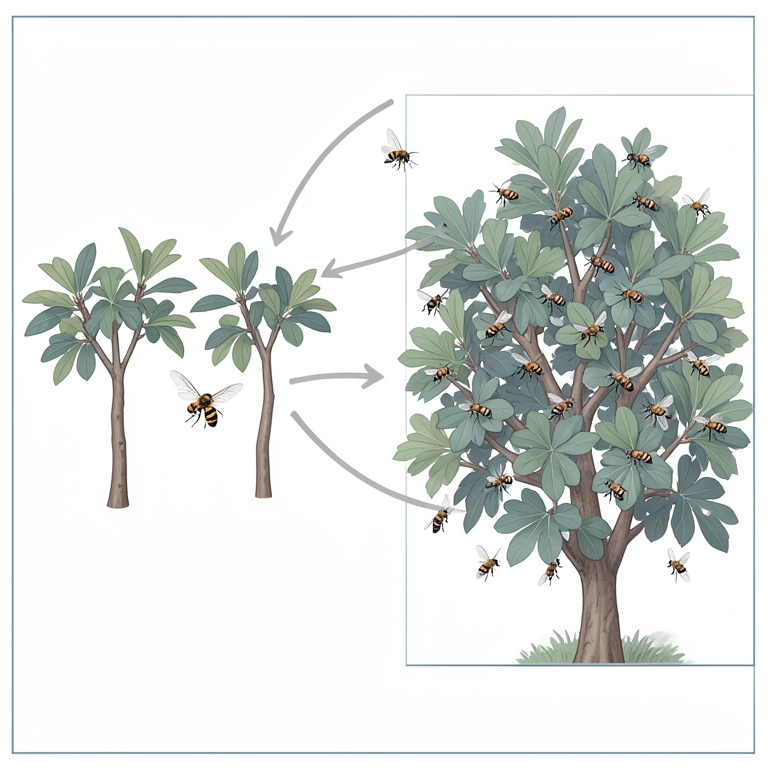
Interaction of Density and Dispersal on Extinction Risk
AI-generated conceptual illustration (Common fig trees (Ficus carica) and fig wasps (Agaonidae)). It explains the idea and does not show study data.
View source evidence ↗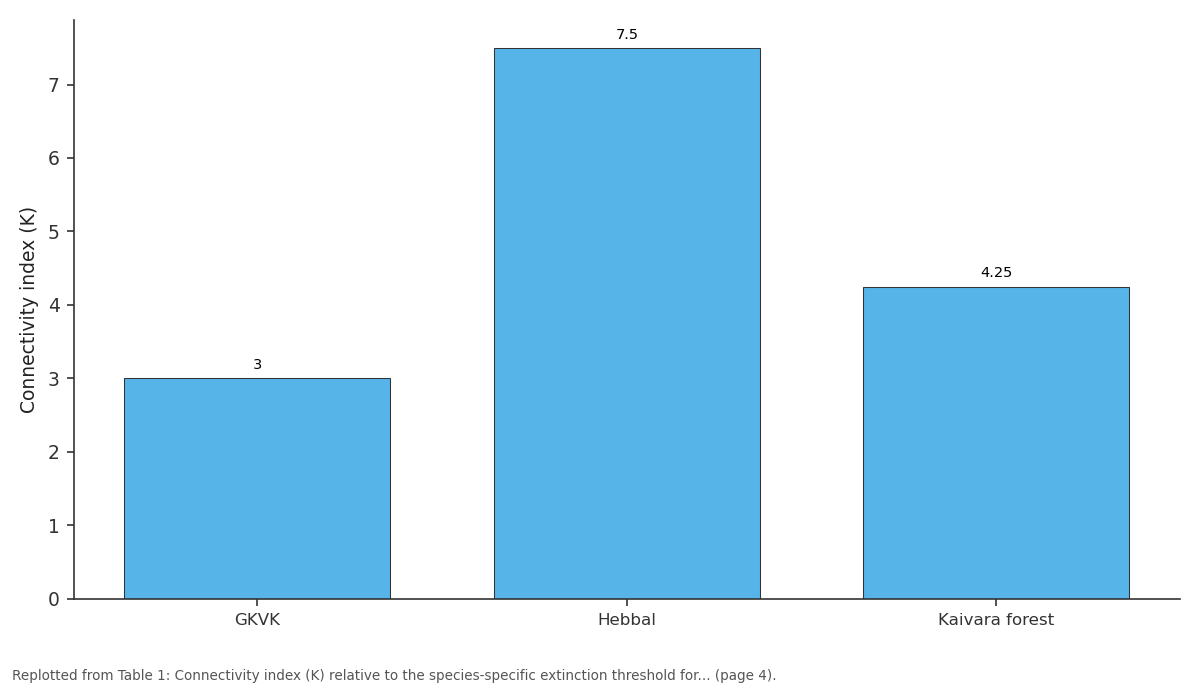
K = N/4: GKVK vs Hebbal vs Kaivara forest
Replotted from Table 1 (page 4) of the original paper. Every bar is the paper's own table value.
View source evidence ↗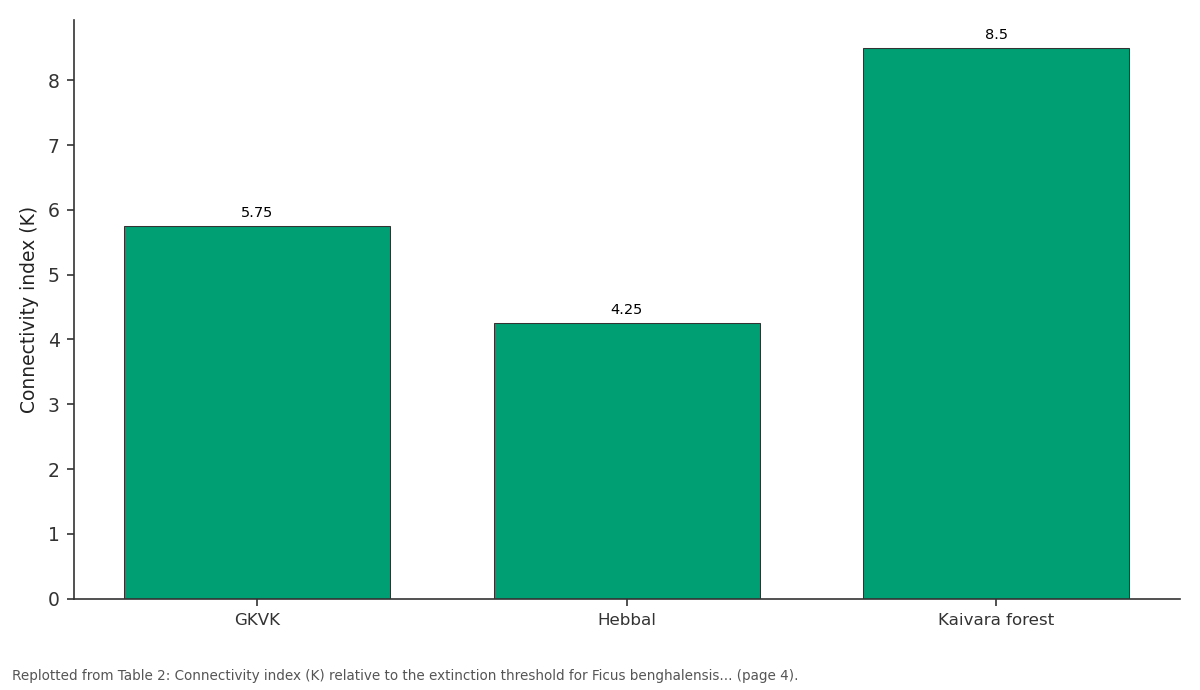
K = N/4: GKVK vs Hebbal vs Kaivara forest
Replotted from Table 2 (page 4) of the original paper. Every bar is the paper's own table value.
View source evidence ↗Figures & tables
From the original paper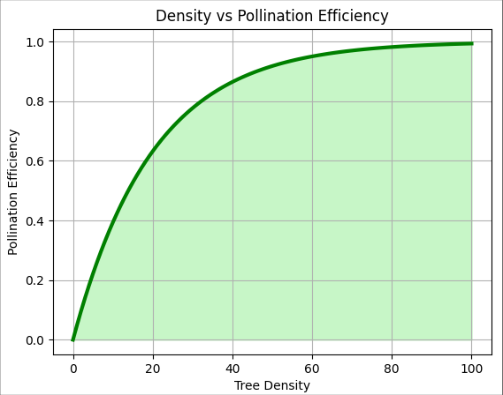 Figure 1
 Table 1
 Table 2
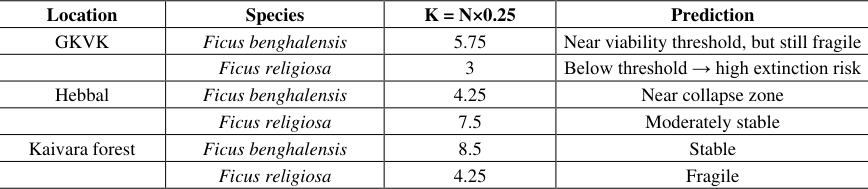 Table 3
 Table 4
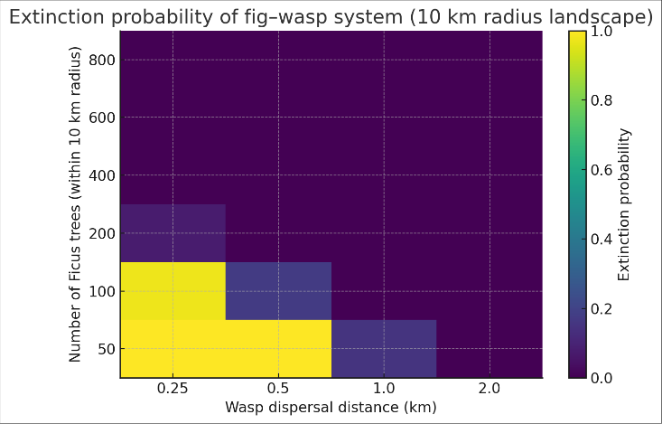 Figure 2
Introduction
Mutualistic interactions are fundamental drivers of biodiversity and ecosystem stability, yet their persistence is highly sensitive to ecological context and environmental variability (Ecology; Bascompte & Jordano, 2007; Bronstein, 1994) [1,2] . Among these interactions, the fig-fig wasp mutualism stands out as one of the most specialized and evolutionarily stable systems, characterized by an extraordinary degree of interdependence between partners (Janzen, 1979; Herre et al., 2008) [11,9] . Fig trees (Ficus spp.) rely exclusively on speciesspecific pollinating wasps for successful sexual reproduction, while the wasps are entirely dependent on fig syconia for oviposition and completion of their life cycle (Kjellberg et al., 2005; Weiblen, 2002) [12] . This obligate relationship has persisted for millions of years through tightly coupled coevolutionary adaptations (Cruaud et al., 2012) [2] . However, despite its evolutionary robustness, the interaction is ecologically fragile due to inherent biological constraints. Pollinator wasps have an extremely short adult lifespan, typically limited to 24-48 hours, within which they must locate a receptive host (Ware & Compton, 1994) [18] . Their dispersal ability is also highly restricted, making successful pollination strongly dependent on the spatial proximity of fig trees (Harrison, 2005) [7] . Furthermore, the system relies on precise synchronization between wasp emergence and the availability of receptive (B-phase) syconia, adding an additional temporal constraint that can influence reproductive success (Cook & Rasplus, 2003) [3] . Previous studies have established that population density and spatial distribution of fig trees are key determinants of pollination efficiency, as they directly influence pollinator movement, encounter rates, and reproductive outcomes (Herre & West, 1997; Holland & DeAngelis, 2010) [8,10] . However, empirical approaches alone are limited in their ability to capture complex ecological processes such as threshold dynamics, long-term extinction risks, and the interactive effects of density, dispersal, and phenology (Okuyama & Holland, 2008) [13] .
International Journal of Biology Sciences https://www.biologyjournal.net
These processes often operate across spatial and temporal scales that are difficult to observe directly in field conditions. Simulation modeling provides a powerful complementary approach by allowing controlled manipulation of ecological variables and exploration of system behavior under a wide range of scenarios, including those that may not be easily replicable in natural settings (Grimm & Railsback, 2005) [5] . Nevertheless, models must be grounded in empirical data to ensure ecological realism and avoid oversimplification. [5,14] . In parallel, empirical validation provides field-based evidence to test the accuracy and ecological realism of model predictions (Holland & DeAngelis, 2010) [10] . The central hypothesis guiding this study is that pollination efficiency is a function of population density, spatial isolation, and phenological overlap, with these relationships being strongly mediated by the dispersal constraints of pollinating fig wasps, particularly their short lifespan and limited movement range (Harrison, 2005; Kjellberg et al., 2005) [7,12] .
Simulation model design
Simulation models were developed using R and Python programming environments to replicate ecological processes observed in natural fig populations (Grimm et al., 2006) [6] . The model was structured to capture the essential biological and spatial dynamics governing the fig-fig wasp interaction (Herre et al., 2008) [9] .
Model structure
The simulation framework consists of three interconnected modules:
Fig tree population module
This module represents the spatial and temporal structure of fig populations. Each tree is assigned geographic coordinates within a simulated landscape, allowing explicit modeling of spatial relationships (Turner et al., 2001) [17] .
Populations are categorized into low, medium, and high density based on tree abundance per unit area. Additionally, each tree is assigned a phenological state corresponding to the developmental stages of the syconium (A-E phases), enabling temporal tracking of reproductive availability (Cook & Rasplus, 2003) [3] .
Pollinator (Wasp) module
This module simulates the life cycle and movement of pollinating fig wasps. Wasps emerge from D-phase syconia carrying pollen and have a strictly limited lifespan (Typically 24-48 hours), imposing strong constraints on dispersal (Ware & Compton, 1994) [18] . Movement is modeled probabilistically, with wasps searching for receptive B-phase syconia within their dispersal range. The probability of successful movement decreases with increasing distance between trees (Harrison, 2005) [7] . [8] .
Interaction module
Interaction module
Key assumptions
To simplify complex ecological processes while retaining biological realism, the following assumptions were incorporated:
• Wasps disperse randomly, but with success decreasing as a function of distance (Okuyama & Holland, 2008) [13]
• The probability of locating a receptive host declines exponentially with increasing inter-tree distance (Holland & DeAngelis, 2010) [10] . • Pollination occurs only when wasps successfully reach B-phase (receptive) syconia (Kjellberg et al., 2005) [12] Reproductive success is represented by the seed-to-gall ratio within syconia, reflecting the balance between plant and pollinator fitness (Herre & West, 1997) [8] .
Model parameters
Model parameters were derived from a combination of empirical observations and published literature (Harrison, 2005; Kjellberg et al., 2005) [7,12] . These include:
• Tree density: Number of fig trees per unit area, representing population size. • Isolation distance: Spatial distance between neighboring trees. • Wasp lifespan: Fixed at approximately 24-48 hours, limiting dispersal opportunities (Ware & Compton, 1994) [18] . • Dispersal range: Distance-dependent movement probability of wasps. • Phenological overlap: Degree of synchrony between receptive (B-phase) and pollen-releasing (D-phase) syconia (Cook & Rasplus, 2003) [3] . • Pollination success: Number of viable seeds produced per syconium.
These parameters collectively determine the probability of successful pollination and reproduction within the simulated environment.
Simulation experiments
To systematically evaluate ecological dynamics, four major simulation scenarios were implemented:
• Density gradient: Populations were simulated across low, medium, and high density levels to assess how increasing tree density influences pollination efficiency and reproductive output (Herre et al., 2008) [9] . • Isolation gradient: Inter-tree distances were progressively increased to evaluate the effects of spatial isolation on wasp dispersal and pollination success (Harrison, 2005) [7] . • Phenological variation: Different flowering patterns were modeled to examine the role of temporal overlap in facilitating pollination (Cook & Rasplus, 2003) [3] . • Combined effects: Interactions between density, isolation, and phenology were analyzed to capture realistic ecological scenarios (Okuyama & Holland, 2008) [13] .
Each simulation scenario was repeated across multiple iterations to incorporate stochastic variability and ensure robustness of results (Grimm & Railsback, 2005) [5] .
Estimation of minimum viable density
A key objective of the simulation analysis was to determine the minimum viable population density required to sustain mutualism. This threshold was defined as the lowest density at which: Below this threshold, simulations predicted increasing pollination failure, declining wasp populations due to unsuccessful dispersal, and eventual collapse of the mutualistic interaction (Holland & DeAngelis, 2010) [10] . Threshold values were further examined under varying levels of isolation and phenological overlap to understand context-dependent stability.
Empirical validation
To test the validity of simulation predictions, empirical data collected from field studies were used for comparison (Herre et al., 2008) [9] . Field measurements were conducted across sites representing different density categories and degrees of isolation.
Measured variables
The following parameters were quantified:
• Pollen load on wasps: Indicator of pollination potential • Number of foundress wasps per syconium: Measure of pollinator arrival success • Seed and gall counts: Indicators of reproductive success for figs and wasps (Herre & West, 1997) [8] .
These metrics provide a comprehensive assessment of pollination efficiency and mutualistic outcomes.
Statistical analysis
Statistical analyses were performed to evaluate relationships between ecological variables and pollination outcomes (Zar, 2010):
• Linear regression was used to examine the relationship between fig tree density and pollination efficiency
Results
Results
Density-dependent pollination efficiency
Simulation results revealed a strong positive relationship between fig tree population density and pollination success.
As tree density increased, pollinator encounter rates with receptive syconia also increased due to reduced inter-tree distances and greater host availability within the short lifespan of fig wasps.
This enhanced encounter rate led to:
• Increased foundress entry • Higher pollen deposition • Greater oviposition success Consequently, reproductive output improved significantly, reflected in higher seed production and increased wasp offspring. However, the relationship followed a non-linear trend (Fig 1 ), with rapid gains at low to moderate densities and saturation at higher densities, indicating diminishing returns beyond a threshold. At low dispersal distances (0.25-0.5 km) and low tree densities (<100 trees), extinction probability remained extremely high, reflecting severe dispersal limitation and reduced likelihood of pollinator encounter. As tree density increased (≥200 trees), extinction probability declined sharply, even at shorter dispersal distances, indicating that higher host availability partially compensates for limited movement. Similarly, increasing wasp dispersal distance (1-2 km) significantly reduced extinction probability across all density levels. Under conditions of moderate to high density combined with greater dispersal capacity, extinction probability approached zero, suggesting stable persistence of the mutualism. Overall, the results highlight a strong interaction between spatial connectivity and dispersal ability, where both factors jointly determine long-term system stability. Connectivity and Extinction Threshold (Ficus religiosa and Ficus bengalensis) All study sites exhibited connectivity index (K) values far below the critical threshold (K₍crit₎ ≈ 45) for Ficus religiosa, indicating widespread instability.
• GKVK (K = 3) showed extremely low connectivity and functioned as a highly sub-viable sink, with a very high extinction risk. • Hebbal (K = 7.5), although still below the threshold, demonstrated relatively improved connectivity and was categorized as sub-viable but comparatively more stable. • Kaivara forest (K = 4.25) also remained below the threshold and functioned as a sub-viable sink.
These results suggest that Ficus religiosa populations across all sites are unlikely to sustain stable mutualistic interactions without increased density or connectivity (table 1). The connectivity analysis for Ficus benghalensis indicates that all study sites fall below the critical extinction threshold (K₍crit₎ ≈ 20), suggesting that none of the populations are fully viable under current conditions (Table 2).
| Location | Trees N | K = N/4 | Compare with K₍crit₎ ≈ 20 | Status |
|---|---|---|---|---|
| GKVK | 23 | 5.75 | << 20 | Sub-viable; strong sink |
| Hebbal | 17 | 4.25 | << 20 | Sub-viable; sink |
| Kaivara forest | 34 | 8.5 | < 20 | Sub-viable, but best of the three |
Table text extracted from the original PDF; superscript letters are shown inline. The original table image is below.
View original table image
| Location | Trees N | K = N/4 | Compare with K₍crit₎ ≈ 45 | Status |
|---|---|---|---|---|
| GKVK | 12 | 3 | << 45 | Highly sub-viable sink |
| Hebbal | 30 | 7.5 | << 45 | Sub-viable, but relatively better |
| Kaivara forest | 17 | 4.25 | << 45 | Sub-viable sink |
Table text extracted from the original PDF; superscript letters are shown inline. The original table image is below.
View original table image
• GKVK (K = 5.75) showed low connectivity and functioned as a strong reproductive sink, indicating limited pollinator movement and reduced chances of successful pollination. • Hebbal (K = 4.25) exhibited the lowest connectivity among the sites and was classified as a sub-viable sink, reflecting a high risk of local mutualism failure.
• Kaivara forest (K = 8.5) had the highest connectivity among the three sites. Although still below the critical threshold, it was categorized as sub-viable but relatively better, suggesting comparatively improved conditions for persistence.
Overall, the results demonstrate that while Ficus benghalensis performs better than Ficus religiosa in terms of connectivity, all populations remain below the threshold required for long-term stability. This indicates that increased tree density or improved spatial connectivity is necessary to sustain viable fig-fig wasp interactions.
Species-specific connectivity and persistence
Connectivity analysis revealed clear differences in persistence between species and locations (Table 3):
| Location | Species | K = N×0.25 | Prediction |
|---|---|---|---|
| GKVK | Ficus benghalensis | 5.75 | Near viability threshold, but still fragile |
| Ficus religiosa | 3 | Below threshold → high extinction risk | |
| Hebbal | Ficus benghalensis | 4.25 | Near collapse zone |
| Ficus religiosa | 7.5 | Moderately stable | |
| Kaivara forest | Ficus benghalensis | 8.5 | Stable |
| Ficus religiosa | 4.25 | Fragile |
Table text extracted from the original PDF; superscript letters are shown inline. The original table image is below.
View original table image
Ficus benghalensis
• Showed relatively higher K values across sites.
• Kaivara forest (K = 8.5) was the only site classified as stable, indicating sufficient connectivity for persistence. • GKVK (K = 5.75) was near the viability threshold but remained fragile.
• Hebbal (K = 4.25) approached a collapse zone, suggesting high vulnerability.
Ficus religiosa
• Displayed consistently lower connectivity.
• GKVK (K = 3) indicated high extinction risk.
• Hebbal (K = 7.5) showed moderate stability, likely due to relatively higher tree numbers. • Kaivara forest (K = 4.25) remained fragile, despite better conditions for F. benghalensis.
Consistency across connectivity analyses
Results in Table 4 reaffirm patterns observed in Table 2 and 5, demonstrating consistency across simulations:
| Location | Species | K = N×0.25 | Prediction |
|---|---|---|---|
| GKVK | Ficus benghalensis | 5.75 | Near viability threshold, but still fragile |
| Ficus religiosa | 3 | Below threshold → high extinction risk | |
| Hebbal | Ficus benghalensis | 4.25 | Near collapse zone |
| Ficus religiosa | 7.5 | Moderately stable | |
| Kaivara forest | Ficus benghalensis | 8.5 | Stable |
| Ficus religiosa | 4.25 | Fragile |
Table text extracted from the original PDF; superscript letters are shown inline. The original table image is below.
View original table image
• Ficus benghalensis consistently performed better than Ficus religiosa in terms of connectivity and persistence. • Kaivara forest emerged as the most stable site overall, particularly for F. benghalensis.
• GKVK and Hebbal showed limited connectivity, with several populations near or below collapse thresholds. • Ficus religiosa remained highly vulnerable across all sites, reinforcing its sensitivity to low density and fragmentation. The results reveal a strong interaction between these two factors in determining system persistence. At low tree densities (≤100 trees) and short dispersal distances (0.25-0.5 km), extinction probability is extremely high (approaching 1.0), indicating near-certain collapse of the mutualism. This reflects severe dispersal limitation, where pollinating wasps fail to locate sufficient receptive syconia within their short lifespan. As tree density increases (≥200-300 trees), extinction probability declines sharply, even under limited dispersal conditions. Higher host density enhances encounter rates, partially offsetting constraints imposed by restricted movement. A similar trend is observed with increasing wasp dispersal distance. At 1-2 km dispersal, extinction probability drops substantially across all density levels, approaching zero under moderate to high densities. This indicates that improved dispersal ability enhances landscape connectivity and stabilizes the mutualism.
Density-dispersal dynamics governing extinction risk in fig-wasp mutualism
Notably, the lowest extinction probabilities occur under combined conditions of high density and long dispersal distance, where the system remains consistently stable over time. In contrast, low density combined with poor dispersal represents the most vulnerable scenario, leading to persistent system failure.
Overall, the figure demonstrates that:
• Tree density and dispersal distance jointly regulate mutualism persistence • High density can compensate for low dispersal to some extent • Increased dispersal significantly reduces extinction risk • Critical thresholds exist below which the system collapses rapidly [8,10] .
Density-dependent mutualism stability
The strong positive relationship between fig tree density and pollination efficiency supports the concept of densitydependent mutualism, where increased host availability enhances pollinator encounter rates. At low densities, pollination success is limited due to greater inter-tree distances and reduced probability of wasp arrival within their short lifespan (Harrison, 2005) [7] . As density increases, pollination efficiency improves through higher foundress entry, pollen transfer, and oviposition success. However, the observed saturation at higher densities indicates diminishing returns, consistent with ecological models of mutualistic interactions (Holland & DeAngelis, 2010; Kjellberg et al., 2005) [12,10] .
Role of spatial isolation and dispersal limitation
The results clearly demonstrate that spatial isolation strongly constrains pollination success, primarily due to the short lifespan and limited dispersal ability of fig wasps.
Increasing inter-tree distance reduces the likelihood of successful host location, leading to higher proportions of unpollinated syconia (Ware & Compton, 1994; Harrison, 2005) [18,7] . The extinction probability patterns observed in Fig. 2 align with metapopulation and landscape ecology theories, where dispersal plays a key role in maintaining persistence across fragmented habitats (Okuyama & Holland, 2008) [13] .
Increased dispersal distance significantly reduced extinction risk in the simulations, suggesting that improved landscape connectivity can compensate for local density limitations. [9,10] . Once connectivity falls below a critical level, populations may function as reproductive sinks, unable to sustain long-term persistence.
Threshold effects and mutualism collapse
Threshold effects and mutualism collapse
Species-specific differences in vulnerability
The results indicate that Ficus benghalensis is relatively more resilient than Ficus religiosa, as reflected by higher connectivity values and better persistence in some sites (e.g., Kaivara forest). In contrast, F. religiosa consistently showed lower connectivity and higher extinction risk.
These differences may be attributed to variations in: [3,9] .
Interaction between density and dispersal
The study demonstrates a strong interactive effect of density and dispersal on mutualism persistence. High tree density increases the probability of pollinator encounter, while greater dispersal enhances connectivity across fragmented landscapes. Importantly, neither factor alone is sufficient under extreme conditions. This interaction supports theoretical predictions that mutualistic systems are jointly regulated by demographic and spatial processes (Okuyama & Holland, 2008) [13] . The lowest extinction probabilities occurred only under conditions of both high density and high dispersal, highlighting the need for combined ecological stability.
Implications
Implications
Acknowledgement
Acknowledgement: I sincerely thank the authorities of GKVK Campus, Hebbal Campus, and Kaivara Park for granting permission to collect data for this study.
References
21 in the original paper- Bascompte J, Jordano P. Plant-animal mutualistic networks. Annu Rev Ecol Evol Syst. 2007;38:567-593. International Journal of Biology Sciences https://www.biologyjournal.net
- Bronstein JL. Conditional outcomes in mutualistic interactions. Trends Ecol Evol. 1994;9(6):214-217.
- Cook JM, Rasplus JY. Mutualists with attitude: coevolving fig wasps and figs. Trends Ecol Evol. 2003;18(5):241-248.
- Cruaud A, et al. An extreme case of plant-insect codiversification. Proc R Soc B. 2012;279:3740-3749.
- Grimm V, Railsback SF. Individual-based modeling and ecology. Princeton: Princeton University Press; 2005.
- Grimm V, et al. A standard protocol for describing individual-based models. Ecol Model. 2006;198:115126.
- Harrison RD. Figs and the diversity of tropical rainforests. Bioscience. 2005;55(12):1053-1064.
- Herre EA, West SA. Conflict of interest in a mutualism. Proc R Soc B. 1997;264:1501-1507.
- Herre EA, Jandér KC, Machado CA. Evolutionary ecology of figs and their associates. Annu Rev Ecol Evol Syst. 2008;39:439-458.
- Holland JN, DeAngelis DL. A consumer-resource approach to mutualism. Ecology. 2010;91(5):12861295.
- Janzen DH. How to be a fig. Annu Rev Ecol Syst. 1979;10:13-51.
- Kjellberg F, et al. Biology of fig-pollinating wasps. Biol Rev. 2005;80(3):509-552.
- Okuyama T, Holland JN. Network structural properties mediating mutualism stability. Ecol Lett. 2008;11:208216.
- Railsback SF, Grimm V. Agent-based and individualbased modeling. Princeton: Princeton University Press; 2019.
- Shanahan M, So S, Compton SG, Corlett R. Fig-eating by vertebrates. Biol Rev. 2001;76:529-572.
- Terborgh J. Keystone plant resources. Conserv Biol. 1986;1:330-334.
- Turner MG, Gardner RH, O'Neill RV. Landscape ecology in theory and practice. New York: Springer; 2001.
- Ware AB, Compton SG. Responses of fig wasps to host plant cues. J Biogeogr. 1994;21:241-252.
- Weiblen GD. How to be a fig wasp. Annu Rev Entomol. 2002;47:299-330.
- West SA, Herre EA, Windsor DM, Green PR. Ecology of fig wasp communities. J Biogeogr. 1996;23:447-458.
- Zar JH. Biostatistical analysis. New Jersey: Pearson; 2010.