
Research article · 2026 · Full text
International Journal of Agriculture and NutritionStudy of Different Types of Fertilizers and It’s Effects on Agricultural Crops in India
Volume 8(3) · Pages 92–99 · DOI: 10.33545/26646064.2026.v8.i3b.363 ↗
Research areasAgricultural Science and FertilizationAgriculture, Plant Science, Crop ManagementPlant Growth and Agriculture Techniques
Abstract
Author-writtenThe present study focuses on evaluating the impact of different types of fertilizers chemical, organic, and biofertilizers - on the growth, yield, and overall health of agricultural crops in India. Fertilizers play a crucial role in increasing soil fertility and boosting crop productivity. However the excessive and unbalance use of chemical fertilizer have led to series concern regarding soil degradation water pollution and adverse environmental effects. This research aims to systematically compare the effectiveness of various fertilizers in terms of crop yield, soil health and long term sustainability. The role of biofertilizers and organic fertilizers in enhancing soil microbial activity, improving soil structure, and reducing dependency on chemical inputs is also highlighted. The research aims to understand how different fertilizers influence crop yield, plant growth, soil fertility, and sustainability. By studying various sources, including published experiments, agricultural surveys, and crop reports, this paper compares the short-term and long-term effects of commonly used fertilizers such as urea, DAP, vermicompost, green manure, and bio-fertilizers like Rhizobium and Azotobacter. Findings from the reviewed studies show that chemical fertilizers contribute to quick crop growth and high yield but also lead to issues like soil degradation, reduced microbial activity, and long-term dependence. On the other hand, organic and bio-fertilizers improve soil health, support sustainable farming, and maintain ecological balance, though their effects are slower and may require consistent application. The aim is to create awareness among farmers and policymakers about the importance of balanced fertilizer use. The research suggests that integrated nutrient management—using a combination of organic, bio, and limited chemical fertilizers—can lead to improved crop productivity while preserving soil health for future generations. Thus, this study serves as a knowledge-based approach to evaluate the role of different fertilizers in Indian agriculture, focusing on maximizing yield and ensuring long-term sustainability without direct crop experimentation.
Summary
Source-checkedPlain-language reading of the full paper, prepared with AI and checked against the text. Each point links to the authors' own words.
Why it matters
- Agriculture is a primary livelihood for more than 60% of the Indian population, making productivity a national priority. View evidence ↗
- While chemical fertilizers boost productivity, their unbalanced or excessive use has caused environmental issues, including water pollution and soil degradation. View evidence ↗
- Fertilizers are essential tools for increasing soil fertility and enhancing the overall productivity of crops. View evidence ↗
The question
- The study aims to compare how different types of fertilizers affect crop yield, soil health, and long-term agricultural sustainability. View evidence ↗
What they did
- The research is a descriptive and analytical study based on secondary data from journals, government reports, and agricultural databases rather than new field trials. View evidence ↗
What they found
- Chemical fertilizers provide rapid crop growth and high yields but result in reduced soil microbial activity and long-term soil degradation. View evidence ↗
- Organic and bio-fertilizers support ecological balance and soil health, although they act more slowly than chemical options. View evidence ↗
- Combining chemical and organic fertilizers resulted in higher yields for wheat and rice than using chemical fertilizers by themselves. View evidence ↗
- Balanced NPK fertilizers, vermicompost, and compost manure were found to be the most effective for increasing productivity and soil fertility. View evidence ↗
- The excessive use of chemical fertilizers is linked to the pollution of groundwater and rivers. View evidence ↗
What it means
- The authors conclude that an integrated approach combining chemical, organic, and biological inputs is the best way to maintain soil fertility and sustainability. View evidence ↗
- The authors recommend that policymakers promote eco-friendly practices and increase farmer awareness regarding bio- and organic fertilizers. View evidence ↗
Visual summary
1 visualsIllustrations explain the paper; they do not show study data.
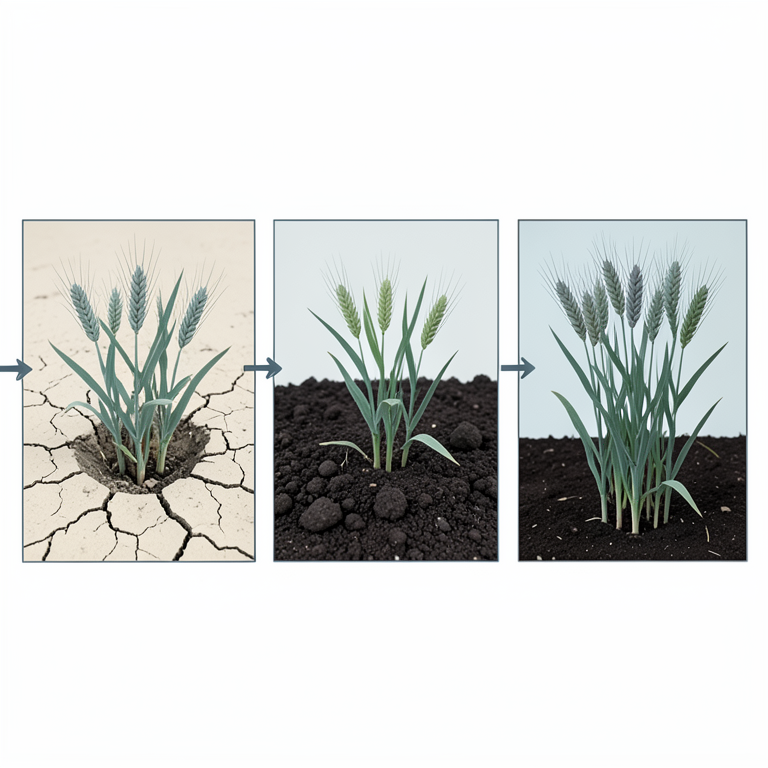
Fertilizer Impact Comparison
AI-generated conceptual illustration (wheat plants in soil). It explains the idea and does not show study data.
View source evidence ↗Figures & tables
From the original paper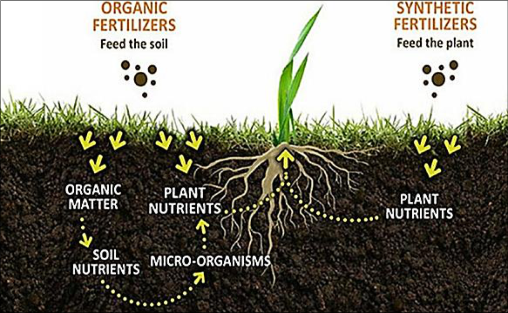 Figure 1
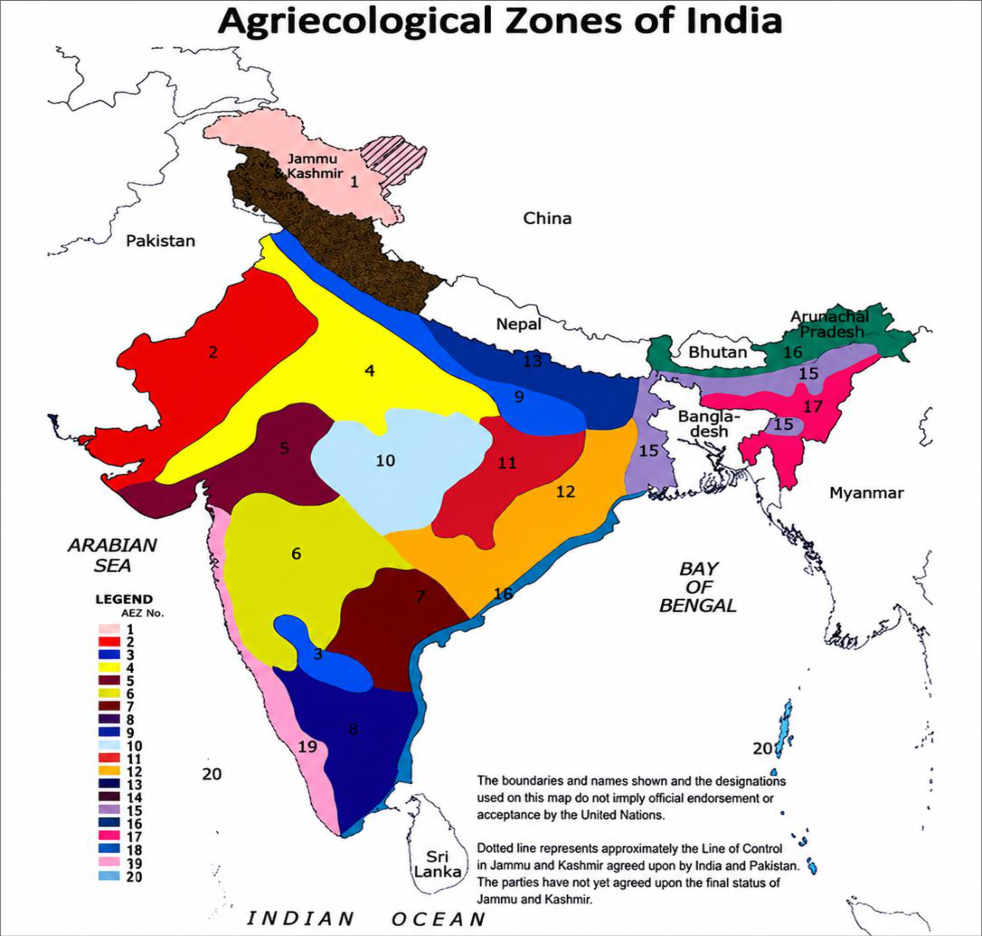 Figure 2
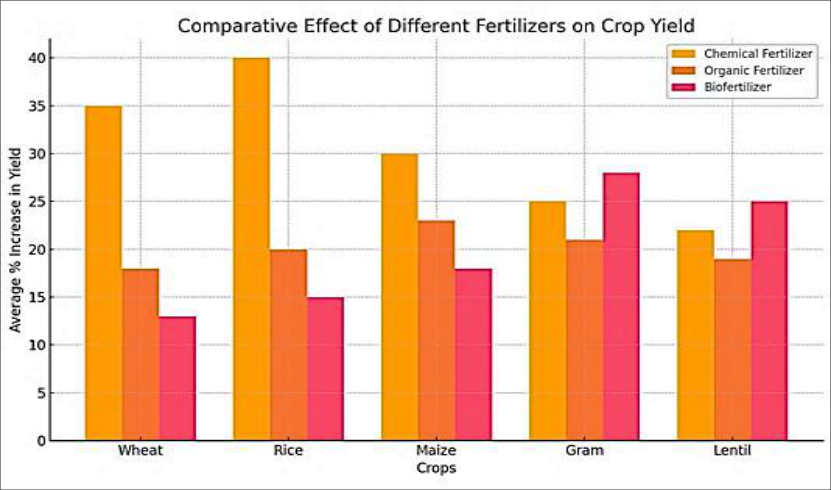 Figure 1
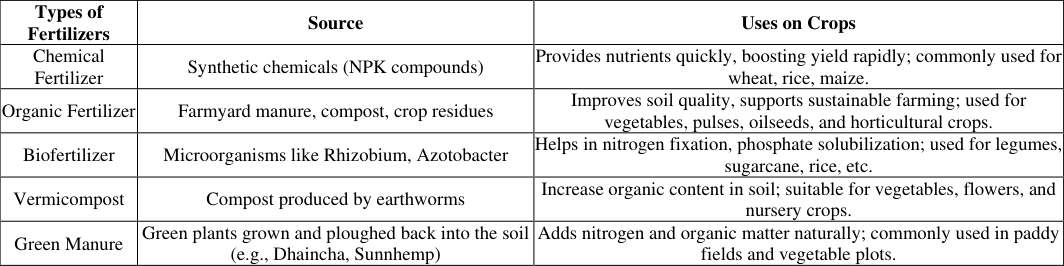 Table 1
Introduction
India is predominantly an agricultural country, where over 60% of the population depends directly or indirectly on agriculture for their livelihood. With the continuous rise in population and increasing demand for food grains, enhancing agricultural productivity has become a national priority. Among the various agricultural inputs, fertilizers play a vital role in boosting crop growth, improving soil fertility, and increasing overall yield. Fertilizers supply essential nutrients to crops that are often deficient in the soil due to continuous farming practices. In ancient times, Indian farmers relied mainly on natural and organic sources of nutrients such as farmyard manure, compost, and green manure to maintain soil fertility. However, after the Green Revolution in the 1960s, the usage of chemical fertilizers like urea, DAP (Di-Ammonium Phosphate), and MOP (Muriate of Potash) increased rapidly. These fertilizers helped India achieve food self-sufficiency, especially in staple crops like wheat and rice. While chemical fertilizers offer immediate and visible improvements in crop growth and productivity, their excessive or unbalanced use has led to serious environmental and soil health issues. Over the past few decades, researchers and agricultural scientists have raised concerns about the declining soil quality, nutrient imbalance, and long-term sustainability of chemical-dependent agriculture. As a result, attention has shifted towards alternative or complementary solutions such as organic and bio-fertilizers. Organic fertilizers, derived from plant and animal waste (like vermicompost, cow dung manure, and green manure), improve soil structure, water retention, and microbial activity. Bio-fertilizers, on the other hand, are living microorganisms (like Rhizobium, Azotobacter, and phosphate-solubilizing bacteria) that enhance nutrient availability through natural processes such as nitrogen fixation and phosphorus solubilization. This research paper aims to study and compare the effects of these three major types of fertilizers chemical, organic, and bio-fertilizers on the growth and yield of agricultural crops in India. Instead of conducting experimental field trials, this study is based on secondary data, published literature, and previous research findings collected from journals, government reports, and agricultural databases. The objective is to evaluate how different fertilizers influence crop productivity, soil health, and sustainability under Indian farming conditions. It also aims to highlight the benefits and limitations of each type of fertilizer and promote the concept of Integrated Nutrient Management (INM), which involves using a balanced combination of organic, bio, and chemical fertilizers.
Classification of fertilizers:
Fertilizers are broadly classified based on their origin, chemical composition, and the nutrients they supply. Understanding these classification is essential fir choosing the right type of fertilizer for specific crops, soil conditions, and agro-climatic zones.
Fertilisers are mainly divided into three major categories: chemical (inorganic), organic, and biofertilizers.
Chemical (Inorganic) fertilizer: These are synthetically manufactured through industrial processes. They provide nutrients in highly soluble forms, which are readily available to plants, leading to quick and visible effects on growth and yield. Biofertilizers: Biofertilizers contain living microorganisms that help enhance the availability of nutrients to plants through natural processes such as nitrogen fixation, phosphate solubilization, and decomposition of organic matter.
Subtypes
Subtypes
Major Types
Nitrogen-fixing biofertilizers: Rhizobium (for legumes), Azospirillum, Azotobacter. Phosphate-Solubilizing microorganisms (PSMs):
Make phosphorus available in soluble form. Mycorrhizal fungi (VAM): Increase phosphorus uptake through symbiotic root association. Potassium-solubilizing Bacteria (KSB).
Advantages
Environmentally safe and sustainable. Improve nutrient efficiency. Inexpensive for farmers.
Importance of fertilizers in Indian agriculture
Help improve food production to meet the needs of over 1.4 billion people. Replenish nutrients that are lost due to continuous cropping, erosion, and leaching.
Enable farmers to adopt intensive cropping systems and reduce fallow periods. Are critical for cultivating high-yielding and hybrid varieties. Contribute significantly to national food security and agricultural GDP. Coastal zones: (Tamil Nadu, Kerala, Odisha) High humidity and salinity; rice, coconut, spices grow here. Organic matter and micronutrients essential. Understanding India's Agro-Ecological Zones is critical for efficient fertilizer use. Adopting the right type and quantity of fertilizer for each region helps maximize crop yields, maintain soil fertility, and protect the environment.
Agro-ecological zones of India and fertilizer use
Agro-ecological zones of India and fertilizer use
Literature Review
Chemical fertilizers and their effect on crops: Chemical fertilizers, particularly nitrogen (N), phosphorus (P), and potassium (K) compounds, have been widely adopted in Indian agriculture to increase crop yield. According to Singh et al. (2015), application of NPK fertilizers significantly enhanced the productivity of staple crops such as wheat, rice, and maize. The immediate availability of nutrients in chemical fertilizers promotes rapid vegetative growth and improved flowering and fruiting. However, excessive use leads to soil nutrient imbalance, acidification, and reduced microbial diversity. Long-term studies have indicated that continuous reliance on chemical fertilizers can degrade soil structure and water-holding capacity (Sharma et al., 2017), necessitating integrated or alternative approaches Organic fertilizers in Indian agriculture Organic fertilizers, such as compost, farmyard manure, and green manure, are known for improving soil texture and fertility over time. As highlighted by Patel and Joshi (2019), the use of organic fertilizers increases soil organic carbon content and encourages beneficial microbial activity. Crops grown with organic inputs often show better resistance to pests and diseases due to improved plant health. Though the yield from organic fertilizers may be comparatively slower initially, the long-term effects on soil sustainability are highly beneficial, especially in rain-fed areas where soil moisture retention is critical.
Biofertilizers and microbial impact on growth
Biofertilizers consist of living microorganisms like Rhizobium, Azospirillum, Azotobacter, and phosphatesolubilizing bacteria (PSB) that naturally fix atmospheric nitrogen and mobilize phosphorus for plant uptake. Reddy et al. (2020) reported that biofertilizers not only enhance nutrient availability but also stimulate root development and improve soil health. These eco-friendly alternatives reduce dependence on chemical inputs and are cost-effective for small-scale farmers. Their role is especially crucial in pulses and leguminous crops, where nitrogen fixation is essential for yield enhancement.
Comparative studies of fertilizer types: Several comparative studies have evaluated the performance of chemical, organic, and biofertilizers across different crop types. According to Kumar et al. (2018), integrated application of chemical and organic fertilizers led to higher yields in rice and wheat, compared to the use of chemical fertilizers alone. Similarly, crops treated with biofertilizers alongside compost showed improved nutrient use efficiency and plant biomass. These findings suggest that a combination approach often provides better results than any single type of fertilizer.
Integrated fertilizer management (IFM): Integrated
Fertilizer Management (IFM) is a modern strategy that involves the combined use of chemical, organic, and biofertilizers to achieve balanced crop nutrition. Research by Verma and Singh (2021) indicates that IFM enhances crop productivity while maintaining soil fertility and minimizing environmental risks. This approach is increasingly promoted under sustainable agriculture policies in India. It not only reduces the input cost for farmers but also ensures long-term ecological balance. Mishra V., Pandey L., and Rajput S. (2018): In this study, the effects of vermicompost and farmyard manure (FYM) were evaluated on the growth, yield, and nutrient uptake of maize in Madhya Pradesh. Results indicated that plots treated with vermicompost showed significant improvement in soil organic matter, root development, and grain protein content. Moreover, biological activity in the soil increased, indicating a healthier ecosystem. The authors argued that the consistent use of organic fertilizers could improve the overall health of Indian soils, which are under stress due to years of chemical overuse.
Joshi K. and Meena R. (2018):
This study investigated the role of biofertilizers like Rhizobium and Azospirillum on the productivity of pulses in Rajasthan. The results showed that the use of biofertilizers along with reduced chemical fertilizers increased nitrogen fixation, improved soil texture, and enhanced the protein content in crops like chickpea and lentil. The authors highlighted that biofertilizers are a costeffective and eco-friendly solution for small and marginal farmers who cannot afford expensive chemical inputs.
Kumar R. and Sharma P. (2019):
This study examined the comparative effects of organic, inorganic (chemical), and integrated fertilizers on the yield and quality of major crops like wheat and rice in the Indo-Gangetic plain. The authors reported that the use of only chemical fertilizers resulted in quick growth and yield but gradually degraded soil structure and reduced microbial activity. However, the integrated nutrient management approach, which combines organic manures with chemical fertilizers, showed better results in terms of soil fertility, water retention, and sustainable yield. The study concluded that integrated practices not only enhanced crop productivity but also ensured long-term agricultural sustainability.
Patel D. and Choudhary V. (2019):
The researchers analyzed the effect of micronutrient fertilizers, especially zinc and boron, on the growth of oilseed crops such as mustard and groundnut in Gujarat. Their findings revealed that the deficiency of micronutrients is a major limiting factor in Indian soils. Application of micronutrient-enriched fertilizers improved flowering, seed setting, and oil content in the crops. The study recommended balanced fertilization that includes both macro and micro-nutrients to ensure high quality and yield.
Singh A. and Devi R. (2020):
The researchers focused on the environmental consequences of excessive chemical fertilizer application in intensive farming zones such as Punjab and Haryana. Their work highlighted the problem of nitrate accumulation in groundwater, soil salinity, and reduction in soil biodiversity. They also explored alternative Chemical fertilizers show high immediate yield increase but may affect long-term soil health. Organic fertilizers improve soil structure and nutrient content gradually. Biofertilizers enhance microbial activity and nitrogen fixation, especially beneficial in pulses.
Plan of work
The present study will be carried out in a systematic and phased manner to achieve the set objectives effectively. The research activities will include literature review, data collection from secondary Sources, compilation, analysis, interpretation of results, and final report writing. The detailed plan of work is presented below: Selection specific crops and study area using secondary data.
Collection of Secondary Data
Gather data from government reports, ICAR publications, journals, etc.
Compilation and Tabulation of Data
Organizing the collected data crop-wise and fertilizer-wise in tables.
Data Analysis
Analyzing the data using tables, graphs, and comparative charts.
Interpretation and Discussion
Interpreting the results, comparing with previous studies, and discussing the findings.
Conclusions and Recommendations
Drawing conclusions and giving suggestions for better use of fertilizers. 9
Report Writing and Submission
Preparing the final thesis/dissertation for submission as per university guidelines.
Observation
During this research, the effects of different types of fertilizers on agricultural crops in India were studied exclusively through the collection and analysis of secondary data. No primary field surveys or direct farmer interviews were conducted. Instead, detailed information was gathered from various credible sources, including government agricultural reports, published research papers, textbooks, and statistical data from recognized institutions.
Through this secondary research approach, different fertilizers chemical, organic, biofertilizers, vermicompost, and green manure were examined in terms of their production source, nutrient composition, application methods, and specific impacts on soil health and crop yield. A comparative analysis of these fertilizers, as documented in the literature, revealed the practical advantages and limitations associated with each type. It was observed that chemical fertilizers, which are synthetically produced and contain nutrients like nitrogen, phosphorus, and potassium (NPK), are widely used for increasing crop yield quickly, especially for major staple crops such as wheat, rice, and maize. However, several studies indicate that continuous and excessive use of chemical fertilizers can cause soil degradation, nutrient imbalance, and environmental pollution in the long term. In contrast, organic fertilizers derived from natural sources such as farmyard manure, compost, and crop residues help improve soil structure, enhance moisture retention capacity, and support soil biodiversity. Although the immediate yield may be comparatively lower, organic fertilizers contribute to the sustainability and long-term fertility of the soil. Biofertilizers, which consist of beneficial microorganisms like Rhizobium and Azotobacter, help in biological nitrogen fixation and phosphorus solubilization, reducing the dependency on synthetic inputs. These are mostly used for leguminous crops, sugarcane, and rice cultivation. Vermicompost, prepared through the decomposition of organic waste by earthworms, enriches the soil with organic nutrients and beneficial microbes, and is especially suitable for horticultural crops, vegetables, and flowers. Green manure, which involves growing specific plants like Dhaincha and Sunnhemp and ploughing them back into the soil, naturally increases the organic matter and nitrogen content of the soil, benefiting crops like paddy and vegetables. From these sources, information was gathered about how different fertilizers are produced, their specific uses on various crops. Based on this comprehensive literature-based observation, it can be concluded that the excessive use of chemical fertilizers alone is not sustainable for long-term soil productivity. An integrated approach, combining chemical fertilizers with organic and biological inputs, as suggested in various studies, can help maintain soil fertility, reduce environmental impact, and support sustainable agricultural practices in India.
Result
The results of this study clearly show that the balanced and combined use of organic and chemical fertilizers has a highly positive effect on the growth and yield of agricultural crops in India. Among all the fertilizers studied, compost manure, vermicompost, and balanced NPK fertilizers have proven to be the most effective for improving soil fertility and increasing crop productivity. Major crops like wheat, rice, and vegetables performed better with healthier growth, improved grain quality, and higher yields when integrated nutrient management practices were followed instead of using only heavy chemical fertilizers. This research also confirms that using organic fertilizers together with chemical fertilizers not only boosts current production but also keeps the soil fertile and healthy for a longer time, which is essential for sustainable agriculture. Such practices help farmers protect their land from long-term soil degradation and reduce the harmful effects of excessive chemical use. As a result, the land remains productive and capable of supporting good yields for future generations as well. Overall, the findings strongly support that adopting eco-friendly and balanced fertilizer practices is the best way to achieve high productivity today while ensuring that soil fertility, biodiversity, and environmental safety are maintained for tomorrow. This positive outcome gives farmers the confidence to follow sustainable methods that benefit both present and future agricultural needs of the country.
Key Points
Better for soil health Chemical fertilizers provide quick nutrients but, with overuse, they damage soil fertility, make the soil hard, and destroy helpful soil microorganisms. Organic fertilizers like compost, farmyard manure (FYM), and vermicompost improve soil structure, support soil microbes, and increase moisture retention naturally.
Long-term benefits Chemical fertilizers give fast results for crops, but continuous heavy use depletes the soil in the long run. Organic fertilizers release nutrients slowly and steadily, which keeps the soil fertile and productive for many years.
Environment-friendly Excessive chemical fertilizers cause water pollution and harm rivers and groundwater. Organic fertilizers are natural, biodegradable, and do not pollute the environment.
Cost-effective over time Chemical fertilizers may seem cheaper at first, but over time, soil damage requires more and more chemicals, increasing the cost. Organic manure can often be made on the farm from waste, saving money in the long run.
Better for future generations Organic fertilizers protect the natural fertility of the soil, so future generations can continue farming productively. Chemical fertilizers alone can weaken soil health if overused, putting future yields at risk.
Conclusion
The present study clearly demonstrates that different types of fertilizers have significant and varied effects on the growth, yield, and overall health of agricultural crops in India. Among the fertilizers studied, organic fertilizers such as compost, manure, and bio-fertilizers have shown a more sustainable and environmentally friendly impact compared to chemical fertilizers. Organic fertilizers not only improve soil fertility and structure but also enhance the nutritional quality of crops without leaving harmful residues. In contrast, chemical fertilizers provide quick nutrient availability and boost crop yields in the short term, but their excessive and continuous use can lead to soil degradation, loss of soil biodiversity, and environmental pollution. Therefore, integrating organic fertilizers with balanced and limited use of chemical fertilizers (integrated nutrient management) can be a practical solution for maintaining soil health and ensuring sustainable agricultural productivity. This research supports the need for increased awareness among farmers about the benefits of organic and biofertilizers and encourages policymakers to promote ecofriendly farming practices for the benefit of future generations. Overall, the findings highlight that sustainable fertilizer practices can help achieve food security while preserving soil and environmental health for India's growing population.
Figures and tables from the paper
References
28 in the original paper- Biswas TD, Mukherjee SK. Textbook of soil science. New Delhi: Tata McGraw Hill; 2006.
- Brady NC, Weil RR. The nature and properties of soils. 15th ed. Pearson; 2016.
- Chhonkar PK, et al. Impact of long-term fertilizer application on soil properties. Indian Journal of Agricultural Sciences. 2000;70(10):691-694.
- Doran JW, Zeiss MR. Soil health and sustainability: managing the biotic component of soil quality. Applied Soil Ecology. 2000;15(1):3-11.
- Food and Agriculture Organization. Fertilizer use by crop in India. FAO Soils Bulletin. 2006.
- Ghosh PK, et al. Long-term fertilizer experiments in India: past, present and future. Australian Journal of Experimental Agriculture. 2007;47(12):1393-1412.
- Giller KE, et al. Agricultural intensification, soil biodiversity and agroecosystem function. Applied Soil Ecology. 1997;6(1):3-16.
- Government of India. Agricultural statistics at a glance. New Delhi: Ministry of Agriculture & Farmers Welfare; 2022.
- Gupta PK. Soil, plant, water and fertilizer analysis. Jodhpur: Agrobios India; 2007.
- Hegde DM, Dwivedi BS. Nutrient management in rainfed drylands of India: a review. Fertilizer Research. 1994;38(2):117-134.
- Indian Council of Agricultural Research. Handbook of agriculture. 6th ed. New Delhi: ICAR; 2020.
- Kumar A, et al. Effect of organic and inorganic sources of nutrients on soil properties and yield of rice-wheat cropping system. Journal of the Indian Society of Soil Science. 2012;60(1):65-70.
- Kumar S, Shivay YS. Integrated nitrogen management for sustainable rice-wheat cropping system. Oryza. 2008;45(4):265-271.
- Lal R. Enhancing crop yields in developing countries through restoration of soil organic carbon pool in agricultural lands. Land Degradation & Development. 2006;17(2):197-209.
- Mahajan S, Gupta RD. Integrated nutrient management in a sustainable rice-wheat cropping system. Springer; 2009.
- Mandal B, et al. Long-term effects of fertilizers and manure on soil fertility and sustainability of a ricewheat system. Soil & Tillage Research. 2007;94(2):386-396.
- Mishra B. Fertilizer technology and management. New Delhi: I.K. International Publishing House; 2018.
- National Academy of Agricultural Sciences. Soil health: key to hunger free India. Policy paper. New Delhi: NAAS; 2018.
- Patra AK. Effects of organic and inorganic fertilizers on soil properties and crop productivity in India. Advances in Agronomy. 2014;123:111-154.
- Pathak H, et al. Long-term trends of fertilizer impacts on crop productivity and soil health in India. Current Science. 2010;99(1):91-98.
- Pimentel D, et al. Environmental, energetic, and economic comparisons of organic and conventional farming systems. Bioscience. 2005;55(7):573-582.
- Prasad R. Efficient fertilizer use: the key to food security and better environment. Journal of Tropical Agriculture. 2011;49(1-2):1-17.
- Roy RN, et al. Plant nutrition for food security: a guide for integrated nutrient management. FAO Fertilizer and Plant Nutrition Bulletin. 2006.
- Singh RP, Agrawal M. Effects of different nitrogen fertilizers on growth, yield and nitrate accumulation in spinach. Ecotoxicology and Environmental Safety. 2007;67(3):367-371.
- Singh Y, et al. Crop residue management with green seeding to enhance resource-use efficiency and soil fertility in rice-wheat cropping system. Journal of Crop Improvement. 2011;25(5):454-467.
- Tandon HLS. Fertilizers in Indian agriculture from 20th to 21st century. FDCO; 2007.
- Yadav RL. Efficient nutrient use in irrigated rice-wheat cropping system in the Indo-Gangetic plains. Field Crops Research. 1998;56(1-2):93-116.
- Zaman M, et al. Effect of urease and nitrification inhibitors on N₂O emissions from a pasture soil fertilized with urea. Agriculture, Ecosystems & Environment. 2008;125(3-4):237-247.