
Research article · 2026 · Full text
International Journal of Advanced Chemistry ResearchN-confused porphyrins structural insights and functional applications: A review
Volume 8(3) · Pages 24–31 · DOI: 10.33545/26646781.2026.v8.i3a.367 ↗
Research areasPorphyrin and Phthalocyanine ChemistryPorphyrin Metabolism and DisordersPhotodynamic Therapy Research Studies
Abstract
Author-writtenN-confused porphyrins (NCPs) are a unique class of porphyrin derivatives in which one of the pyrrole rings is inverted, leading to distinct electronic, structural, and chemical properties. This structural modification alters their coordination chemistry, redox behaviour, and photo physical characteristics, making them highly versatile in various applications. This review comprehensively explores the synthesis strategies, fundamental properties, and emerging applications of NCPs across multiple domains, including catalysis, biomedical sciences, optoelectronics, and environmental sustainability. The synthesis of NCPs has evolved from conventional condensation reactions to advanced templated and metal-assisted approaches, enabling better control over their functionalization and stability. Their unique electronic structure enhances their potential as efficient catalysts in electrochemical and photocatalytic processes, such as hydrogen evolution and CO₂ reduction. In biomedical applications, NCPs have demonstrated promise in photodynamic therapy (PDT) for targeted cancer treatment due to their superior phototoxicity and singlet oxygen generation. Additionally, their optoelectronic properties enable applications in organic photovoltaics (OPVs) and chemical sensors. Despite their remarkable properties, challenges such as limited synthetic scalability, structural stability, and functional tunability remain key areas for future research. Emerging advancements in nanotechnology, supramolecular chemistry, and hybrid material integration offer potential solutions to these limitations. This review provides a critical discussion on the current state-of-the-art in NCP research and highlights future perspectives for their development in next-generation functional materials.
Summary
Source-checkedPlain-language reading of the full paper, prepared with AI and checked against the text. Each point links to the authors' own words.
Why it matters
- Porphyrin-class heterocyclic macrocycles are critical in both synthetic chemistry and biology, serving as the core of molecules like chlorophyll and heme which are essential for light harvesting and oxygen transport. View evidence ↗
- N-confused porphyrins (NCPs) differ from standard porphyrins because one nitrogen atom is positioned externally, which significantly alters their electronic distribution and metal coordination properties. View evidence ↗
- Due to their unique conjugation patterns and tautomeric equilibria, NCPs exhibit greater reactivity and flexibility than conventional porphyrins. View evidence ↗
The question
- The objective of this review is to critically analyze the structural features, synthesis methods, physicochemical properties, and recent applications of N-confused porphyrins. View evidence ↗
What they did
- Traditional synthesis of NCPs involves the acid-catalyzed combination of aldehydes with pyrrole derivatives. View evidence ↗
- Modern synthetic approaches use metal ions, such as Zn²⁺ and Cu²⁺, as templates to improve the inversion of pyrrole rings during cyclization. View evidence ↗
- Microwave-assisted techniques are employed to make the production of NCPs more energy-efficient and time-effective. View evidence ↗
What they found
- NCPs exhibit a modified Soret band between 380-450 nm, which is attributed to a weakening of the macrocycle's π-conjugation. View evidence ↗
- Inverse pyrrole arrangements cause electronic perturbations that result in red-shifted Q-bands appearing between 500-700 nm. View evidence ↗
- Structural analysis of specific Ni(III) NCP complexes revealed an unusually long Ni(III)-C bond measuring 2.170 (9) Å. View evidence ↗
- Metal-NCPs can efficiently catalyze the conversion of CO₂ into methanol, formate, or CO under mild conditions. View evidence ↗
- NCPs are effective photosensitizers for cancer treatment due to their ability to enhance the production of singlet oxygen (¹O₂). View evidence ↗
- NCPs act as photocatalysts capable of degrading organic pollutants in water, including pharmaceuticals, pesticides, and dyes. View evidence ↗
What it means
- The authors conclude that NCPs are a groundbreaking class of molecules that bridge fundamental chemistry and applied sciences, driving innovation in medicine, energy, and environmental technology. View evidence ↗
- The widespread use of NCPs is currently hindered by challenges related to production methods, stability, and synthetic approaches. View evidence ↗
- Industrial scalability is limited because current synthesis methods require low concentrations in organic solvents, making large-scale manufacturing inefficient. View evidence ↗
Visual summary
1 visualsIllustrations explain the paper; they do not show study data.
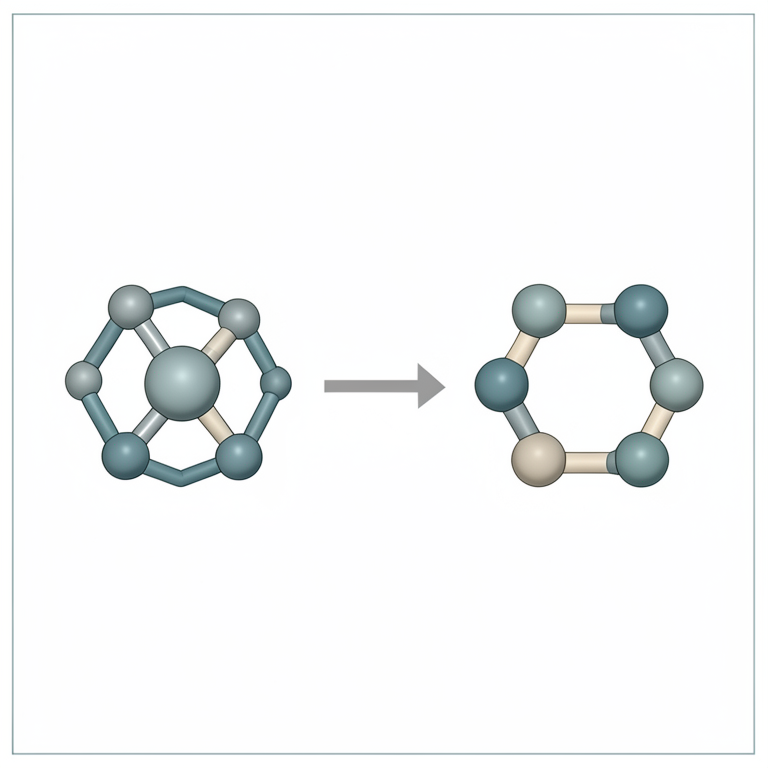
Structural Comparison
AI-generated conceptual illustration (N-confused porphyrin and standard porphyrin molecules). It explains the idea and does not show study data.
View source evidence ↗Figures & tables
From the original paper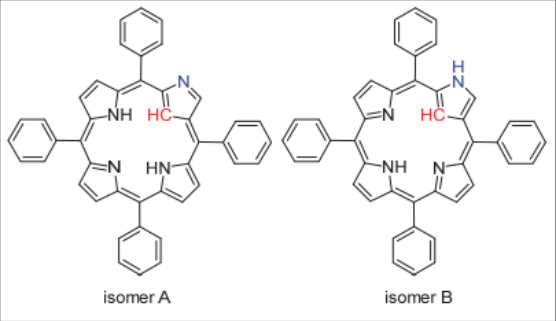 Figure 1
Introduction
Heterocyclic macrocycles of porphyrin class have widespread biological as well as synthetic chemistry importance owing to their well-defined conjugated system and unique electronic and optical properties [1] . These compounds are essential core structural groups of important biological molecules, such as heme and chlorophyll, and participate in oxygen transport, electron transfer, and light harvesting processes [2] . NCPs are a unique subclass of many modified porphyrin derivatives in which the nitrogen is externally instead of internally within the macrocyclic framework [3] . This fundamental structural deviation has profound effects on electronic distribution, redox behaviour, and metal coordination properties that make NCPs enormously functionally versatile in disparate scientific and technological realms [4] . Unlike their conventional porphyrin counterparts, the NCPs offer an extra degree of flexibility and reactivity by virtue of their different conjugated patterns and distinctive tautomeric equilibria [5] . This outward facing nitrogen introduces new coordination modes allowing new metal complexes with different oxidation states and catalytic functionality to be formed [6] . In addition, the rearrangement of the structure of NCPs changes their absorption spectra and redox properties, which significantly contribute to their photo physical and electrochemical properties [7] . NCPs' ability to decrease the instability of unusual oxidation states and to undergo reversible electronic transitions has placed them as promising candidates for catalytic, biomedical, and optoelectronic applications [8] . Given these unique features, N-confused porphyrins have been extensively exploited in the fields of catalysis, PDT, molecular electronics, chemical sensing and environmental remediation [9] . Their higher π conjugation and different metal coordination properties are shown to make them highly effective catalysts in many important catalytic reactions including CO₂ reduction, hydrogen evolution, and organic oxidation [10] . The success of using small molecules to selectively bind and activate has been illustrated through the use of them in the design of artificial photosynthetic systems and biomimetic catalytic frameworks [11] . In PDT of cancer, NCPs have demonstrated great promise in biomedical applications due to their strong absorption in the visible and near infrared, good singlet oxygen generating ability and controlled photo toxicity [12] . Finally, because they are biocompatible and have tunable fluorescence properties, they can be applied in bio imaging and theranostic applications [13] . NCPs can be tuned to have tunable electronic structures that render them attractive materials in the realm of OPVs, OLEDs, and chemical sensors [14] . They have been used in organic semiconductors and field effect transistors due to their ability to modulate the electron transfer and charge transport properties [15] . Moreover, they have also high chemical stability, strong absorption in the UV-visible region, making them attractive for solar energy harvesting and light driven charge separation processes [16] . NCP based materials have shown their capability in pollutant degradation, wastewater treatment and heavy metal ion detection, and thus provide sustainable solutions for environmental remediation in environmental applications [17] . Although NCPs have outstanding properties and broad applications, they suffer from at least some challenges in large-scale synthesis, stability, and functional tunability [18] . Problems with availability of convenient synthetic protocols, problems with structural degradation, and problems with fine tuning physicochemical properties restricts their commercialization [19] . Nevertheless, emerging technological progress in nanotechnology, supramolecular chemistry, and hybrid material integration offers the prospect of overcoming such limitations and increasing the performance of NCP based systems [20] .
Scope and Objectives
This review aims to be a critical analysis of NCPs in terms of their structural features, methods of syntheses, fundamental physicochemical properties, and recent applications. This aims to bridge the gap between fundamental chemistry and applied research, providing insights into how Nconfused porphyrins can be further developed for nextgeneration functional materials and devices.
Literature Review
Luo et al. [21] Because of their distinct chemical structures, chemical-based reactivities, and physical characteristics, Nconfused porphyrins, isomers of regular porphyrins, have drawn a lot of interest from chemists. As a result, they have shown great promise for use in the domains of material science, biochemistry, and catalytic chemistry. Usually, acid-catalysed condensation and subsequent oxidation are utilised to create N-confused porphyrins, with lactams frequently forming as by-products. Catalysed by Pd The stable antiaromatic N-confused expanded porphyrins that are disclosed here are doubly N-confused and ringcontracted hexaphyrin (1.1.0.1.1.0) mono-and bis-Pdcomplexes, which are produced by Suzuki-Miyaura coupling of 1,14-dibromotripyrrin. The bis-Pd complex can be regioselectively brominated by NBS to produce its monoand dibromides, which can be used to synthesise a NiII porphyrin-hexaphyrin-NiII porphyrin triad and a hexaphyrin dimer, respectively. These macrocycles have a red-shifted weakly absorbed tail, a small HOMO-LUMO gap, paratropic ring currents, and an undefined Soret band.
Wanhong et al. [22] the synthesis and application of Nconfused porphyrin manganese, iron, and cobalt complexes is now one of the most popular topics in porphyrin chemistry. The coordination chemistry of N-confused porphyrin is more complicated than that of porphyrin due to the peripheral nitrogen atom, the intramolecular in the C H bond, and NH tautomerism. Isomers A and B are the two NH tautomers of N-confused porphyrin. The coordination chemical of N-confused porphyrin exhibits a variety of functions, including the production of metal-carbon bonds and the stabilisation of odd metal oxidation states. The character of N-confused porphyrins is adaptable to the metal oxidation state. A monanionic, dianionic, or trianionic macrocycle will be produced if the number of hydrogen atoms is reduced from one to three. Complexes of Nconfused porphyrin manganese, iron, and cobalt exhibit the different metal oxidation states. Cobalt chemistry exhibits the monovalent nature of N-confused porphyrin in compounds like CoII(2-N-RNCTPP)Cl and CoII(NCTPP). CoII(2-N-RNCTPP) causes the cobalt metal to take on a valence of +2.Cl possesses both an N-confused porphyrin ligand and a monoanionic axial ligand. Koniarz et al. [23] To synthesise and characterise a family of transition metal complexes consisting of meso-aryl-2-aza-21-carbaporphyrin (N-confused porphyrin, NCP) derivatives that serve as ortho-metallating ligands for ruthenium (II), rhodium (III), and iridium (III), XRD, spectroscopy, and electrochemistry are employed. Their chirality is shown by the enantiomer separation and the investigation of these systems utilising DFT and circular dichroism. An initial catalytic study indicates that the iridium (III) orthometallated complexes are effective in the Nheterocyclization of primary amines with diols. He et al. [24] describe two stable Ni (III) NCP complexes' synthesis, properties, and reactivity. In CHCl3/EtOH, 3-OEt NCP 1 was metalated with NiCl2•6H2O to produce 3-OEt Ni(II) NCP 3, which was readily oxidised by air to produce the Ni(III) complex of NCP inner C-oxide 4. In ethanol and CHCl3, 3 was oxidised with PIFA to create the bis-ethoxy-modified Ni(III) complex 5. X-ray diffraction examination of single crystals was used to determine the structures of 4 and 5. In 4, a peculiarly long Ni(III)-C bond (2.170 (9) Å) was found. The EPR spectra of 4 and 5 were further verified to be paramagnetic Ni(III) complexes by the g-factor (g > 2.1) found in them. Comparative studies revealed that the production of 4 and 5 is significantly influenced by the 3-ethoxy group. Elimination of 4 and 5 using complex 3 regenerated by NaBH4. Martins and Swart [25] The impact of metals on the distinctive Soret band of N-confused porphyrins will be investigated. Using DFT calculations, investigated this lowlying area of the NCP-2H isomer's spectrum in the presence of transition metals with various (d2, d3, d4, and d6) delectron configurations. The amount of unpaired electrons and the presence or absence of an axial ligand play a major role in the spin ground state characteristics of these complexes. These unpaired electrons are more likely to be loca According to study of the non-metallic electronic distribution and spin density, these unpaired electrons are more likely to be located in a N confused porphyrin ring than on the metal. The time-dependent DFT results demonstrated that the N-confused isomer ruptures the aromatic system of the porphyrin, resulting in two lowerintensity peaks in place of the big Soret band. Most metalloporphyrins share the mixed metal/porphyrin nature of the HOMO and LUMO orbitals. The Rh metalloporphyrin was the lone exception, exhibiting a ligand-to-metal charge transfer band that intensified with ligand field. This suggests that redox events occur on Rh because it is the only metal whose orbitals have a greater energy than the ligand's
Reference Key Findings Synthesis & Characterization Applications
Luo et al. [1] NCPs exhibit unique chemical reactivity and physical properties. Anti-aromatic N-confused expanded porphyrins (doubly N-confused hexaphyrins) synthesized.
Acid-catalyzed condensation and oxidation. Stable antiaromatic NCPs were used via Pd catalyzed Suzuki-Miyaura coupling. NBS bromination for regioselective bromides.
Material science, biochemistry, and catalytic chemistry. Applied in macrocycles with small HOMO-LUMO gap and paratropic ring current.
Wanhong et al. [2] Coordination chemistry and oxidation states of NCP manganese, iron, and cobalt complexes. NH tautomerism affects metal coordination.
Macrocycles are reduced to monanionic, dianionic or trianionic macrocycles.
There is a set of co, mn and fe complexes that are formed with monovalent, divalent and trivalent states.
Catalysis, NO storage and delivery, chemical nuclease activity, cyclopropanation of alkene, catalytic oxidation, nitrate reductase activity.
Mesophilic meso-aryl-2-aza-21-carbaporphyrin (NCP) complexed Ru(II), Rh(III), and Ir(III) ortho-metallating ligands. Circular dichroism and DFT analysis of chirality.
XRD, spectroscopy and electrochemistry synthesized. Circular dichroism used for enantiomer separation.
Ir(III) complexes for Nheterocyclization of primary amines with diols: catalysis.
He et al. [4] Stable Ni(III) NCP complexes synthesized. Xray diffraction identifies long Ni(III)-C bond.
After metalating with NiCl₂•6H₂O, oxidation of the intermediate in ethanol and CHCl₃. These EPR spectra confirmed the Ni(III) paramagnetic nature..
Regeneration of Ni(II) complex using NaBH₄. Potential applications in catalysis and redox chemistry.
Martins & Swart [5] Study of metal effects to the Soret band via DFT. Instead, the unpaired electrons exist within the NCP ring more so than the metal. Ligand to metal charge transfer is shown by rh metalloporphyrin.
The DFT and time dependent DFT calculations performed. The HOMO-LUMO orbitals are mixed in metal/porphyrin character.
Insights into electronic structure and reactivity of metal-NCP complexes. Potential for electronic and optical applications.
Structural and Electronic Properties of NCPs 3.1 Molecular Structure of N-Confused Porphyrins
An NCP has a molecular structure very similar to a standard porphyrin, but with a key difference: one of the central nitrogen atoms in the porphyrin ring is replaced by a carbon atom, causing one of the pyrrole rings to be "confused" by having its nitrogen atom positioned on the periphery of the macrocycle instead of the center, essentially flipping one pyrrole ring outward compared to a normal porphyrin; this structural change significantly alters the coordination properties and chemical behavior of the molecule compared to a regular porphyrin.
"Confused" pyrrole ring
Due to this outward facing nitrogen, the pyrrole ring is "confused".
Tautomerism
Because of the secularization, NCPs may have the tautomerism property, that is, the hydrogen atom at the disturbing nitrogen staffs between the interior and peripheral places, that effectiveness of the molecule.
Metal coordination
NCPs have a structure similar to regular porphyrins but can coordinate metal ions within their central cavity, but NCPs' structure alters the metal-binding characteristics and stability relative to regular porphyrins.
Overview of the NCP Framework
Structurally distinct porphyrin derivatives are NCPs characterized by an inverted pyrrole unit where one pyrrole ring houses its nitrogen atom in the external rather than internal space within a given macrocyclic cavity. Results from this inversion have an effect on the connectivity of the π conjugated system and introduction of new reactive sites that by affecting metal coordination and electronic behavior. NCPs generally include a framework such as: Like the conventional porphyrins, a tetrapyrrolic macrocycle, but with at least one pyrrole ring flipped. A peripheral exocyclic nitrogen, which modifies the electron distribution of the ring and enhances the ability of NCPs to form metal complexes with unusual coordination modes. An expanded core size, compared to traditional porphyrins, which influences aromaticity and redox properties.
The diatropic ring current of the core macrocyclic ring is weaker than in ordinary porphyrins due to partial aromaticity. This feature is important in the spectroscopic and electrochemical behaviour of NCPs.
Isomerism and Tautomerism in NCPs
The main feature of NCPs is the presence of several isomeric and tautomeric forms caused by a non-equivalent position of confused pyrrole unit. This results in different possible structural arrangements:
1. Positional Isomers: Mono and di NCPs form when pyrrole can occupy different positions within the macrocyle and have distinct electronic and steric effects. 2. Tautomerism: Proton exchange is rapid when an exocyclic nitrogen is present, so there can be equilibrium of various tautomers, which are important for the interaction with hydrogen, metal, and overall electronic behaviour.
Aromaticity Variations:
In contrast to NCPs, the delocalized π system is well defined in regular porphyrins, but the localized electronic density variations in NCPs cause them to be highly sensitive to spectrum and redox properties.
Comparison with Conventional Porphyrins
NCPs in which the pyrrole unit is inverted, however, introduce a number of important differences compared to regular porphyrins:
Property Conventional Porphyrins NCPs
Core Aromaticity Fully aromatic macrocycle with a strong diatropic ring current Partial aromaticity with disrupted π-conjugation
Metal Coordination
Binds metals at four inner nitrogen sites Binds metals at three inner nitrogens + exocyclic nitrogen, enabling unusual oxidation states Protonation/Deprotonation Proton exchange occurs within the macrocyclic core Proton exchange occurs both internally and at the exocyclic nitrogen Tautomerism Minimal tautomeric shifts Multiple tautomeric forms possible Electronic Absorption Strong Soret band (~400 nm), well-defined Q-bands Modified Soret band, altered Q-band positions due to electronic perturbations
Electronic and Optical Behaviour of NCPs Spectroscopic Characterization
NCPs exhibit distinct spectroscopic signatures that differentiate them from conventional porphyrins. The most widely used techniques to analyse their electronic and optical properties include:
UV-Vis Absorption Spectroscopy
The modified Soret band lies between 380-450 nm for NCPs because the macrocycle's π-conjugation has become weaker. The red-shifted Q-bands of 500-700 nm appear in porphyrins with red-shifted Q-bands compared to regular porphyrins due to the electronic perturbations triggered by inverse pyrrole arrangements. Tautomeric equilibria combined with metal coordination highly affect the absorption spectrum behaviour.
Nuclear Magnetic Resonance (NMR) Spectroscopy
Analysis through ¹H NMR reveals the aromatic ring current effects of regular porphyrins remain lower than those of typical porphyrins. The spectral patterns in protons become complex due to an exocyclic nitrogen's presence which results in proton signal deshielding. NMR experiments conducted at different temperatures show NCPs undergo tautomerism dynamically.
Fluorescence and Photoluminescence
The non-radiative decay pathways in NCPs cause them to have reduced fluorescence intensity compared to conventional porphyrins. Quantum yields of fluorescence strongly depend on the solvent polarity in addition to protonation state and metal coordinate interactions.
Metal complex NCPs demonstrate phosphorescence properties which makes them suitable for OLED technology as well as sensing applications.
Electrochemical Studies (Cyclic Voltammetry, CV)
The redox potential zone of NCPs differs substantially from porphyrin structures because reduced oxidation potentials appear because of electronic structure modifications. The exocyclic nitrogen in heterocyclic molecules strengthens electron donation capabilities which affects charge transfer mechanics in catalytic along with electronic uses. Metal-NCP complexes demonstrate exceptional multielectron redox properties which make them important for applications in energy storage and electrochemical catalysis.
Electronic Modifications Due to N-Confusion
When a pyrrole unit in NCPs inverts its position it produces various changes in their electronic capabilities:
1. Disrupted Aromaticity: The disruption of aromaticity results in partial interruption of π-electron delocalization which causes local shifts in electronic density and changes reactive properties.
Enhanced Lewis Basicity: NCPs function with
elevated Lewis basicity because the exocyclic nitrogen forms new coordination sites which enable metals to stabilize unique oxidation states and geometric structures.
Tunable Optical Absorption:
The modification of electronic transitions in macrocycles creates red-shifted absorption bands that enable broadband light absorption to make NCPs useful for photodynamic therapy as well as light-harvesting applications.
Stronger Dipole Moments:
The asymmetrical charge distribution of NCPs produces stronger dipole moments than conventional porphyrins because they lack symmetrical charge distributions.
Versatile Redox Chemistry:
The modified electronic setting allows multiple redox processes that are useful for photo catalysis and energy storage and charge transport applications.
Synthesis Strategies, Functionalization, and Key Applications of NCPs 4.1 Synthesis Strategies & Functionalization
The chemical production of NCPs needs specialized methods because the rearrangement of the pyrrole structural unit creates challenges. The synthesis of NCPs started as multi-step traditional methods but evolved into modern streamlined procedures which enhance both efficiency and yield.
Traditional Synthesis vs. Modern Techniques Traditional Synthesis Methods
The chemical synthesis of NCPs begins through acidcatalyzed combinations of pyrrole derivatives with aldehydes exactly like standard porphyrin synthesis. When synthesizing porphyrins through the Adler-Longo or Rothemund protocols the production of NCPs occurs as minimal by-products. The detection of NCPs faces difficulties because they appear only in small amounts during the reactions.
The combination of harsh chemical environments produces poor yield results together with unexpected secondary reactions.
Modern Synthetic Strategies
Directed synthesis lets scientists create precursors which lead to the specific formation of NCPs. The cyclization process involving metal ions (such as Cu²⁺ and Zn²⁺) acts as a template to specifically enhance the inversion of pyrrole moieties. The use of microwave-assisted techniques enables both time-efficient and energy-saving methods which improve the production of NCPs. Enzyme-like catalysts in biomimetic approaches assist the formation of macrocycles. Synthesizing NCPs through one-pot and flow chemistry methods enables continuous production which speeds up reactions and scales production efficiently.
Role of Metal Coordination in Modifying Properties
An exocyclic nitrogen found in NCPs forms unique metal coordination modes that modify their electronic systems and redox properties as well as their catalytic behaviour: NCPs differ from standard porphyrins through metal binding through their three interior nitrogen positions while an external exocyclic nitrogen results in uncommon metal coordination structures. Different metal centres (e.g., Fe, Ru, Ni, Zn) alter NCP redox behaviour, optical absorption, and photo stability. The use of Metal-NCP complexes enhances reaction efficiency for both CO₂ reduction processes and oxygen evolution chemistry. Certain metal-NCP hybrids enhance fluorescence, phosphorescence, and energy transfer, useful in optoelectronics and sensing.
Chemical Functionalization of NCPs
To enable practical use of NCPs researchers depend on chemical modifications which boost their properties of stability and reactivity while improving their solubility.
Solubility Enhancement
The incorporation of extended alkyl chains makes solvents more soluble in organic media. The biomedical industry benefits from water solubility when polyethylene glycol chains are attached to sustainable materials. Water solubility is enhanced through sulfonation or carboxylation that adds polar functional groups to molten salt compositions.
Stability Improvements
Bulky groups (e.g., phenyl, alkoxy) reduce aggregation and prevent oxidative degradation. Incorporation of electron-withdrawing groups stabilizes the π-system and prevents photobleaching.
Reactivity Enhancement
Electrophilic/nucleophilic substitutions allow siteselective modifications. Rapid functionalization with drug molecule, targeting ligands, and nanomaterials using the concept of click chemistry.
Key Applications of NCPs
NCPs as well as their metal complexes are widely studied for electrocatalytic and photocatalytic reactions based on the unique redox properties and tunable electronic structures.
Electrocatalytic & Photocatalytic Applications CO₂ Reduction Reaction (CO₂RR)
Efficient catalysis of CO₂ to fuel conversion into CO, formate, or methanol is realized using metal-NCPs operating under mild conditions. Redox active core and metal coordination flexibility leads to enhanced electron transfer efficiency.
Hydrogen Evolution Reaction (HER)
Electrocatalytic water splitting is promoted by NCPs bearing cobalt, nickel, or molybdenum centers. Proton coupled electron transfer in NCPs is facilitated by the exocyclic nitrogen.
Oxygen Reduction Reaction (ORR) & Oxygen Evolution Reaction (OER)
The hybridization of Metal-NCPs provides a means to increase catalytic kinetics of ORR/OER for fuel cells and metal-air batteries. It is highly stable under acidic and alkaline conditions, making them the material of choice for energy storage alloy systems.
Biomedical Applications PDT
Enhanced production of singlet oxygen (¹O₂) gives NCPs excellent properties for acting as cancer treatment photosensitizers. The addition of targeting ligands such as folic acid or antibodies allows functionalized NCPs to accumulate specifically in cancerous tissue regions.
Bioimaging and Fluorescent Sensors
The combination of metals and NCPs (Zn-NCPs and Cu-NCPs) creates fluorescent and phosphorescent properties that allow biological imaging. Functionalized NCPs function as cell-based detection probes which identify both reactive oxygen species and metal ions in cellular environments.
Environmental & Energy Applications Wastewater Treatment & Pollutant Degradation
The photo catalyst properties of NCPs convert organic pollutants including dyes pesticides and pharmaceuticals found in water. These materials demonstrate high oxidative properties while offering adjustable reduction states through which they perform selective photo-Fenton-like reaction pathways.
Energy Conversion & Storage
These electro catalysts consist of hybrid metal and NCP materials for elevating the performance of batteries and supercapacitors during charging and recycling cycles. Functionalized NCPs applied within DSSCs boost both light absorption capabilities and electron injection performance speed.
Challenges and Future Perspectives of NCPs 5.1 Challenges in Synthesis, Stability, and Scalability
The general implementation of NCPs remains limited because of multiple barriers involving synthesis approaches and stability issues and limited production methods.
Limitations in Synthesis
The creation of NCPs face major synthetic hurdles because of low production levels and complicated production routes and separation challenges. NCP production differs from typical porphyrin synthesis because it demands nonselective ring inversion during the formation of pyrroles. The traditional acid-catalysed condensation techniques including Adler-Longo and Rothemund methods end up generating various porphyrin isomers because of which NCP separations become both demanding on time and challenging to execute.
Issues with Stability
An asymmetric structure in NCPs creates unstable conditions which impair their long-term operation in different applications. The stability of NCPs stands lower than regular porphyrins because solution environments cause them to oxidate and photo bleach and aggregate easily. Structural aging over time is caused by side reactions that occur at the reactive sites introduced by exocyclic nitrogen. During operation in extreme pH or oxidative environments metal-NCP complexes tend to lose their ligands or their metal ions.
Scalability Challenges
Industrial NCP production suffers from drawbacks in scalability during synthesis steps. The existing production methods execute reactions at low concentrations in organic solvents which lead to inefficient large-scale manufacturing. The application of specialized purification methods including chromatography and selective crystallization increases both production expenses and impedes commercialization of the chemical products.
Potential Directions for Improving Efficiency and Novel Applications
The applications of NCPs in catalysis alongside both biomedical and optoelectronic and environmental fields need additional developments for their mass commercial viability. The successful adoption of nucleic acid complexes depends on two elements: improved synthesis approaches incorporating automated flow chemistry and enzymemimetic catalysis as well as chemical modifications using hybrid metal complexes and peripheral functionalization. NCPs linked with nanomaterials and their special electronic properties enable new developments in nano-optoelectronics and bio sensing and molecular electronic devices. The applications of NCPs in artificial enzyme mimics along with targeted drug delivery systems and theranostic agents make them suitable for personalized medicine solutions. The energy applications of NCPs extend into sustainable fields such as solar cells and water splitting and carbon dioxide reduction for photosynthetic systems.
Conclusion
The study of NCPs has found out their superb structural and digital homes, distinguishing them from conventional
International Journal of Advanced Chemistry Research https://www.chemistryjournals.net porphyrins and unlocking a wide spectrum of programs. Key findings highlight that NCPs showcase unique isomerism and tautomerism, leading to wonderful digital and optical behaviours, making them especially valuable in photocatalysis, optoelectronics, and biomedical applications. Spectroscopic analysis, inclusive of UV-Vis, NMR, and fluorescence research, has proven that N-confusion significantly alters electron distribution and steel coordination, improving their chemical reactivity and functional versatility. Moreover, advances in artificial techniques, specifically metal-assisted and functionalization methods, have stepped forward the stableness, solubility, and catalytic performance of NCPs, allowing their integration into real-global programs. The importance of NCPs extends some distance beyond their structural novelty. Their integration into energy conversion structures, OPVs, and molecular electronics positions them as capability sportchangers in subsequent-era renewable energy and semiconductor technology. In biomedicine, their use in PDT and bio imaging underscores their ability in non-invasive diagnostics and focused remedies. Furthermore, their utility in environmental sustainability, together with water purification, pollutant degradation, and CO₂ discount, highlights their role in addressing worldwide demanding situations associated with climate trade and pollution manage. Despite those advances, challenges stay in scalability, long-term stability, and price-effective production. Future studies ought to consciousness on growing greater efficient synthesis strategies, improving their stability via advanced functionalization, and exploring hybrid nanostructures to decorate their overall performance. Additionally, interdisciplinary collaborations in nanotechnology, substances technological know-how, and bioengineering might be instrumental in harnessing NCPs' complete ability. Ultimately, NCPs constitute a groundbreaking class of molecular structures that bridge fundamental chemistry with implemented sciences, driving innovation in power, medication, and environmental era. As studies progresses, NCPs are poised to end up imperative additives of sustainable and advanced scientific solutions, shaping the future of catalysis, nanomedicine, and electronic materials.
Figures and tables from the paper
References
25 in the original paper- Iwanaga O, et al. A computational study on the mechanism of catalytic cyclopropanation reaction with cobalt N-confused porphyrin: the effects of inner carbon and intramolecular axial ligand. Molecules. 2022;27(21):7266.
- Jana M, Blasco D, Sundholm D, Rath H. Organometallic copper (II) complex of meso-meso Nmethyl N-confused pyrrole-bridged doubly N-methyl N-confused hexaphyrin. Org Biomol Chem. 2024;22(22):4461-4465.
- Wagner J. Electronic studies into silver (III) Nconfused tetraphenylporphyrin [master's thesis]. Akron: University of Akron; 2023.
- Kasi B, Ojha B, Liaw WF, Hung CH. Expanding the chemistry of pentafluorophenyl-N-confused porphyrin: diketonate substitution and derivatizations at the external 3-C position of the inverted pyrrole ring. ACS Org Inorg Au. 2024;4(6):681-691.
- Hua W, et al. Pulse electrolysis turns on CO₂ methanation through N-confused cupric porphyrin. Angew Chem Int Ed. 2024;63(12):e202315922.
- Dingiswayo S, Babu B, Burgess K, Mack J, Nyokong T. Photodynamic anticancer and antibacterial activities of Sn (IV) N-confused meso-tetra (methylthiophenyl) porphyrin. Photochem. 2023;3(3):313-326.
- Schissler C, et al. Marriage of an N-fused and a regular porphyrin in a cofacial ligand system. Organometallics. 2023;42(15):1882-1889.
- Chengji Y. Synthesis and characterizations of platinumnitrogen confused porphyrins. 2022.
- Białek MJ, Hurej K, Furuta H, Latos-Grażyński L. Organometallic chemistry confined within a porphyrinlike framework. Chem Soc Rev. 2023;52(6):2082-2144.
- Basumatary B, et al. Metalla-carbaporphyrinoids consisting of an acyclic N-confused tetrapyrrole analogue served as stable near-infrared-II dyes. Angew Chem Int Ed. 2024:e202405059.
- Pushpanandan P, Ravikanth M. Neo-porphyrinoids: new members of the porphyrinoid family. Top Curr Chem. 2021;379(4):26.
- Sun M, et al. Mono-and bis-Pd (II) complexes of Nconfused dithiahexaphyrin with absorption and aromaticity modulated by Pd (II) coordination, macrocycle contraction and ancillary ligands. Chem Sci. 2024;15(6):2047-2054.
- Takada R, et al. Electrochemical hydrogen evolution reaction catalysed by a dinuclear cobalt complex with doubly N-confused hexaphyrin. Sustain Energy Fuels. 2023;7(15):3603-3608.
- Iwanaga O, et al. Ruthenium (IV) N-confused porphyrin μ-oxo-bridged dimers: acid-responsive molecular rotors. RSC Adv. 2021;11(40):24575-24579.
- Gamelas SR, Moura NM, Habraken Y, Piette J, Neves MG, Faustino MA. Tetracationic porphyrin derivatives against human breast cancer. J Photochem Photobiol B. 2021;222:112258.
- Jana M, Narayansamy R, Usharani D, Tripathi K, Rath H. Fluoride ion coordination-induced turn-on fluorescence of tailored N-methyl N-confused tripyrromonomethene analogues. Org Biomol Chem. 2022;20(34):6741-6749.
- Longevial JF, Rose C, Poyac L, Clément S, Richeter S. Molecular systems combining porphyrinoids and Nheterocyclic carbenes. Eur J Inorg Chem. 2021;2021(9):776-791.
- Sample HC, Senge MO. Nucleophilic aromatic substitution (SNAr) and related reactions of porphyrinoids: mechanistic and regiochemical aspects. Eur J Org Chem. 2021;2021(1):7-42.
- Nakazono T, Sugawara D, Ito T, Yamada Y, Wada T. Photochemical CO₂ reduction to CO catalyzed by a doubly N-confused hexaphyrin dinuclear iron complex. Chem Lett. 2023;52(6):481-484.
- Maurya YK, et al. Chiral interlocked corrole dimers directly linked at inner carbon atoms of confused pyrrole rings. Chem Asian J. 2021;16(7):743-747.
- Luo F, et al. Doubly N-confused and ring-contracted [24] hexaphyrin Pd-complexes as stable antiaromatic Nconfused expanded porphyrins. Nat Commun. 2023;14(1):5028.
- Wanhong L, Yinghong M, Xin W, Xing L, Haiyang L, Suhong P. Synthesis of N-confused porphyrin manganese, iron and cobalt complexes and their applications. Acta Chim Sin. 2024;82(5):541.
- Koniarz S, Szydełko K, Białek MJ, Hurej K, Chmielewski PJ. Complexes of N-confused porphyrin derivatives as ortho-metallating ligands: synthesis, structure, redox properties, and chirality. Adv Sci. 2024;11(2):2306696.
- He H, et al. Formation of stable Ni(III) N-confused porphyrins aided by a 3-ethoxy group. Chem Eur J. 2022;28(1):e202103272.
- Martins FF, Swart M. Electronic properties and redox chemistry of N-confused metalloporphyrins. J Porphyr Phthalocyanines. 2023;27(7-10):1320-1329.