
Research article · 2026 · Full text
International Journal of Agriculture and NutritionComparative effects of nano-iron, salicylic acid, and rizolex fungicide on the growth and biochemical traits of tomato plants (Solanum lycopersicum L.)
Volume 8(3) · Pages 47–54 · DOI: 10.33545/26646064.2026.v8.i3a.359 ↗
Research areasPlant Growth Enhancement TechniquesPlant Micronutrient Interactions and EffectsPlant Stress Responses and Tolerance
Abstract
Author-writtenThis study aimed to evaluate the effects of nano-iron and salicylic acid on the physiological and biochemical traits of tomato (Solanum lycopersicum L.) in both laboratory and pot experiments. The results showed that the nano-iron significantly enhanced plant growth parameters, increased chlorophyll and carbohydrate contents, and reduced free proline and hydrogen peroxide accumulations, indicating improved photosynthetic efficiency and reduced oxidative stress. Additionally, the laboratory experiments demonstrated that the nano-iron improved nutrient uptake and stimulated metabolic activities, positively affecting cell integrity and antioxidant enzyme activity. Salicylic acid increased fresh and dry weights of shoots and root systems, elevated chlorophyll and carbohydrate contents, and reduced proline and hydrogen peroxide, reflecting enhanced metabolic processes and physiological performance. In contrast, the chemical fungicide Rizolex had limited impact on physiological traits, showing only slight increases in fresh and dry weight and chlorophyll content, with minimal effect on carbohydrates or oxidative stress indicators. Overall, nano and natural treatments were more effective than chemical fungicides in promoting tomato growth and physiological efficiency, and combining nano-iron with salicylic acid could provide synergistic effects to enhance productivity and plant performance.
Summary
Source-checkedPlain-language reading of the full paper, prepared with AI and checked against the text. Each point links to the authors' own words.
Why it matters
- Tomato is a critical vegetable crop globally and specifically in Iraq, where it supports the local economy and food security. View evidence ↗
- Tomato production in Iraq is currently threatened by plant diseases, pests, and unfavorable environmental conditions. View evidence ↗
- There is a need for sustainable, eco-friendly alternatives to chemical pesticides due to their negative impact on soil quality and human health. View evidence ↗
The question
- The study aimed to evaluate how nano-iron and salicylic acid affect tomato seed germination, physiological responses, and overall plant growth. View evidence ↗
What they did
- The researchers used tomato seeds of the cultivar Asma F1. View evidence ↗
- Laboratory germination tests used nano-iron (100-300 ppm), salicylic acid (0.5-2.5 ppm), and Rizolex fungicide (5-20 ppm) compared to a distilled water control. View evidence ↗
- Pot experiments involved transplanting three Asma F1 seedlings per 3 kg pot of sterilized soil, with three replicates per treatment. View evidence ↗
- For the pot study, treatments were applied as foliar sprays using nano-iron (100-300 ppm), salicylic acid (1-2 ppm), and Rizolex (5-20 ppm). View evidence ↗
What they found
- Nano-iron at 300 ppm stimulated early germination, achieving a peak value of 0.96 seeds day⁻¹ compared to 0.60 seeds day⁻¹ in the control. View evidence ↗
- Nano-iron at 300 ppm significantly increased seedling development, with plumule and radicle lengths reaching 27.38 cm and 14.11 cm, compared to 7.62 cm and 4.43 cm in the control. View evidence ↗
- In pot experiments, 300 ppm nano-iron produced the highest biomass, with shoot fresh weight of 290 mg and root fresh weight of 142.2 mg. View evidence ↗
- Nano-iron at 300 ppm improved photosynthetic efficiency, increasing total chlorophyll to 26.652 mg g⁻¹ from 22.040 mg g⁻¹ in the control. View evidence ↗
- Nano-iron at 300 ppm reduced oxidative stress, lowering hydrogen peroxide levels to 0.850 mmol g⁻¹ compared to 1.295 mmol g⁻¹ in the control. View evidence ↗
- Salicylic acid at 2 ppm significantly increased biomass, with shoot fresh weight reaching 259 mg compared to 107 mg in the control. View evidence ↗
- Rizolex fungicide at 20 ppm had a limited effect on chlorophyll, increasing total chlorophyll to 23.488 mg g⁻¹ from 22.040 mg g⁻¹ in the control. View evidence ↗
- Rizolex at 20 ppm showed no significant difference in carbohydrate content (10.27 mg g⁻¹) compared to the control (11.05 mg g⁻¹). View evidence ↗
What it means
- The authors recommend using nano-iron or salicylic acid for growth enhancement and limiting Rizolex to disease control, suggesting a combination of nano-iron and salicylic acid for synergistic effects. View evidence ↗
Visual summary
3 visualsIllustrations explain the paper; charts are replotted from the paper's own table values.
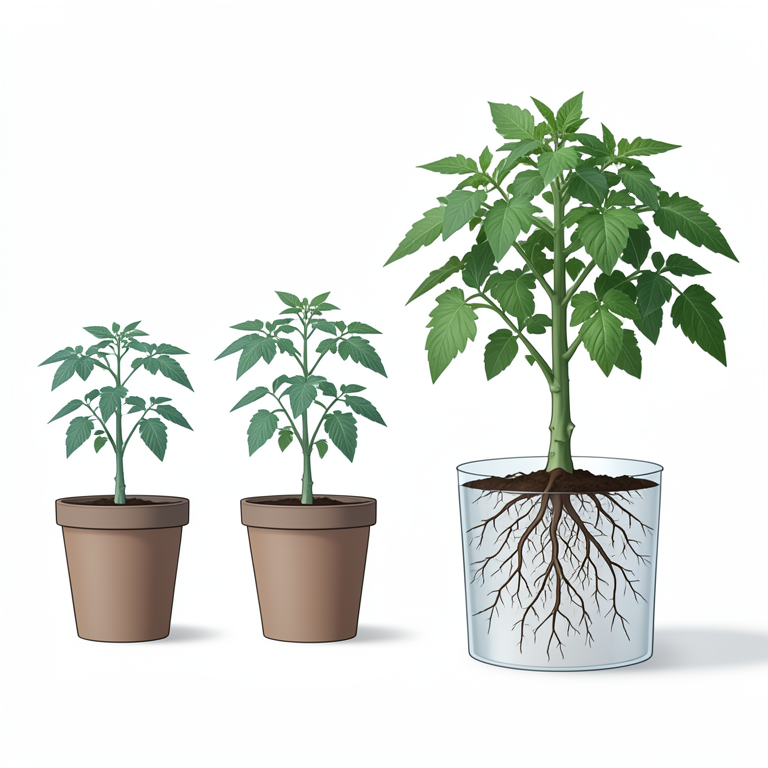
Comparative Biomass Growth
AI-generated conceptual illustration (tomato plants (Solanum lycopersicum L.)). It explains the idea and does not show study data.
View source evidence ↗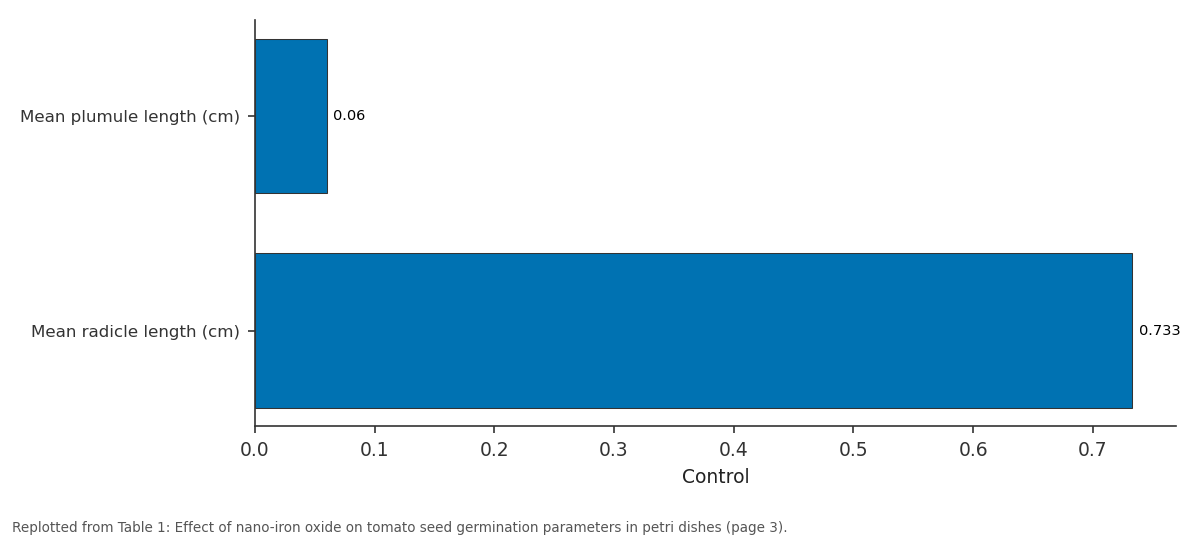
Control: Mean plumule length (cm) vs Mean radicle length (cm)
Replotted from Table 1 (page 3) of the original paper. Every bar is the paper's own table value.
View source evidence ↗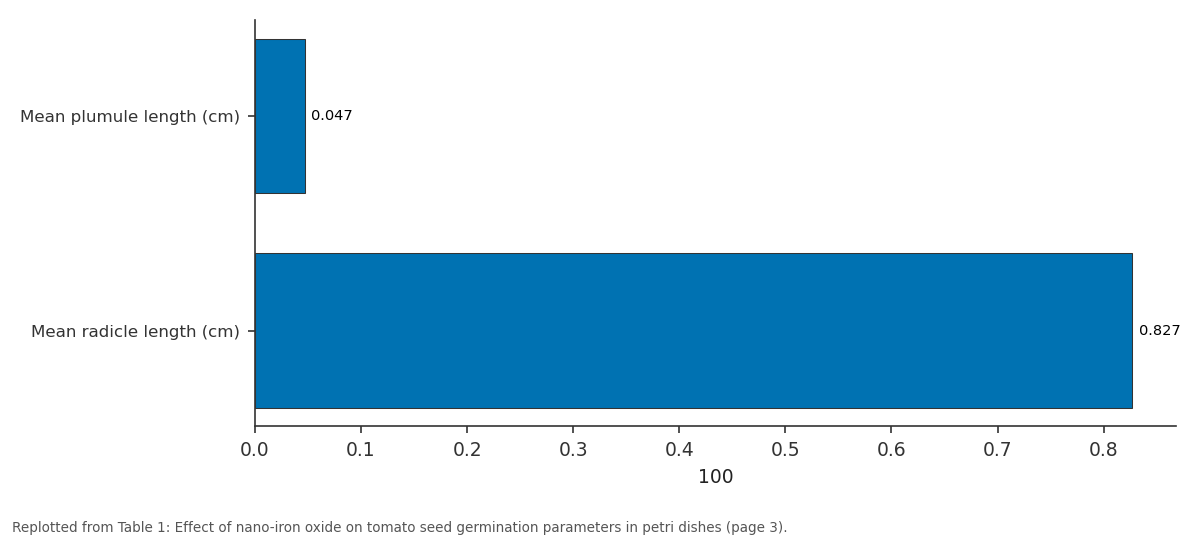
100: Mean plumule length (cm) vs Mean radicle length (cm)
Replotted from Table 1 (page 3) of the original paper. Every bar is the paper's own table value.
View source evidence ↗Figures & tables
From the original paper Table 1
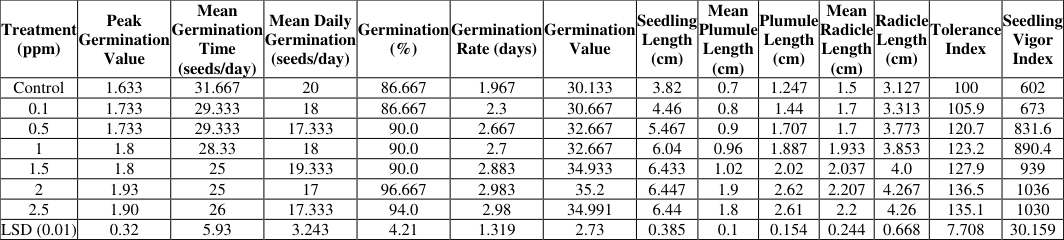 Table 2
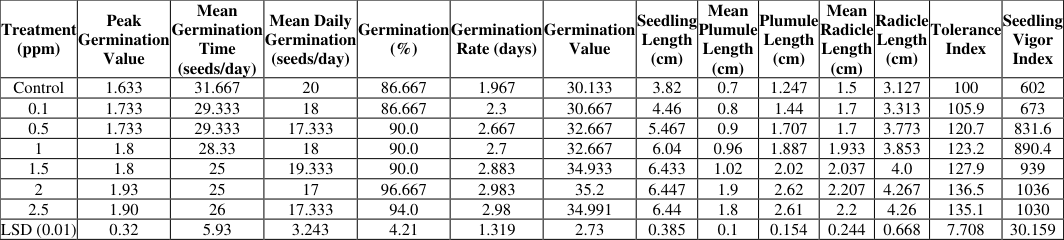 Table 3
 Table 4
 Table 5
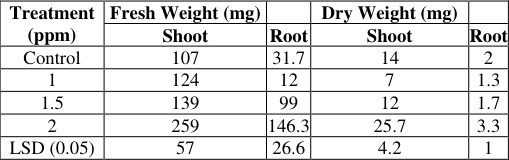 Table 6
 Table 7
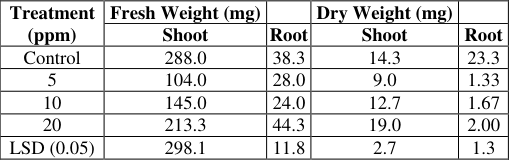 Table 8
 Table 9
Introduction
Tomato (Solanum lycopersicum L.) is one of the most important vegetable crops worldwide and in Iraq. It belongs to the family Solanaceae and represents a fundamental pillar of Iraqi agricultural production, as it is widely cultivated and significantly contributes to supporting the local economy and achieving food security. Data from the Food and Agriculture Organization (FAOSTAT, 2025) [21] indicate that tomato production in Iraq faces increasing challenges due to adverse environmental conditions and the widespread incidence of pests and plant diseases. With the growing environmental awareness of the harmful effects of chemical pesticides on human health and soil quality, it has become necessary to move toward sustainable and ecofriendly alternatives. Among these alternatives, salicylic acid is considered an effective compound that stimulates systemic acquired resistance mechanisms in plants, thereby enhancing their ability to withstand pathogenic stresses (Abass, 2017) [1] . In addition, nanotechnology applications, such as nano-iron, have demonstrated significant potential in enhancing plant immunity and improving resistance to both biotic and abiotic stresses (Abd Oun, 2023) [4] . Treating tomato plants with silver nanoparticles under field conditions resulted in a positive effect, represented by an increase in the internal content of chlorophyll and carotenoid pigments, as well as an enhancement in the activity of the enzyme polyphenol oxidase, indicating their role in improving the physiological efficiency of the plant (Mahawar et al., 2020) [35] .
International Journal of Agriculture and Nutrition https://www.agriculturejournal.net
An experiment was conducted to study the effect of foliar spraying with salicylic acid on some physiological traits and the productivity of cherry tomato plants (cv. Batil) using four levels of salicylic acid. The results showed that the high concentration of salicylic acid (150) achieved significant increases in all studied traits, including NPK content, leaf area, and yield (AL-Mafargy et al., 2020) [9] . This study aims to evaluate the efficiency of both nano-iron and salicylic acid in improving tomato seed germination parameters, as well as to assess the physiological responses and potential phytotoxic effects of these treatments on tomato plant growth.
Materials and Methods
Effect of Nano-Iron Oxide, Salicylic Acid, and Rizolex on Tomato Seed Germination under Laboratory Conditions. Salicylic acid and nano-iron particles (30-50 nm) were obtained from Skyspring Nanomaterials Inc. (USA). The fungicide was obtained from Greenriver Industry Co., Ltd., a Chinese company specialized in the manufacture of agricultural pesticides. Tomato seeds (cv. Asma F1) were obtained from Green Gold Company.
The experiment was conducted in the laboratories of the Department of Plant Protection, College of Agriculture, University of Misan. Tomato (Solanum lycopersicum L.) seeds of the cultivar Asma F1 were used. Seeds were surface-sterilized with 10% sodium hypochlorite solution for 5 min, thoroughly rinsed with distilled water, and airdried. Ten seeds were placed in each Petri dish lined with sterile filter paper and evenly distributed. Five milliliters of treatment solutions were added as follows: nano-iron oxide at concentrations of 100, 200, and 300 ppm; salicylic acid at concentrations of 0.5, 1.0, 1.5, 2.0, and 2.5 ppm; and the fungicide Rizolex at concentrations of 5, 10, and 20 ppm, in addition to a control treatment (distilled water). The Petri dishes were incubated at 25 ± 2 °C. After 10 days of incubation, the following germination parameters were recorded:
1. Peak value of germination (PV): Calculated according to Czabator (1962) [17] .
Mean germination time (MGT): Calculated following
Ellis and Roberts (1981) [20] .
Mean daily germination (MDG):
Calculated using the equation of Czabator (1962) [17] .
Germination percentage (GP): Calculated as:
GP (%) = (Number of germinated seeds / Total number of seeds) × 100.
Germination rate (GR): Calculated according to
Germination rate (GR): Calculated according to
Germination value (GV): Calculated as:
GV = PV × MDG (Czabator, 1962) [17] . 7. Plumule and radicle length (cm): Five normal seedlings were randomly selected from each treatment, and the lengths of plumule and radicle were measured and averaged (AOSA, 1983).
Tolerance index (TI): Calculated according to Iqbal
and Rahmati (1992) [28] . 9. Seedling vigor index (SVI): Calculated using the equation of Abdul-Baki and Anderson (1973) [3] .
Effect of Nano-Iron Oxide, Salicylic Acid, and Rizolex on Tomato Plant Growth under Pot Conditions. The pot experiment was conducted using plastic pots with a capacity of 3 kg, filled with sterilized soil. Tomato seedlings (cv. Asma F1) were transplanted at a rate of three seedlings per pot, with three replicates per treatment.
Plants were treated with nano-iron oxide at concentrations of 100, 200, and 300 ppm, followed by salicylic acid at concentrations of 1, 1.5, and 2 ppm, and the fungicide Rizolex at concentrations of 5, 10, and 20 ppm, in addition to an untreated control. Treatments were applied as foliar sprays until runoff. Plants were maintained under greenhouse conditions and irrigated regularly. At the end of the experimental period, the following growth, physiological, and biochemical parameters were evaluated: Fresh and Dry Weight of Shoot and Root Systems (g) Fresh weight was measured by harvesting three plants per treatment, cutting them at the soil surface, and immediately weighing them using a sensitive balance. For dry weight determination, samples were oven-dried at 60 °C for 72 h until constant weight and then weighed.
Chlorophyll pigments
Chlorophyll a, chlorophyll b, and total chlorophyll contents were determined according to Arnon (1949). Briefly, 200 mg of fresh leaf tissue was homogenized in 8 mL of 80% acetone, centrifuged at 3000 rpm for 10 min, and absorbance was recorded at 645 and 665 nm using a spectrophotometer. Pigment concentrations were calculated using the equations of Ranganna (1977).
Free proline content
Proline content was determined following Bates et al.
(1973) [14] . 0.5 g of fresh leaf tissue was homogenized in 10 mL of 3% sulfosalicylic acid, centrifuged at 6000 rpm for 10 min, and reacted with acid ninhydrin reagent. After incubation at 100 °C for 1 h, absorbance was measured at 520 nm, and proline concentration was expressed as µmol g⁻¹ fresh weight
Hydrogen peroxide (H₂O₂) content
Hydrogen peroxide content was determined according to Sergiev et al. (1997) [46] . Leaf tissue (0.5 g) was extracted in 0.1% trichloroacetic acid, centrifuged at 13,000 rpm for 15 min, and the supernatant was reacted with potassium phosphate buffer and potassium iodide. Absorbance was recorded at 390 nm, and H₂O₂ concentration was calculated using a standard curve.
Total carbohydrate content
Total carbohydrate content was determined according to Dubois et al. (1956) [18] . Dried leaf tissue (0.1 g) was extracted with 80% ethanol, reacted with phenol and concentrated sulfuric acid, and absorbance was measured at 490 nm using a spectrophotometer.
Experimental design and statistical analysis
Data were subjected to analysis of variance (ANOVA) under a completely randomized design (CRD) with three replicates. Means were compared using the Least Significant Difference (LSD) test at p ≤ 0.01 for the laboratory experiment and p ≤ 0.05 for the pot experiment.
Results and Discussion
Results and Discussion
Effect of nano-iron oxide on tomato seed germination parameters in petri dishes
The results presented in increased markedly to 318.3 and 4149, respectively, at 300 ppm, compared with 100 and 1084.8 in the control. All differences among treatments were statistically significant at p ≤ 0.01. These results can be attributed to the unique physicochemical properties of nano-iron particles, including large surface area, high reactivity, and enhanced solubility, which facilitate their interaction with cellular membranes and internal cellular components, thereby improving physiological processes related to seed germination and early growth (Feng et al., 2022) [22] . Moreover, seed priming with metallic nanoparticles stimulates enzymatic activities such as amylase and protease, promoting the mobilization of stored reserves required for embryo development and germination (Abid et al., 2022) [5] . [19] . [38] . The active ingredient, Tolclofos-methyl, acts as a protective fungicide, preventing early infections and producing healthier, stronger seedlings.
Effect of nano-iron oxide on fresh and dry weight of tomato plants in pots
The results (Table 4) indicated that nano-iron oxide concentrations (100, 200, 300 ppm) significantly influenced the fresh and dry weights of both shoot and root systems in tomato plants. The highest concentration (300 ppm) recorded the greatest fresh weight (290 mg for shoots and 142.2 mg for roots) and dry weight (19 mg for shoots and 3 mg for roots), with statistically significant differences compared to the control.
| Treatment (ppm) | Fresh Weight of Shoot (mg) | Fresh Weight of Root (mg) | Dry Weight of Shoot (mg) | Dry Weight of Root (mg) |
|---|---|---|---|---|
| Control | 282 | 33 | 13 | 2.33 |
| 100 | 130 | 37 | 9 | 1.33 |
| 200 | 190 | 77 | 12.7 | 2.33 |
| 300 | 290 | 142.2 | 19 | 3 |
| LSD 0.05 | 60 | 83.7 | 3.6 | 0. 9 |
Table text extracted from the original PDF; superscript letters are shown inline. The original table image is below.
View original table image
Nano-iron oxide is considered a promising alternative to conventional iron supplements in agriculture, as it enhances plant growth, increases fresh and dry weight, and stimulates secondary metabolite production by improving iron uptake and activating physiological processes within the plant (Irum et al., 2020). Another study on soybean showed that 0.75 ppm of nano-iron oxide significantly increased fresh and dry weights of leaves and pods (Sheykhbaglou et al., 2010) [39] . [16,15,32,40] .
Free proline content
Nano-iron oxide treatment resulted in a significant reduction in leaf free proline content. The lowest value was observed at 300 ppm (0.570 µmol g⁻¹) compared to 0.607 µmol g⁻¹ in the control, indicating reduced oxidative stress and better physiological status of the plants. This reflects the activation of osmotic adjustment and stress adaptation mechanisms (Alhaithloul, 2023; Singh et al., 2024) [8,40] .
Hydrogen peroxide (H₂O₂) content
H₂O₂ levels decreased significantly with nano-iron treatment, reaching 0.850 mmol g⁻¹ at 300 ppm, compared to 1.295 mmol g⁻¹ in the control. This reduction is associated with enhanced activity of antioxidant enzymes, including superoxide dismutase (SOD), catalase (CAT), and peroxidase (POD), contributing to decreased oxidative damage in plant tissues (Manzoor et al., 2023) [34] .
Carbohydrate content
The highest carbohydrate content was observed at 300 ppm (16.32 mg g⁻¹), significantly higher than the control (11.05 mg g⁻¹). This increase is likely due to enhanced photosynthetic performance, higher chlorophyll content, and improved iron uptake, which together stimulate sugar accumulation in plant tissues (Yoon et al., 2019; Ghaseminezhad et al., 2022) [44,24] . Table (5).
Effect of salicylic acid on fresh and dry weight of tomato plants Results showed that salicylic acid at concentrations of 1, 1.5, and 2 ppm significantly affected the fresh and dry weight of both shoot and root systems. The highest increase was observed at 2 ppm, with fresh weight reaching 259m g for shoots and 148.3m g for roots, and dry weight reaching 52.7 mg for shoots and 3.3m g for roots, compared to the control values of 107 and 31,7m g (fresh weight) and 14 and 2m g (dry weight) for shoots and roots, respectively (Table 6). Salicylic acid enhances fresh and dry weight by stimulating essential metabolic processes, including improved photosynthetic efficiency and protein synthesis, which directly contribute to biomass accumulation in both shoots and roots (Van et al., 2022) [2] . [29,41,11] .
| Treatment (ppm) | Fresh Weight (mg) | — | Dry Weight (mg) | — |
|---|---|---|---|---|
| Shoot | Root | Shoot | Root | |
| Control | 107 | 31.7 | 14 | 2 |
| 1 | 124 | 12 | 7 | 1.3 |
| 1.5 | 139 | 99 | 12 | 1.7 |
| 2 | 259 | 146.3 | 25.7 | 3.3 |
| LSD (0.05) | 57 | 26.6 | 4.2 | 1 |
Table text extracted from the original PDF; superscript letters are shown inline. The original table image is below.
View original table image
Free proline content
Treatment with salicylic acid reduced leaf free proline levels. The lowest content was recorded at 2 ppm (0.527 µmol g⁻¹) compared to 0.607 µmol g⁻¹ in the control. This decrease results from the regulation of proline metabolism, where biosynthetic enzymes (γ-glutamyl kinase and pyrroline-5-carboxylate reductase) are downregulated, and proline oxidase activity is increased, enhancing proline degradation. This reflects improved stress adaptation and metabolic balance (Misra & Saxena, 2009) [36] . [27,26] . [10,25] . (Table 7). The positive effect of Rizolex on both fresh and dry weight is attributed to its role in promoting early growth of roots and stems (Vuyyuru et al., 2018) [43] . Other studies also reported that Rizolex treatment enhanced plant growth traits compared to the control. For dry weight, treated plants reached 7 g per plant, while fresh weight showed a balanced International Journal of Agriculture and Nutrition https://www.agriculturejournal.net increase compared to other treatments (Korayem et al., 2020) [30] . [31] , who observed a marked increase in chlorophyll pigments at 25 ppm.
Hydrogen peroxide (H₂O₂) content
Hydrogen peroxide (H₂O₂) content
Carbohydrate content
Carbohydrate content
Free proline content
Rizolex treatments significantly affected free proline levels, with the lowest value recorded at 20 ppm (0.563 µmol g⁻¹), compared with 0.607 µmol g⁻¹ in the control. This reduction indicates decreased stress intensity and improved physiological balance. Rizolex may transiently increase abscisic acid (ABA), influencing amino acid metabolism and proline turnover, thereby enhancing stress tolerance (Manivannan et al., 2007) [33] . Previous studies also reported a 30-75% reduction in proline content in tomato plants treated with recommended doses of Rizolex (Selim & Selim, 2019) [38] .
Hydrogen peroxide (H₂O₂) content
Statistical results (Figure 8) indicated that Rizolex significantly reduced leaf H₂O₂ levels, with the lowest concentration recorded at 20 ppm (1.084 mmol g⁻¹) compared with 1.295 mmol g⁻¹ in the control. This decrease reflects enhanced antioxidant defense mechanisms and reduced oxidative damage. Rizolex has been shown to limit ROS accumulation and protect membrane integrity, thereby improving plant physiological status (Velikova et al., 2000; Selim & Selim, 2019) [42,38] .
Carbohydrate content
Rizolex treatments significantly influenced carbohydrate content; however, no significant difference was observed between the 20 ppm treatment (10.27 mg g⁻¹) and the control (11.05 mg g⁻¹). This response may be related to reduced sink strength and limited translocation of sugars from leaves to growing tissues, resulting in carbohydrate retention in leaves (Zabalza et al., 2004) [45] . In contrast, Mystkowska (2023) [37] reported that Rizolex increased total and reducing sugars in potato tubers, indicating enhanced carbohydrate accumulation under certain growth conditions. (Table 9).
Conclusion
The study revealed that nano-iron and salicylic acid significantly enhanced tomato growth, increased chlorophyll and carbohydrate contents, and reduced proline and hydrogen peroxide accumulations, indicating improved physiological performance and reduced oxidative stress. In contrast, the Rizolex fungicide showed limited effects on physiological traits, slightly increasing some parameters such as fresh and dry weight and chlorophyll content, while its impact on carbohydrates, proline, and hydrogen peroxide was minimal.
It is recommended to use nano-iron or salicylic acid to enhance growth and physiological efficiency, limit the use of Rizolex to disease control only, and consider combining nano-iron with salicylic acid for potential synergistic effects to improve growth and productivity.
Acknowledgement
Acknowledgmentsextend my sincere thanks and gratitude to the Dean of the Faculty of Agriculture, University of Misan, for their continuous support and kind encouragement throughout the preparation of this research, which greatly facilitated the completion of this work in an academic and systematic manner. I also express my deep appreciation and gratitude to the Department of Plant Protection for providing all the scientific, laboratory, and practical expertise, which directly contributed to the success of this research and the achievement of its scientific objectives. I would also like to thank everyone who contributed, directly or indirectly, to supporting this work, and I pray that Almighty God rewards them all generously.
Figures and tables from the paper
| Treatment (ppm) | Fresh Weight (mg) | — | Dry Weight (mg) | — |
|---|---|---|---|---|
| Shoot | Root | Shoot | Root | |
| Control | 288.0 | 38.3 | 14.3 | 23.3 |
| 5 | 104.0 | 28.0 | 9.0 | 1.33 |
| 10 | 145.0 | 24.0 | 12.7 | 1.67 |
| 20 | 213.3 | 44.3 | 19.0 | 2.00 |
| LSD (0.05) | 298.1 | 11.8 | 2.7 | 1.3 |
Table text extracted from the original PDF; superscript letters are shown inline. The original table image is below.
View original table image
References
46 in the original paper- Abass MH. In vitro antifungal activity of different plant hormones on the growth and toxicity of Nigrospora spp. on date palm (Phoenix dactylifera L.). Open Plant Science Journal. 2017;10:10-20.
- Abdi N, Van Biljon A, Steyn C, Labuschagne MT. Salicylic acid improves growth and physiological attributes and salt tolerance differentially in two bread wheat cultivars. Plants. 2022;11(14):1853. International Journal of Agriculture and Nutrition https://www.agriculturejournal.net https://doi.org/10.3390/plants11141853
- Abdul-Baki AA, Anderson JD. Vigor determination in soybean seed by multiple criteria. Crop Science. 1973;13:630-633.
- Abd Oun AG. Phenotypic and genotypic identification of seed-borne fungi on some wheat cultivars with the determination of chemical compounds efficiency in reducing fungi and their products [Dissertation]. Basrah: University of Basrah; 2023.
- Abid MA, Kadhim DA, Aziz WJ. Iron oxide nanoparticle synthesis using trigonella and tomato extracts and their antibacterial activity. Materials Technology. 2022;37:547-554. https://doi.org/10.1080/10667857.2020.1863572
- Agrios GN. Plant pathology. 5th ed. Elsevier Academic Press; 2005.
- Ahmad A, Javad S, Iqbal S, Shahid T, Naz S, Shah AA, et al. Efficacy of soil drench and foliar application of iron nanoparticles on growth and physiology of tomato under cadmium stress. Scientific Reports. 2024;14:27920. https://doi.org/10.1038/s41598-024-27920
- Alhaithloul HAS. Comparative efficacy of silicon and iron oxide nanoparticles towards improving plant growth and mitigating arsenic toxicity in wheat. Ecotoxicology and Environmental Safety. 2023;249:114395.
- Al-Mafargy OK, Mohammed HA, Omar DG. The spraying effect of zinc and salicylic acid and their combination on the growth and production of cherry tomato plant. Plant Archives. 2020;20(2).
- Amin AA, Rashed MR, El-Abagy HMH. Physiological effect of indole-3-butyric acid and salicylic acid on onion plants. Journal of Applied Sciences Research. 2007;3(1):1554-1563.
- Anwar I, Bibi S, Mahmood A, Zia MA, Javaid MM, Ali L, et al. Impact of foliar spray of salicylic acid on pea under drought stress. BMC Plant Biology. 2025;25:1123.
- Arnon DI. Copper enzymes in isolated chloroplasts. Plant Physiology. 1949;24:1-15.
- Association of Official Seed Analysts. Seed vigor testing handbook. Lincoln (NE): Contribution No. 32; 1983.
- Bates LS, Waldren RP, Teare ID. Rapid determination of free proline for water stress studies. Plant and Soil. 1973;39:205-207.
- Briat JF, Dubos C, Gaymard F. Iron nutrition, biomass production, and plant product quality. Trends in Plant Science. 2015;20:33-40.
- Broadley M, Brown P, Cakmak I, Rengel Z, Zhao F. Function of nutrients: Micronutrients. In: Marschner P, editor. Marschner's mineral nutrition of higher plants. Academic Press; 2012. p. 191-248.
- Czabator FJ. Germination value: An index combining speed and completeness of pine seed germination. Forest Science. 1962;8:386-395.
- Dubois M, Gilles KA, Hamilton JK, Rebers PA, Smith F. Colorimetric method for determination of sugar. Analytical Chemistry. 1956;28:350-356.
- Dzib-Ek G, Villanueva-Couoh E, Garruña-Hernández R, Vergara-Yoisura S, Larqué-Saavedra A. Effect of salicylic acid on tomato germination and root growth. Revista Mexicana de Ciencias Agrícolas. 2021;12(4):735-740.
- Ellis RH, Roberts EH. The quantification of ageing and survival in orthodox seeds. Seed Science and Technology. 1981;9:373-409.
- FAOSTAT. Crop and livestock products. 2025. https://www.fao.org/faostat/en/#data/QCL
- Feng Y, Kreslavski VD, Shmarev AN, Ivanov AA, Zharmukhamedov SK, Shabala S. Effects of iron oxide nanoparticles on wheat. Plants. 2022;11(14):1894.
- Gatasheh MK, Shah AA, Noreen Z, Usman S, Shaffique S. FeONPs alleviate cadmium toxicity in eggplant. BMC Plant Biology. 2024;24:742.
- Ghaseminezhad M, Zamani Bahramabadi E, Rezanejad F, Afzali D. Physiological changes caused by iron oxide nanoparticles. Journal of Crop Improvement. 2022;36(4):604-618.
- Hashish KI, Azza AMM, Nahed GAA, Mahgoub MH. Influence of salicylic acid on Calendula officinalis. Journal of Agriculture. 2015;6:45-53.
- Hao W, Guo H, Zhang J, Hu G, Yao Y, Dong J. Hydrogen peroxide in salicylic acid signaling. Scientific World Journal. 2014;2014:843764.
- Husen A, Iqbal M, Sohrab SS, Ansari MKA. Salicylic acid alleviates salinity damage. Agriculture and Food Security. 2018;7:1-14.
- Iqbal MZ, Rahmati K. Tolerance of Albizia lebbeck to Cu and Fe. Ekologia. 1992;11:427-430.
- Khan W, Prithiviraj B, Smith D. Photosynthetic response to salicylates. Journal of Plant Physiology. 2003;160:485-492.
- Korayem AS, Abdelhafez AA, Zaki MM, Saleh EA. Biological control of damping-off disease. Egyptian Journal of Microbiology. 2020;55:87-94.
- Lakshmanan GMA, Jaleel CA, Gomathinayagam M, Panneerselvam R. Pigment accumulation induced by hexaconazole. Comptes Rendus Biologies. 2007;330:814-820.
- Mai HJ, Bauer P. Proteomic adaptive changes to iron deficiency. Current Plant Biology. 2016;5:45-56.
- Manivannan P, Jaleel CA, Sankar B, et al. Proline metabolism under drought stress. Colloids and Surfaces B: Biointerfaces. 2007;59:141-149.
- Manzoor N, Ali L, Al-Huqail AA, et al. Iron oxide nanoparticles mitigate arsenic toxicity. Ecotoxicology and Environmental Safety. 2023;264:115382.
- Mahawar H, Prasanna R, Gogoi R, Singh SB, Chawla G, Kumar A. Synergistic effects of silver nanoparticles augmented Calothrix elenkinii for enhanced biocontrol efficacy against Alternaria blight challenged tomato plants. 3 Biotech. 2020;10:1-10.
- Misra N, Saxena P. Effect of salicylic acid on proline metabolism. Plant Science. 2009;177:181-189.
- Mystkowska I, Zarzecka K, Ginter A, Gugała M, Sikorska A. Nitrogen content in potato tubers. Journal of Ecological Engineering. 2023;24(2).
- Selim DA, Selim AH. Effect of Rizolex fungicide on tomato. Journal of Plant Production. 2019;10(2):173184.
- Sheykhbaglou R, Sedghi M, Shishevan MT, Sharifi RS. Effects of nano-iron oxide on soybean. Notulae Scientia Biologicae. 2010;2(2):112-113.
- Singh N, Singh MK, Raghuvansi J, Yadav RK, Azim Z. Green synthesis of nano iron oxide. Biology and Biotechnology. 2024;12(2):173-181.
- Szepesi A, Csiszar J, Bajkan S, et al. Role of salicylic acid pre-treatment. Acta Biologica Szegediensis. 2005;49:123-125.
- Velikova V, Yordanov I, Edreva A. Oxidative stress in bean plants. Plant Science. 2000;151:59-66.
- Vuyyuru M, Sandhu HS, McCray JM, Raid RN. Effects of fungicides on sugarcane. Agronomy. 2018;8(10):223.
- Yoon H, Kang YG, Chang YS, Kim JH. Effects of zerovalent iron nanoparticles. Nanomaterials. 2019;9(11):1543.
- Zabalza A, Orcaray L, Gaston S, Royuela M. Carbohydrate accumulation in herbicide-treated plants. Journal of Agricultural and Food Chemistry. 2004;52:7601-7606.
- Sergiev I, Alexieva V, Karanov E. Effect of spermine, atrazine and combination between them on some endogenous protective systems and stress markers in plants. Compt Rend Acad Bulg Sci. 1997;51(3):121124.