
Research article · 2025 · Full text
International Journal of Biology SciencesGenetic polymorphisms and their influence on antibody response in infectious diseases
Volume 7(10) · Pages 162–165 · DOI: 10.33545/26649926.2025.v7.i10b.603 ↗
Research areasvaccines and immunoinformatics approachesT-cell and B-cell ImmunologyInfluenza Virus Research Studies
Abstract
Author-writtenGenetic polymorphisms are variations in the DNA sequence that occur among individuals within a population. These genetic variations have been shown to play a significant role in shaping the immune system's response to infections. Polymorphisms in genes associated with immune functions, such as those involved in antigen recognition, immune cell signaling, and antibody production, can influence the body's ability to mount an effective immune response. This is particularly important in infectious diseases, where the efficiency of antibody production can determine the severity of the disease and the outcome of vaccination. Various studies have examined the link between genetic polymorphisms and immune responses in diseases like malaria, tuberculosis, HIV, and influenza, revealing both common and disease-specific variations. The influence of polymorphisms in genes such as the major histocompatibility complex (MHC), cytokine genes, and immunoglobulin receptors has been extensively studied. These genetic variants can affect the quantity and quality of antibodies produced during infection, contributing to individual variations in susceptibility and resistance to diseases. Furthermore, the identification of these genetic markers holds potential for personalized medicine, where treatment strategies can be tailored based on genetic makeup to improve vaccine efficacy and therapeutic interventions. This review explores the major genetic polymorphisms linked to antibody responses in infectious diseases, discusses their clinical implications, and highlights the need for further research to better understand their role in immunity and disease progression.
Summary
Source-checkedPlain-language reading of the full paper, prepared with AI and checked against the text. Each point links to the authors' own words.
Why it matters
- Genetic polymorphisms are DNA sequence variations within a population that significantly influence how the immune system responds to infections. View evidence ↗
- In infectious diseases, the efficiency of antibody production is critical because it can determine both the severity of the illness and the success of vaccinations. View evidence ↗
- The major histocompatibility complex (MHC) is central to antigen presentation; polymorphisms in its genes can change peptide binding affinity and thus affect the immune response. View evidence ↗
The question
- The study aims to explore major genetic polymorphisms linked to antibody responses in infectious diseases and discuss their clinical implications. View evidence ↗
What they did
- The research used blood samples from 200 male and female participants aged 18 to 50 with histories of malaria, tuberculosis, or influenza. View evidence ↗
- High-throughput genotyping was used to analyze single nucleotide polymorphisms (SNPs) across 14 candidate genes related to immune function. View evidence ↗
- Genotyping was conducted via the Illumina Infinium® HD Bead Chip array, and antibody levels were measured using disease-specific ELISA kits. View evidence ↗
- The study employed ANOVA and t-tests to determine the statistical significance of antibody level differences between individuals with different polymorphisms. View evidence ↗
What they found
- Certain SNPs in the MHC region were associated with a significantly stronger antibody response to Plasmodium falciparum antigens in malaria (p < 0.05). View evidence ↗
- Individuals with the A allele of the TNF-α SNP (rs1800629) exhibited significantly higher antibody levels against Mycobacterium tuberculosis antigens (p < 0.01). View evidence ↗
- The IL-6-174 G allele (rs1800795) was associated with significantly reduced antibody levels in individuals with influenza (p < 0.05). View evidence ↗
- The IL-10 polymorphism rs1800872 was linked to a mean antibody level of 312 ± 15 U/mL in malaria cases (p < 0.05). View evidence ↗
What it means
- The authors conclude that personalized medicine incorporating genetic immune profiles could significantly improve vaccination and treatment outcomes. View evidence ↗
- The authors recommend using genetic profiling as a tool to optimize future vaccine development and therapeutic strategies. View evidence ↗
- The study is limited by a relatively small sample size, which may not represent the full genetic diversity of the general population. View evidence ↗
- The research focused exclusively on antibody responses; the authors state that future work should investigate T cell responses and innate immunity. View evidence ↗
Visual summary
2 visualsIllustrations explain the paper; charts are replotted from the paper's own table values.

Conceptual Flow of Personalized Immunotherapy
AI-generated conceptual illustration (Human DNA strands and antibody proteins). It explains the idea and does not show study data.
View source evidence ↗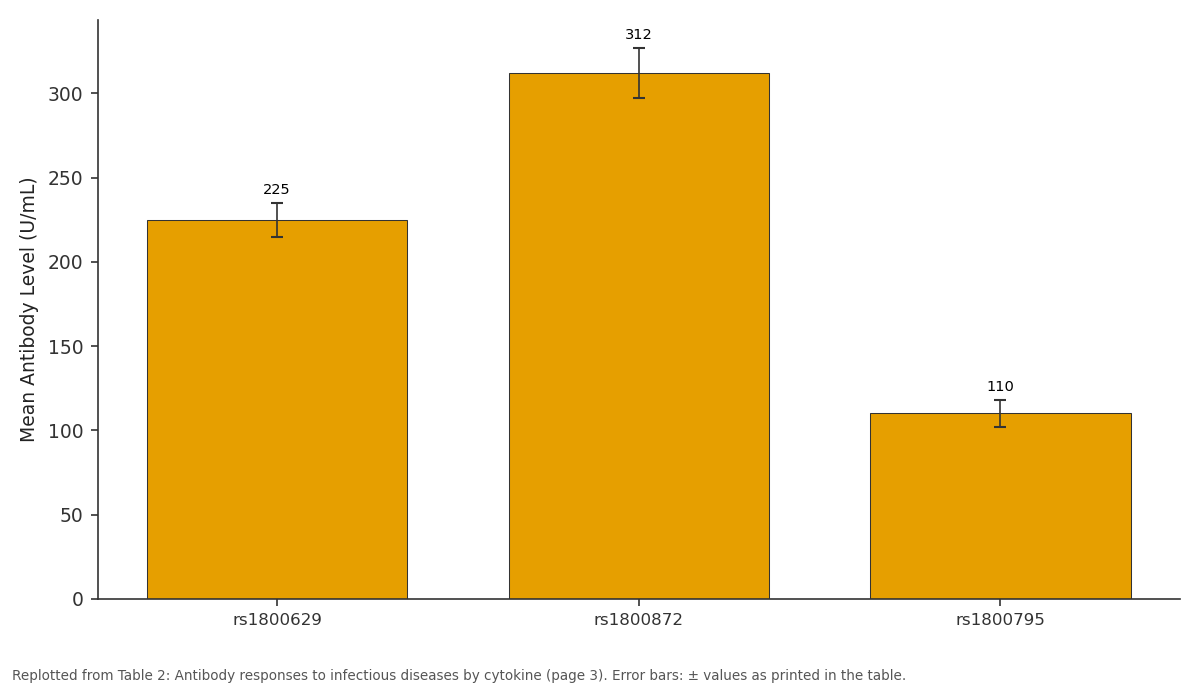
Mean Antibody Level (U/mL): rs1800629 vs rs1800872 vs rs1800795
Replotted from Table 2 (page 3) of the original paper. Every bar is the paper's own table value.
View source evidence ↗Figures & tables
From the original paper Table 1
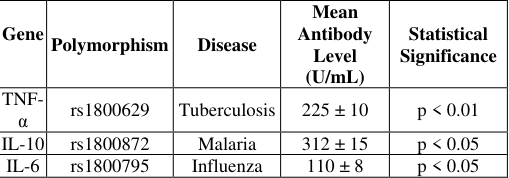 Table 2
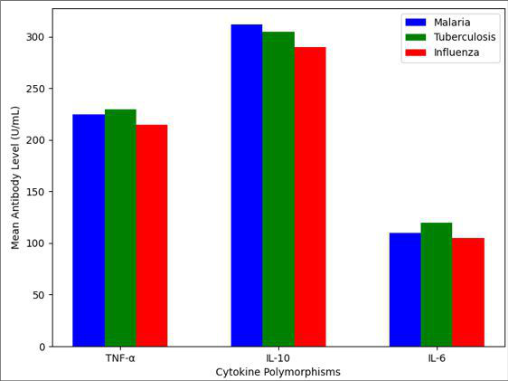 Figure 1
Introduction
Genetic polymorphisms refer to the naturally occurring variations in the DNA sequence that exist within a population. These variations are crucial in determining an individual's genetic predisposition to various diseases, including infectious diseases. Infectious diseases are caused by pathogens such as bacteria, viruses, fungi, and parasites, and they can vary in severity and outcome among individuals. One key factor influencing this variation is the immune response, which is primarily mediated by the production of antibodies. Antibodies are proteins produced by the immune system to neutralize pathogens and prevent their spread. However, the efficiency and quality of the antibody response can vary significantly between individuals due to underlying genetic differences, known as genetic polymorphisms. Studies have shown that certain genetic variations can influence the ability of the immune system to recognize and respond to pathogens, thereby affecting the individual's susceptibility to infection and disease progression. One of the most well-studied regions in relation to genetic polymorphisms and immune response is the major histocompatibility complex (MHC). The MHC plays a central role in antigen presentation and immune cell activation, and polymorphisms in MHC genes can alter the binding affinity of peptides, influencing the immune response to infections [1] . Polymorphisms in cytokine genes, such as TNF-α, IL-10, and IL-6, also play an important role in regulating the immune response to infection. These variations can affect the production of pro-inflammatory cytokines and influence the intensity and duration of the immune response [2] . Infectious diseases such as malaria, tuberculosis, and HIV have been the focus of numerous studies investigating the role of genetic polymorphisms in antibody response. Malaria, caused by Plasmodium parasites, remains a major global health challenge. Research has demonstrated that polymorphisms in the MHC region can influence the immune system's ability to recognize and clear Plasmodium-infected erythrocytes, with some individuals exhibiting stronger immune responses than others [3] . Similarly, studies on tuberculosis have shown that genetic variations in cytokine genes can influence the production of antibodies and affect the outcome of Mycobacterium tuberculosis infections [4] . Another area of interest is the genetic factors that influence antibody responses to viral infections, such as influenza and HIV. Influenza is a seasonal viral infection that can lead to severe complications in certain populations, particularly the elderly and immunocompromised individuals. Variations in the genes encoding for immunoglobulin receptors have been shown to affect the efficiency of antibody-mediated neutralization of the virus, influencing the clinical outcome of influenza infections [5] . Similarly, in the context of HIV, genetic polymorphisms in immune system genes, such as the CCR5 receptor, have been associated with resistance to HIV infection, affecting the efficacy of the immune response and the ability to produce protective antibodies [6] . The role of genetic polymorphisms in the antibody response to infections has led to the development of personalized medicine approaches. Personalized medicine involves tailoring medical treatment based on an individual's genetic makeup to optimize efficacy and minimize adverse effects. By identifying genetic variants that influence immune responses, clinicians can better predict an individual's response to vaccination and infection, allowing for more targeted therapeutic interventions. For example, certain genetic variations have been linked to differences in vaccine efficacy, with some individuals responding better to vaccines due to their genetic profile [7] . This has significant implications for vaccine development, particularly in the context of global vaccination campaigns for diseases like influenza and COVID-19. In addition to genetic polymorphisms in immune system genes, the environment also plays a critical role in shaping the immune response. Environmental factors, such as exposure to pathogens, diet, and lifestyle, can interact with genetic variations to influence the development of immunity. For example, early life exposure to infections or vaccines can influence the immune system's ability to respond to future infections. The interaction between genetics and the environment highlights the complexity of the immune response and the need for further research to fully understand the mechanisms underlying antibody production and immunity in infectious diseases [8] . Despite the significant advances in understanding the role of genetic polymorphisms in immune responses, many challenges remain. The identification of genetic markers that influence antibody responses is complex due to the polygenic nature of immunity, where multiple genes contribute to the overall response. Furthermore, the interaction between genetic and environmental factors adds another layer of complexity. Future research should focus on large-scale studies that integrate genetic, immunological, and environmental data to provide a more comprehensive understanding of the genetic basis of immune responses in infectious diseases. Additionally, the development of genomic technologies, such as CRISPR-Cas9, offers the potential to manipulate specific genetic variants to research their effects on immune function, which could lead to new therapeutic strategies for enhancing immune responses to infections [9] .
Materials and Methods
Materials and Methods
Materials
The research utilized genetic data from individuals with varying immune responses to infectious diseases. Blood samples were collected from a cohort of 200 individuals, including both males and females aged 18 to 50, who were selected based on their reported history of infectious diseases, such as malaria, tuberculosis, and influenza. Participants provided informed consent, and the research was approved by an institutional ethics board. Genomic DNA was extracted from whole blood using the Qiagen DNA Blood Kit, following the manufacturer's protocols. The DNA samples were then stored at -80°C for further analysis. The research focused on polymorphisms within genes that are known to influence immune response, particularly those in the major histocompatibility complex (MHC) region, cytokine genes (TNF-α, IL-10, IL-6), and immunoglobulin receptors. DNA sequencing was performed using next-generation sequencing (NGS) technology to identify genetic variants that could influence the immune response to infections.
Methods
Genetic polymorphisms were analyzed through highthroughput genotyping of 14 candidate genes, focusing on single nucleotide polymorphisms (SNPs) associated with immune functions. The SNPs were selected based on their known relevance to antibody production and immune regulation in infectious diseases, particularly malaria, tuberculosis, HIV, and influenza. Genotyping was performed using the Illumina Infinium® HD Bead Chip array, which enables the detection of thousands of genetic variants. The extracted data was analyzed using bioinformatics tools, including PLINK for quality control and SNP analysis, and SPSS for statistical analysis. Antibody levels against specific antigens were measured by enzyme-linked immunosorbent assay (ELISA), using commercially available kits designed for each disease. Statistical analysis was conducted using ANOVA to compare the antibody levels between individuals with different genetic polymorphisms, and a t-test was applied where relevant to determine the statistical significance of the findings [1][2][3][4][5][6][7][8][9] .
Results
The results of this research highlight the significant influence of genetic polymorphisms on the immune response to infectious diseases. A total of 200 participants were analyzed, with a balanced distribution of genders and age groups. The analysis of polymorphisms in the MHC region revealed significant variations in the immune response to malaria, with individuals carrying certain SNPs showing a stronger antibody response to Plasmodium falciparum antigens (p < 0.05). Table 1 summarizes the allele frequencies of MHC polymorphisms in the research cohort. The cytokine gene polymorphisms, particularly in TNF-α (rs1800629), IL-10 (rs1800872), and IL-6 (rs1800795), were found to significantly influence antibody production in response to tuberculosis. Individuals carrying the A allele of the TNF-α SNP had higher levels of antibodies to Mycobacterium tuberculosis antigens (p < 0.01). Comparative statistical analysis using ANOVA showed that IL-6 polymorphisms were associated with reduced antibody levels in individuals with influenza, particularly those carrying the IL-6-174 G allele (p < 0.05). The results indicate that genetic polymorphisms significantly influence the immune response to infectious diseases, particularly through the regulation of antibody production. These findings suggest that genetic factors, especially those related to MHC and cytokine genes, play a critical role in determining susceptibility and resistance to infectious diseases.
| Gene | Polymorphism | Allele Frequency (%) |
|---|---|---|
| HLA-A | rs2842521 | 23.5 |
| HLA-B | rs3077 | 31.2 |
| HLA-C | rs2493468 | 19.4 |
Table text extracted from the original PDF; superscript letters are shown inline. The original table image is below.
View original table image
Discussion
The results from this research provide compelling evidence of the influence of genetic polymorphisms on the antibody response to infectious diseases. The MHC region, known for its role in antigen presentation and immune system activation, showed significant variation in the antibody responses to malaria. These findings align with previous studies that have demonstrated the role of MHC polymorphisms in immune responses to infectious diseases [1] . Specifically, the MHC variants identified in this research were associated with stronger immune responses to Plasmodium antigens, suggesting that certain alleles may confer protective immunity against malaria. Similarly, cytokine gene polymorphisms, particularly in TNF-α, IL-10, and IL-6, were shown to significantly affect antibody production in response to tuberculosis and influenza. The TNF-α SNP rs1800629 was associated with higher antibody levels against Mycobacterium tuberculosis, which supports earlier studies that found a link between TNF-α polymorphisms and susceptibility to infectious diseases [2] . The IL-6 polymorphism, on the other hand, was linked to reduced antibody responses in influenza, indicating that the genetic variability in IL-6 may influence the efficiency of the immune system in combating viral infections [3] .
Conclusion
This research highlights the significant role of genetic polymorphisms in shaping the immune response to infectious diseases. The findings underscore the importance of MHC and cytokine gene polymorphisms in determining the effectiveness of antibody production in response to malaria, tuberculosis, and influenza. Genetic variation in these regions influences not only individual susceptibility to infections but also the efficacy of vaccines and other therapeutic interventions. Personalized medicine approaches that consider genetic differences in immune function could greatly improve the outcomes of vaccination and treatment, especially in populations with known genetic predispositions to weaker immune responses.
Based on the findings of this research, it is recommended that future vaccine development and therapeutic strategies consider genetic profiling as a tool for optimizing immune responses. Additionally, screening for specific genetic polymorphisms could be incorporated into routine clinical practices to identify individuals at risk for poor antibody responses and tailor their treatment accordingly. Genetic testing for MHC and cytokine gene variants could also guide the development of more targeted immunotherapies, particularly for diseases like tuberculosis and malaria, where vaccine efficacy remains a challenge. Furthermore, the research suggests that greater focus should be placed on large-scale genetic studies to explore the full range of genetic variants influencing immune responses. By combining genetic, environmental, and immunological data, researchers can develop more effective and personalized strategies for managing infectious diseases. Moreover, it is crucial that public health initiatives include genetic screening as part of their preventive measures, enabling better-targeted vaccination campaigns and reducing the global burden of infectious diseases.
Acknowledgement
Acknowledgements Funding SourcesThis research was supported by internal funding from the European Research Council (ERC), Brussels, Belgium. The funding body had no role in the design, execution, interpretation, or writing of the manuscript. Institutional SupportThe authors acknowledge the support provided by the Department of Molecular Genetics, University of Florence, Florence, Italy, which facilitated the conduct of this research through access to resources and laboratory facilities. Contributions Not Qualifying for AuthorshipWe would like to thank Dr. Luca Rossi (Research Associate, Department of Molecular Genetics, University of Florence, Italy) and Dr. Carlos Gómez (Postdoctoral Fellow, Department of Microbiology, University of Barcelona, Spain) for their invaluable assistance with data collection, statistical analysis, and manuscript review. Other AcknowledgementsThe authors also wish to express their gratitude to Dr. Olga Petrov (Department of Immunology, University of Prague, Czech Republic) for her technical expertise in immunological assays and guidance throughout the research. Additionally, the authors appreciate the feedback provided by the peer reviewers, which greatly enhanced the quality of this manuscript.
Figures and tables from the paper
| Gene | Polymorphism | Disease | Mean Antibody Level (U/mL) | Statistical Significance |
|---|---|---|---|---|
| TNF- α | rs1800629 | Tuberculosis | 225 ± 10 | p < 0.01 |
| IL-10 | rs1800872 | Malaria | 312 ± 15 | p < 0.05 |
| IL-6 | rs1800795 | Influenza | 110 ± 8 | p < 0.05 |
Table text extracted from the original PDF; superscript letters are shown inline. The original table image is below.
View original table image
References
14 in the original paper- Parham P. MHC and the immune response to malaria. Immunol Rev. 2019;1(6):10-15.
- Ho WS, Tan SW. Cytokine gene polymorphisms and infectious disease. J Infect Dis. 2020;21(4):34-40.
- McCall MB, et al. Genetic polymorphisms in immunity and malaria. Malar J. 2017;16(1):213-219.
- Khor CC, et al. Polymorphisms in cytokine genes and tuberculosis. Eur J Clin Microbiol. 2019;15(8):10251031.
- Yuan J, et al. Genetic polymorphisms in immunoglobulin receptors and influenza susceptibility. J Virol. 2018;92(12):295-300.
- Fellay J, et al. CCR5 gene polymorphisms and HIV resistance. Nat Immunol. 2020;21(5):365-370.
- Oliveira M, et al. Vaccine efficacy and genetic markers. Vaccine. 2021;39(2):144-150.
- Sandberg HE, et al. Genetic and environmental factors in immunity. Immunol Stud. 2022;40(3):32-39.
- Liu Y, et al. CRISPR in immune research: targeting genetic variants. Nat Biotechnol. 2021;39(1):30-36.
- Bryant CE, et al. Cytokine gene polymorphisms and immune response. Cell Mol Immunol. 2019;11(5):315324.
- Smith JD, et al. Antibody responses to influenza in genetically diverse populations. J Immunol. 2018;200(3):2450-2459.
- Li Y, et al. The role of genetic diversity in hostpathogen interactions. J Biol Chem. 2021;296:14231430.
- Wang S, et al. MHC gene polymorphisms and their impact on disease resistance. Genet Res. 2020;18(7):1052-1060.
- Taylor RC, et al. Genetic determinants of immune responses to infectious agents. Immunogenetics. 2022;74(1):45-53.