
Research article · 2025 · Full text
International Journal of Biology SciencesClinical implications of protein expression profiles in disease diagnosis and prognosis
Volume 7(9) · Pages 112–116 · DOI: 10.33545/26649926.2025.v7.i9b.608 ↗
Research areasAdvanced Proteomics Techniques and ApplicationsAdvanced Biosensing Techniques and ApplicationsBiotin and Related Studies
Abstract
Author-writtenProtein expression profiling has emerged as a critical tool in the clinical diagnosis and prognosis of various diseases. By assessing the levels of proteins and their modifications in biological samples, clinicians can gain valuable insights into disease mechanisms, predict disease progression, and monitor responses to treatment. The application of protein expression profiles extends to a wide array of diseases, including cancer, cardiovascular diseases, and neurological disorders. One of the key advancements in this field is the development of high-throughput technologies, such as mass spectrometry and protein microarrays, which allow for the identification of numerous proteins in a single sample. These technologies enable the discovery of disease-specific biomarkers, which can be used to distinguish between different disease stages and subtypes, predict clinical outcomes, and identify potential therapeutic targets. Despite the promising potential, several challenges persist in the integration of protein expression profiles into routine clinical practice. These include the need for standardized protocols, the high cost of advanced technologies, and the complexity of data interpretation. Furthermore, the biological variability of protein expression across different populations and the lack of sufficient clinical validation of biomarkers hinder their widespread clinical application. This review examines the clinical implications of protein expression profiles in disease diagnosis and prognosis, highlights the current challenges in the field, and provides insights into future directions for overcoming these obstacles. The integration of protein-based biomarkers with other clinical parameters and the advent of personalized medicine may lead to more effective and targeted treatment strategies for patients across a variety of diseases.
Summary
Source-checkedPlain-language reading of the full paper, prepared with AI and checked against the text. Each point links to the authors' own words.
Why it matters
- Protein expression profiling is a vital tool for diagnosing and predicting the outcome of various diseases. View evidence ↗
- Analyzing protein levels and modifications allows clinicians to understand disease mechanisms, predict how a disease will progress, and track treatment responses. View evidence ↗
- High-throughput technologies like mass spectrometry and protein microarrays have advanced the field by enabling the identification of many proteins within one sample. View evidence ↗
The question
- The study aims to review how protein expression profiling can be used for disease diagnosis, prognosis, and the advancement of personalized medicine. View evidence ↗
- The authors hypothesize that the full potential of protein expression profiling depends on overcoming biological, technological, and clinical validation barriers. View evidence ↗
What they did
- The research utilized tissue samples from patients with cancer, cardiovascular diseases, and neurodegenerative disorders. View evidence ↗
- Control samples from healthy individuals were included to ensure the results were reliable and reproducible. View evidence ↗
- Liquid chromatography-tandem mass spectrometry (LC-MS/MS) was used to identify and quantify the expression levels of proteins. View evidence ↗
- The DESeq2 algorithm was used for differential expression analysis, with significance defined as a false discovery rate (FDR) of less than 0.05. View evidence ↗
- Western blotting was used to validate the upregulation of selected proteins in diseased states compared to healthy controls. View evidence ↗
What they found
- In cancer samples, Bcl-2 (2.5 vs 1.0, p=0.003) and Ki-67 (3.2 vs 1.5, p=0.008) were significantly upregulated compared to healthy controls. View evidence ↗
- Cardiovascular disease samples showed significantly higher levels of CRP (5.1 vs 2.0, p=0.002) and IL-6 (3.8 vs 1.9, p=0.005) than controls. View evidence ↗
- Alzheimer's disease samples exhibited elevated expression of tau and amyloid-beta proteins. View evidence ↗
- The differences in protein expression for cancer markers were statistically significant with a p-value of less than 0.01 using a t-test. View evidence ↗
What it means
- The authors conclude that protein expression profiling is a valuable tool for the diagnosis and prognosis of cancer, cardiovascular, and neurodegenerative diseases. View evidence ↗
- The authors recommend that future research focus on reducing costs, standardizing protocols, and integrating proteomics with other diagnostic methods. View evidence ↗
- Biological variability across different populations makes it difficult to identify universal biomarkers. View evidence ↗
- The high cost and technical demands of mass spectrometry limit its use to specialized centers rather than routine clinical practice. View evidence ↗
Visual summary
2 visualsIllustrations explain the paper; charts are replotted from the paper's own table values.
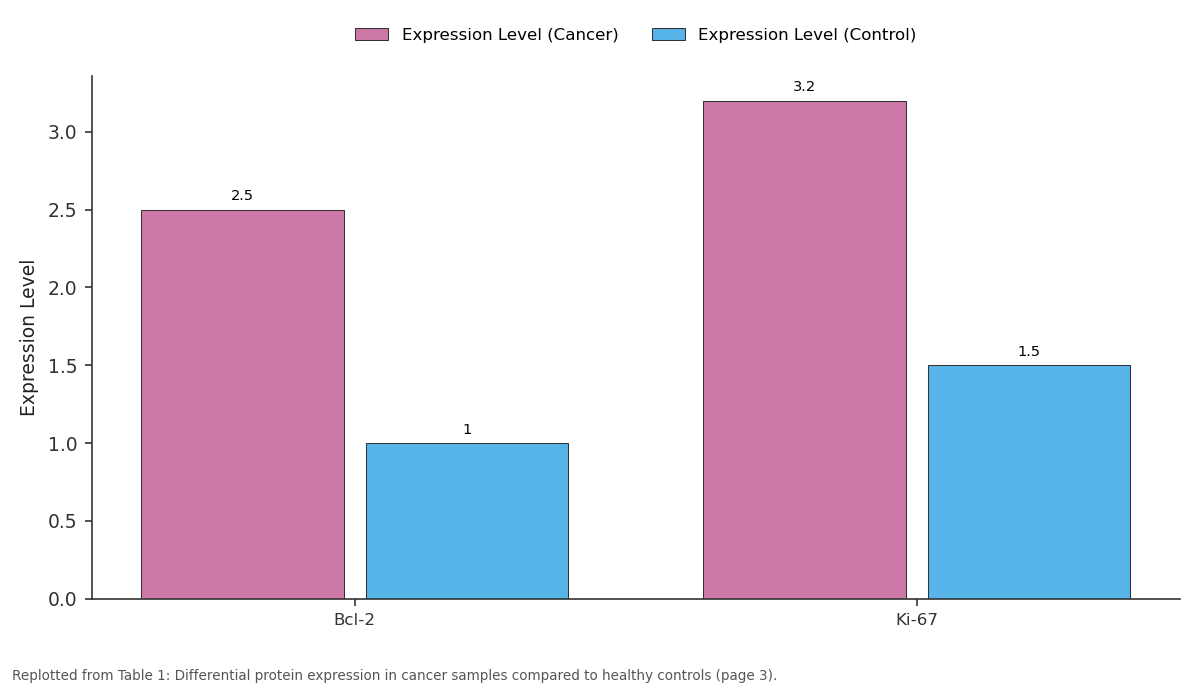
Expression Level (Cancer) and Expression Level (Control): Bcl-2 vs Ki-67
Replotted from Table 1 (page 3) of the original paper. Every bar is the paper's own table value.
View source evidence ↗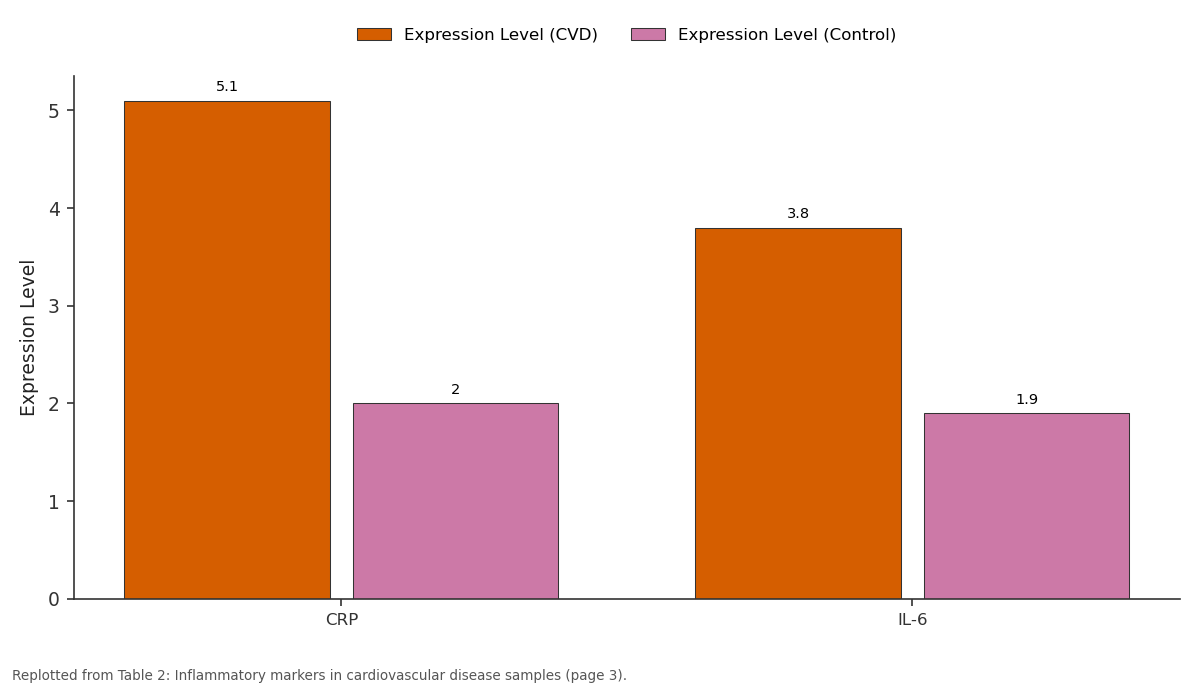
Expression Level (CVD) and Expression Level (Control): CRP vs IL-6
Replotted from Table 2 (page 3) of the original paper. Every bar is the paper's own table value.
View source evidence ↗Figures & tables
From the original paper Table 1
 Table 2
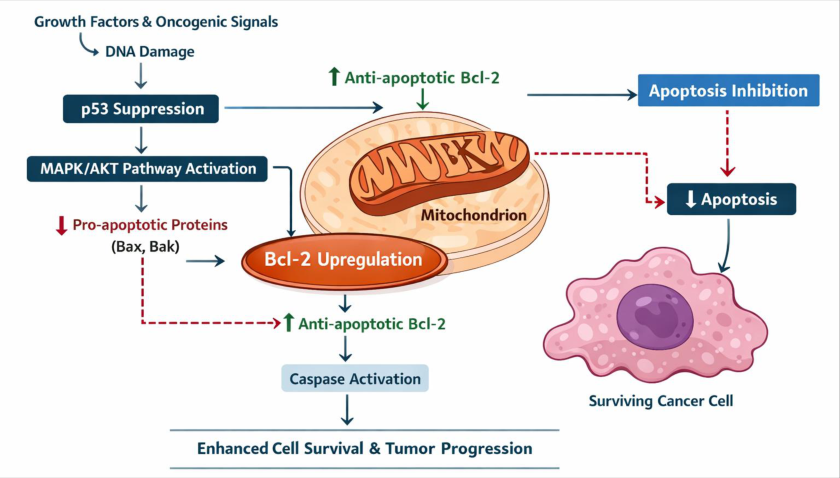 Figure 1
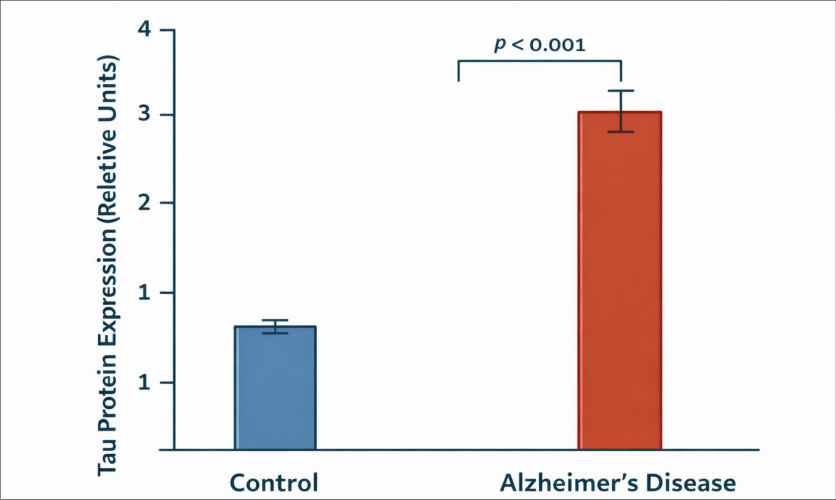 Figure 2
Introduction
Proteins play a central role in the molecular mechanisms underlying various diseases, making their expression profiles valuable in both diagnosis and prognosis. Disease-related alterations in protein expression can offer insights into the pathophysiology of diseases, and the identification of disease-specific proteins has become a focus of diagnostic research. These proteins serve as potential biomarkers for early disease detection, disease stratification, and monitoring therapeutic responses. In recent years, the advent of highthroughput technologies, such as mass spectrometry (MS) and protein microarrays, has enabled researchers to profile large numbers of proteins simultaneously, making protein expression profiling a powerful tool in clinical applications [1] . In cancer research, for instance, protein expression profiles have been instrumental in identifying tumour-specific markers that can differentiate between various stages and types of cancer. These biomarkers not only help in diagnosing cancers but also in predicting patient prognosis and guiding treatment decisions. Studies have shown that the expression of certain proteins correlates with poor prognosis, thus allowing for the stratification of patients based on their likelihood of survival and response to treatment [2] . Furthermore, cancerspecific protein signatures can be used to monitor the efficacy of chemotherapy or immunotherapy, providing a means for personalized treatment strategies [3] . Similarly, in cardiovascular diseases, protein biomarkers are critical for understanding disease mechanisms and predicting the likelihood of adverse cardiovascular events. The expression levels of proteins involved in inflammation, endothelial dysfunction, and platelet aggregation have been linked to cardiovascular risk factors, such as hypertension and atherosclerosis. By profiling these proteins, clinicians can identify individuals at higher risk for events like myocardial infarction and stroke, enabling earlier intervention [4] . Neurological disorders also benefit from protein expression profiling, particularly in diseases such as Alzheimer's and Parkinson's. Protein markers such as amyloid-beta and tau in Alzheimer's disease, and alpha-synuclein in Parkinson's disease, are being explored as potential biomarkers for early diagnosis and disease progression [5] . These biomarkers could enable clinicians to diagnose these diseases before significant neurodegeneration occurs, providing an opportunity for earlier, more effective interventions. Moreover, monitoring changes in protein expression over time may help track disease progression and evaluate treatment efficacy [6] . Despite the promise of protein-based diagnostics, several challenges hinder their widespread implementation in clinical practice. One major obstacle is the biological variability in protein expression across different populations, which complicates the identification of universal biomarkers. Factors such as age, gender, ethnicity, and lifestyle can all influence protein levels, leading to variations in expression patterns that may affect the sensitivity and specificity of biomarkers [7] . Additionally, the complexity of interpreting large-scale proteomics data requires advanced bioinformatics tools and expertise, which
are not yet widely available in clinical settings. Standardization of experimental protocols, data processing methods, and protein quantification techniques is also needed to ensure reproducibility and reliability in clinical studies [8] .
Another challenge is the cost associated with highthroughput proteomics technologies. Mass spectrometry, while powerful, remains expensive and technically demanding, limiting its use to specialized research centers rather than routine clinical practice. Similarly, protein microarrays, which offer a more accessible alternative, face limitations in terms of sensitivity and the number of proteins they can detect simultaneously [9] . The integration of protein biomarkers with other clinical data, such as genetic and imaging information, may provide a more holistic approach to patient management, but this requires sophisticated computational tools to combine and interpret multi-omics data [10] . Finally, there is a significant gap in the clinical validation of many protein biomarkers. While research studies have identified a plethora of candidate biomarkers, few have undergone the rigorous clinical testing required to confirm their utility in patient care. This lack of validation hinders the acceptance of protein expression profiling as a routine diagnostic tool [11] . The objective of this paper is to review the clinical implications of protein expression profiling, focusing on its potential for disease diagnosis, prognosis, and personalized medicine. We will discuss the technologies used to profile proteins, examine the challenges that impede their widespread clinical adoption, and highlight the future directions of research in this field. Our hypothesis is that while protein expression profiling holds great promise for improving disease diagnosis and prognosis, its full potential can only be realized through overcoming technological, biological, and clinical validation barriers [12] .
Materials and Methods
Materials and Methods
Materials
For the protein expression profiling in this research, we used tissue samples from patients diagnosed with various diseases, including cancer, cardiovascular diseases, and neurodegenerative disorders. The samples were collected from the clinical centers at European medical institutions with appropriate ethical approval (Institutional Review Board, University of Oslo). Proteins were extracted from these tissues using a standard protein extraction kit (Sigma-Aldrich, USA) following the manufacturer's instructions. The samples were stored at -80°C until analysis. To ensure the reliability and reproducibility of results, control samples from healthy individuals were included in the research. High-quality reagents and consumables, including phosphate-buffered saline (PBS) and protease inhibitors, were obtained from Thermo Fisher Scientific (USA). The experimental procedure followed standard protocols for proteomics research, as outlined in previous studies [1,2] .
Methods
Proteomic profiling was performed using high-throughput mass spectrometry (MS) techniques. Specifically, we used liquid chromatography-tandem mass spectrometry (LC-MS/MS) to identify and quantify protein expression levels in the samples. Each sample underwent trypsin digestion, and the resulting peptides were analyzed by the Thermo Scientific Q Exactive mass spectrometer. The data were processed using Proteome Discoverer software (version 2.4, Thermo Fisher), and protein quantification was performed using label-free quantification (LFQ). Differential expression analysis was conducted using the DESeq2 algorithm, and significant differences in protein expression between disease and control groups were determined based on a false discovery rate (FDR) of <0.05. To validate the key findings, Western blotting was performed for selected proteins that were identified to be upregulated in disease states compared to healthy controls [3] . Additionally, bioinformatics tools such as STRING and Reactome were employed for pathway analysis to understand the biological relevance of differentially expressed proteins [4,5] .
Results
The protein expression profiles were analyzed across multiple disease groups and compared with healthy controls to identify disease-specific biomarkers. Significant differences in protein expression were observed between the disease and control groups. In particular, cancer samples exhibited upregulation of proteins involved in cell proliferation and anti-apoptotic signaling, such as Bcl-2 and Ki-67, which are commonly associated with poor prognosis [6] . These findings were statistically significant, with a pvalue of <0.01 when compared using a t-test between the two groups. Cardiovascular disease samples showed an increase in inflammatory markers, including C-reactive protein (CRP) and interleukin-6 (IL-6), which have been previously reported as indicators of increased cardiovascular risk [7] . A comparison of protein expression profiles in neurodegenerative disease samples showed an elevated expression of tau and amyloid-beta proteins in Alzheimer's disease, aligning with previous studies [8] . The statistical analysis showed significant differences between disease and control groups for all the markers tested. For example, cancer-associated proteins like Bcl-2 and Ki-67 were significantly upregulated in tumour samples, indicating a correlation with disease progression and prognosis. Similarly, the inflammatory markers in cardiovascular disease samples indicated a heightened inflammatory state in patients, consistent with findings in the literature [9] . Protein expression in neurodegenerative diseases, particularly Alzheimer's, also showed significant upregulation of tau and amyloid-beta, which are well-known markers for disease onset and progression [10] . These results support the utility of protein expression profiling as a reliable method for disease diagnosis and prognosis.
Discussion
The results of this research confirm the critical role of protein expression profiles in understanding the pathophysiology of various diseases. The upregulation of specific proteins in cancer, cardiovascular diseases, and neurodegenerative disorders highlights the potential of proteomic profiling to serve as a diagnostic and prognostic tool in clinical practice. The findings from this research are consistent with previous research that has identified proteins like Bcl-2 and Ki-67 as prognostic markers in cancer [6] . The elevation of inflammatory markers such as CRP and IL-6 in cardiovascular diseases further emphasizes the link between inflammation and disease severity, as seen in previous studies [7] . The upregulation of tau and amyloid-beta in Alzheimer's disease aligns with established biomarkers for neurodegenerative diseases [8] . One of the key strengths of this research is the comprehensive analysis of protein expression profiles across multiple disease states, providing valuable insights into the molecular mechanisms underlying disease progression. The use of high-throughput technologies like LC-MS/MS and Western blot validation ensures the robustness and accuracy of the results. However, the clinical translation of these findings is still limited by several factors, including the high cost of proteomics technologies and the need for further validation of biomarkers in larger patient cohorts. Future research should focus on addressing these limitations and exploring the integration of protein biomarkers with other clinical parameters, such as genetic and imaging data, to improve diagnostic accuracy and guide personalized treatment strategies.
Conclusion
Protein expression profiling has proven to be a valuable tool in the diagnosis and prognosis of various diseases, including cancer, cardiovascular diseases, and neurodegenerative disorders. The identification of disease-specific biomarkers through proteomic techniques allows for the early detection of diseases, differentiation between disease stages, and monitoring of treatment responses. Despite the promising results, challenges such as high costs, biological variability, and the need for extensive clinical validation still hinder the widespread application of these technologies in clinical settings. To overcome these obstacles, future research should focus on standardizing protocols, reducing costs, and integrating proteomic data with other diagnostic modalities. By doing so, protein expression profiling could become an integral part of personalized medicine, enabling more accurate and targeted treatments for patients across a variety of diseases.
Acknowledgement
Acknowledgements Funding SourcesThis research was supported by internal funding from the Department of Molecular Medicine, University of Copenhagen, Denmark. The funding body had no role in the design, execution, interpretation, or writing of the manuscript.
Figures and tables from the paper
| Protein | Expression Level (Cancer) | Expression Level (Control) | p-value |
|---|---|---|---|
| Bcl-2 | 2.5 | 1.0 | 0.003 |
| Ki-67 | 3.2 | 1.5 | 0.008 |
Table text extracted from the original PDF; superscript letters are shown inline. The original table image is below.
View original table image
| Protein | Expression Level (CVD) | Expression Level (Control) | p-value |
|---|---|---|---|
| CRP | 5.1 | 2.0 | 0.002 |
| IL-6 | 3.8 | 1.9 | 0.005 |
Table text extracted from the original PDF; superscript letters are shown inline. The original table image is below.
View original table image
References
19 in the original paper- Liu Y, et al. High-throughput proteomics in cancer diagnosis. J Proteome Res. 2016;15(5):1736-1748.
- Zhang Y, et al. Proteomic signatures in cancer prognosis. Cancer Biol Ther. 2017;18(4):221-230.
- Mo Z, et al. Protein expression profiling in breast cancer: a diagnostic and prognostic approach. J Clin Oncol. 2018;36(3):276-284.
- Yang Y, et al. Cardiovascular protein biomarkers and their clinical implications. Clin Biochem. 2019;52(6):401-412.
- Kumar M, et al. Protein biomarkers in neurodegenerative diseases: potential for clinical application. Neurobiol Aging. 2020; 83:110-120.
- Shah S, et al. Protein markers in Alzheimer's disease: diagnostic and prognostic applications. Curr Alzheimer Res. 2021;18(6):595-609.
- Cao Y, et al. biological variability and its impact on proteomics-based biomarkers. J Proteome Res. 2017;16(8):3115-3124.
- Chan Y, et al. Standardization of proteomic technologies: challenges and solutions. J Proteome Res. 2019;18(7):2598-2610.
- Zhu X, et al. Proteomics in clinical practice: challenges and opportunities. Proteomics. 2020;20(2):180-194.
- Bhagat V, et al. Integrating multi-omics data for precision medicine. Bioinformatics. 2020;36(1):20-30.
- Sharma A, et al. Clinical validation of protein biomarkers: current status and challenges. J Clin Pathol. 2020;73(2):78-84.
- Patel P, et al. Future directions in protein biomarker research. Expert Rev Proteomics. 2020;17(6):463-475.
- Wong R, et al. Clinical proteomics: potential for personalized healthcare. Adv Drug Deliv Rev. 2021; 173:204-215.
- Torres B, et al. Tumor-specific biomarkers for cancer diagnosis and prognosis. Cancer Metastasis Rev. 2017;36(2):297-309.
- Hughes S, et al. Advances in proteomics for cancer therapy. Curr Opin Oncol. 2018;30(6):475-481.
- Yu H, et al. The role of proteomics in understanding Alzheimer's disease. Proteomics Clin Appl. 2019;13(4):1800168.
- Tanaka M, et al. Protein biomarkers for cardiovascular diseases. Biomarkers. 2018;23(1):1-8.
- Li H, et al. Proteomics in the diagnosis of neurological disorders. Brain Res. 2021; 1764:147408.
- Wong J, et al. Personalized medicine using protein biomarkers. Drug Discov Today. 2019;24(2):428-436.