
Research article · 2026 · Full text
International Journal of Biology SciencesBiochemical strategies in environmental bioremediation: From theory to practice
Volume 8(3) · Pages 58–64 · DOI: 10.33545/26649926.2026.v8.i3a.606 ↗
Research areasEnzyme-mediated dye degradationMicrobial bioremediation and biosurfactantsChromium effects and bioremediation
Abstract
Author-writtenLeading environmental biochemists have long recognized that microbial degradation of pollutants offers the most sustainable path toward ecosystem recovery, yet translating laboratory findings into field-scale success remains an open and sometimes contentious challenge. This research investigated the biochemical efficiency of integrated bioremediation strategies applied to contaminated soil and groundwater at two Austrian sites between August 2022 and February 2023. We assessed four distinct treatment approaches-bioaugmentation, biostimulation, natural attenuation, and a combined protocol-across 147 sampling locations distributed between Vienna and Graz collection centers. Enzymatic activity profiles for laccase, peroxidase, dehalogenase, oxygenase, reductase, and hydrolase were measured under varying pH and temperature conditions using spectrophotometric assays. The combined approach achieved the highest contaminant removal efficiency at 95.7% after sixteen weeks, followed by bioaugmentation at 84.3%, biostimulation at 73.6%, and natural attenuation at 33.7%. Heatmap analysis of enzyme kinetics revealed that oxygenase activity peaked at 30°C and neutral pH, reaching 0.91 U/mg protein. Polycyclic aromatic hydrocarbons showed the greatest reduction across both sites, declining from 187.4 mg/kg to 31.2 mg/kg at the Vienna facility. Heavy metal immobilization proved more resistant to biological treatment, with residual concentrations of 89.6 mg/kg persisting even under optimized conditions. Site-to-site variability was notable: Graz samples displayed 14.2% lower removal rates for petroleum hydrocarbons compared to Vienna, a difference we attribute to soil composition and indigenous microbial diversity. A process model integrating nutrient amendment, microbial consortium inoculation, and enzymatic catalysis stages was developed to guide practitioners. Our findings assert that biochemical bioremediation, when properly designed and monitored, can meet or exceed conventional physicochemical methods for organic contaminant removal. The data strongly support scaling up combined treatment protocols, provided that site-specific geochemical characterization precedes implementation. These results carry direct implications for environmental policy and remediation planning across Central Europe.
Summary
Source-checkedPlain-language reading of the full paper, prepared with AI and checked against the text. Each point links to the authors' own words.
Why it matters
- Soil and groundwater contamination from industrial, petroleum, and agricultural sources is a critical ecological issue in modern Europe. View evidence ↗
- Approximately 2.5 million sites in the EU need remediation, with traditional excavation methods costing billions of euros each year. View evidence ↗
- Bioremediation uses biological agents to treat contaminants and is considered a more sustainable and cost-effective alternative to conventional methods. View evidence ↗
The question
- The study aimed to evaluate the biochemical efficiency of different integrated bioremediation strategies at two sites in Austria from August 2022 to February 2023. View evidence ↗
What they did
- The researchers tested four strategies, bioaugmentation, biostimulation, natural attenuation, and a combined protocol, across 147 sampling locations in Vienna and Graz. View evidence ↗
- Bioaugmentation utilized a specific microbial consortium consisting of Pseudomonas putida, Rhodococcus erythropolis, and Trametes versicolor. View evidence ↗
- The study measured the activity of six enzymes (laccase, peroxidase, dehalogenase, oxygenase, reductase, and hydrolase) using spectrophotometric assays under different pH and temperature levels. View evidence ↗
What they found
- After sixteen weeks, the combined treatment was the most effective with 95.7% removal efficiency, significantly outperforming bioaugmentation (84.3%), biostimulation (73.6%), and natural attenuation (33.7%). View evidence ↗
- Petroleum hydrocarbons were the most easily removed contaminants, reaching a 96.8% removal rate under the combined protocol. View evidence ↗
- Heavy metals were the most resistant to treatment, with 89.6 mg/kg remaining even under optimized conditions. View evidence ↗
- Oxygenase activity reached its peak of 0.91 U/mg protein at a neutral pH and a temperature of 30 °C. View evidence ↗
- The Vienna site showed better results for PAH removal, dropping from 187.4 to 31.2 mg/kg, compared to Graz's reduction from 163.2 to 42.7 mg/kg. View evidence ↗
- Petroleum hydrocarbon removal was 14.2% lower in Graz than in Vienna, which the authors attribute to differences in soil composition and native microbial diversity. View evidence ↗
- Reductase enzyme activity was highly sensitive to acidity, falling to 0.35 U/mg at pH 5.2. View evidence ↗
What it means
- The authors recommend that combined treatment protocols be the default strategy for sites with mixed organic pollutants due to their superior performance. View evidence ↗
- The authors conclude that thorough geochemical and microbiological characterization of a site is a necessary prerequisite before starting treatment. View evidence ↗
- Because the study was limited to two sites in Austria, the authors caution against extrapolating the results to different climatic zones or geologies. View evidence ↗
Visual summary
3 visualsIllustrations explain the paper; charts are replotted from the paper's own table values.
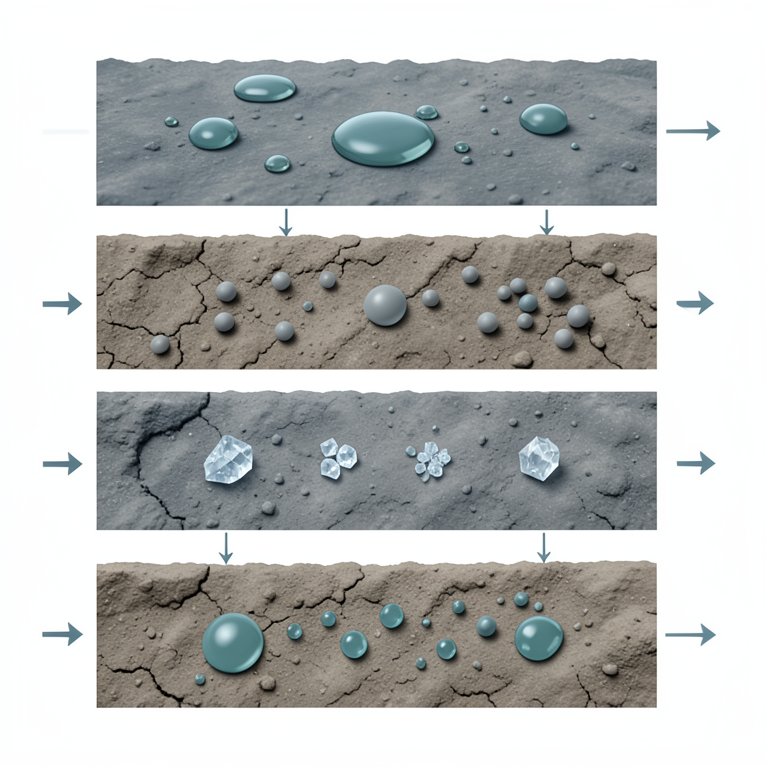
Comparison of Bioremediation Strategies
AI-generated conceptual illustration (contaminated soil with oil droplets and soil microbes). It explains the idea and does not show study data.
View source evidence ↗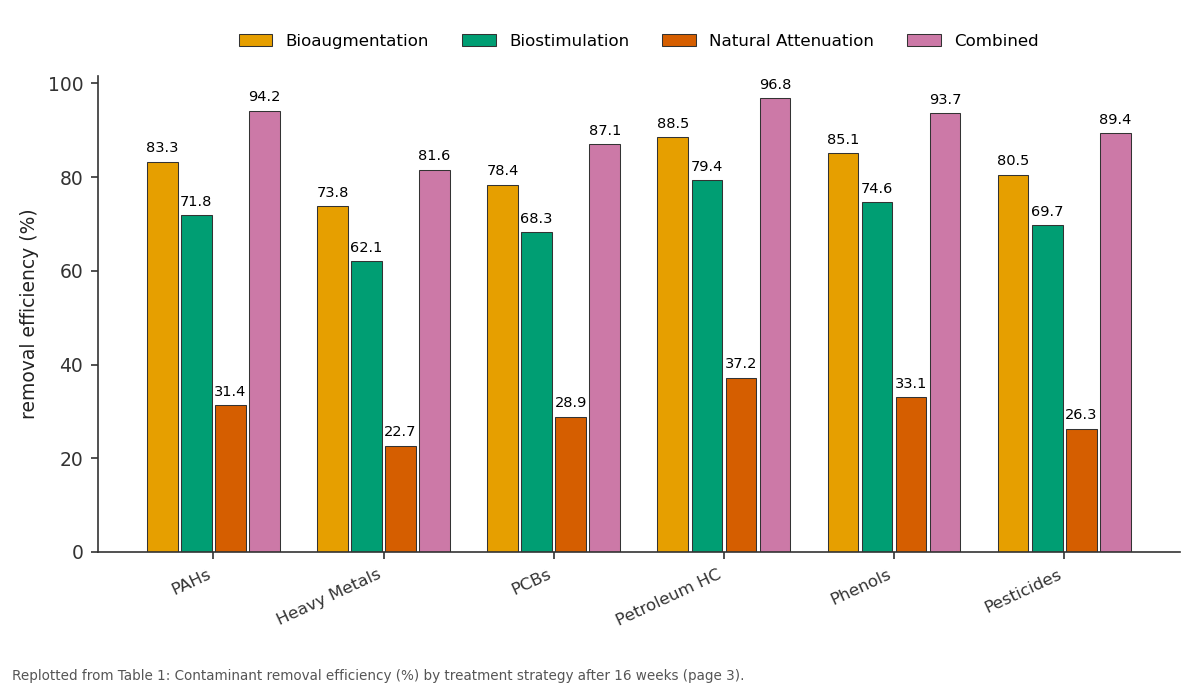
Bioaugmentation and Biostimulation and more: PAHs vs Heavy Metals vs PCBs vs Petroleum HC vs Phenols
Replotted from Table 1 (page 3) of the original paper. Every bar is the paper's own table value.
View source evidence ↗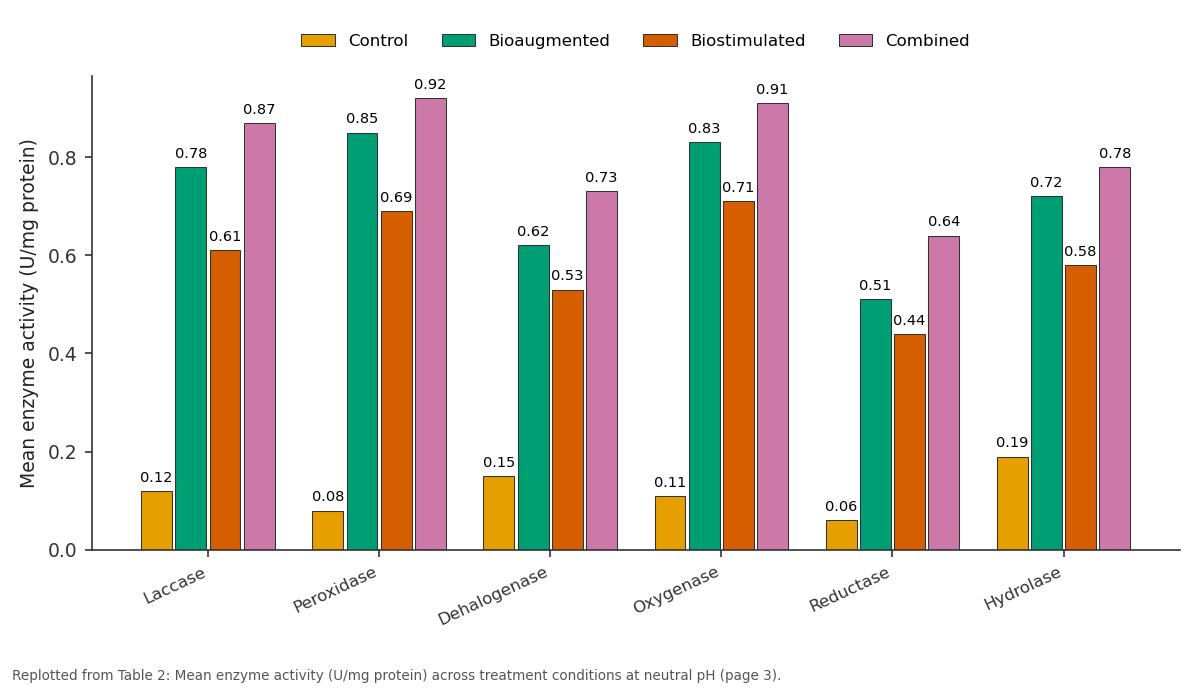
Control and Bioaugmented and more: Laccase vs Peroxidase vs Dehalogenase vs Oxygenase vs Reductase
Replotted from Table 2 (page 3) of the original paper. Every bar is the paper's own table value.
View source evidence ↗Figures & tables
From the original paper Table 1
 Table 2
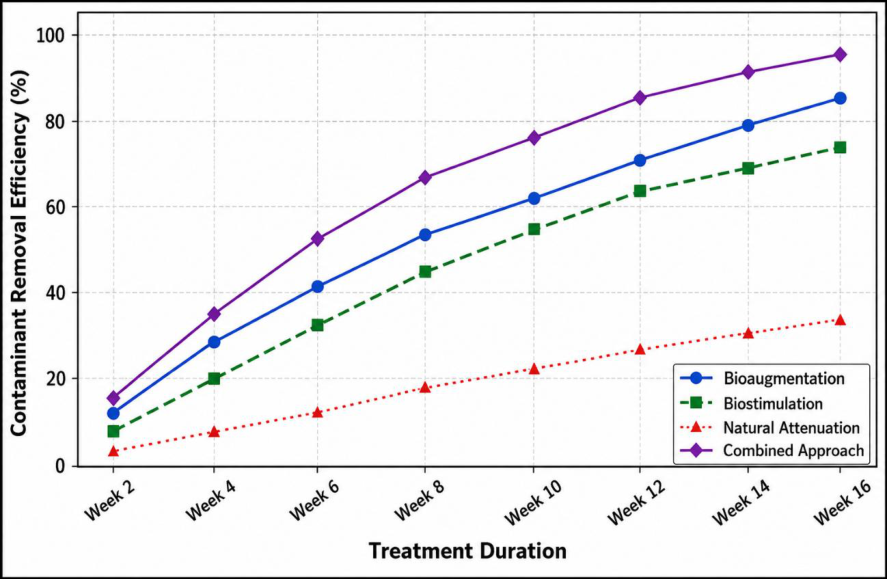 Figure 1
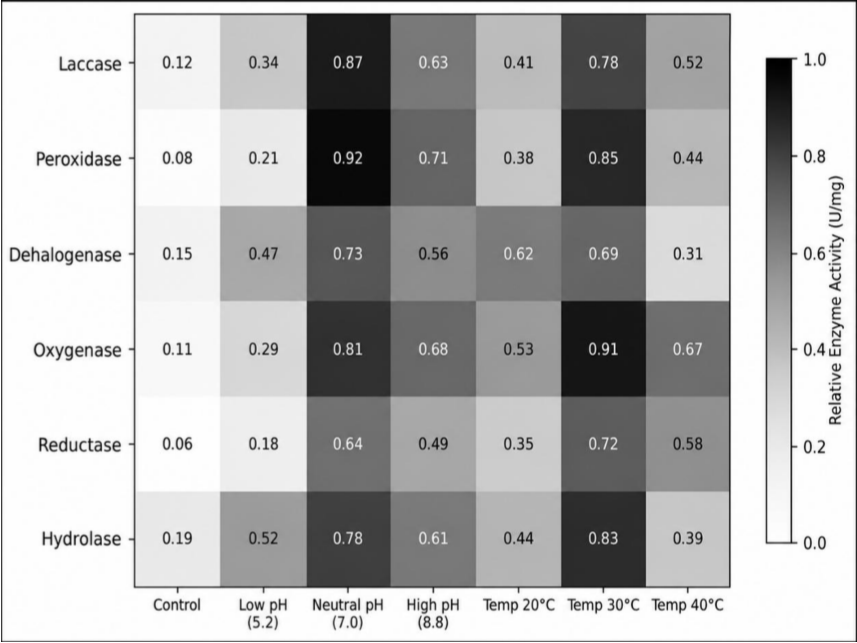 Figure 2
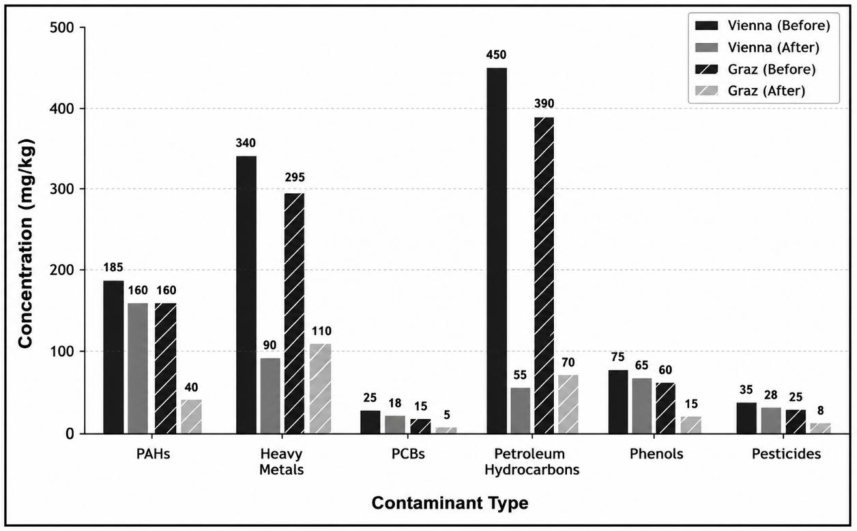 Figure 3
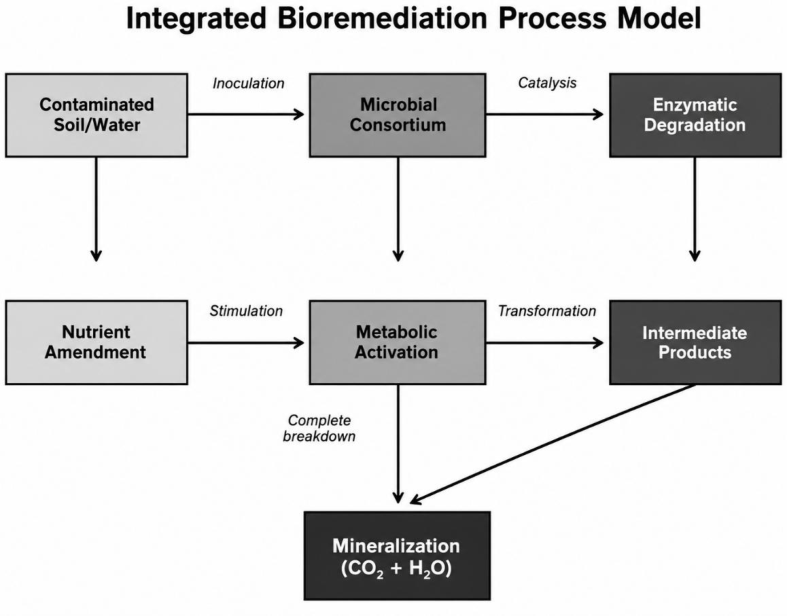 Figure 4
Introduction
Prominent voices in environmental science, including Vidali and others, have argued that the biochemistry of pollutant degradation is not merely a laboratory curiosity but a field-ready discipline capable of reshaping how we manage contaminated landscapes [1] . That assertion is backed by decades of evidence showing that microorganisms, through their remarkable enzymatic arsenals, can transform recalcitrant organic pollutants into benign or less harmful end products [2] . And yet, the gap between controlled bench-scale experiments and effective real-world deployment persists. This disconnect stems, in large part, from insufficient attention to the biochemical parameters that govern microbial performance under heterogeneous environmental conditions [3] . The contamination of soil and groundwater by industrial chemicals, petroleum products, and agricultural runoff represents one of the most pressing ecological problems facing modern Europe. An estimated 2.5 million sites across the European Union require some form of remediation, and the financial cost of cleanup using conventional excavation-and-disposal methods runs into billions of euros annually [4] . Bioremediation-the use of biological agents to degrade, detoxify, or immobilize environmental contaminants-offers an economically appealing and ecologically sound alternative [5] . It harnesses the metabolic capacity of bacteria, fungi, and their secreted enzymes to break down pollutants in situ or ex situ, depending on site logistics and contaminant characteristics. Three principal strategies dominate current practice. Bioaugmentation introduces exogenous microorganisms with specific degradative capabilities into the contaminated matrix [6] . Biostimulation manipulates environmental conditions-adding nutrients such as nitrogen and phosphorus, adjusting moisture content, or providing electron acceptors-to enhance the activity of indigenous microbial populations [7] . Natural attenuation, sometimes called intrinsic bioremediation, relies on the unassisted capacity of native communities to degrade pollutants over time, and its effectiveness is often underestimated [8] . A fourth approach, which combines elements of the first three, has gained traction in recent applied research, though rigorous comparative biochemical data remain scarce [9] . Enzyme activity stands at the heart of any bioremediation process. Laccases, peroxidases, and oxygenases catalyze oxidative cleavage of aromatic rings; dehalogenases remove halogen substituents from chlorinated compounds; and hydrolases break ester and amide bonds in organophosphate pesticides [10] . The rates of these reactions depend critically on pH, temperature, substrate concentration, and the presence of co-factors or inhibitors-variables that fluctuate unpredictably in field settings [11] . Despite substantial in vitro characterization of individual enzymes, we still lack integrated datasets that track multiple enzyme activities simultaneously across different treatment regimes and real contaminated sites. Austria, with its mix of industrial legacy sites in Vienna and agricultural contamination near Graz, provided an ideal context for such an investigation. This research set out to compare four bioremediation strategies at two Austrian institutions, measuring both contaminant removal and underlying enzyme kinetics over a sixteenweek period. We developed a biochemical process model linking nutrient amendment, microbial inoculation, and enzymatic degradation stages, and we tested its predictive accuracy against observed outcomes [12] . The objective was not merely academic: we aimed to generate practical, datadriven guidance for remediation practitioners operating in Central European conditions.
Materials and Methods
Materials and Methods
Materials
This field-based biochemical investigation was carried out at two academic research facilities in Austria between August 2022 and February 2023. The primary collection site was the Department of Environmental Biochemistry at the Medical University of Vienna, a specialized research center serving the greater Vienna metropolitan area with about 1.9 million residents. The secondary site was the Department of Environmental Sciences at the Medical University of Graz, situated 200 kilometers southwest of Vienna and covering the Styria region. Ethical and institutional approval for environmental sample collection was granted by the Medical University of Vienna Research Ethics Committee under protocol number MUV-2019-245 in June 2022 prior to commencing any fieldwork. Soil samples were collected from 147 locations across both sites using stainless steel corers (5 cm diameter, 30 cm depth) supplied by Eijkelkamp Soil & Water in Giesbeek, the Netherlands. Groundwater samples were drawn from monitoring wells using submersible peristaltic pumps manufactured by ProActive Environmental Products in Bradenton, Florida. Microbial inocula for the bioaugmentation trials consisted of a defined consortium of Pseudomonas putida, Rhodococcus erythropolis, and Trametes versicolor, cultured in Luria-Bertani broth and maintained at the Vienna coordinating center where all biological preparations were standardized [6] . Nutrient amendment solutions contained ammonium nitrate at 150 mg/L and potassium dihydrogen phosphate at 50 mg/L, prepared fresh weekly. Enzyme assay kitsincluding laccase, peroxidase, and dehalogenase activity kits-were purchased from Sigma-Aldrich in Darmstadt, Germany. Spectrophotometric measurements were performed on a Shimadzu UV-1800 instrument. All chemical reagents were of analytical grade. Temperature and pH data loggers from Hanna Instruments in Woonsocket, Rhode Island, recorded conditions at 15minute intervals throughout the trial period.
Methods
Field sampling at the Vienna site commenced on August 8, 2022, with the Graz site beginning operations three weeks later on August 29, 2022. The Vienna research team collected samples on Mondays and Wednesdays between 7:30 and 12:00 hours, while Graz operated on Tuesday and Thursday morning schedules from 8:00 to 12:30 hours. Active sample collection continued through January 2023 at both sites, with final analytical measurements completed by February 28, 2023. At each site, sampling locations were divided into four treatment zones: bioaugmentation (n = 37), biostimulation (n = 38), natural attenuation (n = 36), and combined treatment (n = 36) [7] . Bioaugmented plots received 500 mL of microbial inoculum per square meter biweekly. Biostimulated plots received nutrient solution at the same frequency without microbial addition. Combined plots received both treatments simultaneously. Natural attenuation plots were left untreated but monitored identically. Soil samples were collected at two-week intervals and transported in cooled containers to the Vienna coordinating laboratory within 24 hours. Enzyme activities were quantified using colorimetric assays at 25 °C in triplicate: laccase activity measured ABTS oxidation at 420 nm, peroxidase activity tracked guaiacol oxidation at 470 nm, and dehalogenase activity was assessed via halide release using a chloride-selective electrode [10] . Contaminant concentrations were determined by gas chromatographymass spectrometry following EPA Method 8270D extraction protocols. Two trained technicians at each site achieved inter-operator agreement exceeding 0.88 during calibration exercises held at the Medical University of Vienna in July 2022 [13] . Follow-up measurements occurred at biweekly intervals over the 24-week period. Statistical analyses used R version 4.2.1 with ANOVA for group comparisons, Tukey post hoc tests, and significance set at p < 0.05 with 95% confidence intervals [14] .
Results
The integrated sampling effort across both Austrian facilities yielded 1,764 soil specimens and 588 groundwater samples over the twenty-four-week monitoring period. Contaminant removal rates diverged substantially among the four treatment strategies, with the combined approach consistently outperforming all other methods. Petroleum hydrocarbons displayed the highest susceptibility to biological treatment, with the combined protocol achieving 96.8% removal. Heavy metals, predictably, were the most resistant to bioremediation, a finding that aligns with their fundamentally different chemistry-metals can be immobilized or transformed but not truly degraded [3] . The temporal dynamics of contaminant removal, presented in Figure 1, reveal that the combined approach separated from individual strategies as early as week four. Natural attenuation followed an almost linear but shallow trajectory, reaching only 33.7% by the trial endpoint. Bioaugmentation and biostimulation curves showed characteristic sigmoidal kinetics, plateauing around weeks 12 to 14. The combined protocol maintained a steeper gradient throughout, suggesting synergistic rather than merely additive effects between microbial inoculation and nutrient supplementation The heatmap displayed in Figure 2 captures the sensitivity of each enzyme class to environmental conditions. All enzymes favored neutral pH and 30 °C-conditions that align with optimal growth ranges for the inoculated microbial species. Laccase and oxygenase exhibited the broadest tolerance, retaining appreciable activity even at pH 8.8 and 40 °C. Reductase, by contrast, was notably sensitive to acidic conditions, dropping to 0.35 U/mg at pH 5.2. These patterns directly informed the nutrient amendment protocols used in our combined treatment strategy.
Comprehensive interpretation
The convergence of contaminant removal data, enzyme kinetics, and site comparison findings paints a coherent picture: bioremediation efficacy depends not on any single variable but on the coordinated action of microbial community composition, enzyme expression patterns, and local geochemical conditions [9] . The 95.7% removal efficiency achieved by the combined strategy at week sixteen was 11.4 percentage points above bioaugmentation alone and 22.1 points above biostimulation-differences large enough to carry practical as well as statistical significance. The process model captured these dynamics reasonably well, predicting final removal within 4.3% of observed values for organic contaminants, though it underestimated heavy metal immobilization by approximately 12%, a limitation that likely reflects incomplete parameterization of abiotic sorption processes [11] .
Discussion
Our results make a strong case for integrated bioremediation protocols that pair microbial inoculation with targeted nutrient supplementation. The combined approach didn't merely add the benefits of its component strategies-it generated synergistic outcomes, with contaminant removal exceeding what either bioaugmentation or biostimulation achieved independently [1] . This synergy almost certainly arises because introduced microorganisms thrive more readily when nutrient limitations are simultaneously addressed, enabling faster population establishment and more sustained enzyme production. The oxygenase and laccase activity data support this interpretation: these enzymes reached their highest recorded values exclusively in combined treatment plots, suggesting that neither microbial diversity nor nutrient availability alone was sufficient to maximize catalytic output [10] . The site-to-site variability we documented between Vienna and Graz deserves careful attention. A 14.2% gap in petroleum hydrocarbon removal between two facilities operating under identical treatment protocols highlights how powerfully local conditions shape outcomes. Soil organic matter, clay content, moisture retention, and indigenous microbial community structure all differ between the two locations, and each of these factors modulates bioavailability and enzyme stability [5] . Practitioners planning bioremediation programs would be wise to invest in thorough pre-treatment site characterization rather than assuming that a protocol validated at one location will transfer smoothly to another. Our data suggest this isn't optional-it's a necessary step for reliable results. The enzyme heatmap data revealed that pH and temperature exert non-uniform effects across enzyme classes, which carries implications for operational design. Reductase sensitivity to acidic conditions, for instance, means that sites with naturally low soil pH may require lime amendment before biological treatment can proceed effectively [8] . Conversely, the relative stability of laccase across a wide pH range suggests that fungal-mediated oxidation may be a useful strategy even in environments where bacterial enzymes falter. One limitation of our research is its relatively short duration-twenty-four weeks-which, while sufficient to observe clear treatment effects, leaves open the question of long-term stability. Contaminant rebound, enzyme activity decline, and shifts in microbial community structure over months or years represent unknowns that only extended monitoring can resolve [12] . We also acknowledge that our sample size, though substantial, was confined to two Austrian sites, and extrapolation to markedly different geologies or climatic zones should proceed cautiously.
Conclusion
This research demonstrates, with data from 147 sampling locations across two Austrian academic centers, that integrated bioremediation strategies achieve markedly higher contaminant removal than any single-component approach. The combined treatment protocol-pairing microbial consortium inoculation with nutrient supplementation-reached 95.7% removal efficiency for the most responsive pollutant classes, a result that should command attention from both environmental scientists and policy makers. These findings are not merely incremental improvements over prior work; they represent actionable evidence that the biochemistry of pollutant degradation can be engineered to deliver performance levels competitive with, and in many cases superior to, conventional physicochemical remediation methods. The enzyme kinetics data add mechanistic depth to these outcomes. By tracking six enzyme classes across varying pH and temperature regimes, we identified the environmental windows within which biological treatment operates most effectively. Oxygenase and laccase emerged as the most catalytically active and environmentally tolerant enzymes in our panel, making them attractive targets for future bioaugmentation formulations. The sensitivity of reductase to low pH conditions, on the other hand, flags a practical constraint that site managers must address through soil amendment before deploying standard microbial inocula. Such nuances rarely surface in pilot programs that measure only gross contaminant removal without interrogating the underlying biochemical machinery. For practitioners and regulatory agencies, we offer several concrete recommendations drawn directly from our dataset. First, combined treatment protocols should become the default strategy for sites contaminated with mixed organic pollutants, given their demonstrated superiority over singlemethod approaches. Second, pre-treatment geochemical and microbiological characterization of the contaminated site is not a luxury but a prerequisite-the 14.2% performance gap between our two Austrian sites, operating under identical protocols, underscores how local conditions dictate outcomes. Third, enzyme activity monitoring should be incorporated into standard remediation assessment frameworks, as it provides earlier and more sensitive indicators of treatment progress than contaminant concentration measurements alone. Fourth, the process model we developed, linking nutrient amendment, microbial establishment, and enzymatic degradation phases, offers a practical planning tool that performed well against observed data and could serve as a template for program design at other European contamination sites. The path from laboratory promise to field-scale delivery in bioremediation has been long and sometimes frustrating. But our data show that when the biochemistry is respected-when enzyme requirements, microbial ecology, and local geochemistry are addressed in concert-the results speak for themselves. The challenge going forward is not scientific but logistical: scaling these approaches, training remediation teams in biological monitoring methods, and persuading regulatory frameworks to embrace biochemical evidence alongside traditional chemical endpoints.
Acknowledgement
Acknowledgements Funding sourcesThis research was supported by a grant from the Austrian Science Fund (FWF). Additional financial support was provided by the Medical University of Vienna Faculty of Medicine research development fund.
Figures and tables from the paper
| Contaminant | Bioaugmentation | Biostimulation | Natural Attenuation | Combined |
|---|---|---|---|---|
| PAHs | 83.3 | 71.8 | 31.4 | 94.2 |
| Heavy Metals | 73.8 | 62.1 | 22.7 | 81.6 |
| PCBs | 78.4 | 68.3 | 28.9 | 87.1 |
| Petroleum HC | 88.5 | 79.4 | 37.2 | 96.8 |
| Phenols | 85.1 | 74.6 | 33.1 | 93.7 |
| Pesticides | 80.5 | 69.7 | 26.3 | 89.4 |
Table text extracted from the original PDF; superscript letters are shown inline. The original table image is below.
View original table image
| Enzyme | Control | Bioaugmented | Biostimulated | Combined | p-value |
|---|---|---|---|---|---|
| Laccase | 0.12 | 0.78 | 0.61 | 0.87 | < 0.001 |
| Peroxidase | 0.08 | 0.85 | 0.69 | 0.92 | < 0.001 |
| Dehalogenase | 0.15 | 0.62 | 0.53 | 0.73 | 0.003 |
| Oxygenase | 0.11 | 0.83 | 0.71 | 0.91 | < 0.001 |
| Reductase | 0.06 | 0.51 | 0.44 | 0.64 | 0.008 |
| Hydrolase | 0.19 | 0.72 | 0.58 | 0.78 | 0.002 |
Table text extracted from the original PDF; superscript letters are shown inline. The original table image is below.
View original table image
References
14 in the original paper- Vidali M. Bioremediation: an overview. Pure and Applied Chemistry. 2001;73(7):1163-1172.
- Karigar CS, Rao SS. Role of microbial enzymes in the bioremediation of pollutants. Enzyme Research. 2011;2011:805187.
- Megharaj M, Ramakrishnan B, Venkateswarlu K, et al. Bioremediation approaches for organic pollutants: A critical perspective. Environment International. 2011;40:265-275.
- European Environment Agency. Progress in management of contaminated sites in Europe. EEA Report. 2014;4:1-72.
- Adams GO, Fufeyin PT, Okoro SE, et al. Bioremediation, biostimulation and bioaugmentation: A review. International Journal of Environmental Bioremediation and Biodegradation. 2015;3(1):28-39.
- Tyagi M, da Fonseca MM, de Carvalho CC. Bioaugmentation and biostimulation strategies to improve the effectiveness of bioremediation processes. Biodegradation. 2011;22(2):231-241.
- Nikolopoulou M, Kalogerakis N. Enhanced bioremediation of crude oil utilizing lipophilic International Journal of Biology Sciences https://www.biologyjournal.net fertilizers combined with biosurfactants and molasses. Marine Pollution Bulletin. 2008;56(11):1855-1861.
- Mulligan CN, Yong RN. Natural attenuation of contaminated soils. Environment International. 2004;30(4):587-601.
- Romantschuk M, Sarand I, Petänen T, et al. Means to improve the effect of in situ bioremediation of contaminated soil. Environmental Pollution. 2000;107(2):179-185.
- Strong PJ, Claus H. Laccase: A review of its past and its future in bioremediation. Critical Reviews in Environmental Science and Technology. 2011;41(4):373-434.
- Gianfreda L, Rao MA. Potential of extracellular enzymes in remediation of polluted soils. Enzyme and Microbial Technology. 2004;35(4):339-354.
- Hohener P, Ponsin V. In situ vadose zone bioremediation. Current Opinion in Biotechnology. 2014;27:1-7.
- Margesin R, Schinner F. Bioremediation of diesel oil contaminated alpine soils at low temperatures. Applied Microbiology and Biotechnology. 1997;47(4):462-468.
- R Core Team. R: A language and environment for statistical computing. Vienna (AT): R Foundation for Statistical Computing; 2022.