
Research article · 2026 · Full text
International Journal of Horticulture and Food ScienceJeevamrit as an indigenous biofertilizer for sustainable soil management
Volume 8(3) · Pages 56–60 · DOI: 10.33545/26631067.2026.v8.i3a.494 ↗
Research areasHumic Substances and Bio-Organic StudiesPharmacological Effects of Medicinal PlantsPhytochemicals and Medicinal Plants
Abstract
Author-writtenAgriculture today is undergoing a paradigm shift toward sustainability, where productivity must coexist with ecological balance and cultural wisdom. Biofertilizers represent a regenerative alternative to chemical inputs, revitalizing soil health and crop resilience. Among them, Jeevamrit a traditional cow-based formulation rooted in the ethos of Cowpathy and inspired by the ancient science of Vrikshayurveda has emerged as a potent soil inoculant and plant growth enhancer. By harnessing microbial diversity and organic synergy, Jeevamrit not only nurtures crop but also aligns with the United Nations’ Sustainable Development Goals (SDGs), particularly those addressing food security, climate action, and biodiversity conservation. Its promise lies in bridging indigenous knowledge with modern agroecology, positioning it as more than a fertilizer: A holistic intervention for resilient soils, healthier harvests, and sustainable livelihoods. Yet, variations in preparation methods and limited large-scale validation highlight the need for standardized protocols and rigorous research. This review synthesis underscores Jeevamrit’s transformative potential as a cornerstone of sustainable farming, where tradition and science converge to cultivate a greener, self-reliant future.
Summary
Source-checkedPlain-language reading of the full paper, prepared with AI and checked against the text. Each point links to the authors' own words.
Why it matters
- Chemical-intensive farming has caused ecological damage, including the loss of soil organic matter and disruption of microbial communities, which threatens long-term agricultural sustainability. View evidence ↗
- Beneficial microorganisms are essential for soil health because they manage nutrient cycling, decompose organic matter, and suppress diseases. View evidence ↗
- Jeevamrit is a traditional cow-based biofertilizer inspired by Vrikshayurveda and Cowpathy that acts as a plant growth enhancer and soil inoculant. View evidence ↗
The question
- The review aims to synthesize existing knowledge on the biochemical and microbial properties of Jeevamrit and its effects on plants and soil, while identifying research gaps. View evidence ↗
What they did
- A standard liquid Jeevamrit formulation consists of 10 kg cow dung, 10 L cow urine, 2 kg jaggery, 2 kg pulse flour, 100 g soil, and 200 L water. View evidence ↗
- The fermentation process for liquid Jeevamrit typically lasts between 48 hours and 7 days, though warmer climates can reduce this to 2-3 days. View evidence ↗
What they found
- The pH of finished Jeevamrit is 4.92, which is significantly more acidic than its primary ingredients like cow urine (8.16) and cow dung (8.08). View evidence ↗
- Biochemical analysis of Jeevamrit shows a total nitrogen content of 1.90%, total phosphorus of 0.201%, and total potassium of 0.291%. View evidence ↗
- Applying Jeevamrit improves soil fertility by increasing rhizosphere colonization, soil enzyme activity, and microbial biomass carbon. View evidence ↗
- Jeevamrit enhances plant immunity and suppresses soil-borne pathogens through the introduction of beneficial microbes and metabolites like antibiotics and organic acids. View evidence ↗
What it means
- The authors conclude that Jeevamrit is a sustainable and culturally rooted alternative to chemical fertilizers that supports long-term farm economics and soil health. View evidence ↗
- A major limitation of Jeevamrit is that it cannot be used in veganic farming because it relies on animal-derived inputs like cow dung and urine. View evidence ↗
Visual summary
2 visualsIllustrations explain the paper; charts are replotted from the paper's own table values.
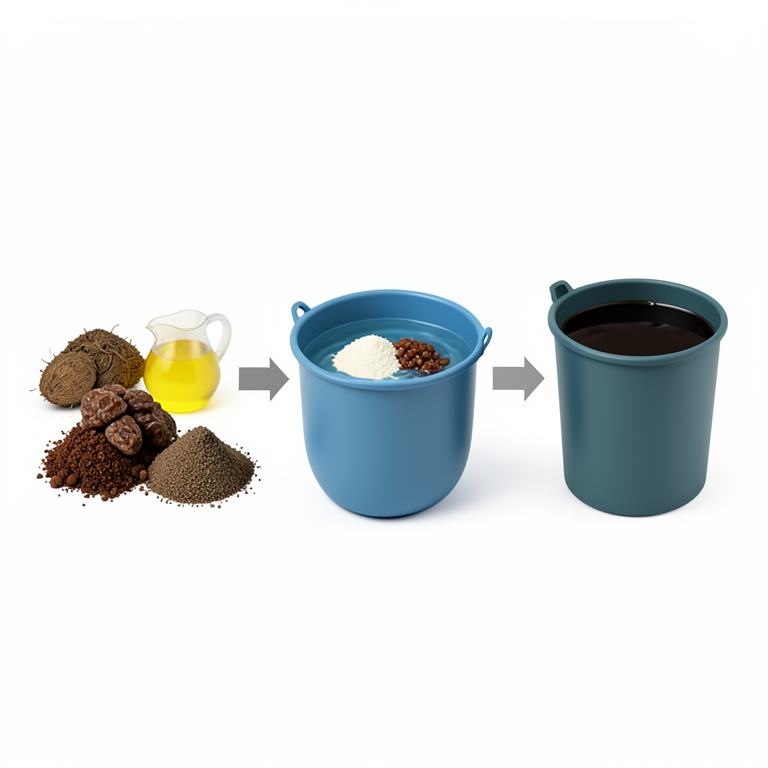
Liquid Jeevamrit Production Cycle
AI-generated conceptual illustration (cow dung, cow urine, jaggery, pulse flour, and soil in a plastic drum). It explains the idea and does not show study data.
View source evidence ↗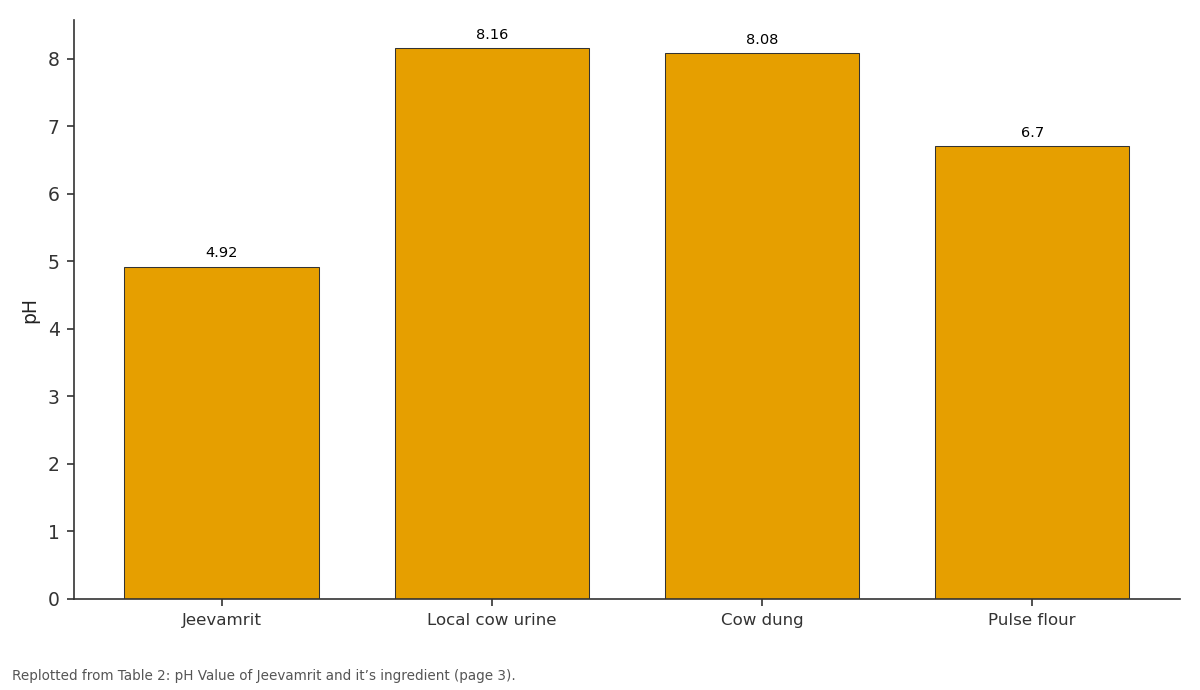
pH: Jeevamrit vs Local cow urine vs Cow dung vs Pulse flour
Replotted from Table 2 (page 3) of the original paper. Every bar is the paper's own table value.
View source evidence ↗Figures & tables
From the original paper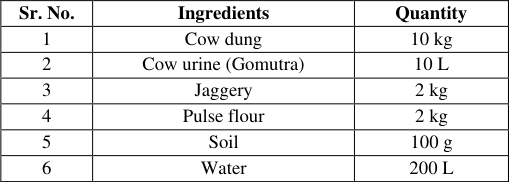 Table 1
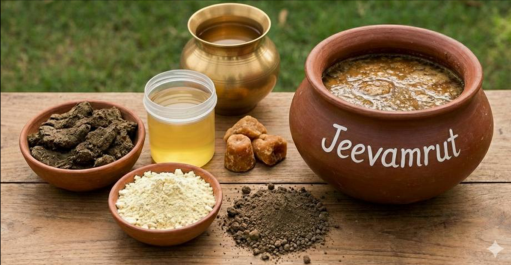 Figure 1
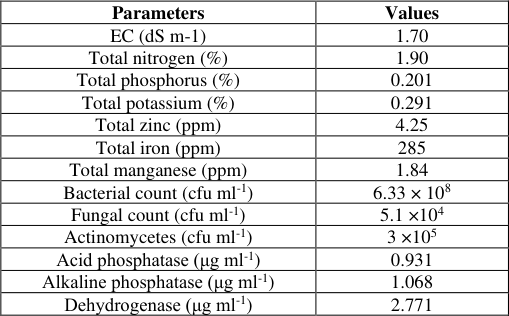 Table 3
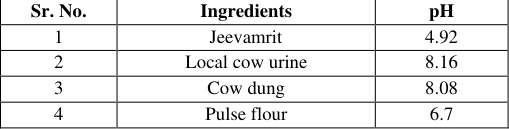 Table 2
Introduction
Modern agriculture is confronted with the challenge of producing sufficient food for a growing global population while simultaneously addressing the ecological damage caused by decades of chemical-intensive farming. Excessive use of synthetic fertilizers, pesticides, and soil conditioners has resulted in progressive depletion of soil organic matter, disruption of soil microbial communities, water pollution, and increased production costs for farmers. These issues collectively threaten long-term agricultural sustainability and highlight the urgent need for eco-friendly, biologically active alternatives that restore soil fertility while enhancing crop performance (Bhadu et al., 2021) [2] . Soil health is the foundation of productive agriculture, and the abundance and diversity of beneficial microorganisms play a critical role in nutrient cycling, organic matter decomposition, disease suppression, and overall soil resilience. Conventional chemical inputs fail to support these functions, often reducing microbial biomass and enzymatic activity over time. As a result, there is growing scientific interest in natural, microbe-rich biofertilizers that are inexpensive, self-sustaining, and aligned with ecological farming principles.Cows have long been recognized not only for their cultural and economic significance but also for their essential role in sustaining biodiversity and maintaining ecological balance. Cow-derived products and practices, collectively termed Cowpathy, contribute substantially to multiple sectors, including sustainable agriculture, human health and nutrition, biofertilizer production, renewable energy generation, and ecosystem conservation. Within this broader framework, Jeevamrit has emerged as a foundational component of natural and organic farming systems, offering a cost-effective, environmentally benign, and increasingly evidence-based alternative to synthetic agricultural inputs (Anjali and Kaushal, 2022) [1] . Jeevamrit (also spelled Jivamrit) is a traditional organic formulation prepared from indigenous cow dung, cow urine, jaggery, pulse flour, and a small quantity of fertile soil. First systematized by Subhash Palekar under Zero Budget Natural Farming (ZBNF), the formulation acts as a potent microbial growth accelerator (Patel et al., 2025) [12] . Scientific studies indicate that Jeevamrit contains diverse populations of Plant Growth-Promoting Rhizobacteria (PGPR), nitrogen fixers, phosphate solubilizers, cellulose degraders, and phytohormone-producing microbes that stimulate plant growth and improve soil structure (Khokhar KK., 2024) [5] . The nutrient-rich medium of urine, organic carbon sources, and legume flour further supports rapid microbial multiplication during fermentation. Regular soil drenching or fertigation with Jeevamrit enhances nutrient mineralization, boosts enzymatic activity, increases microbial biomass carbon, and sustains yield across cereals, pulses, oilseeds, and horticultural crops (Kulkarni, S. S., & Gargelwar, A. P. 2019) [6] . Despite its growing use, scientific studies on Jeevamrit remain fragmented, with variations in preparation, application, and reported outcomes. This review consolidates current findings on its biochemical properties, microbial composition, soil-enhancing effects, plant growth responses, and agronomic benefits, while highlighting gaps in formulation standardization, nutrient dynamics, microbial profiling, and large-scale validation. The aim is to provide a clear scientific basis for optimizing Jeevamrit in sustainable and regenerative agriculture.
Origin and concept of Jeevamrit
The origin of Jeevamrit lies in India's indigenous farming traditions, where cow-derived products have long been revered as vital for soil fertility and ecological balance. Rooted in the philosophy of Cowpathy, Jeevamrit is prepared from cow dung, cow urine, jaggery, pulse flour, and local soil. The fermentation process transforms these inputs into a living microbial consortium that enhances nutrient mineralization, soil enzymatic activity, and plant growth (Naresh RK et al., 2018) [8] . The conceptual foundation of Jeevamrit resonates strongly with Vrikshayurveda, the ancient Indian science of plant life, which dates back to texts such as Surapala's Vrikshayurveda (10 th century CE). Vrikshayurveda prescribed formulations using cow dung, cow urine, milk, ghee, and plant extracts to promote plant health, disease resistance, and soil rejuvenation. These practices emphasized the role of natural fermentations and bioactive compounds in sustaining crop productivity. Jeevamrit can thus be seen as a modern revival of Vrikshayurveda principles, adapted into a practical, farmer-friendly biofertilizer for contemporary organic agriculture (Dwiwedi, 1980) [3] . Jeevamrit is more than a fertilizer it is a biological catalyst that restores soil fertility by stimulating microbial biomass, improving nutrient cycling, and suppressing pests and diseases through organic acids and microbial metabolites. By bridging traditional wisdom (Vrikshayurveda) with modern microbial science, Jeevamrit embodies a holistic approach to sustainable and regenerative agriculture (Naresh RK et al., 2018) [8] .
Composition of Jeevamrit
Jeevamrit is a microbially enriched, cow-based liquid biofertilizer formulated to rapidly enhance soil biological activity. Its composition includes a combination of organic substrates and microbial inoculants that together create an environment conducive to the proliferation of beneficial soil microorganisms. Core ingredients (Kulkarni, S.S., & Gargelwar, A.P. 2019) [6] . a) Indigenous cow dung: Indigenous cow dung functions as the primary microbial inoculum, naturally enriched with diverse plant growth-promoting rhizobacteria (PGPR), actinomycetes, yeasts, and certain fungi. It serves as a rich source of organic carbon, essential micronutrients, and decomposer microbes, thereby fostering a dynamic microbial consortium that enhances nutrient cycling and soil fertility. b) Indigenous cow urine: Cow urine (Gomutra) has been demonstrated to enhance plant resistance against a broad spectrum of pathogens, including mycoplasmas, viruses, bacteria, fungi, nematodes, and insect pests that cause diseases and damage. In conjunction with cow dung, it serves as a valuable source of amino acids, which contribute to an increased nitrogen content in organic fertilizers. [13] [5] a) The liquid state of Jeevamrit. b) Dry Jeevamritm (Ghana Jeevamrit). c) The semi-solid state of Jeevamrit.
a) Preparation of liquid Jeevamrit
Jeevamrit is traditionally prepared through aerobic fermentation, which enables rapid microbial multiplication and metabolite formation (Khokhar, K. K., 2024) [5] . 1) Container selection: Use a 200 L plastic drum or cement tank; avoid metal containers due to corrosive urine components.
2) Mixing process:
To prepare Jeevamrit, 10 kg of fresh cow dung is added into a drum and thoroughly dissolved in 200 L of water. To this mixture, 10 L of cow urine is incorporated and mixed well. Separately, 2 kg of jaggery is dissolved in water and added to the solution, followed by 2 kg of pulse flour, ensuring that all lumps are removed. Finally, a handful of fertile soil (approximately 200-250 g) is introduced to enrich the microbial diversity, completing the formulation.
3) Fermentation:
The mixture should be stirred vigorously two to three times daily to maintain aerobic conditions and support microbial proliferation.
Fermentation is typically allowed for 48 hours to 7 days, depending on the ambient temperature. In warmer climates, microbial activity accelerates, and a shorter fermentation period of 2-3 days is often sufficient to achieve the desired microbial richness.
4) Completion indicators: The successful fermentation of
Jeevamrit is typically indicated by the appearance of a frothy surface layer, an earthy smell that is pleasant rather than putrid, and fine bubbling that reflects active microbial respiration. 5) Application: Jeevamrit can be supplied to crops twice a month either through irrigation channels or as a 10% foliar spray, with applications repeated every 15 days until soil fertility is restored.
b) Preparation of Dry Jeevamrit (Ghan-Jeevamrit)
This method is particularly useful in dryland or rainfed regions where water availability is limited. To prepare, collect 100 kg of fresh cow dung, 2 kg of jaggery, 2 kg of pulse flour, and a small handful of fertile farm soil. Mix the ingredients thoroughly, adding a little cow urine to activate microbial growth. The mixture is then spread out in a shaded area to dry naturally. Once dried, it is sieved to obtain a fine powder and stored in gunny bags. In this form, Ghan-Jeevamrit remains effective for up to one year, offering farmers a practical and long-lasting alternative to liquid Jeevamrit (Khokhar, K. K., 2024; Patel et al., 2025) [5, 12] .
c) Preparation of semi-solid Jeevamrit
It is prepared as a thick slurry through partial fermentation, resulting in a paste-like consistency. This form is easier to store than the liquid preparation and can be directly applied to soil while maintaining microbial richness for a longer period. However, it is less suitable for foliar spraying and requires careful handling to prevent spoilage (Khokhar, K. K., 2024) [5] . Pulse flour 6.7 (Kulkarni, S. S., & Gargelwar, A. P. 2019) [6] 5. Storage, shelf life and spoilage of Jeevamrit Storage: Although Jeevamrit is most effective when applied fresh, short-term storage is possible under controlled conditions. It should be kept in a shaded, cool, and wellventilated space to avoid overheating. Containers must be loosely covered to allow gas release and prevent anaerobic fermentation. Regular stirring during storage helps maintain microbial activity and prevents sedimentation, ensuring the formulation remains biologically active (Kumar., et al., 2021) [7] .
Shelf life: Maximum microbial viability is achieved when Jeevamrit is used within 48 hours to 3 days after fermentation. However, short-term storage for up to 15-30 days is feasible if the mixture is stirred daily, aeration is maintained, and temperatures remain cool (Kumar., et al., 2021) [7] .
Spoilage: Indicators of spoilage include the development of a foul odor, excessive gas accumulation, and a darkened, viscous texture. Such formulations should not be used, as they may harbor undesirable or pathogenic microbes that compromise soil and crop health. Farmers are therefore advised to monitor Jeevamrit closely during storage and discard any batches showing these spoilage signs.
Biochemical and microbial composition of Jeevamrit
Jeevamrit is a microbially rich biofertilizer characterized by a diverse population of beneficial microorganisms and a biologically active nutrient profile. It contains abundant plant growth-promoting rhizobacteria (PGPR) such as nitrogen-fixing, phosphate-solubilizing, and potassiummobilizing bacteria, along with fungi and actinomycetes that accelerate nutrient mineralization and enhance soil fertility (Khokhar, KK., 2024) [5] . Biochemically, Jeevamrut provides a readily available source of organic carbon, essential macro-nutrients (N, P, K), and trace elements including manganese, copper, iron, and zinc, all released during fermentation. The active fermentation process also produces enzymes, organic acids, amino acids, vitamins, and microbial metabolites that function as natural growth stimulants and pathogen suppressants. This synergistic combination of microbial consortia and bioactive compounds makes Jeevamrit a potent inoculant that improves nutrient availability, boosts soil biological activity, and promotes overall plant growth (Patel et al., 2018; Nitin, & Purohit, H. S., 2021) [11,9] . 1.84 Bacterial count (cfu ml -1 ) 6.33 × 10 8 Fungal count (cfu ml -1 ) 5.1 ×10 4 Actinomycetes (cfu ml -1 ) 3 ×10 5 Acid phosphatase (μg ml -1 ) 0.931 Alkaline phosphatase (μg ml -1 )
1.068 Dehydrogenase (μg ml -1 ) 2.771 (Somdutt, et al., 2023) [14] 7. Significance of Jeevamrit a) Enhances soil microbial biomass and activity: The key significance of Jeevamrit lies in its role as a powerful microbial inoculant. Cow dung and cow urine supply diverse beneficial microbes such as nitrogen fixers, phosphate solubilizers, and plant growthpromoting rhizobacteria. When enriched with jaggery, pulse flour, and fertile soil, the mixture becomes a nutrient-rich medium that accelerates microbial multiplication. Application of Jeevamrit has been shown to enhance microbial biomass carbon, soil enzyme activity, and rhizosphere colonization, thereby improving nutrient transformation and overall soil fertility (Kulkarni, S. S., & Gargelwar, A. P. 2019) [6] .
b) Strengthens plant immunity and disease resistance:
It strengthens plant immunity by enriching the soil with beneficial microbes and their metabolites, including organic acids, antibiotics, and enzymes that suppress soil-borne pathogens. It fosters a competitive microbial environment that limits the growth of harmful fungi and bacteria, while plant growth-promoting rhizobacteria (PGPR) trigger induced systemic resistance (ISR). As a result, crops experience reduced dependency on chemical pesticides and lower overall stress, leading to healthier and more resilient plants (Pandia, et al., 2019) [10] . c) Eco-friendly and climate-resilient farming: It supports eco-friendly, climate-resilient farming by replacing synthetic inputs that pollute soil and water. Its microbial activity enhances carbon sequestration, improves soil buffering capacity, and lowers inputrelated emissions, fostering sustainable agriculture adaptable to climate stress (Khokhar, K. K., 2024) [5] . d) Low-cost, locally available, farmer-friendly input: It is a farmer-friendly input prepared from locally sourced cow dung, urine, jaggery, gram flour, soil, and water. Its preparation is simple and inexpensive compared to chemical or commercial biofertilizers, making it easily adoptable by smallholders. This affordability and accessibility position Jeevamrit as a practical tool for sustainable, low-input farming (Jadhav, et al., 2024) [4] . e) Improves soil fertility and nutrient cycling:
Jeevamrit boosts soil fertility by driving microbial nitrogen fixation, phosphorus solubilization, potassium mobilization, and organic matter breakdown. Enhanced enzyme activity ensures efficient nutrient cycling, reducing reliance on chemical fertilizers (Kumar., et al., 2021) [7] .
Limitations and research gaps
A key limitation of Jeevamrut in the present agricultural context is its incompatibility with veganic or vegan organic farming, which strictly prohibits the use of animal-derived inputs. Because Jeevamrut is fundamentally prepared from cow dung, cow urine, and dairy-associated byproducts, it directly contradicts the principles of animal-free agriculture.
With the growing preference for ethical, cruelty-free, and plant-based nutrient sources, Jeevamrit faces restricted acceptance within modern veganic systems that rely solely on plant-based composts, microbial inoculants, and mineral amendments. Moreover, despite its widespread use in traditional organic farming, significant research gaps persist particularly the lack of standardized preparation methods, limited peer-reviewed data on its long-term soil impacts, inconsistent microbial profiling across regions, and very few comparative studies evaluating plant-based alternatives that could serve similar functions. These gaps further limit its applicability and scientific validation, especially in contexts where animal-free inputs are mandatory.
Conclusion
Conclusion
Figures and tables from the paper
| Sr. No. | Ingredients | Quantity |
|---|---|---|
| 1 | Cow dung | 10 kg |
| 2 | Cow urine (Gomutra) | 10 L |
| 3 | Jaggery | 2 kg |
| 4 | Pulse flour | 2 kg |
| 5 | Soil | 100 g |
| 6 | Water | 200 L |
Table text extracted from the original PDF; superscript letters are shown inline. The original table image is below.
View original table image
| Parameters | Values |
|---|---|
| EC (dS m-1) | 1.70 |
| Total nitrogen (%) | 1.90 |
| Total phosphorus (%) | 0.201 |
| Total potassium (%) | 0.291 |
| Total zinc (ppm) | 4.25 |
| Total iron (ppm) | 285 |
| Total manganese (ppm) | 1.84 |
| Bacterial count (cfu ml-1) | 6.33 × 10⁸ |
| Fungal count (cfu ml-1) | 5.1 ×10⁴ |
| Actinomycetes (cfu ml-1) | 3 ×10⁵ |
| Acid phosphatase (μg ml-1) | 0.931 |
| Alkaline phosphatase (μg ml-1) | 1.068 |
| Dehydrogenase (μg ml-1) | 2.771 |
Table text extracted from the original PDF; superscript letters are shown inline. The original table image is below.
View original table image
| Sr. No. | Ingredients | pH |
|---|---|---|
| 1 | Jeevamrit | 4.92 |
| 2 | Local cow urine | 8.16 |
| 3 | Cow dung | 8.08 |
| 4 | Pulse flour | 6.7 |
Table text extracted from the original PDF; superscript letters are shown inline. The original table image is below.
View original table image
References
13 in the original paper- Anjali, Kaushal S. Cowpathy and Vedic krishi to improve soil health. Int J Environ Agric Res. 2022;8(5):19-24.
- Bhadu K, Sharma SK, Choudhary R, Yadav SK, Jain RK, Jat G, et al. Effect of jeevamrut on productivity and profitability of wheat under organic farming. Indian J Agric Sci. 2021;91(6):924-928.
- Jadhav T, Kapadi S, Magar G, Marwar A, Satpute S. Jeevamrut. Int J Innov Res Multidiscip Phys Sci. 2024;12(2).
- Khokhar KK. Four pillars of natural farming. Just Agric. 2024;4(10):149-158.
- Kulkarni SS, Gargelwar AP. Production and microbial analysis of jeevamrutham for nitrogen fixers and phosphate solubilizers in rural Maharashtra. IOSR J Agric Vet Sci. 2019;12(8):1-6.
- Kumar A, Avasthe RK, Babu S, Singh R, Verma G, Dhaka AK, et al. Jeevamrut: a low-cost organic liquid manure for sustainable crop production. Kerala Karshakan e-J. 2021 Aug:32-35.
- Naresh RK, Shukla AK, Kumar M, Kumar A, Gupta RK, Vivek, et al. Cowpathy and Vedic krishi to empower food and nutritional security and improve soil health: a review. J Pharmacogn Phytochem. 2018;7(1):560-575.
- Nitin, Purohit HS. Effect of different jeevamrut-based liquid formulations on soil biochemical properties and growth of blackgram (Vigna mungo). Int J Chem Stud. 2021;9(1):2280-2283.
- Pandia S, Trivedi A, Sharma SK, Yadav S. Evaluation of jeevamrut against Alternaria leaf spot of mungbean. Int J Curr Microbiol Appl Sci. 2019;8(9):2240-2251.
- Patel DM, Patel IM, Patel BT, Singh NK, Patel CK. Effect of panchgavya and jivamrut on yield and soil properties of groundnut (Arachis hypogaea). Int J Chem Stud. 2018;6(3):804-809.
- Patel K, Tripathi S, Patel DS, Singh A, Dube A. Impact of jeevamrit and beejamrit on growth and yield of Indian mustard. Int J Adv Biochem Res. 2025;9(SP8):1627-1631.
- Shweta, Rani S, Rana A, Gandhi R, Kumar V. Ancient natural farming: Way forward to sustainability in modern agriculture. Arch Agric Environ Sci. 2025;10(3):533-539.
- Somdutt, Bhadu K, Rathore RS, Shekhawat PS. Jeevamrut and panchagavya effects on growth and productivity of organic crops: a review. Agric Rev. 2023;44(4):451-459