
Research article · 2026 · Full text
International Journal of Biology SciencesPrevalence of protozoan parasites inhabiting the digestive tract of domestic birds in Assam, India
Volume 8(3) · Pages 102–108 · DOI: 10.33545/26649926.2026.v8.i3b.599 ↗
Research areasCoccidia and coccidiosis researchBird parasitology and diseasesParasite Biology and Host Interactions
Abstract
Author-writtenThe present study was undertaken to ascertain the prevalence of protozoan parasites inhabiting the digestive tract of domestic birds which included pigeon (Columba livia domestica), chicken (Gallus gallus domesticus), duck (Anas platyrhynchos domesticus) and quail (Coturnix coturnix japonica) in the state of Assam, India. The study was conducted in 8 districts of Assam viz. Kamrup (Rural and Metro), Dhubri, Barpeta, Nalbari, Darrang, Baksa, Lakhimpur and Dhemaji. A total of 1278 pooled faecal samples were collected for study. Faecal examination by floatation method for the presence or absence of oocyst of coccidia and by Modified Ziehl- Neelsen staining for detection of Cryptosporidium infection was carried out in domestic birds and overall prevalence of protozoa was recorded as 34.66%. Identified species were Eimeria labbeana (26.35%), E. columbarum (8.69%) and E. columbae (3.53%) from pigeon; Eimeria tenella (19.13%), E. acervulina (9.46%), E. necatrix (6.88%), E. maxima (2.36%) and Cryptosporidium baileyi (3.01%) from chicken; Eimeria battakhi (19.86%) from duck and Eimeria tsunodai (13.29%), E. bateri (5.69%), E. uzura (3.16%) and Cryptosporidium meleagridis (4.43%) from quail.
Summary
Source-checkedPlain-language reading of the full paper, prepared with AI and checked against the text. Each point links to the authors' own words.
Why it matters
- Poultry is a highly efficient livestock sub-sector for providing protein to meet increasing global demand. View evidence ↗
- Avian coccidiosis is a widespread and harmful protozoal disease affecting domestic birds, including those in India. View evidence ↗
- Infections caused by Eimeria species can lead to weight loss, enteric disorders, depression, and death in birds. View evidence ↗
- Subclinical coccidiosis is economically significant because it impairs feed utilization and gut health. View evidence ↗
The question
- The study aimed to provide data on protozoan parasites in domestic birds in Assam, India, due to a lack of existing documentation. View evidence ↗
What they did
- The researchers examined the prevalence of coccidia and Cryptosporidium in pigeons, chickens, ducks, and quails across eight districts of Assam. View evidence ↗
- The study analyzed 1,278 pooled fecal samples (2-5 g each) from 368 pigeons, 465 chickens, 287 ducks, and 158 quails. View evidence ↗
- Coccidia and Cryptosporidium oocysts were detected using a floatation method with Sheather’s solution and microscopic examination. View evidence ↗
- Modified Ziehl-Neelsen staining was used on fecal smears to specifically detect Cryptosporidium oocysts. View evidence ↗
What they found
- The overall prevalence of protozoan parasites across all domestic birds studied was 34.66%. View evidence ↗
- Pigeons had a protozoan prevalence of 38.58%, consisting entirely of Eimeria species. View evidence ↗
- Chickens showed the highest overall prevalence at 40.86%, with 37.84% Eimeria and 3.01% Cryptosporidium. View evidence ↗
- Ducks had a protozoan prevalence of 24.04%, with no Cryptosporidium detected. View evidence ↗
- Quails had an overall prevalence of 26.58%, including 22.15% Eimeria and 4.43% Cryptosporidium. View evidence ↗
- In pigeons, Eimeria labbeana was the most common species (26.35%), followed by E. columbarum (8.69%) and E. columbae (3.53%). View evidence ↗
- In chickens, Eimeria tenella was the most prevalent (19.13%), while Cryptosporidium baileyi was found in 3.01% of samples. View evidence ↗
- Eimeria battakhi was found in 19.86% of ducks; in quails, Eimeria tsunodai (13.29%) and Cryptosporidium meleagridis (4.43%) were identified. View evidence ↗
What it means
- The authors conclude that protozoan infections of the digestive tract are predominant among domestic birds in Assam. View evidence ↗
- The study provides the first report from Assam for E. tsunodai, E. bateri, E. uzura (quail), E. battakhi (duck), C. baileyi (chicken), and C. meleagridis (quail). View evidence ↗
Visual summary
2 visualsIllustrations explain the paper; charts are replotted from the paper's own table values.
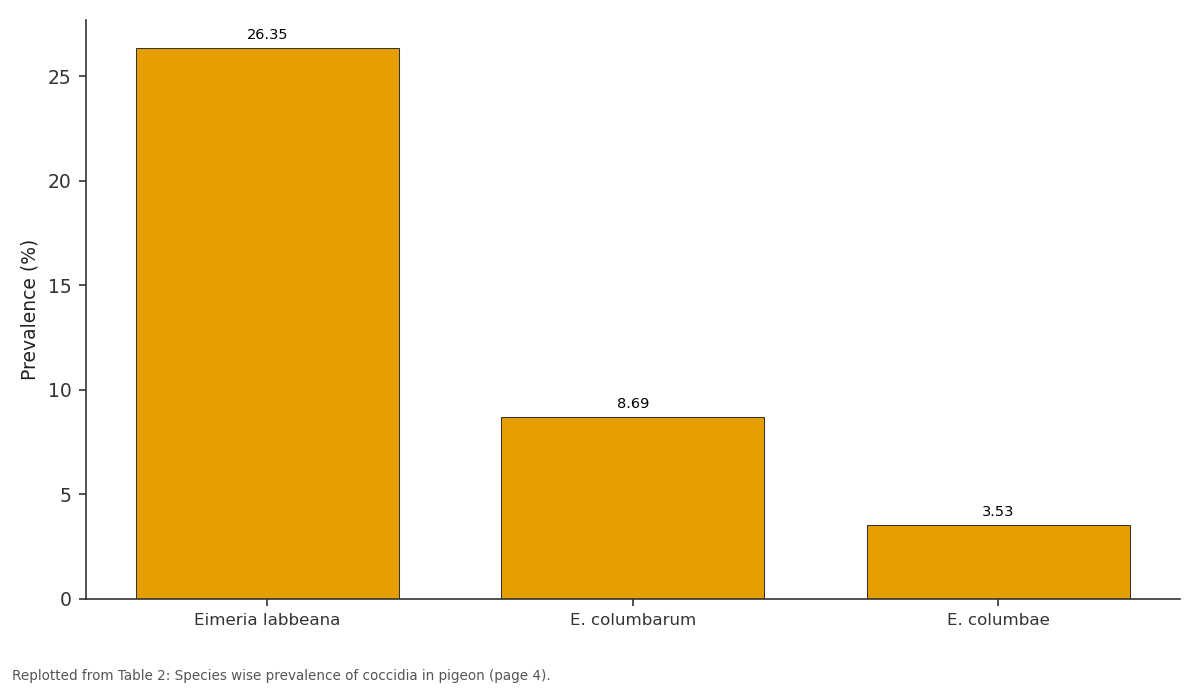
Prevalence (%): Eimeria labbeana vs E. columbarum vs E. columbae
Replotted from Table 2 (page 4) of the original paper. Every bar is the paper's own table value.
View source evidence ↗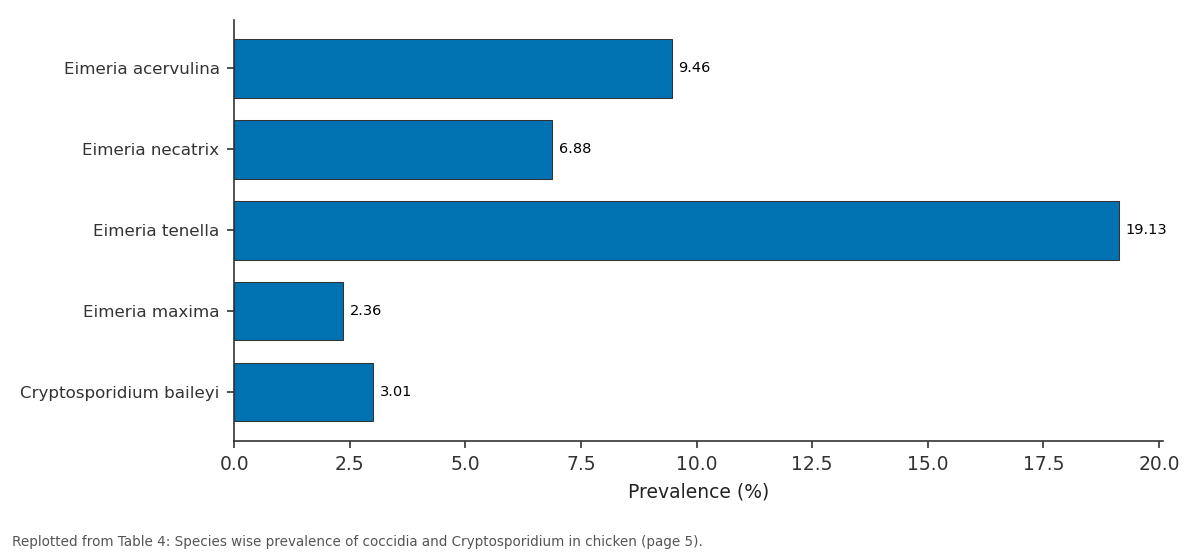
Prevalence (%): Eimeria acervulina vs Eimeria necatrix vs Eimeria tenella vs Eimeria maxima vs Cryptosporidium baileyi
Replotted from Table 4 (page 5) of the original paper. Every bar is the paper's own table value.
View source evidence ↗Figures & tables
From the original paper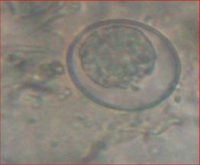 Plate 1
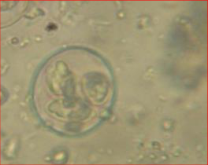 Plate 1
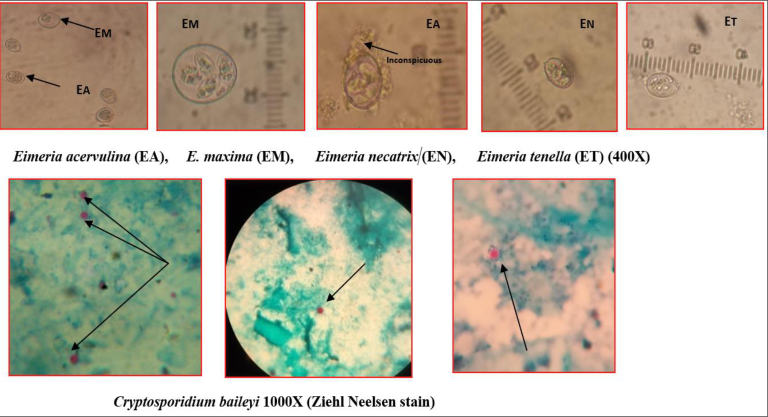 Plate 2
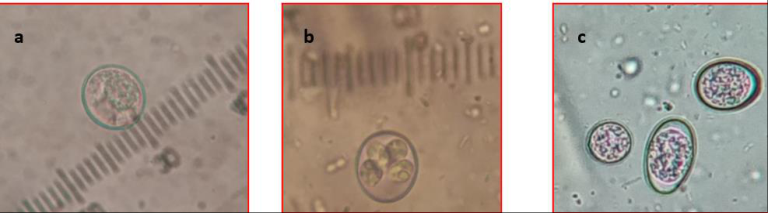 Plate 3
 Table 1
 Table 2
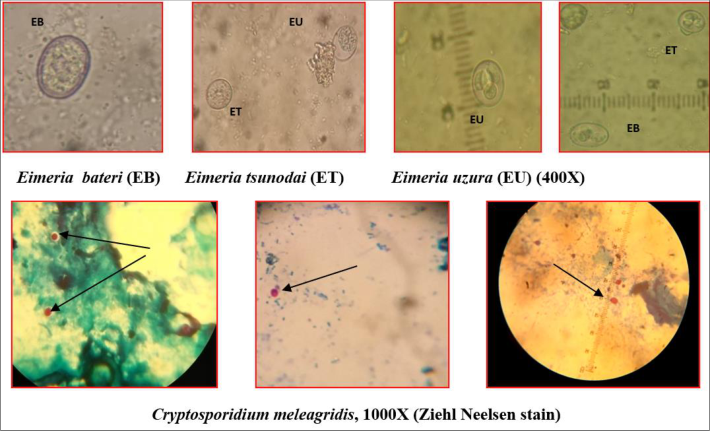 Plate 4
 Table 3
 Table 4
 Table 5
 Table 6
 Table 7
 Table 8
 Table 9
Introduction
Birds have been domesticated by humans from ancient times to provide supplementary income to most of the landless families. Among all the domestic birds, duck, chicken, geese, pigeons, quails, turkeys, etc., are more popular throughout the world. The world has over 23 vertebrates (O'Donoghue, 1995) [26] and additionally infect the bursa of Fabricius, respiratory system and other organs in birds (Nakamura and Meireles, 2015) [25] . Due to the perception of the insignificance of domestic birds, little attention in terms of research has been paid to these hosts in India. Limited and partial information on these protozoan parasites of domesticated birds in Assam being less documented, therefore the current study has been designed to provide information on these protozoan parasites.
Materials and Methods
The present study was undertaken to know the prevalence of protozoan parasites (species of coccidia and Cryptosporidium) inhabiting the digestive tract of domestic birds viz. pigeon (Columba livia domestica), chicken (Gallus gallus domesticus), duck (Anas platyrhynchos domesticus) and quail (Coturnix coturnix japonica) in 8 districts of Assam, India, viz. Kamrup (Rural and Metro), Dhubri, Barpeta, Nalbari, Darrang, Baksa, Lakhimpur and Dhemaji. Regular visits were made to different households, market places, commercial farms and temple premises to physically examine the birds for their health status, collection of samples (faeces of birds) for laboratory examination/ evaluation.
Faecal sample collection
A total of 1278 pooled faecal samples each of 2-5 g, from 368 pigeons, 465 chickens, 287 ducks and 158 quails were collected, examined microscopically by floatation method using Sheather's solution (sp. gravity 1.2) for the presence or absence of oocyst of coccidia (10X, 40X) and detection of refractile bodies of Cryptosporidium oocysts (40X, 100X). Faecal samples found positive for coccidia oocysts were mixed with 2.5% potassium dichromate solution for sporulation (Soulsby, 2012) [36] . Faecal smears prepared from individual samples were examined by the Modified Ziehl-Neelsen staining (Henriksen and Pohlenz, 1981) [15] for detection of Cryptosporidium oocysts which appear as pink to red stained spherical to ellipsoidal bodies containing four naked sporozoites against a pale green background under oil immersion objectives (100X). Species identification was done on the basis of host species, shape and size measured by micrometry (Sloss et al., 1994) [35] .
Analysis of data
The prevalence data obtained were subjected to statistical analysis using Chi-square test using SAS v.20 software.
Results and Discussion Prevalence of coccidia infection
Out of 368 faecal samples from pigeon, 142 were found positive for coccidia (Eimeria sp.) with a prevalence of 38.58%. It was 37.84% in chicken, 24.04% in duck and 22.15% in quail. Cryptosporidium sp. was detected in 3.01% of chickens and 4.43% of quails, while none was recorded from pigeon and duck (Table 1).
| Host | No. of faecal sample examined | Species of protozoan parasite | — | Total |
|---|---|---|---|---|
| Eimeria sp. (%) | Cryptosporidium sp. (%) | |||
| Pigeon | 368 | 142 (38.58%) | 0 (0.0%) | 142 (38.58%) |
| Chicken | 465 | 176 (37.84%) | 14 (3.01%) | 190 (40.86%) |
| Duck | 287 | 69 (24.04%) | 0 (0.0%) | 69 (24.04%) |
| Quail | 158 | 35 (22.15%) | 7 (4.43%) | 42 (26.58%) |
| Total | 1278 | 422 (33.02%) | 21 (1.64%) | 443 (34.66%) |
| Chi square value | 2487.56 | 0.729NS | ||
| P value | < 0.001 | 0.393 |
Table text extracted from the original PDF; superscript letters are shown inline. The original table image is below.
View original table image
(i) Prevalence of coccidia in pigeon
In pigeon, among the three species under genus Eimeria, oocysts of Eimeria labbeana were the most frequently detected (26.35%), followed by E. columbarum (8.69%) and E. columbae (3.53%) as shown in Table 2 [6] and 31.0% by Sivajothi and Sudhakara Reddy (2015) [34] from India; 35% by Mahdii and Al-Rubaie (2013) [22] from Baghdad; 52% by Hui et al. (2012) [16] from Shangai. Similarly, Saikia (2016) [29] in her study conducted in domestic pigeon from Assam reported 38.81% prevalence of coccidia infection. Aleksandra and Pilarczyk (2014) [3] similarly isolated three species (Eimeria labbeana, E. columbarum and E. columbae) in mixed infection in two pigeon lofts in West Pomerania. Saikia et al. (2017) [28] recorded four species viz. [16,22,3,40] . In the present study Cryptosporidium oocyst could not be detected in any of the faecal samples from pigeon. However, Faraj (2014) [12] recorded 40% prevalence of Cryptosporidium parasite from wild pigeons in Baghdad city and Bamaiyi et al.
| Species of coccidia identified | Sample examined | No of positive sample | Prevalence (%) | Chi square value | P value |
|---|---|---|---|---|---|
| Eimeria labbeana | 368 | 97 | 26.35 | 94.09** | < 0.001 |
| E. columbarum | 32 | 8.69 | |||
| E. columbae | 13 | 3.53 | |||
| Total | 368 | 142 | 38.58 |
Table text extracted from the original PDF; superscript letters are shown inline. The original table image is below.
View original table image
(2013) [5] recorded 7.4% in Nigeria.
Prevalence of coccidia and Cryptosporidium in chicken
In chicken, out of 465 faecal samples screened for coccidia, 190 were positive with overall prevalence of 40.86%. Statistical analysis revealed highly significant (p < 0.01) difference. Among four species of Eimeria (Plate II), oocysts of Eimeria tenella were most commonly detected (19.13%), followed by E. acervulina (9.46%), E. necatrix (6.88%) and lowest prevalence of E. maxima (2.36%) as shown in Table 4. The Cryptosporidium oocyst isolated from chicken was identified as C. baileyi, which measured 4.6 × 6.2 µm in size, with a prevalence of 3.01%. The morphological differences showing comparison among the four recorded Eimeria species from chicken are presented in Table 5.
| Species of coccidia identified | Sample examined | No of samples positive | Prevalence (%) | Chi square value | p value |
|---|---|---|---|---|---|
| Eimeria acervulina | 465 | 44 | 9.46 | 114.00** | < 0.001 |
| Eimeria necatrix | 32 | 6.88 | |||
| Eimeria tenella | 89 | 19.13 | |||
| Eimeria maxima | 11 | 2.36 | |||
| Cryptosporidium baileyi | 14 | 3.01 | |||
| Total | 465 | 190 | 40.86 |
Table text extracted from the original PDF; superscript letters are shown inline. The original table image is below.
View original table image
Plate 2: Coccidia and Cryptosporidium in chicken
The prevalence of 37.84% due to Eimeria spp. in chicken is almost similar to 31.8% observed by Gharekhani et al.
(2014) [13] in Western Iran, 31.8% by Kaboudi et al. (2016) [19] in free-range chicken in Tunisia, 37.1% reported by Jatau et al. (2012) [18] in Zaria. Contrary to our findings, Luu et al.
(2013) [21] found 56% prevalence of Eimeria in Ethiopia and Pant et al. (2018) [27] recorded 56.25% coccidiosis around Tarai region of Uttarakhand. The variation in prevalence might be attributed to different factors such as sampling periods, sample size, geographical area, and climatic conditions observed in the different study areas. Relatively high prevalence was reported in commercial farms compared to the backyard poultry farming which may be due to poor management, hygienic and sanitary practices such as perpetual spillage of water on the litters from the poultry drinkers, which encourages Eimeria build-up and subsequent sporulation and infection in the deep litter management. This is consistent with the reports by Methusela et al. (2002) [23] and Taylor et al. (2007) [37] .
Kalita (2016) [20] recorded four Eimeria species in broiler chickens of Assam with highest prevalence of E. tenella (62.50%) followed by E. acervulina (23.43%), E. mitis (12.50%) and E. maxima (1.56%). E. tenella as the most common species was recorded by many workers from India (77% by Singh et al., 1977 [33] from Assam; 43.59% by Jadhav et al., 2012 [17] from Maharashtra) and abroad (Hadipour et al., 2011 [14] from Southwest Iran, Kaboudi et al., 2016 [19] from Tunisia). Current et al. (1986) [8] reported Cryptosporidium baileyi as the most frequently diagnosed species with reports of clinical or subclinical disease in 12 avian orders including Galliformes. In our present study, the chicken positive for Cryptosporidium oocysts appeared healthy without any signs of illness. This agreed with the report of Blagburn et al. (1987) [7] who observed that oral infection by C. baileyi is generally subclinical, although there may be decreased weight gain, which may only be transitory and drinking water might serve as a main source of distribution of oocysts among poultry flocks.
Prevalence of coccidia in duck
Two species of Eimeria viz. Eimeria battakhi (19.86%) and unidentified Eimeria sp. (4.18%), were recorded in ducks out of 287 pooled faecal samples examined with an overall prevalence of 24.04% (Table 6, Plate III). Statistically, the difference was highly significant (p < 0.01). No Cryptosporidium sp. was found. The morphological difference of the two Eimeria species is shown in Table 7. [24] in their study in Gharbia Governorate, Egypt, recorded 4.5% Eimeria and identified three species-E. battakhi (1.7%), E. danailova (1%) and E. schachdagica (1.2%) in single or mixed infection. Zuo et al. (1990) [41] also recorded E. battakhi in China similar to our findings. Adejinmi et al.
| Characters | E. battakhi | Unidentified Eimeria sp. |
|---|---|---|
| Oocyst shape | Subspherical to ovoid | Oval and spherical |
| Oocyst wall | Smooth | Smooth |
| Size (µm) | 19.5 × 21 µm | 17 × 10 µm |
| Micropyle | Absent | Absent |
| Oocyst residuum | Absent | Absent |
| Sporocyst residuum | Present | Absent |
| Sporulation time | 24-48 hours | - |
Table text extracted from the original PDF; superscript letters are shown inline. The original table image is below.
View original table image
| Species of coccidia identified | Sample examined | No of positive sample | Prevalence (%) | Chi square value | p value |
|---|---|---|---|---|---|
| Eimeria battakhi | 287 | 57 | 19.86 | 33.36** | <0.001 |
| Unidentified Eimeria sp. | 12 | 4.18 | |||
| Total | 287 | 69 | 24.04 |
Table text extracted from the original PDF; superscript letters are shown inline. The original table image is below.
View original table image
(2011) [1] recorded a high prevalence of Eimeria sp. (34.3%) along with Tyzzeria sp. (16.6%) and Cryptosporidium sp. (15.4%) by examining 175 faecal samples of domestic ducks (Anas platyrhynchos) in Nigeria.
Prevalence of coccidia and Cryptosporidium in quail
A total of 158 pooled faecal samples from quail were screened for coccidia and 42 were found positive with an overall prevalence of 26.58%. Three species of Eimeria i.e. Eimeria bateri (5.69%), E. uzura (3.16%) and E. tsunodai (13.29%) either as single or in mixed infection, were recorded. One species of Cryptosporidium, i.e. C. meleagridis (4.5-4.0 4.6-5.2 µm) was reported with a prevalence of 4.43% (Table 8 and Plate IV). Statistically, highly significant (p < 0.01) difference was seen. The morphological differences showing comparison among the three recorded Eimeria species from quail are presented in Table 9. [4] recorded 15.78% prevalence of Eimeria spp. due to E. tsunodai, E. bateri and E. uzura in Japanese quail in Namakkal and Coimbatore districts from Chennai, India. However, a higher prevalence rate was reported by Al Saeedy and Al Rubaie (2014) [2] in Baghdad (78.33%). Teixeira et al.
| Characters | E. bateri | E. uzura | E. tsunodai |
|---|---|---|---|
| Oocyst shape | Subspherical, ovoid or ellipsoid | Ovoid | Ovoid |
| Size (µm) | 22.30 ± 1.84 × 16.76 ± 1.32 µm | 21.48 ± 6.76 × 18.23 ± 1.13 µm | 17.23 ± 1.5 × 14.88 ± 0.79 µm |
| Micropyle | Absent | Absent | Absent |
| Oocyst residuum | Absent | Absent | Absent |
| Sporocyst residuum | Present | Present | Present |
| Sporulation time | 24-48 hours | 36-48 hours | 22-36 hours |
Table text extracted from the original PDF; superscript letters are shown inline. The original table image is below.
View original table image
| Species of coccidia identified | No. of Samples examined | No of positive sample | Prevalence% | Chi square value | p value |
|---|---|---|---|---|---|
| Eimeria bateri | 158 | 9 | 5.69 | 15.81** | 0.001 |
| Eimeria uzura | 5 | 3.16 | |||
| Eimeria tsunodai | 21 | 13.29 | |||
| Cryptosporidium meleagridis | 7 | 4.43 | |||
| Total | 158 | 42 | 26.58 |
Table text extracted from the original PDF; superscript letters are shown inline. The original table image is below.
View original table image
(2004) [38] identified E. tsunodai, E. bateri and E. uzura from young and mature Japanese quails of either sex in Rio de Janeiro, Brazil. Most of the authors reported highest prevalence of Eimeria tsunodai compared to the other Eimeria species as was observed in our present study. Shaapan et al. (2011) [30] recorded small-sized (5.2 × 4.4 µm) round or slightly ovoid oocysts of C. meleagridis from native quails in different farms in Giza, Egypt similar to our findings. Lethargy, decreased body weight gain, lower pigmentation, and diarrhea were the most common clinical signs.
Acknowledgement
AcknowledgmentsThe authors are grateful to the Dean, College of Veterinary Science, Assam Veterinary and Fishery University for providing necessary facilities to carry out the research work. They also declare that there is no conflict of interest related to the work.
Figures and tables from the paper
| Characters | E. labbeana | E. columbarum | E. columbae |
|---|---|---|---|
| Oocyst shape | slightly spherical to subspherical | spherical or subspherical | Subspherical |
| Size (µm) | 19.5-23.43×16.41-19.03 µm | 20.06 × 17.52 µm | 16.4 × 14.3 µm |
| Micropyle | No visible micropyle | Absent | Absent |
| Sporocyst shape | elongate ovoid | elliptical or elongated | Ellipsoidal |
| Sporulation time (hour) | 24-36 hours | 36-40 hours | 65-72 hours |
Table text extracted from the original PDF; superscript letters are shown inline. The original table image is below.
View original table image
References
41 in the original paper- Adejinmi JO, Oke M. Gastro-intestinal parasites of domestic ducks (Anas platyrhynchos) in Ibadan, southwestern Nigeria. Asian J Poult Sci. 2011;5(1):4650.
- Al-Saeedy HYK, Al-Rubaie HMA. Epidemiological study of coccidiosis in quail in Baghdad city. J Kerbala Univ Sci. 2014;12(4).
- Aleksandra BR, Pilarczyk B. Occurrence of coccidian infection in pigeons in amateur husbandry: diagnosis and prevention. Ann Parasitol. 2014;60(2):93-97.
- Anbarasi P, Ponnudurai G, Senthivel K, Puvarajan B, Arulmozhi AA. Note on incidence of coccidiosis in Japanese quail (Coturnix coturnix japonica). Indian Vet J. 2016;93(2):29-31.
- Bamaiyi PH, Umoh JU, Abdu PA, Lawal IA. Prevalence of Cryptosporidium oocysts in birds in Zaria, Nigeria. Borneo J Resour Sci Technol. 2013;2(2):52-59.
- Bandyopadhyay PK, Bhatka JN, Shukla R. A new Eimeria species (Protozoa: Apicomplexa: Sporozoea) from the blue rock pigeon Columba livia (Aves: Columbidae). Zoos Print J. 2006;21:2386-2387.
- Blagburn BL, Lindsay DS, Giambrone JJ, Sundermann CA, Hoerr FJ. Experimental cryptosporidiosis in broiler chickens. Poult Sci. 1987;66(3):442-449.
- Current WL, Upton SJ, Haynes TB. The life cycle of Cryptosporidium baileyi n. sp. (Apicomplexa: Cryptosporidiidae) infecting chickens. J Protozool. 1986;33:289-296.
- Dey AR, Begum N, Paul SC, Noor M, Islam KM. Prevalence and pathology of blood protozoa in pigeons reared at Mymensingh district, Bangladesh. Int J Bio Res. 2010;2(12):25-29.
- Eljadar M, Saad W, Elfadel G. Prevalence of endoparasites of domestic pigeons (Columba livia domestica) in the Green Mountain region of Libya. J Am Sci. 2012;8(12):191-193.
- FAOSTAT. FAO statistical database. Rome: FAO; 2016.
- Faraj AA. Distribution of Cryptosporidium spp. infection in wild pigeons in Baghdad city, Iraq. Bas J Vet Res. 2014;1(2):121-140.
- Gharekhani J, Sadeghi-Dehkordi Z, Bahrami M. Prevalence of coccidiosis in broiler chicken farms in western Iran. J Vet Med. 2014;4:303-309.
- Hadipour MM, Olyaie A, Naderi M, Azad F, Nekouie O. Prevalence of Eimeria species in scavenging native chickens of Shiraz, Iran. Afr J Microbiol Res. 2011;5:3296-3299.
- Henriksen SA, Pohlenz JFL. Staining of cryptosporidia by a modified Ziehl-Neelsen technique. Acta Vet Scand. 1981;22:594-596.
- Hui D, Qiping Z, Hongyu H, Jun C, Lian-lian J, Shunhai Z, Yanbo Z, Wei-jiao M, Bing H. Prevalence and species identification of Eimeria infection in pigeons in Shanghai. Chin J Anim Infect Dis. 2012;1:101-109.
- Jadhav BN, Nikam SV, Bhamare SN. Eimeria infection as a challenge to the poultry industry in Aurangabad district of Maharashtra, India. Elixir Appl Biol. 2012;47:8973-8976.
- Jatau ID, Sulaiman NH, Musa IW, Lawal AI, Okubanjo OO, Isah I, et al. Prevalence of coccidia infection and predominance of Eimeria spp. in free-range indigenous and intensively managed exotic chickens in Zaria, Nigeria. Asian J Poult Sci. 2012;6:79-88.
- Kaboudi K, Umar S, Munir MT. Prevalence of coccidiosis in free-range chicken in Sidi Thabet, Tunisia. Scientifica. 2016;2016:1-6.
- Kalita A. Comprehensive study of eimerian coccidia and coccidiosis in chicken. Guwahati: Assam Agricultural University; 2016.
- Luu L, Bettridge J, Christley RM, Melese K, Blake D, Dessie T, et al. Prevalence and molecular characterization of Eimeria species in Ethiopian village chickens. BMC Vet Res. 2013;9:208.
- Mahdii EF, Al-Rubaie HMA. Prevalence of pigeon coccidiosis in Baghdad city. Iraq J Vet Med. 2013;37(1):106-108.
- Methusela SK, Tilahun G, Hafez HM, Wolemesked M. Studies on poultry coccidiosis in different production systems in Debre Zeit and surrounding areas, Ethiopia. Bull Anim Health Prod Afr. 2002;50:41-52.
- Nagwa EA, El-Akabawy LM, El-Madawy RS, Toulan EI. Studies on intestinal protozoa of poultry in Gharbia governorate. Benha Vet Med J. 2013;25(2):78-83.
- Nakamura AA, Meireles MV. Cryptosporidium infections in birds: a review. Braz J Vet Parasitol. 2015;24:253-267.
- O'Donoghue PJ. Cryptosporidium and cryptosporidiosis in man and animals. Int J Parasitol. 1995;25:139-195.
- Pant S, Bhatt P, Shekhar S, Krishna G. Epidemiological investigation of poultry coccidiosis in and around Tarai region of Uttarakhand. Int J Curr Microbiol Appl Sci. 2008;7(7):374-380.
- Saikia M, Bhattacharjee K, Sarmah PC, Deka DK, Kakati P, Konch P. Prevalence of coccidia in domestic pigeon (Columba livia domestica) of Assam, India. Int J Chem Stud. 2017;5(3):453-457.
- Saikia M. Studies on protozoa infection of domestic pigeon (Columba livia domestica) in Assam. Guwahati: Assam Agricultural University; 2016.
- Shaapan R, Khalil FAM, Nadia MTAEE. Cryptosporidiosis and toxoplasmosis in native quails of Egypt. Res J Vet Sci. 2011;4:30-36.
- Shawkat A, Sadeq M, Shubia W, Robert AS, Mingan C. Towards the control of necrotic enteritis in broiler chickens with in-feed antibiotics phasing out worldwide. Anim Nutr. 2015;10:1-11.
- Shirzad MR, Seifi S, Gheisari HR, Hachesoo BA, Habibi H, Bujmehrani H. Prevalence of risk factors for subclinical coccidiosis in broiler chicken farms in Mazandaran province, Iran. Trop Anim Health Prod. 2011;43:1601-1604.
- Singh J, Hussain O, Borkakoty M. Eimeria species infecting chicken in Assam. Vetcol. 1977;17:1-3.
- Sivajothi S, Sudhakara Reddy B. Gastrointestinal parasites of domestic pigeons in YSR Kadapa district, Andhra Pradesh, India. J Dairy Vet Anim Res. 2015;2(6):1-3.
- Sloss MW, Kemp RL, Zajac AM. Veterinary clinical parasitology. 6th ed. Ames: Iowa State University Press; 1994.
- Soulsby EJL. Helminths, arthropods and protozoa of domesticated animals. 7th ed. London: Bailliere Tindall; 2012. p. 367-370, 440-441.
- Taylor MA, Coop RL, Wall RL. Parasites of poultry and game birds. In: Veterinary parasitology. Ames: Blackwell Publishing; 2007. p. 459-557.
- Teixeira M, Teixeira-Filho WL, Lopes CWG. Coccidiosis in Japanese quails (Coturnix japonica): characterization of a naturally occurring infection in a commercial rearing farm. Rev Bras Cienc Avic. 2004;6:129-134.
- Yang L, Yang LK. Diagnosis and therapy of intestinal trichomoniasis in pigeons. Chin J Vet Sci Technol. 1995;25:33-35.
- Yang R, Brice B, Elliott A, Ryan U. Morphological and molecular characterization of Eimeria labbeana-like (Apicomplexa: Eimeriidae) in a domestic pigeon (Columba livia domestica) in Australia. Exp Parasitol. 2016;166:124-130.
- Zuo YX, Song XL, Lin YY, Tu Y. Survey on the species of coccidia in domestic ducks in Yunnan, China. Chin J Vet Sci Technol. 1990;9:13-13.