
Research article · 2026 · Full text
International Journal of Biology SciencesAnti-inflammatory activity of Alangium salviifolium Decapetalum by Carrageenan-induced Rat-Paw Odema
Volume 8(3) · Pages 88–91 · DOI: 10.33545/26649926.2026.v8.i3b.596 ↗
Research areasAlkaloids: synthesis and pharmacologyBerberine and alkaloids researchNeuropeptides and Animal Physiology
Abstract
Author-writtenAlangium salviifolium plat parts are traditionally employed in indigenous systems of medicine for the management of ailments like vomiting, diarrhea, rheumatic pain, skin infections etc. In this investigation, the anti-inflammatory potential of 95% methanolic extracts prepared from the stem and roots of A. salviifolium was assessed using the carrageenan-induced paw oedema model in rats. The percentage of inhibition of the total paw oedema shown by A. salviifolium stem and root extracts at a concentration of 200, 400 and 800 mg/kg was 59.79±0.7, 71.38±0.4, 89.00±1.0 and 59.79±4.2, 71.38±0.4, 89.00±0.5 respectively. The standard drug ibuprofen at a dose of 5mg/kg had exhibited 89.02±1.0 percentage. Both extracts showed statistically significant reduction in paw oedema relative to the control group, indicating pronounced anti-inflammatory activity.
Summary
Source-checkedPlain-language reading of the full paper, prepared with AI and checked against the text. Each point links to the authors' own words.
Why it matters
- Alangium salviifolium is traditionally used in indigenous medicine to treat various conditions, including skin infections, rheumatic pain, diarrhea, and vomiting. View evidence ↗
- The plant is used both internally and externally to manage inflammatory conditions, acute rheumatism, leprosy, and hemorrhoids. View evidence ↗
- Previous scientific research indicates that the bark of the plant is rich in steroids and tannins, while the leaves contain alkaloids and flavonoids. View evidence ↗
The question
- The study aimed to evaluate the anti-inflammatory potential of 95% methanolic extracts from the roots and stems of A. salviifolium using a rat model of carrageenan-induced paw oedema. View evidence ↗
What they did
- The researchers used a Soxhlet apparatus with 95% methanol to extract 500 g each of pulverized, shade-dried stems and roots. View evidence ↗
- The experiment used adult albino Wister rats of both sexes, weighing between 200 g and 250 g. View evidence ↗
- Rats were split into eight groups of four; one negative control (1% sodium CMC), one positive control (ibuprofen), and six test groups receiving stem (ASS) or root (ASR) extracts at doses of 200, 400, and 800 mg/kg. View evidence ↗
- Inflammation was induced by injecting 0.1 ml of 1% carrageenan into the right hind paw, while the left paw received saline as a control. View evidence ↗
What they found
- Acute toxicity tests showed no signs of toxicity up to 1000 mg/kg, resulting in an LD50 value greater than 1000 mg/kg. View evidence ↗
- Both stem and root extracts inhibited total paw oedema in a dose-dependent manner: 59.79% at 200 mg/kg, 71.38% at 400 mg/kg, and 89.00% at 800 mg/kg. View evidence ↗
- The positive control, ibuprofen at 5 mg/kg, showed a total paw oedema inhibition of 89.02 ± 1.0%. View evidence ↗
- The anti-inflammatory effects of the root and stem extracts were statistically significant (p < 0.05 to p < 0.001) and increased with the dose. View evidence ↗
- At the 800 mg/kg dose, both stem and root extracts provided inhibition levels (89.00%) nearly identical to those of ibuprofen. View evidence ↗
- Phytochemical screening identified steroids, terpenoids, and alkaloids in both extracts, while the stem extract additionally contained flavonoids, carbohydrates, and tannins. View evidence ↗
What it means
- The authors conclude that both stem and root extracts of A. salviifolium possess pronounced anti-inflammatory activity. View evidence ↗
- The authors state that further research is needed to identify the specific phytochemicals and the exact mechanism responsible for the observed anti-inflammatory effects. View evidence ↗
Visual summary
3 visualsIllustrations explain the paper; charts are replotted from the paper's own table values.
Dose-Response Comparison
AI-generated conceptual illustration (rat paws). It explains the idea and does not show study data.
View source evidence ↗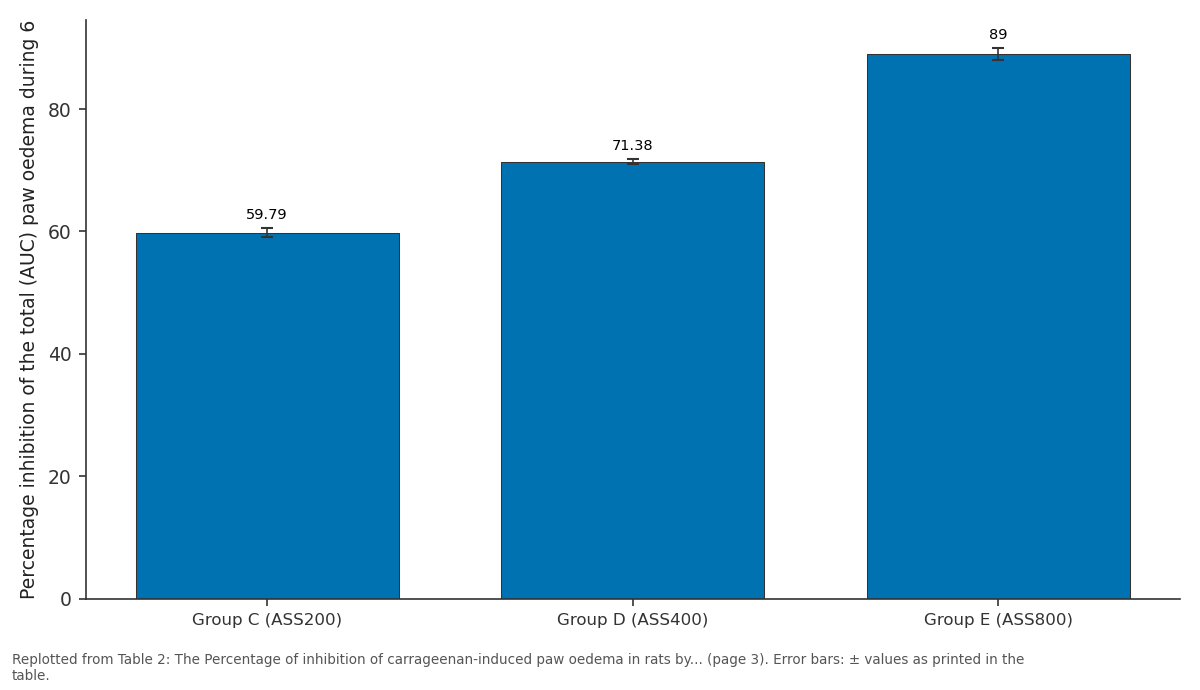
Percentage inhibition of the total (AUC) paw...: Group C (ASS200) vs Group D (ASS400) vs Group E (ASS800)
Replotted from Table 2 (page 3) of the original paper. Every bar is the paper's own table value.
View source evidence ↗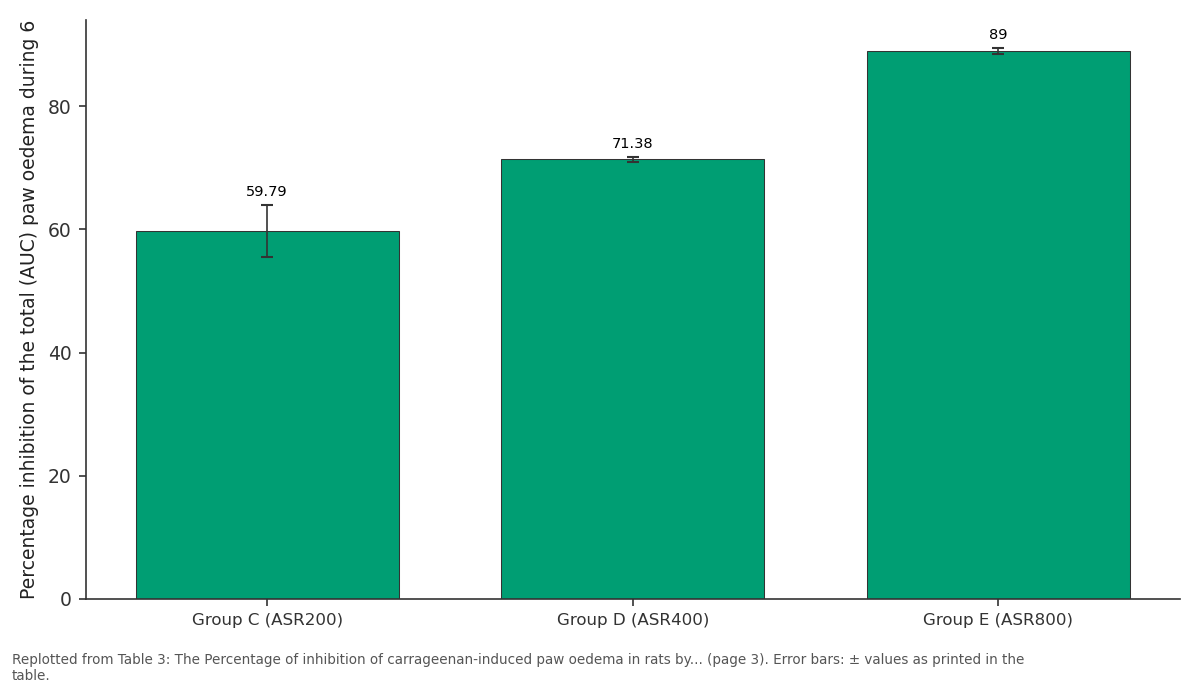
Percentage inhibition of the total (AUC) paw...: Group C (ASR200) vs Group D (ASR400) vs Group E (ASR800)
Replotted from Table 3 (page 3) of the original paper. Every bar is the paper's own table value.
View source evidence ↗Figures & tables
From the original paper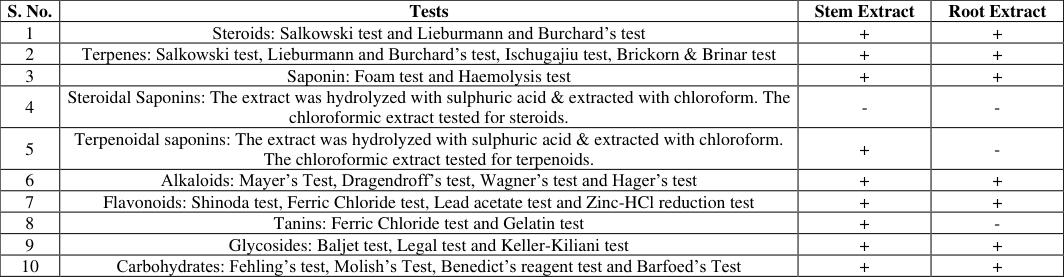 Table 1
 Table 2
 Table 3
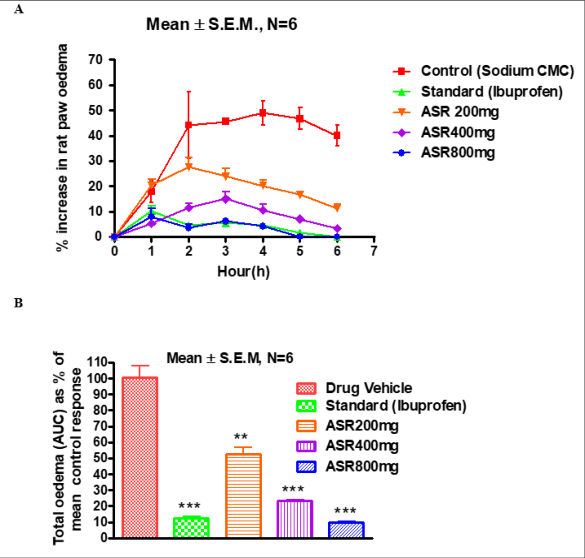 Figure 1
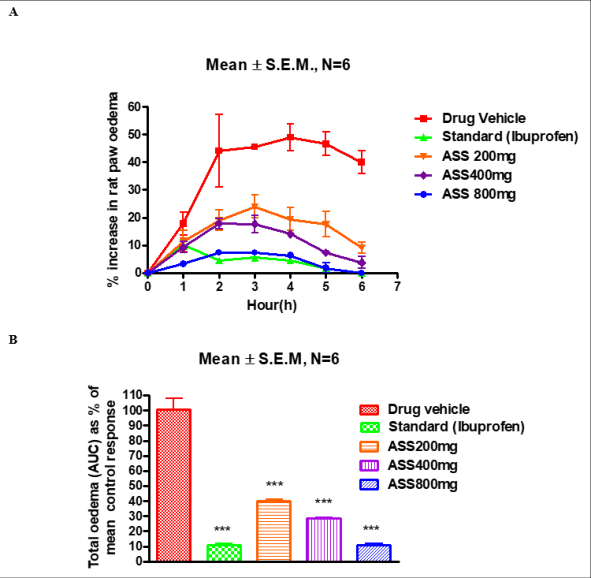 Figure 2
Introduction
The family Alangiaceae comprises twenty-two species, among which Alangium salviifolium Decapetalum is the most extensively used medicinal species in traditional healthcare systems of India, China, Myanmar (Burma), and the Philippines [1] . The plant flourishes in Eastern Asia, Madagascar, western Pacific Ocean islands, Western Africa, southern and tropical Australia, and New Caledonia [2] . Alangium salviifolium (Akola in Sanskrit) also known as Sage-leaved Alangium is a deciduous tropical tree with thorny leaves. The subspecies name Decapetalum represents the flowers with ten petals [3] . The various parts of A. salviifolium have been reported to exhibit acrid, astringent, emollient, anti-helmintic, diuretic and purgative properties [3] . The plant is traditionally used both externally and internally for the treatment of acute rheumatism and hemorrhoids, inflammatory conditions, leprosy, and cases of rabid dog bite. The root bark is considered an effective antidote against several poisons. Additionally, the fruits are applied as a poultice to alleviate burning sensations and control hemorrhage [3] . The leaves are used as a poultice to reduce rheumatic pains [4] . The stem bark is used both as contraceptive and abortifacient and also used in vomiting and diarrhea [5] . Scientific studies show that the leaves are rich in flavonoids and alkaloids while the bark is rich in tannins and steroids [6] . Flowers are shown to have bioactive compounds like alkaloids, flavonoids, steroids, tannins, saponins, phenols, coumarins, quinines, cardiac glycosides, reducing sugars, and proteins [7] . In this study Alangium salviifolium root and stem methanol extracts along with their barks were studied for their anti-inflammatory activity, as they are known to be in use traditionally.
Extraction
The stems (500 g) and roots (500 g) of A. saliviifolium were shade dried, pulverized into coarse powder and extracted in a Soxhlet apparatus with 95% methanol. The extract was concentrated under reduced pressure, dried completely and weighed. The percentage yields of methanolic ASR and ASS are 6 gm and 8 gm respectively. The extract was stored in a refrigerator and a weighed quantity was suspended in 1% sodium carboxy methyl cellulose (CMC) solution for the experiment [8] .
Preliminary Biochemical test
Qualitative determination of alkaloids, flavonoids, saponins, glycosides, tannins, steroids and triterpinoids for methanolic extracts of stem and roots of A. salviifolium was performed using standard phytochemical screening procedure [9] .
Animals Used
Colony bred adult albino Wister rats of either sex (supplied by B.N. Ghosh & Co., Calcutta) weighing 200 g -250 g were selected for the study. Animals were maintained at 25 °C ± 2 °C, relative humidity 50 ± 15% under 12hr light/dark cycle. The animals were fed with standard pellet diet (Ratan Brothers, India) and water ad libitium. The experimental protocol has been approved by the Institutional Animal Regulatory body of the Government (Regd. No. 516/01/A/CPCSEA). [10] A. saliviifolium methanol extract was evaluated for acute toxicity study according to the OECD (Organization for Economic Co-operation and Development) guidelines No. 425 of CPCSEA. The rats of both sexes were acclimatized to the laboratory conditions for 10 days before commencement of the experiment. All animals were provided with standard pellet diet and water ad libitum. Wister albino rats weighing between 200-250 g were divided into groups of ten each with an equal number of males and females. They were kept for overnight fasting. Three doses of the extract 100, 500 and 1000 mg/kg body weight, were given orally to three different groups. The animals were kept for observation for a period of 14 days. There were no signs of toxicity up to 1000 mg/kg body weight. The LD 50 value of the extracts was found to be >1000 mg/kg b. wt.
Acute toxicity study
Acute toxicity study
Anti-Inflammatory activity
The anti-inflammatory activity of the methanolic stem and root extracts of Alangium saliviifolium was determined in Wister strain albino rats using carrageenan-induced paw oedema method [11] . The rats were divided into eight groups (I, II, III, IV, V, VI, VII, VIII), four in each group. Group I was treated with drug vehicle, 1% sodium CMC in saline (negative control); Group II was treated with non-steroidal anti-inflammatory drug ibuprofen (positive control); Groups III, IV, V received crude methanolic ASS (200, 400, 800 mg/kg body weight) while the rest of the groups received crude ASR (200, 400, 800 mg/kg body weight). All doses (0.1 ml/100 g body weight) were administered orally 1 h prior to the induction of oedema. Then 0.1 ml of 1% carrageenan solution was injected into the subplantar surface of the right hind paw of the rats. Simultaneously the left paws were injected with saline water. The thickness of the rat's paw was measured using Zeitlin's Constant loaded Lever apparatus [12] . The paw thickness of the rats was measured for 6h with 1h interval. Zero-hour readings are the initial paw reading of the animals. The degree of paw oedema was calculated as follows:
Where Y 1 = paw thickness at time t (1, 2, 3, 4, 5, 6hr) after injection Y 0 = paw thickness at 0 hr i.e. before injection Therefore, Percentage (%) increase due to carrageenan = (% increase in right paw -% increase in left paw).
Results
The phytochemical tests of the stem extract showed the presence of flavonoids, steroids, terpenoids, alkaloids, carbohydrates, and tannins. The phytochemical tests of the root extract showed the presence of steroids, terpenoids and alkaloids (Table 1). The oedema and percentage of rate of inhibition for each group were measured and calculated (Table -2
| S. No. | Tests | Stem Extract | Root Extract |
|---|---|---|---|
| 1 | Steroids: Salkowski test and Lieburmann and Burchard’s test | + | + |
| 2 | Terpenes: Salkowski test, Lieburmann and Burchard’s test, Ischugajiu test, Brickorn & Brinar test | + | + |
| 3 | Saponin: Foam test and Haemolysis test | + | + |
| 4 | Steroidal Saponins: The extract was hydrolyzed with sulphuric acid & extracted with chloroform. The chloroformic extract tested for steroids. | - | - |
| 5 | Terpenoidal saponins: The extract was hydrolyzed with sulphuric acid & extracted with chloroform. The chloroformic extract tested for terpenoids. | + | - |
| 6 | Alkaloids: Mayer’s Test, Dragendroff’s test, Wagner’s test and Hager’s test | + | + |
| 7 | Flavonoids: Shinoda test, Ferric Chloride test, Lead acetate test and Zinc-HCl reduction test | + | + |
| 8 | Tanins: Ferric Chloride test and Gelatin test | + | - |
| 9 | Glycosides: Baljet test, Legal test and Keller-Kiliani test | + | + |
| 10 | Carbohydrates: Fehling’s test, Molish’s Test, Benedict’s reagent test and Barfoed’s Test | + | + |
Table text extracted from the original PDF; superscript letters are shown inline. The original table image is below.
View original table image
& Table-3).
From the observed values, the percentage of maximal paw oedema produced during 6h was calculated and plotted as line graph. The percentage of total paw oedema as area under the time course curve (AUC) produced during 6h was also calculated and plotted as bar graph (Fig. 1 & Fig. 2). The data obtained from the experiment were expressed as means ± S.E.M, N = 4. Student's t-test was employed to compare values between the test and control group values. The differences in the test versus control values were considered statistically significant at p ≤ 0.05. The root and stem extracts of Alangium salviifolium exhibited dosedependent statistically significant effects, with significance levels ranging from p < 0.05 to p < 0.001.
Discussion
On comparison with the drug vehicle (positive control) group, all the test groups had shown a significant reduction in inflammation. The root and the stem extracts have shown the same potency. The percentage of inhibition of edema by 800 mg dosage of stem (89.00 ± 1.0) and root (89.00 ± 0.5) extract was almost equal to that of the standard drug, ibuprofen (89.02 ± 1.0). According to Vinegar et al. (1987) the development of the carrageenan induced edema derives from the release of cytoplasmic enzymes and inflammatory mediators like histamine and serotonin from mast cells and the increase of prostaglandins and thromboxane's via the catalytic activity of cyclooxygenase enzymes (COX-1 & COX-2) in the inflammatory area [13] . The macrophages in the carrageenan induced dermal tissue release much interleukin-1 to induce accumulation of polymorphic nuclear cells (PMN) into the inflammatory area. The activated PMNs then release the lysosomal enzymes and activate oxygen, especially superoxide dismutase, to destroy connective tissue and induce paw swelling. The suppression of the increase in paw oedema by ibuprofen is due to the inhibition of the enzyme arachidonate cyclooxygenase or COX [14] . The results of present study suggest that the methanol extracts of Alangium salviifolium at a dose of 200, 400 and 800 mg/kg significantly (p < 0.001) suppressed carrageenan-induced rat paw oedema. The observed antiinflammatory effect of Alangium saliviifolium extracts could be due to the presence of bio-active chemical compounds like steroids, flavonoids, terpenoids and alkaloids in the extract, which are known to possess anti-inflammatory activity [15] . Further studies are necessary to elucidate the mechanism and phytochemical responsible for antiinflammatory activity.
Acknowledgement
Acknowledgement I express my deep sense of gratitude to Prof. B. Ganga Rao, Department of Pharmacognosy and Phytochemistry, A.U. College of Pharmaceutical Sciences, Andhra University, Visakhapatnam, Andhra Pradesh, for his encouragement and guidance in executing the experimental work.
Figures and tables from the paper
| S. No. | Treatment | Percentage inhibition of the maximal paw oedema during 6h | Percentage inhibition of the total (AUC) paw oedema during 6h |
|---|---|---|---|
| 1 | Group A (Drug Vehicle) | 0.0 ± 5.2 | 0.0 ± 0.9 |
| 2 | Group B (Ibuprofen) | 81.6 ± 1.8 | 89.02 ± 1.0 |
| 3 | Group C (ASS200) | 56.935 ± 4.0 | 59.79 ± 0.7 |
| 4 | Group D (ASS400) | 67.825 ± 1.8 | 71.38 ± 0.4 |
| 5 | Group E (ASS800) | 86.68 ± 0.1 | 89.00 ± 1.0 |
Table text extracted from the original PDF; superscript letters are shown inline. The original table image is below.
View original table image
| S. No. | Treatment | Percentage inhibition of the maximal paw oedema during 6h | Percentage inhibition of the total (AUC) paw oedema during 6h |
|---|---|---|---|
| 1 | Group A (Drug Vehicle) | 0.0 ± 4.3 | 0.0 ± 73 |
| 2 | Group B (Ibuprofen) | 77.97 ± 18 | 89.02 ± 1.2 |
| 3 | Group C (ASR200) | 40.86 ± 3.6 | 59.79 ± 4.2 |
| 4 | Group D (ASR400) | 67.74 ± 2.7 | 71.38 ± 0.4 |
| 5 | Group E (ASR800) | 86.84 ± 0.9 | 89.00 ± 0.5 |
Table text extracted from the original PDF; superscript letters are shown inline. The original table image is below.
View original table image
References
15 in the original paper- London: L. Reeve & Co.; 1875. p. 741.
- Nyayiru K, Udaya P, Bhuvaneswari S, Preethy S, Rajalakshmi N, Saranya M, Anto J, Selvaraj A. Studies on antimicrobial, antioxidant, larvicidal, pesticidal activity and phytochemistry of leaves of Alangium salvifolium (L.f.) Wang. Int J Pharm Pharm Sci. 2013;5:86-89.
- Kirtikar KR, Basu BD. Indian medicinal plants. Vol. 2. 2nd ed. Dehradun: International Book Distributors; 1994. p. 1236.
- Rastogi RP, Mehrotra BN. Compendium of Indian medicinal plants. Vol. 2. New Delhi: PID; 1993.
- Murugan V, Shareef H, Ramasharma GVS, Ramanathan M, Suresh B. Antifertility activity of the stem bark of Alangium salviifolium (Linn. f.) Wang in Wistar female rats. Indian J Pharmacol. 2000;32:388389.
- Tanwer BS, Vijayvergia R. Phytochemical evaluation and quantification of primary metabolites of Alangium salviifolium. Int J Pharm Biosci. 2010;1:1-6.
- Gopinath S. Broad spectrum antimicrobial activities and phytochemical analysis of Alangium salviifolium flower extract. Global J Res Med Plants Indig Med. 2013;2(3):135-135.
- Anonymous. Pharmacopoeia of India. 2nd ed. New Delhi: Ministry of Health; 1980. p. 67-69.
- Trease GE, Evans WC. Pharmacognosy. London: Bailliere Tindall; 1989.
- Ghosh MN. Fundamentals of experimental pharmacology. 2nd ed. Calcutta: Scientific Book Agency; 1984.
- Winter CA, Risley EA, Nuss GW. Carrageenin-induced oedema in hind paw of the rat as an assay for antiinflammatory drugs. Proc Soc Exp Biol Med. 1962;111:544-550.
- Battu GR, Zeitlin IJ, Gray AI. Anti-inflammatory activity of octanordammarane triterpenes from resin extracts of Commiphora kua in adjuvant-induced arthritis in rats. Br J Pharmacol. 2000;133:199-199.
- Vinegar R, Truax JF, Selph JL, Venable AL, McKenzie KK. Pathway to carrageenan-induced inflammation in the hind limb of the rat. Fed Proc. 1987;46:118-126.
- Rang HP, Dale MM, Ritter JM. Pharmacology. 4th ed. London: Churchill Livingstone; 1999. p. 230.
- Jackson RL, Jason MD. Analgesic, antipyretic and antiinflammatory drugs used in the treatment of gout. In: Goodman LS, Gilman A, editors. The pharmacological basis of therapeutics. 10th ed. New York: McGrawHill; 2001. p. 687-688.