
Research article · 2026 · Full text
International Journal of Biology SciencesIsolation, characterization and identification of bacteria isolated from rhizosphere of Vicia faba L.
Volume 8(3) · Pages 92–96 · DOI: 10.33545/26649926.2026.v8.i3b.597 ↗
Research areasLegume Nitrogen Fixing SymbiosisPlant-Microbe Interactions and ImmunityGenetic and Environmental Crop Studies
Abstract
Author-writtenIn the present study, seventeen isolates of bacteria were isolated from the rhizosphere of Vicia faba L. The isolates were identified on the basis of morphological, biochemical and molecular characterization. Only two isolates were selected for molecular characterization. Phylogenetic analysis was done on the basis of 16S rDNA sequence analysis. Almost all isolates promote plant growth.
Summary
Source-checkedPlain-language reading of the full paper, prepared with AI and checked against the text. Each point links to the authors' own words.
Why it matters
- Vicia faba L., commonly known as faba bean, is a protein-rich legume and ranks as the third most common grain legume globally. View evidence ↗
- Interactions between plants and microorganisms are valuable for developing biofertilizers, bioinoculants, and other biological processes. View evidence ↗
The question
- The study aimed to investigate and identify the bacteria present in the rhizosphere of Vicia faba L. View evidence ↗
What they did
- The researchers used two varieties of Vicia faba L., HFB-1 and Vikrant, sourced from Birsa Agricultural University in Jharkhand. View evidence ↗
- Bacterial isolates were obtained from rhizospheric soil using a serial dilution method (10-1 to 10-9) and incubated on YEMA plates at 28 ± 2 °C for 24 hours. View evidence ↗
- Isolates were characterized using a battery of biochemical tests, including hydrolysis tests (starch, casein, gelatin), the catalase test, and various metabolic tests like indole and citrate utilization. View evidence ↗
What they found
- Out of the 17 bacterial isolates recovered from the rhizosphere, 2 were Gram-positive and 15 were Gram-negative. View evidence ↗
- Biochemical screening showed that all isolates were catalase-positive, while all were negative for the VP-test and H2S production; citrate utilization was the most common positive trait among the specific tests (12 isolates). View evidence ↗
- Molecular analysis identified isolate HFB-1NS-VI as having 96.77% similarity to Fictibacillus phosphorivorans and isolate VKNS-VII as having 90.27% similarity to Delftia rhizosphaerae. View evidence ↗
- The study found that nearly all of the isolated bacteria possess plant growth-promoting properties. View evidence ↗
What it means
- The authors conclude that the identified bacteria are nitrogen-fixing and promote plant growth, which can help maintain soil fertility. View evidence ↗
- The authors suggest that further research into these beneficial bacteria could lead to increased crop production. View evidence ↗
Visual summary
1 visualsIllustrations explain the paper; they do not show study data.
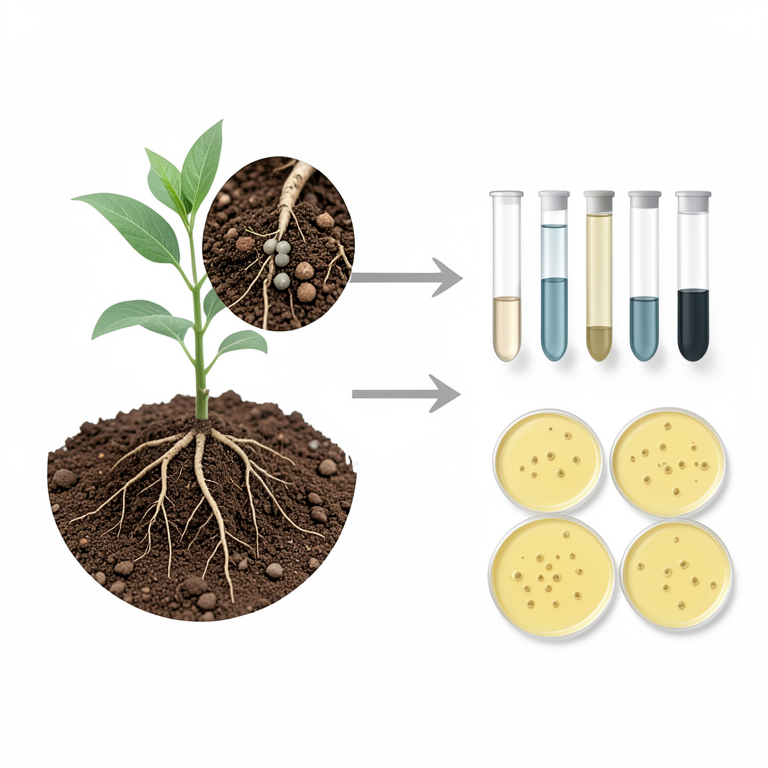
Rhizosphere Isolation Process
AI-generated conceptual illustration (Vicia faba L. (faba bean) plants and rhizospheric soil). It explains the idea and does not show study data.
View source evidence ↗Figures & tables
From the original paper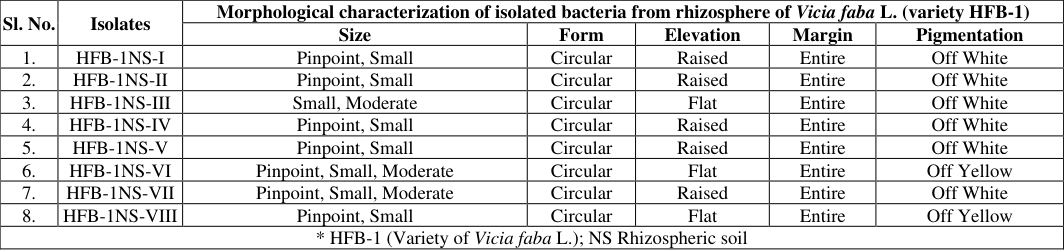 Table 1
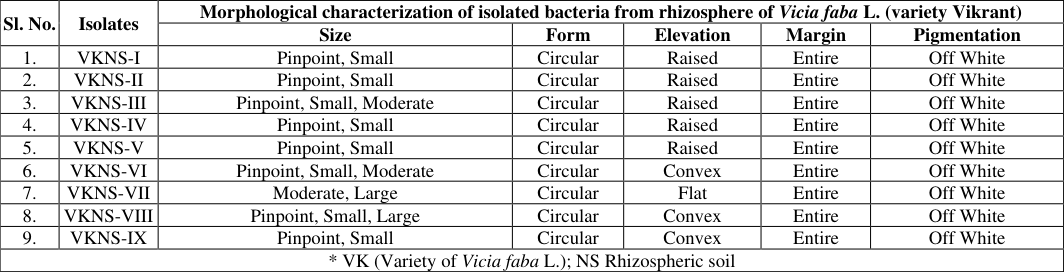 Table 2
 Table 3
 Table 4
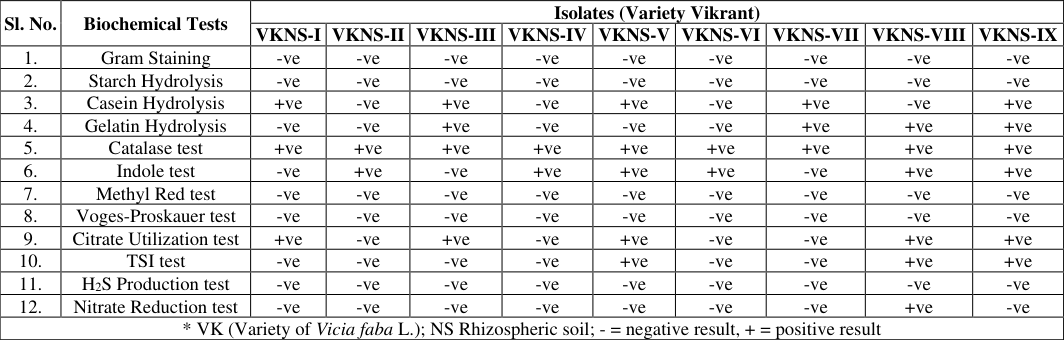 Table 4
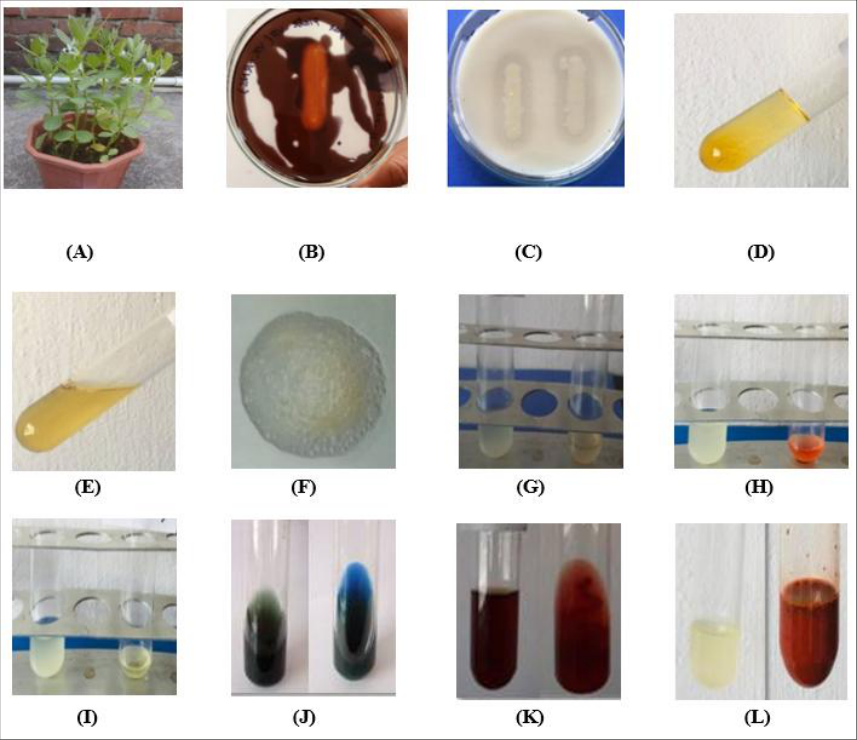 Figure 1
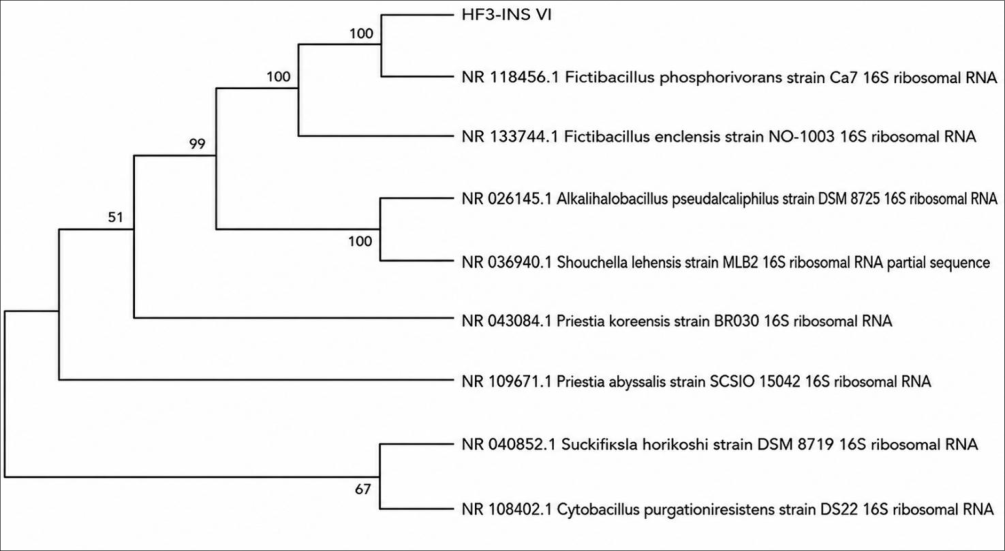 Figure 2
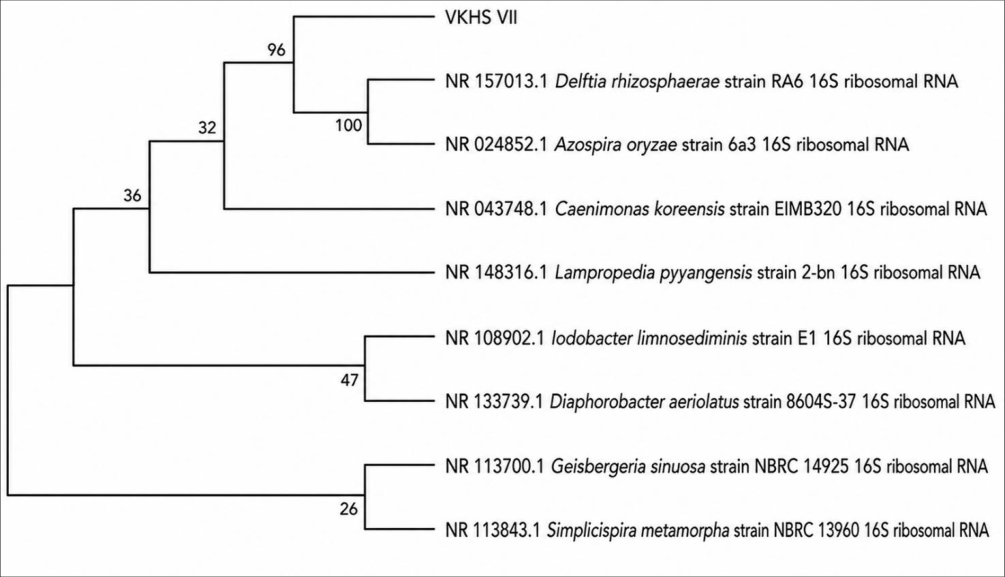 Figure 3
Introduction
Plants are very important for our environment because they balance nature. It is impossible to imagine our environment without plants as they benefit society in various ways like food, feed, shelter, clothing, oxygen, medicine, agriculture etc. [1] Legumes are very important for human diet as they are rich in carbohydrates, proteins, vitamins and dietary fiber [2] . Faba bean is botanically known as Vicia faba L. which belongs to family Fabaceae. It is one of the protein-rich leguminous plants of the Fabaceae family and the third most common grain legume in the world. It is known by several names in India which include Bakala, Kala matar, Raj-rawan, Anhuri, Kadu huralikayee etc. It is an important protein source for both humans and animals [3] . The diversity of microorganisms plays a very important role in maintaining the functions of the ecosystem, which support life on earth. According to the World Data Centre for Microorganisms over 1.7 million strains are registered. The interactions between plants and microorganisms are helpful in the field of biofertilizers, bioinoculants, bioprocessing and biofilming. Both plant and types of soil play an important role in the diversity of microorganisms and structural community in the rhizosphere [4] .
Materials and methods
Materials and methods
Collection of seeds
Seeds of Vicia faba L. (variety HFB-1 and Vikrant) were taken from Birsa Agricultural University, Kanke, Ranchi, Jharkhand.
Isolation of bacterial isolates
Plants were grown in pots to collect rhizospheric soils. After flowering, the rhizospheric soils were collected. By serial dilution method the isolates of bacterial culture were obtained from rhizospheric soil. The diluted samples (10 -1 -10 -9 ) were then spread on the YEMA plates and were incubated at 28 ± 2 °C for 24 hours. After 24 h colonies were picked up and streaked again on the YEMA plates and were incubated again at 28 ± 2 °C for 24 hours to obtain the pure culture [5,6] .
Morphological characterization of isolates
For morphological characterization the size, form, elevation, margin and pigmentation of bacterial isolates were determined by observing the colonies on YEMA plates grown overnight at 28 ± 2 °C [7,8] . Gram staining technique was used for microscopic observation of the isolates [9,10] . [10] .
Molecular identification
Total seventeen isolates of bacteria were isolated from the rhizosphere of Vicia faba L. Two isolates were selected for molecular characterization (HFB-1NS-VI and VKNS-VII).
The quality of extracted DNA from the isolates was evaluated on 1.0% Agarose Gel. By using specific primers the fragment of rDNA gene was amplified by resolving on Agarose gel a single discrete PCR amplicon band of 1500 bp was observed. Forward and reverse DNA sequencing reaction of PCR amplicon was carried out using BDT v3.1 Cycle sequencing kit on ABI 3730xl Genetic analyzer with forward primer and reverse primer.
The rDNA gene sequence was used to carry out BLAST with the database of NCBI Genbank database for the identification of isolates of bacteria. On the basis of maximum identity score, the first ten sequences were selected and aligned using Clustal W. Software. The phylogenetic tree was constructed using MEGA XI.
The evolutionary history was inferred by using the Maximum Likelihood method based on the Kimura 2-parameter model. On the basis of 1000 replicates the percentage of replicate trees was evaluated using the bootstrap resampling method [11][12][13] .
Results
Results
Morphological characterization
A total of 17 isolates of bacteria were isolated from the rhizosphere of Vicia faba L. Gram staining result showed that 2 isolates were positive and 15 were negative. Colony morphology of the isolates was studied, which revealed that the size was pinpoint, small and moderate, the form was circular, the elevation was flat, raised and convex, the margin was entire and the pigmentation was off white and off yellow.
Biochemical characterization
Biochemical characterization
Sl. No. Biochemical Tests
Sl. No. Biochemical Tests
Isolates (Variety HFB-1) HFB-1NS-I HFB-1NS-II HFB-1NS-III HFB-1NS-IV HFB-1NS-V HFB-1NS-VI HFB-1NS-VII HFB-1NS
Isolates (Variety HFB-1) HFB-1NS-I HFB-1NS-II HFB-1NS-III HFB-1NS-IV HFB-1NS-V HFB-1NS-VI HFB-1NS-VII HFB-1NS
Identification and molecular characterization
The identification of some isolates was made on the basis of biochemical tests performed and also according to Bergey's Manual and it was found that they were Rhizobium species.
According to 16S rDNA sequencing, two isolates were identified. BLAST and Phylogenetic tree analysis revealed that one isolate i.e. HFB-1NS-VI showed similarities of 96.77% with Fictibacillus phosphorivorans and another isolate i.e. VKNS-VII showed similarities of 90.27% with Delftia rhizosphaerae.
The results of biochemical characterization are presented in Tables 3 and4 On the basis of morphological and biochemical characterization, and 16S rRNA sequencing the isolates were identified as Rhizobium spp., Fictibacillus phosphorivorans and Delftia rhizosphaerae.
Conclusion
Through this research work many bacteria were identified which will be helpful in the field of agriculture. The bacteria found were nitrogen fixing and also help in plant growth promotion. The fertility of the soil can be maintained by effective nitrogen fixing bacteria. Further research may help to increase crop production with the help of beneficial bacteria.
Figures and tables from the paper
| Sl. No. | Isolates | Morphological characterization of isolated bacteria from rhizosphere of Vicia faba L. (variety HFB-1) | — | — | — | — |
|---|---|---|---|---|---|---|
| Size | Form | Elevation | Margin | Pigmentation | ||
| 1. | HFB-1NS-I | Pinpoint, Small | Circular | Raised | Entire | Off White |
| 2. | HFB-1NS-II | Pinpoint, Small | Circular | Raised | Entire | Off White |
| 3. | HFB-1NS-III | Small, Moderate | Circular | Flat | Entire | Off White |
| 4. | HFB-1NS-IV | Pinpoint, Small | Circular | Raised | Entire | Off White |
| 5. | HFB-1NS-V | Pinpoint, Small | Circular | Raised | Entire | Off White |
| 6. | HFB-1NS-VI | Pinpoint, Small, Moderate | Circular | Flat | Entire | Off Yellow |
| 7. | HFB-1NS-VII | Pinpoint, Small, Moderate | Circular | Raised | Entire | Off White |
| 8. | HFB-1NS-VIII | Pinpoint, Small | Circular | Flat | Entire | Off Yellow |
| * HFB-1 (Variety of Vicia faba L.); NS Rhizospheric soil |
Table text extracted from the original PDF; superscript letters are shown inline. The original table image is below.
View original table image
| Sl. No. | Isolates | Morphological characterization of isolated bacteria from rhizosphere of Vicia faba L. (variety Vikrant) | — | — | — | — |
|---|---|---|---|---|---|---|
| Size | Form | Elevation | Margin | Pigmentation | ||
| 1. | VKNS-I | Pinpoint, Small | Circular | Raised | Entire | Off White |
| 2. | VKNS-II | Pinpoint, Small | Circular | Raised | Entire | Off White |
| 3. | VKNS-III | Pinpoint, Small, Moderate | Circular | Raised | Entire | Off White |
| 4. | VKNS-IV | Pinpoint, Small | Circular | Raised | Entire | Off White |
| 5. | VKNS-V | Pinpoint, Small | Circular | Raised | Entire | Off White |
| 6. | VKNS-VI | Pinpoint, Small, Moderate | Circular | Convex | Entire | Off White |
| 7. | VKNS-VII | Moderate, Large | Circular | Flat | Entire | Off White |
| 8. | VKNS-VIII | Pinpoint, Small, Large | Circular | Convex | Entire | Off White |
| 9. | VKNS-IX | Pinpoint, Small | Circular | Convex | Entire | Off White |
| * VK (Variety of Vicia faba L.); NS Rhizospheric soil |
Table text extracted from the original PDF; superscript letters are shown inline. The original table image is below.
View original table image
| Sl. No. | Biochemical Tests | Isolates (Variety HFB-1) | — | — | — | — | — | — | — |
|---|---|---|---|---|---|---|---|---|---|
| HFB-1NS- I | HFB- 1NS-II | HFB-1NS- III | HFB-1NS- IV | HFB-1NS- V | HFB-1NS- VI | HFB-1NS- VII | HFB-1NS- VIII | ||
| 1. | Gram Staining | -ve | -ve | -ve | -ve | -ve | +ve | -ve | +ve |
| 2. | Starch Hydrolysis | -ve | -ve | -ve | -ve | -ve | +ve | -ve | -ve |
| 3. | Casein Hydrolysis | +ve | +ve | +ve | +ve | +ve | -ve | +ve | -ve |
| 4. | Gelatin Hydrolysis | -ve | -ve | +ve | -ve | -ve | -ve | -ve | -ve |
| 5. | Catalase test | +ve | +ve | +ve | +ve | +ve | +ve | +ve | +ve |
| 6. | Indole test | +ve | +ve | -ve | +ve | +ve | -ve | +ve | -ve |
Table text extracted from the original PDF; superscript letters are shown inline. The original table image is below.
View original table image
| 7. | Methyl Red test | +ve | +ve | -ve | +ve | +ve | -ve | +ve | -ve |
|---|---|---|---|---|---|---|---|---|---|
| 8. | Voges-Proskauer test | -ve | -ve | -ve | -ve | -ve | -ve | -ve | -ve |
| 9. | Citrate Utilization test | +ve | +ve | +ve | +ve | +ve | -ve | +ve | +ve |
| 10. | TSI test | -ve | -ve | -ve | -ve | -ve | -ve | -ve | +ve |
| 11. | H2S Production test | -ve | -ve | -ve | -ve | -ve | -ve | -ve | -ve |
| 12. | Nitrate Reduction test | +ve | +ve | -ve | +ve | +ve | -ve | +ve | +ve |
| * HFB-1 (Variety of Vicia faba L.); NS Rhizospheric soil; - = negative result, + = positive result |
Table text extracted from the original PDF; superscript letters are shown inline. The original table image is below.
View original table image
| Sl. No. | Biochemical Tests | Isolates (Variety Vikrant) | — | — | — | — | — | — | — | — |
|---|---|---|---|---|---|---|---|---|---|---|
| VKNS-I | VKNS-II | VKNS-III | VKNS-IV | VKNS-V | VKNS-VI | VKNS-VII | VKNS-VIII | VKNS-IX | ||
| 1. | Gram Staining | -ve | -ve | -ve | -ve | -ve | -ve | -ve | -ve | -ve |
| 2. | Starch Hydrolysis | -ve | -ve | -ve | -ve | -ve | -ve | -ve | -ve | -ve |
| 3. | Casein Hydrolysis | +ve | -ve | +ve | -ve | +ve | -ve | +ve | -ve | +ve |
| 4. | Gelatin Hydrolysis | -ve | -ve | +ve | -ve | -ve | -ve | +ve | +ve | +ve |
| 5. | Catalase test | +ve | +ve | +ve | +ve | +ve | +ve | +ve | +ve | +ve |
| 6. | Indole test | -ve | +ve | -ve | +ve | +ve | +ve | -ve | +ve | +ve |
| 7. | Methyl Red test | -ve | -ve | -ve | -ve | -ve | -ve | -ve | -ve | -ve |
| 8. | Voges-Proskauer test | -ve | -ve | -ve | -ve | -ve | -ve | -ve | -ve | -ve |
| 9. | Citrate Utilization test | +ve | -ve | +ve | -ve | +ve | -ve | -ve | +ve | +ve |
| 10. | TSI test | -ve | -ve | -ve | -ve | +ve | -ve | -ve | +ve | +ve |
| 11. | H2S Production test | -ve | -ve | -ve | -ve | -ve | -ve | -ve | -ve | -ve |
| 12. | Nitrate Reduction test | -ve | -ve | -ve | -ve | -ve | -ve | -ve | +ve | -ve |
| * VK (Variety of Vicia faba L.); NS Rhizospheric soil; - = negative result, + = positive result |
Table text extracted from the original PDF; superscript letters are shown inline. The original table image is below.
View original table image
References
13 in the original paper- Usman A, Abubakar S, Alaku C, Nnadi O. Plant: A necessity of life. International Letters of Natural Sciences. 2014;20:151-159.
- Ambika A, Supritha DS, Amitkumar K, Sridhar R. Introduction to legumes: Overview and its importance for food security. Futuristic Trends in Agriculture and Allied Sciences. 2023:95-106.
- Mishra UK, Tripathi RM, Yadav D, Kumar R, Prajapati PK, Muwel K. Studies on correlation and path coefficient analysis in faba bean (Vicia faba L.). International Journal of Plant & Soil Science. 2023;35(21):362-368.
- Naveed M, Mubeen S, Khan S, Ahmed I, Khalid N, Suleria HAR, et al. Identification and characterization of rhizospheric microbial diversity by 16S ribosomal RNA gene sequencing. Brazilian Journal of Microbiology. 2014;45(3):985-993.
- Soumare A, Diedhiou AG, Thuita M, Hafidi M, Ouhdouch Y, Gopalakrishnan S, et al. Exploiting biological nitrogen fixation: A route towards sustainable agriculture. Plants (Basel). 2020;9(8):1011.
- Oraon V, Singh K. Genetic biodiversity of nitrogenfixing bacteria from agricultural soil of Madhya Pradesh, India. Advances in Life Science and Technology. 2014;24.
- Fogelberg F, Ostlund J, Myrbeck A. Effect of cultivar and inoculants on yields of faba beans (Vicia faba minor) and subsequent spring wheat (Triticum aestivum) under Scandinavian cropping conditions. Frontiers in Agronomy. 2023;5.
- Singha B, Das P, Mazumder PB. Morphological and biochemical characterization of rhizobia isolated from root nodule of Crotalaria juncea L. grown in Assam. International Journal of Scientific Research. 2013;4(4):1928-1931.
- Oraon V, Singh K. Assessment of phenotypic and genotypic diversity of Rhizobium bacteria in Madhya Pradesh. Journal of Biology, Agriculture and Healthcare. 2015;5(7).
- Cappuccino JG, Sherman N. Microbiology: A laboratory manual. Menlo Park (CA): Benjamin/Cummings; 2002.
- Kimura M. A simple method for estimating evolutionary rate of base substitutions through comparative studies of nucleotide sequences. Journal of Molecular Evolution. 1980;16:111-120.
- Kumar S, Stecher G, Tamura K. MEGA7: Molecular evolutionary genetics analysis version 7.0 for bigger datasets. Molecular Biology and Evolution. 2015.
- Felsenstein J. Confidence limits on phylogenies: An approach using the bootstrap. Evolution. 1985;39:783791.