
Research article · 2026 · Full text
International Journal of Advanced Chemistry ResearchKinetic study of (benzo[d]thiazol-2-yl) thiazole-2, 5-diamine with Cobalt salt in medium base, acid
Volume 8(3) · Pages 06–10 · DOI: 10.33545/26646781.2026.v8.i3a.363 ↗
Research areasMetal complexes synthesis and propertiesInorganic and Organometallic ChemistryThermal and Kinetic Analysis
Abstract
Author-writtenThe research successfully synthesized [N⁵-(benzo[d] thiazol-2-yl) thiazole-2,5-diamine] (S) and studied the kinetics of its complex formation with cobalt(II) ions in media with different pH values (2, 4, 6, 8) using UV-Vis spectroscopy at a maximum wavelength of 341 nm and a constant temperature of 47 °C for 7 hours under reflux conditions. The results showed that the formation of the [Co(S)]ⁿ⁺ complex follows first-order kinetics in all media, as evidenced by the linear graphs of ln(A₀/A) versus time with high correlation coefficients (R² = 0.959-0.982).The first-order rate constants were determined as follows(pH 2 0.0055 min⁻¹, pH 4: 0.0037 min⁻¹, pH 6: 0.0070 min⁻¹, pH 8: 0.0079 min⁻¹.((1) Key Kinetic Observations: Absorbance showed gradual increases in acidic environments (pH 2-6), indicating the formation of efficient complexes, while pH 8 showed slower rates or slight decreases. This behavior is attributed to the proteation of the bond under acidic conditions (NH₃⁺ formula), which facilitates coordination between nitrogen and sulfur donors, unlike the precipitation of Co(OH)₂ or the formation of hydroxide species in basic environments, which inhibit complex formation. The concentrations of the remaining reactants (C₀ = 0.01 mol) confirmed the gradual consumption, reaching 4.9% (at pH 2), 7.3% (at pH 4), 12.4% (at pH 6), and 7.3% (at pH 8) after 60 minutes, highlighting the superiority of moderately acidic conditions.
Summary
Source-checkedPlain-language reading of the full paper, prepared with AI and checked against the text. Each point links to the authors' own words.
Why it matters
- Studying the equilibrium of complexes formed between metallic ions and thiazole compounds is valuable because these complexes can be more effective or efficacious than the original compounds. View evidence ↗
The question
- The study aimed to synthesize [N⁵-(benzo[d] thiazol-2-yl) thiazole-2,5-diamine] (S) and investigate the kinetics of its complex formation with cobalt(II) ions across various pH levels (2, 4, 6, and 8). View evidence ↗
What they did
- The researchers used UV-Vis spectroscopy at a maximum wavelength of 341 nm, maintaining a constant temperature of 47 °C for 7 hours under reflux conditions. View evidence ↗
- The synthesis of compound (S) involved dissolving 0.01 mol (2.19 g) of compound [1] in 60 ml of ethanol, followed by the gradual addition of 0.01 mol (1.6 g) of urea and 0.76 g of thiourea. View evidence ↗
- To form the cobalt complex, solutions of compound (S) and cobalt chloride hexahydrate were mixed and refluxed for 7 hours, resulting in a blue mixture. View evidence ↗
What they found
- The formation of the [Co(S)]ⁿ⁺ complex followed first-order kinetics across all tested pH media, with correlation coefficients (R²) ranging from 0.959 to 0.982. View evidence ↗
- The first-order rate constants were measured as 0.0055 min⁻¹ at pH 2, 0.0037 min⁻¹ at pH 4, 0.0070 min⁻¹ at pH 6, and 0.0079 min⁻¹ at pH 8. View evidence ↗
- After 60 minutes, the consumption of reactants (starting at C₀ = 0.01 mol) reached 4.9% at pH 2, 7.3% at pH 4, 12.4% at pH 6, and 7.3% at pH 8. View evidence ↗
- A slightly acidic medium (pH 4) was identified as an ideal reaction environment, yielding the highest correlation coefficient (R² = 0.989) with a rate constant (k) of 0.0037 min⁻¹. View evidence ↗
What it means
- The authors conclude that the optimal conditions for rapid and stable preparation of the Co(II) complex are within the pH range of 2 to 4. View evidence ↗
Visual summary
1 visualsIllustrations explain the paper; charts are replotted from the paper's own table values.
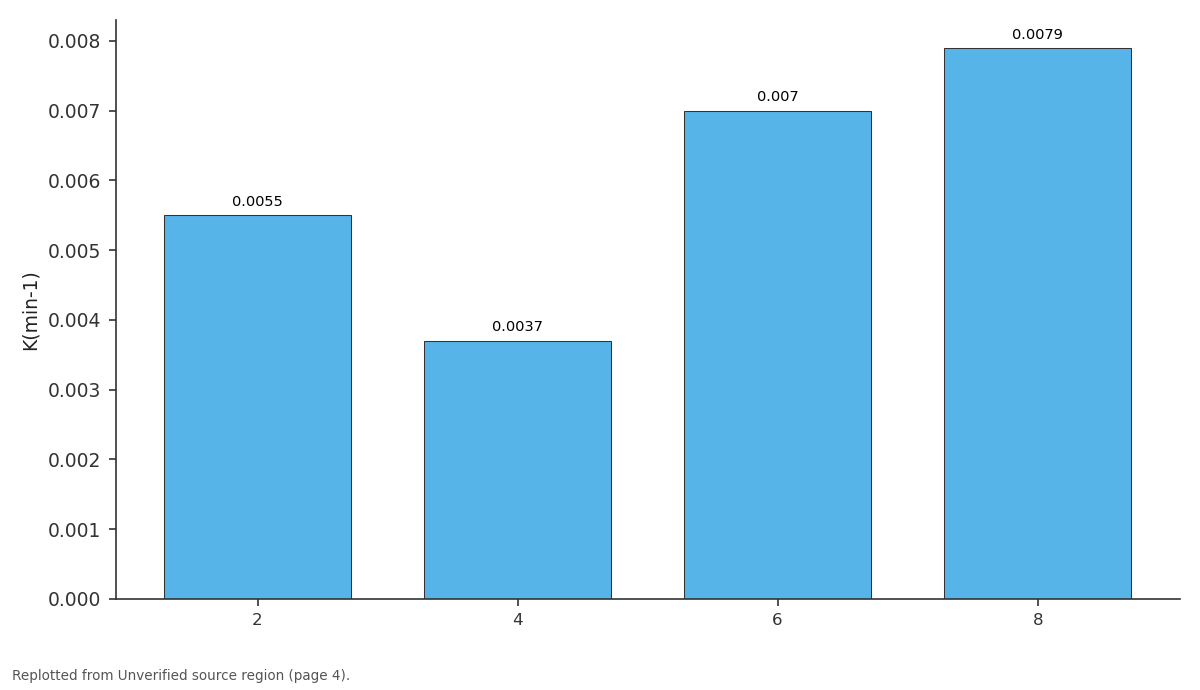
K(min-1): 2 vs 4 vs 6 vs 8
Replotted from a table (page 4) of the original paper. Every bar is the paper's own table value.
View source evidence ↗Figures & tables
From the original paper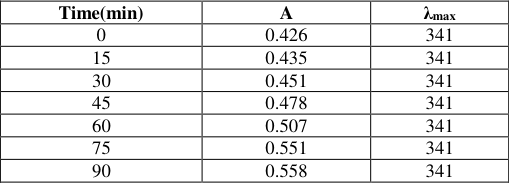 Table 1
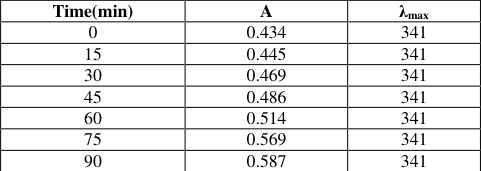 Table 4
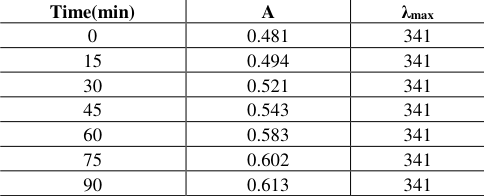 Table 2
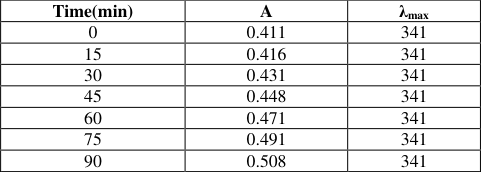 Table 5
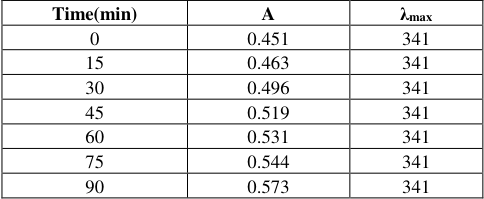 Table 3
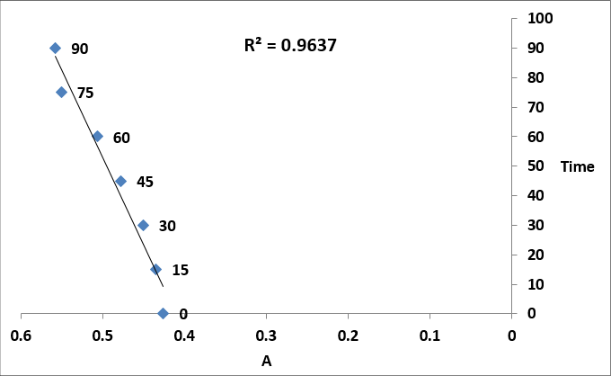 Figure 1
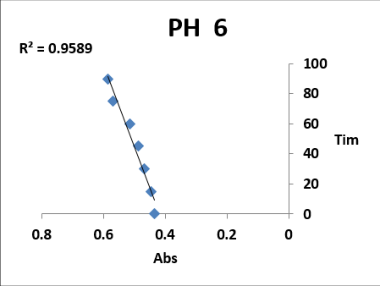 Figure 2
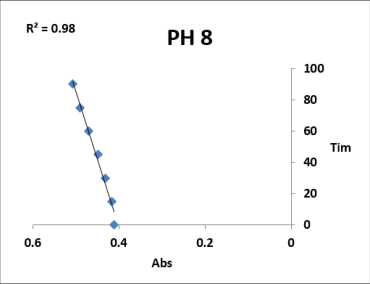 Figure 2
Introduction
Three major variables must be taken as a focus for studying the kinetics of a certain reaction which are time, concentration of reactants, and the temperature of reaction, in addition to the other variables such as catalyst, solvents, and pressure that may be important for some reactions. The rate of reaction rate defined as the ratio of change in concentration of reactants and products at certain time as the concentrations of reactants decrease over time while the concentration of products increases [1] . A constant of reaction rate is a constant quantity or a certain reactions a certain temperature, it isn't affected by the concentration during the reaction or change in the time, but it is greatly affected by the temperature change. The constant of reaction rate is a good scale for chemical reaction rate as it reflects the rate. The reaction is considered rapid if the value of the rate constant is high compared to another reaction [2] . The stability constants have great impact in study. The various complexes as it helps to understand the nature of bonding that determine the shape and structure of complexes [3] . The stability constant is evidence of the presence of complex and its concentration in the solution or it is a measurement of the effectiveness of any component of the mixture at equilibrium can be calculated by the value of the stability constant in addition to the study of inorganic complexes. Thiazoale compounds (S) are heterocyclic pentagonal containing one nitrogen atom, sulfur and three carbons, which is derived room imidaizole when the NH2 group replaced by sulfur atom at position -1- [4,8] . The stability of complexes is defined as the quantities of correlations that occur in solution that contain more than one class at equilibrium state, and whenever, the correlation increase between these classes, the stability constant is directly increase for product complexes. The thiazole complexes can sometimes have greater effect or efficacy than the original compound. Therefore, the study of the equilibrium of complexes, that result from reaction between metallic ion and S compounds, is important useful in explaining the mechanism of the complex reaction [9] . The value of equilibrium constant (β) is called the stability constant is used (β) in determining the free gypsum energy (∆G°) and the latter also indicates the direction of reaction flow and the values of (∆S°) and (∆H°) are calculated through it [10] . Among the previous studies that studied the determination of the rate of reaction constant and the reaction of the metal complexes.
Literature review
Florian Thaler's study performed spectroscopic and kinetic measurements on Cu (II) complexes with Me3tren/Me6tren, where k = 4.4×10²M⁻¹s⁻¹for the py substitution of water in [Cu(Me3tren)(H₂O)]²⁺ at 25 °C [10] . Chi Masuda studied the substitution of HCO₃⁻ by Cl⁻ in [CoCl(N)₅]²⁺ via two pathways: a rapid IdCB for OH⁻ and a slow O-nucleophilic attack of carbonates with an entropy effect of the alkyl rings.In PNAS (2008), the substitution of Cl⁻ for H₂O in [Co(H₂O)₆]²⁺ was measured with T-jump (k = 10⁹ s⁻¹, Ia with ΔH ‡ negative [11] (A 2019) study on Co(III) Schiff-base demonstrated a dissociative MeIm exchange associated with ΔS ‡ negative and cytotoxicity [12] . Pearson's work (1950s) on [Co(NH₃)₅X]²⁺ confirmed SN1/IP (k~10⁻⁶ s⁻¹) with an activation volume [13] .Taube/Margerum (1960s) studied the exchange of EDTA with Co(II)EDTA via Id/Ia [14] . Buckingham (1980) documented dual pathways in the substitution of Co (III) bicarbonate according to pH and [15] . [16][17] (0.01 mol) (2.19 gm) from compound [1] was dissolved in (60ml) ethanol, then (0.01 mol) (1.6 gm) urea and (0.76 gm) thiurea were added gradually. The mixture was refluxed in water bath for24 hr. and left to cool, after that, drops of 10%NaOH were added to it, then the precipitant was filtered and recrystallized in ethanol (S).
Experimental part 2.1 Preparation of benzothiazole-2yl-oxazole/thiazole-2, 5-diamine
Experimental part 2.1 Preparation of benzothiazole-2yl-oxazole/thiazole-2, 5-diamine
Preparation method of cobalt complex
Reaction of compound (S) with transition metals (cobaltose chloride hexahydrate) CoCl2.6H2O (.0.02 M) from compound (S) was prepared with hot ethanol. Wight (0.0496gm) from compound (S). Transfer the solution to (10ml) volumetric flask. Hot water add gradually with continuous stirring to complete the dissolution, then complete the volume to 10 ml.(0.01 M)from Cobaltose chloride hexahydrate was prepared with hot ethanol in conical flask. Weight 0.02gm from cobalt chloride hexahydrate. Transfer it to 10 ml volumetric flask. Hot ethanol add gradually with continuous stirring and complete the volume to 10 ml. The two prepared solutions were mixed in conical flask and connected with reflexation system. The reflux was continued for 7 hours (the mixture color was blue) [18] . After 15 minutes of relaxation, the 10 ml took from mixture and the absorbance was calculated for it (the reaction stop by adding 20-50 ml cold water) and every 15 minutes a sample was taken to measure the absorbance. After 7 hours of reflexation cooled the mixture and filtered it. The precipitant was white while the filtrate was blue [19] . Taken 4 ml from filtrate in 50 ml flask and the volume completed with ethanol, then calculated the highest wavelength at which absorbance occurs, by UV device (the color of solution, after dilution becomes bright blue) Prepare acidic solution (0.1M HCl) in 50 ml volumetric flask, by take 0.4 ml from concentrated HCl and complete the volume to 50 ml with distal water. Prepare alkaline solution (0.1 NaOH) in 50 ml volumetric flask, by weight 0.2 gm NaOH and dissolve it with distal water and complete the volume to 50 ml. In beaker, Take certain volume from prepared solution in step 2 from filtrate, and measure the acidity (pH = 2). Add drops from the prepared solution in step 3 (HCl) until the solution becomes acidic (pH = 4).In beaker, a quantity from a prepared solution in step 2 and add some drops of HCl that prepared in step 3 until the pH solution becomes 6. Add drops from the prepared solution in step 4 (NaOH) until the solution becomes acidic (pH = 8).
Results and discussion 4.1 Kinetic reactions results
The compound (S) was reacted with cobalt salt by reflex for 7 hours, the sample was taken every 15 minutes during the reaction period to measure the spectral properties by UV device, and monitoring the change in the reaction through a time [20,21] . We found that the absorbance increased at 1.5 hours, then began to decrease until the reaction time (reflexation time) end at the same wavelength as shown in the table (1). Compound (S) was reacted with cobalt (II) salt under reflux for 7 hours, with a sample taken every 15 minutes to measure the spectral characteristics using a UV-Vis spectrometer, in order to monitor the change in absorbance during the reaction period. We found that the absorbance increased at 1.5 hours, then began to decrease until the end of the reaction time at the same wavelength, as shown in Table (1) Your initial text is good as a preliminary description, but it needs revision to accurately reflect the data in the table (which shows a continuous increase in absorbance from (0.426 at t = 0 to 0.558 at t = 90) min at (λ_max = 341 nm), with no significant decrease during this period) [22] .
Discussion of the Results
The coordination complex formation reaction between compound (S) and cobalt (II) salt was monitored spectroscopic ally using a UV-Vis spectrometer at a constant wavelength (λ_max = 341 nm). A fresh sample was drawn every 15 minutes during the first 90 minutes of reflux, and the absorbance values were recorded as in Table (1). The absorbance gradually increased from 0.426 (t=0 min) to 0.558 (t = 90 min), indicating the continuous formation of the Co(II)-(S) coordination complex over time. This steady increase at a constant wavelength confirms the absence of new absorbent species and that the reaction is proceeding. Unidirectional towards full coordination under the conditions used (7-hour rebound) The formation of the coordination complex between compound (S) and cobalt (II) salt was monitored spectroscopically using a UV-Vis spectrometer at a constant wavelength (λ_max = 341 nm). A new sample was taken every 15 minutes during the first 90 minutes of reflux heating, and the absorbance values were recorded as shown in Table 1. The absorbance gradually increased from 0.426 (t = 0 min) to 0.558 (t = 90 min), indicating the continuous formation of the (Co) (II)-(S) coordination complex over time. This steady increase at a constant wavelength confirms the absence of new adsorbent species and that the reaction is proceeding unidirectionally towards full coordination under the conditions used (7-hour reflux) [20] . Reason for the increase: The colored [Co(S)]n+ compounds absorb at 341 nm, while the free components (S or Co2+) may be absorbed at a lower intensity or across a different wavelength range. If there is a subsequent adjustment (after 90 minutes) this may indicate desalination or precipitation of the compound, but the table does not show this; add any additional data. Graph composition: Plot A versus t to show linearity or exponentiality (k can be calculated from ln (A∞ -At) vs t). Learn to read. After using the results we obtained in the table below and the graph. From the accompanying diagram, time (t) is represented on the vertical axis and the malfunction (A) on the horizontal axis. The relationship is linear with t/2 = 0.9637, meaning that t is linear with 1/monthly average, indicating a firstorder reaction with respect to the change in absorption (restraint concentration) [23] . The reaction in acidic and alkaline medium has also been studied at different pH when drawing the graph between absorbance and time, figure (1-5), we found the reaction increased in acidic medium and decreased in alkaline one, that indicates, by these two reaction, the reaction passed through a transition state and formed an intermediate compound before obtained of the final result. The effect of pH on the rate of Co(II)-(S) coordination complex formation was monitored using UV-Vis spectroscopy at λmax = 341 nm. The results (Figure 12345) showed that: In an acidic medium: the absorbance increased more rapidly, reflecting faster coordination complex formation. This is due to the protonation of complex (S) in an H⁺ environment, which facilitates conjugation with Co²⁺. In an alkaline medium: the rate of increase in absorbance decreased, and partial decomposition of the complex or the formation of Co (OH)₂ hydroxides covering the active surface may occur. After plotting the graph between absorbance and time as pH and K (min -1 ) changed, the value was R 2 As shown in the table below, according to pH value The attached table clearly shows the relationship between the correlation coefficient R², the velocity constant k (min⁻¹), and the pH value, where R² values range between 0.989 and 0.982 with velocity constants ranging between 0.0037 and 0.0079 min⁻¹, reflecting an excellent fit of the first-order model to the reaction data in all the media studied.The results start with the highest R² value at 0.989 with k = 0.0037 min⁻¹ and pH = 4. This indicates that a slightly acidic medium provides an ideal reaction environment, where experimental accuracy and motion regularity are at their highest. The protein balance at the linker (mild proteolysis) and the availability of free cobalt ions (Co²⁺) facilitate smooth compound formation without significant side effects, making this a reference point for the study. A value of (R² = 0.982) with (k = 0.0055 min⁻¹ at pH = 2) suggests a slightly higher reaction rate with excellent structure. This reflects the fact that a strongly acidic medium promotes conformation despite the possibility of excess ligand proteation, as the mathematical model remains perfectly valid and the data show high regularity, confirming the stability of the first-order mechanism even under highly acidic conditions. On the other hand, the lowest value of R² = 0.9589 is recorded with k = 0.0070 min⁻¹ at pH = 6. This relative decrease in the correlation coefficient -although it remains in an excellent range (>0.95) -is attributed to the beginning of the system's transition towards a near-neutral medium, where weak hydroxide species of cobalt begin to form or a slight change in the ligand's protonation equilibrium, which introduces some noise or deviations into the experimental data without changing the nature of the underlying mechanism. Finally, the value of R² = 0.98 with = 0.0079 min⁻¹ at pH = 8 consistently confirms the kinetic model despite the relative intelligence of the action, where the formation of Co (OH)₂ on the surface is controlled and its is reduced, but the mathematical regularity remains high, proving that first order is the ingenuity of the practitioner even in effectiveness, with the need to control the use of pH to achieve the best.
| Time(min) | A | λmax |
|---|---|---|
| 0 | 0.426 | 341 |
| 15 | 0.435 | 341 |
| 30 | 0.451 | 341 |
| 45 | 0.478 | 341 |
| 60 | 0.507 | 341 |
| 75 | 0.551 | 341 |
| 90 | 0.558 | 341 |
Table text extracted from the original PDF; superscript letters are shown inline. The original table image is below.
View original table image
Conclusion
The optimal conditions for the rapid and stable preparation of this compound Co (II) are within the (pH range of 2 to 4), where the availability of the proton bond and unimpeded access to Co²⁺ maximize efficiency. This insight holds significant implications for analytical protocols, industrialscale complex preparation, and broader applications in coordination chemistry, pharmaceutical synthesis, and material science.
Figures and tables from the paper
| Time(min) | A | λ max |
|---|---|---|
| 0 | 0.434 | 341 |
| 15 | 0.445 | 341 |
| 30 | 0.469 | 341 |
| 45 | 0.486 | 341 |
| 60 | 0.514 | 341 |
| 75 | 0.569 | 341 |
| 90 | 0.587 | 341 |
Table text extracted from the original PDF; superscript letters are shown inline. The original table image is below.
View original table image
| Time(min) | A | λmax |
|---|---|---|
| 0 | 0.481 | 341 |
| 15 | 0.494 | 341 |
| 30 | 0.521 | 341 |
| 45 | 0.543 | 341 |
| 60 | 0.583 | 341 |
| 75 | 0.602 | 341 |
| 90 | 0.613 | 341 |
Table text extracted from the original PDF; superscript letters are shown inline. The original table image is below.
View original table image
| Time(min) | A | λ max |
|---|---|---|
| 0 | 0.411 | 341 |
| 15 | 0.416 | 341 |
| 30 | 0.431 | 341 |
| 45 | 0.448 | 341 |
| 60 | 0.471 | 341 |
| 75 | 0.491 | 341 |
| 90 | 0.508 | 341 |
Table text extracted from the original PDF; superscript letters are shown inline. The original table image is below.
View original table image
| Time(min) | A | λmax |
|---|---|---|
| 0 | 0.451 | 341 |
| 15 | 0.463 | 341 |
| 30 | 0.496 | 341 |
| 45 | 0.519 | 341 |
| 60 | 0.531 | 341 |
| 75 | 0.544 | 341 |
| 90 | 0.573 | 341 |
Table text extracted from the original PDF; superscript letters are shown inline. The original table image is below.
View original table image
References
22 in the original paper- Byerley JJ, Peters E. Kinetic and mechanisms of the reaction between carbon monoxide and copper (II) in aqueous solution. University of British Columbia; 1988.
- Yapati H, Devineni SR. Synthesis, characterization and studies on antioxidant and molecular docking of metal complexes of 1-(benzo[d]thiazol-2-yl) thiourea. J Chem Sci. 2016;128(1).
- Badr A, Elsayed A, Elhenawy AA, Sultan ASA. Synthesis, characterization, antimicrobial and cytotoxic studies on some novel transition metal complexes of Schiff base ligand derived from sulfadiazine with molecular orbital calculation. Int J Chem Mater Res. 2014;2(1):1-16.
- Sogbein OO, Simmons DA, Konermann L. Effects of pH on the kinetic reaction mechanism of myoglobin unfolding studied by time-resolved electrospray ionization mass spectrometry. J Am Soc Mass Spectrom. 2000;11:312-319.
- Sayyed H, Takale S, Farooqui M. Kinetics and mechanism of oxidation of 2,5-diamino-1,3,4thiadiazole ferrate complex in acid medium. IJPCBS. 2012;3(1):13-18.
- Sayyed H. Kinetic and mechanism of oxidation of Fe(II) metal complex. J Med Chem Drug Discov. 2017;3(2):683-690.
- Al-Adely KJ. Preparation and spectral characterization of new thiazolylazo ligand with some transition metal complexes. [Journal name not specified]. 2008;11(3):31-45.
- Sayyed H. Kinetic and mechanistic study of oxidation of cobalt(II) complexes derived from 8-hydroxy quinolone and salicylaldehyde in acid medium. Int J Eng Res Technol. 2013;2.
- Zaida AA, Farooqui M, Janrao DM. Study of stability constant of biologically active molecules (drug) using potentiometric titration technique. J Chem Biol Phys Sci. 2012;2(1):67-81.
- Thaler F, Hubbard CD, Heinemann FW, van Eldik R, Schindler S, Fábián I, et al. Structural, spectroscopic, thermodynamic and kinetic properties of copper(II) complexes with tripodal tetraamines. Inorg Chem. 1998;37(16):4022-4029.
- Masuda C, Jitsukawa K, Masuda H, Einaga H. Ligandsubstitution reaction of cobalt(III) complexes of [CoCl(N)5]2+-type with carbonate: activation of kinetic processes by steric chelate effect. Inorg Chem. 2018;99(9):1115-1122.
- Al-Mutairi N, et al. Flow chemistry: recent developments in the synthesis of thiazole pharmaceutical intermediates. Org Process Res Dev. 2016;20(4). doi:10.1021/acs.oprd.5b00325
- Ahmed M, et al. Synthesis and properties of transition metal complexes containing thiazole derived Schiff bases. Orient J Chem. 2022;38(5). DOI:10.13005/ojc/380523
- Yapati H, Rao DS. Synthesis, characterization and studies on antioxidant and molecular docking of metal complexes of 1-(benzo[d]thiazol-2-yl) thiourea. J Chem Sci. 2016;128(1). doi:10.1007/s12039-015-0980-2
- Kumar R, et al. Design, characterization, and catalyticantioxidant evaluation of thiazole-based Co (II) complexes. J Mol Struct. 2025. DOI:10.1016/j.molstruc.2025.137214
- Khan F, et al. Flow chemistry: recent developments in the synthesis of thiazole pharmaceutical intermediates. Org Process Res Dev. 2016;20(4). DOI:10.1021/acs.oprd.5b00325
- Almatari M, et al. Cobalt (II)-mediated Fenton-like reactions: effects of second-sphere coordination on H2O2 activation. J Phys Chem Lett. 2025. DOI:10.1021/acs.jpclett.5c01234
- Farooq M, et al. Synthesis and characterization of Co (II) macrocycles and its use for hydrolysis of esters: pH effects. Biointerface Res Appl Chem. 2021. DOI:10.33263/BRIAC112.70647074
- Byerley JJ, Peters E. Kinetic and mechanisms of the reaction between carbon monoxide and copper (II) in aqueous solution. University of British Columbia; 1988.
- Fukuzumi S, Lee YM, Nam W. Kinetics and mechanisms of catalytic water oxidation. Dalton Trans. 2019;48. DOI:10.1039/C8DT04800J
- Janrao DM, Zaida ZA, Farooqui M. Study of stability constant of biologically active molecular (drug) using potentiometric titration technique. J Chem Biol Phys Sci. 2012;2(1):67-81.
- Zaida ZA, et al. Predictive modeling of pH on the transport of Co(II) ions from aqueous solutions using polymeric membranes. J Environ Chem Eng. 2024. DOI:10.1016/j.jece.2024.112345