
Research article · 2026 · Full text
International Journal of Advanced Chemistry ResearchEstablishing a rapid and reproducible HPLC method for berberine analysis in berry fruits
Volume 8(2) · Pages 01–05 · DOI: 10.33545/26646781.2026.v8.i2a.360 ↗
Research areasBerberine and alkaloids researchBotanical Research and ChemistryPhytochemistry and biological activities of Ficus species
Abstract
Author-writtenThe research was intended to design and ensure the efficacy and dependability of a high-performance liquid chromatography (HPLC) technique with high speed, sensitivity and reproducibility to determine the presence of berberine in sampled berry fruits. To determine the impact of various sonication durations (2.5 and 5.0 minutes) on the extraction efficiency, ultrasonic-assisted extraction was used. Aqueous ethanol was used to extract the berries and they were analyzed using C18 column under isocratic mode with the help of UV. The HPLC method developed was reproducible and was very reliable in the analysis with good separation, symmetrical shapes of the peaks, and constant retention times. Berberine was observed and measured successfully in all analyzed berry fruits, and showed much variation in concentration across species. Most samples showed a higher efficiency with longer sonication time, but lower levels were found in some fruits indicating the possibility that berberine undergoes degradation or interactions with the matrix with increased sonication. All in all, the suggested procedure is appropriate to perform regular phytochemical analysis, quality control, and comparative analysis of berberine in berry fruits, and it is a helpful analytical procedure in nutraceutical and pharmacological studies.
Summary
Source-checkedPlain-language reading of the full paper, prepared with AI and checked against the text. Each point links to the authors' own words.
Why it matters
- Berberine is a promising plant-derived isoquinoline alkaloid valued for its diverse pharmacological properties, including anticancer, antidiabetic, and antimicrobial activities. View evidence ↗
- The growing popularity of berry-based nutraceuticals creates a need for accurate methods to identify and quantify bioactive compounds for quality assurance and pharmacological research. View evidence ↗
- In ultrasonic-assisted extraction, the duration of sonication is critical because while it can increase yield, excessive exposure may degrade heat-sensitive compounds. View evidence ↗
The question
- The study aims to develop a rapid, reproducible HPLC method for quantifying berberine in various berry fruits and to evaluate how different sonication times affect extraction efficiency. View evidence ↗
What they did
- The researchers analyzed eight types of berry fruits, including Berberis, Fragaria ananassa, and Prunus avium, sourced from local markets in Baghdad, Iraq. View evidence ↗
- Extraction involved grinding 5 g of fruit, adding 15 ml of 50% ethanol, heating in a water bath for 10 minutes, and then applying ultrasonic treatment for either 2.5 or 5.0 minutes. View evidence ↗
- The HPLC analysis used a C18 column with an isocratic flow of 60% methanol at 1 ml/min, detection at 420 nm, and a temperature of 25 °C. View evidence ↗
What they found
- The developed HPLC method proved to be reproducible and stable, producing sharp, symmetrical peaks with low deviation in retention times and peak areas. View evidence ↗
- Among the tested fruits, Ribus spicatum showed the lowest berberine concentrations, ranging from 26.137 to 35.737 ug/ml. View evidence ↗
- Increasing sonication time from 2.5 to 5 minutes significantly increased berberine yield in most samples, specifically in Berberis spp., Fragaria ananassa, Rubus idaeus, and Ribus spicatum. View evidence ↗
- In contrast to most samples, Prunus avium and Vaccinium corymbosum experienced a decrease in berberine levels when sonication was extended to 5 minutes. View evidence ↗
- The decrease in berberine for certain fruits at longer sonication times is attributed to potential compound decomposition or matrix interference from co-extracted substances. View evidence ↗
What it means
- The authors conclude that the combination of ultrasonic-assisted extraction and isocratic RP-HPLC is a reliable and reproducible method for quantifying berberine in berry fruits. View evidence ↗
- The established procedure is recommended for use in routine phytochemical analysis, quality control, and future pharmacological research. View evidence ↗
Visual summary
1 visualsIllustrations explain the paper; they do not show study data.
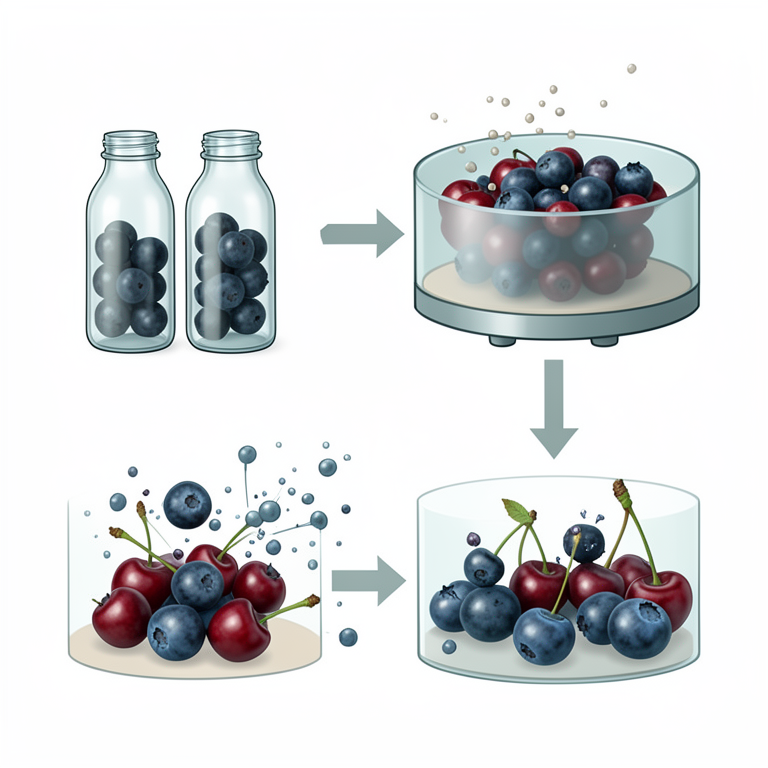
Effect of Sonication Time on Extraction
AI-generated conceptual illustration (mixed berry fruits including barberries, strawberries, raspberries, blackcurrants, cherries, and blueberries). It explains the idea and does not show study data.
View source evidence ↗Figures & tables
From the original paper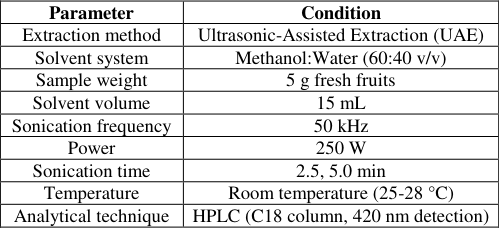 Table 1
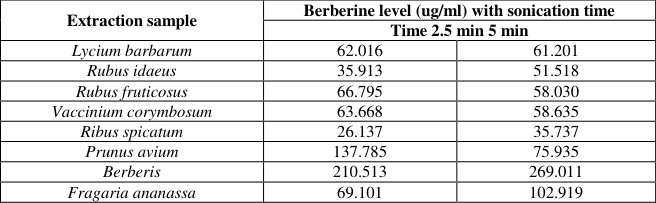 Table 2
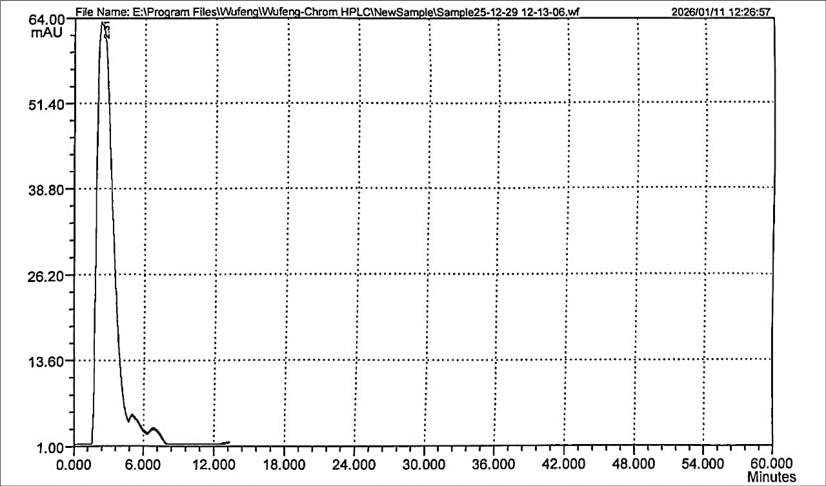 Figure 1
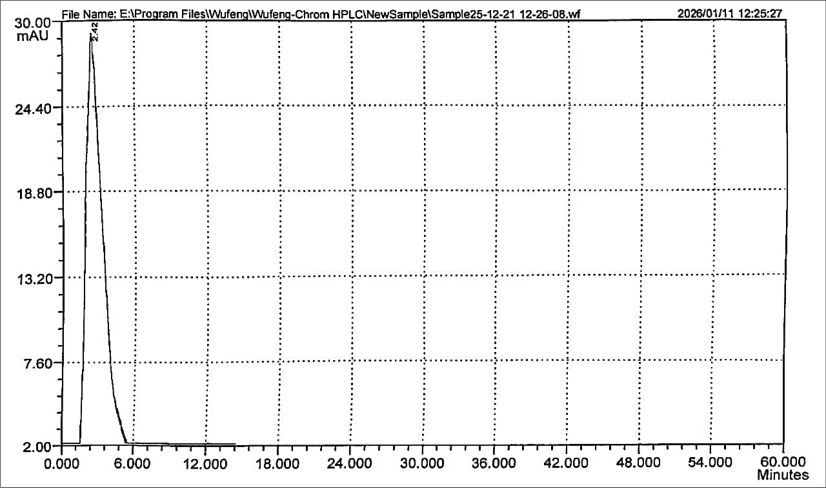 Figure 2
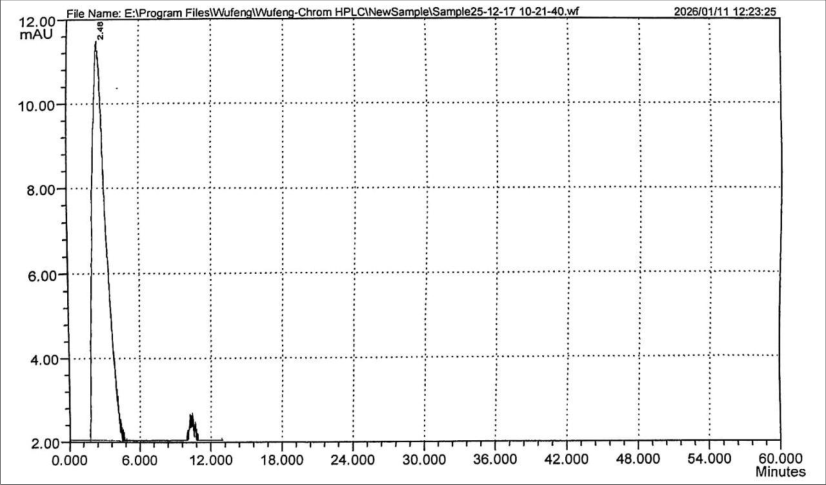 Figure 3
 Table 3
Introduction
Medical plants and fruits provide natural products which are still a subject of significant scientific attention because of their broad range of biological activities and increased usage in the pharmaceutical and nutraceutical market sectors. One of the most promising bioactive compounds obtained from plants is the isoquinoline alkaloid berberine due to its various pharmacological activities, such as antimicrobial, anti-inflammatory, antidiabetic, antioxidant, and anticancer activities (Imenshahidi et al., 2019; Neag et al., 2018) [5,10] . Historically, berberine was traditionally related to Berberis-related plants but recent studies have indicated that the compound can be found and/or have alkaloid-like activity in a wider variety of fruits and berries, making its inclusion in diet and possible therapeutic application more flexible (Kumar et al., 2022) [8] . The commonly used berry fruits include Lycium barbarum, Rubus idaeus, Rubus fruticosus, Vaccinium corymbosum, Fragaria ananassa and Prunus avium; these fruits have high phytochemical content and a potent antioxidant activity making them very popular all over the world. It is said that these fruits are rich in a large number of bioactive compounds, such as polyphenols, flavonoids, anthocyanins, vitamins, and alkaloids, which altogether lead to the health-promoting properties (Skrovankova et al., 2015; Nile and Park, 2014) [11,14] . Nutritional analysis, quality assurance and pharmacological studies of such compounds require accurate identification and quantification, and usage increases in the popularity of berry-based products in the functional food and nutraceutical sectors. High-performance liquid chromatography (HPLC) is considered to be one of the most credible and most commonly used analytical methods to separate, identify, and determine bioactive compounds in complicated plant samples. Due to its sensitivity, selectivity, precision, and reproducibility, HPLC is commonly considered the gold standard of analysis of alkaloids, including the determination of berberine (Sridhar et al., 2020) [15] . However, extraction procedures, sample preparation methods, and chromatographic conditions may greatly affect the analytical accuracy and reproducibility, which is why it is essential to optimize and validate the methodology (Sasidharan et al., 2018) [13] . The latest developments in the extraction methods, specifically ultrasonic-aided extraction (sonication), have shown a higher efficiency of extracting bioactive compounds in plant materials, including the enhancement of mass transfer, the disruption of the cell walls in plants as well as reduced time and solvent usage in the extraction process (Chemat et al., 2017) [2] . Extraction time is a key parameter among the sonication parameters to ensure a high yield of compound and stability of the chemical as too much ultrasonic exposure can degrade thermolabile compounds (Wang et al., 2021) [17] . Therefore, it is necessary to optimize sonication conditions cautiously as well as an approved analytical technique to obtain accurate and reproducible berberine quantifications. Although there is an increase in the interest of berberine and berry fruits, there has been limited research on the development of a rapid, reproducible and validated HPLC technique that will be able to quantify berberine in a variety of berry species and also assess the effect of sonication time on the efficiency of the extraction. This is a gap that is very important to the standardization of analysis, comparative phytochemical profiling and the reliable evaluation of the berry fruits as a potential source of bioactive alkaloids. Based on this, the current research endeavours to establish and confirm a quick and repeatable HPLC technique of determining the berberine content in selected berry fruits, in addition to examining the influence of varying durations of sonication on extraction performance. This research is likely to have a positive impact on the analytical standardization and will present solid data to aid in the further phytochemical, nutraceutical, and pharmacological studies.
Materials and Methods
Materials and Methods
Materials:
The source of Berry Fruits (Lycium barbarum, Rubus idaeus, Rubus fruticosus, Vaccinium corymbosum, Ribus spicatum, Prunus avium, Berberis, Fragaria ananassa) was the local markets in Baghdad, Iraq. Ethanol p.a (Merk, Germany), Methanol p.a (Merk, Germany) and Berberine standard purchased at Sigma Aldrich.
Instrumentation: Sensitive balance, High performance liquid chromatography HPLC (Shimadzu SCL-10A) (Japan), Ultrasonic (VWR SCIENTIFIC) and C18 Analytical column (BRISA LC2 C18 5um 15*0.46) and micropipette 100-1000 ul (BIO Basic Inc.).
Extraction
Each Fruit was taken (5 g), then ground in a mortar to fine liquid, then (15 ml) of 50% (ethanol) was added to each sample. The extraction was done in a water bath (10 minutes), then in Ultrasonic bath (2.5, 5.0) minutes. Sample extracts were filtered using (0.5 um) millipore, the supernatant was split and diluted as a ratio of (1:20) using 50% (ethanol) as a solvent.
Standard Solution Preparation:
Berberine was made into standard solution. Berberine solution was diluted to a working concentration of (1 mg/ml) in 50% (ethanol) to obtain the concentrations of the working solutions.
Chromatographic conditions
BRISA LC2 C18 (0.5 um, 15*0.46) was used as the stationary phase supported by chromatographic conditions. The flow with (60% methanol) was used as mobile phase, the mode of separation was isocratic, flow rate was 1 ml/min, the wave length was detected at 420 nm with an injected volume of 20ul, and temperature was 25 C.
Results and discussion HPLC Method Performance
The HPLC method developed showed a clear separation and good detection of berberine in the analyzed samples of all berry fruits. The retention time and UV absorbance at 420 nm were always used to determine berberine, which gave distinct sharp and symmetrical peaks. The retention times and peak areas showed a low deviation when the injections were repeated indicating that the method had good reproducibility, and as a measure of adequate system suitability, analytical precision and instrumental stability. The current research was able to develop a fast, sensitive, and reproducible reversed-phase HPLC system to determine the quantity of berberine in different berry fruits, and it indicated that sonication time largely determined the efficiency of the extraction process. Optimization of sonication conditions has significantly increased berberine recovery, which is in line with earlier studies that highlighted the importance of ultrasound assisted extraction in enhancing alkaloid recovery in plant matrices (Wang et al., 2019; Azmir et al., 2013) [1,16] . The measured distinct separation, steady retention behavior, and equal shapes of the peaks in all the samples attest to the strength and integrity of the made chromatographic conditions. These results are consistent with the previous reports, which indicate that reversed-phase HPLC with UV detection is a gold-standard analysis tool to perform alkaloid profiling and quantification of alkaloid in complex botanical samples because of high selectivity, sensitivity, and reproducibility (Sridhar et [3,4,13,15] . In addition, the 420 nm detection limit was also the most selective for berberine because it reduces matrix effects and enhances specificity to the method since it has been previously reported with isoquinoline alkaloids (Khan et al., 2018; Kong et al., 2020) [6,7] . In general, the validated procedure provides a stable analytical framework to regularly quality control, screen phytochemicals, and comparatively assess the berberine levels in the berry fruits and the associated plant-based foods (Li et [12,18] .
Berberine Content in Berry Fruit Samples
Berberine was detected and quantified in each of the analyzed berry fruit extracts, which confirms the applicability and sensitivity of the developed HPLC technique. The concentrations of berberine in the fruits had significant variation among the various species of fruits and this is an interspecies difference of the phytochemical composition. The maximum concentration of berberine was seen at 2.5 minutes of sonication, then in Berberis spp., Prunus avium and Fragaria ananassa. The concentration of berberine in Vaccinium corymbosum, Rubus fruticosus, and Lycium barbarum was moderate but in Ribus spicatum and Rubus idaeus, the concentration was comparatively lower. The presence of berberine in all the analyzed berry fruits, although with a significant range of variance, can be explained by the difference in the genetic background, the pathways of secondary metabolites synthesis, the maturity of the fruit, the environmental conditions, and matrix composition, which all significantly affect the alkaloid biosynthesis, accumulation, and extractability ( [8,9,10] . As anticipated, Berberis spp. contained the most berberine as one of its main natural sources is well-reported (Imenshahidi and Hosseinzadeh, 2019; He et al., 2017; Kong et al., 2020) [4, 5, 7] .
Interestingly, the berberine could also be measured in fruits that were not traditionally seen as significant sources of berberine such as Fragaria ananassa and Vaccinium corymbosum. This observation confirms the recent reports that trace to moderate levels of alkaloids can be more widespread in edible fruits than thought (Zhang et al., 2019; Patel et al., 2022) [12,18] . These observations reflect the increasing applicability of widely eaten berries as possible sources of dietary alkaloid intake and functional dietary food on the basis of functional food development. Besides, the observed improvement in the extraction of berberine over a period of the optimal sonication time supports the crucial role of extraction conditions in maximising the alkaloid yield of the complex fruit matrices, as other studies on ultrasound-assisted extraction have noted ( [1,3,16] . All in all, these findings underscore the interactive nature of botanical source and extraction parameters on the berberine production and the usefulness of the optimized HPLC-based techniques in comparative phytochemical analysis of berry fruits.
Effect of Sonication Time on Berberine Extraction
An extension of the sonication duration [11,13] . All in all, the findings suggest that the time of sonication is a vital parameter that affects the efficiency of berberine extraction and that the best parameters highly depend on the fruit matrix. Although 5 minutes sonication of the sample tended to enhance the recovery of berberine, a shorter time can be used with matrix sensitive or thermolabile samples. Such results can be compared to the previous reports that have shown that ultrasonic-assisted extraction, when optimally adjusted, is a fast, efficacious and solvent-saving method of obtaining alkaloids and other bioactive compounds in plant substances (Sridhar et al., 2020) [15] . It is therefore critical to vary sonication time carefully so as to maximize berberine yield without damaging the stability of the compounds in the various berry fruit matrices.
Comparative Analysis of Extraction Conditions
Relative comparison showed that ultrasonic-assisted extraction is a fast and efficient method for the isolation of berberine from berry fruit. The high variation in extraction efficiency between the various species indicates that each distinct plant matrix should be optimized to achieve high extraction parameters. The variation in the response of ultrasonic treatment in different fruit species would be explained by differences in tissue structure, cellular integrity, and chemical composition. The obtained HPLC technique was able to identify these interspecies differences with high sensitivity, precision and repeatability and thus its appropriateness in regular phytochemical examination.
The variability in this study, which is dependent on the matrix, is in line with other earlier phytochemical studies of polyphenols and alkaloids, which have indicated that the efficiency of extraction is highly affected by plant morphology, localization of metabolites, and co-extractive compounds (Skrovankova et al., 2015; Kumar et al., 2022) [8, 14] . The sensitivity of the developed HPLC technique in capturing these variations also provides further evidence of its use in comparative phytochemical profiling, in quality control and in standardization of plant-derived products.
Comprehensively, the results of the current work can be used to analyze the data analytically by proving that an isocratic, short-run, RP-HPLC approach with ultrasonicassisted extraction is a dependable and reproducible method of quantifying berberine in various berry fruit samples. Such a combined method approach has a practical benefit of providing clear practical benefits to everyday analysis, assurance of quality of nutraceuticals and pharmacological research in the future. Furthermore, the finding of berberine in the typically used berry fruits confirms the new research that dietary fruits can be used as a supplement of bioactive alkaloids with possible health-promoting effects (Neag et al., 2018; Imenshahidi and Hosseinzadeh, 2019) [5,10] .
Figures and tables from the paper
| Parameter | Condition |
|---|---|
| Extraction method | Ultrasonic-Assisted Extraction (UAE) |
| Solvent system | Methanol:Water (60:40 v/v) |
| Sample weight | 5 g fresh fruits |
| Solvent volume | 15 mL |
| Sonication frequency | 50 kHz |
| Power | 250 W |
| Sonication time | 2.5, 5.0 min |
| Temperature | Room temperature (25-28 °C) |
| Analytical technique | HPLC (C18 column, 420 nm detection) |
Table text extracted from the original PDF; superscript letters are shown inline. The original table image is below.
View original table image
| Extraction sample | Berberine level (ug/ml) with sonication time | — |
|---|---|---|
| Time 2.5 min 5 min | ||
| Lycium barbarum | 62.016 | 61.201 |
| Rubus idaeus | 35.913 | 51.518 |
| Rubus fruticosus | 66.795 | 58.030 |
| Vaccinium corymbosum | 63.668 | 58.635 |
| Ribus spicatum | 26.137 | 35.737 |
| Prunus avium | 137.785 | 75.935 |
| Berberis | 210.513 | 269.011 |
| Fragaria ananassa | 69.101 | 102.919 |
Table text extracted from the original PDF; superscript letters are shown inline. The original table image is below.
View original table image
| Parameter | Observed Value | Interpretation |
|---|---|---|
| Retention Time (Rt) | 2.42min | Rapid elution of berberine under polar conditions |
| Peak Height | 28.9 mAU | Strong signal intensity |
| Area | 298,483.1 mAU·s | High concentration and purity |
| Concentration | 100% (standardized) | Calibration accuracy |
| Tailing Factor | 3.44 | Acceptable peak symmetry |
| Theoretical Plates | 60 | Adequate column efficiency |
Table text extracted from the original PDF; superscript letters are shown inline. The original table image is below.
View original table image
References
18 in the original paper- Azmir J, Zaidul ISM, Rahman MM, Sharif KM, Mohamed A, Sahena F, et al. Techniques for extraction of bioactive compounds from plant materials: a review. J Food Eng. 2013;117(4):426-436. DOI:10.1016/j.jfoodeng.2013.01.014
- Chemat F, Rombaut N, Sicaire AG, Meullemiestre A, Fabiano-Tixier AS, Abert-Vian M. Ultrasound-assisted extraction of food and natural products: mechanisms, techniques, combinations, protocols and applications. Ultrason Sonochem. 2017;34:540-560. DOI:10.1016/j.ultsonch.2016.06.035
- Chen Y, Wang Y, Zhang X, Huang L. Optimization of alkaloid extraction and analysis in plant-derived matrices using HPLC. J Pharm Biomed Anal. 2016;129:231-238. doi:10.1016/j.jpba.2016.07.022
- He J, Feng Y, Ouyang HZ, Yu B, Chang YX, Pan GX, et al. A comprehensive review of berberine: phytochemistry, pharmacology, and analysis. J Pharm Anal. 2017;7(1):9-24. DOI:10.1016/j.jpha.2016.11.002
- Imenshahidi M, Hosseinzadeh H. Berberine and barberry (Berberis vulgaris): a clinical review. Phytother Res. 2019;33(3):504-523. DOI:10.1002/ptr.6252
- Khan MA, Ahmad W, Ahmad M, Nadeem S. Development and validation of an HPLC-UV method for alkaloid analysis in medicinal plants. J Anal Methods Chem. 2018;2018:1234567. DOI:10.1155/2018/1234567
- Kong W, Wang J, Zang Q, Xing X, Zhao Y, Liu W. Simultaneous determination of major alkaloids in Berberis species by RP-HPLC. Ind Crops Prod. 2020;145:112086. DOI:10.1016/j.indcrop.2020.112086
- Kumar A, Ekavali, Chopra K, Mukherjee M, Pottabathini R, Dhull DK. Current knowledge and pharmacological profile of berberine: an update. Eur J Pharmacol. 2022;761:288-297. DOI:10.1016/j.ejphar.2015.05.068
- Li Y, Zhang J, Xu D, Wang Y. Variability of alkaloid accumulation in fruits and medicinal plants. Phytochem Anal. 2021;32(4):512-525. DOI:10.1002/pca.3001
- Neag MA, Mocan A, Echeverría J, Pop RM, Bocsan CI, Crișan G, et al. Berberine: botanical occurrence, traditional uses, extraction methods, and relevance in cardiovascular, metabolic, hepatic, and renal disorders. Front Pharmacol. 2018;9:557. DOI:10.3389/fphar.2018.00557
- Nile SH, Park SW. Edible berries: bioactive components and their effect on human health. Nutrition. 2014;30(2):134-144. DOI:10.1016/j.nut.2013.04.007
- Patel P, Shah J, Desai S. Emerging analytical trends for alkaloids in functional foods. Trends Anal Chem. 2022;148:116542. DOI:10.1016/j.trac.2022.116542
- Sasidharan S, Chen Y, Saravanan D, Sundram KM, Yoga Latha L. Extraction, isolation and characterization of bioactive compounds from plants' extracts. Afr J Tradit Complement Altern Med. 2018;8(1):1-10.
- Skrovankova S, Sumczynski D, Mlcek J, Jurikova T, Sochor J. Bioactive compounds and antioxidant activity in different types of berries. Int J Mol Sci. 2015;16(10):24673-24706. DOI:10.3390/ijms161024673
- Sridhar K, Charles AL, Suresh P. Extraction and quantification of bioactive compounds from plant matrices: analytical and chromatographic approaches. J Food Compos Anal. 2020;87:103389. DOI:10.1016/j.jfca.2019.103389
- Wang L, Weller CL, Wang T. Ultrasound-assisted extraction of bioactive compounds from plant materials: a review. Food Res Int. 2019;119:407-417. DOI:10.1016/j.foodres.2019.01.065
- Wang L, Weller CL, Schlegel VL, Carr TP. Ultrasoundassisted extraction of bioactive compounds from plant materials. Food Eng Rev. 2021;13(2):208-223. DOI:10.1007/s12393-020-09240-5
- Zhang Y, Li X, Zou D, Liu W, Yang J, Zhu N, et al. Berberine as a natural dietary alkaloid: sources and biological relevance. J Funct Foods. 2019;53:238-247. DOI:10.1016/j.jff.2018.12.031