
Research article · 2026 · Full text
International Journal of Biology SciencesImpact of sewage wastewater application on nursery parameters of Mulberry (Morus indica. L)
Volume 8(3) · Pages 97–101 · DOI: 10.33545/26649926.2026.v8.i3b.598 ↗
Research areasSilkworms and Sericulture ResearchPapaya Research and ApplicationsComposting and Vermicomposting Techniques
Abstract
Author-writtenA pot culture experiment was conducted at the Department of Sericulture, Forest College and Research Institute, Mettupalayam during 2018-19. Application of sewage wastewater had significantly influenced the growth, yield and biochemical parameters of mulberry. Among the treatments, lowest concentration of sewage wastewater was significantly different when compared to other treatments. The sewage wastewater with 25 per cent concentration was noticed the increasing growth and yield parameters viz., sprouting percentage of 90.00 per cent, shoot length of 23.11 cm, number of leaves per shoot was 9.36, number of shoots per plant of 4.39, leaf area of 16.45 cm2. Among the treatments, sewage wastewater was significantly different when compared to other treatments.
Summary
Source-checkedPlain-language reading of the full paper, prepared with AI and checked against the text. Each point links to the authors' own words.
Why it matters
- Mulberry silk is the dominant variety of silk produced in India, accounting for over 81% of the total national production. View evidence ↗
- Because mulberry leaf productivity depends on various factors including soil nutrients and agronomical practices, native soil fertility is often insufficient on its own. View evidence ↗
- Wastewater is viewed as a valuable agricultural resource because its nutrient content can potentially benefit plant growth. View evidence ↗
The question
- The study aimed to evaluate how the application of sewage wastewater influences the growth, yield, and biochemical parameters of mulberry plants. View evidence ↗
What they did
- A pot culture experiment was conducted between 2018 and 2019 at the Forest College and Research Institute in Mettupalayam, Tamil Nadu. View evidence ↗
- The researchers used the Victory-1 (V1) mulberry variety and sewage wastewater sourced from Ukkadam in the Coimbatore district. View evidence ↗
- Hardwood cuttings (15-20 cm long, 0.3-0.5 cm diameter) with 3-4 active buds were treated with 3000 ppm IBA for 15-20 minutes before being planted in soil-sand mixtures in cement pots. View evidence ↗
- Growth and yield parameters were measured 30 days after planting across different wastewater concentrations, with each value representing the mean of four replications. View evidence ↗
What they found
- The 25% wastewater concentration (T1) resulted in the highest sprouting percentage at 90.00%, while the tap water control (T5) had the lowest at 75.00%. View evidence ↗
- The highest mean shoot length of 23.11 cm was achieved with 25% wastewater (T1), compared to the lowest of 17.24 cm in the tap water control (T5). View evidence ↗
- The 25% wastewater treatment (T1) produced the shortest mean internodal length (3.49 cm), whereas the tap water control (T5) produced the longest (3.72 cm). View evidence ↗
- The maximum mean number of leaves per shoot (9.36) was found in the 25% wastewater group (T1), while the minimum (7.15) was in the control group (T5). View evidence ↗
- The 25% wastewater treatment (T1) yielded the highest mean number of shoots per plant (4.39), compared to 3.42 for the tap water control (T5). View evidence ↗
- The highest mean leaf length (7.16 cm) was observed in the 25% wastewater treatment (T1), while the lowest (6.08 cm) was in the tap water control (T5). View evidence ↗
- The maximum leaf breadth (3.33 cm) was recorded for the 25% wastewater treatment (T1), and the minimum (1.59 cm) for the tap water control (T5). View evidence ↗
- The highest leaf area (16.45 cm²) was recorded with 25% wastewater (T1), while the lowest (6.67 cm²) was recorded with tap water (T5). View evidence ↗
What it means
- The authors conclude that while nutrient-enriched wastewater at low concentrations promotes robust mulberry growth, high concentrations inhibit growth by negatively affecting metabolic activities. View evidence ↗
- The study concludes that a 25% concentration of sewage wastewater is the most effective treatment for maximizing sprouting percentage and shoot length in mulberry. View evidence ↗
Visual summary
3 visualsIllustrations explain the paper; charts are replotted from the paper's own table values.
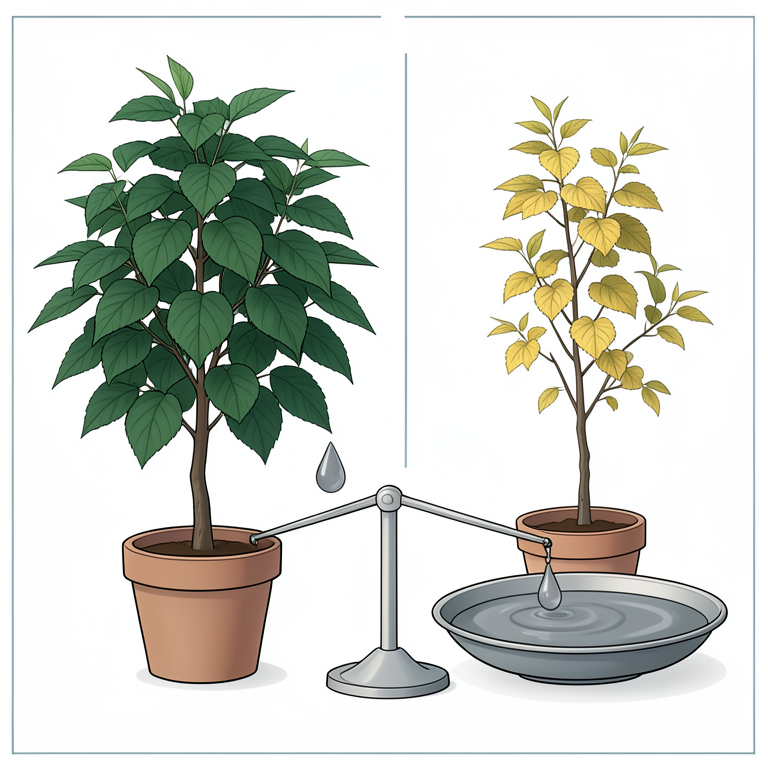
Nutrient Balance Concept
AI-generated conceptual illustration (Mulberry plants (Morus indica L.) in nursery pots). It explains the idea and does not show study data.
View source evidence ↗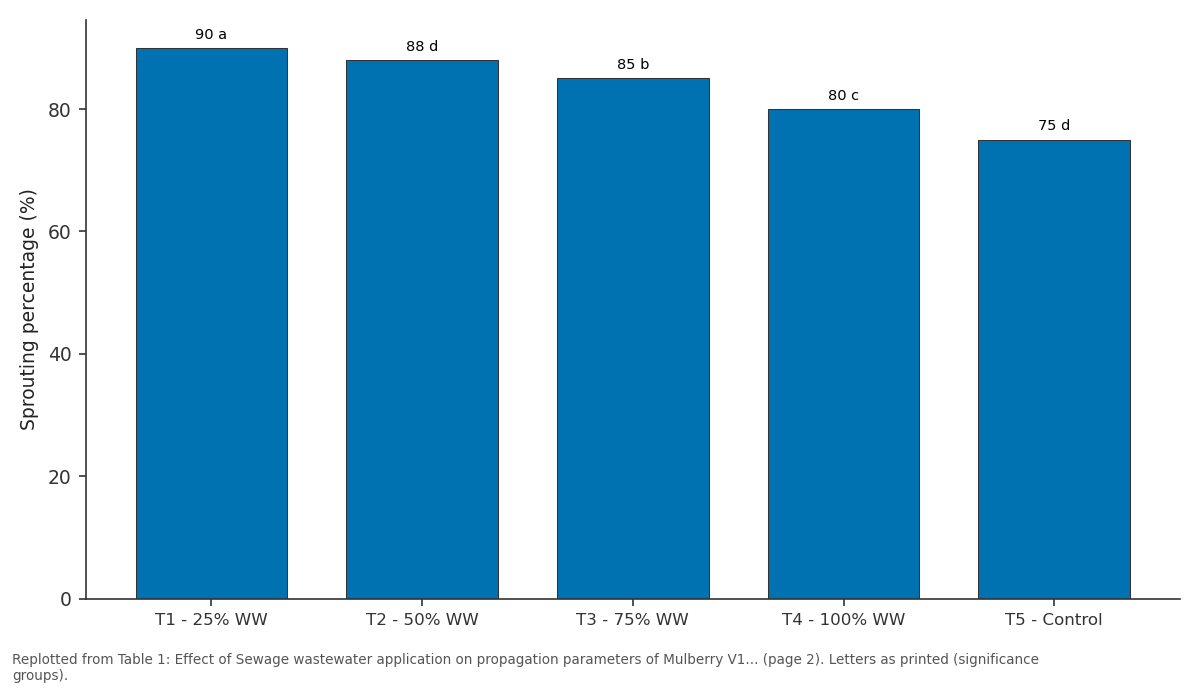
Sprouting percentage (%): T1 - 25% WW vs T2 - 50% WW vs T3 - 75% WW vs T4 - 100% WW vs T5 - Control
Replotted from Table 1 (page 2) of the original paper. Every bar is the paper's own table value.
View source evidence ↗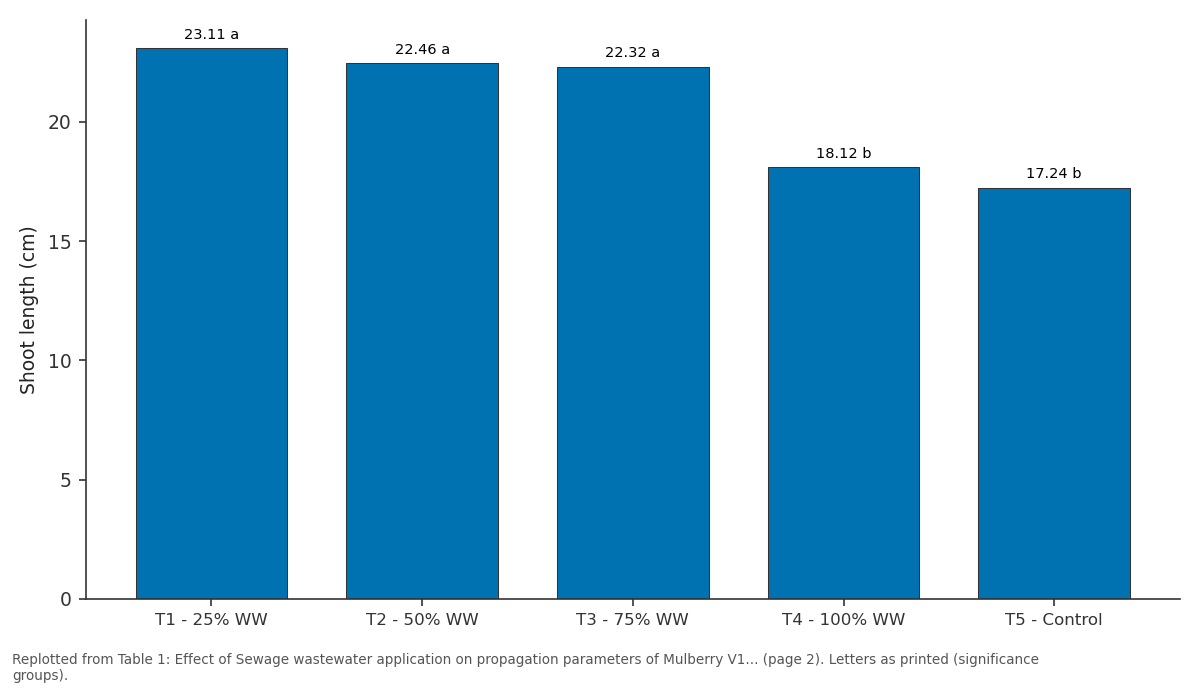
Shoot length (cm): T1 - 25% WW vs T2 - 50% WW vs T3 - 75% WW vs T4 - 100% WW vs T5 - Control
Replotted from Table 1 (page 2) of the original paper. Every bar is the paper's own table value.
View source evidence ↗Figures & tables
From the original paper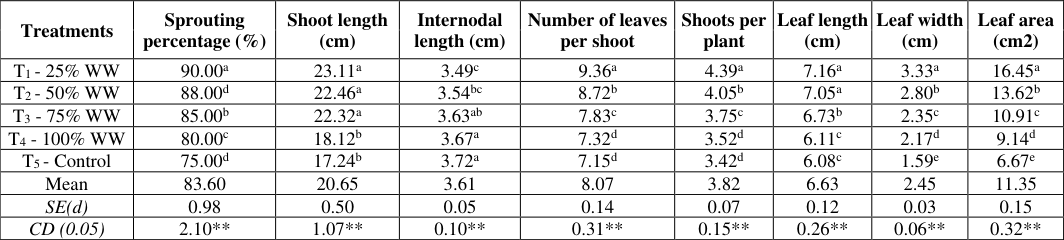 Table 1
Introduction
India is the second largest producer of silk in the world next to China with an annual silk production of around 23,000 MT. Different types of silk, viz., Mulberry, Eri, Muga and Tasar are produced in India. Mulberry silk is the most popular variety in India, contributing more than 81% of the country's silk production. About 24,427 farmers are practicing sericulture in Tamil Nadu by cultivating 46,570 acres of Mulberry which gives an employment opportunity to 2.32 lakh persons. Out of the total silk production in the country, the major share of Mulberry silk is from the traditional sericulture states such as Tamil Nadu, Karnataka, Andhra Pradesh, West Bengal and Jammu and Kashmir. Mulberry is a hardy, deep-rooted perennial plant that grows continuously throughout the year under favorable climatic conditions as prevailing under the tropics and is extensively cultivated over a wide range of soils. The Mulberry leaf quality and quantity depend on the soil type, varieties, available plant nutrients in soil, agronomical practices and agro-climatic conditions. Hence, native soil fertility alone cannot be relied upon for quantity and quality of Mulberry leaf productivity. In Mulberry, morphological traits such as plant height, number of shoots per plant, number of nodes per meter length, leaf yield, shoot yield and biological yield per plant, physiological traits, i.e., photosynthetic rate, transpiration rate and water use efficiency; biochemical traits, i.e. total protein, sugar, starch and amino acid contents in the S-54 and M5 Mulberry varieties were found increased in sewage wastewater treated plant compared to bore well water treated plant (Chikkaswamy and Paramanik, 2014b) [5] . Wastewater was considered as a potential water resource, because it contains a considerable amount of nutrients which may prove beneficial for plant growth (Mishra et al. 1997) [15] and hence the use of wastewater in agriculture has gained importance rapidly. Nowadays, water scarcity is making agriculture increasingly dependent on the reuse of water which leads to the search for alternative sources of application which could substantiate the yield potential of crops and also serve as an alternative source for fresh water. Due to population explosion, it leads to water crisis for application by 2050. It helps for the conservation of water, recycling of nutrients in wastewater, reducing the direct application of organic fertilizers and minimizing the contamination of water bodies (Vasudevan et al. 2010) [23] ; (Thapliyal et al. 2009) [21] ; (Hylander et al. 2006) [11] .
Materials and Methods
The experimental materials for the current study were the V1 (Victory-1) Mulberry variety and sewage wastewater collected from Ukkadam in Coimbatore district.
Location
Location
Selection of Mulberry cuttings
Morus indica species cuttings were selected from FC&RI, Mettupalayam based on the morphological features viz., shoot length, number of leaves/plant, and stem girth. The vegetative multiplication of the selected Mulberry variety was carried out by preparing hardwood cuttings, with 3-4 active buds, 15 -20 cm long and 0.3 to 0.5 cm diameter. The cuttings were dipped in IBA (3000 ppm) solution about 15 -20 minutes and planted in cement pots containing mixture of soil and sand.
Growth performance of cuttings at nursery
Biometric observations such as sprouting percentage (%), shoot length (cm), internodal distance (cm) and number of shoots per plant were recorded at 30 days after planting.
The number of cuttings sprouted in each treatment was counted on the 7 th day after sowing. The total sprouting percentage was calculated by using the following formula.
Sprouting percentage =
Total number of cuttings sprouted Total number of cuttings sown × 100
Leaf length and breadth (cm 2 plant -1 ) Leaf length and breadth were measured for individual leaf from each treatment in different replications.
The length of the shoot was measured from base of the shoot to the tip of the fully opened leaf of the main shoot expressed in centimeter.
The plant height was measured from the base of the plant to the tip of the fully opened leaf of all the labeled plants and mean shoot height was measured and calculated at 30 days after planting.
Mean plant height =
Mean plant height =
Number of shoots
Number of shoots
Number of shoots per plant
The number of shoots per plant was recorded from labeled plants at an interval of 30 days after planting and number of shoots was calculated using the formula.
Number of shoots per plant =
Number of shoots per plant =
Number of plants
Number of plants
Distance between two nodes was measured from main shoot and expressed in centimeter.
Number of leaves per plant
The leaves were counted from labeled plants at 30 days after planting and mean number of leaves per plant was calculated by using the formula.
Number of leaves per plant =
Number of leaves per plant =
Growth and yield parameters of Mulberry (V1 variety)
Observations were recorded in the Mulberry plant at 30 days after planting in pots by application with different concentrations of wastewater (Table 1).
| Treatments | Sprouting percentage (%) | Shoot length (cm) | Internodal length (cm) | Number of leaves per shoot | Shoots per plant | Leaf length (cm) | Leaf width (cm) | Leaf area (cm2) |
|---|---|---|---|---|---|---|---|---|
| T1 - 25% WW | 90.00a | 23.11a | 3.49c | 9.36a | 4.39a | 7.16a | 3.33a | 16.45a |
| T2 - 50% WW | 88.00d | 22.46a | 3.54bc | 8.72b | 4.05b | 7.05a | 2.80b | 13.62b |
| T3 - 75% WW | 85.00b | 22.32a | 3.63ab | 7.83c | 3.75c | 6.73b | 2.35c | 10.91c |
| T4 - 100% WW | 80.00c | 18.12b | 3.67a | 7.32d | 3.52d | 6.11c | 2.17d | 9.14d |
| T5 - Control | 75.00d | 17.24b | 3.72a | 7.15d | 3.42d | 6.08c | 1.59e | 6.67e |
| Mean | 83.60 | 20.65 | 3.61 | 8.07 | 3.82 | 6.63 | 2.45 | 11.35 |
| SE(d) | 0.98 | 0.50 | 0.05 | 0.14 | 0.07 | 0.12 | 0.03 | 0.15 |
| CD (0.05) | 2.10** | 1.07** | 0.10** | 0.31** | 0.15** | 0.26** | 0.06** | 0.32** |
Table text extracted from the original PDF; superscript letters are shown inline. The original table image is below.
View original table image
Among the treatments, T 1 -25% concentration of wastewater recorded the highest sprouting percentage of 90.00% in sewage wastewater followed by T 2 -50% concentration of wastewater recorded the sprouting percentage of 88.00% in sewage wastewater, respectively. The lowest sprouting percentage of 75.00% was recorded in sewage wastewater under the treatment T 5 -tap water application.
Among the treatment combinations, T 1 -25% concentration of wastewater recorded the highest mean shoot length of 23.11 cm in sewage wastewater followed by T 2 -50% concentration of wastewater noticed the shoot length of 22.46 cm in sewage wastewater. The lowest mean shoot length of 17.24 cm was recorded in sewage wastewater under the treatment T 5 -tap water application.
Among the treatments, T 1 -25% concentration of wastewater was recorded shortest mean internodal length of 3.49 cm in sewage wastewater was recorded followed by T 2 -50% concentration of wastewater recorded the mean internodal length of 3.54 cm in sewage wastewater. The longest internodal length of 3.72 cm was recorded in sewage wastewater under the treatment T 5 -tap water application.
Number of leaves per shoot of Mulberry (V1 variety)
Application of wastewater showed positive trend with regard to the number of leaves per shoot. Among the treatments, T 1 -25% concentration of wastewater recorded the maximum mean number of leaves per shoot of 9.36 in sewage wastewater followed by T 2 -50% concentration of wastewater recorded the 8.72 in sewage wastewater. The minimum mean number of leaves per shoot of 7.15 was recorded in sewage wastewater under the treatment T 5control.
Number of shoots per plant of Mulberry (V1 variety)
Among the treatments, T 1 -25% concentration of wastewater recorded the highest mean number of shoots per plant of 4.39 in sewage wastewater followed by T 2 -50% concentration of wastewater recorded the number of shoots per plant of 4.05 in sewage wastewater. The lowest mean number of shoots per plant of 3.42 was recorded in sewage wastewater under the treatment T 5 -tap water application.
Among the treatments, T 1 -25% concentration of wastewater recorded the highest mean leaf length of 7.16 cm in sewage wastewater followed by T 2 -50% concentration of wastewater recorded 7.05 cm in sewage wastewater. The lowest mean leaf length of 6.08 cm was recorded in sewage wastewater under the treatment T 5 -tap water application.
Among the treatments, T 1 -25% concentration of wastewater showed the maximum leaf breadth of 3.33 cm in sewage wastewater followed by T 2 -50% concentration of wastewater recorded leaf breadth of 2.80 cm in sewage wastewater. The minimum mean leaf breadth of 1.59 cm was recorded in sewage wastewater under the treatment T 5tap water application.
Leaf area (cm 2 ) of Mulberry (V1 variety) Among the treatments, T 1 -25% concentration of wastewater recorded the highest leaf area of 16.45 cm 2 in sewage wastewater followed by treatment T 2 -50% concentration of wastewater recorded leaf area of 13.62 cm 2 in sewage wastewater. The lowest leaf area of 6.67 cm 2 was recorded in sewage wastewater under the treatment T 5 -tap water.
Discussion
The application of wastewater on Mulberry had a significant effect on sprouting percentage. In Mulberry, T 1 -25% concentration of wastewater recorded the highest sprouting percentage of 90.00% in sewage wastewater. Increasing growth parameters in Mulberry were recorded at the lowest concentration of wastewater application when compared to control. The wastewater enriched with essential nutrients helped for the robust plant growth of Mulberry and cocoon productivity. The highest concentration of wastewater decreased growth parameters of the plant due to the presence of excess amount of elements in the wastewater which inhibit the sprouting and growth by affecting the metabolic activities reported by Srivastava et al. (1987) [19] , Kaushik et al. (2005) [12] , Lakshmi and Sundaramoorthy (2000) [13] and Vaithiyanathan et al. (2014) [22] . The results of the present study are supported by the findings of Medhi et al. (2008) [14] and it was observed that the highest plant growth and sprouting percentage at lower concentration of paper mill wastewater in mustard, pea and rice. Similar results were observed by Singh et al. (2014) [18] in cowpea and similar such result was obtained by Dhevagi and Oblisami (2000) [7] who confirmed that the paper mill wastewater, at lowest concentration showed a maximum sprouting percentage. This is also in accordance with the results of Sahai et al. (1979) [17] , who found that lowest concentration of wastewater increases the germination parameters due to presence of growth promoting nutrients in the diluted wastewater. Misra and Behera (1991) [16] found that higher concentration of wastewater application decreases the germination percentage, chlorophyll pigment, carbohydrates and protein content in plants. Doke et al. (2011) [6] reported that higher concentration of paper mill wastewater affected the germination percentage, vegetative parameters of the green gram due to presence of high amount of organic and inorganic compounds, which becomes toxic to plants. These results are in accordance with Ezhilvannan et al. (2011) [9] , who reported that higher concentration of paper mill wastewater affected the plant growth and decreased the amino acid and protein content in maize. The application of sewage wastewater had a significant effect on shoot length. Among the treatments, T 1 -25% concentration of wastewater recorded the highest mean shoot length of 23.11 cm in sewage wastewater. The highest shoot length might be due to the enriched wastewater with essential nutrients and in the lowest concentration of wastewater helps for the robust growth of Mulberry. Similarly, highest concentrations of wastewater (50, 75 and 100%) decrease growth parameters of the plant. Because of the presence of excess amount of elements in the wastewater which inhibits the growth by affecting the metabolic activities reported by Srivastava et al. (1987) [19] , Kaushik et al. (2005) [12] , Lakshmi and Sundaramoorthy (2000) [13] and Vaithiyanathan et al. (2014) [22] . The present finding was strengthened by Chandraju et al. (2012) [3] and El-Sawaf (2005) [8] revealed that lower concentration of wastewater increased the shoot length in Mulberry. The internodal length of Mulberry plants was significantly influenced by application with wastewater treatments. At 25% concentration of wastewater, shortest mean internodal length of 3.49 cm in sewage wastewater was recorded. In this present study, while increasing the dilution of wastewater, the internodal length was decreased and vice versa. This might be due to the presence of highest load of organic compounds in wastewater. This is in line in accordance with findings of Ganesh keremane et al. (2004) [10] reported the shortest internodal length with the application of organic formulation on Mulberry. The present findings were supported by Sori and Gebreselassie (2016) [20] and noticed the internodal length in 4.40 cm in kumbi Mulberry genotype. Application of wastewater showed positive trend with regard to the number of leaves per shoot. As above, at 25% concentration of wastewater treatments, maximum number of leaves per shoot, viz., 9.36 in sewage wastewater was recorded. The increase in number of leaves per shoot was due to short internodal length. The present result corroborated the findings of El-Sawaf (2005) [8] , who noticed the highest number of leaves per shoot in lower concentration of sewage wastewater. Among the all treatments, lowest concentration of wastewater had maximum number of shoots per plant of 4.39 was recorded in sewage wastewater. The number of shoots per plant significantly increased at lower concentration and this might be due to the presence of high amount of total nitrogen content in wastewater than tap water. This work was supported by Chikkaswamy and Paramanik (2014a) [4] and reported that number of shoots per plant in lower concentration of wastewater application. Leaf area of Mulberry was significantly influenced by the application of wastewater. The lowest concentration of wastewater application at 25% recorded the highest leaf area of 16.45 cm 2 in sewage wastewater. This might be due to increase in the photosynthetic rate and water use efficiency of Mulberry. El-Sawaf (2005) [8] opined that application with sewage wastewater at lower concentration increased the leaf area in sorghum varieties.
Conclusion
In Mulberry, T 1 -25% concentration of wastewater application recorded the highest sprouting percentage of 90.00% in sewage wastewater. Among the treatments, T 1 -25% concentration of wastewater recorded the highest mean shoot length of 23.11 cm in sewage wastewater. At 25% concentration of wastewater, shortest mean internodal length of 3.49 cm in sewage wastewater was recorded. At 25% concentration of wastewater treatments, maximum number of leaves per shoot of 9.36 in sewage wastewater was recorded. Among the all treatments, lowest concentration of wastewater had maximum number of shoots per plant of 4.39 was recorded in sewage wastewater. The lowest concentration of wastewater application at 25% recorded the highest leaf area of 16.45 cm 2 in sewage wastewater respectively.
References
19 in the original paper- Chandraju S, Nagendraswamy G, Chidan Kumar CS, Nagendra Swamy R. Studies on the yields of cocoons of CSR19, Kolar Gold and CSR2 × CSR4 reared fed with M5 variety of mulberry leaves cultivated by spent wash application. Int J Pharm Biol Res. 2012;3(2).
- Doke KM, Khan EM, Rapolu J, Shaikh A. Physicochemical analysis of sugar industry effluent and its effect on seed germination of Vigna angularis, Vigna cylindrica and Sorghum cernum. Ann Environ Sci. 2011;5(1):1-2.
- Dhevagi P, Oblisami G. Effect of paper mill effluent on germination of agricultural crops. J Ecobiol. 2000;12(4):243-249.
- El-Sawaf N. Response of Sorghum spp. to sewage wastewater application. Int J Agric Biol. 2005;7(6):869874.
- Ezhilvannan D, Sharavanan PS, Vijayaragavan M. Effect of sugar mill effluent on growth and amino acid and protein contents of maize (Zea mays L.) plants. J Ecobiotechnol. 2011.
- Keremane G, Huga I, Girish I, Vanitha B, Asharani CM. Use of effective microorganisms in sericulture. Indian Silk. 2004;42(10):9-10.
- Hylander LD, Kietlińska A, Renman G, Simán G. Phosphorus retention in filter materials for wastewater treatment and its subsequent suitability for plant production. Bioresour Technol. 2006;97(7):914-921.
- Kaushik A, Nisha R, Jagjeeta K, Kaushik CP. Impact of long-and short-term application of a sodic soil with distillery effluent in combination with bioamendments. Bioresour Technol. 2005;96(17):1860-1866.
- Lakshmi S, Sundaramoorthy P. Effect of sugar mill effluent on germination, seedling growth and biochemical changes in ragi (Eleusine coracana Gaertn). Indian J Environ Ecoplann. 2000;3(3):501506.
- Medhi UJ, Talukdar AK, Deka S. Effect of pulp and paper mill effluent on seed germination and seedling growth of mustard (Brassica campestris), pea (Pisum sativum) and rice (Oryza sativa) seeds. Pollut Res. 2008;27(4):437-442.
- Mishra A, Patel S, Behera RK, Mishra BK, Behera GB. Dye-surfactant interaction: role of an alkyl chain in the localization of styrylpyridinium dyes in a hydrophobic force field of a cationic surfactant (CTAB). Bull Chem Soc Jpn. 1997;70(12):2913-2918.
- Misra RN, Behera PK. Effect of paper industry effluent on growth, pigments, carbohydrates and proteins of rice seedlings. Environ Pollut. 1991;72(2):159-167.
- Sahai R, Agrawal N, Khosla N. Effect of fertilizer factory effluent on seed germination, seedling growth and chlorophyll content of Phaseolus radiatus Linn. Trop Ecol. 1979;20(2):155-162.
- International Journal of Biology Sciences https://www.biologyjournal.net in the Sudan Savanna of Nigeria. Int J Agron. 2014;2014:1-7.
- Srivastava N, Sahai R. Effects of distillery waste on the performance of Cicer arietinum L. Environ Pollut. 1987;43(2):91-102.
- Sori W, Gebreselassie W. Evaluation of mulberry (Morus spp.) genotypes for growth, leaf yield and quality traits under southwest Ethiopian condition. J Agron. 2016;15(4):173-178.
- Thapliyal A, Vasudevan P, Dastidar MG. Domestic wastewater for fertigation: a solution for water recycling and application. Proc Micropol Ecohazard. 2009;6.
- Vaithiyanathan T, Soundari M, Sundaramoorthy P. Response of black gram (Vigna mungo L.) to sugar mill effluent treatment. Int J Res Bot. 2014;4(1):15-18.
- Vasudevan P, Thapliyal A, Srivastava RK, Pandey A, Dastidar MG, Davies P. Fertigation potential of domestic wastewater for tree plantations. 2010.