
Research article · 2026 · Full text
International Journal of Horticulture and Food ScienceSocio-economic, psychological and institutional determinants of farm mechanization adoption in Sugarcane cultivation
Volume 8(3) · Pages 28–33 · DOI: 10.33545/26631067.2026.v8.i3a.490 ↗
Research areasSugarcane Cultivation and ProcessingAgricultural Engineering and MechanizationLivestock Management and Performance Improvement
Abstract
Author-writtenFarm mechanization has become a critical intervention in sugarcane cultivation in India in response to persistent labour shortages, rising wage rates, and the need to enhance productivity and operational efficiency. Adoption of mechanized technologies in sugarcane farming, however, remains uneven and influenced by a complex interaction of socio-economic, psychological, and institutional factors. This review synthesizes empirical evidence from studies conducted across major sugarcane-growing regions of India to examine the determinants shaping farmers’ awareness, knowledge, and utilization of farm machinery. The findings reveal that education, farm size, income, farming experience, and access to information significantly influence mechanization adoption, while psychological attributes such as innovativeness, risk orientation, scientific orientation, and economic motivation play a crucial role in farmers’ decision-making behaviour. Institutional factors, including availability of machinery, custom hiring services, training exposure, extension support, and credit access, further condition the extent and intensity of mechanization. Although mechanization has improved timeliness of operations and reduced labour drudgery, its adoption remains largely confined to selected operations, with limited penetration in planting, harvesting, and ratoon management. The review underscores the need for a holistic mechanization strategy that integrates appropriate technology, capacity building, and institutional support to promote inclusive and sustainable mechanization in sugarcane cultivation. Addressing these determinants is essential for improving productivity, reducing production costs, and ensuring the long-term viability of the sugarcane sector in India.
Summary
Source-checkedPlain-language reading of the full paper, prepared with AI and checked against the text. Each point links to the authors' own words.
Why it matters
- Farm mechanization is critical for Indian sugarcane cultivation to address rising wages, labor shortages, and the need for better productivity. View evidence ↗
- The adoption of these technologies is currently uneven due to a complex mix of institutional, psychological, and socio-economic factors. View evidence ↗
The question
- The study aims to synthesize evidence from major Indian sugarcane regions to identify the factors that determine how farmers become aware of and utilize farm machinery. View evidence ↗
What they did
- The authors conducted a thorough literature review of existing research articles rather than collecting new primary data. View evidence ↗
What they found
- Older farmers are more represented in mechanized systems because they typically possess more capital, land ownership, and experience. View evidence ↗
- Farmers with medium and large farm sizes show higher rates of adopting mechanized practices compared to smaller farmers. View evidence ↗
- Income levels dictate the mode of access: high-income farmers tend to own machinery, while low-income farmers rely on hiring services. View evidence ↗
- Labor scarcity and rising wages during peak seasons serve as primary drivers that accelerate the adoption of mechanization. View evidence ↗
- Farmers generally exhibit medium levels of economic motivation and innovativeness, suggesting a cautious approach to new technology. View evidence ↗
- While scientific orientation is generally medium, it is higher among those using advanced tools like drip irrigation and precision farming. View evidence ↗
- Formal training participation is low to moderate, with most growers having never attended a formal program. View evidence ↗
- Mechanization is partial; it is used for land preparation but remains limited in planting, harvesting, and ratoon management. View evidence ↗
- Custom hiring centers and cooperative models are essential for making mechanization inclusive for small and marginal farmers. View evidence ↗
What it means
- To increase adoption, the authors recommend improving credit access, creating region-specific machinery, and strengthening training. View evidence ↗
- The authors conclude that progress requires moving beyond simple tractorization toward a holistic system integrating machinery, skills, and institutional support. View evidence ↗
Visual summary
2 visualsIllustrations explain the paper; they do not show study data.
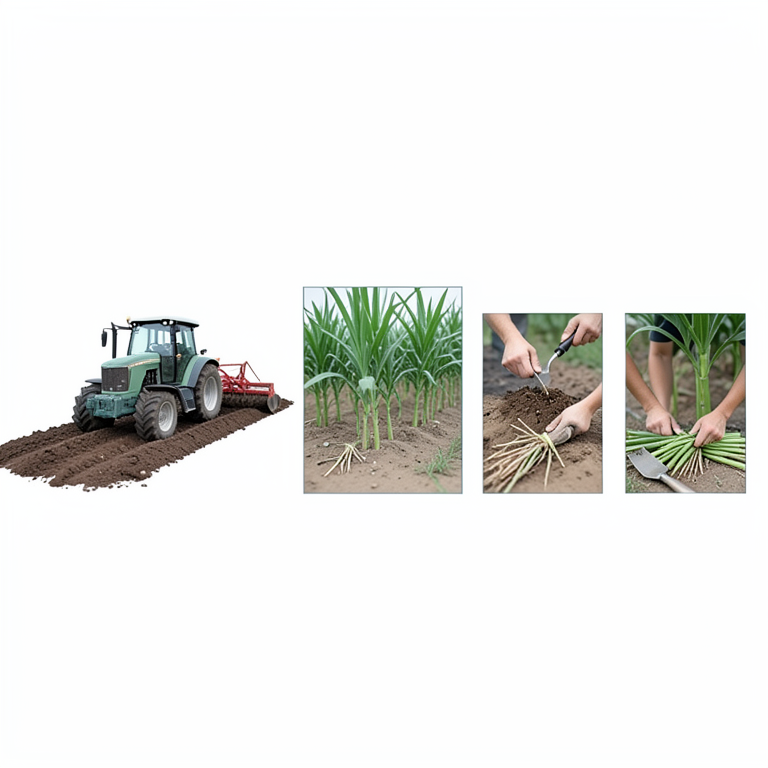
Partial Mechanization Gap
AI-generated conceptual illustration (Sugarcane plants in a field). It explains the idea and does not show study data.
View source evidence ↗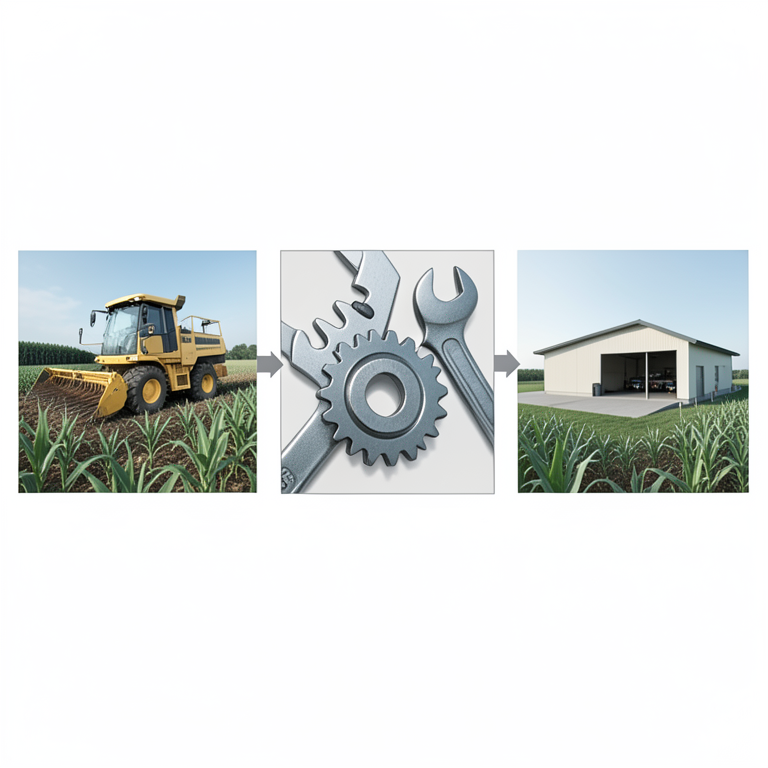
Holistic Mechanization Ecosystem
AI-generated conceptual illustration (Sugarcane plants and agricultural machinery). It explains the idea and does not show study data.
View source evidence ↗Introduction
Empirical research conducted across different regions of India has consistently highlighted the socio-economic and behavioural characteristics of sugarcane growers as key determinants influencing farm mechanization adoption. Age distribution patterns reported across multiple studies indicate that sugarcane cultivation is predominantly managed by middle-aged farmers, who represent the most active group in adopting improved farm technologies (Kanavi, 2000; Shashidhar, 2014) [31,59] . However, studies focusing specifically on mechanized cultivation systems have reported a higher representation of older farmers, particularly in sugarcane and other commercial crops, suggesting that accumulated experience, capital ownership, and decision-making authority play a significant role in mechanization adoption (Ghosh, 2014; Pauline, 2022; Karunthadankanni, 2022) [30,34,32] . Younger farmers were comparatively fewer, reflecting limited participation of youth in labour-intensive agricultural enterprises unless supported by mechanized interventions.
Socio-Personal Characteristics of Sugarcane Growers
Age has been widely reported as an important socio-personal factor influencing the adoption of farm mechanization in sugarcane cultivation.
Several studies observed that the majority of sugarcane growers belonged to the middle-aged category, which represents the most economically active and decisionmaking segment of the farming population (Kanavi, 2000; Shashidhar, 2014) [31,59] . In contrast, studies focusing on mechanized sugarcane systems reported a comparatively higher proportion of older farmers, indicating that experience, land ownership, and capital availability strongly influence mechanization decisions (Ghosh, 2014; Pauline, 2022; Karunthadankanni, 2022) [30,34,32] . The limited participation of younger farmers reflects the declining interest of rural youth in labour-intensive agriculture unless supported by mechanized interventions.
Cropping Pattern and Income Characteristics
Area under sugarcane cultivation was generally reported to be medium to high, especially in irrigated and commercially oriented regions (Vijayalan, 2021; Pauline, 2022; Karunthadankanni, 2022) [84,34,32] . Farmers cultivating sugarcane on a larger scale exhibited greater dependence on mechanization to manage labour-intensive operations efficiently and to ensure timeliness. Income level significantly influenced machinery adoption behaviour. Most sugarcane growers fell into the medium income category, though both low-and high-income groups were also represented (Rosaiahyeluri, 2000) [39] . Higher income farmers showed greater capacity for machinery ownership, whereas low-income farmers relied predominantly on hired services and traditional implements (Ghosh, 2014; Mande and Thombre, 2019; Shanthy and Muthusamy, 2022) [27,33,37] .
Psychological and Behavioural Attributes
Psychological characteristics such as innovativeness, economic motivation, risk orientation, and scientific orientation were reported to have a significant influence on mechanization adoption. Most studies documented medium levels of innovativeness and economic motivation, indicating cautious but progressive attitudes towards new technologies (Chandra and Shiraj, 2021; Jayabalan, 2012; Ghosh, 2014) [19,30,27] . A medium level of risk orientation was also consistently reported, suggesting selective adoption of mechanization rather than complete technological transformation (Pauline, 2022) [34] . Scientific orientation was predominantly medium, with higher levels observed among farmers adopting advanced technologies such as precision farming and drip irrigation systems (Floralavanya, 2017; Thiyagarajan, 2021; Karunthadankanni, 2022) [25,74,32] . These findings highlight the importance of strengthening farmers' scientific outlook through extension and capacity-building initiatives
Availability of Farm Power, capital power and Machinery
Availability of farm power and machinery remained uneven across regions. Ownership of tractors and advanced implements was limited, particularly among smallholders, leading to a high dependence on hiring services for critical operations (Subramanian, 2000; Ghosh, 2020; Din, 2021) [65,26,24] . These findings underline the importance of strengthening custom hiring centres and cooperative mechanization models to improve access. Labour availability emerged as one of the most critical constraints influencing mechanization adoption. Acute shortages of skilled labour during peak agricultural seasons, combined with rising wage rates, were widely reported across sugarcane-growing regions (Santhi, 2016; Dhanasekaran, 2017; Pauline, 2022) [42,23,34] . Labour scarcity acted as a major driving force accelerating the adoption of mechanized operations in sugarcane cultivation.
Training Exposure and Capacity Building
Training participation related to farm implements and machinery was found to be low to moderate. Several studies reported that a majority of sugarcane growers had not attended formal training programmes, while only a small proportion participated in multiple training sessions (Pauline, 2022; Karunthadankanni, 2022) [34,32] . Limited training exposure constrained effective utilization, maintenance, and optimization of machinery.
Awareness, Knowledge and Utilization of Farm Machinery
Awareness, knowledge, and utilization levels of farm implements and machinery were predominantly medium among sugarcane growers. High adoption was observed for basic implements, while advanced machinery related to precision agriculture and resource conservation remained underutilized (Ghosh, 2014; Persis, 2017; Pauline, 2022) [27,35,34] . Education, farm size, extension contact, scientific orientation, innovativeness, and training participation were consistently reported to have significant positive relationships with awareness, knowledge, and utilization behaviour (Pauline, 2022) [34] .
Conclusion
Farm mechanization has emerged as an indispensable component of sustainable sugarcane cultivation in India, particularly in the context of persistent labour scarcity, rising wage rates, and increasing pressure to enhance productivity and cost efficiency. The reviewed studies collectively demonstrate that mechanization adoption in sugarcane farming is not merely a technological choice but a multifaceted process shaped by socio-personal, economic, psychological, and institutional factors. Characteristics such as education, farm size, income level, farming experience, scientific orientation, and access to information and training consistently influence farmers' awareness, knowledge, and utilization of farm machinery. Despite the recognized benefits of mechanization in improving timeliness of operations, reducing drudgery, and enhancing labour and land productivity, its adoption in sugarcane cultivation remains uneven and largely partial. Mechanization is still predominantly confined to land preparation and limited intercultural operations, while critical stages such as planting, harvesting, and ratoon management continue to rely heavily on manual labour. This partial mechanization reflects structural constraints including small and fragmented landholdings, limited machinery ownership, inadequate training exposure, and uneven availability of farm power across regions. The findings also underline the growing importance of institutional mechanisms such as custom hiring centres, cooperative models, and extension services in promoting inclusive mechanization, particularly among small and marginal farmers (Persis, 2017) [35] . Labour scarcity has emerged as a dominant driver accelerating mechanization; however, without adequate capacity building and contextspecific machinery solutions, the full potential of mechanization in sugarcane systems cannot be realized. Strengthening farmer-oriented training programmes, improving access to credit, and promoting region-specific, cost-effective machinery are therefore essential to enhance adoption intensity. Overall, this review highlights that future progress in sugarcane mechanization must move beyond tractorisation towards a holistic, system-based approach that integrates appropriate machinery, skilled human resources, and supportive institutional frameworks. Addressing existing gaps through targeted research, policy support, and technology dissemination will be critical for improving productivity, ensuring economic viability of sugarcane farming, and sustaining the competitiveness of the Indian sugar industry in a rapidly changing agricultural landscape.
Declaration of Generative AI and AI-assisted technologies
The authors take complete responsibility of the information presented in the manuscript and has not used Artificial Intelligence (AI) tools or bots in drafting the review paper.
Data Availability Statement
The article is purely drafted from thorough literature study, there is no data available for the submitted manuscript.
Funding
This review is not funded by any organization or agency in any format.
Competing Interests
As part of declaration, the authors have no financial or personal interest/relationships regarding the information present in the manuscript. "I have not submitted my manuscript to a preprint server before submitting it to this journal.
References
83 in the original paper- Abraham K. The conduct of inquiry: methodology for behavioral science. Chandler Publication. 1974.
- Agarwal JC. Educational research on integration. New Delhi: Arya Book Department. 2016.
- Agila R. Performance of contract farming: a critical analysis [Ph.D. thesis]. Coimbatore: AC & RI, Tamil Nadu Agricultural University. 2025.
- Alagesan V. Performance of tractor drawn seed drill. J Ext Educ. 2021;12(3):3190-3234.
- Anandaraja N. Farm mechanization in Tamil Nadu: issues and prospects [M.Sc. (Ag.) thesis]. Coimbatore: AC & RI, Tamil Nadu Agricultural University. 2019.
- Anithamary A. Prospects for organic farming among farmers -a critical analysis [M.Sc. (Ag.) thesis]. Coimbatore: AC & RI, Tamil Nadu Agricultural University. 2016.
- Anuraj MS. Research-extension-farmer linkages in Kottayam district of Kerala: an analysis with reference to rubber small holding sector [M.Sc. (Ag.) thesis]. Coimbatore: AC & RI, Tamil Nadu Agricultural University. 2023.
- Archanasathyan R. Impact of Kudumbashree programme on gender empowerment [M.Sc. (Ag.) thesis]. Coimbatore: AC & RI, Tamil Nadu Agricultural University. 2017.
- Arulumurugan R. Knowledge and adoption of postharvest technologies of turmeric growers [M.Sc. (Ag.) thesis]. Coimbatore: AC & RI, Tamil Nadu Agricultural University. 2020.
- Arunachalam R. Indigenous practice for natural resource management [Ph.D. thesis]. Coimbatore: AC & RI, Tamil Nadu Agricultural University. 2023.
- Arunkumar K. Retrospects and prospects of commercial cassava cultivation [M.Sc. (Ag.) thesis]. Coimbatore: AC & RI, Tamil Nadu Agricultural University. 2022.
- Balasubramani N, Swathilakshmi PS, Chandrakandan K. A study on yield gap analysis in paddy in Erode district of Tamil Nadu. Asian J Ext Educ. 2025;24(12):44-52.
- Balishter J, Gupta VK, Singh R. Impact of mechanization on employment and farm productivity. Indian J Agric Econ. 2021;32(3):484-489.
- Balarubini M. Impact of National Horticultural Mission training programme in cashew cultivation [M.Sc. (Ag.) thesis]. Madurai: AC & RI, Tamil Nadu Agricultural University. 2020.
- Banumathy S. Technological gaps and adoption of improved rainfed practices in rice [M.Sc. (Ag.) thesis]. Madurai: AC & RI, Tamil Nadu Agricultural University. 2023.
- Bhuvaneswari B. Role of tribal women in the conservation of agrobiodiversity: a multidimensional analysis [Ph.D. thesis]. Coimbatore: Tamil Nadu Agricultural University. 2025.
- Bloom M, Eaglhalt E, Farst E, Hill W, Karathwool PR. Taxonomy of educational objectives: cognitive domain. New York: Longmans Green and Company. 1995.
- Chandra R, Shiraj. Effectiveness of eco-friendly cultivation practices in paddy: an analysis [M.Sc. (Ag.) thesis]. Madurai: AC & RI, Tamil Nadu Agricultural University. 2021.
- Clarke LJ. Strategies for agricultural mechanization development. Rome: Agricultural Support System Division, FAO. 2020.
- Deepa MK. Technological gaps in adoption of ecofriendly technologies of vegetables [M.Sc. (Ag.) thesis]. Coimbatore: AC & RI, Tamil Nadu Agricultural University. 2023.
- Deepabarathi M. Adoption and marketing behaviour of senna growers [M.Sc. (Ag.) thesis]. Madurai: AC & RI, Tamil Nadu Agricultural University. 2023.
- Din MJU. Socio-economic problems of small farmers in adopting new agricultural technology. Sarhad J Agric. 2021;27(2):299-304.
- Floralavanya V. Sustainable water management through drip irrigation in Madurai district [M.Sc. (Ag.) thesis]. Madurai: AC & RI, Tamil Nadu Agricultural University. 2017.
- Ghosh BK. Determinants of farm mechanization in modern agriculture. Indian J Agric Res. 2020;5(12):1107-1115.
- Ghosh SM. Farm mechanization in sugarcane, cotton and groundnut crops: an analysis [M.Sc. (Ag.) thesis]. Coimbatore: AC & RI, Tamil Nadu Agricultural University. 2024.
- Gupta P. Use of improved farm implements by rural women. Indian J Ext Educ. 2016;32(2):689-691.
- Gurumurthy P, Singa Rao M, Bhaskar Reddy B, Reddy BN. Optimizing tillage and irrigation for sunflower cultivation. Helia. 2018;31(49):91-102.
- Jayabalan KR. Bio-input utilization of sugarcane growers [M.Sc. (Ag.) thesis]. Madurai: AC & RI, Tamil Nadu Agricultural University. 2022.
- Kanavi VP. Knowledge and adoption behaviour of sugarcane growers in Belgaum district of Karnataka [M.Sc. (Ag.) thesis]. Dharwad: UAS. 2020.
- Karunthadankanni T. Impact of farm mechanization in rice-based irrigated agro-ecosystem [M.Sc. (Ag.) thesis]. Coimbatore: AC & RI, Tamil Nadu Agricultural University. 2022.
- Mande JV, Thombre BM. Adoption of cultivation practices by sugarcane growers. Agric Sci Dig. 2019;29(3):178-181.
- Pauline AA. Farm mechanization in paddy cultivation in Madurai district of Tamil Nadu [M.Sc. (Ag.) thesis]. Madurai: AC & RI, Tamil Nadu Agricultural University. 2022.
- Persis V. Retrospects and prospects of farm mechanization in tribal agriculture [M.Sc. (Ag.) thesis]. Coimbatore: AC & RI, Tamil Nadu Agricultural University; 2017.
- Sharma MP, Singh AK, Singh J. Mechanization of sugarcane farming in India: relevant issues. Invited lead paper. Institution of Engineers (India), Karnataka State Centre; Bangalore. 2017.
- Shanthy RT, Muthusamy GR. Wider row spacing in sugarcane: a socio-economic performance analysis. Sugar Tech. 2022;4(2):126-133.
- Rahman MS, Miah MAM, Moniruzzaman, Hossain S. Impact of farm mechanization on labour use for wheat cultivation. J Anim Plant Sci. 2021;21(3):589-594.
- Rosaiahyeluri. An analysis of knowledge gap on IPM technologies of cotton -a system approach [M.Sc. (Ag.) thesis]. Coimbatore: AC & RI, Tamil Nadu Agricultural University. 2022.
- Sailaja V. A critical analysis of oil palm growers in Nellore district of Andhra Pradesh. Unpublished topical research. Coimbatore: Tamil Nadu Agricultural University. 2021.
- Sangeetha S. Factors influencing the adoption of precision farming technologies in tomato cultivation [M.Sc. (Ag.) thesis]. Coimbatore: AC & RI, Tamil Nadu Agricultural University. 2019.
- Saravanapriya M. Environmental consciousness among vegetable growers -a critical analysis [M.Sc. (Ag.) thesis]. Coimbatore: AC & RI, Tamil Nadu Agricultural University. 2025.
- Sathish A. Prospects of integrated farming system in watershed areas of Namakkal district [M.Sc. (Ag.) thesis]. Coimbatore: AC & RI, Tamil Nadu Agricultural University. 2023.
- Sathiyakala P. Developing training strategy for rural youth on rice-based farm implements [M.Sc. (Ag.) thesis]. Coimbatore: AC & RI, Tamil Nadu Agricultural University. 2018.
- Sathyachitradevi M. Spread and acceptance of low-cost technologies of major crops by resource-poor farmers [M.Sc. (Ag.) thesis]. Coimbatore: AC & RI, Tamil Nadu Agricultural University; 2016.
- Sathyasundaram I. Micro irrigation and drought management. Kurukshetra. 2016;54(8):32-34.
- Seethalakshmi R. Designing training strategies for farm women on integrated pest management in rice [M.Sc. (Ag.) thesis]. Coimbatore: AC & RI, Tamil Nadu Agricultural University. 2019.
- Selltiz C, Wrightsman LS, Cook SW. Research methods in social relations. New York: Holt, Rinehart and Winston. 1986.
- Selvamalathi S. Shift in cultivation from cotton to pulses in rainfed tracts [M.Sc. (Ag.) thesis]. Madurai: AC & RI, Tamil Nadu Agricultural University. 2023.
- Selvarani G. Training needs of tribal farmers of the Nilgiris [M.Sc. (Ag.) thesis]. Madurai: AC & RI; 2020.
- Senthamarai G. Changing trends in role performance of farm women [M.Sc. (Ag.) thesis]. Madurai: AC & RI, Tamil Nadu Agricultural University. 2016.
- Senthil A. Crop insurance scheme among paddy farmers of Cuddalore district [M.Sc. (Ag.) thesis]. Madurai: AC & RI. 2019.
- Senthil Kumar K. Mass media utilisation behaviour of farmers -an analysis [M.Sc. (Ag.) thesis]. Coimbatore: AC & RI, Tamil Nadu Agricultural University. 2020.
- Senthilkumar S. Drip irrigation: economic and market potential in Coimbatore district [M.Sc. (Ag.) thesis]. Madurai: AC & RI, Tamil Nadu Agricultural University. 2021.
- Senthilvadivoo K. Integrated wasteland development programme -a critical analysis [M.Sc. (Ag.) thesis]. Madurai: AC & RI, Tamil Nadu Agricultural University. 2023.
- Shanmugachitra P. Knowledge and adoption of progressive and less progressive sericulturalists in Tamil Nadu [M.Sc. (Ag.) thesis]. Coimbatore: AC & RI, Tamil Nadu Agricultural University. 2017.
- Shashidhar KK. Socio-economic profile of drip irrigation farmers in Shimoga and Davanagere districts of Karnataka [M.Sc. (Ag.) thesis]. Dharwad: UAS. 2023.
- Shashidhar DN. Influencing factors and constraints in drip irrigation adoption by horticultural farmers of Bijapur district [M.Sc. (Ag.) thesis]. Dharwad: UAS. 2024.
- Shrivastava KK, Trivedi MS, Lakhera ML. Knowledge and adoption behaviour of chilli growers. Agric Ext Rev. 2022;14(4):22-25.
- Sidhakaran VS. Private extension for corporate sector tea plantation in Sri Lanka: scope and strategies [Ph.D. thesis]. Coimbatore: Tamil Nadu Agricultural University. 2018.
- Singh AK. Tests, measurements and research methods in behavioural sciences. New Delhi: Tata McGraw-Hill. 2016.
- Singh AK. Tests, measurements and research methods in behavioural sciences. New Delhi: Bharati Bhawan Publishers. 2018.
- Vedantam SK, Sagili JL, Dikkala PK, Sridhar K. Functional, thermal, pasting and rheological properties of gluten-free maize composite flour: effect of moth bean flour and hydrocolloid addition. J Food Process Preserv. 2021;45:e16104.
- Subramanian S. Knowledge and adoption of integrated weed management practices by paddy and cotton growers [M.Sc. (Ag.) thesis]. Coimbatore: AC & RI, Tamil Nadu Agricultural University. 2020.
- Sudha T. Prospects of precision farming in Dharmapuri district -a multidimensional analysis [M.Sc. (Ag.) thesis]. Madurai: AC & RI, Tamil Nadu Agricultural University; 2018.
- Suganya T. Mass media utilization behaviour of extension personnel [M.Sc. (Ag.) thesis]. Coimbatore: AC & RI, Tamil Nadu Agricultural University; 2020.
- Sunil Kumar GM. Farmers' knowledge and adoption of production and post-harvest technology in tomato crop of Belgaum district [M.Sc. (Ag.) thesis]. Dharwad: UAS; 2024.
- Supe SV. Factors related to degree of responsibility in decision-making among farmers [Ph.D. thesis]. New Delhi: IARI; 2019.
- Suresh R. Farmers' adoption of agricultural technologies in tank-fed areas of Gundar river basin [M.Sc. (Ag.) thesis]. Madurai: AC & RI, Tamil Nadu Agricultural University; 2021.
- Swathilakshmi PS, Chandrakandan K, Balasubramani N. Yield gap analysis among rice growers in north eastern zone of Tamil Nadu. Agric Situ India. 2016;729-733.
- Thangaraja K. Socio-economic analysis of dry farming in Dindigul district of Tamil Nadu [M.Sc. (Ag.) thesis]. Coimbatore: AC & RI, Tamil Nadu Agricultural University; 2024.
- Thangaraja. Impact of precision farming in Dharmapuri district [Ph.D. topical research]. Coimbatore: AC & RI, Tamil Nadu Agricultural University; 2018.
- Thiyagarajan M. Impact of system of rice intensification (SRI) among paddy farmers of Coimbatore district [M.Sc. (Ag.) thesis]. Coimbatore: AC & RI, Tamil Nadu Agricultural University; 2021.
- Thurstone LL, Chave EJ. The measurement of attitude. Chicago: University of Chicago Press; 2019.
- Trivedi G. Measurement and analysis of socioeconomic status of rural families [Ph.D. thesis]. New Delhi: IARI; 1923.
- Vanetha KP. Utilization behaviour of farm equipment in commercial crops. Unpublished topical research. Coimbatore: AC & RI, Tamil Nadu Agricultural University; 2016.
- Vengalamani K. Farmers' perception towards private and public agricultural extension services in Madurai district [M.Sc. (Ag.) thesis]. Madurai: AC & RI; 2019.
- Venkatachalam G. Extension strategies to popularize water management practices in delta areas [M.Sc. (Ag.) thesis]. Coimbatore: AC & RI, Tamil Nadu Agricultural University; 2025.
- Venkattakumar R, Sripal KB. Impact of farm mechanization on farm women in rice farming system. J Ext Educ. 2021;12(1).
- Venkatesan S. Awareness, knowledge and adoption of recommended tomato cultivation practices [M.Sc. (Ag.) thesis]. Coimbatore: Tamil Nadu Agricultural University; 2020.
- Venkataramulu. Knowledge level, adoption and marketing behaviour of chilli growers in Guntur district of Andhra Pradesh [M.Sc. (Ag.) thesis]. Dharwad: UAS; 2023.
- Vilas. Integrated management practices adopted by paddy farmers [M.Sc. (Ag.) thesis]. Madurai: AC & RI, Tamil Nadu Agricultural University; 2025.
- Vijayalan. Awareness, knowledge and adoption of ecofriendly agricultural practices in rice [M.Sc. (Ag.) thesis]. Coimbatore: AC & RI, Tamil Nadu Agricultural University; 2021.
- Krishna VS, Jain SK, Panwar NL, Wadhawan N. Emergence of IoT in the field of food and agricultural sector. J Food Process Eng. 2024;47(8):e14698.
- Krishna VS, Jain SK, Panwar NL, Rama Sree. An overview on phase change material incorporated in convective solar dryers. J Energy Storage. 2025;131.