
Research article · 2026 · Full text
International Journal of Horticulture and Food ScienceStatus, Challenges, and Prospects of Farm Mechanization in Sugarcane Cultivation in India
Volume 8(3) · Pages 15–20 · DOI: 10.33545/26631067.2026.v8.i3a.488 ↗
Research areasSugarcane Cultivation and ProcessingAgricultural Economics and PracticesLivestock Management and Performance Improvement
Abstract
Author-writtenIndian agriculture is undergoing a structural transformation marked by rising labour scarcity, increasing wage rates, and growing dependence on migratory labour. These changes have intensified the need for farm mechanization, particularly in labour-intensive crops such as sugarcane. Sugarcane cultivation involves multiple operations extending over a long crop cycle and accounts for a major share of the cost of sugar production. Despite the availability of mechanization technologies, their adoption remains uneven and largely confined to land preparation. This review paper synthesizes existing knowledge on labour dynamics, the need and scope of farm mechanization, and the current status of mechanization in sugarcane cultivation in India, with special emphasis on productivity, cost efficiency, and sustainability. The paper also identifies major constraints limiting mechanization adoption and outlines future research and policy directions to strengthen mechanized sugarcane production systems.
Summary
Source-checkedPlain-language reading of the full paper, prepared with AI and checked against the text. Each point links to the authors' own words.
Why it matters
- Indian agriculture is currently facing a structural shift characterized by a shortage of labor, higher wages, and an increased reliance on migrant workers. View evidence ↗
- Sugarcane is a particularly labor-intensive crop with a long growth cycle, making it a significant contributor to the overall cost of sugar production. View evidence ↗
- Labor shortages lead to negative outcomes such as delayed operations, lower productivity, and higher cultivation costs. View evidence ↗
The question
- The paper aims to synthesize knowledge regarding labor dynamics and the current status, scope, and need for farm mechanization in Indian sugarcane cultivation, focusing on sustainability, cost efficiency, and productivity. View evidence ↗
- The study seeks to identify the primary barriers to adopting mechanization and propose future policy and research directions. View evidence ↗
What they did
- The authors conducted a thorough literature study to draft the review; no new primary data was collected. View evidence ↗
What they found
- The primary goals of farm mechanization are to lower production costs and increase the productivity of both land and labor. View evidence ↗
- Evidence indicates that mechanization typically reallocates labor to other sectors rather than causing total job displacement. View evidence ↗
- In sugarcane cultivation, mechanization is largely limited to land preparation, while planting, earthing up, and transportation still rely heavily on manual labor. View evidence ↗
- The adoption of advanced harvesting and planting tools is hindered by high costs, fragmented land, low awareness, and poor access to hiring services. View evidence ↗
- Key barriers to mechanization include a lack of skilled operators, insufficient maintenance infrastructure, and a shortage of machinery specifically designed for the crop. View evidence ↗
- Adoption is further limited by institutional issues, including weak extension support, uneven subsidies, and limited credit access. View evidence ↗
What it means
- The authors recommend promoting custom hiring centers, creating machinery suited for small farmers, and increasing capacity through training. View evidence ↗
- The authors conclude that a tailored, inclusive mechanization strategy is essential for the long-term viability of India's sugar industry and sustainable development. View evidence ↗
- The authors state that future research needs to evaluate the social, environmental, and economic impacts of mechanization in sugarcane systems. View evidence ↗
Visual summary
1 visualsIllustrations explain the paper; they do not show study data.
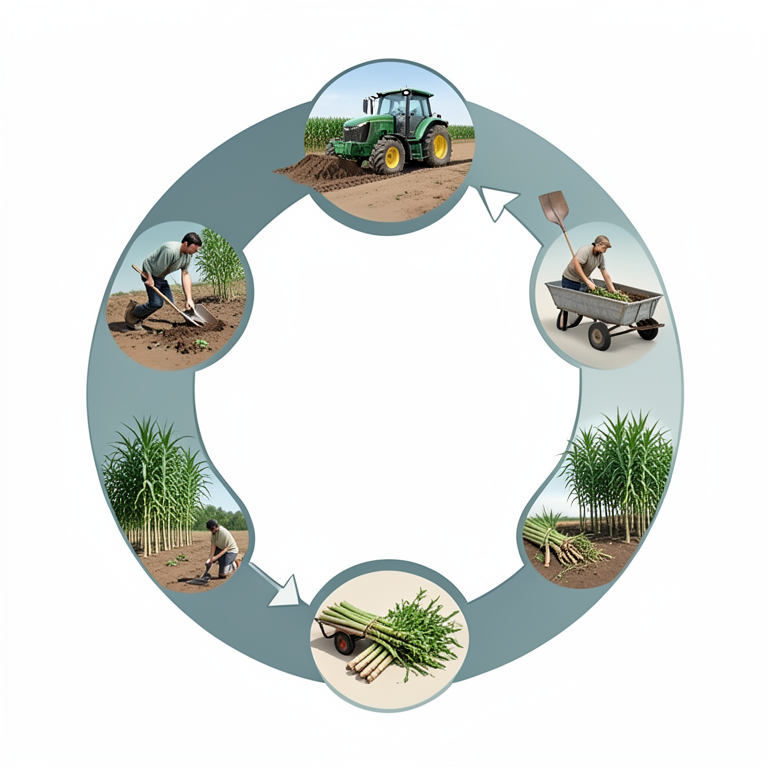
Mechanization Gap in Sugarcane Cycle
AI-generated conceptual illustration (sugarcane plants in an Indian agricultural field). It explains the idea and does not show study data.
View source evidence ↗Introduction
Indian agriculture has historically been characterized by an abundant supply of labour, low wage rates, fragmented and skewed landholdings, and limited livelihood opportunities outside the farm sector. For decades, agriculture functioned as a labour-absorbing sector, particularly for landless labourers and small and marginal farmers who depended heavily on seasonal employment to supplement their meagre farm incomes. However, this traditional equilibrium between labour supply and demand has undergone significant transformation in recent years (Ghosh, 2020) [26] . Accelerated rural-to-urban migration, coupled with the implementation of large-scale public employment programmes such as the Viksit Bharat -Guarantee for Rozgar and Ajeevika Mission (Gramin) Scheme (VB-G RAM G), has substantially altered rural labour markets. While these interventions have improved rural income security, they have simultaneously contributed to rising agricultural wage rates and an acute shortage of farm labour, particularly during peak agricultural operations (Balishter et al., 2021; Rahman et al., 2021) [14,38] . Agriculture in India remains predominantly seasonal, with labour demand concentrated during critical stages such as land preparation, planting, intercultural operations, harvesting, and post-harvest handling. Traditionally, the rural labour force was mobilized from landless households and small and marginal farmers who offered family labour during lean periods (Clarke, 2020; Pauline, 2022) [20,34] . In the current scenario, many agriculturally intensive regions experience severe labour shortages, forcing farmers to depend increasingly on migratory labour from labour-surplus states. This dependence not only raises production costs but also introduces uncertainties related to labour availability, wage volatility, and operational delays (Ghosh, 2020; Anandaraja, 2019) [26,6] . The consequences of labour scarcity are manifested in delayed farm operations, reduced crop productivity, increased cost of cultivation, leasing-out of agricultural land, changes in input use patterns such as compost application, and a growing reliance on family labour (Balishter et al., 2021; Karuntha Dankanni, 2022) [14,3] . These challenges are particularly pronounced during peak agricultural seasons, when timely execution of operations is critical for ensuring yield and quality (Clarke, 2020; Ghosh, 2020) [20,26] .
To cope with labour shortages, farmers have adopted several adaptive strategies, including sourcing labour from outside villages, engaging labour on a contract basis, adopting shared farming arrangements, and increasingly turning towards farm mechanization. Among these, mechanization has emerged as a structurally significant response with longterm implications for agricultural productivity, cost efficiency, and sustainability (Clarke, 2020; Balishter et al., 2021) [20,14] . Farm mechanization is no longer viewed merely as a labour-substituting process, but rather as an integral component of a broader agricultural development strategy aimed at enhancing both land and labour productivity while reducing production risks and drudgery (Rahman et al., 2021; Venkatta Kumar and Sripal, 2021) [38,54] . Farm power forms the backbone of agricultural mechanization and encompasses human labour, draught animals, tractors, engines, agricultural tools, implements, and machinery. In most agricultural production systems, expenditure on farm power, including labour wages, animal power maintenance, fuel consumption, and machinery depreciation, constitutes a substantial share of total production costs, often exceeding the expenditure on other inputs such as seeds and agrochemicals. In many developing countries, including India, insufficient access to appropriate farm power, coupled with low labour productivity and emerging labour scarcity, has constrained agricultural growth and food security (Pauline, 2022; Persis, 2017) [34,35] . Consequently, improving labour productivity through mechanization has gained increasing recognition as a priority for sustainable agricultural development. Contrary to common misconceptions, agricultural mechanization does not inherently aim at replacing labour but seeks to enhance the efficiency and productivity of both land and labour. An effective mechanization strategy must therefore be embedded within a comprehensive agricultural technology framework, which in turn aligns with national agricultural development objectives. The principal purposes of mechanization include increasing labour productivity, enhancing land productivity, and reducing the cost of production. Mechanization facilitates the substitution of human and animal labour with machines, thereby enabling farmers either to cultivate larger areas with the same labour force or to release labour for employment in nonagricultural sectors (Mande and Thombre, 2019; Kanavi, 2020) [33,31] . Simultaneously, mechanization supports higher land productivity by enabling timely operations, improving input-use efficiency, and facilitating practices such as multiple cropping through reduced turnaround time between successive crops. Another important dimension of mechanization lies in its potential to reduce the cost of cultivation, particularly under conditions of rising wage rates and declining availability of draught animals. Although the direct economic benefits of mechanization can be quantified through cost savings, additional advantages such as reduced drudgery, improved occupational health, enhanced operational precision, and reduced production risk are equally significant, albeit difficult to express in monetary terms (Kanavi, 2020; Sailaja, 2021) [31,40] . Furthermore, mechanization plays a crucial role in minimizing post-harvest losses and supporting on-farm processing, thereby contributing to value addition and income enhancement (Clarke 2020; Sharma et al., 2017) [20,36] .
Farm Mechanization in India
The scope has expanded considerably, driven by the need for timeliness, precision, and efficiency in agricultural operations. Timely execution of farm activities has become a decisive factor in achieving optimal yields, particularly under conditions of climatic variability and intensified cropping systems. Operations such as land levelling, sowing, fertilizer application, irrigation, plant protection, harvesting, and threshing demand a high degree of precision to maximize input-use efficiency and minimize losses (Abraham, 1974) [1] . Mechanized equipment enables uniform seed placement, precise fertilizer application, and efficient harvesting, which are difficult to achieve consistently through traditional manual methods. Moreover, mechanization reduces the number of operations required and increases output capacity, thereby enhancing cropping intensity and overall farm productivity. Although concerns have been raised regarding labour displacement due to mechanization, empirical evidence suggests that mechanization primarily leads to a reallocation of labour rather than outright displacement (Gupta, 2016) [28] . Labour released from manual farm operations is often absorbed in allied sectors such as machinery manufacturing, repair and maintenance services, custom hiring centres, and agri-service enterprises. In this manner, mechanization contributes to the diversification of rural livelihoods and supports the commercialization of agriculture. The evolution of farm mechanization in India has been influenced by both indigenous innovations and technological developments from advanced agricultural systems. Early mechanization efforts focused on irrigation pumps, tillage implements, chaff cutters, tractors, and threshers. The advent of high-yielding crop varieties during the Green Revolution, combined with assured irrigation and increased fertilizer use, generated higher farm incomes and accelerated the adoption of mechanized inputs, particularly threshers and tractors. Over time, the demand for advanced machinery such as reapers and combine harvesters has increased, reflecting a gradual transition towards more comprehensive mechanization. In recent years, mechanization has extended beyond large landholders, with small and marginal farmers increasingly adopting selected farm equipment through institutional mechanisms such as custom hiring and machinery rental services. Mechanized operations covering tillage, sowing, irrigation, plant protection, harvesting, and threshing have become more common, contributing to improved farm management efficiency across different farm sizes. Within this broader context, mechanization assumes particular significance in sugarcane cultivation, one of the most important commercial crops in India. Sugarcane plays a pivotal role in the national economy by supporting the sugar industry and allied sectors such as jaggery, ethanol, and khandsari production. India is among the world's leading sugar producers, competing closely with Brazil for the top position, and contributes a substantial share to global and Asian sugar production. Sugarcane cultivation spans millions of hectares across the country, with states such as Uttar Pradesh, Maharashtra, Andhra Pradesh, and Karnataka occupying prominent positions in terms of area and production. Andhra Pradesh occupies a notable position in sugarcane cultivation, ranking among the leading states in terms of area and output. Sugarcane is an important commercial crop in the state, contributing significantly to national sugar production. The crop is cultivated under both planted and ratoon systems and exhibits relatively high productivity levels. Sugarcane farming involves a complex sequence of operations, including land preparation, planting, interculture, earthing up, plant protection, harvesting, transportation, and ratoon management. While land preparation is largely mechanized using conventional tillage implements, several other operations such as planting, interculture, earthing up, and transportation remain only partially mechanized, resulting in high labour dependence. In the context of globalization and increasing competition, there is a pressing need to enhance sugar productivity per unit area, time, and input while conserving soil and water resources. Mechanization offers viable solutions for achieving these objectives by ensuring timeliness, reducing human drudgery, and improving operational efficiency. Given that sugarcane occupies the field for nearly a year and accounts for a substantial proportion of sugar production costs, improving mechanization levels across the crop cycle is critical for the economic viability of the sugar industry. Despite the development of several specialized implements for sugarcane cultivation by research institutions, adoption has remained limited, with mechanization largely confined to traction and basic land preparation operations. Bridging this gap between technological development and field-level adoption is essential for sustaining sugarcane productivity and profitability. Against this backdrop, strengthening farm mechanization, particularly in labourintensive crops such as sugarcane, emerges as a strategic imperative for Indian agriculture. A systematic assessment of mechanization needs, adoption barriers, and potential interventions is crucial for designing policies and technologies that address labour scarcity, reduce production costs, and enhance overall agricultural sustainability .
Concept and Need for Farm Mechanization
Farm mechanization encompasses the use of human labour, draught animals, tractors, engines, agricultural implements, and machinery to perform farm operations efficiently and in a timely manner. Expenditure on farm power, including labour wages, fuel, and machinery depreciation, constitutes a major share of total production costs, often exceeding the cost of seeds and agrochemicals. In developing countries, inadequate access to appropriate farm power and low labour productivity have constrained agricultural growth and food security, thereby underscoring the importance of mechanization (Venkatesan, 2020) [55] . A common misconception is that mechanization displaces labour; however, its primary objective is to enhance productivity and efficiency. An effective mechanization strategy must be aligned with broader agricultural technology and development strategies. The major purposes of farm mechanization include increasing labour productivity, enhancing land productivity, and reducing the cost of cultivation. Mechanization enables farmers to cultivate larger areas with the same labour force or release labour for employment in non-agricultural sectors, while also facilitating timely operations that are critical for higher cropping intensity and yields (Vilas, 2025) [57] .
Scope and Benefits of Farm Mechanization
The scope of farm mechanization in India has expanded significantly due to the growing importance of timeliness, precision, and efficiency in agricultural operations. Timely execution of operations such as land levelling, sowing, fertilizer application, irrigation, plant protection, harvesting, and threshing is crucial for achieving optimal yields (Ramulu, 2023) 56] . Mechanized equipment ensures uniform seed placement, precise input application, and reduced postharvest losses, which are difficult to achieve consistently through manual methods (Trivedi, 1923) [50] . Mechanization also contributes to reducing the cost of cultivation by offsetting rising labour wages and declining availability of draught animals. Additional benefits include reduced drudgery, improved occupational health, enhanced operational safety, and reduced production risk. Although concerns about labour displacement persist, mechanization often results in labour reallocation rather than displacement, with labour absorbed into allied sectors such as machinery manufacturing, repair services, custom hiring centres, and agri-service enterprises (Thurstone and Chave, 2019) [49] .
Status of Farm Mechanization in India
Farm mechanization in India has evolved gradually, influenced by both indigenous innovations and technological developments from advanced agricultural systems. Early mechanization efforts focused on irrigation pumps, tillage equipment, tractors, and threshers Thiyagarajan, 2021) [48] . The Green Revolution of the 1960s, characterized by high-yielding varieties, assured irrigation, and increased fertilizer use, significantly accelerated mechanization adoption by enhancing farm incomes. In recent years, mechanization has extended beyond large landholders, with small and marginal farmers increasingly accessing machinery through hiring services and cooperative models (Ananthan, 2024) [5] . Mechanized operations now cover most stages of crop production, although the degree of mechanization varies widely across regions and crops. Despite this progress, mechanization remains uneven and is often limited to specific operations, particularly land preparation (Vijayalan, 2021) [58] .
Importance of Mechanization in Sugarcane Cultivation
Sugarcane is one of the most important commercial crops in India and plays a pivotal role in the national economy. India is among the world's leading sugar producers, contributing a substantial share to global and Asian sugar production. Sugarcane cultivation spans millions of hectares and supports a wide range of industries, including sugar, jaggery, ethanol, and khandsari. Sugarcane cultivation involves a long and complex crop cycle extending over nearly a year and includes operations such as land preparation, planting, interculture, earthing up, plant protection, harvesting, transportation, and ratoon management. These operations are highly labour-intensive and demand timely execution to ensure productivity and quality (Sathyan, 2017) [9] . Sugarcane accounts for a major share of the cost of sugar production, making efficiency in cultivation practices critical for the economic viability of the sugar industry (Sangeetha, 2019) [41] .
Mechanization Status in Sugarcane Cultivation
Despite the availability of specialized machinery developed by research institutions, mechanization in sugarcane cultivation remains largely confined to traction and land preparation using implements such as cultivators and harrows. Operations such as planting, interculture, earthing up, harvesting, and transportation continue to rely heavily on manual labour or semi-mechanized practices. The adoption of improved planting and harvesting equipment has been limited due to factors such as high initial investment, small and fragmented landholdings, lack of awareness, and inadequate access to custom hiring services. Regional variations exist in mechanization levels, with states such as Uttar Pradesh, Maharashtra, Andhra Pradesh, and Karnataka exhibiting differing degrees of adoption. In Andhra Pradesh, sugarcane is an important commercial crop with relatively high productivity; however, mechanization beyond land preparation remains limited, increasing labour dependence and cost of cultivation (Anuraj, 2023; Saravana, 2025) [8,43] .
Challenges and Constraints in Mechanization Adoption
Major constraints limiting mechanization adoption in sugarcane cultivation include fragmented landholdings, high capital costs, limited availability of crop-specific machinery, lack of skilled operators, and inadequate repair and maintenance infrastructure. Institutional and policy-related challenges, such as limited access to credit, uneven subsidy distribution, and weak extension support, further constrain adoption. Additionally, socio-economic factors, including risk aversion and traditional farming practices, influence farmers' willingness to adopt mechanized technologies (Jayabalan, 2022; Rosaiahyeluri, 2022) [30,39] .
Future Directions and Policy Implications
Strengthening mechanization in sugarcane cultivation requires a holistic approach integrating technological innovation, institutional support, and policy interventions. Promotion of custom hiring centres, development of scaleappropriate machinery for small and marginal farmers, and capacity building through training and extension services are critical (Balasubramani et al., 2025) [13] . Greater emphasis on mechanization of planting, interculture, and harvesting operations can significantly reduce labour dependence and cost of cultivation (Venkatachalam, 2025) [53] . Future research should focus on evaluating the economic, environmental, and social impacts of mechanization in sugarcane-based production systems. Policy frameworks must align mechanization strategies with sustainability goals, ensuring efficient use of resources while enhancing farmer income and resilience.
Conclusion
Farm mechanization has emerged as a critical response to labour scarcity and rising production costs in Indian agriculture. In sugarcane cultivation, where labour demand is high and operations are time-sensitive, mechanization offers substantial potential to improve productivity, reduce drudgery, and enhance cost efficiency. However, mechanization adoption remains uneven and limited to select operations. Addressing technological, institutional, and socio-economic constraints is essential for realizing the full benefits of mechanization. A focused and inclusive mechanization strategy tailored to the specific needs of sugarcane cultivation can contribute significantly to sustainable agricultural development and the long-term viability of the sugar industry in India.
Declaration of Generative AI and AI-assisted technologies
The authors take complete responsibility of the information presented in the manuscript and has not used Artificial Intelligence (AI) tools or bots in drafting the review paper.
References
58 in the original paper- Abrahamkalpan. The Conduct of Inquiry: Methodology for Behavioral Science. Chandler Publication; 1974.
- Agarwal JC. Educational Research on Integration. New Delhi: Arya Book Department; 2016.
- Agila R. Performance of Contract Farming: A Critical Analysis. Unpublished Ph.D. Thesis, AC & RI, TNAU, Coimbatore; 2025.
- Alagesan V. Performance of Tractor Drawn Seed Drill. Journal of Extension Education. 2021;12(3):3190-3234.
- Ananthan L. Socio-Anthropological Analysis and Training Need Assessment of Honey Hunters in Selected Hilly Areas of Tamil Nadu. Unpublished M.Sc. (Ag.) Thesis, TNAU, Coimbatore; 2024.
- Anandaraja N. Farm mechanization in Tamil Nadu: Issues and prospects. Unpublished M.Sc. (Ag.) Thesis, AC & RI, TNAU, Coimbatore; 2019.
- Anitha Mary A. Prospects for Organic Farming among Farmers -A Critical Analysis. Unpublished M.Sc. (Ag.) Thesis, AC & RI, TNAU, Coimbatore; 2016.
- Anuraj MS. Research-Extension-Farmer Linkages in Kottayam District of Kerala: An Analysis with Reference to Rubber Small Holding Sector. Unpublished M.Sc. (Ag.) Thesis, AC & RI, TNAU, Coimbatore; 2023.
- Archana Sathyan R. Impact of Kudumbashree Programme on Gender Empowerment. Unpublished M.Sc. (Ag.) Thesis, AC & RI, TNAU, Coimbatore; 2017.
- Arulu Murugan R. Knowledge and Adoption of PostHarvest Technologies of Turmeric Growers. Unpublished M.Sc. (Ag.) Thesis, AC & RI, TNAU, Coimbatore; 2020.
- Arunachalam R. Indigenous Practice for Natural Resource Management. Ph.D. Thesis, AC & RI, TNAU, Coimbatore; 2023.
- Arunkumar K. Retrospects and Prospects of Commercial Cassava Cultivation. Unpublished M.Sc. (Ag.) Thesis, AC & RI, TNAU, Coimbatore; 2022.
- Balasubramani N, Swathilekshmi PS, Chandrakandan K. A Study on Yield Gap Analysis in Paddy in Erode District of Tamil Nadu. Asian Journal of Extension Education. 2025;24(1&2):44-52.
- Balishter J, Gupta VK, Singh R. Impact of Mechanization on Employment and Farm Productivity. Indian Journal of Agricultural Economics. 2021;32(3):484-489.
- Balarubini M. Impact of National Horticultural Mission Training Programme in Cashew Cultivation. Unpublished M.Sc. (Ag.) Thesis, AC & RI, TNAU, Madurai; 2020.
- Banumathy S. Technological Gaps and Adoption of Improved Rainfed Practices in Rice. Unpublished M.Sc. (Ag.) Thesis, AC & RI, TNAU, Madurai; 2023.
- Bhuvaneswari B. Role of Tribal Women in the Conservation of Agrobiodiversity: A Multidimensional Analysis. Unpublished Ph.D. Thesis, TNAU, Coimbatore; 2025.
- Bloom M, Eaglhalt E, Farst E, Hill W, Karathwool PR. Taxonomy of Educational Objectives: Cognitive Domain. Longmans Green and Company, New York; 1995.
- Chandra R, Shiraj. Effectiveness of Eco-friendly Cultivation Practices in Paddy: An Analysis. Unpublished M.Sc. (Ag.) Thesis, AC & RI, TNAU, Madurai; 2021.
- Clarke LJ. Strategies for Agricultural Mechanization Development. Agricultural Support System Division, FAO, Rome, Italy; 2020.
- Deepa MK. Technological Gaps in Adoption of Ecofriendly Technologies of Vegetables. Unpublished M.Sc. (Ag.) Thesis, AC & RI, TNAU, Coimbatore; 2023.
- Deepa Barathi M. Adoption and Marketing Behaviour of Senna Growers. Unpublished M.Sc. (Ag.) Thesis, AC & RI, TNAU, Madurai; 2023.
- Dhanasekaran B. Adoption and Marketing Behaviour of Maize Farmers in Salem District. Unpublished M.Sc. (Ag.) Thesis, Annamalai University; 2017.
- Din MJU. Socio-Economic Problems of Small Farmers in Adopting New Agricultural Technology. Sarhad Journal of Agriculture. 2021;27(2):299-304.
- Flora Lavanya V. Sustainable Water Management through Drip Irrigation in Madurai District. Unpublished M.Sc. (Ag.) Thesis, AC & RI, TNAU, Madurai; 2017.
- Ghosh BK. Determinants of Farm Mechanization in Modern Agriculture. Indian Journal of Agricultural Research. 2020;5(12):1107-1115.
- Ghosh SM. Farm Mechanization in Sugarcane, Cotton and Groundnut Crops: An Analysis. Unpublished M.Sc. (Ag.) Thesis, AC & RI, TNAU, Coimbatore; 2024.
- Gupta P. Use of Improved Farm Implements by Rural Women. Indian Journal of Extension Education. 2016;32(2):689-691.
- Gurumurthy P, Singa Rao M, Bhaskar Reddy B, N Reddy BN. Optimizing Tillage and Irrigation for Sunflower Cultivation. HELIA. 2018;31(49):91-102.
- Jayabalan KR. Bio-input Utilization of Sugarcane Growers. Unpublished M.Sc. (Ag.) Thesis, AC & RI, TNAU, Madurai; 2022.
- Kanavi VP. Knowledge and Adoption Behaviour of Sugarcane Growers in Belgaum District of Karnataka. M.Sc. (Ag.) Thesis, UAS, Dharwad; 2020.
- Karuntha Dankanni T. Impact of Farm Mechanization in Rice-Based Irrigated Agro-Ecosystem. Unpublished M.Sc. (Ag.) Thesis, AC & RI, TNAU, Coimbatore; 2022.
- Mande JV, Thombre BM. Adoption of Cultivation Practices by Sugarcane Growers. Agricultural Science Digest. 2019;29(3):178-181.
- Pauline AA. Farm Mechanization in Paddy Cultivation in Madurai District of Tamil Nadu. Unpublished M.Sc. (Ag.) Thesis, AC & RI, TNAU, Madurai; 2022.
- Persis V. Retrospects and Prospects of Farm Mechanization in Tribal Agriculture. Unpublished M.Sc. (Ag.) Thesis, AC & RI, TNAU, Coimbatore; 2017.
- Sharma MP, Singh AK, Singh J. Mechanization of Sugarcane Farming in India: Relevant Issues. Invited Lead Paper, Institution of Engineers (India), Karnataka State Centre, Bangalore; 2017.
- Shanthy RT, Muthusamy GR. Wider Row Spacing in Sugarcane: A Socio-Economic Performance Analysis. Sugar Tech. 2022;4(2):126-133.
- Rahman MS, MAM Miah, Moniruzzaman, Hossain S. Impact of Farm Mechanization on Labour Use for Wheat Cultivation. Journal of Animal & Plant Sciences. 2021;21(3):589-594.
- Rosaiahyeluri. An Analysis of Knowledge Gap on IPM Technologies of Cotton -A System Approach. Unpublished M.Sc. (Ag.) Thesis, AC & RI, TNAU, Coimbatore; 2022.
- Sailaja V. A Critical Analysis of Oil Palm Growers in Nellore District of Andhra Pradesh. Unpublished Topical Research, TNAU, Coimbatore; 2021.
- Sangeetha S. Factors Influencing the Adoption of Precision Farming Technologies in Tomato Cultivation. Unpublished M.Sc. (Ag.) Thesis, AC & RI, TNAU, Coimbatore; 2019.
- Santhi S. System of Rice Intensification (SRI) among Rice Farmers of Tirunelveli District. Unpublished M.Sc. (Ag.) Thesis, Annamalai University, Annamalai Nagar; 2026.
- Saravana Priya M. Environmental Consciousness among Vegetable Growers -A Critical Analysis. Unpublished M.Sc. (Ag.) Thesis, AC & RI, TNAU, Coimbatore; 2025.
- Sathish A. Prospects of Integrated Farming System in Watershed Areas of Namakkal District. Unpublished M.Sc. (Ag.) Thesis, AC & RI, TNAU, Coimbatore; 2023.
- Sathiyakala PS, Chandrakandan K, Balasubramani N. Yield Gap Analysis among Rice Growers in North Eastern Zone of Tamil Nadu. Agricultural Situation in India. 2016;729-733.
- Unpublished M.Sc. (Ag.) Thesis, AC & RI, TNAU, Coimbatore; 2024.
- Thangaraja. Impact of Precision Farming in Dharmapuri District. Ph.D. Topical Research, AC & RI, TNAU, Coimbatore; 2018.
- Thiyagarajan M. Impact of System of Rice Intensification (SRI) among Paddy Farmers of Coimbatore District. Unpublished M.Sc. (Ag.) Thesis, AC & RI, TNAU, Coimbatore; 2021.
- Thurstone LL, Chave EJ. The Measurement of Attitude. University of Chicago Press, Chicago; 2019.
- Trivedi G. Measurement and Analysis of SocioEconomic Status of Rural Families. Unpublished Ph.D. Thesis, IARI, New Delhi; 1923.
- Vanetha KP. Utilization Behaviour of Farm Equipment in Commercial Crops. Unpublished Topical Research, AC & RI, TNAU, Coimbatore; 2016.
- Vengala Mani K. Farmers' Perception towards Private and Public Agricultural Extension Services in Madurai District. Unpublished M.Sc. (Ag.) Thesis, AC & RI, Madurai; 2019.
- Venkatachalam G. Extension Strategies to Popularize Water Management Practices in Delta Areas. Unpublished M.Sc. (Ag.) Thesis, AC & RI, TNAU, Coimbatore; 2025.
- Venkatta Kumar R, Sripal KB. Impact of Farm Mechanization on Farm Women in Rice Farming System. Journal of Extension Education. 2021;12(1).
- Unpublished M.Sc. (Ag.) Thesis, TNAU, Coimbatore; 2020.
- Venkata Ramulu. Knowledge Level, Adoption and Marketing Behaviour of Chilli Growers in Guntur District of Andhra Pradesh. M.Sc. (Ag.) Thesis, UAS, Dharwad; 2023.
- Vilas. Integrated Management Practices Adopted by Paddy Farmers. Unpublished M.Sc. (Ag.) Thesis, AC & RI, TNAU, Madurai; 2025.
- Vijayalan. Awareness, Knowledge and Adoption of Eco-Friendly Agricultural Practices in Rice. Unpublished M.Sc. (Ag.) Thesis, AC & RI, TNAU, Coimbatore; 2021.