
Research article · 2026 · Full text
International Journal of Agriculture and NutritionA systematic review of the effects of fly ash on soil properties, crop productivity and environmental risks in agriculture
Volume 8(3) · Pages 04–08 · DOI: 10.33545/26646064.2026.v8.i3a.350 ↗
Research areasCoal and Its By-productsRecycling and utilization of industrial and municipal waste in materials productionClay minerals and soil interactions
Abstract
Author-writtenCoal-fired thermal power plants remain the primary source of electricity generation in many areas of the developing world, with the resulting fly ash (FA) being one of the largest components of solid waste generated by these plants. Fly ash contains high levels of heavy metals and occasionally contains radioactive elements, making it difficult to dispose of safely and posing questions about environmental pollution, bioaccumulation, and human health risk. This study will examine the risks and potential agronomic benefits of fly ash in order to provide information that can help promote an appropriate balance between environmental safety and the potential for sustainable agricultural applications.
Summary
Source-checkedPlain-language reading of the full paper, prepared with AI and checked against the text. Each point links to the authors' own words.
Why it matters
- Coal-fired thermal power plants are a primary electricity source in developing regions, producing fly ash as a major component of their solid waste. View evidence ↗
- The presence of heavy metals and occasional radioactive elements in fly ash makes safe disposal difficult and raises concerns regarding human health and environmental pollution. View evidence ↗
- In India, for the 2022-2023 period, only slightly more than 60% of the 140 million tons of generated fly ash was successfully utilized. View evidence ↗
The question
- The study aims to examine the risks and agronomic benefits of fly ash to find a balance between environmental safety and sustainable agricultural use. View evidence ↗
What they did
- The authors conducted a systematic review focusing on the agricultural potential, associated hazards, and sustainable management of fly ash. View evidence ↗
What they found
- Fly ash typically consists of silicon dioxide (20-60%), aluminum oxide (5-35%), iron oxide (4-40%), and calcium oxide (1-40%), with other minor oxides making up less than 10%. View evidence ↗
- Adding fly ash up to 40% increased soil water retention from 39% to 55% and soil porosity from 43% to 53%. View evidence ↗
- Wheat growth and grain production were enhanced by adding 20% fly ash to clayey soil and 30% to sandy soil. View evidence ↗
- For mung beans, a 10% application rate of fly ash was found to be the superior dose for increasing yield across three different types. View evidence ↗
- The yield of the IR-64 rice variety can be increased using 7.5% fly ash. View evidence ↗
- Arsenic absorption increased with higher fly ash rates, with basil and zucchini exceeding hazardous thresholds by 7 ppm. View evidence ↗
- Applying 60%, 80%, and 100% fly ash treatments led to significant increases in the concentration of Cu, Fe, Mn, Ni, and Zn in Zea mays compared to the control. View evidence ↗
- Lead (Pb) levels in edible plant parts exceeded USEPA carcinogenic risk criteria and allowable limits, posing risks to food safety and human health. View evidence ↗
What it means
- The authors conclude that low application rates of fly ash can increase crop yields, but over-application harms soil quality and crop production. View evidence ↗
- The authors state that future research needs to establish regionally based application guidelines and implement monitoring programs for soil micronutrients and trace metals. View evidence ↗
Visual summary
1 visualsIllustrations explain the paper; they do not show study data.
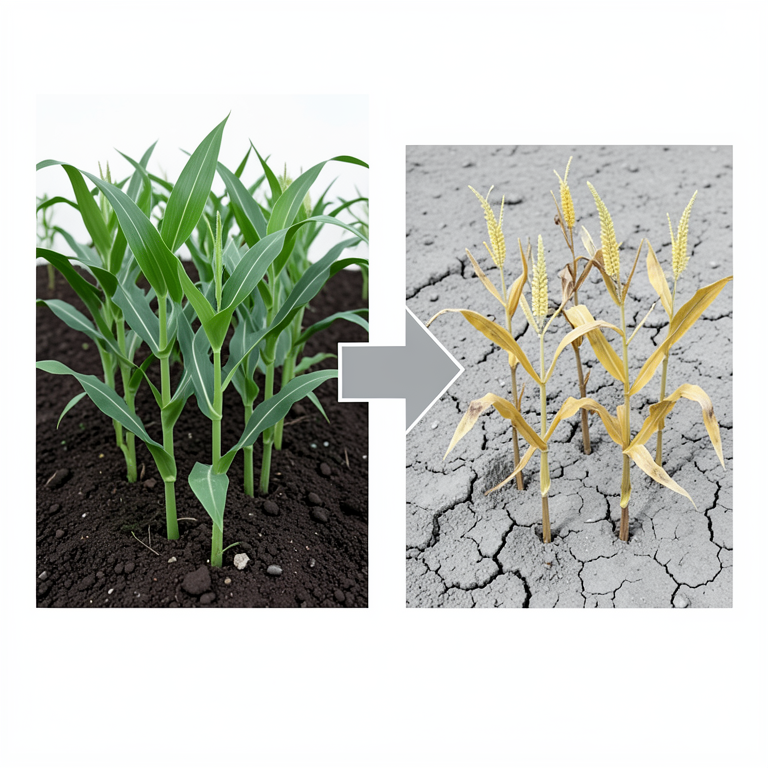
Dose-Response Relationship of Fly Ash
AI-generated conceptual illustration (maize plants in soil). It explains the idea and does not show study data.
View source evidence ↗Introduction
Worldwide, coal is widely utilized as the main energy source for the production of electricity. FA is created as a byproduct of burning coal to generate energy in the thermal power plant (Basu et al., 2009; Patil et al., Kuznia, 2025) [6,35] . More than 70% of India's electricity is produced by thermal power plants, which also produce significant amounts of FA. According to national figures for 2022-2023, only over 60% of the 140 million tons of FA generated were used successfully (Central Electricity Authority, 2023) [10] . From a circular economy standpoint, it is possible to utilize coal fly ash as a raw material for later use. Despite its potential to improve soil structure and increase soil organic matter, the mining of coal fly ash has been documented to cause several environmental harms. For instance, it has been demonstrated that an excess of coal fly ash decreases the soil's capacity to hold onto water and retain nutrients (Tripathi et al., 2020) [14] . By-products of the thermal energy production, such as fly ash (20%) and bottom ash (80%), are unavoidably produced and contain heavy metals, chlorides, and organic compounds (Chen et al. 2017, Dontriros et al. 2020) [13,16] . Since bottom ash is believed to be less hazardous and difficult to work with than fly ash, it can be utilized as a construction material. The emission of fly ash with heavy metals is immediately concerning since it might create major health problems (Atanes et al. 2019) [4] . Fly ash is finely divided debris that is created when coal burns and is transported by the fuel gases of boilers that run on pulverized coal, claim Murugan and Vijayarangam (2013) [30] . Its present disposal method, which necessitated the use of vast areas of land as disposal sites, led to a number of environmental problems, including deteriorating groundwater quality, decreased soil productivity, impacts on the health of people and animals, and disruptions to the proper growth of higher plants (Tiwari et al. 2019) [46] . Fly ash stays above ground when transported by the wind or by vehicles to the disposal site because its particle sizes vary from 0.01 to 100 micrometers (Bhatt et al. 2019) [7] . Previously seen as a waste, coal fly ash is now attracting the attention of experts worldwide. The most troublesome issue of the century was how to dispose of it. Environmentalists and scientists are looking at every avenue to lessen the burden of coal fly ash, a waste byproduct produced during coal burning. Coal fly ash makes up 70-75% of all coal combustion byproducts on Earth; hence efforts were made to find every potential application for this residue. Fly ash is recommended for use in road building, as a liming material, and in conjunction with cement; nevertheless, during morphological examination and property investigation, it was shown to have a vast ability to alter the physical characteristics of soil. With its distinct structure, coal fly ash has been discovered to include a variety of macro and micronutrients that can alter the texture and other physical characteristics of soil over time. Fly ash may be utilized in agriculture as a natural manure source that can improve the development characteristics of plants because it also includes vital nutrients in its composition (Raj and Mohan., 2016) [38] . Rhizobium sp. populations benefited from the use of fly ash as a soil amendment, and the establishment of a number of soil-borne micropathogens was shown to be inhibited (Chandrakar et al., 2015) [12] . According to recent studies, coal fly ash can improve soil quality, enrich nutrients, and reduce deficiencies in the soil. Carbonated, sulphates, bicarbonates, K, P, B, Ca, Mg, Zn, and carbonated are all increased when coal fly ash is added (Yunusa et al. 2006) [49] . Fly ash is a possible fertilizer since it gives crops essential nutrients and minerals (Tiwari et al. 2016) [47] . The chemical composition, pH, and electrical conductivity of soil can all be altered by fly ash (Tejasvi 2017) [44] . This review looks at fly ash's potential for agriculture, related hazards, and sustainable management techniques.
Properties of fly ash
Fly ash's physico-chemical characteristics are influenced by the composition of the source coal, the furnace's combustion conditions, the ash's age, particle size, and collector configuration (Basu et al., 2009) [6] . Typically, fly ash is a silty loam with particles less than 0.01 mm in diameter. One of the key physical characteristics for qualitatively assessing the lime concentration is its color. Higher levels of organic matter are suggested by darker colors, whereas higher levels of calcium oxide are indicated by lighter colors. Coal ashes have a specific gravity of about 2.0, however it can range widely from 1.6 to 3.1 (McLaren and Digioia, 1987) [27] . Fly ash (FA) has a high surface area and a light texture because of its porous particles and other carbonaceous materials. FA particles can be large or small and spherical (Natusch & Wallace, 1974) [31] , resulting in a variety of fly ash types with a wide range of characteristics, including specific weight (2.1-2.6 g cm-1), bulk density (1-1.8 g cm-1), moisture retention (6.1%-13.4%), and water retention (49%-66%) (Abhishek et al., 2025; Chakraborty et al., 2025) [1,11] . The type of coal burned and the combustion process have a significant impact on the chemical composition of FA. The main constituents are usually silicon dioxide (20-60%), aluminum oxide (5-35%), and iron oxide (4-40%), with varying amounts of calcium oxide (1-40%) and minor oxides like magnesium, potassium, and sodium (usually less than 10%). In accordance with the mineral phases available and their buffering ability, FA can form leachates with pH values ranging from acidic to highly alkaline (about 4-12) when it comes into contact with water. The composition and characteristics of fly ash are identical to those of coal. FA contains every element found in soil, with the exception of carbon and nitrogen (Kumar et al., 2000) [25] . Higher aluminum concentration is known to be organically hazardous, whereas FA contains aluminum in the form of an aluminosilicate structure, which is far less toxic (Page et al., 1979) [32] . Coal ash contains elements including Zn, Mn, Cu, Mo, and Se, as well as phosphorus (P) and boron (B), which are among the nutrients that many plants require.
Role of fly ash in soil management 3.1 Effect of fly ash on soil physico chemical properties
The influence of FA on soil has already been the subject of several studies. Because of the tiny particle size, alkalinity, and mineral makeup of the ash, applying FA to soil can cause substantial changes in its physical and chemical environment. The pH of the soil is one of the most noticeable consequences. Following an alkaline fly ash treatment, it was demonstrated that the rapid release of Na, Ca, Al, and OH ions from fly ash raised the pH of the soil (Alterary and Marei 2021) [3] . According to Misra et al. (1991) [28] , fly ash may be used as a liming material to balance the acidity of the soil and supply nutrients that plants can use. It has been demonstrated by researchers that applying fly ash as a liming agent to acidic soils may enhance soil characteristics and boost crop productivity (Mishra and Behera 1991) [29] . When fly ash is applied, the soil's electrical conductivity and metal concentration both rise. According to reports, permeability and ability to hold water were increased by gradually increasing the fly-ash content in regular field soil (0, 10, 20, up to 100% v/v) (Kumar, A et al. 2003) [24] . Plant growth benefits from this increase in water-holding capacity, particularly in rain-fed agriculture. Fly ash amendments up to 40% also improved soil ability to retain water from 39 to 55% and the porosity of soil from 43 to 53% (Sippola et al. 2003) [42] . The incorporation of untreated FA to sandy soils significantly reduced microbial respiration, numbers, size, and enzyme activity as well as soil nitrogen cycle activities including nitrification and N mineralization, according to a number of short-term laboratory incubation experiments. There is relatively little information available about how fly ash amendments affect the biological characteristics of soil (Furlani et al. 2011) [17] . The high concentrations of trace elements and soluble salts in the unweathered fly ash contributed to these negative consequences. But when fly ash weathered during natural leaching, it was discovered that the quantity of water-soluble salts and other trace elements decreased, lessening the negative effects over time. The physico-chemical characteristics of fly ash surrounding the Badarpur thermal power plant were reported by Qadir and Siddiqui (2014) [36] . They discovered that the polluted locations had greater levels of silt, sand, pH, electrical conductivity, and metal concentration than the uncontaminated sites. When soluble salts boost electrical conductivity to suppressive levels or when large application rates raise pH over the ideal range for native microbial communities, microbial activity in FA-amended soils frequently exhibits an initial drop. However, with better nutrient availability (e.g., Mo, P, B, and Ca) and improved moisture conditions, microbial biomass and activity of enzymes may recover or even exceed baseline levels when the soil-ash system equilibrates.
Effect of fly ash on crop production
Thick layers of fly ash limit the movement of water and reduce the amount of total light that is available to support photosynthesis and ultimately to reduce photosynthesis at all. Due to the ability of fly-ash-weighted leaves to retain heat better than leaves that do not contain fly ash, the temperature of such leaves increases, thus allowing them to transpire faster than normal leaves. Different plant species' shoots were carrying out distinct tasks that were impacted by fly ash particles above ground. Changes to soil characteristics as a result of the introduction of fly ash can have an immediate or mediated impact on microbial activity and root growth (Parab et al., 2015) [34] . The presence of large amounts of calcium, phosphorus, magnesium, potassium and sulphur in fly ash will result in the enhancement of nutrient uptake by the soil and thus increase the growth of plants (Kalra et al., 1997) [20] , which would subsequently boost crop yields (Basu et al., 2007) [5] . The influence of an application rate of fly ash at 100 t ha-1 on the uptake of macronutrients by crops such as wheat, maize and eggplant when grown in rotation was evaluated by Tripathi et al. (2009) [48] . Greater levels of macronutrient uptake (K, S, N, Ca, P and Mg) from plants to the soil occurred after the application of fly ash. Additionally, they demonstrated that the application of fly ash improved the soil pool of micronutrients that plants might use, such as Mn, Zn, Fe, and Ni, while also modestly increasing the soil pool of certain harmful elements, such as Pb, Cr, Cu, Se, and Mo, especially for the second and third harvests. According to Dhindsa et al. (2016) [15] , adding 20% fly ash to clayey soil and 30% to sandy soil enhanced wheat germination, tillering, plant height, life cycle, and grain production. According to Thakare et al. (2013) [45] , fly ash acts as a great soil modifier, conditioner, and source of vital nutrients for noticeably enhancing the texture and fertility with a notable increase in crop yield. They also found that fly ash at concentrations of 5 to 10% in soil blending was helpful for the development and yield of chilli plants. Singh and Agrawal (2010) [40] carried out an experiment to investigate the effects of applying fly ash on the yield of three different types of mung beans (Vigna radiata) on soil that had been improved with varying amounts of fly ash (0, 5, 10, and 20% w/w, respectively). All three of the types evaluated in this experiment showed favorable responses at a 10% application rate. Consequently, it is determined that a lower fly ash treatment dose is a superior choice for increasing the yield of various vegetable varieties. Furthermore, the climate and soil texture at that location also affect vegetable output. Utilizing fly ash increased the dry mass, root length, and shoot length of Vigna radiata and Sesbania cannabina (Gupta and Sinha, 2009), as well as the growth and production of cucumbers (Ajaz and Tiyagi, 2003) [2] . Compared to plants cultivated without fly ash, eggplant plants planted in soil modified with 25% fly ash showed a considerable increase in growth and photosynthetic pigments (Khan and Siddiqui, 2017a, 2017b) [21,22] . Compared to plants planted with 20% sand mix soil and loam soil, carrot plants grown in 20% fly ash adjusted soil exhibited better growth, photosynthetic pigments, and acquired larger amounts of proline. The use of 7.5% fly ash can boost the yield of IR-64 variety rice, according to the findings of a research by Purnamasari et al. (2024) [50] that compared several ameliorants, including fly ash applied to peat soil in polybag planting containers. The development of maize and rice was enhanced by soil amended with 60% fly ash, which may also be utilized as a soil-improving resource for plant growth, resulting in the sustainable use of solid waste product (Panda et al., 2015) [35] .
Influence of fly ash on metal accumulation in plants
Metal accumulation in plants varies by species as well as within a plant's different components. It was observed that there were significant differences in the way that basil, tomato, zucchini, and sunflower plants absorbed certain metals when they were potted in soil that had been improved with fly ash at rates of 5%, 10%, and 20% (Brake et al, 2004) [8] . The absorption rate of As rose in tandem with the fly ash amelioration rates; it was found that the levels of arsenic in basil and zucchini exceeded the hazardous threshold by 7 parts per million. Cafer et al. (2015) [9] evaluated the effects of fly ashes on soil and maize plants. He came to the conclusion that treatments with fly ash also raised the amounts of Na, B, P, S, Ca, Mg, Al, Fe, Cu, Mo, and Se in plant roots. Doses of fly ash treatment were closely correlated with rising element concentrations. Referring to research conducted by Rafiullah et al. (2022) [37] , Zea mays exhibited increased uptake of heavy metals with increasing treatment of coal fly ash. Significant increases in concentration of Cu, Fe, Mn, Ni, and Zn compared to control were observed after applying 60%, 80%, and 100% fly ash treatments. Accumulation of Cd and Pb also increased significantly, indicating that higher concentrations of fly ash improved metal uptake. The amount of fly ash used has been shown to negatively affect the quality of both soil and rice by increasing the amount of heavy metals available to plants (Singh et al., 2016) [41] . While the enzyme systems that provide protection against oxidative stress had higher enzyme activity with the increased application of fly ash, this was not enough to overcome the oxidative stress to rice plants. The buildup of heavy metals in rice indicates a significant risk to food safety and human consumption. According to Rawat et al. (2019) [39] , native weed species exhibit a notable buildup of heavy metals originating from fly ash, with different plant species exhibiting distinct accumulation patterns. Generally speaking, metal accumulation was higher in roots than in shoots, while certain species had higher accumulation in shoots. Metal transfer from soil to roots and then to shoots was confirmed by translocation and bioaccumulation parameters. Tabassum and Singh (2025) [43] assessed the phytoextraction capability of red amaranth, cowpea, moth bean, and malabar spinach and found that, with the exception of Pb, the majority of heavy metals stayed under WHO/FAO limits. Elevated Pb contents in edible plant parts were beyond USEPA carcinogenic risk criteria and allowable limits, suggesting possible issues with human health and food safety. The findings of Jibrin (2025) [19] showed that heavy metal contamination levels were highest in plants (spinach and moringa) relative to soils and water samples in the study area, and that heavy metal contamination from the ash produced by coal burning processes at a local cement manufacturer played a major role in contaminating crops and water, thus posing a public health and environmental concern.
Conclusion
When fly ash treatment rates are low, higher crop and plant yield will occur due to soil texture being a significant factor affecting agricultural production. However, if fly ash is over-applied, it can create problems for crop production, soil quality, and soil characteristics. Given that metal toxicity is one of the most significant barriers to successfully using fly ash on agricultural land, possible safe usage of fly ash to prevent land and/or watershed contamination exists when fly ash application is conducted under regulated conditions. Regulated fly ash application can reduce the potential for soil erosion and soil degradation, while also providing assistance to maintain healthy ecosystems. To provide the best prospects for success in applying fly ash in agricultural production, future research should focus on establishing fly ash application guidelines that are regionally based and include a monitoring program to assess the levels of micronutrients and trace metals in soils over time. These activities will aid in the sustainable integration of fly ash into agricultural production systems and will assist in balancing the needs of waste management with the needs of preserving soil health, environmental quality, and food security.
References
49 in the original paper- Abhishek S, Ghosh A, Singh AA, Pandey B. Identification of metal-tolerant herbaceous species for phytostabilization and ecological restoration of fly ash dumpsites. Physiologia Plantarum and Molecular Biology of Plants. 2025;31:1719-1738. doi:10.1007/s12298-025-01612-3.
- Ajaz S, Tiyagi S. Effect of different concentrations of fly ash on the growth of cucumber plant, Cucumis sativus. Archives of Agronomy and Soil Science. 2003;49:457-461.
- Alterary SS, Marei NH. Fly ash properties, characterization and applications: A review. Journal of King Saud University Science. 2021;33(6):101536. https://doi.org/10.1016/j.jksus.2021.101536.
- Atanes E, Cuesta-García B, Nieto-Márquez A, Fernández-Martínez F. A mixed separationimmobilization method for soluble salts removal and stabilization of heavy metals in municipal solid waste incineration fly ash. Journal of Environmental Management. 2019;240:359-367. https://doi.org/10.1016/j.jenvman.2019.03.122.
- Basu M, Bhadoria PBS, Mahapatra SC. Role of soil amendments in improving groundnut productivity of acid lateritic soil. International Journal of Agricultural Research. 2007;2:87-91. doi:10.3923/ijar.2007.87.91.
- Basu M, Pande M, Bhadoria PBS, Mahapatra SC. Potential fly ash utilization in agriculture: A global review. Progress in Natural Science. 2009;19:11731186. doi:10.1016/j.pnsc.2008.12.006.
- Bhatt A, Priyadarshini S, Mohanakrishnan AA, Abri A, Sattler M, Techapaphawit S. Physical, chemical and geotechnical properties of coal fly ash: A global review. Case Studies in Construction Materials. 2019;11: e00263.
- Brake SS, Jensen RR, Mattox JM. Effects of coal fly ash amended soils on trace element uptake in plants. Environmental Geology. 2004;45:680-689.
- Türkmen C, Müftüoğlu UM, Uysal İ. Effect of fly ash applications on heavy metal contents of soil and corn plant (Zea mays L.). Turkish Journal of Agricultural and Natural Sciences. 2015;2(1):92-98.
- Central Electricity Authority. Report on fly ash generation at coal/lignite based thermal power stations and its utilization in the country for the 1st half of the year 2022-2023. New Delhi: Central Pollution Control Board; 2023.
- Chakraborty P, Singh S, Wood DA, Hazra B, Kumar P, Kumar PV. Spatio-temporal variation, integrated quantification of source attribution, and health risk assessment of metal trace element contamination in coal mining soils of the eastern Raniganj basin, India. Journal of Environmental Chemical Engineering. 2025;13:116567. doi:10.1016/j.jece.2025.116567.
- Chandrakar T, Jena D, Dash AK, Jena SN, Panda N, Monica M. Soil microbial activity as influenced by application of fly ash and soil amendments to maize crop in acidic alfisols. International Research Journal of Agricultural Science and Soil Science. 2015;5(4):120128.
- Chen W, Kirkelund GM, Jensen PE, Ottosen LM. Comparison of different MSWI fly ash treatment processes on the thermal behavior of As, Cr, Pb and Zn in the ash. Waste Management. 2017;68:240-251.
- Tripathi DM, Singh D, Tripathi S. Influence of coal flyash on soil properties and productivity of chickpea crop in semi-arid region of Bundelkhand. Current World Environment. 2020;15(1):127-136. doi:10.12944/cwe.15.1.16.
- Dhindsa HS, Sharma RD, Kumar R. Role of fly ash in improving soil physical properties and yield of wheat (Triticum aestivum). Agricultural Science Digest. 2016;36(2):97-101.
- Dontriros S, Likitlersuang S, Janjaroen D. Mechanisms of chloride and sulfate removal from municipal solid waste incineration fly ash: Effect of acid-base solutions. Waste Management. 2020;101:44-53. https://doi.org/10.1016/j.wasman.2019.09.033.
- Furlani E, Tonello G, Maschio S, Aneggi E, Minichelli D, Bruckner S, Lucchini E. Sintering and characterisation of ceramics containing paper sludge, glass cullet and different types of clayey materials. Ceramics International. 2011;37:1293-1299.
- Gupta AK, Sinha S. Growth and metal accumulation response of Vigna radiata L. var. PDM-54 grown on fly ash-amended soil: effect on dietary intake. Environmental Geochemistry and Health. 2009;31:463473.
- Jibrin NA. Assessment of the environmental impact of fly ash on the concentration of heavy metals around Cement Company of Northern Nigeria. Lafia Journal of Scientific and Industrial Research. 2025;3(1):7-12.
- Kalra N, Joshi HC, Chaudhary A, Chaudhary R, Sharma SK. Impact of fly ash incorporation in soil on germination of crops. Bioresource Technology. 1997;61:39-41.
- Khan M, Siddiqui ZA. Interactions of Meloidogyne incognita, Ralstonia solanacearum and Phomopsis vexans on eggplant in sand mix and fly ash mix soils. Scientia Horticulturae. 2017;225:177-184.
- Kinasti RMA, Notodisurzo DN. Utilization of coal burning waste (bottom ash) at the Suralaya power plant as a planting media in an effort to reduce environmental pollution. Jurnal Kajian Ilmu dan Teknologi. 2017;6(2):129-138.
- Kumar A, Singhal BD, Joshi JP, Raj JPN. Impact of pulp and paper mill effluent on lysimetric soil and vegetation used for land treatment. Journal of Scientific and Industrial Research. 2003;62:883-891.
- Kumar V, Mathur M, Sharma PK. Fly ash management: Vision for the new millennium. New Delhi: FAM and CBIP; 2000.
- Kuznia M. A review of coal fly ash utilization: environmental, energy and material assessment. Energies. 2025;18:52. doi:10.3390/en18010052.
- McLaren RJ, Digioia AM. The typical engineering properties of fly ash. In: Proceedings of Geotechnical Practice for Waste Disposal. New York: American Society of Civil Engineers; 1987. p. 683-697.
- Mishra RN, Behera PK. The effect of paper industry effluent on growth, pigment, carbohydrate and protein of rice seedlings. Environmental Pollution. 1991;72:159-168.
- Mishra RN, Panigrahy GN, Patra KS. Studies on physiotoxicity of paper mill effluent on Oryza sativa L. var. IR-36. Bionature. 1991;11:99-101.
- Murugan S, Vijayarangam M. Effect of fly ash in agricultural field on soil properties and crop productivity: A review. International Journal of Engineering Research and Technology. 2013;2(12):5460.
- Natusch DFS, Wallace JR. Urban aerosol toxicity: the influence of particle size. Science. 1974;186:695-699.
- Page AL, Elseewi AA, Straughan IR. Physical and chemical properties fly ash from coal-fired power plants with reference to environmental impacts. Residue Reviews. 1979;71:83-120.
- Panda SS, Mishra LP, Muduli SD, Nayak BD, Dha NK. The effect of fly ash on vegetative growth and photosynthetic pigment concentrations of rice and maize. Biologia. 2015;61(2):94-100.
- Parab N, Sinha S, Mishra S. Coal fly ash amendment in acidic field: Effect on soil microbial activity and onion yield. Applied Soil Ecology. 2015;96:211-216. https://doi.org/10.1016/j.apsoil.2015.08.007.
- Patil SN, Sanap SR, Wagh MA, Patil NP, Bhagmare HM, Solanki PV, et al. Utilization of coal fly ash as a fertilizer for cash crop plants and check its effect on the growth of methi, spinach and dhania. Journal of Environmental Science. 2013;6:23-25.
- Qadir SU, Siddiqui AW. Effect of fly ash on some biochemical parameters of selected plants growing at dumping site of Badarpur thermal power plant in Delhi. International Journal of Research in Applied, Natural and Social Sciences. 2014.
- Rafiullah, Khan S, Kakar A, Gulshan A, Hussain F, Shah S, et al. Effect of coal fly ash on seedling growth, productivity, biochemical and heavy metals uptake of Zea mays L. and soil characteristics in semi-arid climatic conditions of Quetta Valley. 2022;2:119-128.
- Raj S, Mohan S. Effect of low concentration of fly ash on plant growth performance: a review. International Journal of Recent Advances in Engineering and Technology. 2016;4(I-1).
- Rawat K, Pathak B, Fulekar MH. Heavy metal accumulation by plant species at fly-ash dumpsites: thermal power plant, Gandhinagar, Gujarat. International Journal of Plant and Environment. 2019;5. doi:10.18811/ijpen.v5i02.7.
- Singh A, Agrawal SB. Response of mung bean cultivars to fly ash: growth and yield. Ecotoxicology and Environmental Safety. 2010;73:1950-1958.
- Singh PK, Tripathi P, Dwivedi S, Awasthi S, Shri M, Chakrabarty D, et al. Fly-ash augmented soil enhances heavy metal accumulation and phytotoxicity in rice (Oryza sativa L.): a concern for fly-ash amendments in agriculture sector. Plant Growth Regulation. 2016;78:21-30.
- Sippola J, Makela-Kurtto R, Rantala PR. Effects of composted pulp and paper mill sludge on soil properties and plant growth. Compost Science and Utilization. 2003;11:228-237.
- Tabassum N, Singh PK. Heavy metal content in agricultural soils around an industrial city and their remediation using legume and leafy plants. Journal of Applied Biology and Biotechnology. 2025;13(2):136145. doi:10.7324/JABB.2025.210-297.
- Tejasvi A. Response of pea crop in fly ash amended soil. Annals of Horticulture. 2017;10(1):25-30.
- Thakare PB, Mahendra, Chaudhary D, Pokale WK. Growth of chilli plants in fly ash blended soil. African Journal of Basic and Applied Sciences. 2013;5(5):237241.
- Tiwari MK, Bajpai S, Dewangan UK. Environmental issues in thermal power plants: a review in Chhattisgarh. Journal of Materials and Environmental Science. 2019.
- Tiwari MK, Bajpai S, Dewangan UK. Fly ash utilization: a brief review in Indian context. International Research Journal of Engineering and Technology. 2016;3(4):949-956.
- Tripathi RC, Masto RE, Ram LC. Bulk use of pond ash for cultivation of wheat-maize-eggplant crops in sequence on a fallow land. Resources, Conservation and Recycling. 2009;54:134-139.
- Yunusa IAM, Eamus D, DeSilva DL, Murray BR, Burchett MD, Skilbeck GC, et al. Fly ash: an exploitable resource for management of Australian agricultural soils. Fuel. 2006;85(16):2337-2344.
- Safitri E, Purnamasari L. How Effective is the Use of Digital Evaluation Media in Learning Student: A Review. Journal of Digital Learning and Distance Education. 2024 Jun 30;3(1):897-901.