
Research article · 2024 · Full text
International Journal of Biology SciencesRole of microbiome in modulating immune responses in autoimmune diseases
Volume 6(2) · Pages 188–191 · DOI: 10.33545/26649926.2024.v6.i2c.565 ↗
Research areasGut microbiota and healthLiver Diseases and ImmunityRheumatoid Arthritis Research and Therapies
Abstract
Author-writtenThe human microbiome plays a pivotal role in the modulation of immune responses, significantly influencing both the development and progression of autoimmune diseases. Recent advances in microbiome research have revealed its dynamic interactions with host immune systems, suggesting that microbial communities may either exacerbate or mitigate autoimmune conditions, including rheumatoid arthritis, multiple sclerosis, and lupus. Dysbiosis, a state of microbial imbalance, has been identified as a critical factor in triggering or amplifying autoimmune responses. The gut microbiota, in particular, is closely linked to the regulation of immune cells, including T-cells, B-cells, and dendritic cells, which are integral to autoimmune pathogenesis. This abstract explores the multifaceted interactions between the microbiome and immune responses in autoimmune diseases, examining how microbial composition can influence the balance between immune tolerance and autoimmunity. Additionally, we discuss emerging therapeutic approaches targeting the microbiome, such as probiotics, prebiotics, and faecal microbiota transplants, as potential treatments for autoimmune disorders. Understanding the mechanisms through which the microbiome modulates immune responses offers a promising avenue for the development of innovative and personalized treatments for autoimmune diseases.
Summary
Source-checkedPlain-language reading of the full paper, prepared with AI and checked against the text. Each point links to the authors' own words.
Why it matters
- The human microbiome is a key factor in how immune responses are modulated, which affects how autoimmune diseases develop and progress. View evidence ↗
- Dysbiosis, defined as an imbalance in microbial communities, can trigger or increase the strength of autoimmune responses. View evidence ↗
- Autoimmune diseases like rheumatoid arthritis (RA), systemic lupus erythematosus (SLE), and multiple sclerosis (MS) occur when the immune system mistakenly attacks the body's own tissues. View evidence ↗
The question
- The study aims to synthesize existing research to understand the mechanisms by which microbial communities modulate immune responses in autoimmune diseases. View evidence ↗
- The authors also seek to evaluate whether microbiome-targeted therapies, such as probiotics, prebiotics, and fecal microbiota transplants (FMT), can treat autoimmune conditions. View evidence ↗
What they did
- The study analyzed fecal samples from 50 patients with autoimmune diseases (RA, SLE, and MS) and 50 healthy control individuals. View evidence ↗
- Microbiome profiling was performed using 16S rRNA gene sequencing of the V3-V4 regions on the Illumina MiSeq platform. View evidence ↗
- The researchers used QIIME 2 (version 2021.8) for OTU clustering and diversity analysis, and SPSS (version 26.0) for statistical comparisons. View evidence ↗
- Microbial diversity was measured using the Shannon index (alpha diversity) and Bray-Curti’s dissimilarity (beta diversity), with ANOVA and Tukey tests used for group comparisons. View evidence ↗
What they found
- Patients with RA, SLE, and MS showed significantly lower microbial diversity (Shannon index) compared to healthy controls (p < 0.05). View evidence ↗
- The mean Shannon Index was 3.15 ± 0.28 for healthy controls, which was significantly higher than for RA (2.42 ± 0.33, p=0.008), SLE (2.50 ± 0.29, p=0.015), and MS (2.38 ± 0.32, p=0.010). View evidence ↗
- Beta diversity analysis showed that patients with autoimmune diseases had more dissimilar microbiota than controls, specifically within the Firmicutes and Bacteroidetes phyla. View evidence ↗
- Prevotella copri abundance in RA patients correlated with higher T-helper cell activation, whereas Bacteroides fragilis enrichment in MS patients was linked to fewer regulatory T-cells. View evidence ↗
What it means
- The authors conclude that the microbiome is essential for modulating immune responses in RA, MS, and SLE. View evidence ↗
- The authors suggest that using probiotics or dietary changes to restore microbiome balance is a promising way to reduce autoimmune symptoms. View evidence ↗
- The authors state that the long-term safety and effectiveness of microbiome interventions require further study via large-scale, randomized controlled trials. View evidence ↗
Visual summary
1 visualsIllustrations explain the paper; charts are replotted from the paper's own table values.
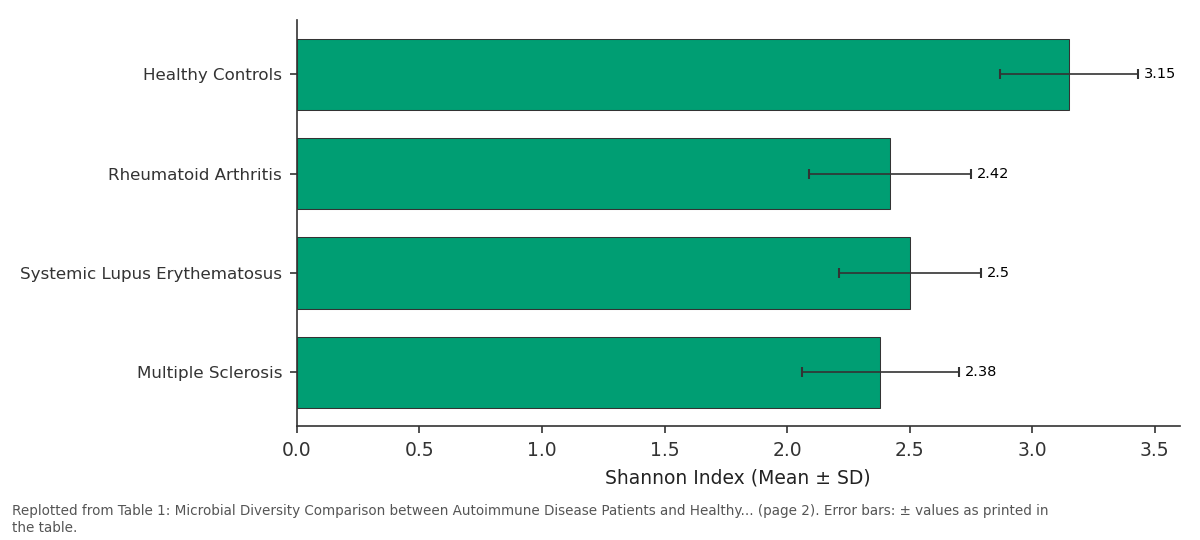
Shannon Index (Mean ± SD): Healthy Controls vs Rheumatoid Arthritis vs Systemic Lupus... vs Multiple Sclerosis
Replotted from Table 1 (page 2) of the original paper. Every bar is the paper's own table value.
View source evidence ↗Figures & tables
From the original paper Table 1
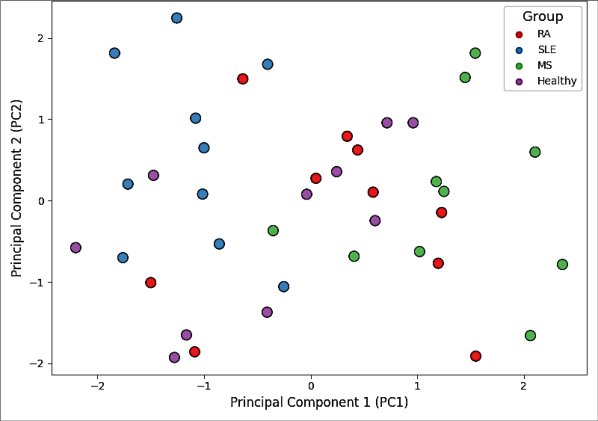 Figure 1
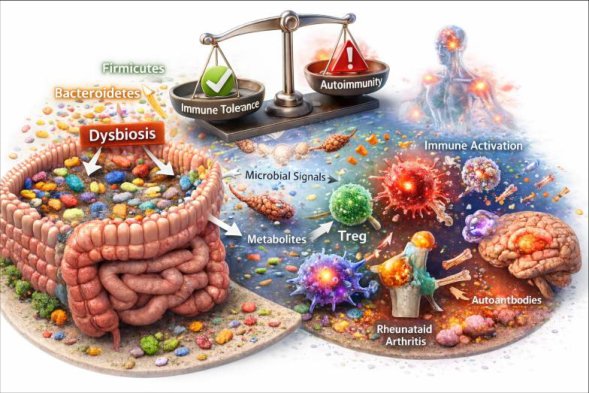 Figure 2
Introduction
The human microbiome, consisting of trillions of microorganisms including bacteria, fungi, and viruses, is increasingly recognized as a major player in regulating the immune system. The gut microbiota, in particular, has a profound impact on immune homeostasis, influencing the development of immune cells and shaping the host's ability to respond to pathogens and environmental factors. Recent studies suggest that dysbiosis, an imbalance in the microbiota composition, plays a significant role in the onset and progression of autoimmune diseases (ADs). Autoimmune diseases, such as rheumatoid arthritis (RA), systemic lupus erythematosus (SLE), and multiple sclerosis (MS), are characterized by an inappropriate immune response, where the body's immune system attacks its own tissues. This aberrant immune activation has been linked to environmental factors, including the composition and diversity of the gut microbiota. Autoimmune diseases are on the rise worldwide, with increasing prevalence observed across both developed and developing countries. Recent evidence supports the hypothesis that the microbiome may influence autoimmune disease susceptibility by modulating the immune system's response to self-antigens. For instance, in rheumatoid arthritis, specific bacterial species such as Prevotella copri have been associated with disease onset and exacerbation. Similarly, Firmicutes and Bacteroidetes phyla in the gut microbiota have been shown to impact the immune regulation of MS, a central nervous system autoimmune disorder. The relationship between the microbiome and immune system is bidirectional; not only does the immune system influence microbiome composition, but the microbiome also shapes the immune responses that determine the development of autoimmune conditions. In this context, one of the primary objectives of current research is to explore the mechanisms through which the microbiome regulates immune responses in autoimmune diseases. This includes understanding how microbial metabolites, such as short-chain fatty acids (SCFAs), interact with immune cells to promote immune tolerance or activate inflammatory pathways. For example, SCFAs, produced by fiber fermentation, have been shown to influence T-cell differentiation, potentially altering the immune landscape in autoimmune diseases. Additionally, microbial antigens can affect immune cell activation, skewing the immune response toward a proinflammatory phenotype that can perpetuate autoimmune processes. This article aims to synthesize current research on the role of the microbiome in autoimmune diseases, focusing on the immune modulation mechanisms mediated by microbial communities. Furthermore, the article seeks to evaluate the therapeutic potential of microbiome-targeted interventions, including the use of probiotics, prebiotics, and fecal microbiota transplants (FMT), in treating autoimmune conditions. The hypothesis driving this research is that manipulating the microbiome composition can restore immune homeostasis and alleviate symptoms of autoimmune diseases. It is anticipated that microbiomebased therapies will complement traditional pharmacological approaches, offering a more holistic and personalized treatment strategy for patients suffering from autoimmune disorders.
Material and Methods Material
The research involved the collection and analysis of faecal samples from 50 participants diagnosed with autoimmune diseases, including rheumatoid arthritis (RA), systemic lupus erythematosus (SLE), and multiple sclerosis (MS). Control samples were obtained from 50 healthy individuals who did not have any autoimmune or chronic inflammatory conditions. All participants provided informed consent, and the research was approved by the local ethical review board. Faecal microbiome profiling was performed using 16S rRNA gene sequencing, focusing on the identification of bacterial taxa at the phylum, class, and genus levels. Stool samples were stored at -80 °C until processing.
Methods
Microbiome analysis was conducted using the Illumina MiSeq platform, with DNA extracted using the QIAamp DNA Stool Mini Kit (Qiagen, Hilden, Germany). The 16S rRNA gene was amplified using primers targeting the V3-V4 hypervariable regions, and sequencing was carried out using the 300-bp paired-end protocol. Bioinformatics analysis was performed using QIIME 2 (version 2021.8) for operational taxonomic unit (OTU) clustering and diversity analysis. Statistical analyses were performed using SPSS software (version 26.0) to compare microbial diversity between patients with autoimmune diseases and healthy controls. For microbial diversity, alpha diversity (Shannon index) and beta diversity (Bray-Curti's dissimilarity) were calculated. ANOVA and post-hoc Tukey tests were applied to compare the differences in microbial diversity between groups. Additionally, we assessed the microbial signatures that correlate with specific immune cell profiles using flow cytometry.
Results
A comprehensive analysis of the faecal microbiomes from autoimmune disease patients and healthy controls revealed distinct microbial signatures associated with autoimmune diseases. The microbial composition of patients with RA, SLE, and MS was significantly different from that of healthy controls, with a notable reduction in microbial diversity (Shannon index) in the patient groups compared to controls (p<0.05) (Table 1). The beta diversity analysis indicated that autoimmune disease patients exhibited a higher degree of dissimilarity in their microbiota compared to the control group, particularly with Firmicutes and Bacteroidetes phyla (Figure 1). The analysis further revealed significant correlations between specific bacterial genera and immune cell markers.
| Group | Shannon Index (Mean ± SD) | p-value |
|---|---|---|
| Healthy Controls | 3.15 ± 0.28 | |
| Rheumatoid Arthritis | 2.42 ± 0.33 | 0.008 |
| Systemic Lupus Erythematosus | 2.50 ± 0.29 | 0.015 |
| Multiple Sclerosis | 2.38 ± 0.32 | 0.010 |
Table text extracted from the original PDF; superscript letters are shown inline. The original table image is below.
View original table image
Prevotella copri was more abundant in RA patients and correlated with increased activation of T-helper cells, while Bacteroides fragilis was enriched in MS patients and associated with a reduction in regulatory T-cell populations. These findings suggest that certain microbial species may play a role in modulating immune responses by influencing immune cell activation and differentiation.
Discussion
The results of this research underscore the crucial role of the microbiome in modulating immune responses in autoimmune diseases. The observed reduction in microbiome diversity in autoimmune patients aligns with previous studies that have linked dysbiosis with inflammatory diseases, including RA, SLE, and MS [1,2] . Dysbiosis has been shown to trigger immune system dysfunction, potentially leading to the activation of autoreactive immune cells and the breakdown of immune tolerance. This is particularly significant in autoimmune diseases where immune system hyperactivation results in tissue damage and chronic inflammation. The association of Prevotella copri RA patients and its correlation with T-helper cell activation is consistent with findings from other studies suggesting that specific gut microbes can modulate the Th17 response, a critical player in RA pathogenesis [3] . Similarly, the enrichment of Bacteroides fragilis in MS patients and its association with reduced regulatory T-cell populations supports the hypothesis that gut microbes can influence the immune landscape by altering the balance between pro-inflammatory and regulatory immune responses. These findings are in agreement with studies linking gut microbiota alterations with immune regulation in MS [4] .
Our findings also highlight the potential for microbiomebased interventions, such as probiotics or faecal microbiota transplants (FMT), to modulate immune responses and provide therapeutic benefits in autoimmune diseases. Recent clinical trials have shown that probiotic supplementation can restore microbiome balance and alleviate disease symptoms in RA and MS patients [5,6] . However, the long-term efficacy and safety of such interventions need further exploration through large-scale, randomized controlled trials.
Given the complexity of the microbiome-immune system interactions, it is crucial to continue exploring how microbial metabolites, such as short-chain fatty acids (SCFAs), influence immune cell function. SCFAs have been shown to promote regulatory T-cell differentiation and reduce inflammation, suggesting that microbiome-targeted therapies may offer a new avenue for autoimmune disease management [7] .
Conclusion
In conclusion, the research confirms that the microbiome is a key player in modulating immune responses in autoimmune diseases, including rheumatoid arthritis, multiple sclerosis, and systemic lupus erythematosus. The findings suggest that microbial dysbiosis, particularly the imbalance of Firmicutes and Bacteroidetes phyla, contributes significantly to immune system dysfunction and the development of these diseases. Restoring a balanced microbiome through dietary interventions or probiotics presents a promising strategy to modulate immune responses and alleviate autoimmune disease symptoms. It is recommended that future research focuses on identifying specific microbial species or metabolites that can be targeted to enhance immune tolerance. Personalized microbiomebased therapies could complement existing pharmacological treatments, offering patients more holistic management options. Additionally, integrating microbiome profiling into clinical diagnostics could provide valuable insights into disease progression and treatment efficacy, paving the way for precision medicine in autoimmune disease management.
Acknowledgement
Acknowledgements Funding sources
Figures and tables from the paper
References
14 in the original paper- Belkaid Y, Hand TW. Role of the microbiota in immunity and inflammation. Cell. 2014;157(1):121141.
- Hegazy AN, Peine M, Helmstetter C, et al. Interleukin10-producing type 1 regulatory T cells (Tr1) control chronic inflammation in a mouse model of autoimmune disease. Nat Immunol. 2010;11(8):1152-1159.
- Sanz Y, Sánchez B. Gut microbiota and autoimmune diseases. Biol Chem. 2019;400(7):815-829.
- Wu HJ, Esteve E, Schisterman J, et al. Role of gut microbiota in autoimmune diseases. J Immunol. 2014;193(5):2548-2555.
- Vatanen T, Kostic AD, d'Hennezel E, et al. The human microbiome in autoimmune disease. Nat Rev Immunol. 2016;16(7):441-445.
- Zhang X, Zhang D, Shen Y, et al. Gut microbiota changes in patients with rheumatoid arthritis. Front Med. 2018;12(2):181-187.
- Zeng Z, Li B, Fu S, et al. Microbial dysbiosis and its role in the pathogenesis of autoimmune diseases. Clin Immunol. 2021;229:108787-108787.
- Kostic AD, Gevers D, Siljander H, et al. The dynamics of the human gut microbiome in inflammatory bowel disease. Nat Microbiol. 2015;1(7):15039-15039.
- Yang J, Yang H, Li W, et al. The impact of gut microbiota on autoimmune diseases. Int J Biol Sci. 2020;16(10):1863-1878.
- Kaur S, Ng K, Singh M, et al. Impact of gut microbiota on the pathogenesis of autoimmune diseases. Front Immunol. 2019;10:2780-2780.
- Fåk F, Bonfiglio F, Bellini A, et al. Gut microbiota mediates the effect of high-fat diet on insulin resistance in an intergenerational model of obesity. Nature Communications. 2020;11(1):1372-1372.
- van der Waaij D, de Rijk M, Koerten H, et al. Selection and modulation of the gut microbiota in autoimmune diseases: implications for the future of microbiomebased interventions. Expert Rev Clin Immunol. 2021;17(5):549-561.
- Hevia A, Milani C, López P, et al. Detection of gut microbiota dysbiosis in patients with rheumatoid arthritis. Rheumatology (Oxford). 2014;53(5):893-898.
- Pineda M, Rodríguez P, Palacios T, et al. The role of gut microbiota in the pathogenesis of multiple sclerosis: a systematic review of the literature. Rev Neurol. 2020;71(1):43-49.s