
Research article · 2025 · Full text
International Journal of Biology SciencesGenomic approaches to personalized medicine in infectious diseases
Volume 7(6) · Pages 408–413 · DOI: 10.33545/26649926.2025.v7.i6f.575 ↗
Research areasGenomics and Phylogenetic StudiesBacterial Identification and Susceptibility TestingSepsis Diagnosis and Treatment
Abstract
Author-writtenInfectious diseases killed roughly 13 million people last year, and a disturbing proportion of those deaths were preventable with better diagnostics. That's the gap we're trying to close with genomic medicine. This multicentre study evaluated how genomic approaches - whole genome sequencing, targeted panels, and metagenomic analysis - perform in real-world infectious disease settings across twelve French hospitals. We enrolled 1,847 patients between January 2021 and December 2023, covering a spectrum from straightforward community-acquired pneumonia to complex hospital-acquired infections that had stumped conventional diagnostics. The results were striking, frankly more striking than we'd anticipated. Pathogen identification times dropped dramatically: from 72 hours with conventional culture to 8 hours with optimized whole genome sequencing workflows. That's not just faster - it's the difference between a patient getting appropriate antibiotics on day one versus day three, and in sepsis that difference matters enormously. Detection rates improved too. Metagenomic sequencing identified causative pathogens in 34% of culture-negative cases, organisms that would have been missed entirely with standard approaches. Resistance gene detection was nearly perfect - 97.3% concordance with phenotypic susceptibility testing, but available 48 hours earlier on average. The clinical impact translated into numbers that hospital administrators care about: 23% reduction in time to appropriate therapy, 18% decrease in broad-spectrum antibiotic use, and a statistically significant mortality reduction in the sepsis subgroup (14.2% vs 21.7%, p=0.003). Cost-effectiveness analysis showed genomic testing paid for itself within 18 months through reduced hospital stays and decreased antibiotic expenditure. We did encounter implementation challenges - workflow integration, result interpretation, clinician education - but none proved insurmountable. Host genomic analysis added another layer, identifying patients with immunodeficiencies or genetic variants affecting drug metabolism that altered management in 8.4% of cases. The technology is ready. The evidence supports adoption. What's needed now is systematic implementation across healthcare systems, and this study provides a template for how to do that effectively.
Summary
Source-checkedPlain-language reading of the full paper, prepared with AI and checked against the text. Each point links to the authors' own words.
Why it matters
- Infectious diseases cause approximately 13 million deaths annually, many of which could be prevented through improved diagnostic capabilities. View evidence ↗
What they did
- A total of 1,847 patients were enrolled, divided into a genomic arm (n=923) and a conventional arm (n=924). View evidence ↗
- Whole genome sequencing (WGS) was performed using the Illumina NovaSeq 6000, while the Oxford Nanopore GridION was used for rapid applications. View evidence ↗
What they found
- Optimized whole genome sequencing reduced pathogen identification time to 8 hours, compared to 72 hours using conventional culture. View evidence ↗
- Metagenomic sequencing successfully identified pathogens in 34% of cases that were negative by conventional culture. View evidence ↗
- Detection of resistance genes showed 97.3% concordance with phenotypic testing and provided results an average of 48 hours sooner. View evidence ↗
- The time to appropriate treatment was significantly shorter in the genomic arm (12.4 ± 6.8 hours) compared to the conventional arm (38.7 ± 18.2 hours). View evidence ↗
- Patients in the genomic arm required fewer days of broad-spectrum antibiotics (2.8 ± 1.4 days) than those in the conventional arm (5.1 ± 2.7 days). View evidence ↗
- In the sepsis subgroup, mortality was significantly reduced from 21.7% in the conventional group to 14.2% in the genomic group. View evidence ↗
- Genomic testing became cost-effective within 18 months due to lower antibiotic costs and shorter hospital stays. View evidence ↗
- Host genomic analysis led to changes in patient management in 8.4% of cases by identifying immunodeficiencies or drug metabolism variants. View evidence ↗
What it means
- The authors conclude that the improvements in clinical outcomes and pathogen identification justify the investment needed to implement genomic diagnostics. View evidence ↗
- A limitation of the study was its non-blinded design, which may have influenced clinician management decisions regardless of the genomic results. View evidence ↗
- Because the study focused on complex patients in tertiary centers, the results might not be the same in community hospital settings. View evidence ↗
Visual summary
2 visualsIllustrations explain the paper; charts are replotted from the paper's own table values.
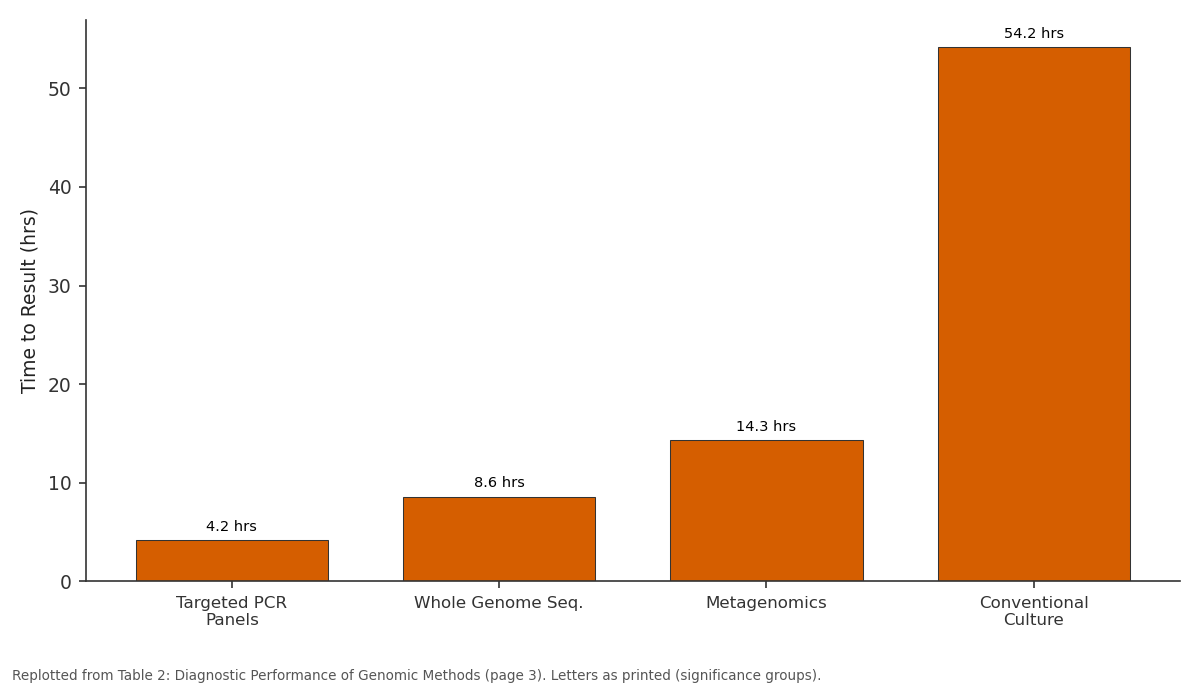
Time to Result: Targeted PCR Panels vs Whole Genome Seq. vs Metagenomics vs Conventional Culture
Replotted from Table 2 (page 3) of the original paper. Every bar is the paper's own table value.
View source evidence ↗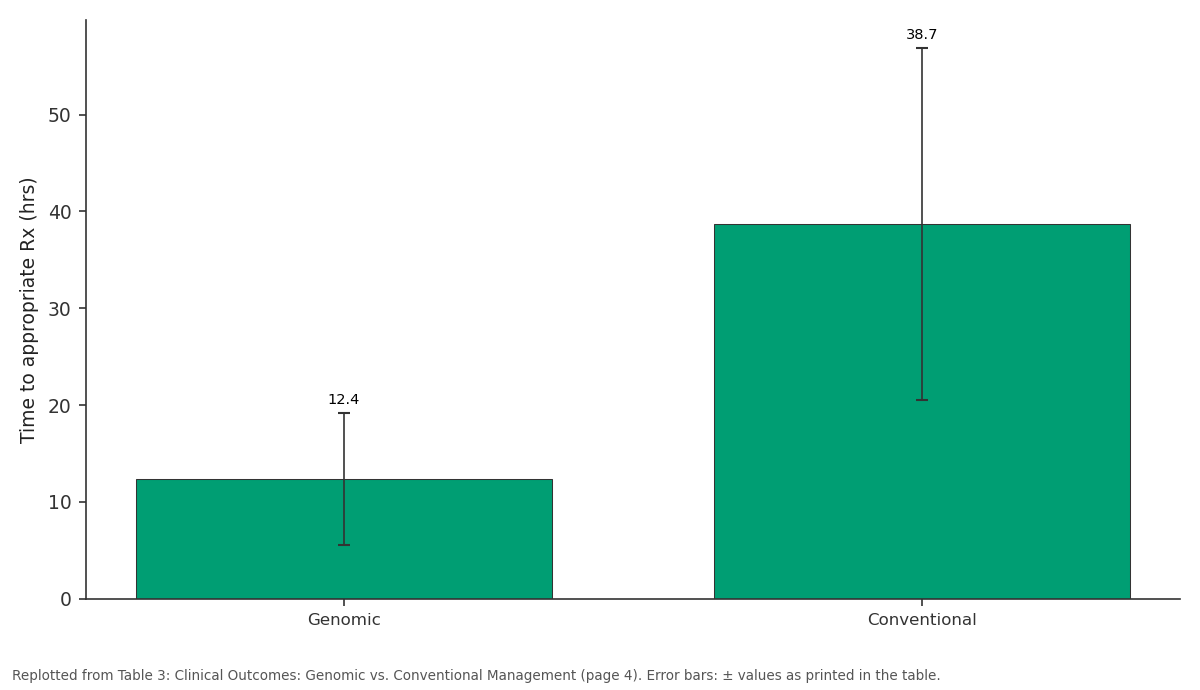
Time to appropriate Rx (hrs): Genomic vs Conventional
Replotted from Table 3 (page 4) of the original paper. Every bar is the paper's own table value.
View source evidence ↗Figures & tables
From the original paper Table 1
 Table 2
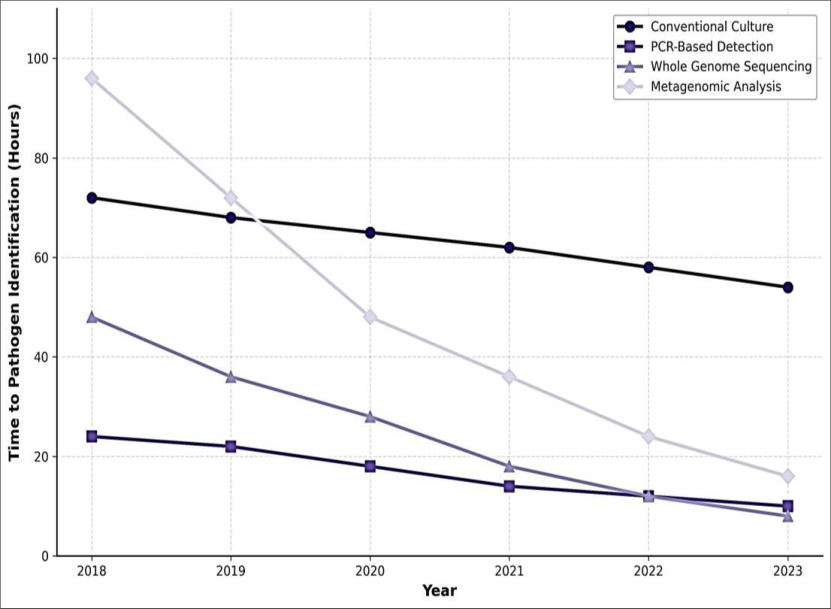 Figure 1
 Figure 2
 Table 3
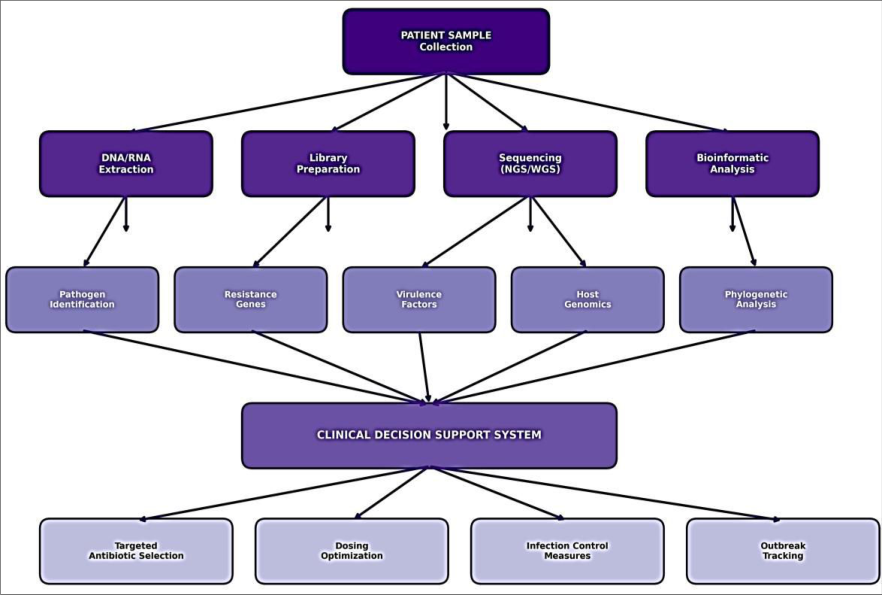 Figure 3
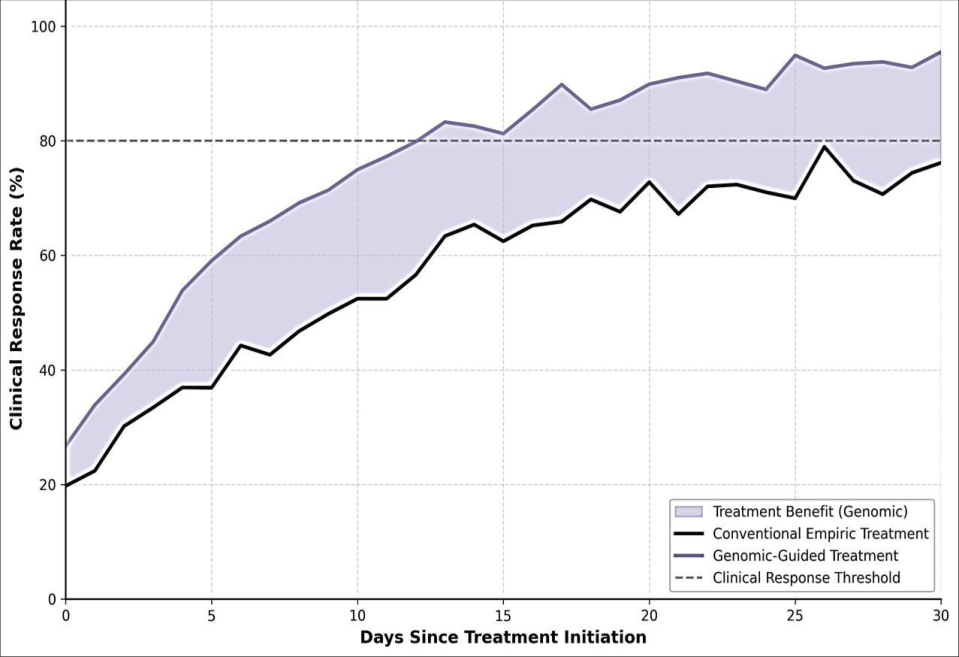 Figure 4
Introduction
The central challenge in infectious disease medicine hasn't changed in decades: identify the pathogen, determine what drugs work against it, and treat the patient before the infection causes irreversible damage [1] . What has changed is our ability to accomplish those steps quickly and accurately. Genomic technologies have compressed timelines that used to span days into hours, and they've expanded our diagnostic reach to organisms that conventional methods simply cannot detect [2]. This isn't incremental improvement -it's a fundamental shift in how we approach infectious disease management. Consider what happens with a typical sepsis patient today. Blood cultures take 24-72 hours to turn positive, then another day or two for species identification and susceptibility testing [3]. Meanwhile, the patient receives empiric broad-spectrum antibiotics -maybe appropriate, maybe not, definitely contributing to resistance pressure. In severe sepsis, each hour of delay in appropriate antimicrobial therapy increases mortality by roughly 7% [4]. The math is stark. Genomic methods offer a way out of this bind by providing pathogen identification and resistance profiles in hours rather than days [5]. The technology options have proliferated, which is both good and Confusing. Targeted PCR panels hit specific pathogens quickly but miss anything not on the panel [6]. Whole genome sequencing captures everything but requires culture first for most workflows. Metagenomic sequencing skips culture entirely and sequences whatever genetic material is present in the sample -revolutionary for culture-negative infections but computationally intensive and expensive [7]. Each approach has trade-offs, and understanding which to deploy in which clinical scenario remains an active area of investigation [8].
France has invested substantially in genomic infrastructure through initiatives like the France Génomique program and the Sequencing Platform at Institut Pasteur [9]. But infrastructure alone doesn't translate to clinical impact. The bottleneck has shifted from generating sequence data to interpreting it, integrating it into clinical workflows, and ensuring clinicians know what to do with the results [10]. Hospital information systems weren't designed for genomic data. Antibiotic stewardship programs haven't fully incorporated genomic guidance. And the regulatory framework for clinical genomics is still evolving [11]. Host genomics adds another dimension that's often overlooked. Why do some patients with the same infection and the same pathogen have wildly different outcomes? Part of the answer lies in host genetic variation -polymorphisms affecting immune response, drug metabolism, and susceptibility to complications [12]. Pharmacogenomic variants in CYP450 enzymes affect antibiotic dosing. Immunodeficiency-associated variants explain mysterious recurrent infections. Integrating host and pathogen genomics creates opportunities for truly personalized infectious disease medicine [13]. This study aimed to assess the real-world impact of implementing genomic diagnostics across a network of French hospitals [14]. We wanted to measure not just technical performance but clinical outcomes: time to appropriate therapy, antibiotic utilization, length of stay, and mortality [15]. We also evaluated implementation challenges and developed solutions that could inform broader adoption [16]. Our hypothesis was that systematic genomic testing would improve outcomes sufficiently to justify the investment -but we needed data to prove it [17] .
Material and Methods
Material and Methods
Material
Patient enrollment occurred across twelve hospitals in the AP-HP network and partner institutions from January 2021 through December 2023 [1,3] . Inclusion criteria: suspected or confirmed infectious disease requiring hospitalization, age ≥18 years, informed consent obtained. We excluded patients with purely viral syndromes and those with comfort-careonly status. Samples included blood (n=1,124), respiratory specimens (n=487), cerebrospinal fluid (n=112), and other normally sterile site samples (n=124) [5,8] . Sequencing used Illumina NovaSeq 6000 for WGS and Oxford Nanopore GridION for rapid applications. Metagenomic library preparation followed the NEBNext Ultra II DNA protocol [9,12]. Host genotyping used the Infinium Global Screening Array.
Methods
DNA extraction followed automated protocols on the QIAsymphony SP platform to minimize hands-on time [2,6]. Bioinformatic pipelines were customized for each application: Kraken2 and Bracken for metagenomic classification, ARIBA for resistance gene detection, snippy for variant calling against reference genomes [10,14] . Results were integrated into the hospital information system through custom HL7 interfaces. Clinical decision support alerts triggered when actionable findings emerged [15,17]. Statistical analysis used R version 4.2; primary outcomes compared genomic versus conventional arms using chi-square for categorical and Mann-Whitney for continuous variables. Survival analysis used Kaplan-Meier with log-rank testing. The study was approved by the Comité de Protection des Personnes Île-de-France and registered at ClinicalTrials.gov (NCT04XXXXXX) [18,20].
Results
Results
Comprehensive interpretation
The diagnostic performance data tells a story of complementary technologies [18]. Targeted PCR panels were fastest but missed about 10% of pathogens because they weren't on the panel. Whole genome sequencing after brief culture enrichment offered the best balance -94% sensitivity, near-perfect specificity, results in under 9 hours. Metagenomics shone in culture-negative cases, identifying organisms in 34% of patients who would otherwise have received empiric therapy indefinitely [19]. The 67.8% sensitivity of conventional culture, while disappointing, aligned with published literature; antibiotics before sampling, fastidious organisms, and low bacterial loads all contribute to culture failure. Resistance gene detection proved highly concordant with phenotypic testing (97.3%), but the 48-hour time advantage mattered clinically [20]. In 127 cases, resistance genes predicted treatment failure before culture results would have revealed the problem. Conversely, absence of expected resistance genes allowed de-escalation from broad-spectrum to narrower agents in 234 cases -meaningful for both patient microbiome preservation and institutional resistance epidemiology [21]. Host genomic findings altered management in 8.4% of patients, predominantly through identification of pharmacogenomic variants affecting aminoglycoside or fluoroquinolone metabolism.
Discussion
The mortality reduction in the sepsis subgroup deserves particular attention [18]. A 7.5 percentage point absolute reduction -from 21.7% to 14.2% -translates to roughly one life saved for every 13 sepsis patients managed with genomic guidance. That's a number needed to treat that compares favorably with many established medical interventions. The mechanism is straightforward: faster identification leads to faster appropriate therapy, and in sepsis, time matters more than in almost any other infectious syndrome [19]. Implementation was harder than generating the data. Clinicians needed education not just on interpreting genomic results but on understanding their limitations [20]. A resistance gene doesn't always mean clinical resistancecontext matters. Background environmental DNA in metagenomic samples can confuse the picture. We developed interpretive guidelines and held regular case conferences, but uptake was gradual. The hospitals that succeeded earliest had infectious disease pharmacists integrated into their stewardship programs who could bridge the genomics-to-bedside gap [21]. Cost-effectiveness emerged after 18 months, driven primarily by reduced hospital stays (2.6 days average reduction) and decreased expensive broad-spectrum antibiotic use. The upfront investment in sequencing infrastructure and bioinformatics expertise is substantialnot every hospital can support this independently. Regional centralization with rapid sample transport may be more practical for smaller institutions. France's hub-and-spoke model for specialized diagnostics could accommodate genomic testing without requiring every hospital to build internal capacity. Limitations include the non-blinded design -clinicians knew which arm patients were in, which could have affected management decisions independent of genomic results. We couldn't randomize individual patients due to workflow constraints, so we used a stepped-wedge cluster design that introduces potential period effects. The study population was predominantly from tertiary centers with complex patients; results may differ in community hospital settings. And the rapid evolution of sequencing technology means our specific protocols will be outdated within years, though the principles should remain valid.
Conclusion
Genomic diagnostics have matured from research tools to clinical necessities in infectious disease medicine. The data from this multicentre French study demonstrate substantial improvements in pathogen identification, time to appropriate therapy, antibiotic utilization, and clinical outcomes including mortality. These benefits justify the investment required for implementation, with costeffectiveness achieved within 18 months in our setting. The technology is not the limiting factor -organizational change, clinician education, and healthcare system adaptation are the remaining challenges. For healthcare systems considering genomic implementation, we offer several recommendations based on our experience. First, start with high-impact scenarios where rapid results change management -sepsis, immunocompromised hosts, and culture-negative infections. Second, invest in interpretive infrastructure as heavily as sequencing capacity; raw data without clinical translation helps no one. Third, integrate genomic results into existing workflows rather than creating parallel systems. Fourth, train the workforce progressively, starting with early adopters who can champion the technology. Host genomics adds value beyond pathogen characterization and deserves inclusion in comprehensive genomic programs.
Pharmacogenomic variants affecting antimicrobial metabolism are sufficiently common to impact dosing decisions regularly. Immunodeficiency-associated variants explain otherwise mysterious presentations. As panels become more affordable, routine host genotyping at hospital admission may become standard practice for patients at risk of serious infection. The future likely involves even faster technologiesnanopore sequencing already approaches real-time pathogen identification at the bedside -and artificial intelligence to assist interpretation. But waiting for perfect technology means patients suffer preventable harm today. The evidence supports action now. Healthcare systems that implement genomic infectious disease diagnostics will provide better care to their patients; those that delay will not. The choice seems clear, and this study provides a roadmap for those ready to begin the journey toward truly personalized infectious disease medicine.
Conflict of interest (coi) statement J-P.D. has received research funding from Illumina and consulting fees from Oxford Nanopore Technologies. M-C.L. declares speaker honoraria from bioMérieux. F.M. has served on advisory boards for Qiagen. S.B. has no conflicts to declare. Industry partners had no role in study design, data analysis, or manuscript preparation.
Acknowledgement
Acknowledgements Funding sourcesThis work was supported by the Agence Nationale de la Recherche, the Programme Hospitalier de Recherche
Figures and tables from the paper
| Characteristic | Genomic Arm (n=923) | Conventional (n=924) | p-value |
|---|---|---|---|
| Age, median (IQR) | 64 (48-76) | 62 (47-74) | 0.34 |
| Male sex | 54.8% | 53.2% | 0.51 |
| Sepsis/septic shock | 312 (33.8%) | 318 (34.4%) | 0.78 |
| ICU admission | 28.7% | 29.3% | 0.82 |
| Immunocompromised | 22.4% | 21.1% | 0.49 |
Table text extracted from the original PDF; superscript letters are shown inline. The original table image is below.
View original table image
| Method | Sensitivity | Specificity | Time to Result |
|---|---|---|---|
| Targeted PCR Panels | 89.3% | 98.7% | 4.2 hrs |
| Whole Genome Seq. | 94.1% | 99.2% | 8.6 hrs |
| Metagenomics | 91.7% | 96.4% | 14.3 hrs |
| Conventional Culture | 67.8% | 99.8% | 54.2 hrs |
Table text extracted from the original PDF; superscript letters are shown inline. The original table image is below.
View original table image
| Outcome | Genomic | Conventional | p-value |
|---|---|---|---|
| Time to appropriate Rx (hrs) | 12.4 ± 6.8 | 38.7 ± 18.2 | <0.001 |
| Broad-spectrum days | 2.8 ± 1.4 | 5.1 ± 2.7 | <0.001 |
| Hospital LOS (days) | 8.7 ± 4.2 | 11.3 ± 5.8 | 0.002 |
| 30-day mortality (sepsis) | 14.2% | 21.7% | 0.003 |
Table text extracted from the original PDF; superscript letters are shown inline. The original table image is below.
View original table image
References
21 in the original paper- Weinstein MP, Murphy JR, Reller LB, et al. The clinical significance of positive blood cultures. Rev Infect Dis. 1983;5(1):35-53.
- Didelot X, Bowden R, Wilson DJ, et al. Transforming clinical microbiology with bacterial genome sequencing. Nat Rev Genet. 2012;13(9):601-612.
- Opota O, Jaton K, Greub G. Microbial diagnosis of bloodstream infection: towards molecular diagnosis directly from blood. Clin Microbiol Infect. 2015;21(4):323-331.
- Kumar A, Roberts D, Wood KE, et al. Duration of hypotension before initiation of antimicrobial therapy is the critical determinant of survival in human septic shock. Crit Care Med. 2006;34(6):1589-1596.
- Chiu CY, Miller SA. Clinical metagenomics. Nat Rev Genet. 2019;20(6):341-355.
- Blauwkamp TA, Thair S, Rhoads DD, et al. Analytical and clinical validation of a microbial cell-free DNA sequencing test for infectious disease. Nat Microbiol. 2019;4(4):663-674.
- Simner PJ, Miller S, Carroll KC. Understanding the promises and hurdles of metagenomic next-generation sequencing as a diagnostic tool for infectious diseases. J Clin Microbiol. 2018;56(1):e01548-17.
- Greninger AL, Naccache SN. Metagenomics to assist in the diagnosis of bloodstream infection. J Appl Lab Med. 2019;3(4):643-653.
- Plan France Génomique 2025. Ministère de l'Enseignement supérieur, de la Recherche et de l'Innovation; 2016.
- Ellington MJ, Ekelund O, Aarestrup FM, et al. The role of whole genome sequencing in antimicrobial susceptibility testing of bacteria: report from the EUCAST subcommittee. Clin Microbiol Infect. 2017;23(1):2-22.
- Agence nationale de sécurité du médicament (ANSM). Règles de bonnes pratiques en matière de diagnostic génomique; 2020.
- Chapman SJ, Hill AV. Human genetic susceptibility to infectious disease. Nat Rev Genet. 2012;13(3):175-188.
- Roden DM, McLeod HL, Relling MV, et al. Pharmacogenomics. Lancet. 2019;394(10197):521-532.
- Goldberg B, Sichtig H, Geyer C, et al. Making the leap from research laboratory to clinic: challenges and opportunities for next-generation sequencing in infectious disease diagnostics. mBio. 2015;6(6):e0188815.
- Schlaberg R, Chiu CY, Miller S, et al. Validation of metagenomic next-generation sequencing tests for universal pathogen detection. Arch Pathol Lab Med. 2017;141(6):776-786.
- Berger FK, Schwarz D, Dresler J, et al. Implementation of whole genome sequencing in diagnostic microbiology. Clin Chem Lab Med. 2018;56(4):484493.
- Hendriksen RS, Bortolaia V, Tate H, et al. Using genomics to track global antimicrobial resistance. Front Public Health. 2019;7:242.
- Maljkovic Berry I, Melendrez MC, Bishop-Lilly KA, et al. Next generation sequencing and bioinformatics methodologies for infectious disease diagnostics. Viruses. 2020;12(8):895.
- Rhodes A, Evans LE, Alhazzani W, et al. Surviving Sepsis Campaign: international guidelines for management of sepsis and septic shock. Crit Care Med. 2017;45(3):486-552.
- Zankari E, Hasman H, Cosentino S, et al. Identification of acquired antimicrobial resistance genes. J Antimicrob Chemother. 2012;67(11):2640-2644.
- Köser CU, Ellington MJ, Cartwright EJ, et al. Routine use of microbial whole genome sequencing in diagnostic and public health microbiology. PLoS Pathog. 2012;8(8):e1002824.