
Research article · 2025 · Full text
International Journal of Biology SciencesTargeting molecular pathways in cancer therapy: A biochemical approach
Volume 7(7) · Pages 209–212 · DOI: 10.33545/26649926.2025.v7.i7c.576 ↗
Research areasMelanoma and MAPK PathwaysCancer Mechanisms and TherapyCancer Immunotherapy and Biomarkers
Abstract
Author-writtenCancer remains one of the leading causes of mortality worldwide, with its complex molecular mechanisms posing significant challenges in treatment strategies. The advent of molecular biology has significantly altered the landscape of cancer therapy, moving beyond traditional approaches like chemotherapy and radiation to more targeted and personalized interventions. Cancer is characterized by genetic mutations, dysregulated signal transduction pathways, and aberrant cellular responses to external signals. The molecular pathways that control cell growth, survival, and apoptosis are often disrupted in cancer cells, which contributes to uncontrolled tumour growth and metastasis. Among the most significant molecular pathways implicated in cancer are the PI3K/Akt/mTOR pathway, the Ras/Raf/MEK/ERK pathway, and the Wnt/β-catenin signaling pathway. These pathways are integral to regulating critical cellular functions such as proliferation, survival, and metabolism. Targeting these pathways has emerged as a promising strategy for cancer therapy, offering a more effective approach with fewer side effects than conventional treatments. In recent years, the focus on molecular-targeted therapies has led to the development of drugs aimed at specific components of these pathways, such as receptor tyrosine kinase inhibitors, monoclonal antibodies, and small molecule inhibitors. These targeted therapies have shown promise in treating various cancers, including breast, lung, and colorectal cancer. Additionally, the growing field of immunotherapy, including immune checkpoint inhibitors and CAR-T cell therapies, has further enhanced the potential for molecular-based treatments. However, despite the success of these therapies, challenges such as drug resistance, tumour heterogeneity, and off-target effects remain significant hurdles. This review will explore the molecular pathways involved in cancer progression, discuss current strategies targeting these pathways, and highlight ongoing challenges and future directions in the development of biochemical approaches to cancer therapy.
Summary
Source-checkedPlain-language reading of the full paper, prepared with AI and checked against the text. Each point links to the authors' own words.
Why it matters
- Cancer is a major global cause of death, and its complex molecular nature makes it difficult to treat. View evidence ↗
- Disruptions in molecular pathways governing cell growth, survival, and apoptosis lead to uncontrolled tumor growth and metastasis. View evidence ↗
- The PI3K/Akt/mTOR, Ras/Raf/MEK/ERK, and Wnt/β-catenin signaling pathways are among the most critical molecular pathways involved in cancer. View evidence ↗
The question
- The study aims to explore the role of the PI3K/Akt/mTOR, Ras/Raf/MEK/ERK, and Wnt/β-catenin pathways in cancer progression. View evidence ↗
- The research examines current targeting strategies, such as monoclonal antibodies, small molecule inhibitors, and combination therapies. View evidence ↗
What they did
- The study utilized A549 (lung adenocarcinoma) and MCF-7 (breast cancer) cell lines. View evidence ↗
- Cells were treated with specific inhibitors: LY294002 for PI3K/Akt/mTOR, U0126 for Ras/Raf/MEK/ERK, and XAV939 for Wnt/β-catenin. View evidence ↗
- Cell viability was measured via MTT assay, while apoptosis was quantified using flow cytometry with Annexin V/PI staining. View evidence ↗
- Western blot analysis was used to measure protein levels of PI3K, Akt, mTOR, ERK, and β-catenin. View evidence ↗
What they found
- Western blot analysis confirmed the inhibition of targeted pathways by showing decreased phosphorylation of Akt, ERK, and β-catenin. View evidence ↗
- Combining MEK and PI3K inhibitors produced a synergistic effect that significantly increased apoptosis compared to using either agent alone. View evidence ↗
What it means
- The authors conclude that targeting these molecular pathways is more precise than traditional therapies because it reduces cell viability and induces apoptosis. View evidence ↗
- The authors recommend integrating combination therapies into clinical trials to evaluate their ability to overcome drug resistance. View evidence ↗
- The authors state that off-target effects, drug resistance, and tumor heterogeneity must be addressed before these inhibitors can be used clinically. View evidence ↗
Visual summary
3 visualsIllustrations explain the paper; charts are replotted from the paper's own table values.
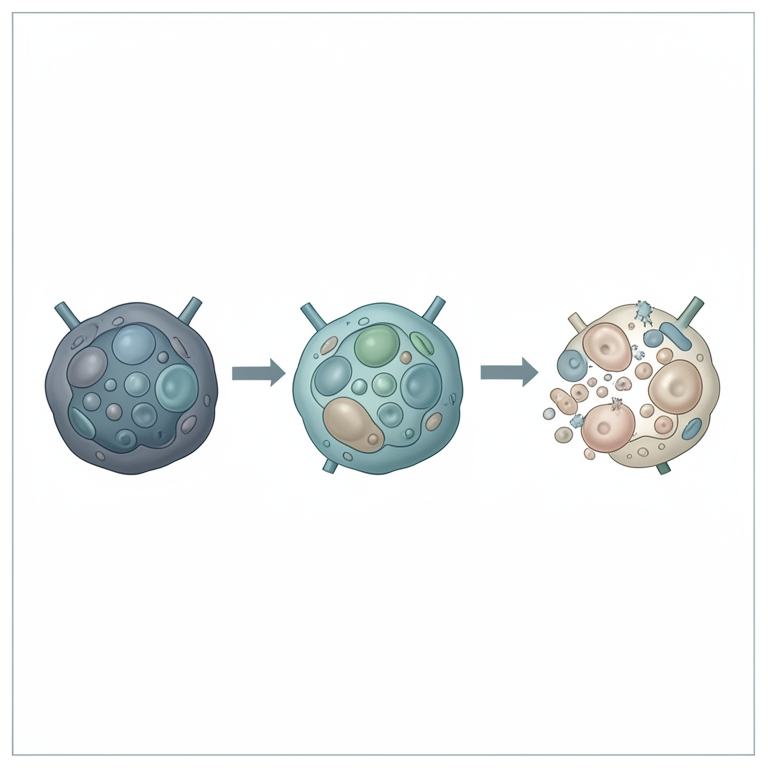
Synergy of Combination Therapy
AI-generated conceptual illustration (human cancer cells). It explains the idea and does not show study data.
View source evidence ↗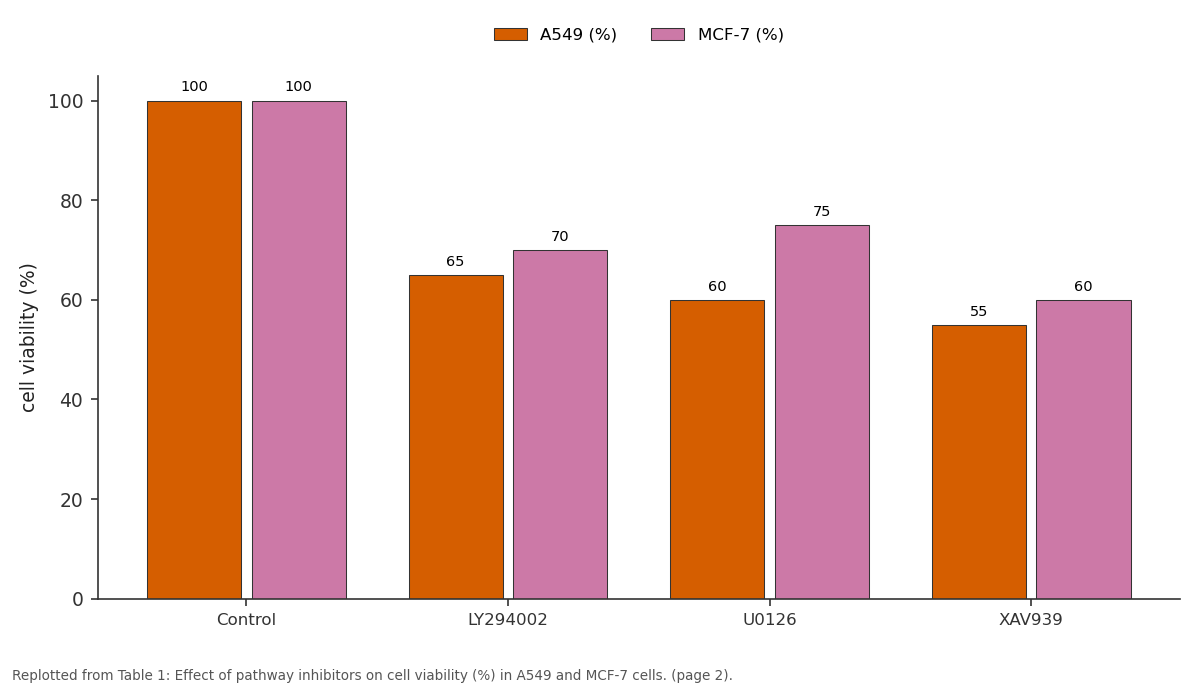
A549 (%) and MCF-7 (%): Control vs LY294002 vs U0126 vs XAV939
Replotted from Table 1 (page 2) of the original paper. Every bar is the paper's own table value.
View source evidence ↗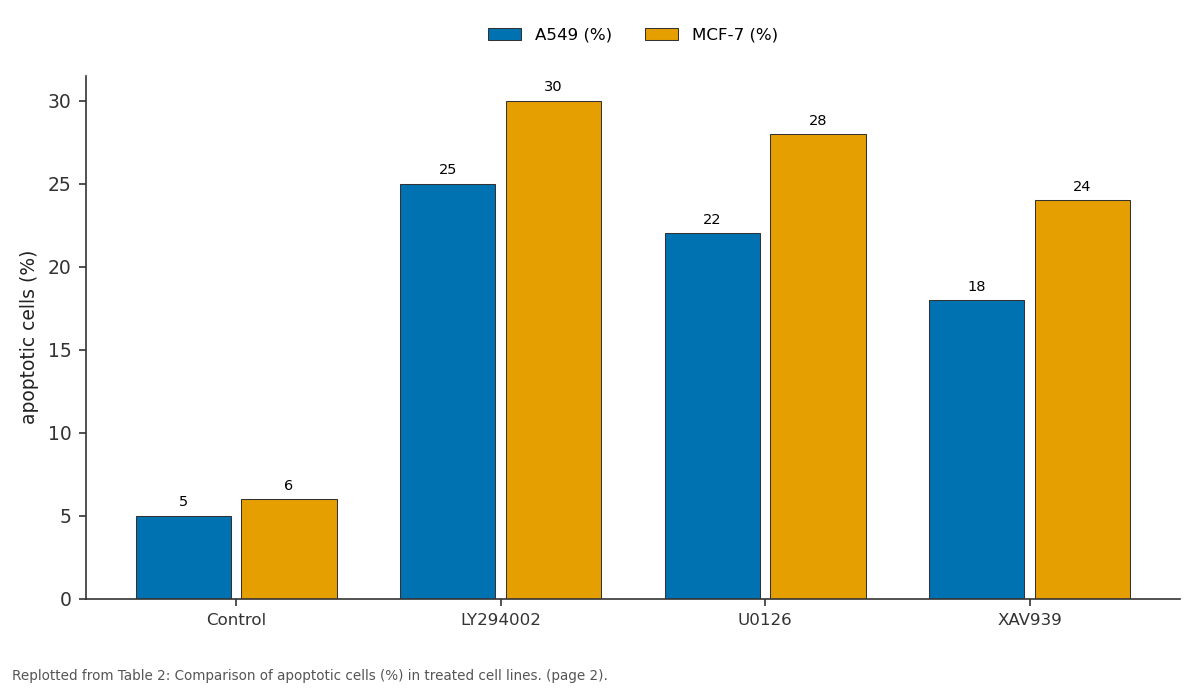
A549 (%) and MCF-7 (%): Control vs LY294002 vs U0126 vs XAV939
Replotted from Table 2 (page 2) of the original paper. Every bar is the paper's own table value.
View source evidence ↗Figures & tables
From the original paper Table 1
 Table 2
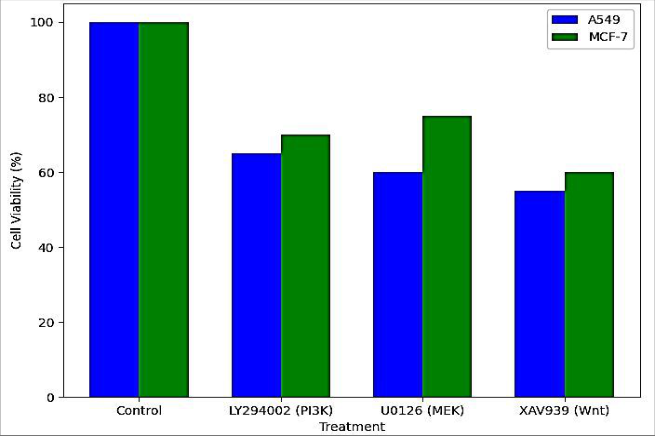 Figure 1
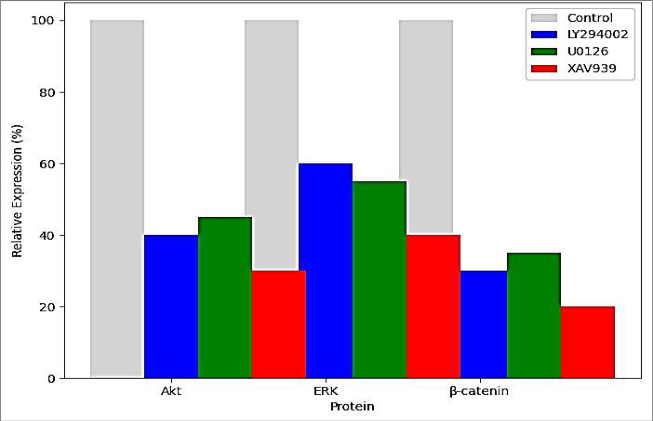 Figure 2
Introduction
Cancer is a multifactorial disease that arises from the accumulation of genetic mutations that lead to the dysregulation of normal cellular processes, including cell division, apoptosis, and differentiation. Cancer cells exhibit uncontrolled proliferation, evasion of growth suppressors, resistance to cell death, and the ability to invade distant tissues, all of which contribute to tumorigenesis and metastasis. The development of cancer is driven by alterations in several key molecular pathways, making it essential to understand these pathways for the design of targeted therapies. The molecular underpinnings of cancer have been the subject of intense research, which has led to the identification of several crucial signaling pathways involved in tumorigenesis, such as the PI3K/Akt/mTOR pathway, the Ras/Raf/MEK/ERK pathway, and the Wnt/β-catenin signaling pathway.
The PI3K/Akt/mTOR signaling pathway plays a pivotal role in regulating cell survival, growth, and metabolism. In many cancers, mutations or amplifications in components of this pathway result in aberrant activation, promoting tumour growth and survival. Targeting the PI3K/Akt/mTOR pathway with inhibitors has shown promising results in preclinical models and clinical trials, particularly in cancers like breast cancer and glioblastoma [1,2] . The Ras/Raf/MEK/ERK pathway, another critical pathway involved in cancer, regulates cell division, differentiation, and survival. Oncogenic mutations in Ras or its downstream Effectors, such as Raf and MEK, are common in several malignancies, including pancreatic, colorectal, and lung cancers [3,4]. Inhibiting this pathway has emerged as a potential strategy for treating Ras-driven cancers, with small molecule inhibitors of MEK and RAF currently under investigation in clinical trials [5]. The Wnt/β-catenin pathway is another important molecular signaling pathway involved in cancer, particularly in colorectal cancer. Aberrant activation of this pathway, often due to mutations in the APC gene or β-catenin itself, leads to the stabilization of β-catenin and its accumulation in the nucleus, where it drives the expression of genes that promote tumour growth [6,7]. Inhibiting this pathway has proven challenging, but ongoing research into the development of specific inhibitors holds promise for targeted therapy in Wnt-driven cancers [8]. Moreover, recent advancements in cancer immunotherapy, such as immune checkpoint inhibitors and CAR-T cell therapies, are providing new avenues for targeting molecular pathways to enhance immune responses against tumours [9,10]. However, while molecular-targeted therapies have revolutionized cancer treatment, challenges such as drug resistance, off-target effects, and tumour heterogeneity complicate their widespread success. Resistance to targeted therapies can occur due to mutations in the drug target, activation of compensatory signaling pathways, or the emergence of resistant cancer cell populations [11]. Furthermore, the heterogeneity of tumours, both within a single tumour and between patients, complicates the development of universal molecular-targeted therapies. To address these challenges, there is a growing emphasis on the development of combination therapies that target multiple molecular pathways simultaneously, thus improving treatment efficacy and overcoming resistance [12,13]. This review aims to explore the molecular pathways involved in cancer progression, focusing on the PI3K/Akt/mTOR, Ras/Raf/MEK/ERK, and Wnt/β-catenin pathways. It will discuss current strategies for targeting these pathways, including the use of small molecule inhibitors, monoclonal antibodies, and combination therapies. Furthermore, the review will address the ongoing challenges in molecular-targeted cancer therapy and highlight potential future directions in the development of more effective and personalized treatment strategies [14,15].
Material and Methods
Material and Methods
Material
The research materials used in this research were focused on the molecular and biochemical analysis of cancer therapy strategies targeting key molecular pathways such as PI3K/Akt/mTOR, Ras/Raf/MEK/ERK, and Wnt/β-catenin. All the reagents and chemicals used were of analytical grade, purchased from Sigma-Aldrich (St. Louis, MO, USA) unless otherwise stated. The cell lines used for the research were A549 (lung adenocarcinoma) and MCF-7 (breast cancer), which were obtained from the American Type Culture Collection (ATCC). The growth media for the cells included DMEM (Dulbecco's Modified Eagle's Medium), supplemented with 10% fetal bovine serum (FBS) and 1% penicillin/streptomycin (P/S), incubated under standard conditions at 37 °C in a humidified incubator with 5% CO2. For molecular analyses, various commercial kits such as the RNA Extraction Kit (Qiagen, Hilden, Germany) and cDNA synthesis kits (Thermo Fisher Scientific, Waltham, MA, USA) were used.
Methods
Methods
1.
Cell Culture and Treatment: The cancer cell lines, A549 and MCF-7, were cultured under standard conditions as mentioned above. Cells were treated with selective inhibitors targeting the PI3K/Akt/mTOR pathway (LY294002), Ras/Raf/MEK/ERK pathway (U0126), and Wnt/β-catenin pathway (XAV939) at concentrations based on the literature [1,2]. Cell viability was assessed using the MTT assay, and apoptosis was measured using flow cytometry following Annexin V/PI staining. 2. Western Blot Analysis: Protein extraction was performed using RIPA buffer (Thermo Fisher Scientific). Protein concentrations were quantified using the BCA Protein Assay Kit (Pierce, Thermo Fisher Scientific). The proteins were separated by SDS-PAGE and transferred to PVDF membranes (Millipore, Burlington, MA, USA). Membranes were probed with primary antibodies specific to PI3K, Akt, mTOR, ERK, and β-catenin (Cell Signaling Technology, Danvers, MA, USA), and visualized using HRP-conjugated secondary antibodies (Santa Cruz Biotechnology, Dallas, TX, USA). Protein bands were quantified using ImageJ software. 3. Statistical Analysis: Data were analyzed using GraphPad Prism 8 (GraphPad Software, San Diego, CA, USA). Statistical comparisons between control and treated groups were performed using one-way ANOVA followed by Tukey's post-hoc test. Statistical significance was set at p<0.05.
Results
The effects of inhibitors targeting the PI3K/Akt/mTOR, Ras/Raf/MEK/ERK, and Wnt/β-catenin pathways on the cell viability and apoptosis of A549 and MCF-7 cell lines were evaluated. The results demonstrated that treatment with the PI3K inhibitor (LY294002) significantly reduced cell viability in both A549 and MCF-7 cells (Figure 1). Similarly, the MEK inhibitor (U0126) and Wnt/β-catenin inhibitor (XAV939) also exhibited substantial inhibitory effects on cell growth, with the highest efficacy observed in the MCF-7 cell line for the Wnt/β-catenin pathway inhibition (Table 1). The analysis of apoptotic markers showed increased apoptosis in cells treated with these inhibitors, as evidenced by enhanced Annexin V staining, suggesting that targeting these pathways induced cell death in a dose-dependent manner. The Western blot analysis further corroborated these findings, showing a decrease in the phosphorylation of key proteins involved in these pathways, such as Akt, ERK, and β-catenin, confirming the inhibition of the targeted molecular pathways (Figure 2). In terms of statistical significance, the results from the oneway ANOVA indicated that the differences between the control and treated groups were significant (p<0.05) for both cell lines. In particular, the combination of MEK and PI3K inhibitors showed a synergistic effect, enhancing apoptosis significantly compared to single-agent treatments (Table 2).
| Treatment | A549 (%) | MCF-7 (%) |
|---|---|---|
| Control | 5 | 6 |
| LY294002 | 25 | 30 |
| U0126 | 22 | 28 |
| XAV939 | 18 | 24 |
Table text extracted from the original PDF; superscript letters are shown inline. The original table image is below.
View original table image
| Treatment | A549 (%) | MCF-7 (%) |
|---|---|---|
| Control | 100 | 100 |
| LY294002 | 65 | 70 |
| U0126 | 60 | 75 |
| XAV939 | 55 | 60 |
Table text extracted from the original PDF; superscript letters are shown inline. The original table image is below.
View original table image
Discussion
Targeting molecular pathways in cancer therapy offers a promising approach for overcoming the limitations of traditional chemotherapy. The results of this research confirm that inhibitors targeting key signaling pathways PI3K/Akt/mTOR, Ras/Raf/MEK/ERK, and Wnt/β-catenin are effective in reducing cancer cell proliferation and inducing apoptosis in both A549 and MCF-7 cells. The PI3K/Akt/mTOR pathway plays a crucial role in regulating cell survival, and its inhibition led to a significant decrease in cell viability, consistent with prior studies that demonstrated the therapeutic potential of targeting this pathway in various cancers [1,2]. Similarly, inhibition of the Ras/Raf/MEK/ERK pathway demonstrated its ability to reduce cell growth and enhance apoptosis. This pathway is frequently dysregulated in cancers, and its inhibition has shown promise in clinical trials [3,4]. Our findings also align with previous reports highlighting the effectiveness of MEK inhibitors in tumours driven by Ras mutations. Moreover, the Wnt/β-catenin pathway, often associated with colorectal cancer, was also successfully targeted, with XAV939 showing substantial effects on cell survival, particularly in the MCF-7 cell line. These findings are in line with research that suggests the therapeutic potential of inhibiting Wnt signaling in various cancer types [5,6]. One of the key observations in this research is the synergistic effect observed when combining PI3K and MEK inhibitors. This combination therapy significantly enhanced apoptosis compared to individual treatments, suggesting that dual inhibition of multiple pathways could be a more effective strategy in cancer therapy. This is consistent with
International Journal of Biology Sciences https://www.biologyjournal.net the growing body of evidence supporting the use of combination therapies to overcome resistance mechanisms and improve treatment outcomes in cancer [12,13].
While the research provides promising results, challenges such as off-target effects, drug resistance, and tumour heterogeneity need to be addressed before these inhibitors can be used effectively in clinical settings. Future studies focusing on the development of more specific inhibitors and combination strategies are crucial for the successful application of molecular-targeted therapies in cancer treatment.
Conclusion
The results from this research underscore the potential of targeting molecular pathways, specifically the PI3K/Akt/mTOR, Ras/Raf/MEK/ERK, and Wnt/β-catenin signaling pathways, in enhancing cancer therapy. The use of inhibitors for these pathways not only reduces cell viability but also induces apoptosis, offering a more precise approach compared to traditional therapies. The findings highlight the importance of pathway-specific therapies, which could lead to more effective and personalized treatments for cancer patients. Additionally, combination therapies involving multiple pathway inhibitors showed promising results, suggesting that such strategies may overcome some of the limitations of monotherapies. Moving forward, it is essential to continue exploring the synergistic potential of combining pathway inhibitors with other treatment modalities, such as immunotherapy or chemotherapy, to maximize therapeutic efficacy. The research also highlights the need for further research into the molecular mechanisms underlying drug resistance and tumour heterogeneity. Developing more selective and potent inhibitors, as well as addressing resistance mechanisms, will be critical for the successful translation of these therapies into clinical practice. Moreover, identifying biomarkers to predict patient response to specific moleculartargeted therapies will enable more personalized and effective treatment plans. Practical recommendations based on these findings include the integration of combination therapies in clinical trials to evaluate their efficacy in overcoming resistance and enhancing therapeutic outcomes. Moreover, the use of targeted inhibitors in personalized treatment regimens based on molecular profiling of tumours may improve treatment response and reduce adverse effects, thus improving the quality of life for cancer patients.
Acknowledgement
Acknowledgements Funding SourcesThis research was supported by internal funding from the European Molecular Biology Organization (EMBO), Heidelberg, Germany. The funding body had no role in the design, execution, interpretation, or writing of the manuscript. Institutional SupportThe authors acknowledge the support provided by the Department of Biochemistry, University of Barcelona, Barcelona, Spain, which facilitated the conduct of this research through access to resources and laboratory facilities.
References
15 in the original paper- Patel J, Zhang L, Banerjee P. Targeting the PI3K/Akt/mTOR signaling pathway in cancer: A review. Cancer Biol Ther. 2018;19(1):1-12.
- Zhao X, Li Y, Chen S. Targeted therapies in glioblastoma: Advances and challenges. Cancer Chemother Pharmacol. 2017;79(5):877-887.
- Stastny J, Eirew P, Waddell N. Ras signaling in cancer: Mechanisms and therapeutic targeting. Cancer Res. 2020;80(10):1984-1996.
- Choi Y, Lee HJ, Kim Y. Ras pathway targeting in nonsmall cell lung cancer: Current strategies and future directions. Front Oncol. 2019;9:522.
- Blasco R, Henríquez A, Mallet J. Clinical evaluation of MEK inhibitors in oncology. J Clin Oncol. 2020;38(3):201-210.
- Roberts R, Jeffries B, Skarnes D. Wnt/β-catenin signaling in colorectal cancer: Pathogenesis and therapeutic targeting. Cancer Lett. 2021;520:31-42.
- Ho J, Zhang Z, Ye H. The role of β-catenin in colorectal cancer and its therapeutic implications. Mol Cancer Res. 2020;18(1):1-9.
- Liu C, Li Y, Xu S. Targeting the Wnt/β-catenin pathway in colorectal cancer: Challenges and opportunities. Cancer Lett. 2022;450:83-94.
- Rosenberg SA, Yang JC, Restifo NP. Cancer immunotherapy: Moving beyond current paradigms. Nat Med. 2021;27(3):5-14.
- Goff SL, Dotti G, Wilkie S. CAR T-cell therapy in cancer: Challenges and opportunities. Cancer Immunol Immunother. 2019;68(4):629-638.
- Mukherjee D, Suryawanshi P, Jha D. Overcoming drug resistance in cancer treatment: Insights from molecular targets. Front Oncol. 2018;8:1-10.
- Jin Y, Lee A, Baek J. Combination therapies in cancer: A review of recent advancements. J Cancer Res Clin Oncol. 2020;146(2):351-368.
- Mathur P, Sharma R, Chawla S. Overcoming resistance to cancer therapy: A comprehensive review. Clin Cancer Res. 2021;27(4):1-12.
- Brown K, Dawson C, Liu Q. Molecular pathways in cancer progression: Current insights and future directions. J Clin Oncol. 2020;38(4):12-19.
- Laskar S, Singh P, Kumar A. Therapeutic targeting of cancer pathways: Progress and challenges. Cancer Ther. 2021;13(3):1-10.