
Research article · 2026 · Full text
International Journal of Biology SciencesPartial Fetotomy for Resolution of Dystocia in a Free-Ranging Hog Deer (Axis porcinus) with Bilateral Shoulder Flexion
Volume 8(2) · Pages 48–50 · DOI: 10.33545/26649926.2026.v8.i2a.580 ↗
Research areasReproductive Physiology in LivestockAnimal Behavior and Welfare StudiesVeterinary Medicine and Surgery
Abstract
Author-writtenDystocia is an important cause of perinatal morbidity and mortality in domestic and wild ruminants, with fetal malposture being a major contributing factor in cervids. This report describes the clinical management of dystocia due to bilateral shoulder flexion in a full-term free-ranging hog deer (Axis porcinus). A 34 kg doe was presented with prolonged labor and protrusion of the fetal head. Clinical examination confirmed anterior longitudinal presentation, dorsosacral position, and bilateral flexion of the forelimbs. Absence of fetal reflexes and movement established fetal death prior to intervention. As manual mutation was not feasible due to impaction and limited pelvic space, partial fetotomy was performed under epidural anesthesia. Decapitation of the fetal head followed by sequential forelimb extension allowed controlled vaginal delivery of the dead fawn. Supportive therapy and post-procedural care were administered for three days. No intraoperative complications or postpartum disorders were observed, and the dam recovered uneventfully. This case demonstrates that partial fetotomy can be effectively adapted for managing obstructive dystocia in cervids when timely diagnosis and appropriate obstetrical techniques are applied.
Summary
Source-checkedPlain-language reading of the full paper, prepared with AI and checked against the text. Each point links to the authors' own words.
Why it matters
- Dystocia, often caused by fetal malposture in cervids, is a significant driver of perinatal morbidity and mortality in both wild and domestic ruminants. View evidence ↗
- Bilateral shoulder flexion is a specific malposture that increases the fetus's thoracic diameter, blocking its passage through the pelvic canal and requiring medical intervention. View evidence ↗
- The hog deer (Axis porcinus) is a medium-sized cervid from South and Southeast Asia with a typical gestation period of 220 to 230 days. View evidence ↗
The question
- The study aims to describe the diagnostic approach, obstetrical intervention, and maternal outcome for a free-ranging hog deer experiencing dystocia due to bilateral shoulder flexion. View evidence ↗
What they did
- The subject was a full-term pregnant free-ranging female hog deer weighing approximately 34 kg presenting with prolonged labor and a protruding fetal head. View evidence ↗
- Fetal death was confirmed before intervention through the absence of fetal movement, corneal response, and reflexes. View evidence ↗
- To reduce straining and aid manipulation, 1 ml of 2% lignocaine hydrochloride was administered as epidural anesthesia in the sacrococcygeal space. View evidence ↗
- Because manual correction was not possible, a partial fetotomy was performed using a small ruminant fetotome for decapitation, followed by the use of a blunt eye hook to correct the forelimbs. View evidence ↗
- Post-procedural care for three days included daily 20 ml of intrauterine herbal cleanser and intramuscular injections of enrofloxacin (5 ml), multivitamins (1.5 ml), and meloxicam (1.5 ml). View evidence ↗
What they found
- At presentation, the doe was recumbent and dehydrated, exhibiting a heart rate of 98 beats/min, a respiratory rate of 34 breaths/min, and a rectal temperature of 102.8 °F. View evidence ↗
- Examination confirmed the fetus was in a dorsosacral position with anterior longitudinal presentation and bilateral shoulder flexion; manual mutation was impossible due to limited space and impaction. View evidence ↗
- The dead fawn was successfully delivered vaginally via controlled traction after the fetal head was decapitated and the forelimbs were extended. View evidence ↗
- The procedure was completed without immediate complications, including uterine rupture, vaginal laceration, or excessive hemorrhage. View evidence ↗
- During a three-day observation period, the dam remained stable, showed improved activity and hydration, and exhibited no signs of systemic illness, metritis, or retained membranes. View evidence ↗
What it means
- The authors conclude that partial fetotomy is an effective adaptation for cervid obstetrics when combined with proper lubrication, epidural anesthesia, and stabilization. View evidence ↗
- The successful outcome suggests that established ruminant obstetrical principles can be feasibly applied to wildlife, provided there is timely intervention and careful case selection. View evidence ↗
Figures & tables
From the original paper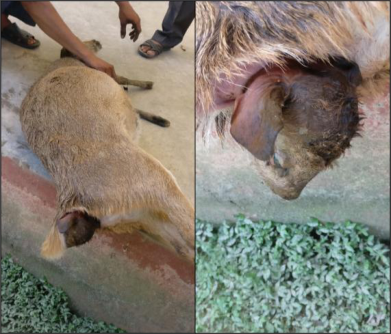 Figure 1
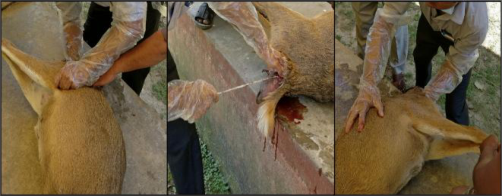 Figure 2
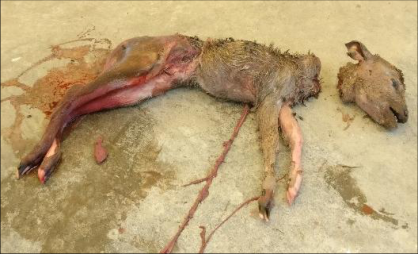 Figure 3
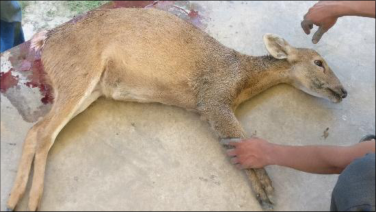 Fig. 4
Introduction
Dystocia is a significant cause of perinatal morbidity and mortality in both domestic and wild ruminants, arising from maternal, fetal, or mechanical factors. Among cervids, fetal causes particularly malpresentation and malposture are frequently implicated, with flexion deformities of the head, neck, or limbs constituting major obstructive conditions (Smythe, 1986; Lawrence, 1986) [7,5] . Bilateral shoulder flexion, though less commonly reported, increases the effective thoracic diameter of the fetus and prevents its passage through the maternal pelvic canal, thereby necessitating obstetrical intervention. In farmed and semidomesticated deer populations, dystocia has been associated with calf birth weight, pelvic conformation, nutritional status, and reproductive management practices (Mee, 2008; Woodbury et al., 2006) [6,10] . Studies in sambar deer (Cervus unicolor) and other cervid species indicate that reproductive efficiency, fawn survival, and perinatal mortality are influenced by both maternal and fetal determinants (Haigh et al., 2005; Chan et al., 2009) [4,2] . Similar patterns have been documented in red deer (Cervus elaphus), where dystocia contributes substantially to neonatal losses. The hog deer (Axis porcinus), a medium-sized cervid native to South and Southeast Asia, typically has a gestation period ranging from approximately 220 to 230 days, comparable to other small cervids. Most pregnancies result in the birth of a single fawn. As in other deer species, parturition is usually rapid and unassisted; therefore, prolonged labor often indicates fetal maldisposition or obstruction requiring clinical management. Although obstetrical techniques such as mutation, traction, and fetotomy are well established in domestic ruminant practice (Engum & Lyngset, 1970) [3] , their application in wild cervids remains infrequently documented. Reports describing dystocia management in deer species are limited (Thirumurugan et al., 2014) [9] , highlighting the need for additional clinical documentation. The present study describes the clinical management of dystocia due to bilateral shoulder flexion in a free-ranging hog deer (Axis porcinus), emphasizing the diagnostic approach, obstetrical intervention, and maternal outcome.
Materials and Methods
A full-term pregnant free-ranging female hog deer (Axis porcinus), weighing approximately 34 kg, was presented with a history of prolonged labor and protrusion of the fetal head from the vulva (Fig. 1). The case was managed at a veterinary referral facility under field-compatible clinical conditions. Clinical assessment of fetal viability was performed at presentation, and absence of reflexes, corneal response, and detectable fetal movement confirmed fetal death prior to obstetrical intervention.
Clinical Examination
Physical examination included recording of rectal temperature, heart rate, and respiratory rate. Hydration status was assessed based on mucous membrane appearance and general demeanor. Per-vaginal examination was performed using sterile lubrication to determine fetal presentation, position, and posture (Fig. 2). The fetus was identified in anterior longitudinal presentation with dorsosacral position and bilateral flexion of both forelimbs at the shoulder joints.
Pre-operative Management
Supportive therapy was initiated prior to obstetrical intervention. Intravenous fluid therapy was administered to address dehydration. Dexamethasone was given as supportive medication. Epidural anesthesia was achieved by administering 1 ml of 2% lignocaine hydrochloride in the sacrococcygeal space to reduce straining and facilitate manipulation. The birth canal was lubricated using carboxymethyl cellulose to minimize friction during the procedure.
Obstetrical Procedure
As manual correction was not feasible, partial fetotomy was performed. Decapitation of the protruded fetal head was carried out using a small ruminant fetotome under epidural anesthesia (Fig. 2). Following removal of the head, both forelimbs were corrected alternately using a blunt eye hook. Controlled traction was then applied to facilitate per-vaginal delivery.
Post-procedural Protocol
Post-intervention therapy included intramuscular administration of enrofloxacin (5 ml, IM), multivitamins (1.5 ml, IM), and meloxicam (1.5 ml, IM) for three consecutive days. A 20 ml intrauterine herbal cleanser was administered daily as part of uterine care.
Results
On presentation, the doe was recumbent and dehydrated, with a rectal temperature of 102.8 °F, heart rate of 98 beats/min, and respiratory rate of 34 breaths/min. The fetal head was protruding from the vulva and appeared edematous and dry, suggesting prolonged exposure and obstruction. Per-vaginal examination confirmed anterior longitudinal presentation with dorsosacral position and bilateral shoulder flexion. Manual mutation was not possible due to impaction and restricted intrauterine space. Partial fetotomy involving decapitation of the fetal head was successfully performed under epidural anesthesia. Following improved intrauterine access, both forelimbs were extended alternately using a blunt eye hook. Controlled traction facilitated complete vaginal delivery of the dead fawn (Fig. 3). No immediate complications such as excessive hemorrhage, vaginal laceration, or uterine rupture were observed during or immediately after the procedure. Postoperative therapy was administered as per protocol. The dam remained clinically stable during the monitoring period and showed progressive improvement in hydration and activity (Fig. 4). No signs of metritis, systemic illness, or retained fetal membranes were observed during the threeday observation period.
Discussion
Dystocia in cervids is relatively less documented compared to domestic bovines, yet fetal malposture remains a primary cause when it occurs (Smythe, 1986; Lawrence, 1986) [7,5] . Bilateral shoulder flexion increases the effective fetal thoracic diameter and prevents engagement within the maternal pelvic canal. In small-bodied cervids such as hog deer, limited pelvic capacity further compounds the obstruction. Risk factors associated with dystocia in deer include fetal size, pelvic conformation, nutritional status, and reproductive management (Mee, 2008) [6] . In farmed cervid species, perinatal mortality has been correlated with obstructive dystocia and delayed intervention ( [4,10] . Although hog deer typically experience rapid and uncomplicated parturition following a gestation period of approximately 220-230 days, prolonged labor should raise suspicion of fetal maldisposition.
In domestic ruminants, bilateral shoulder flexion may sometimes be corrected through repulsion and mutation; however, in wildlife species, anatomical constraints and stress responses often limit prolonged manipulation. When the fetus is non-viable and mutation is impractical, fetotomy remains a rational alternative to cesarean section, particularly in field-compatible settings (Engum & Lyngset, 1970) [3] . Reports describing dystocia management in deer species remain limited (Thirumurugan et al., 2014) [9] , and documentation of fetotomy in free-ranging cervids is especially scarce. The present case demonstrates that partial fetotomy can be adapted effectively to cervid obstetrics when performed with adequate stabilization, epidural anesthesia, and proper lubrication.
Early correction was critical in preventing secondary complications such as uterine rupture, septic metritis, or maternal mortality. The favorable maternal outcome supports the clinical feasibility of applying established ruminant obstetrical principles to wildlife practice, provided careful case selection and timely intervention. Wildlife obstetrics sits at an interesting intersection of anatomy, behavior, and logistics. When anatomy narrows the exit and time narrows the margin for error, technique becomes the deciding variable. In this case, disciplined application of a classical ruminant procedure resolved a mechanically obstructive dystocia while preserving maternal health which, in wildlife management, is always the primary objective.
Conclusion
Partial fetotomy was successfully employed to resolve dystocia caused by bilateral shoulder flexion in a freeranging hog deer (Axis porcinus). Manual correction was not feasible due to fetal impaction and limited pelvic space. Decapitation followed by forelimb extension allowed controlled vaginal delivery. No intraoperative or immediate post-operative complications were observed. The case supports the use of conventional ruminant obstetrical techniques in wildlife practice when timely intervention is performed.
Statements and Declarations Ethical Approval and Consent to Participate
The clinical intervention was performed as an emergency therapeutic procedure to save the life of the animal. No experimental protocol was involved.
Consent for Publication
Consent for Publication
Acknowledgement
AcknowledgmentsThe authors acknowledge the clinical and support staff involved in the management of the case.
References
10 in the original paper- Audigé L, Wilson PR, Morris RS, Vosloo A. A birthweight and dystocia model in farmed red deer (Cervus elaphus). Prev Vet Med. 2001;50(3-4):241-255.
- Chan JP-W, Hsu W-L, Chen T-H, Chang C-C. Obstetrical management and perinatal survival in farmed sambar deer (Cervus unicolor). Theriogenology. 2009;72(1):96-102.
- Engum O, Lyngset O. Fetotomy in large animals. Acta Vet Scand. 1970;11(4):545-556.
- Haigh JC, Hudson RJ, Bubenik GA. Reproductive performance and perinatal mortality in farmed deer. Anim Reprod Sci. 2005;85(3-4):323-336.
- Lawrence TLJ. Reproductive disorders in deer. Vet Rec. 1986;118(3):65-68.
- Mee JF. Prevalence and risk factors for dystocia in cattle: A review. Vet J. 2008;176(1):93-101.
- Smythe RH. Obstetrical conditions in deer species. J Zoo Wildl Med. 1986;17(2):89-94.
- Su C-H, Huang C-J, Lin Y-C, Chen H-C. Clinical management of dystocia in farmed deer. Taiwan Vet J. 2010;36(2):101-107.
- Thirumurugan P, Suresh S, Kathiravan P. Management of dystocia in spotted deer (Axis axis): A case report. Indian J Anim Reprod. 2014;35(2):78-80.
- Woodbury MR, Haigh JC, Hudson RJ. Neonatal survival and perinatal management in farmed cervids. Small Ruminant Res. 2006;63(1-2):1-7.