
Research article · 2026 · Full text
International Journal of Horticulture and Food SciencePreparation, Characterization and Evaluation of a Novel Bio-Fertilizer from Cow Dung Cake, Banana Waste (Musa ×paradisiaca) and Eggshell
Volume 8(2) · Pages 35–38 · DOI: 10.33545/26631067.2026.v8.i2a.483 ↗
Research areasPlant Growth Enhancement TechniquesInnovations in Aquaponics and Hydroponics SystemsComposting and Vermicomposting Techniques
Abstract
Author-writtenThe extensive use of chemical fertilizers has resulted in soil degradation, nutrient imbalance, environmental pollution, and a decline in beneficial soil microbiota. To address these issues, a value-added biofertilizer was developed from organic waste materials through controlled biological processing. Eggshell waste was utilized as a calcium source and pH buffering agent, banana waste served as a source of potassium and phosphorus, and cow dung cake provided organic nitrogen and a diverse microbial consortium. In the present study, a novel bio-fertilizer was prepared using cow dung cake, banana waste, and eggshell. The prepared biofertilizer was characterized using physicochemical, chemical, and biological parameters. Its effectiveness was evaluated by comparing plant growth with a chemical NPK fertilizer. The results demonstrate that the developed bio-fertilizer improves soil fertility, enhances plant growth, and offers a sustainable alternative to synthetic fertilizers.
Summary
Source-checkedPlain-language reading of the full paper, prepared with AI and checked against the text. Each point links to the authors' own words.
Why it matters
- Heavy reliance on chemical fertilizers has led to negative outcomes such as soil degradation, pollution, and a loss of beneficial soil microbes. View evidence ↗
- Biofertilizers use living microorganisms to improve plant productivity by making essential nutrients more available through biological processes. View evidence ↗
- Organic waste materials provide specific nutrients: eggshells provide calcium and pH buffering, banana waste provides potassium and phosphorus, and cow dung provides nitrogen and microbes. View evidence ↗
The question
- The study aimed to prepare and evaluate a novel bio-fertilizer made from cow dung cake, banana waste, and eggshell. View evidence ↗
What they did
- Distilled water was added to the mixture to maintain a moisture content of approximately 55-60% to support microbial activity. View evidence ↗
- The mixture underwent a bio-curing process at ambient temperature for 10 to 15 days. View evidence ↗
- The effectiveness of the bio-fertilizer was tested on the growth and yield of lady's finger (Abelmoschus esculentus). View evidence ↗
What they found
- The organic treatment increased the germination rate to 90%, compared to 75% in the control group. View evidence ↗
- At 30 days after sowing (DAS), plants treated with the bio-fertilizer reached an average height of 43 cm, while control plants were 28 cm. View evidence ↗
- Treated plants produced an average of 15 leaves per plant, whereas control plants produced 9. View evidence ↗
- The organic treatment led to earlier flowering, occurring at 39 days after sowing compared to 47 days for the control. View evidence ↗
- The number of fruits per plant increased to 16 with the organic treatment, compared to 9 in the control group. View evidence ↗
- The average fruit length was 14 cm for treated plants, compared to 9 cm for control plants. View evidence ↗
- Treated plants produced fruits that were deep green, tender, and uniform in shape, while control fruits were thinner and uneven. View evidence ↗
What it means
- The authors conclude that this organic fertilizer is an effective, sustainable, and eco-friendly alternative to synthetic fertilizers for improving soil health and crop productivity in lady's finger cultivation. View evidence ↗
Visual summary
3 visualsIllustrations explain the paper; charts are replotted from the paper's own table values.
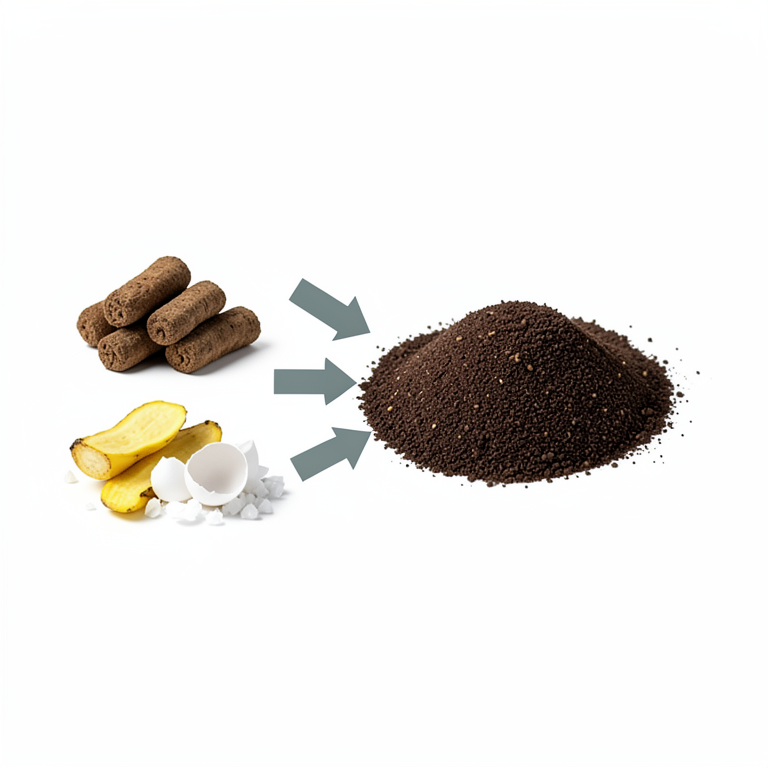
Bio-Fertilizer Composition
AI-generated conceptual illustration (cow dung cakes, banana peels, and crushed eggshells). It explains the idea and does not show study data.
View source evidence ↗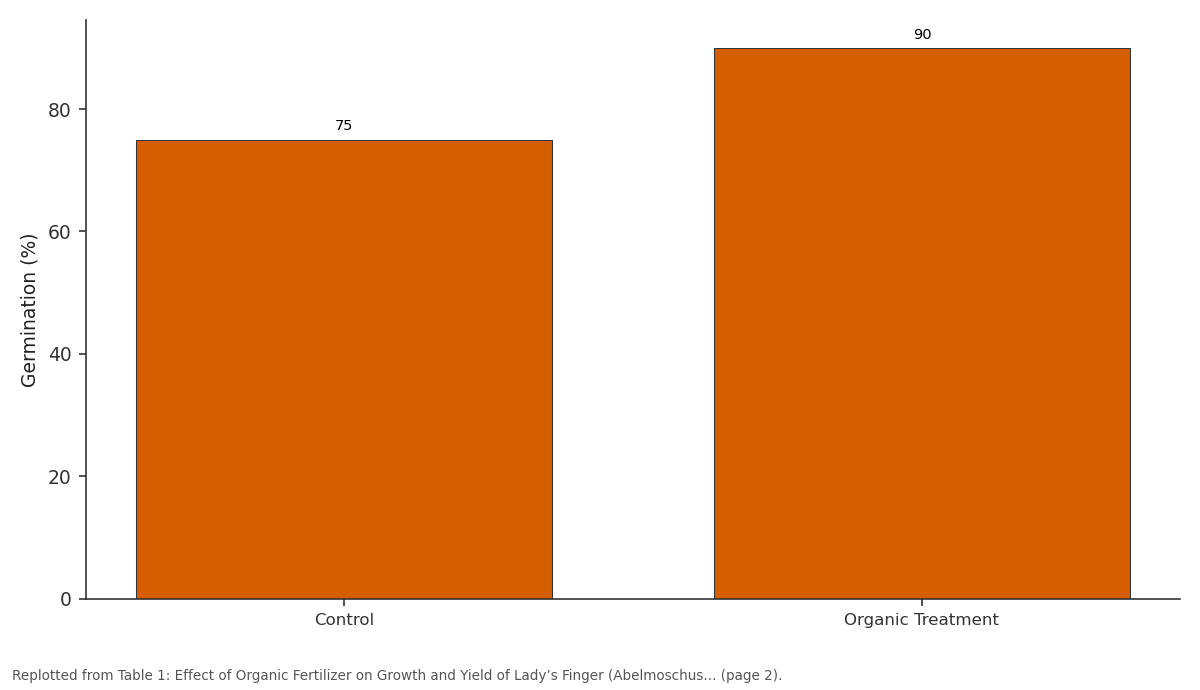
Germination (%): Control vs Organic Treatment
Replotted from Table 1 (page 2) of the original paper. Every bar is the paper's own table value.
View source evidence ↗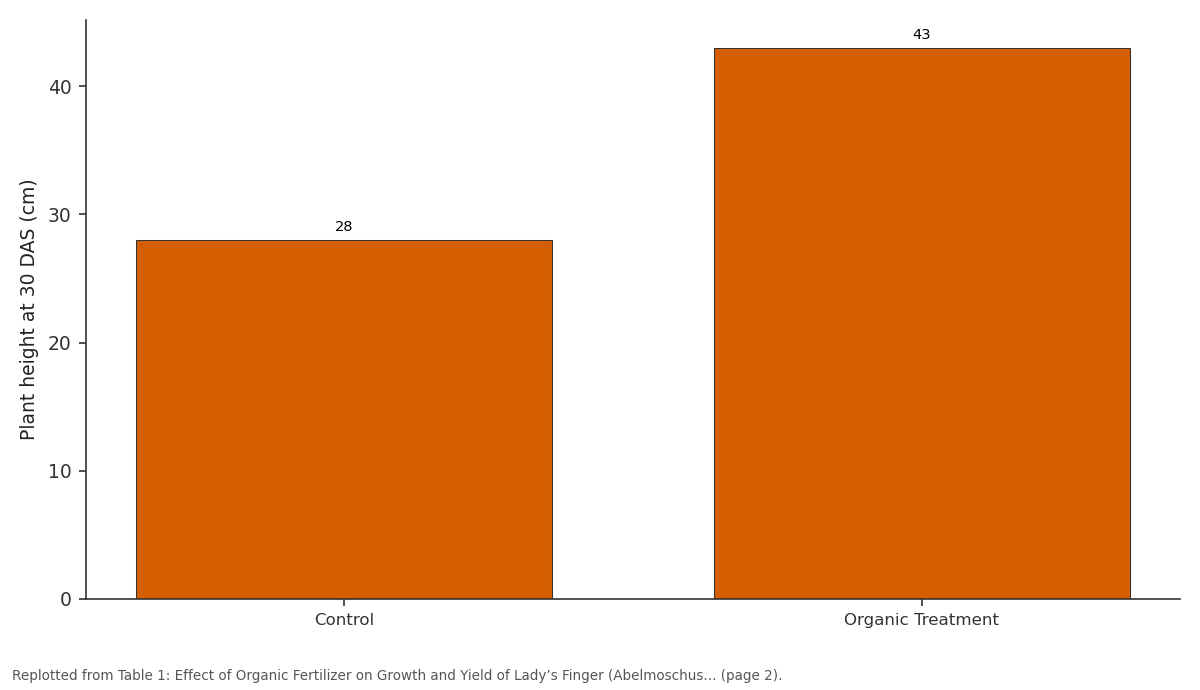
Plant height at 30 DAS (cm): Control vs Organic Treatment
Replotted from Table 1 (page 2) of the original paper. Every bar is the paper's own table value.
View source evidence ↗Figures & tables
From the original paper Table 1
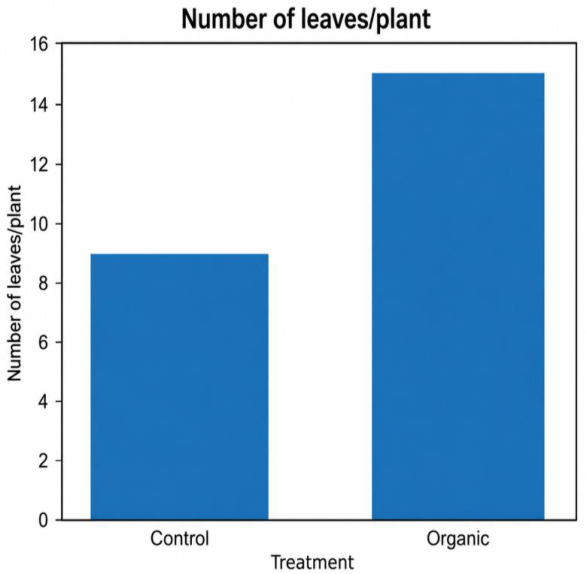 Figure 1
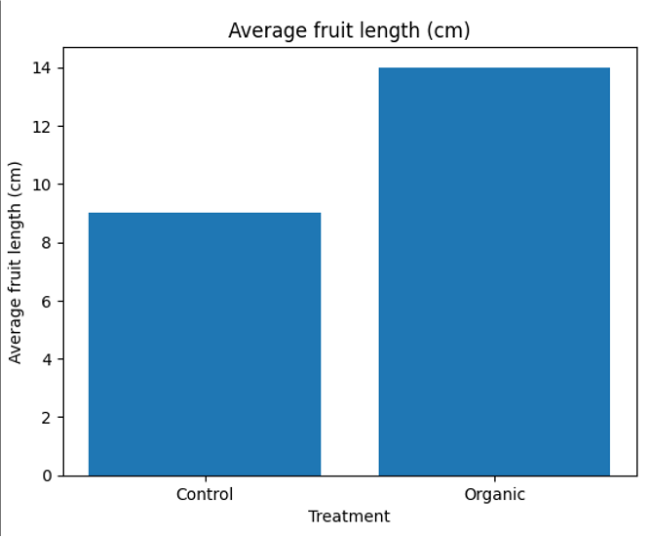 Figure 2
Introduction
The global demand for food production is projected to increase by approximately 60-70% by 2050 due to population growth, urbanization, and changing dietary patterns [1] . To meet this demand, modern agriculture has relied heavily on chemical fertilizers, particularly nitrogen (N), phosphorus (P), and potassium (K). Global fertilizer consumption exceeded 190 million metric tons in recent years, with nitrogen fertilizers accounting for nearly 60% of total usage (International Fertilizer Association [2] . Although chemical fertilizers have significantly increased crop yields, their excessive and indiscriminate application has resulted in serious environmental and agronomic challenges, including soil degradation, nutrient leaching, eutrophication of water bodies, greenhouse gas emissions, and declining soil microbial diversity [3] . Biofertilizers are microbial inoculants containing living or latent microorganisms that enhance plant growth and productivity by increasing the availability and uptake of essential nutrients through biological mechanisms. Unlike synthetic fertilizers, which provide nutrients in chemically soluble forms, biofertilizers operate by fixing atmospheric nitrogen, solubilizing insoluble mineral nutrients, and improving nutrient cycling within the soil-plant system [4] . Their effectiveness depends on the successful colonization of the rhizosphere or plant tissues and the establishment of beneficial plantmicrobe interactions. The principal groups of biofertilizers include nitrogen-fixing bacteria such as Rhizobium, Azotobacter, and Azospirillum; phosphate-solubilizing microorganisms belonging to genera such as Bacillus and Pseudomonas; potassium-mobilizing microbes; and arbuscular mycorrhizal fungi (AMF). These microorganisms contribute to plant growth by improving nutrient availability, synthesizing phytohormones, enhancing root development, and increasing plant tolerance to biotic and abiotic stresses [5] . In addition, biofertilizers play a significant role in maintaining soil health by promoting microbial diversity, improving soil structure, and sustaining long-term soil fertility. The widespread and intensive use of chemical fertilizers has resulted in numerous environmental and agronomic challenges, including soil degradation, nutrient imbalance, groundwater contamination, and the decline of beneficial soil microorganisms [6] . In this context, biofertilizers have gained increasing attention as an integral component of sustainable and integrated nutrient management systems.
Their use has been shown to reduce dependence on chemical fertilizers, lower production costs, and mitigate adverse environmental impacts without compromising crop yields [7] . Therefore, in this study, we deeply focused on preparing a Novel Bio-Fertilizer from Cow Dung Cake, Banana Waste (Musa × paradisiaca) and Eggshell which does not affect the growth of plant and soil fertility.
Materials and Methods
Materials and Methods
Preparation of Bio-fertilizer
A mixed bio-fertilizer was formulated by combining cow dung cake extract, banana peel powder, and eggshell powder. The components were blended in an optimized ratio determined through preliminary trial experiments to achieve a balanced nutrient composition and enhanced microbial activity in the final formulation.
Optimized Composition
Cow dung cake: 50% Banana peel powder: 30% Eggshell powder: 20%
The selected ratio ensures an effective balance of macronutrients (N, K, Ca) and organic matter while supporting beneficial microbial growth.
Formulation Procedure
The weighed quantities of each component were thoroughly mixed in a clean plastic container. The mixture was homogenized manually using a sterile spatula to ensure uniform distribution of nutrients and microorganisms. Homogenization was considered a critical step to prevent nutrient segregation and to ensure consistent fertilizer quality. Distilled water was gradually added to maintain an adequate moisture content of approximately 55-60%, which was optimal for microbial activity. The mixture was loosely covered to allow aeration while preventing contamination by insects and dust. The homogenized mixture was subjected to a bio-curing process for 10-15 days at ambient temperature. During this period, the material was intermittently turned or stirred at two-day intervals to maintain aerobic conditions, enhance oxygen diffusion, and ensure uniform microbial colonization. This bio-curing phase served as a critical stabilization and maturation step for the biofertilizer, during which intensified microbial activity promoted the mineralization of labile organic substrates, reduction of phytotoxic compounds, and establishment of beneficial microbial populations essential for nutrient transformation and plant growth-promoting functions.
Results & Discussion
Application of an organic fertilizer comprising cow dung, banana peel, and eggshell significantly influenced the growth, flowering, and yield attributes of lady's finger (Abelmoschus esculentus). Treated plants exhibited superior performance compared to the control throughout the growth period.
Growth parameters
An increase in germination percentage was observed in treated plots (85-90%) compared to control plants (70-75%), indicating improved seedling establishment under organic nutrient management. At 30 days after sowing (DAS), treated plants attained an average height of 40-45 cm, whereas control plants reached only 25-30 cm. The number of leaves per plant was also higher in treated plants (14-16 leaves) compared to control (8-10 leaves), reflecting enhanced vegetative growth were shown in Table 1 and it is shown in Figure 1. The improvement in growth parameters can be attributed to the availability of nitrogen and organic matter from cow dung, which enhances microbial activity and nutrient mineralization in the soil, leading to better nutrient uptake.
| Parameter | Control | Organic Treatment |
|---|---|---|
| Germination (%) | 75 | 90 |
| Plant height at 30 DAS (cm) | 28 | 43 |
| Number of leaves per plant | 9 | 15 |
| Days to first flowering | 47 | 39 |
| Number of fruits per plant | 9 | 16 |
| Average fruit length (cm) | 9 | 14 |
Table text extracted from the original PDF; superscript letters are shown inline. The original table image is below.
View original table image
Flowering and fruiting response
Early flowering was recorded in organically treated plants, with first flowering occurring at 38-40 DAS, while control plants flowered at 45-48 DAS. The number of fruits per plant increased significantly in treated plants (15-18 fruits) compared to control (8-10 fruits). Fruit length was also higher in treated plants, ranging from 12-15 cm, whereas control fruits measured only 8-10 cm tabulated-Table 1 and shown in Figure 2.
Fruit quality and yield
Fruits harvested from treated plants were uniform in shape, tender, and deep green in color, indicating improved quality. Control plants produced comparatively thinner and uneven fruits. The enhanced fruit quality may be attributed to calcium supplied by eggshells, which strengthens cell walls, improves fruit firmness, and reduces physiological disorders.
Integrated nutrient effect
The combined application of cow dung, banana peel, and eggshell resulted in a balanced and slow-release nutrient supply, improving soil fertility and sustaining plant growth over time. Unlike chemical fertilizers, this organic treatment enhanced soil physical and biological properties while minimizing nutrient loss and environmental impact. Overall, the results demonstrate that the integrated organic fertilizer significantly improves growth, yield, and quality of lady's finger, highlighting its potential as a sustainable alternative to conventional fertilizers.
Conclusion
The findings of the present investigation indicate that the application of organic fertilizer derived from cow dung, banana peel, and eggshell exerted a positive influence on the growth and yield of lady's finger (Abelmoschus esculentus). Organically treated plants showed improved germination, enhanced vegetative growth, early onset of flowering, and increased fruit number and size when compared with the control. The observed improvements may be attributed to the integrated and balanced supply of essential macronutrients, particularly nitrogen, potassium, phosphorus, and calcium, along with improved soil physical and biological properties. The slow and sustained release of nutrients from the organic inputs ensured better nutrient uptake and minimized losses. In conclusion, the combined application of cow dung, banana peel, and eggshell proved to be an effective and sustainable nutrient management strategy for lady's finger cultivation and can be recommended as an ecofriendly alternative to synthetic fertilizers for improving crop productivity and soil health.
References
7 in the original paper- Food and Agriculture Organization of the United Nations. FAO. 2017.
- International Fertilizer Association. Fertilizer outlook 2022-2026. Paris: International Fertilizer Association; 2022.
- Tilman D, Balzer C, Hill J, Befort BL. Global food demand and the sustainable intensification of agriculture. Proceedings of the National Academy of Sciences of the United States of America. 2011;108(50):20260-20264.
- Vessey JK. Plant growth promoting rhizobacteria as biofertilizers. Plant and Soil. 2003;255(2):571-586.
- Bhattacharyya PN, Jha DK. Plant growth-promoting rhizobacteria (PGPR): Emergence in agriculture. World Journal of Microbiology and Biotechnology. 2012;28(4):1327-1350.
- Mahanty T, Bhattacharjee S, Goswami M, Bhattacharyya P, Das B, Ghosh A, Tribedi P. Biofertilizers: A potential approach for sustainable agriculture development. Environmental Science and Pollution Research. 2017;24(4):3315-3335.
- Malusá E, Sas-Paszt L, Ciesielska J. Technologies for beneficial microorganisms inocula used as biofertilizers. The Scientific World Journal. 2012; 2012:491206.