
Research article · 2025 · Full text
International Journal of Agriculture and NutritionGovernment interventions and agricultural transformation: Micro-regional evidence from Kandaghat block, Solan district, Himachal Pradesh
Volume 7(9) · Pages 59–63 · DOI: 10.33545/26646064.2025.v7.i9a.289 ↗
Research areasAgricultural Innovations and PracticesAgricultural Economics and PracticesAgricultural risk and resilience
Abstract
Author-writtenThe present study examines the impact of government initiatives on agricultural production in Kandaghat block, Solan district, Himachal Pradesh. Based on primary data from 100 respondents across three Panchayats—Basha, Siri Nagar, and Wakna—the research evaluates the level of awareness, participation, and effectiveness of key agricultural schemes. Findings reveal high awareness (99%) and participation (94%) in government programs, with the Gram Panchayat playing a central role in information dissemination. The majority of farmers (94%) have adopted modern agricultural practices, leading to increased productivity and improved incomes, with 92% reporting income growth in the past three years. Farmers also recognized the contribution of schemes toward crop diversification and sustainable farming, though challenges such as bureaucratic delays, limited inclusion of marginal farmers, gender disparities, and weak market linkages remain. The study emphasizes the importance of simplifying scheme access, strengthening Panchayat-led outreach, tailoring interventions to hill-specific conditions, and enhancing storage and market infrastructure. Future research should explore long-term sustainability outcomes, gender participation, youth engagement, and comparative hill-region strategies. Overall, the findings underscore that inclusive, context-sensitive, and well-implemented schemes can transform agriculture in hilly regions into a more resilient and sustainable sector.
Summary
Source-checkedPlain-language reading of the full paper, prepared with AI and checked against the text. Each point links to the authors' own words.
Why it matters
- Agriculture is the largest industry in Himachal Pradesh, employing nearly 75% of the population and contributing more than half of the state's net domestic product. View evidence ↗
- The Kandaghat block in Solan district is a significant area for studying government initiatives due to its diverse agro-climatic conditions and prevalence of small and marginal landholdings. View evidence ↗
The question
- The study aims to examine how government initiatives have impacted agricultural production within the Kandaghat block of Solan district, Himachal Pradesh. View evidence ↗
What they did
- The researchers used convenient random sampling to select 100 respondents (mostly aged 40–60) from three Panchayats: Siri Nagar (36), Basha (29), and Wakna (35). View evidence ↗
- Primary data collection involved semi-structured interviews with Agriculture Development Officers and Panchayat leaders, as well as Focus Group Discussions with youth, women, and farmers. View evidence ↗
- The study utilized a structured questionnaire containing 30 questions to gather data from the respondents. View evidence ↗
What they found
- Awareness of government agricultural schemes was nearly universal at 99%, with Gram Panchayats serving as the primary information source for 69% of respondents. View evidence ↗
- Participation levels were high, with 97% of respondents participating in some form and 94% having applied for at least one government scheme. View evidence ↗
- Government schemes improved access to agricultural inputs for 93% of farmers and increased yields for 93% of participants, with 44% reporting significant gains. View evidence ↗
- Crop diversification occurred for 94% of respondents, especially in Wakna and Basha, suggesting that schemes drove structural changes in farming. View evidence ↗
- The adoption rate for modern agricultural equipment and inputs was 94%, with nearly all farmers in Basha adopting these practices. View evidence ↗
- Income growth was widespread, with 92% of farmers reporting increases and no respondents reporting a decline in income. View evidence ↗
- While 72% of farmers believed government schemes contributed to sustainable agriculture, 28% remained skeptical, particularly those in Wakna. View evidence ↗
What it means
- The authors conclude that government initiatives have had a positive influence on Kandaghat's agriculture by increasing income, productivity, and crop diversification. View evidence ↗
- The authors recommend expanding farmer training, investing in markets and storage, simplifying applications, tailoring schemes to hill regions, and strengthening outreach via Panchayats. View evidence ↗
- The study notes that less educated respondents, women, and marginal farmers face barriers to accessing schemes due to inadequate training, complex procedures, and limited resources. View evidence ↗
- The authors state that future research should investigate the long-term sustainability of these schemes, specifically regarding natural farming adoption, climate resilience, and soil health. View evidence ↗
Visual summary
1 visualsIllustrations explain the paper; they do not show study data.
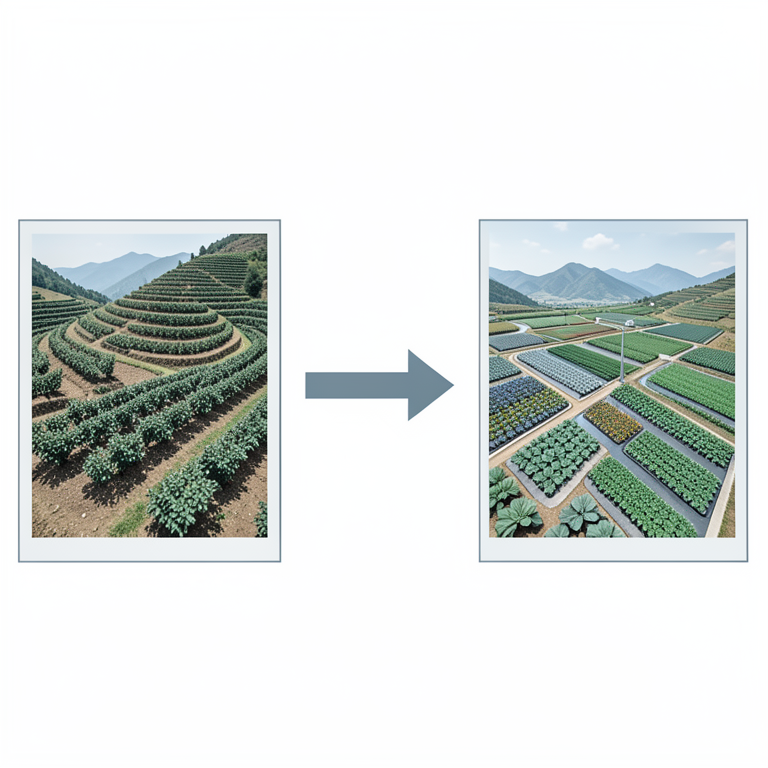
Study overview
AI-generated conceptual illustration (Apple orchards and vegetable farms in the Himalayan foothills of Himachal Pradesh). It explains the idea and does not show study data.
View source evidence ↗Introduction
Agriculture, derived from the Latin ager (field) and colo (cultivate), involves the cultivation of crops and domesticated animals to sustain human needs. It includes practices like horticulture, arboriculture, and livestock management, classified by soil, intensity, or type of produce. While often seen as crop cultivation, it broadly covers both plant and animal farming. Defined by the Oxford English Dictionary as the science and art of cultivating soil, harvesting crops, and rearing livestock, agriculture is rooted in two processes-cultivation and domestication. It also encompasses diverse production systems and functions as a landscape-scale process of food production, with horticulture specifically referring to smallscale gardening near homes [1] . It plays a role in traditional agricultural systems and the study of agriculture's origins. In agriculture, arboriculture refers to the cultivation of trees and shrubs primarily for fruits, nuts, seeds, and ancillary products like wood and fiber. It is sometimes linked to agroforestry and includes orchards, plantations, and, to some extent, timber production, though large-scale timber farming is typically classified as forestry. Agriculture is defined by the scale of cultivation, its impact on landscapes, and its role in the human diet. It involves the systematic cultivation of plants and animals, transforming land for large-scale crop and livestock production [2] .
In India, agriculture's share in GDP fell from 36.4% in 1982-83 to 18.5% in 2006-07, while industry and services grew faster. Yet, dependence on agriculture for livelihood has remained unchanged. To strengthen the sector, the government and RBI boosted credit flow, with disbursements surpassing targets. Crop production is shaped by weather, inputs (fertilizers, irrigation, seeds, credit), and price signals, with MSPs guiding crop choices. Monsoon variability and irrigation levels drive output fluctuations, while productivity remains low and uneven across statesfor instance, wheat yields in 2005-06 ranged from 1,393 kg/ha in Maharashtra to 4,179 kg/ha in Punjab. The Eleventh Plan noted wide yield gaps, stressing the scope for improvement through better practices. The XII Five Year Plan (2012-17) allocated ₹4.43 lakh crore to rural development, higher than the previous plan. Though agriculture contributes only about 14% of GDP, it remains the main livelihood for most rural Indians and has shown improved growth and diversification (GOI, 2012) [3] .
Major Initiatives In Agricultural Development In Himachal Pradesh
Agriculture plays a vital role in the economy of Himachal Pradesh, being the largest industry in the state. It provides direct or indirect employment to nearly 75% of the population and contributes over half of the state's net domestic product. Recognizing its importance, the state government has consistently prioritized the agricultural sector. This commitment is reflected in the establishment of separate departments, such as horticulture, which were originally part of the agriculture department, to ensure more effective and efficient implementation of various programs and strategies [4] . Himachal Pradesh, primarily known for its hilly terrain and horticulture based agriculture, has also been the beneficiary of such government efforts. The Kandaghat block of Solan district, characterized by small and marginal landholdings, diverse agro -climatic conditions, and a dependence on both agriculture and allied activities, presents a unique case for studying the real world impact of these initiatives.
Review of Literature
Gupta, P. et al. (2018) [5] examined farmer perceptions of climate change and its impact on apple cultivation in Shimla district, Himachal Pradesh. Drawing on household surveys in Cheog and Baldeyan Panchayats, the study highlighted that the majority of farmers were aware of changing climatic conditions and reported adverse effects on horticulture productivity. Apple growers associated climate variability with declining yields, reduced fruit quality, and increased uncertainty in income. The findings emphasized that climate change poses a serious threat to rural livelihoods and longterm economic stability in the region. The authors recommended farmer-centered adaptation strategies to mitigate these risks and sustain apple cultivation under shifting climatic conditions. Gupta, P. at al. (2018) [6] showed that farmers widely perceive climatic changes as reducing yields, quality, and livelihood security, stressing the need for local adaptation. Complementing this, Bhattacharya, Gupta, and Sharma (2018) analyzed three decades of secondary data, finding that while apple cultivation has expanded, production trends remain unstable due to climate shifts, pests, and diseases. Together, these studies highlight both farmer perceptions and empirical evidence of climate risks, underscoring the need for adaptive policy responses in Himalayan horticulture. Arora (2019) [7] highlights agriculture's dual role in climate change, noting adverse effects from rising temperatures and erratic rainfall. He recommends climate-resilient crops, agroforestry, and farmer education, advocating a systemsbased sustainability approach. Kumar, S. (2020) [8] explores agricultural marketing issues in hill regions, including weak infrastructure, storage gaps, and middlemen dominance. He suggests digital platforms, contract farming, and niche product promotion supported by institutional reforms. Bhattarai et al. (2021) [9] use satellite data to link groundwater depletion with declining cropped areas, especially wheat, threatening food security. They call for less water-intensive crops, efficient irrigation, and stronger water governance. Thakur, A. et al. (2020) [10] , examined the Kharal valley of Kullu district, where agriculture and horticulture remain the backbone of rural livelihoods. Their study highlighted the persistence of indigenous practices such as oxen-ploughing, cow dung manuring, and irrigation through the kulh system, alongside traditional post-harvest methods. However, they noted that climate change has severely affected the cultivation of traditional crops, many of which are now at risk of extinction due to low tolerance to extreme weather conditions. This work draws attention to the dual challenge of sustaining traditional knowledge systems while also modernizing agricultural practices to cope with climatic pressures. Akkaya et al. (2021) [11] argue that targeted government interventions-R&D subsidies, PPPs, and institutional support-are more effective than blanket subsidies in fostering agricultural innovation and sustainable growth. Barbosa (2024) [12] analyzes global policy tools for sustainable farming, including eco-subsidies, ecosystem payments, and regulatory reforms. He advocates shifting support from harmful subsidies to inclusive, context-specific strategies. Shubham (2024) [13] evaluates the Mid-Himalayan Watershed Development Project, noting gains in productivity, diversification, and livelihoods, but highlights sustainability, participation, and coordination challenges needing stronger policy support.
Objectives of the study 1. To identify and document key government agricultural initiatives in Kandaghat block. 2. To assess farmer awareness and participation levels. 3. To evaluate the impact of schemes on crop yield, cropping patterns, input use, and income.
Materials and Methods
The study used a multi-stage sampling design. Solan district was purposively selected, and within it, Kandaghat block was chosen for its mix of traditional and modern farming. Three Panchayats-Siri Nagar, Basha, and Wakna-were sampled based on accessibility and active farming. A total of 100 respondents, mostly aged 40-60 years, were selected through convenient random sampling (36 from Siri Nagar, 29 from Basha, and 35 from Wakna). Both primary and secondary data were used. Primary data was collected through Focus Group Discussions (FGDs) with farmers, women, and youth, and semi-structured interviews with Panchayat leaders and Agriculture Development Officers. These covered socioeconomic profiles, resource use, traditional knowledge, and scheme performance. Socio-demographic data (landholding, income, education) was also gathered to contextualize farmer experiences.
Data analysis and interpretation
This chapter presents the analysis of data collected from 100 respondents of 3 Panchayat that is Siri Nagar, Basha, Wakna, that come in Kandaghat block, district Solan, Himachal Pradesh. The objective is to understand the Impact of Government Initiatives on Agricultural production. The data has been gathered through a structured questionnaire consisting of 30 questions.
Socio-demographic profile of respondents
The survey revealed that most respondents were middleaged (40-60 years), accounting for 40%, with Siri Nagar recording the highest share (46.8%). Younger farmers (20-40 years) represented 28%, concentrated in Siri Nagar (37.5%), while elderly respondents (60+) formed 32%, with Basha showing a notably higher proportion. This suggests both generational continuity in farming and youth migration in certain areas. Gender distribution showed a male majority (58%), though Basha and Siri Nagar displayed relatively balanced participation compared to Wakna, indicating village-level differences in gendered access to farming roles. A strong majority (94%) of respondents were married, reflecting household-centered farming systems.
Cropping patterns and diversification
Cropping practices showed a mix of staples and diversification. Wheat (18.9%) and maize (17.5%) were the most common crops, with wheat concentrated in Siri Nagar and maize in Basha. Pulses, fruits, vegetables, mustard, and potatoes also contributed significantly to the cropping system, while ginger cultivation in Basha indicated niche specialization. These findings reflect an evolving pattern where subsistence crops coexist with diversified horticulture and cash crops.
Awareness and engagement with government schemes
Awareness of agricultural schemes was nearly universal (99%), largely mediated by Gram Panchayats (69%), followed by informal networks and social media. Among specific schemes, the Rajya Krishi Yantrikaran Programme (RKYP) was most recognized and widely applied for, followed by MMKUSY, SMAM, and NFSM. Overall, 94% of respondents reported having applied for at least one scheme, with 97% participating in some form. Although most respondents found application processes manageable (79% easy/very easy), difficulties persisted in Wakna. Importantly, 94% received assistance during applications, underscoring the role of institutional support.
Benefits, effectiveness, and outcomes
A large majority (91%) reported receiving benefits from schemes, mainly farm equipment (30.8%) and financial assistance (29.6%), followed by crop insurance, inputs, and training. Most respondents (80%) found support timely, though Siri Nagar reported occasional delays. Benefits were considered sufficient by 78%, particularly in Siri Nagar and Wakna, with slightly lower satisfaction in Basha. Schemes also improved access to agricultural inputs for 93% of farmers and led to yield increases for 93%-with 44% reporting significant gains. Crop diversification was reported by 94% of respondents, particularly in Basha and Wakna, indicating strong scheme-driven structural changes in farming practices.
Modernization, income, and sustainability
The adoption of modern agricultural inputs and equipment was high (94%), with near-universal uptake in Basha. Income improvements were also widespread: 43% of respondents reported significant increases and 49% slight increases over the past three years, with no recorded declines. Finally, 72% of farmers perceived government schemes as contributing to sustainable agriculture, though skepticism remained among 28%, particularly in Wakna, reflecting the need for stronger awareness and demonstration of long-term sustainability practices.
Key suggestions for strengthening agricultural schemes
Key suggestions for strengthening agricultural schemes
Suggestions and recommendation
This study, Impact of Government Initiatives on Agricultural Production in Kandaghat Block, Solan District, Himachal Pradesh, explored how agricultural schemes operate at the grassroots. Drawing from 100 respondents across Basha, Siri Nagar, and Wakna Panchayats, the findings highlight both the strengths and shortcomings of interventions in improving farming practices, productivity, and rural livelihoods. The research shows that while schemes have boosted awareness, participation, and modernization, challenges remain in inclusivity, sustainability, and administrative efficiency. The demographic profile revealed a predominance of middle-aged and married respondents, underscoring familycentered farming practices. Gender participation varied across villages, with Basha showing better female representation. Education levels ranged from illiterate to graduate, but gaps persist, particularly in Wakna, highlighting the need for farmer education and training to ensure equal access to schemes and technologies. Landholding patterns showed dominance of medium and large farmers, though marginal farmers remain vulnerable, pointing to unequal benefits in scheme access. Awareness and participation in schemes were impressively high, with 99% aware and 94% having applied to at least one program. The Gram Panchayat emerged as the key information source, reaffirming the importance of local governance. Popular schemes such as the Rajya Krishi Yantrikaran Programme (RKYP) and MMKUSY showed strong uptake, while NFSM lagged behind. High engagement demonstrates effective outreach, but variations in understanding and utilization suggest the need for simplified processes and better communication strategies. The adoption of modern agricultural inputs and equipment (94%) is a clear indicator of farmers' willingness to innovate. Government initiatives have successfully promoted mechanization, use of improved seeds, and fertilizers, contributing to better yields. Income levels reflect this progress, with 92% of farmers reporting increases, and none reporting declines. Similarly, 72% of respondents associated these schemes with sustainable farming practices, though doubts among some farmers highlight the need for more visible demonstrations of long-term benefits. Despite overall success, several challenges persist. Marginal farmers, women, and less educated respondents face barriers due to complex procedures, inadequate training, and weaker access to resources. Bureaucratic delays, poor market linkages, and limited use of digital or mass media further reduce efficiency. While awareness is high, deeper understanding of schemes and their benefits remains limited, creating an awareness-application gap. These challenges call for greater equity, simplification, and context-sensitive approaches tailored to hill farming conditions. In conclusion, government initiatives have positively influenced agriculture in Kandaghat by improving productivity, income, and diversification. However, the findings underscore the importance of making schemes more inclusive, timely, and sustainable. Recommendations include strengthening Panchayat-led outreach, simplifying application processes, tailoring schemes to hill regions, investing in storage and markets, and expanding farmer training programs. With responsive governance and community participation, agricultural policies can move beyond intent to impact, ensuring farming in Kandaghat evolves into a more resilient, profitable, and sustainable sector.
Conclusion Towards inclusive and sustainable agricultural development
This study demonstrates that government initiatives have made significant contributions to agricultural development in the Kandaghat block, particularly in improving awareness, adoption of modern practices, and farm incomes. Yet, the findings also highlight persistent gaps that must be addressed for long-term sustainability and inclusivity. First, local outreach through Panchayats and Krishi Vigyan Kendras remains the cornerstone of effective implementation. Strengthening these institutions and using local languages and digital tools can ensure that awareness translates into actual participation. Second, simplifying application and documentation procedures is essential to make schemes accessible for small, marginal, and less-educated farmers. Village-level facilitation centers and support mechanisms can bridge the gap between policy intent and farmer participation. Third, policies must be tailored to the unique needs of hilly regions. Promoting off-season vegetables, horticulture, and natural farming will not only improve incomes but also build resilience against climate and market uncertainties. Finally, strengthening markets and infrastructure is crucial. Investments in storage, cold chains, rural mandis, and Farmer Producer Organizations will enhance farmers' bargaining power, reduce dependence on middlemen, and ensure fairer farm-gate prices. Looking ahead, future research could focus on the long-term sustainability outcomes of government schemes, including their impact on soil health, climate resilience, and natural farming adoption. Greater attention to gender participation and youth engagement will provide valuable insights for more inclusive policies. Comparative research across different hill regions could also help identify best practices and region-specific strategies to strengthen agricultural development.
In sum, the road ahead lies in refining existing schemes through equity, simplification, and context-sensitive strategies. With responsive governance, strengthened institutions, and active community participation, agricultural initiatives can transform farming in Kandaghat into a more resilient, profitable, and sustainable sector.
References
11 in the original paper- Harris DR, Fuller DQ. Agriculture: definition and overview. 2013.
- Government of India. Twelfth Five Year Plan (20122017). Vol. I. New Delhi: NITI Aayog; 2013.
- Sharma KD. Export potential of high-value crops in the context of globalization. In: Compendium of lectures for summer school trainees. Palampur: Department of Agricultural Economics, HPKV; 1997 Jul 1-21. p. 27889.
- Gupta P, Sharma VK, Bhattacharya B. Farmer's perceptions on climate change and its impact on apple cultivation in Shimla district, Himachal Pradesh. Int J Creative Res Thoughts (IJCRT). 2018;6(1):604-12.
- Arora N. Impact of climate change on agriculture production and its sustainable solutions. Unpublished manuscript; 2019.
- Kumar S. Problems and prospects of agricultural marketing in hills of Himachal Pradesh. Unpublished study; 2020.
- Bhattarai M, Barker R, Narayanamoorthy A. The impact of groundwater depletion on agricultural production in India. Working paper/Report; 2021.
- Thakur A, Gupta P, Sharma VK. Traditional crops and indigenous farming practices in Kharal valley of Kullu district, Himachal Pradesh. Int J Agric Nutr. 2020;2(2):13-22.
- Akkaya D, Bimpikis K, Lee H. Government interventions to promote agricultural innovation. 2021.
- Barbosa M. Government support mechanisms for sustainable agriculture: a systematic literature review and future research agenda. 2024.
- Shubham. Assessment of Mid-Himalayan Watershed Development Project for improving agriculture and socio-economic structure of farmers in Himachal Pradesh. Unpublished dissertation; 2024.