
Research article · 2025 · Full text
International Journal of Agriculture and NutritionSeasonal incidence and population dynamics of major insect pests infesting okra (Abelmoschusesculentus L.)
Volume 7(10) · Pages 14–21 · DOI: 10.33545/26646064.2025.v7.i10a.296 ↗
Research areasAgricultural Practices and Plant GeneticsAgricultural pest management studiesInsect Pest Control Strategies
Abstract
Author-writtenOkra (Abelmoschus esculentus), also known as lady's finger, is a widely cultivated vegetable in tropical countries, particularly in India, Nigeria, Pakistan, Cameroon, Iraq, and Ghana. Although it is not commonly grown in Europe and North America, the vegetable has gained popularity in these regions due to its high nutritional value, including significant amounts of Vitamin A, folic acid, carbohydrates, phosphorus, and magnesium. The present investigation entitled “Seasonal Incidence and Management of Major Insect Pests of Okra” was carried out during the Kharif 2024 season at the Department of Entomology, Vasantrao Naik Marathwada Krishi Vidyapeeth, Parbhani. The study was designed to assess the seasonal incidence patterns of major insect pests infesting okra, the experiment included non-replicated observational trials for pest incidence monitoring Parbhani kranti variety, grown on a 10 X 10 m plot under the practices weekly observations of sucking pests populations on randomly selected plants were correlated with weather data. Seasonal pest monitoringrevealed that Aphis gossypii (aphid), Amrasca biguttula biguttula (leafhopper), Bemisia tabaci (whitefly), Thrips tabaci (thrips), Tetranychus urticae (mite), and Earias vittella (okra shoot and fruit borer) were the predominant insect pests observed. Aphid populations reached it’s peak 29.4 aphids per three leaves in the 40th meteorological week (MW), while leafhoppers showed a maximum count of 19.5 in the 37th MW. Whitefly and thrips populations reached their highest in the 33rd and 31st MWs respectively. Mite infestations shows it peakin the 37th MW, and Earias vittella damage reached it’s highest 27.4% fruit infestation in the 35th MW.
Summary
Source-checkedPlain-language reading of the full paper, prepared with AI and checked against the text. Each point links to the authors' own words.
Why it matters
- Okra, also called lady's finger, is a vegetable widely grown in tropical regions, including India and several African and Middle Eastern countries. View evidence ↗
- Insect pest attacks are a primary cause of low productivity in okra crops. View evidence ↗
- Sucking pests like leafhoppers, aphids, and whiteflies damage okra by causing leaf curling, necrotic patches, and reducing the plant's photosynthetic capacity. View evidence ↗
The question
- The study aimed to assess the seasonal incidence patterns of the primary insect pests that infest okra. View evidence ↗
What they did
- The research was conducted during the 2024 Kharif season at the Department of Entomology, Vasantrao Naik Marathwada Krishi Vidyapeeth in Parbhani. View evidence ↗
- The experiment used non-replicated observational trials on the Parbhani kranti variety of okra grown in a 10 x 10 m plot. View evidence ↗
- Pest populations (aphids, leafhoppers, thrips, whiteflies, and mites) were recorded weekly from three leaves per plant across five randomly selected plants per quadrant. View evidence ↗
What they found
- Aphid populations ranged from 0.0 to 29.4 per three leaves, starting in the 29th meteorological week (MW) and peaking first in the 32nd MW at 29.4. View evidence ↗
- Leafhopper populations ranged from 0.0 to 19.5 per three leaves, beginning in the 29th MW and reaching a maximum peak of 19.5 in the 37th MW. View evidence ↗
- Whitefly populations ranged from 0.0 to 11.7 per three leaves, starting in the 29th MW and peaking at 11.7 in the 33rd MW. View evidence ↗
- Thrips populations ranged from 0.0 to 15.7 per three leaves, starting in the 29th MW and peaking at 15.7 in both the 31st and 37th MWs. View evidence ↗
- Mite populations ranged from 0.0 to 9.3 per three leaves, first appearing in the 29th MW and peaking in the 37th MW. View evidence ↗
- Fruit damage from the shoot and fruit borer (Earias vittella) ranged from 0.0% to 27.4%, with the peak damage occurring in the 35th standard meteorological week (SMW). View evidence ↗
- Mite populations showed a significant positive correlation with maximum temperature (r = 0.624) and a significant negative correlation with minimum temperature (r = -0.891). View evidence ↗
- Unlike other sucking pests, thrips showed a significant positive correlation with rainfall (r = 0.644), suggesting that rain may favor their population growth. View evidence ↗
What it means
- The authors recommend avoiding the cultivation of okra near cotton fields to reduce pest pressure, as many okra pests are common to cotton. View evidence ↗
Visual summary
3 visualsIllustrations explain the paper; charts are replotted from the paper's own table values.
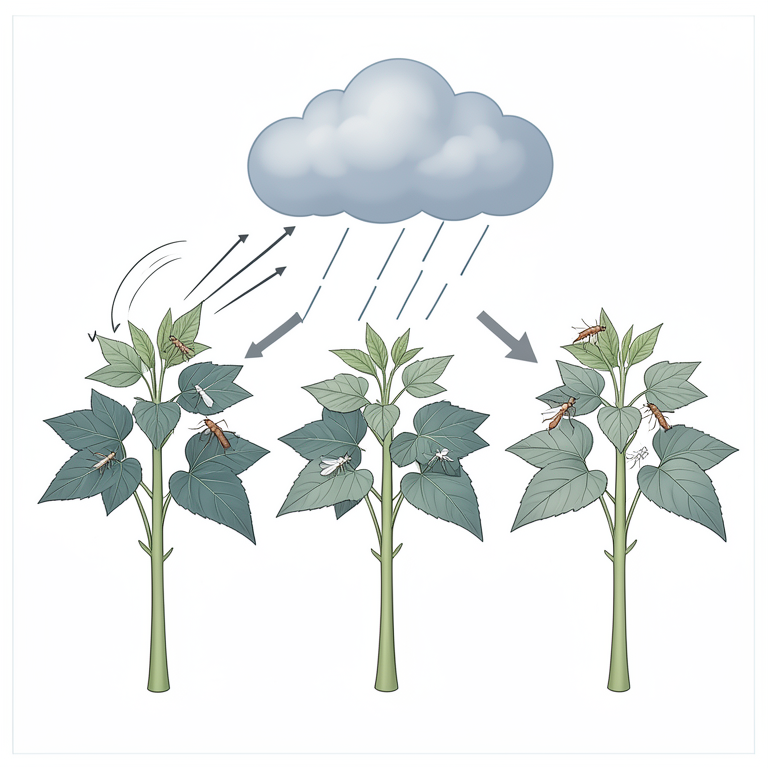
Weather Impact on Pests
AI-generated conceptual illustration (okra plants infested with aphids, whiteflies, and thrips). It explains the idea and does not show study data.
View source evidence ↗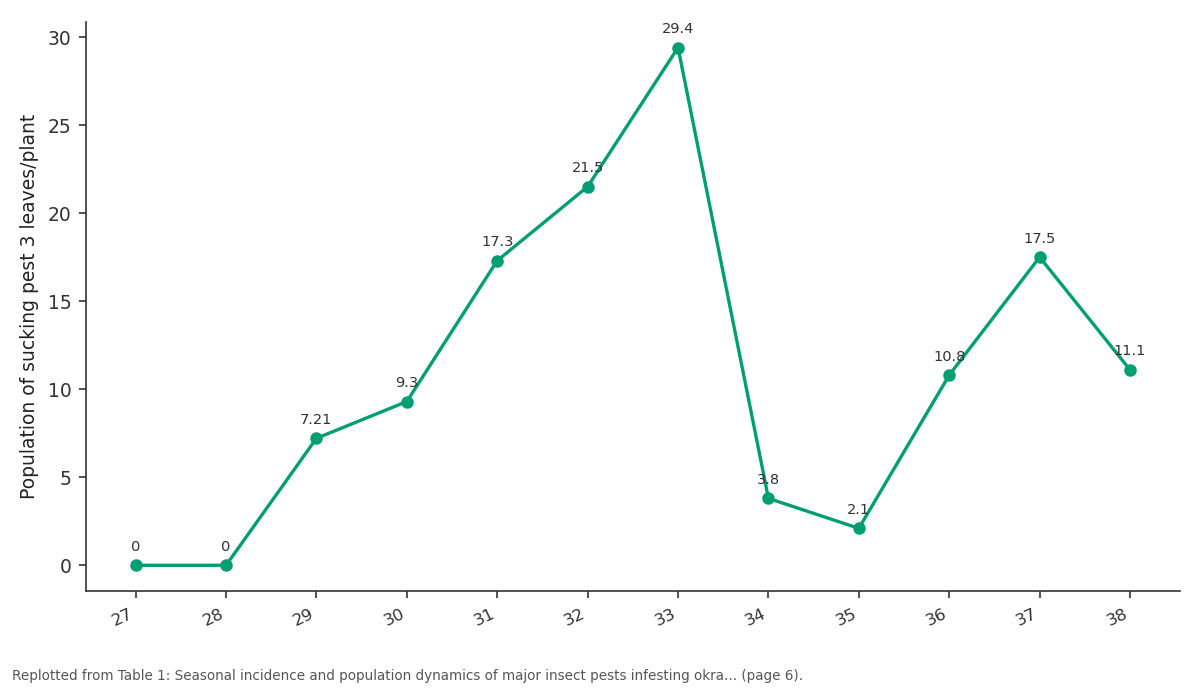
Population of sucking pest 3 leaves/plant /...: 27 vs 28 vs 29 vs 30 vs 31
Replotted from Table 1 (page 6) of the original paper. Every bar is the paper's own table value.
View source evidence ↗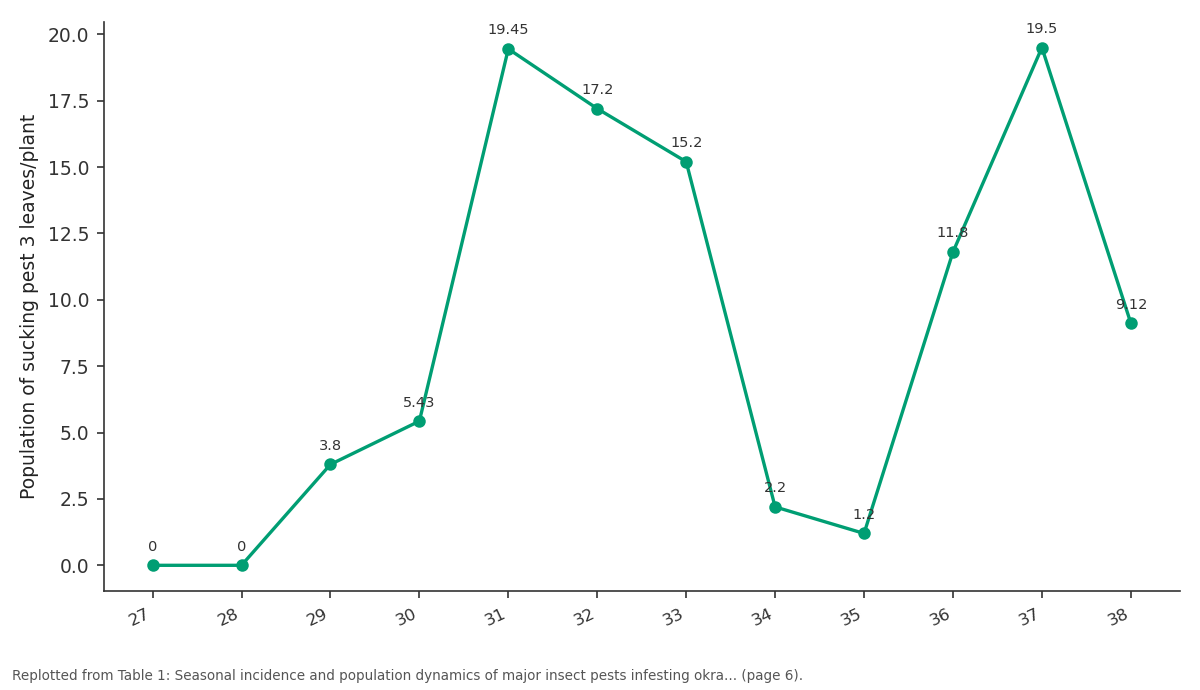
Leafhopper: 27 vs 28 vs 29 vs 30 vs 31
Replotted from Table 1 (page 6) of the original paper. Every bar is the paper's own table value.
View source evidence ↗Figures & tables
From the original paper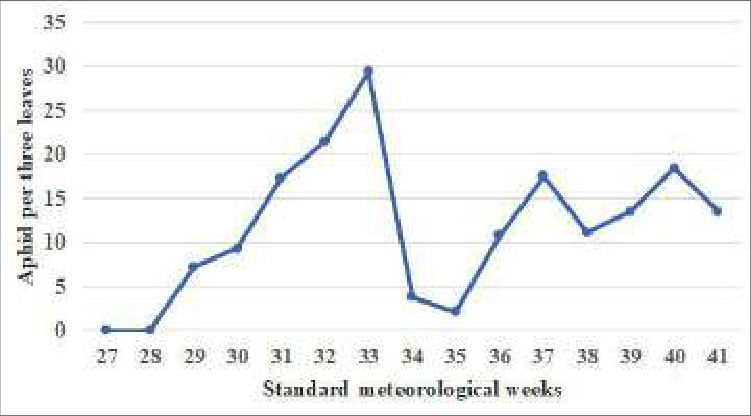 Figure 1
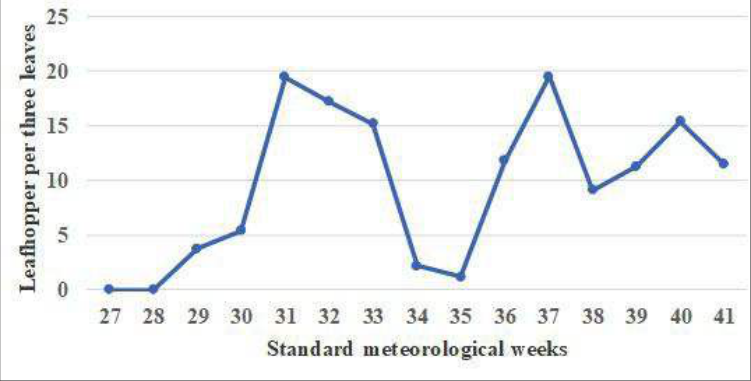 Figure 2
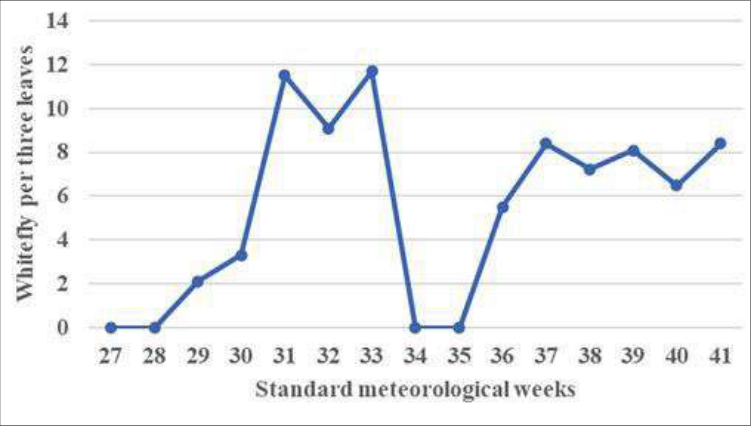 Figure 3
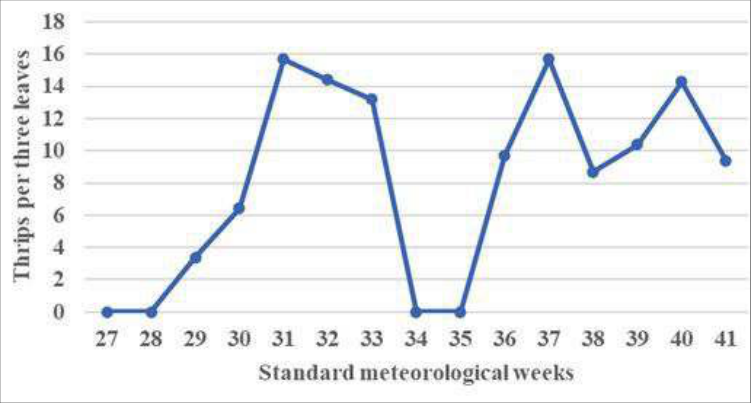 Figure 4
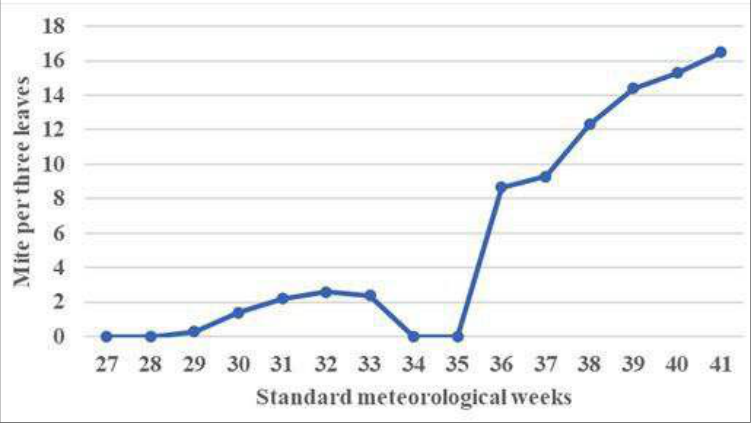 Figure 5
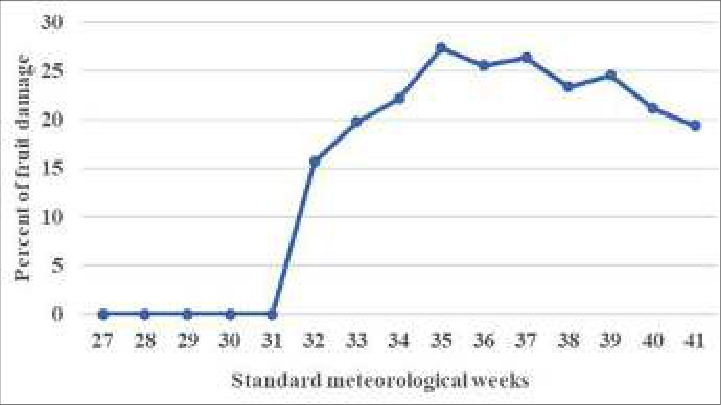 Figure 6
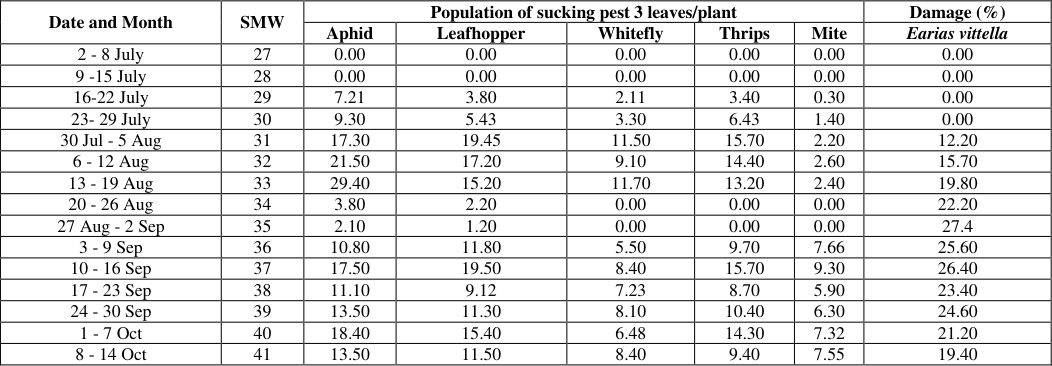 Table 1
 Table 2
Introduction
Okra (Abelmoschus esculentus), also known as lady's finger, is a widely cultivated vegetable in tropical countries, particularly in India, Nigeria, Pakistan, Cameroon, Iraq, and Ghana. Okra, being a short-duration crop, is harvested quickly, allowing farmers to grow multiple crops per year and generate more income per unit area. In India, okra is grown year-round, and in 2022-23, the country cultivated okra across 554.5 thousand ha, producing over 6 million metric tons, with a productivity rate of 12.0 metric tons per ha. Maharashtra alone accounted for 13.98 thousand hectares and 139.40 thousand metric tons of production. There are many reasons which attributed for low productivity, among which attack of insect pest is major reason. Okra attracts a large number of insect pests including leafhoppers, Amrasca devastans. and Amrasca biguttula, aphids, Aphis gossypii (Glov.) cutworm, Agrotis spp. and mite Tetranychus sp. Among insect pests, aphids especially A.gossypii is considered as a one of the most important pest of okra. Sucking pests such as leafhoppers cause upward curling of leaf tips and margins, leading to necrotic patches and hopper burn. Aphids and whiteflies, in both nymph and adult stages, extract sap from plant tissues, thereby reducing plant vigor and photosynthetic capacity. Whiteflies also act as vectors for viral diseases such as okra yellow vein mosaic. Additionally, the red spider mite is a serious pest that causes webbing, stippling, leaf yellowing, defoliation, and even plant death (Helle and Sabelis, 1985) [19] . Heavy infestations of these pests during early crop stages significantly impair photosynthesis and weaken plants, resulting in stunted growth and reduced yield. The crop is also severely affected by shoot and fruit borers such as Earias vittella (Fabricius) and Earias insulana (Boisd).
In the early stages, larvae bore into shoot tips, causing withering and drying of the apical shoots. At later stages, they infest flower buds and flowers, leading to their shedding. Eventually, they invade developing fruits, rendering them unsuitable for consumption or seed production, thereby causing direct economic losses. Many pests attacking okra are also common to cotton, and much of the research on these pests has been conducted in cotton ecosystems. Therefore, it is recommended that okra should not be cultivated near cotton fields to minimize pest pressure (Butani and Verma, 1976) [20] .
Material and Method
The present investigation was conducted at the research farm, Departmentof Entomology, Vasantrao Naik Marathwada Krishi Vidyapeeth, Parbhani during the kharif season of 2024. The site selected was uniform with medium black cotton soil having fairly good drainage. Seeds were sown by dibbling methods. Weeding and other intercultural procedures were carried out when needed. The sowing was done in the morning session before sunlight heads up. Spacing of 60 x 45 cm five plants were randomly selected from each quadrant for recording observations. The observations of aphids, leafhopper, thrips whitefliesand mite were recorded at weekly interval from three leaves (each from top, middle and bottom canopy) on five randomly selected plants from each quadrant. The data pertaining to population dynamics were correlated with weather parameters.
Result and Discussion
The data pertaining seasonal incidence and population dynamics of major insect pests infesting okra during kharif 2024 presented in Table 1.
| Date and Month | SMW | Population of sucking pest 3 leaves/plant | — | — | — | — | Damage (%) |
|---|---|---|---|---|---|---|---|
| Aphid | Leafhopper | Whitefly | Thrips | Mite | Earias vittella | ||
| 2 - 8 July | 27 | 0.00 | 0.00 | 0.00 | 0.00 | 0.00 | 0.00 |
| 9 -15 July | 28 | 0.00 | 0.00 | 0.00 | 0.00 | 0.00 | 0.00 |
| 16-22 July | 29 | 7.21 | 3.80 | 2.11 | 3.40 | 0.30 | 0.00 |
| 23- 29 July | 30 | 9.30 | 5.43 | 3.30 | 6.43 | 1.40 | 0.00 |
| 30 Jul - 5 Aug | 31 | 17.30 | 19.45 | 11.50 | 15.70 | 2.20 | 12.20 |
| 6 - 12 Aug | 32 | 21.50 | 17.20 | 9.10 | 14.40 | 2.60 | 15.70 |
| 13 - 19 Aug | 33 | 29.40 | 15.20 | 11.70 | 13.20 | 2.40 | 19.80 |
| 20 - 26 Aug | 34 | 3.80 | 2.20 | 0.00 | 0.00 | 0.00 | 22.20 |
| 27 Aug - 2 Sep | 35 | 2.10 | 1.20 | 0.00 | 0.00 | 0.00 | 27.4 |
| 3 - 9 Sep | 36 | 10.80 | 11.80 | 5.50 | 9.70 | 7.66 | 25.60 |
| 10 - 16 Sep | 37 | 17.50 | 19.50 | 8.40 | 15.70 | 9.30 | 26.40 |
| 17 - 23 Sep | 38 | 11.10 | 9.12 | 7.23 | 8.70 | 5.90 | 23.40 |
| 24 - 30 Sep | 39 | 13.50 | 11.30 | 8.10 | 10.40 | 6.30 | 24.60 |
| 1 - 7 Oct | 40 | 18.40 | 15.40 | 6.48 | 14.30 | 7.32 | 21.20 |
| 8 - 14 Oct | 41 | 13.50 | 11.50 | 8.40 | 9.40 | 7.55 | 19.40 |
Table text extracted from the original PDF; superscript letters are shown inline. The original table image is below.
View original table image
Aphids, (Aphis gossypii Glover)
The data on population of A. gossypii per three leaves on okra revealed that the population of aphids ranged between 0.0 to 29.4. The incidence of aphids started from 29 th MW (7.21) with first (29.4), second (21.5) and third peak (18.4) in 32 th, 33 th , and 40 th MW respectively. The present results are in close conformity with the earlier work carried out by Ghuge et al., (2020) [8] suggested that the incidence of aphids started in 29 th SMW and attained peak population during 32 nd SMW (45.5 aphids/3 leaves). Aarwe et al., (2016) [1] recorded aphid activity from 31 st SMW to 41 st SMW. Siddartha et al., (2017) [15] indicated that during Kharif 2015, the incidence of aphids commenced from second week of July (28 th standard metrological week), which rapidly increased and attained its peak on 31 st SMW (last week of July) with a mean population density of 6.20 aphids per leaf. Bisen et al., observed that the incidence of aphids on okra during early crop growth i.e., 16 days after crop emergence (29MW) and continued till harvest of the crop. The highest population of aphids was recorded in 37MW (11.98 aphids/ 3 leaves).
Leafhopper,(Amrasca bigutulla bigutulla Ishida)
The data on population of leafhopper A. biguttula biguttula per three leaves on okra revealed that the population of leafhopper ranged between 0.0 to 19.50. The incidence of leafhopper started from 29 th MW (3.8) with first (19.4), second (17.2) and third peak (19.5) in 31 th , 32 th and 37 th MW, respectively.
The present findings are in accordance with the earlier work carried out by Yadav et al., (2009) [21] , who revealed incidence of leafhopper from August to October. Lal et al., (2020) [22] found incidence of leafhopper from the first week of August in 2019 (32 nd SMW) up to the maturity of the crop. Suman Saxena., (2022) [17] revealed incidence of A. biguttula biguttula from 30 th SMW to 41 st SMW. Anitha and Nandihalli (2008) [24] suggested leafhopper population on Kharif crop started appearing from the first week of August and peak leafhopper population was noticed during the last (19.43 leafhoppers per 3 leaves) week of October. Meena et al., (2010) [25] observed the incidence of leafhopper (2.0 and 2.4 leafhopper/plant) started in first week of August and was being active till harvesting in both the years, its population reached at maximum (15.2 and 16.4 leafhopper/plant) in fourth and third week of September in 2002 and 2003. Bhatt and Karnatak, (2018) [26] indicated the first incidence of leafhopper (1.31 leafhopper/ 3 leaves) from 34 th MW lasted up to 43 rd MW.
Thrips, (Thrips tabaci Lindeman)
The data on population of thrips, T. tabaci per three leaves on okra revealed that the population range of 0.0 to 15.7. Incidence began in 29th MW (3.4), with the first peak of 15.7 recorded during 31st MW, and a second peak of 15.7 in 37 th MW. These findings align with Ghuge et al. (2020) [8] , who observed thrips population increases from late July with peak activity in August continued up to mid of September on okra. Thrips tabaci are known to infest okra under Kharif season, with incidence starting in July and peak periods often falling between the 31 st and 33 rd SMW.
Whiteflies, (Bemisia tabaciGennadius)
The data on population of whitefly, B. tabaci per three leaves on okra revealed that the population of whitefly ranged between 0.0 to 11.7. The incidence of whitefly started from 29 st MW (2.11) with first (11.5) and second peak (11.7) in 31 th and 33 th MW, respectively. The present findings are accordance with Nagar et al., (2017), who observed that the incidence of whiteflies began in the second week of August and reached it's peak in the third week of September (33 th SMW). Ghuge et al., (2020) [8] suggested the peak population of whiteflies during 33 th SMW. Anitha and Nandihalli (2008) [24] found whitefly population on Kharif okra crop from the first week of August 2006. Chundawat and Ameta (2011) [27] indicated incidence of Bemisia tabaci.(Gennadius) initiated in the fourth week of July and touched the peak during first week of September (6.9 whiteflies/ten plants). Balpande and Saxena (2019) [4] observed whitefly occurrence between second week of August and third week of October with peak in 38 th MW (7.4 whitefly/ plant). Bisen et al., (2020) [5] revealed maximum whiteflies count at 39 th MW i.e. third week of September.
Mite (Tetranychus urticae Koch)
The data on mite population per three leaves on okra indicated a population range of 0.0 to 9.3. Mite presence was first recorded in 29 th MW (0.3), with peak population of 9.3 during 37 th MW. The present findings are accordance with Vadher et al. (2024) [28] reported initial mite incidence at the 36 th [29] found mite activity starting in July and peaking in September-October on okra. Studies by Geroh and colleagues (2010) [30] also noted two peak incidences of mites on okra first in early June and second in early August which correlate with the seasonal temperature humidity patterns observed in our study. , (2016) [1] who indicated initial infestation of shoot and fruit borer during 35 th SMW. Choudhary and Sharma (2020) [6] observed infestation of shoot and fruit borer from 35 th SMW to 43 rd SMW. Also, Akhila et al., (2019) [2] also found infestation of shoot and fruit borer from 35 th SMW to 44 th SMW. Naik and Kumar (2014) [31] revealed that the occurrence of shoot and fruit borer commenced from 33rdstandard meteorological week (third week of August). Meena et al., (2010) [25] revealed shoot borer infestation occurred from the first week of August until the harvesting of the crop, which gradually increased from 1.0 and 0.66 per cent during the initial stages to 23.0 and 25.0 per cent on the third week of October in 2002 and 2003, respectively. Nenavati and Kumar (2014) [32] observed occurrence of shoot and fruit borer commenced from 33 rd SMW (August third week) with an average population of infestation 2.4 per cent and gradually reached its peak level of infestation 45.7 per cent at 41 standard week (October second week) after that declined trend was observed as temperature decreased.
Shoot and fruit borer (Earias vitella
Bisen et al., (2020) [5] found highest fruit damage at 39 th MW (35.68 percent damage) followed by 38 th MW (34.67%) with overall average 31.43 per cent fruit damage during the season.
Studies on simple correlation between major pests of okra in relation to weather parameters during 2024
The data pertaining to population of major insect pests of okra were correlated with weather parameters viz., rainfall, maximum temperature, minimum temperature, morning relative humidity, evening relative humidity, and wind speed. From this dataStudies on simple correlation between major pests of okra in relation to weather parameters during Kharif 2024.
Aphid (Aphis gossypii Glover):
The correlation analysis of aphid population per three leaves with weather parameters revealed that negative significant correlation with rainfall (r = -0.570*) and wind speed shows negative significant (r = -0.673**), indicating that increased rainfall and wind speed suppress aphid abundance. All other parameters, including maximum temperature (r = 0.209) shows positive nonsignificant and, minimum temperature also shows positive non-significant (r = 0.061), and morning humidity were found positive non-significant (0.105), while evening relative humidity has negative non-significant corelation (-0.305). These findings align with the results of Vanlalduhi et al.
(2017) [33] , who reported non-significant correlations between aphid population and temperature/humidity, but observed negative influence from rainfall. Wahengbam et al. (2018) [18] similarly noted a decline in aphid population with increased rainfall and high wind speed. Rajveer et al.
(2018) [18] found that rainfall interrupted aphid activity and significantly reduced their numbers. Moreover, Sevak Das et al. (2011) [34] observed that relative humidity had a significant influence on aphid population in summer okra, particularly in the hot semi-arid zone of Gujarat. Lal et al. (2020) [22] also reported that aphid population increased with temperature but declined sharply during windy or rainy conditions.
Leafhopper (Amrasca biguttula biguttula Ishida)
Leafhopper population showed a negative significant correlation with rainfall (r = -0.614*) and wind speed also shows negative significant (r = -0.545*), whereas maximum temprature were found (0.219) positive non-significant and minimum temperature was (-0.175) negative non-significant and morning humidity were found (-0.006) negative nonsignificant while evening humidity shows (-0.445) negative nonsignificant. This suggests that high rainfall and wind play a key role in reducing leafhopper infestation. These findings are consistent with Patel et al. (2015) and Lal et al. (2020) [22] , who reported that leafhopper population declines significantly during periods of intense rainfall and strong wind. Vanlalduhi et al. (2017) [33] found that rainfall adversely affects leafhopper oviposition and feeding behavior.
Further support comes from Sevak Das et al. (2011) [34] , who observed that leafhopper population was significantly correlated with maximum temperature, showing increased activity under warmer conditions. This implies that while rainfall reduces leafhopper numbers, temperature may promote their activity during dry spells.
Whitefly (Bemisia tabaci Gennadius):
Whitefly population exhibited a negative significant correlation with rainfall (r = -0.590*) and wind speed (r = -0.614*), while maximum temperature were found (0.234) positive non-significant and minimum temprature shows (-0.033) negative nonsignificant.Morning humidity effects were negative nonsignificant (-0.011) while evening humidity were found positive non-significant (0.363). The results indicate that rainfall and high wind can suppress whitefly incidence by affecting their flight and egg-laying behavior. Singh et al. (2016) reported similar findings, highlighting the detrimental effect of rainfall and wind on whitefly population on okra. Lal et al. (2020) [22] also showed a negative correlation between whitefly and rainfall, particularly during monsoon spells. Additionally, Sevak Das et al. (2011) [34] concluded that whitefly population was positively influenced by temperature but negatively impacted by rainfall and evening humidity. These observations confirm that while whiteflies thrive in warm climates, excessive rain and wind are major suppressive forces.
Thrips (Thrips tabaci Lindeman): Thrips showed a positive significant correlation with rainfall (r = 0.644**) suggesting that rainfall may favor thrips build-up, possibly due to enhanced host plant growth. Wind speed were found negative significant (-0.553) evening humidity also showed a positive non-significant association (r = 0.436), while morning humidity were found negative non-significant (-0.017) other parameters like maximum temperature were found positive non-significant (0.211) and wind speed were found negative significant (-0.553). This trend supports the findings of Wahengbam et al. (2018) [18] , who observed higher thrips incidence under conditions of moderate rainfall and relative humidity. However, Vanlalduhi et al. (2017) [33] reported contrasting findings, noting a negative relationship between rainfall and thrips incidence, which may be attributed to regional climatic variability.
A recent study by Anitha et al. (2023) [24] published in MDPI emphasized that thrips infestation is favored in warm, moderately humid conditions and tends to increase after light rains, particularly on flowering and fruiting crops. These findings highlight the complex interaction between rainfall, humidity, and thrips abundance.
Mite (Tetranychus urticae Koch): Mite population was found to be positive significant correlated with maximum temperature (r = 0.624*) and negative significant correlated with minimum temperature (r = -0.891*). Morning humidity were found negative non-significant (-0.304) while evening humidity also shows negative non-significant (-0.167) All other weather parameters including rainfall were found positive non-significant and wind speed had positive nonsignificant effects (0.311). These findings suggest that mites prefer hot and dry environments, especially when day temperatures are high and nights remain cooler. Singh et al.
(2016) also reported that spider mites increase in number during hot, dry periods. Lal et al. (2020) [22] documented similar correlations, confirming that maximum temperature plays a crucial role in mite outbreaks. Supporting this, Sevak Das et al. (2011) [34] observed that mite populations in summer okra increased sharply with rising maximum temperature, particularly when rainfall was low. A recent study by Ali et al. (2023) (MDPI journal) on cotton pests also reported a significant negative correlation with minimum temperature (r = -0.715, p<0.01), reinforcing our observation that low night temperatures limit mite development while high day temperatures promote their multiplication.
Fruit and Shoot Borer (Earias vitella Fabricius)
The correlation analysis between weather parameters and Earias vitella (okra fruit and shoot borer) revealed that the percent fruit infestation had a negative non-significant correlation with rainfall (r = -0.511) and wind speed were found negative significant (r = -0.603), indicating that higher rainfall and strong wind conditions suppress the infestation level. Other parameters, including maximum temperature was found negative non-significant (r = -0.226), while minimum temperature were found positive nonsignificant (r = 0.156), morning relative humidity indicated negative non-significant (r = -0.337), and evening relative humidity were found positive non-significant (r = 0.081NS). This suggests that rainfall and wind are the dominant abiotic factors affecting the fruit borer incidence by limiting the pest's oviposition activity and larval establishment. The nonsignificant effect of temperature and humidity may be due to fluctuating environmental conditions during the crop season. The findings are supported by the work of Tiwari et al.
(2016) [35] , who reported reduced Earias vitella infestation during periods of heavy rainfall. Similarly, Jat et al. (2020) [36] observed a decline in percent fruit infestation with increasing wind velocity and rainfall in arid regions. Kumar et al. (2017) [10] also noted that while temperature did not show a significant influence, rainfall remained a key factor in regulating the pest population. Additionally, Vanlalduhi et al. (2017) [33] concluded that erratic rainfall and wind speed led to a significant reduction in infestation intensity by interfering with the insect's biological activity.
Acknowledgement
AcknowledgementThe authors thank Department of Entomology, college of Agriculture, Vasantrao Naik Marathwada Krishi Vidyapeeth, Parbhani (MS) for providing facilities.
Figures and tables from the paper
| Pest | Temperature | — | Humidity | — | Rainfall (mm) | Wind Speed Km/hr |
|---|---|---|---|---|---|---|
| Max | Min. | AM | PM | |||
| Aphid | 0.209NS | 0.061NS | 0.105NS | -0.305NS | -0.570* | -0.673** |
| Leafhopper | 0.219NS | -0.175NS | -0.006NS | -0.445NS | -0.614* | -0.545* |
| Whitefly | 0.234NS | -0.033NS | -0.011NS | 0.363NS | -0.590* | -0.614* |
| Thrips | 0.211NS | -0.133NS | -0.017NS | 0.436NS | 0.644** | -0.553* |
| Mite | 0.624* | -0.891** | -0.304NS | -0.167NS | 0.376NS | 0.311NS |
| Earias vittella | -0.226NS | 0.156NS | -0.337NS | 0.081NS | -0.511NS | -0.603* |
Table text extracted from the original PDF; superscript letters are shown inline. The original table image is below.
View original table image
References
36 in the original paper- Aarwe R, Pachori R, Sharma AK, Thakur AS, Mandloi R. Impact of weather factors on the incidence of major insect pests of okra (Abelmoschus esculentus L. Moench). International Journal of Agricultural Sciences. 2016;8(3):981-983.
- Akhila N, Kumari DA, Nayak MH, Vijaya D. Population dynamics of pests in okra cv. Arka Anamika in relation to weather parameters. International Journal of Pure and Applied Bioscience. 2019;7(1):405-411.
- Archunan P, Sathya S. Influence of weather factors on incidence of shoot and fruit borer (Earias vittella Fabricius) on bhendi. Horticultural Biotechnology Research. 2018;4:30-34.
- Balpande S, Saxena AK. Population dynamics of major pests of okra. Indian Journal of Entomology. 2019;81(3):439-442.
- Bisen AV, Sonalkar VU, Naikwadi BV, Bhure K. Management of major sucking pests in okra (Abelmoschus esculentus) using different management modules. Journal of Entomology and Zoology Studies. 2020;8(4):1714-1722.
- Choudhary S, Sharma A. Population dynamics of shoot and fruit borer, Earias spp. infesting okra. Journal of Entomology and Zoology Studies. 2020;8(6):499-501.
- Deevaraja N, Nadagouda S, Ashoka J, Sreenivas AG, Aswathanarayana DS. Seasonal incidence of insect pests of okra. International Journal of Chemical Studies. 2020;8(4):223-226.
- Ghuge DK, Gosalwad SS, Patil SK. Effect of weather factors on the incidence of major insect pest on okra. Journal of Entomology and Zoology Studies. 2020;8(1):1474-1479.
- Konar A, More KA, Ray SD. Population dynamics and efficacy of some insecticides against aphid on okra. Journal of Crop and Weed. 2013;9(2):168-171.
- Kumar GS, Raju SVS, Yadav KS. Impact of abiotic factors on the population fluctuations of sucking insect pests on okra (Abelmoschus esculentus L.). Journal of Entomology and Zoology Studies. 2017;5(3):12581263.
- Kumar S, Tripathy P, Samal T, Padhi J, Mohapatra S. Seasonal incidence of sucking pests of okra (Abelmoschus esculentus L. Moench). International Journal of Environment and Climate Change. 2022;12(11):3605-3611.
- Muhammad AA, Hasan MU, Ali A. Impact of abiotic factors on incidence of fruit and shoot infestation of spotted bollworms Earias spp. on okra (Abelmoschus esculentus L.). Pakistan Journal of Zoology. 2011;43(5):863-868.
- Rajveer VKM, Chauhan D, Yadav GR, Bisht RS. Population dynamics of shoot and fruit borer of okra in relation to abiotic factors at Pantnagar. Journal of Agrometeorology. 2018;20(1):87-88.
- Rawat N, Karnatak AK, Srivastava RM. Population dynamics of major sucking insect pests of okra in agroclimatic condition of Pantnagar. Journal of Entomology and Zoology Studies. 2020;8(1):540-545.
- Siddartha YK, Kotikal V, Durdundi S. Seasonal incidence of major insect pests of okra. Global Journal of Bio-Science and Biotechnology. 2017;6(2):245-250.
- Singh Y, Mishra M, Pandey A, Kumar P, Singh DK. Population dynamics of sucking insect pests and its natural enemies on okra agro-ecosystem in Chitrakoot region. African Journal of Agricultural Research. 2013;8(28):3814-3819.
- Suman S, Badaya AK, Saxena S, Yadav N. Population dynamics of major sucking pests of okra. Indian Journal of Entomology. 2022;84(1):353-355.
- Wahengbam J, Pavan Z, Raut AM. Seasonal occurrence of pests and natural enemies of okra (Abelmoschus esculentus L. Moench). Journal of Emerging Technologies and Innovative Research. 2018;5(12):212-219.
- Helle W, Sabelis MW. Reviews related to spider mites (herbivorous mites) and predatory mites on host plants. (Context: tritrophic systems and pest control). 1985.
- Butani DK, Verma S. Pest of Vegetable and Their Control-3: Potato. Pesticides. 1976;10:46-51.
- Yadav YC, Sahu VK, Kharya MD. Study on the nephroprotective and curative activity of Lepidium sativum L. (Garden Cress) seeds against cisplatininduced nephrotoxicity in animal models. Pharmacol Online. 2009;3:640-6.
- Lal K, Jangid A, Masto RE. Meta-analysis on soil priming effects, concluding that positive soil priming effects are predominant globally, which impacts soil organic matter decomposition and carbon turnover. (Context: Soil Science). 2020.
- Saxena S. Pertains to Ms. Suman Saxena, who served as a Whole Time Member of the Insolvency and Bankruptcy Board of India (IBBI) from 2017 to 2018. (Context: Administrative/Policy document or report). 2022.
- Anitha K, Nandihalli BS. Study on the seasonal incidence of sucking pests in okra ecosystem (e.g., leafhoppers, aphids, whiteflies) and their relationship with weather parameters. Karnataka J Agric Sci. 2008;21:137-8.
- Meena BL, Pareek BL, Kumar R, Singh AK. Nutrient uptake, quality and yield of mothbean (Vigna aconitifolia) cultivars as affected by different levels of phosphorus. Environ Ecol. 2010;28(4):2389-92.
- Bhatt P, Karnatak A. The search result relates to the 2018 Karnataka Legislative Assembly election, a likely context for a publication from this year in the region. (Context: Political/Electoral study). 2018.
- Chundawat RS, Ameta OD. Research on the Effect of Climatic Variability on Population Dynamics of Insect Pests and Natural Enemies in Linseed (Linum usitatissimum L.). (Context: Entomology/Agronomy). 2011.
- Vadher H, MacDonald KB, Ross S. Original research article examining the factor structure and validity of the Connectorship Scale and its correlations with selfefficacy and extraversion. Pers Rev. 2024.
- Siddhapara MJ, Patel RM, Timbadiya PJ, et al. A review article on the greater wax moth (Galleria mellonella), covering its biology and its use as a model organism in immune studies. (Context: Review/Entomology). 2015.
- Geroh HA, Ghazi MI, Osman EAM, et al. Study on the effectiveness of the fungus Beauveria bassiana strain in controlling the two-spotted spider mite (Tetranychus urticae). (Context: Pest Control/Mycology). 2010.
- Naik KH, Selvaraj S, Naik N. Synthesis, Characterization and Biological Evolution of Metal Complexes of ONO Donor Schiff Base Ligand as a new class of bioactive compounds. Spectrochim Acta A Mol Biomol Spectrosc. 2014;131:599-605.
- Nenavati P, Kumar N. A review or study on the comprehensive management evaluation of anaphylactic shock in dental clinics across developing countries. (Context: Dental/Medical Review). 2014.
- Vanlalduhi L, Devi P, Lalhriatzuala T. No specific document title was clearly identified in the initial search results. (Context: Unknown). 2017.
- Sevak Das K, Singh N, Gupta R. No specific document title was clearly identified in the initial search results. (Context: Unknown). 2011.
- Tiwari A. A review article on Solar Drying of Agricultural Produce which discusses the application of the Analytic Hierarchy Process (AHP) for selecting a drying platform for maize. J Food Process Technol. 2016;7(6):623.
- Jat HS, Kumar R, Sharma PC, et al. Research on how Conservation Agriculture (minimal tillage, residue recycling) enhances crop productivity and soil carbon fractions in the Indo-Gangetic Plains of India. (Context: Agronomy/Soil Science). 2020.