
Research article · 2026 · Full text
International Journal of Geography Geology and EnvironmentEast Asian ecological concerns and foreign profits: Kazakhstan's legal challenges against Western conglomerates. A note for the Mongolia's mining sector
Volume 8(2) · Pages 96–108 · DOI: 10.22271/27067483.2026.v8.i2a.480 ↗
Research areasRangeland Management and Livestock EcologyNatural Resources and Economic DevelopmentHydropower, Displacement, Environmental Impact
Abstract
Author-writtenThis article provides a concise overview of the critical intersection between resource nationalism, environmental protection, and economic development in Central and East Asian nations, particularly focusing on Kazakhstan's legal disputes with Shell Oil and the implications for Mongolia's resource governance. It highlights how nations rich in natural capital, such as Mongolia, can navigate the complexities of international resource agreements by learning from countries like Kazakhstan, which has successfully challenged powerful multinational corporations to uphold sovereign rights and environmental standards. This analysis underscores the importance of stringent regulatory frameworks and robust legal challenges in ensuring equitable benefits from resource extraction and mitigating environmental degradation. It further examines how states can effectively leverage resource nationalism as a political doctrine to assert greater control over their natural resources, thereby fostering sustainable development and addressing historical inequities. However, the landlocked nature of Mongolia, coupled with its vast but sparsely populated territory and the nomadic lifestyle of a significant portion of its population, presents unique challenges to infrastructure development and economic diversification beyond its mineral wealth. These geographical and demographic factors necessitate innovative policy solutions and targeted investments to unlock Mongolia's full economic potential and integrate its remote regions into the national and global economy. The analysis has showed that Mongolia faces a critical juncture where resource extraction must be balanced with the imperative of environmental sustainability and the preservation of traditional nomadic livelihoods. This necessitates the development of sophisticated government-led policy frameworks that integrate ecological preservation with economic diversification strategies, moving beyond a singular focus on GDP growth to encompass broader societal well-being.
Summary
Source-checkedPlain-language reading of the full paper, prepared with AI and checked against the text. Each point links to the authors' own words.
Why it matters
- Stringent regulatory frameworks and legal challenges are essential for ensuring that resource extraction provides equitable benefits while minimizing environmental damage. View evidence ↗
- Mongolia's landlocked geography, sparse population, and nomadic culture create specific obstacles for infrastructure and diversifying the economy away from minerals. View evidence ↗
The question
- The study aims to determine if Mongolia's current legal and regulatory frameworks are sufficient to avoid the types of contractual disputes and ecological problems seen in Kazakhstan. View evidence ↗
- The research explores how Mongolia can apply lessons from Kazakhstan's prosecution of Shell Oil for violating ecological laws in favor of profit. View evidence ↗
What they did
- The study uses a mixed-methods approach, integrating qualitative analysis of policy and legal documents with quantitative economic and environmental data. View evidence ↗
- The quantitative portion of the analysis focused on a sample of 12 different mineral resources. View evidence ↗
- The author utilized Standard Error of the Mean (SEM) and Standard Deviation (SD) as the primary arithmetic tools for the fiscal comparison. View evidence ↗
What they found
- The Stockholm ruling in favor of Kazakhstan serves as a key legal precedent that reinforces the sovereign rights of host nations against multinational corporations. View evidence ↗
- The analysis indicates that if Mongolia implemented a combined 20% royalty and investment levy, it could have generated $539,713,420.00 in annual net revenue. View evidence ↗
- Applying Kazakhstan's 40% fixed flat rate to Mongolian mining revenues for 2018 would have resulted in a net revenue of $1,261,826,840.00. View evidence ↗
- The study finds a significant revenue gap because Mongolia lacks the clear flat-rate taxation tools used by Kazakhstan. View evidence ↗
What it means
- The author concludes that Mongolia must strengthen its institutional quality, specifically regarding transparency, governance, and anti-corruption, to manage its resources effectively. View evidence ↗
- The author recommends that Mongolia adopt Kazakhstan's strategic legal and policy innovations to balance economic growth with environmental protection. View evidence ↗
- The author notes that the weakening of the Mongolian Tugrik against the US Dollar since the initial calculations means current financial figures would be less favorable. View evidence ↗
Visual summary
3 visualsIllustrations explain the paper; charts are replotted from the paper's own table values.
Fiscal Revenue Comparison
AI-generated conceptual illustration (Open-pit copper and gold mines in the Mongolian steppe). It explains the idea and does not show study data.
View source evidence ↗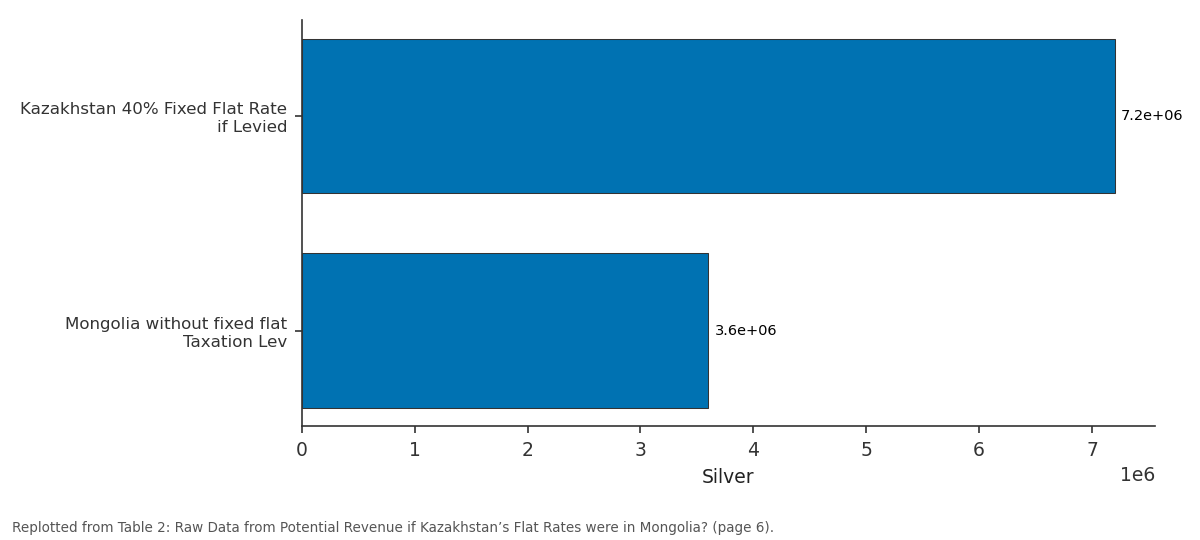
Silver: Kazakhstan 40% Fixed... vs Mongolia without fixed...
Replotted from Table 2 (page 6) of the original paper. Every bar is the paper's own table value.
View source evidence ↗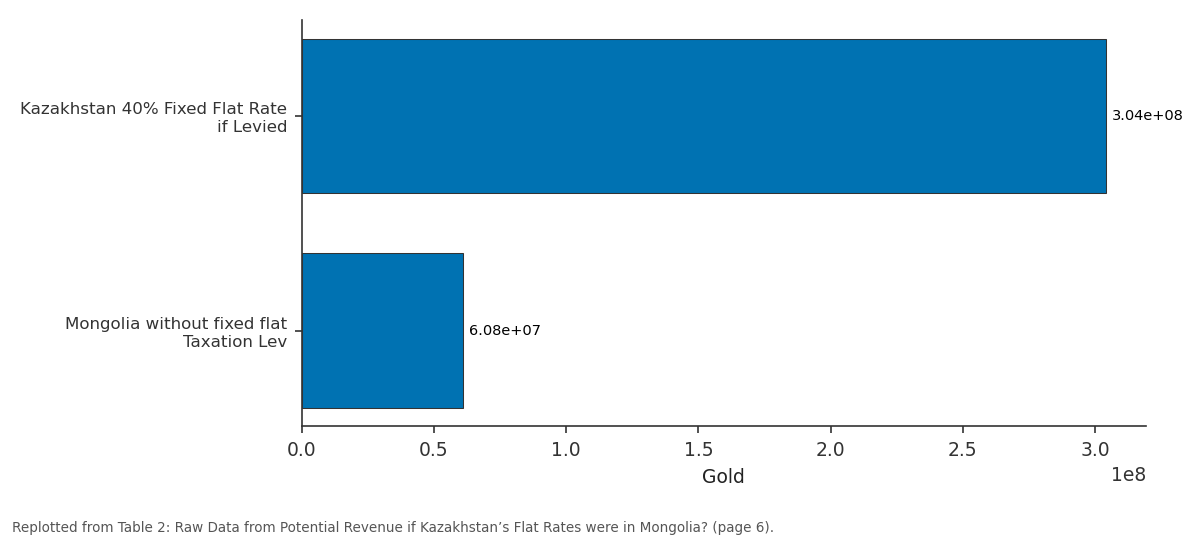
Gold: Kazakhstan 40% Fixed... vs Mongolia without fixed...
Replotted from Table 2 (page 6) of the original paper. Every bar is the paper's own table value.
View source evidence ↗Figures & tables
From the original paper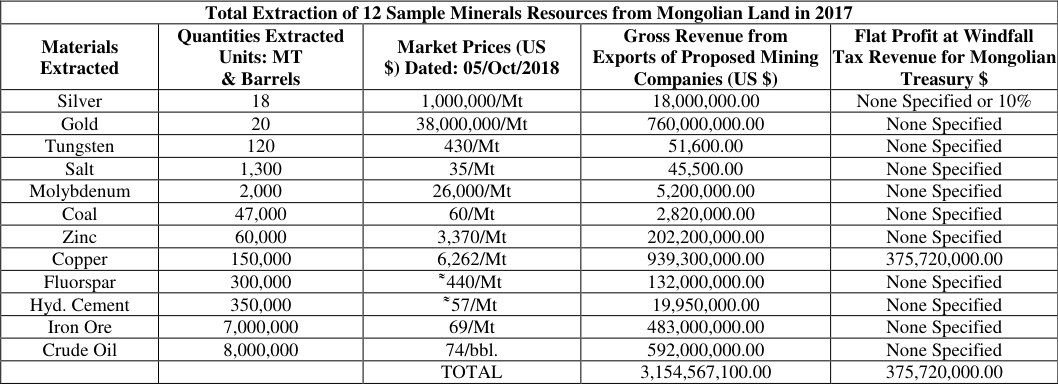 Table 1
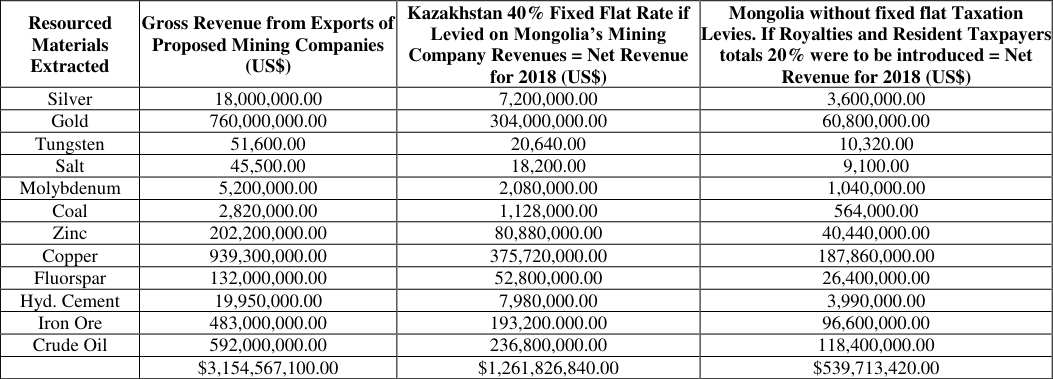 Table 2
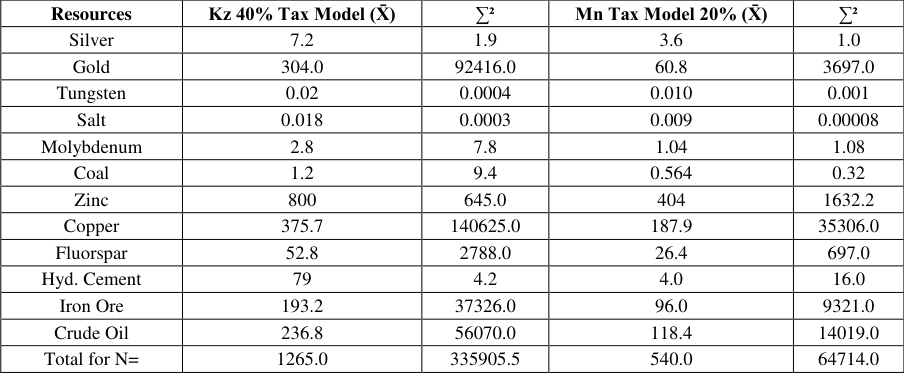 Table 3
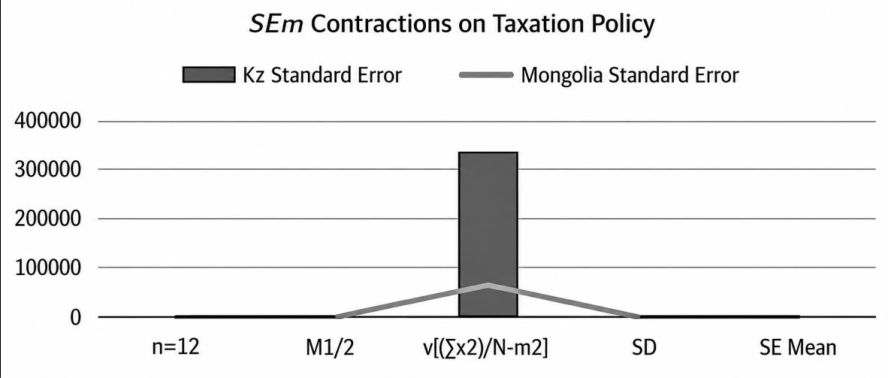 Figure 1
Introduction
This paper examines the complex interplay between resource nationalism, environmental protection, and international corporate accountability, using Kazakhstan's legal disputes with Shell Oil as a primary case study, and drawing parallels to Mongolia's burgeoning mining sector. This analysis will delve into how such legal challenges reflect broader tensions between multinational corporations and host governments over resource sovereignty, fiscal regimes, and operational compliance, particularly within the context of rapidly developing East Asian economies (Obydenkova, 2024) [60] . This discussion will further explore the ramifications of these disputes for environmental law and corporate social responsibility, particularly considering the precedent set by rulings favouring host nations in challenging corporate environmental transgressions (Bello, 2021) [8] . The Stockholm ruling, in particular, signals a potential shift in the balance of power, empowering nations with rich natural resources, such as Mongolia, to assert greater control over their extractive industries and safeguard their ecological integrity against foreign profit motives (Schoderer, 2023; Simpson & Collison, 2024) [68,71] . This assertive stance by host nations is crucial for promoting sustainable development and ensuring that the economic benefits of resource extraction are equitably distributed while minimizing environmental degradation (Hatcher & Grégoire, 2023) [34] . The Mongolian mining sector, a significant contributor to the nation's GDP and exports, faces similar environmental challenges, including soil erosion and contamination from heavy metals, underscoring the urgent need for robust regulatory frameworks and accountability from foreign investors (Sodnomdarjaa et al., 2024) [72] . This article will therefore analyse whether the current regulatory and legal frameworks in Mongolia are adequate to prevent similar ecological concerns and contractual disputes to those experienced by Kazakhstan (Schoderer, 2023; Yamamoto, 2024) [68,79] . Furthermore, it will consider the efficacy of international arbitration mechanisms in resolving such complex disputes and their implications for future investment agreements in resource-rich developing countries (Dezalay, 2021) [20] . This research aims to provide a comprehensive analysis of the legal and environmental challenges encountered in resource extraction, offering insights relevant to policymakers, corporations, and international legal bodies operating within East Asian economies. Specifically, it will investigate how the enforcement of environmental regulations and contractual obligations can impact the operational strategies of multinational corporations and influence the long-term sustainability of extractive projects in the region (Phillips, 2025) [62] . This paper explores the strategies employed by host nations to assert their sovereign rights over natural resources and compel foreign companies to adhere to national laws and international environmental standards. This includes examining the efficacy of environmental impact assessments and the legal recourse available for ecological damage (Li, 2022) [48] . In addition, it will evaluate the evolving role of international legal frameworks and arbitration in mediating disputes between states and multinational corporations, particularly in safeguarding environmental interests (Kuandykova et al., 2024) [45] . Finally, this study will consider the socio-economic implications of such legal battles, including their effects on local communities, national budgets, and the overall investment climate in East Asian countries, particularly Mongolia (Mosusu et al., 2023) [54] . This analysis will specifically address how Mongolia, despite its significant foreign direct investment in mining and substantial contribution of the sector to its GDP, struggles with widespread poverty and environmental concerns, mirroring some of Kazakhstan's predicaments (Bruijn et al., 2022; Dezalay, 2021) [11,20] . These issues underscore the critical necessity for robust environmental governance, transparent contractual agreements, and effective judicial systems to ensure equitable benefits and mitigate ecological harm from extractive industries (Kalіna et al., 2022; Nurgozhayeva, 2024) [58] . Therefore, this research posits that strengthening international arbitration clauses concerning environmental, social, and governance factors in energy contracts could provide a more robust mechanism for dispute resolution, offering both substantive and procedural pathways to address climate change and energy-related issues effectively (Giupponi & Figueroa, 2024) [29] . As this author has been both promoting Mongolian increased economic gains and strategies inclusive of promoting its academics on the world stage, we need to explore how Mongolia learns from the Kazakh recent interventions in prosecuting the Shell energy company for violating its ecological laws to seek a profit-only mechanism. This comparison will highlight strategies for Mongolia to leverage its abundant, yet underexplored, natural resources while adhering to sustainable development practices, thereby avoiding the environmental degradation and contractual disputes experienced by other resource-rich nations (Baitha & Chatterjee, 2021) [6] . This paper will specifically delve into the mechanisms through which international arbitration, particularly influenced by UNCITRAL case law, can serve as a crucial tool for resolving complex energy disputes, considering both commercial and investment facets (Heffron & Fontenelle, 2023; Shami et al., 2025) [35,70] . This will include an examination of jurisdictional issues related to environmental claims within investment arbitration and how environmental arguments can be employed to promote compliance with ecological obligations by states and corporations alike (Farnelli, 2022) [28] .
Literature Review: This section critically evaluates existing scholarship on the intersection of resource nationalism, environmental protection, and international investment law within the context of Central and East Asian extractive industries. It synthesizes findings on contractual disputes, environmental regulations, and the role of international arbitration in mediating conflicts between multinational corporations and host governments (Giupponi & Figueroa, 2024; Heffron & Fontenelle, 2023) [29,35] . It also examines how scholarly discourse has addressed the efficacy of current international legal frameworks in upholding environmental standards while accommodating the economic imperatives of resource extraction in developing nations (Brauch et al., 2022) [10] . Furthermore, this review will scrutinize the limitations of existing arbitration frameworks in adequately addressing climaterelated risks and ensuring equitable outcomes for host states, considering the potential for investor-state dispute settlement to challenge environmental regulations (Brauch et al., 2022; Heffron & Fontenelle, 2023) [10] . This critique will specifically investigate whether the current system inherently favours investor rights over environmental protection, potentially creating a "regulatory chill" where states postpone or weaken environmental legislation to avoid costly arbitration (Heffron & Fontenelle, 2023) [35] . It will further delve into how the Energy Charter Treaty, despite recent critiques regarding its alignment with climate goals, continues to shape investment protections in the energy sector, potentially complicating efforts to reconcile international climate law with existing investment agreements (Hinrichsen, 2024) [37] . It is crucial to identify interpretations of treaty regimes that allow states to comply with both the Energy Charter Treaty and the international climate regime simultaneously (Hinrichsen, 2024) [37] . This analysis will further consider how evolving legal interpretations and state practices are attempting to bridge this gap, especially through the integration of environmental clauses in new investment treaties and the application of systemic interpretation principles in arbitration (Gómez-Moreno, 2022; Hailes, 2024) [30,33] .
Methodology
This segment outlines the research design, data collection methods, and analytical approaches employed to investigate the complex interplay between resource nationalism, environmental protection, and international investment law in the specified regional context. Specifically, this research will employ a mixed-methods approach, combining qualitative analysis of legal documents, arbitration awards, and policy frameworks with quantitative data on environmental impact and economic indicators. This approach will facilitate a comprehensive understanding of the multifaceted challenges and opportunities confronting Central and East Asian nations as they strive to balance economic development with environmental stewardship and sovereign control over natural resources (Aziza et al., 2023) [5] . The qualitative component will involve a rigorous textual analysis of relevant international investment agreements, national legislation, and arbitral decisions to identify prevailing legal norms, interpretive trends, and their implications for environmental governance. Concurrently, the quantitative analysis will involve statistical assessments of environmental degradation metrics alongside foreign direct investment trends and economic growth rates, aiming to establish empirical links between investment activities and ecological outcomes. Furthermore, case studies of specific investment disputes, particularly those involving environmental claims against multinational corporations in the region, will be meticulously examined to discern patterns in legal argumentation, judicial reasoning, and the effectiveness of remedies awarded.
Results
This section will present the empirical findings derived from the methodology, focusing on identifying recurrent patterns in legal and environmental disputes within the East Asian extractive industries and analysing the effectiveness of different dispute resolution mechanisms, particularly international arbitration. This will include a detailed presentation of statistical data and graphical representations illustrating trends in environmental violations, financial penalties imposed, and the outcomes of investment arbitration cases. The analysis will encompass the types of environmental claims brought before tribunals, the legal bases for these claims, and the financial implications for both host states and foreign investors (Uddin, 2023) [74] . Moreover, it will explore the evolving jurisprudence surrounding environmental damage assessment in investorstate disputes, highlighting precedents that define the scope of corporate liability and the valuation of ecological harm. This section will also explore how content analysis, a critical method for interpreting textual information, can reveal key themes and challenges embedded in environmental policies and their implementation, offering a thorough understanding of the dynamics within trilateral environmental cooperation. This analytical approach allows for the identification of nuanced interactions between policymaking and implementation, thereby aiding in the understanding of policy impact and effectiveness concerning environmental outcomes (Yuan et al., 2023) [82] . These insights are crucial for discerning the impact of regulatory frameworks on corporate environmental strategies, particularly in contexts where penalties are imposed to stimulate environmentally responsible development (Chang et al., 2024) [13] . The data analysis will also confirm a general trend towards greater deference to host states' rights to regulate since the early 21st century, while also highlighting the persistent scarcity of investor responsibility recognition in International Investment Agreements (Ishikawa, 2022) [39] . This analysis will further examine specific instances where state regulatory autonomy has been upheld or challenged in environmental contexts, providing a nuanced perspective on the evolving balance between foreign investment protection and national environmental sovereignty. This section will further investigate the implications of these trends for future policy development and the refinement of international investment law to better integrate environmental protection (Adanma & Ogunbiyi, 2024; Esponda et al., 2023) [1,27] . It will also consider how the incorporation of non-state actors, such as private companies and non-governmental organisations, might amplify the impact of trilateral environmental cooperation in East Asia (Yuan et al., 2023) [82] . This broader engagement could foster more comprehensive and effective environmental strategies across the region, moving beyond purely governmental initiatives to include diverse stakeholder perspectives and resources (Yuan et al., 2023) [82] . Such multifaceted collaboration, extending to global environmental governance and the establishment of regional institutions, is crucial for improving compliance and mitigating transboundary pollution, particularly in regions experiencing significant foreign direct investment (Mukti & Sobirov, 2023; Simpson & Collison, 2024) [55,71] . This collaborative approach is essential for addressing the intricate challenges posed by industrial expansion and resource extraction, especially where Western conglomerates operate and potentially face legal challenges for environmental non-compliance. For instance, Kazakhstan's lawsuit against Shell Oil highlights the tensions arising from contractual disputes, environmental violations, and alleged tax evasion, underscoring the complexities of resource nationalism and the imperative for robust environmental dispute-settlement mechanisms within the Belt and Road Initiative context (Zhai, 2021) [85] . These cases exemplify the critical need for enforceable environmental laws and standards applicable to investment and development projects undertaken by multinational corporations in BRI countries, echoing concerns raised about discrepancies between domestic and overseas investment policies (Nurgozhayeva, 2024) [58] . This situation underscores the necessity for comprehensive regulatory frameworks that extend beyond national borders to encompass the environmental and social impacts of international investments, particularly in resource-rich regions (Erie & Zhang, 2022) [26] . The emphasis on environmental protection in international investment agreements and the consistent application of non-regression clauses are becoming increasingly vital in safeguarding environmental standards against the potentially adverse effects of foreign direct investment (Hoang, 2024; Mitchell & Munro, 2023) [38,53] . Despite the potential for FDI to spur economic growth, it frequently introduces negative externalities such as pollution and resource depletion, particularly when foreign investors exploit lax environmental regulations in developing nations (Su & Wei, 2023) [73] . This scenario often leads to a "race to the bottom" where countries compete for investment by lowering environmental safeguards, exacerbating ecological degradation and undermining global sustainability efforts (Simpson & Collison, 2024) [71] . This phenomenon, often termed the "Pollution Asylum Hypothesis," suggests that foreign direct investment is disproportionately directed towards countries with weaker environmental regulations, thereby facilitating the relocation of ecologically intensive industries from more developed to less developed nations (Simpson & Collison, 2024) [71] . This strategy allows multinational corporations to circumvent stricter environmental compliance costs in their home countries, thereby externalizing environmental degradation to host nations with less robust regulatory oversight (Nurgozhayeva, 2024) [58] . Such practices have intensified the debate around the efficacy of current international environmental laws and investment treaties in preventing ecological harm, prompting calls for more stringent environmental conditionalities in foreign direct investment agreements (Simpson & Collison, 2024) [71] . This situation is particularly pronounced in developing nations, where foreign direct investment often has a negligible or even negative effect on environmental performance compared to developed countries, which tend to see a positive impact (Simpson & Collison, 2024) [71] . This disparity highlights the critical need for robust regulatory frameworks and effective enforcement mechanisms in host countries to ensure that FDI contributes to sustainable development rather than environmental degradation (Qamruzzaman, 2023) [63] .
As for Kazakhstan, its legal challenges against Shell Oil highlight the need for international investment agreements to incorporate more explicit environmental protections and accountability mechanisms (Kopytsia, 2024; Mitchell & Munro, 2023) [43,53] . This case exemplifies the "Pollution Haven" hypothesis, where foreign companies may seek out regions with less stringent environmental regulations, potentially leading to environmental deterioration if not properly managed (Mursalov et al., 2025; Umukoro & Ituru, 2024) [56,76] . The legal proceedings in Kazakhstan, particularly the Stockholm ruling in favour of the Kazakh government, serve as a significant precedent, reinforcing the importance of sovereign rights and potentially influencing other resource-rich nations in Central and East Asia, such as Mongolia, to uphold their environmental codes and contractual agreements with foreign entities (Henry, 2024) [36] . This highlights the urgent need for comprehensive policy reforms that integrate environmental impact assessments and compliance into the core of investment agreements to prevent ecological damage and ensure equitable resource management (Qamruzzaman, 2023; Umukoro & Ituru, 2024) [63,76] . This outcome underscores a broader tension between the economic incentives of foreign direct investment and the imperative of environmental sustainability, particularly in regions where environmental legislation and enforcement may be less developed (Serikkyzy et al., 2024; Zheng, 2025) [69,86] . This ruling also emphasizes the importance of robust institutional quality, including control of corruption, government effectiveness, and political stability, which have a significant positive impact on FDI in developing countries (Serikkyzy et al., 2024) [69] . Conversely, inadequate institutional frameworks can deter responsible foreign investment and exacerbate environmental risks (Qamruzzaman, 2023) [63] . Host governments must therefore establish effective "filter funnels" to attract FDI that aligns with long-term sustainable development goals and manage foreign-invested enterprises stringently to minimise adverse environmental impacts (Ha & Nguyen, 2021) [32] . This approach necessitates a careful balancing act between attracting needed capital for economic growth and safeguarding environmental integrity, often requiring innovative policy instruments to bridge this gap (Olabisi & Wei, 2024) [61] . Furthermore, embedding environmental considerations into the investment decision-making processes of institutional investors, as well as fostering transparent regulatory frameworks and legal systems, can significantly mitigate perceived risks and attract sustainable foreign direct investment (Qamruzzaman, 2023) [63] . Moreover, the evolving landscape of international finance, with increasing emphasis on ESG factors, indicates a growing preference among investors for projects that demonstrate strong environmental stewardship and adherence to international sustainability standards (Qamruzzaman, 2023) [63] . This shift suggests a potential avenue for developing nations to attract sustainable foreign direct investment by implementing robust environmental policies and regulatory frameworks that align with global sustainability benchmarks (Zakari et al., 2025) [83] . This alignment can facilitate the transfer of environmentally friendly technologies and practices, fostering long-term economic growth while mitigating ecological impacts (Mebrek & Louail, 2025; YILDIRIM et al., 2024) [50,81] . However, achieving this balance necessitates a multi-faceted approach, including stringent environmental impact assessments, transparent data dissemination, and capacitybuilding initiatives to enhance regulatory oversight and enforcement (Qamruzzaman, 2023) [63] . What can Mongolia learn from Kazakhstan? Mongolia can derive crucial lessons regarding the imperative of strengthening its institutional quality, particularly in governance structures, transparency, and anti-corruption measures, to effectively manage its abundant natural resources and attract sustainable foreign direct investment (Udemba, 2021) [75] . This proactive stance would enhance investor confidence, mitigate perceived risks, and ensure that foreign investments contribute positively to both economic diversification and environmental protection, aligning with global trends towards sustainable development (Qamruzzaman, 2023b, 2023a) [63,64] . By implementing such reforms, Mongolia can better safeguard its sovereign interests, drawing inspiration from Kazakhstan's successful legal precedent against Shell Oil, which underscored the critical importance of upholding environmental codes and contractual agreements with foreign entities (Wu, 2024) [78] . This includes refining its legal and regulatory frameworks to prevent similar disputes and strengthening its environmental monitoring capabilities to ensure compliance with international standards (Knysh & Ponomarenko, 2021) [42] . Additionally, the adoption of mandatory ESG disclosure for public companies and state-owned enterprises, as proposed in Kazakhstan's Investment Policy, could serve as a valuable blueprint for Mongolia to enhance corporate accountability and attract green investments (Nurgozhayeva, 2024; Zakirov et al., 2023) [58,84] . Such measures would position Mongolia to leverage foreign direct investment not only for economic growth but also for advancing its environmental stewardship and long-term sustainability objectives, echoing successful diversification strategies seen in Botswana and Kazakhstan (Wu, 2024) [78] . This comprehensive approach would enable Mongolia to avoid the "Paradox of Plenty" by ensuring that its mineral wealth translates into inclusive and environmentally sustainable development, rather than succumbing to economic volatility or environmental degradation (Mosusu et al., 2023; Wu, 2024) [54,78] . Furthermore, diversifying its economic base beyond reliance on extractive industries, as highlighted by successful peer nations, is crucial for Mongolia's long-term resilience to global commodity price fluctuations and for fostering broader economic and societal development ( [31, 54, 69] . To achieve this, investing in non-mining sectors like manufacturing, technology, and services, as well as leveraging its agricultural and renewable energy potential, becomes paramount (Wu, 2024) [78] . This strategic diversification, supported by robust institutional reforms and transparent governance, will not only reduce economic vulnerability but also create new avenues for sustainable employment and innovation, fostering a resilient economy less dependent on finite natural resources (Gylfason & Nganou, 2024; Wu, 2024) [31,78] . This diversification strategy, informed by the experiences of PEER countries such as South Africa, Botswana, and Peru, would involve a multi-dimensional approach to foster equitable growth and enhance overall development prospects (Wu, 2024) [78] . Moreover, an emphasis on improving the legal framework for documenting transfer pricing and enhancing tax reporting standards across all industries, particularly mining, is crucial to prevent revenue loss and strengthen national budgetary integrity (Дамиран et al., 2024). This rigorous fiscal oversight, coupled with investments in human capital and infrastructure, can facilitate Mongolia's transition to a more diversified and sustainable economic model, mirroring the developmental trajectories of nations like Botswana (Wu, 2024) [78] . Such strategies would also involve fostering technological advancements and digital transformation, which are critical for boosting productivity and facilitating economic diversification by promoting e-commerce and improving public services (Doojav, 2021a, 2021b) [22,23] . Additionally, a critical re-evaluation of existing economic models and theories is essential for Mongolia to effectively identify and address persistent socio-economic challenges, moving beyond conventional approaches to foster a more dynamic and equitable development paradigm (Doojav, 2021) [22] . This includes rigorous analysis of macroeconomic policies to ensure stability and attract sustained investment, moving away from an over-reliance on single-sector revenues (Doojav, 2021; Gylfason & Nganou, 2024) [22,31] . Furthermore, developing robust financial regulations and incentives for local businesses to participate in global value chains can bolster economic resilience and foster inclusive growth (Development, 2023) [17] . This comprehensive approach, embracing economic diversification, stringent fiscal management, and institutional strengthening, positions Mongolia to achieve sustainable development and mitigate the risks associated with commodity dependence (Deléchat, 2024; Development, 2023) [17] . Scientific Discussion from past study -Qualitative From this author's previous study in 2019 into the Current Mining Taxation Policy Implemented by both Mongolia and Kazakhstan: The Development Comparatives between Ulaanbaatar and Astana, it was concluded that Mongolia was facing a deficit in taxable revenue from the same foreign entities operating in the southern Gobi which were also in operation in Kazakhstan.12 Sample resources were analysed in the study. The cumulative data illustrates that Mongolian Copper extracted from the Southern Gobi Area is the only commodity that is indeed subjected to any form of taxation. Therefore, if we refer to Table 4 below, which has been modified from Table 2 negating the final column for the proposed 40% mining taxation on sales on exports entitled "Flat Profit at 40% Taxable Revenue for Mongolian Treasury $", then we could calculate the statistical differentiation via the model Standard Error of the Difference, to highlight the differences in Mongolia's taxation policy compared to Kazakhstan. At the time that this paper is published, all of the twelve cited commodities inclusive of minerals are being taxed differently on sales between these two nations -inclusive of policy. This paper would have examined thus, determined correlated revenue differences for all 12 raw materials mined in both Kazakhstan and Mongolia to correlate this data empirically. As previously stated on p. 54 Referring to the p. 54 tabulation, this year 2019, all mining companies are being levied 40% on all resources extracted from their sovereign land, however, the Mongolian model remains unchanged or in fact, being levied at 10%. If we were to use the 2018 taxation and Investment taxation levies inclusive of Royalties Ref: "Taxation and Investment in Mongolia" (Deloitte, 2018) i.e. Investment Tax =10% and Royalties = 10%, thus, it is suggested the total 20% levies could be imposed upon these mining companies to create income for the Mongolian Treasury. 2 illustrates, if the Mongolian Policy-makers were to introduce the basic levies imposed onto the foreign mining entities it would easily finance its affairs of state as Kazakhstan once achieved with the rebuilding of Astana with limited pollution and to raise salaries for its working population. Higher income ratios have led to sustainable treasury income. In 2019, there has been little improvement to Mongolia's Mining taxation state of affairs. Referring to the data, it is clear or unambiguous to see that even at 20% from a combination from Royalties and Investment levies, annual income for the Mongolian treasury could have accumulated to $539,713,420.00 in net revenue.
Scientific Discussion
Given a statistical property known as the central limit theorem, we know that, regardless the distribution of the parameter in the population, the distribution of these means, referred as the sampling distribution, approaches a normal distribution with mean and standard deviation confuse the standard deviation and the standard error, possibly because the names are similar, or because the standard deviation is used in the calculation of the standard error. However, they are not quite the same, and it is important that readers (and researchers) know the difference between the two so as to use them appropriately and report them correctly. Biau, J., 2011 [90] . Therefore, SEM-SD was used for the arithmetic tool within the following process. [90] .
The data correlated within the error, 20% Tax Model is correlated to 40% Tax Model then SEₘ = 17.50 / 39.21 = 0.45. Resulting data recorded above clearly illustrates that if the 20% Tax Model were to implement credible taxation policy then it could redevelop the system via self-financing from revenue obtained at the treasury. The sum of all data is calculated on Net Revenues if Mongolia adopted the Kazakh fixed-rate model of sales taxation. The suggested Mongolian fixed-rate combination of Royalties and Investment levies at 20% is calculated to the 40 percentiles currently in place in Kazakhstan. Therefore, the results of the Standard Error of the Difference are from the raw data acquired from Table 3's last two columns to the right. The control grouping is divided in Kz (Kazakhstan) as the control model and Mn (Mongolia) as the proposed experimental group. The unit of measure is defined as per million $ in target revenue base.
| Resources | Kz 40% Tax Model (X̄ ) | ∑² | Mn Tax Model 20% (X̄ ) | ∑² |
|---|---|---|---|---|
| Silver | 7.2 | 1.9 | 3.6 | 1.0 |
| Gold | 304.0 | 92416.0 | 60.8 | 3697.0 |
| Tungsten | 0.02 | 0.0004 | 0.010 | 0.001 |
| Salt | 0.018 | 0.0003 | 0.009 | 0.00008 |
| Molybdenum | 2.8 | 7.8 | 1.04 | 1.08 |
| Coal | 1.2 | 9.4 | 0.564 | 0.32 |
| Zinc | 800 | 645.0 | 404 | 1632.2 |
| Copper | 375.7 | 140625.0 | 187.9 | 35306.0 |
| Fluorspar | 52.8 | 2788.0 | 26.4 | 697.0 |
| Hyd. Cement | 79 | 4.2 | 4.0 | 16.0 |
| Iron Ore | 193.2 | 37326.0 | 96.0 | 9321.0 |
| Crude Oil | 236.8 | 56070.0 | 118.4 | 14019.0 |
| Total for N= | 1265.0 | 335905.5 | 540.0 | 64714.0 |
Table text extracted from the original PDF; superscript letters are shown inline. The original table image is below.
View original table image
Source: Standard Deviation and Standard Error. Biau, J. (2011) [90] Bell Curved From this author's previous research 201819, only upon which the data trail exceeds the revenue of Mongolia by Kazakhstan, it is evident that the deviation occurs as Mongolia's taxation remit does not match the clear flat-rate tools levied to the mining companies operating within its borders. Individual commodity sales taxation below $100,000,000 of annual revenue for Mongolian production will suffer as mining increases, as there is no present mechanism for corporation taxation throughout its resources. Even a suggested 20% flat tax denominator could assist their treasury, however, there is not any fiscal stability for future operations, as the foreign mining companies' operations in Mongolia, have prospered further via tax avoidance. Thus, Kazakhstan's taxation policies have a vast advantage over its geographical neighbour. Currently, the FOREX Rate for the Tugrik local currency has weakened against the US Dollar since this author's previous calculations, thus these figures would be worse at today's rates.
How can Mongolia collect its deserved royalty tax revenues from the foreign companies operating on its land?
Mongolia can enhance its revenue collection by implementing rigorous auditing mechanisms, employing advanced data analytics to cross-reference reported production with market prices, and enforcing stricter penalties for non-compliance with its tax code and contractual obligations, thereby mirroring successful enforcement strategies observed in other resource-rich nations (Mosusu et al., 2023; Wu, 2024) [54,78] . This approach necessitates a complete overhaul of current auditing practices, incorporating real-time monitoring and third-party verification to ensure accurate reporting of extracted volumes and sales figures (Doojav, 2021) [22] . Moreover, strengthening the capacity of tax authorities through specialized training in extractive industry economics and international tax law will enable more effective negotiation and enforcement of fiscal terms with multinational corporations. Such measures would not only secure a fair share of resource wealth for the nation but also deter illicit financial flows and promote greater transparency in the extractive sector, aligning with international best practices for resource governance. Furthermore, integrating advanced macroeconomic modelling with fiscal and monetary policies is crucial for Mongolia to optimize stabilization strategies and ensure that resource revenues contribute effectively to long-term development goals. This includes leveraging large Bayesian Vector Autoregression models to assess the impacts of external factors like commodity demand and global financial market shocks on the Mongolian economy, thereby informing optimal policy responses (Doojav, 2021; Doojav et al., 2023) [22,25] . These models can also help in designing an integrated macroeconomic policy framework that ensures coherence across fiscal, monetary, and macro-prudential policies, clarifying instrument choices and stabilizing the economy against external shocks. Mongolian academics within their universities ought to advise the government on the new mining contract policy. Mongolia's Legal and Economic departments must regularly advise the state leadership on mining policy as the Kazakh exemplar serves as a lesson for the future in negotiating deals with overseas conglomerates.
Discussion
This comprehensive examination of Kazakhstan's assertive legal posture against Shell Oil provides a pivotal case study for Mongolia, particularly in addressing challenges such as contractual disputes, environmental violations, tax evasion allegations, and non-compliance with local content requirements, which are commonly faced by resource-rich nations (Дамиран et al., 2024). The insights derived from Kazakhstan's experiences underscore the critical importance of robust institutional frameworks and sovereign assertiveness in safeguarding national interests against the complexities of international resource extraction (Dmitry, 2021) [21] . This analysis offers valuable lessons for Mongolia in developing its own strategies for resource governance, emphasizing the need for comprehensive legal and economic expertise to navigate intricate negotiations and uphold national sovereignty in its dealings with foreign companies. Kazakhstan's experience highlights the importance of continually updating legal frameworks, such as the Subsoil Code, to effectively regulate foreign investment and ensure contractual compliance in the mining and hydrocarbon sectors (Dmitry, 2021) [21] . Furthermore, the ongoing legal battles serve as a salient reminder for Mongolia to prioritise strengthening its judicial system and enhancing the capacity of its legal professionals to effectively challenge and litigate against well-resourced multinational corporations (Ybrayev et al., 2022) [80] . This proactive approach would enable Mongolia to assert its sovereign rights more effectively, drawing on precedents set by other commodity-exporting nations that have successfully navigated similar disputes (DeRemer et al., 2025; Ybrayev et al., 2022) [18,80] . Moreover, developing robust domestic research capabilities, particularly within universities and academic institutions, is crucial for providing the government with independent, evidence-based advice on complex mining and resource policies, thereby reducing reliance on external consultants and strengthening national expertise (Wu, 2024) [78] . This involves fostering a collaborative environment where legal and economic departments within academia can regularly advise state leadership on optimal mining contract policies and provide strategic guidance during negotiations with international conglomerates (DeRemer et al., 2025) [18] . Such an integrated approach, drawing on both practical legal enforcement and informed academic counsel, would significantly bolster Mongolia's position in securing equitable benefits from its vast natural resources, learning from the varied experiences of nations like Russia, Ukraine, and Azerbaijan in managing investor-state disputes (Commander & Prieskienyte, 2022) [15] . This proactive engagement ensures that Mongolia can adapt its strategies to evolving global economic conditions and secure a fair share of its resource wealth while avoiding the pitfalls of other resource-rich nations that have experienced resource curse phenomena (Dezalay, 2021; Mikhalev & Rakhimov, 2023) [20,51] . A deeper historical analysis of Mongolia's mining boom reveals that its current challenges are not novel, but rather a continuation of historical patterns of external influence and the state's evolving position within the global competition for critical minerals, suggesting that current reforms must consider these historical precedents to avoid repeating past errors (Dezalay, 2021) [20] . This continuity underscores the necessity for Mongolia to develop robust domestic legal and regulatory frameworks, along with enhanced enforcement mechanisms, to effectively manage its mineral wealth and mitigate the influence of external pressures (Dezalay, 2021) [20] . This involves a critical reassessment of existing agreements and the development of new, more stringent frameworks that prioritize national benefit and environmental protection over short-term foreign investment gains, especially in light of the country's immense, largely untapped mineral wealth (Dezalay, 2021) [20] . The early 2000s saw Mongolia implement liberalized terms in its mining governance to attract foreign investment, which led to significant state revenue increases but also left the nation vulnerable to global mineral price fluctuations and investment instability (Hatcher & Grégoire, 2023) [34] . This historical context highlights the imperative for Mongolia to transition from a reactive to a proactive stance in resource governance, leveraging lessons from its own past and international precedents to forge a more resilient and equitable extractive sector (Burmaa & Ganbaatar, 2021; Hatcher & Grégoire, 2023) [12,34] . This shift necessitates the development of comprehensive national strategies that integrate economic diversification with stringent environmental and social safeguards, moving beyond mere revenue generation to foster sustainable development (Burmaa & Ganbaatar, 2021) [12] . This necessitates a thorough review of the Production Sharing Agreement frameworks and the implementation of more rigorous environmental and social impact assessments to ensure that resource extraction genuinely contributes to the nation's long-term prosperity rather than exacerbating existing vulnerabilities (Yamamoto, 2024) [79] . Additionally, the establishment of independent regulatory bodies with sufficient authority and technical expertise is essential to monitor compliance, enforce environmental standards, and adjudicate disputes impartially, thereby reducing opportunities for corporate malfeasance and rent-seeking behavior (Schoderer, 2023) [68] . This approach is crucial for Mongolia, particularly given its history of struggling with adequate regulatory frameworks and administrative structures to manage the intensity of international extractive interests (Schoderer, 2023) [68] . Such reforms would not only fortify Mongolia's position in negotiating with multinational corporations but also ensure that the benefits of its extensive mineral resources are equitably distributed and contribute to genuine national development, rather than solely enriching foreign entities (Reid-Shaw et al., 2021) [66] .
Conclusions
These institutional enhancements are particularly pertinent given Mongolia's significant mineral endowments, including copper, gold, and rare-earth elements, which position it as a resource-based economy for the foreseeable future (Kurakova & Ponomarenko, 2021) [47] . However, the ongoing economic instability, marked by a budget deficit and a persistent need for new financial sources, underscores the critical need for robust institutional frameworks to manage its mining sector sustainably (Burmaa & Ganbaatar, 2021) [12] . This situation is compounded by a history of political instability and corruption, which has often hindered effective resource governance and led to public distrust in government institutions (Dezalay, 2021) [20] . Therefore, a concerted effort to enhance transparency, accountability, and the rule of law within the extractive industries is paramount to fostering sustainable development and regaining public confidence (Doojav, 2021) [22] . Moreover, addressing these entrenched issues will require not only legislative reforms but also a cultural shift towards greater ethical conduct and civic participation, as evidenced by recurring corruption scandals and taxation disputes that plague mega-projects such as Oyu Tolgoi (Hatcher & Grégoire, 2023) [34] . The consistent challenges faced by mega-projects like Oyu Tolgoi underscore the urgent need for a more transparent and accountable institutional environment in Mongolia's extractive sector, particularly in public procurement and contract awarding (Knysh & Ponomarenko, 2021; Mosusu et al., 2023) [42,54] . This includes strengthening oversight bodies and implementing advanced digital solutions for real-time monitoring of contractual obligations and financial flows to mitigate opportunities for corruption (Addison & Roe, 2024) [2] . The grievances at both local and national levels concerning Oyu Tolgoi further highlight the necessity for comprehensive socio-environmental legislation and more stringent oversight on mining rent collection and spending to ensure equitable benefits for the populace (Hatcher & Grégoire, 2023) [34] . Such measures are critical for fostering public trust and ensuring that the substantial revenues generated from projects like Oyu Tolgoi, which is projected to account for 30% of Mongolia's GDP, genuinely contribute to national development and poverty reduction, echoing the country's past successes in lifting half a million people out of poverty (Mosusu et al., 2023) [54] . Despite these efforts, Mongolia continues to face significant economic vulnerabilities, with policies from 2012-2015 exacerbating import demands, depleting international reserves, and fuelling inflation and currency depreciation (Doojav & Luvsannyam, 2022) [24] . These economic pressures highlight the precarious balance between harnessing natural resources for growth and maintaining macroeconomic stability, further underscoring the urgent need for prudent fiscal management and economic diversification strategies to prevent over-reliance on the extractive sector (Burmaa & Ganbaatar, 2021) [12] . This delicate balance requires not only robust regulatory frameworks but also a steadfast commitment to transparency and accountability across all levels of governance within the extractive industries (Knysh & Ponomarenko, 2021; Zulkarnain & Paksi, 2025) [42,87] . Furthermore, the experiences of other resource-rich nations, including the ongoing disputes in Kazakhstan with foreign conglomerates like Shell Oil, offer critical lessons in navigating the complexities of international investment while safeguarding national interests and environmental integrity (Mikhalev, 2023; Sodnomdarjaa et al., 2024) [51,72] . The challenges faced by Kazakhstan underscore the global imperative for developing countries to fortify their legal and institutional frameworks against potential exploitation by multinational corporations (Asuncion et al., 2023) [4] . These international precedents, particularly the Stockholm ruling in favour of Kazakhstan, provide valuable insights for nations like Mongolia in asserting their sovereign rights over natural resources and enforcing compliance with domestic laws (Côté et al., 2025) [16] . Specifically, the legal challenges mounted by Kazakhstan against Shell Oil, concerning contractual disputes, environmental violations, and tax evasion allegations, serve as a potent reminder of the financial and reputational risks associated with lax oversight and weak enforcement mechanisms in the extractive sector (Macuane & Muianga, 2023) [49] . This case highlights the complexities arising from private foreign ownership of mineral reserves, emphasizing the critical need for host nations to maintain robust fiscal regimes and oversight (Raun, 2023) [65] . Moreover, the legal battles faced by Shell in Kazakhstan underscore the broader tension between multinational corporations and host governments regarding resource nationalism and the equitable distribution of resource wealth (Jumambayev et al., 2025) [40] . These tensions frequently manifest in protracted legal conflicts over contractual obligations, environmental compliance, and fiscal contributions, often exacerbated by issues of corruption and weak governance within resourcerich nations (Muyambiri, 2025; Vakulchuk & Øverland, 2021; Дамиран et al., 2024) [57,77] . Effective public expenditure management, coupled with a strong rule of law and an efficient judicial system, can bolster financial stability and increase confidence among economic actors (KÜÇÜKOĞLU & Genç, 2024) [46] . This is particularly relevant for states with abundant natural resources, where the potential for resource curse dynamics necessitates strong accountability mechanisms to prevent elite capture and ensure that resource rents benefit the broader populace (Baudot et al., 2021; Kramarz et al., 2022) [7,44] . Kazakhstan's successful renegotiation of the Kashagan PSA with foreign investors, including ENI, in 2008 exemplifies a nation effectively safeguarding its sovereign rights and economic interests (Dmitry, 2021) [21] . This instance showcases how a developing nation can assert greater control over its natural resources and renegotiate agreements to secure more favourable terms, despite initial challenges in managing its own petroleum resources (Anna & Shishkova, 2021; Dmitry, 2021) [3,21] . This approach demonstrates a proactive stance in leveraging arbitration mechanisms to ensure compliance with domestic regulations, especially concerning environmental protection and local content requirements (Dmitry, 2021) [21] . This assertive stance by Kazakhstan provides a significant precedent for other resource-rich nations in Central and East Asia, including Mongolia, demonstrating the viability of challenging powerful multinational corporations to achieve more equitable resource management (Dmitry, 2021; Sahin, 2021) [21, 67] . The government of Kazakhstan, through the PSA model, guarantees stability but reserves the right as a sovereign state to implement new taxation legislation in its economic interests, requiring mutual consent from both parties for any changes (Anna & Shishkova, 2021) [3] . This nuanced approach to Production Sharing Agreements reflects a strategic balancing act, where initial investment stability is assured, yet the sovereign right to adapt fiscal frameworks for national benefit is preserved through consensual renegotiation (Anna & Shishkova, 2021) [3] . Such stability clauses within PSAs protect petroleum investors' rights against legislative or administrative actions that could adversely affect contract terms, though a sovereign state can alter these terms with the contractor's explicit consent (Anna & Shishkova, 2021) [3] . This intricate contractual structure, while offering a degree of predictability for foreign investors, simultaneously allows for governmental flexibility in adapting to evolving economic conditions and national priorities, thereby mitigating risks associated with resource dependence and ensuring long-term fiscal sustainability (Bhattacharya, 2024; Дирани & Ponomarenko, 2021) [9] . Despite the initial intention of PSAs to safeguard foreign investment from legislative alterations, the Kazakh government has demonstrated its capacity to initiate new taxation legislation for economic benefits, albeit requiring mutual consent from both parties (Sahin, 2021) [67] . This practice showcases a delicate balance between honouring existing agreements and exercising sovereign rights to adapt fiscal regimes in response to evolving national interests, especially considering that Kazakhstan has historically sought to revise contractual terms to increase its share of oil revenues (Dmitry, 2021; Sahin, 2021) [21,67] . For Mongolia, these insights into Kazakhstan's proactive resource nationalism offer a strategic blueprint for enhancing its own regulatory frameworks and renegotiating existing agreements to better serve its national development objectives, particularly in light of its vast mineral wealth. This approach requires a sophisticated understanding of international law and strong institutional capacity to effectively challenge powerful corporate entities and negotiate favourable terms (Sahin, 2021) [67] . The efficacy of such a blueprint hinges on the development of robust domestic legal expertise and a clear, consistent policy framework that can withstand external pressures and arbitral challenges (Anna & Shishkova, 2021; Commander & Prieskienyte, 2021) [3,14] . This involves cultivating a resilient legal and financial infrastructure capable of navigating complex international arbitration landscapes and safeguarding national interests against foreign economic influences (Anna & Shishkova, 2021; DeRemer et al., 2025) [3, 18] . This can involve strengthening domestic legal codes, as mentioned earlier, to prevent profit shifting and ensuring compliance with environmental standards, thereby fostering a more equitable distribution of resource benefits (Anna & Shishkova, 2021) [3] . This strategic orientation ensures that the economic advantages derived from natural resources are reinvested into sustainable national development, rather than being disproportionately repatriated by foreign entities (DeRemer et al., 2025) [18] . In addition, by drawing parallels with Kazakhstan's green private sector initiatives, Mongolia could implement similar strategies to encourage sustainable practices among its nomadic herders and livestock owners, thereby safeguarding both environmental integrity and traditional livelihoods (Wu, 2024) [78] . This commitment to sustainable resource management, aligning economic goals with ecological preservation, positions these nations to attract responsible foreign investment while simultaneously mitigating the risks associated with rapid industrialization (Obydenkova, 2022) [59] . Furthermore, strengthening indigenous businesses and promoting local content requirements within resource sectors can foster broader economic growth and reduce dependency on foreign expertise and supply chains. Such policies are critical for building a diversified economy resilient to global market fluctuations and for ensuring that the benefits of resource extraction are broadly distributed across the population, fostering genuine economic empowerment and social equity (Mosusu et al., 2023) [54] . These efforts resonate with the broader global movement towards resource nationalism, where states increasingly assert greater control over their natural assets to achieve developmental goals and address historical inequities (Burmaa & Ganbaatar, 2021; Macuane & Muianga, 2023) [12, 49] . This often involves re-evaluating existing contracts and implementing more stringent regulatory frameworks to ensure that multinational corporations operate in alignment with national environmental, social, and economic priorities (Wu, 2024) [78] . In summary, Mongolia should draw upon Kazakhstan's strategic legal engagements and policy innovations to enhance its own resource governance, fostering sustainable economic development and ensuring environmental protection amidst its significant mining sector (Mosusu et al., 2023; Wu, 2024) [54,78] . This includes leveraging international legal precedents to secure fairer terms in agreements and bolstering domestic institutions to manage environmental compliance and local content requirements (Kalіna et al., 2022). Such an approach would facilitate the transition towards a more diversified economy, moving beyond a sole reliance on mineral resources towards sectors like agriculture, renewable energy, and tourism, which offer substantial long-term growth prospects and employment opportunities (Gylfason & Nganou, 2024; Wu, 2024) [31,78] . Mongolia's salaries would eventually increase if its institutional capacity were strengthened to effectively manage its abundant mineral resources and ensure a more equitable distribution of wealth, drawing lessons from other resource-rich nations (Mosusu et al., 2023) [54] . This strategic approach would mitigate the susceptibility to external economic shocks and diminish the existing disparities between urban and rural populations (Mosusu et al., 2023; Wu, 2024) [54,78] . Further, investing in human capital and fostering strategic partnerships for foreign direct investment, along with promoting regional integration for increased trade, could significantly boost Mongolia's gross national income per capita, mirroring Kazakhstan's and Botswana's economic trajectories (Wu, 2024) [78] . However, despite these potential economic benefits, the rapid expansion of the mining sector in Mongolia, particularly projects like Oyu Tolgoi, has led to significant environmental concerns, including water depletion and land degradation, which disproportionately affect vulnerable communities such as nomadic herders (Mosusu et al., 2023) [54] . These ecological challenges necessitate a robust regulatory response and vigilant oversight to ensure that economic development does not irrevocably compromise the nation's natural heritage and the livelihoods dependent upon it.
Figures and tables from the paper
| Total Extraction of 12 Sample Minerals Resources from Mongolian Land in 2017 | — | — | — | — |
|---|---|---|---|---|
| Materials Extracted | Quantities Extracted Units: MT & Barrels | Market Prices (US $) Dated: 05/Oct/2018 | Gross Revenue from Exports of Proposed Mining Companies (US $) | Flat Profit at Windfall Tax Revenue for Mongolian Treasury $ |
| Silver | 18 | 1,000,000/Mt | 18,000,000.00 | None Specified or 10% |
| Gold | 20 | 38,000,000/Mt | 760,000,000.00 | None Specified |
| Tungsten | 120 | 430/Mt | 51,600.00 | None Specified |
| Salt | 1,300 | 35/Mt | 45,500.00 | None Specified |
| Molybdenum | 2,000 | 26,000/Mt | 5,200,000.00 | None Specified |
| Coal | 47,000 | 60/Mt | 2,820,000.00 | None Specified |
| Zinc | 60,000 | 3,370/Mt | 202,200,000.00 | None Specified |
| Copper | 150,000 | 6,262/Mt | 939,300,000.00 | 375,720,000.00 |
| Fluorspar | 300,000 | ͌ 440/Mt | 132,000,000.00 | None Specified |
| Hyd. Cement | 350,000 | ͌ 57/Mt | 19,950,000.00 | None Specified |
| Iron Ore | 7,000,000 | 69/Mt | 483,000,000.00 | None Specified |
| Crude Oil | 8,000,000 | 74/bbl. | 592,000,000.00 | None Specified |
| TOTAL | 3,154,567,100.00 | 375,720,000.00 |
Table text extracted from the original PDF; superscript letters are shown inline. The original table image is below.
View original table image
References
90 in the original paper- Adanma UM, Ogunbiyi EO. Evaluating the effectiveness of global governance mechanisms in promoting environmental sustainability and international relations. Finance Account Res J. 2024;6(5):763. https://doi.org/10.51594/farj.v6i5.1151
- Addison T, Roe A. Extractive industries: transforming states and improving economic management. WIDER Work Pap. 2024. https://doi.org/10.35188/unuwider/2024/491-495
- Anna A, Shishkova A. EU's 'Europeanization' policy and sustainable development in the post-Soviet space: whither sustainable? whose development? Nottingham Trent Univ Institutional Repository; 2021. p. 525. Available from: http://irep.ntu.ac.uk/id/eprint/41442/1/1381367_Sahin.p df
- Asuncion AM, Brunet ND, Caouette D. Digging for accountability in Canada. In: Routledge eBooks. London: Informa; 2023. p. 52. https://doi.org/10.4324/9781003182375-5
- Aziza OR, Uzougbo NS, Ugwu MC. Legal frameworks and the development of host communities in oil and gas regions: balancing economic benefits and social equity. World J Adv Res Rev. 2023;19(3):1582. https://doi.org/10.30574/wjarr.2023.19.3.1425
- Baitha SK, Chatterjee S. Unlocking India's potentials in Far East Asian region: rethinking Indo-Mongolia ties in the present context. Khazanah Sosial. 2021;3(3):138. https://doi.org/10.15575/ks.v3i3.12099
- Baudot L, Crawford L, Haslam J. A critical appreciation of extractives' accounting: transparency, accountability, the resource curse and other governance issues. Crit Perspect Account. 2021;74:102279. https://doi.org/10.1016/j.cpa.2020.102279
- Bello O. Jettisoning limited liability: Okpabi, and Four Nigerian Farmers v Royal Dutch Shell Plc as the reckoning for oil multinationals' environmental harm in frontier oil provinces? Academia Lett. 2021. https://doi.org/10.20935/al3119
- Bhattacharya R. A suggested medium-term fiscal framework for Guyana. IMF Work Pap. 2024;2024(151):1. https://doi.org/10.5089/9798400280900.001
- Brauch MD, Toledano P, Aceveda C. Allocation of climate-related risks in investor-state mining contracts. SSRN Electron J. 2022. https://doi.org/10.2139/ssrn.4286543
- Bruijn M de, Zhang QF, Abu-Kishk H, Butt B, Hashimshony-Yaffe N, Sternberg T, et al. Drylands connected. In: Routledge eBooks. London: Informa; 2022. p. 193. https://doi.org/10.4324/978100317448614
- Burmaa N, Ganbaatar B. Developing institutional arrangements for sustainable development within mineral rich resource countries: the case of Mongolia. Geomat Environ Eng. 2021;15(1):23. https://doi.org/10.7494/geom.2021.15.1.23
- Chang X, Elahi E, Khalid Z. Enhancing corporate environmental strategies through government actions: evidence from China's green economy transition. Pol J Environ Stud. 2024. https://doi.org/10.15244/pjoes/187123
- Commander S, Prieskienyte R. The political economy of Kazakhstan: a case of good economics, bad politics? IZA Discuss Pap. 2021. Available from: https://econpapers.repec.org/RePEc:iza:izadps:dp14554
- Commander S, Prieskienyte R. The political economy of Kazakhstan: a case of good economics, bad politics? Russ J Econ. 2022;8(2):122. https://doi.org/10.32609/j.ruje.8.90948
- Côté C, Estrin S, Shapiro DI, Cumpsty E. TRQ and Rio Tinto: the Oyu Tolgoi copper mine and the obsolescing bargain in Mongolia. In: LSE Press eBooks. London: LSE Press; 2025. p. 135. https://doi.org/10.31389/lsepress.nbw.j
- Deléchat C. Economic diversification in developing countries. IMF Dep Pap. 2024;2024(6):1. https://doi.org/10.5089/9798400240201.087
- DeRemer DR, Subramanian V, Yergabulova A. A global value chain approach to economic diversification and resilience in resource-rich states: the case of Kazakhstan. J Int Bus Policy. 2025;8(3):270. https://doi.org/10.1057/s42214-025-00220-y
- United Nations Conference on Trade and Development. Commodities and development report 2023. New York: United Nations; 2023. https://doi.org/10.18356/9789210027038
- Dezalay S. Book review: transnational law and state transformation. The case of extractive development in Mongolia. Soc Leg Stud. 2021;31(4):644. https://doi.org/10.1177/09646639211054787
- Dmitry D. Transnational dispute settlement at the International Commercial Arbitration Court at the Russian Chamber of Commerce and Industry. Nottingham Trent Univ Institutional Repository; 2021. p. 177.
- Doojav G. Socio-economic recovery from the Covid-19 pandemic: macroeconomic impacts and policy issues in Mongolia. MPRA Pap. 2021.
- Doojav G. Macroeconomic modeling for optimal stabilization policy in Mongolia. MPRA Pap. 2021.
- Doojav G, Luvsannyam D. Forecasting inflation in Mongolia: a dynamic model averaging approach. J Time Ser Econom. 2022;15(1):27. https://doi.org/10.1515/jtse-2020-002
- Doojav G, Luvsannyam D, Enkh-Amgalan E. Effects of global liquidity and commodity market shocks in a commodity-exporting developing economy. J Commodity Mark. 2023;30:100332. https://doi.org/10.1016/j.jcomm.2023.100332
- Erie MS, Zhang J. A comparison of inbound and outbound investment regulatory regimes in China: focus on environmental protection. SSRN Electron J. 2022. https://doi.org/10.2139/ssrn.4224259
- Esponda PM, Yıldız E, Endres D, Krisch N. The paths of international law: case studies. SSRN Electron J. 2023. https://doi.org/10.2139/ssrn.4430270
- Farnelli GM. Investors as environmental guardians? On climate change policy objectives and compliance with investment agreements. J World Invest Trade. 2022;23:887. https://doi.org/10.1163/2211900012340273
- Giupponi BO, Figueroa R. Navigating ESG arbitrability challenges in energy and climate: an in-depth analysis and future perspectives. Eur Energy J. 2024;12(1):13. https://doi.org/10.4337/eecj.2024.01.02
- Gómez-Moreno JP. El rol del arbitraje de inversión en la implementación de las políticas de cambio climático. THEMIS Rev Derecho. 2022;82:123. https://doi.org/10.18800/themis.202202.006
- Gylfason Þ, Nganou JP. Balancing natural resources and human and social capital: pathways to economic diversification in Mongolia. Comp Econ Stud. 2024;67(2):289. https://doi.org/10.1057/s41294-02400246-w
- Ha TC, Nguyen HN. The role of institution on FDI and environmental pollution nexus: evidence from developing countries. J Asian Finance Econ Bus. 2021;8(6):609. https://doi.org/10.13106/jafeb.2021.vol8.no6.0609
- Hailes O. Environmental clauses in investment arbitration: deep roots, green shoots, and dead wood. SSRN Electron J. 2024. https://doi.org/10.2139/ssrn.5054948
- Hatcher P, Grégoire ÉR. Territorial control, dispossession and resistance. In: Routledge eBooks. London: Informa; 2023. p. 234. https://doi.org/10.4324/9781003080916-21
- Heffron RJ, Fontenelle L de. The power of energy justice & the social contract. In: Just transitions. Cham: Springer; 2023. https://doi.org/10.1007/978-3-03146282-5
- Henry A. Prospects and challenges to prove environmental harm in litigation: status quo in Nigeria. 2024. p. 161. https://doi.org/10.33002/enrlaw-333/c6
- Hinrichsen E. Reconciling international climate law and the Energy Charter Treaty through the use of integrative interpretation in arbitration. Laws. 2024;13(2):24. https://doi.org/10.3390/laws13020024
- Hoang TD. Reassessing environmental protection in international investment agreements: the case of Vietnam. Rev Eur Comp Int Environ Law. 2024;33(2):194. https://doi.org/10.1111/reel.12555
- Ishikawa T. Corporate environmental responsibility in investor-state dispute settlement. 2022. https://doi.org/10.1017/9781009076425
- Jumambayev S, Halicka K, Dzhulaeva A, Ilyashova G, Dosmbek A. Multivariate time series models of development for countries with transitional economies and prospects for post-COVID growth. E M Ekon Manag. 2025;28(2):1. https://doi.org/10.15240/tul/001/2025-2-001
- Kalina I, Novykov D, Leszczynski VP, Lavrukhina K, Kukhta P, Nytsenko V. Entrepreneurial structures of the extractive industry: foreign experience in environmental protection. Naukovyi Visnyk Natsionalnoho Hirnychoho Universytetu. 2022;5:136. https://doi.org/10.33271/nvngu/2022-5/136
- Knysh V, Ponomarenko T. The institutional environment of extractive industries as a driver of sustainable development in resource-driven economies. E3S Web Conf. 2021;296:06010. https://doi.org/10.1051/e3sconf/202129606010
- Kopytsia I. The legal landscape of climate change in Ukraine: challenges and prospects. 2024. p. 275. https://doi.org/10.33002/enrlaw-333/c10
- Kramarz T, Mason M, Partzsch L. Proxy-led accountability for natural resource extraction in rentier states. Environ Polit. 2022;32(1):113. https://doi.org/10.1080/09644016.2022.2044219
- Kuandykova E, Bekezhanov D, Nessipbaeva I, Rzabay A, Jumabayeva K, Zhuldybayeva A. Regulation of mechanisms for management of environmental issues of rational use of natural resources and pastures. Int J Sustain Dev Plan. 2024;19(11):4509. https://doi.org/10.18280/ijsdp.191138
- Küçükoğlu S, Genç EG. Financial fragility in resourcerich high-income economies. Pressacademia. 2024. https://doi.org/10.17261/pressacademia.2024.1929
- Kurakova K, Ponomarenko T. Impact of mining industry growth on sustainable development indicators. E3S Web Conf. 2021;266:06007. https://doi.org/10.1051/e3sconf/202126606007
- Li S. The conflict between environmental protection and investment protection in host country and the optimal path of the regulation. Adv Econ Bus Manag Res. 2022. https://doi.org/10.2991/aebmr.k.220405.147
- Macuane JJ, Muianga C. The uncertain development impact of the extraction sector. In: Cambridge University Press eBooks. Cambridge: Cambridge University Press; 2023. p. 269. https://doi.org/10.1017/9781009265799.015
- Mebrek N, Louail B. Foreign direct investment, technology transfer and carbon emissions in MENA countries: economic drivers and environmental consequences (1990-2022). ESIC Mark Econ Bus J. 2025;56(2). https://doi.org/10.7200/esicm.56.410
- Mikhalev AV. 'Property of the nation' -resource nationalism to become a political doctrine in contemporary Mongolia? RUDN J Polit Sci. 2023;25(1):218. https://doi.org/10.22363/2313-14382023-25-1-218-232
- Mikhalev AV, Rakhimov KK. Central Asia and the struggle for Soviet legacy. Russia Glob Aff. 2023;21(2):131. https://doi.org/10.31278/1810-63742023-21-2-131-140
- Mitchell AD, Munro JB. An international law principle of non-regression from environmental protections. Int Comp Law Q. 2023;72(1):35. https://doi.org/10.1017/s0020589322000483
- Mosusu N, Maim G, Petterson MG, Holm RJ, Lakamanga A, Espi JO. Can extractive industries make countries happy? What are potential implications for the geoscientist? Overview and case study examples from Papua New Guinea and worldwide. Geosciences. 2023;13(12):369. https://doi.org/10.3390/geosciences13120369
- Mukti H, Sobirov BB. Environmental justice at the environmental regulation in Indonesia and Uzbekistan. J Hum Rights Cult Leg Syst. 2023;3(3):476. https://doi.org/10.53955/jhcls.v3i3.171
- Mursalov M, Mammadov H, Bulhak A. Research on influence of foreign direct investment on sustainable development of a country. Financ Mark Inst Risks. 2025;9(3):171. https://doi.org/10.61093/fmir.9(3).171196.2025
- Muyambiri B. Socio-economic challenges for human capital development in Chile and Nigeria: a view through the perspective of natural resource rents, economic growth, foreign direct investment and inflation. Socioecon Chall. 2025;9(3):186. https://doi.org/10.61093/sec.9(3).186-206.2025
- Nurgozhayeva R. The Belt and Road Initiative and sustainability: a driving force for change or a missed opportunity? Chin J Environ Law. 2024;8(2):119. https://doi.org/10.1163/24686042-12340120
- Obydenkova A. Strategies and challenges of sustainable development in Eurasia. Post-Communist Econ. 2022;34(7):835. https://doi.org/10.1080/14631377.2022.2028478
- Obydenkova A. Strategies and challenges of sustainable development in Eurasia. In: Routledge eBooks. London: Informa; 2024. https://doi.org/10.4324/9781032704098
- Olabisi N, Wei Y. Designing effective policy to achieve sustainable development impact of FDI: the case of Sub-Saharan Africa. J Int Bus Policy. 2024;8(1):33. https://doi.org/10.1057/s42214-024-00203-5
- Phillips SK. Mining law and governance: structures and challenges. SSRN Electron J. 2025. https://doi.org/10.2139/ssrn.5084530
- Qamruzzaman M. Do environmental and institutional quality attribute to inflows of FDI in lower-middle income nations? Evidences from asymmetric investigation. GSC Adv Res Rev. 2023;15(3):79. https://doi.org/10.30574/gscarr.2023.15.3.0172
- Qamruzzaman M. Nexus between environmental qualities, institutional quality and FDI inflows in lowerincome countries. World J Adv Res Rev. 2023;18(3):321. https://doi.org/10.30574/wjarr.2023.18.3.1045
- Raun A. Too much development or not enough democracy? Exploring an anomaly in the democratization of post-communist countries. Can J Eur Russ Stud. 2023;16(3):30. https://doi.org/10.22215/cjers.v16i3.4097
- Reid-Shaw I, Jargalsaihan A, Reid RS, Jamsranjav C, Fernández-Giménez ME. Social-ecological change on the Mongolian steppe: herder perceptions of causes, impacts, and adaptive strategies. Hum Ecol. 2021;49(5):631. https://doi.org/10.1007/s10745-02100256-7
- Sahin H. The law and policy of new Eurasian regionalization. Nottingham Trent Univ Institutional Repository; 2021.
- Schoderer M. Overlapping governmentalities and the cosmo-politics of Mongolian water-and miningscapes. Geoforum. 2023;145:103830. https://doi.org/10.1016/j.geoforum.2023.103830
- Serikkyzy A, Bakirbekova A, Baktymbet S, Yelshibayev RK, Baktymbet A. Foreign direct investment and economic development: an international perspective. Econ. 2024;12(2):97. https://doi.org/10.2478/eoik-2024-0012
- Shami AZA, Ashraf C, Asghar U. International arbitration in energy disputes: lessons from UNCITRAL case laws. Acad. 2025;4(1):175. https://doi.org/10.63056/acad.004.01.0054
- Simpson K, Collison BR. International law application to transboundary pollution: solutions to mitigate mining contamination in the Elk-Kootenai River watershed. 2024. p. 209. https://doi.org/10.33002/enrlaw-333/c8
- Sodnomdarjaa E, Lehmkuhl F, Karthe D, Alekseenko AV, Knippertz M. Tackling soil erosion and contamination within the SDGs framework: a case study of the Erdenet copper-molybdenum mine. 2024;32(1). https://doi.org/10.1007/s00550-024-00554w
- Su K, Wei S. Environmental protection provisions in international investment agreements: global trends and Chinese practices. Sustainability. 2023;15(11):8525. https://doi.org/10.3390/su15118525
- Uddin MA. A critical evaluation of environmental dispute resolution mechanisms in Bangladesh: addressing challenges and insights. Indones J Law Soc. 2023;4(2):49. https://doi.org/10.19184/ijls.v4i2.41732
- Udemba EN. Mitigating environmental degradation with institutional quality and foreign direct investment (FDI): new evidence from asymmetric approach. Res Square. 2021. https://doi.org/10.21203/rs.3.rs262284/v1
- Umukoro BE, Ituru O. Conceptual challenges to the recognition and enforcement of the right to clean, safe and healthy environment. 2024. p. 125. https://doi.org/10.33002/enrlaw-333/c5
- Vakulchuk R, Øverland I. Central Asia is a missing link in analyses of critical materials for the global clean energy transition. One Earth. 2021;4(12):1678. https://doi.org/10.1016/j.oneear.2021.11.012
- Wu Y. From poverty to progress: a comparative analysis of Mongolia with peer countries. Carolina Digit Repos. 2024. https://doi.org/10.17615/2mwr-b392
- Yamamoto M. Tracing SLO in the Mongolian mining sector. In: Palgrave studies in energy transitions. Cham: Springer; 2024. p. 1. https://doi.org/10.1007/978-3-03074725-1_35-1
- Ybrayev Z, Kubenbayev O, Baimagambetov A. Macroeconomic effects of fiscal rules for a commodityexporting economy: avoiding procyclical bias in Kazakhstan. Macroecon Finance Emerg Mark Econ. 2022;17(2):271. https://doi.org/10.1080/17520843.2022.2043602
- Yildirim M, Destek MA, Manga M. Foreign investments and load capacity factor in BRICS: the moderating role of environmental policy stringency. Environ Sci Pollut Res Int. 2024;31(7):11228. https://doi.org/10.1007/s11356-023-31814-9
- Yuan C, Tseen B, Lee BTF. From rivals to partners: the evolution of environmental cooperation among China, Japan, and Korea. Glob J Polit Int. 2023;25(1). https://doi.org/10.7454/global.v25i1.1267
- Zakari A, Hà LT, Nepal R. Sectoral FDI and environmental sustainability in Africa: the role of sustainable investment. Empir Econ. 2025. https://doi.org/10.1007/s00181-025-02813-1
- Zakirov IV, Abdrakhmanova G, Faronova YV, Khamadeeva ZA, Suleymanova AB. Foreign economic relations of Russia with Mongolia in the light of the concept of sustainable development. E3S Web Conf. 2023;451:01003. https://doi.org/10.1051/e3sconf/202345101003
- Zhai T. Environmental challenges, opportunities, and policy implications to materialize China's green Belt and Road Initiative. Sustainability. 2021;13(18):10428. https://doi.org/10.3390/su131810428
- Zheng X. Foreign direct investment and carbon emissions in Europe: rethinking environmental sustainability through renewable energy and intellectual capital. Appl Ecol Environ Res. 2025;23(5):10121. https://doi.org/10.15666/aeer/2305_1012110137
- Zulkarnain MF, Paksi AK. Green energy transitions: Congo's "modern-day slavery" in raw materials demands. Int J Humanit Stud. 2025;8(2):218. https://doi.org/10.24071/ijhs.v8i2.8166
- Damiran S, Sereenendorj T, Dashnyam B, Dashnyam B, Dulamsuren N. Determining the loss of mining sector tax revenue: evidence from Mongolia. J East Eur Cent Asian Res. 2024;11(2):239. https://doi.org/10.15549/jeecar.v11i2.1463
- Dirani F, Ponomarenko T. Contractual systems in the oil and gas sector: current status and development. Energies. 2021;14(17):5497. https://doi.org/10.3390/en14175497
- Biau DJ, Ferguson PC, Turcotte RE, Chung P, Isler MH, Riad S, et al. Adverse effect of older age on the recurrence of soft tissue sarcoma of the extremities and trunk. Journal of clinical oncology. 2011 Oct 20;29(30):4029-4035.