
Research article · 2025 · Full text
International Journal of Agriculture and NutritionAgri-business incubation and innovation: Catalysts of agricultural transformation in south India
Volume 7(8) · Pages 34–40 · DOI: 10.33545/26646064.2025.v7.i8a.265 ↗
Research areasAgricultural Economics and PracticesAgriculture, Land Use, Rural DevelopmentAgricultural Innovations and Practices
Abstract
Author-writtenIndia is rich in biodiversity, traditional indigenous knowledge, and human capital, all of which have enormous potential for fostering agri-based innovation. As per the annual report of 2022-2023 by Department of Agriculture & Farmers Welfare, 54.6 of the total workforces is engaged in agriculture and allied sector activities and accounts for 18.6 % of India's GVA at current prices during 2021-22. The study was conducted in two states - Kerala and Tamil Nadu. The Agri-business incubators in these two states which are attached to the State Agricultural Universities (SAU) and Research Institutes under ICAR were selected. Two Agribusiness incubators each from Kerala and Tamil Nadu has been selected purposively for this study. This paper aims to infer the number of enterprises established after incubation and their survival rate, nature and extent of innovation-based agribusiness incubation undertaken by Agri-Business Incubators (ABIs) and the interventions made by the agribusiness incubators. Based on the literature review, opinion of the experts’ and focused group discussion with the officials working in ABI, the items have been generated and the results are obtained.
Summary
Source-checkedPlain-language reading of the full paper, prepared with AI and checked against the text. Each point links to the authors' own words.
Why it matters
- Agriculture and allied sectors are critical to the Indian economy, employing 54.6% of the workforce and contributing 18.6% of the Gross Value Added (GVA) in 2021-22. View evidence ↗
- New agricultural enterprises often fail due to a lack of mentorship, credit, marketing facilities, training, and technological support. View evidence ↗
- Agri-Business Incubators (ABIs) are intended to prevent the failure of new agribusinesses by providing a supportive environment for their initial launch. View evidence ↗
The question
- The study aims to determine the number and survival rate of enterprises established via incubation, the nature and extent of innovation involved, and the specific interventions provided by ABIs. View evidence ↗
What they did
- The research was conducted in Kerala and Tamil Nadu, purposively selecting two Agri-Business Incubators from each state. View evidence ↗
- The selected incubators were KAU-ABI and TIC-CTCRI in Kerala, and NABARD-MABIF and SBI-ABI in Tamil Nadu. View evidence ↗
- Data was collected via personal interviews using a pre-tested schedule with a sample of 20 ABI officials (five from each of the four incubators). View evidence ↗
What they found
- The overall survival rate of enterprises established after incubation was 88.54% in Kerala and 90.52% in Tamil Nadu. View evidence ↗
- In Kerala, KAU-ABI showed a higher survival rate of 94.12% compared to 75% for TIC-CTCRI. View evidence ↗
- In Tamil Nadu, the survival rates were similar between the two incubators, with 90.61% for NABARD-MABIF and 89.47% for SBI-ABI. View evidence ↗
- Processing and value addition was the most common type of innovation in both states, occurring in 80.60% of cases in Kerala and 41.25% in Tamil Nadu. View evidence ↗
- Production was the second most frequent area of innovation, representing 33.33% of activities in Kerala and 23.75% in Tamil Nadu. View evidence ↗
- Innovation in packaging and agricultural consultancy was observed exclusively in Tamil Nadu, each accounting for 3.66% of activities. View evidence ↗
- The number of established enterprises peaked in 2021 and decreased slightly in 2022, though the authors note a surge of people entering agribusiness in 2022 to secure self-employment following lockdown unemployment. View evidence ↗
What it means
- The authors conclude that ABIs are vital for the establishment and survival of agro-enterprises because they foster innovation and provide necessary launch support. View evidence ↗
- The authors note that differences in incubator policies, funding, and the mindset of agripreneurs across districts may influence outcomes. View evidence ↗
Visual summary
2 visualsIllustrations explain the paper; charts are replotted from the paper's own table values.
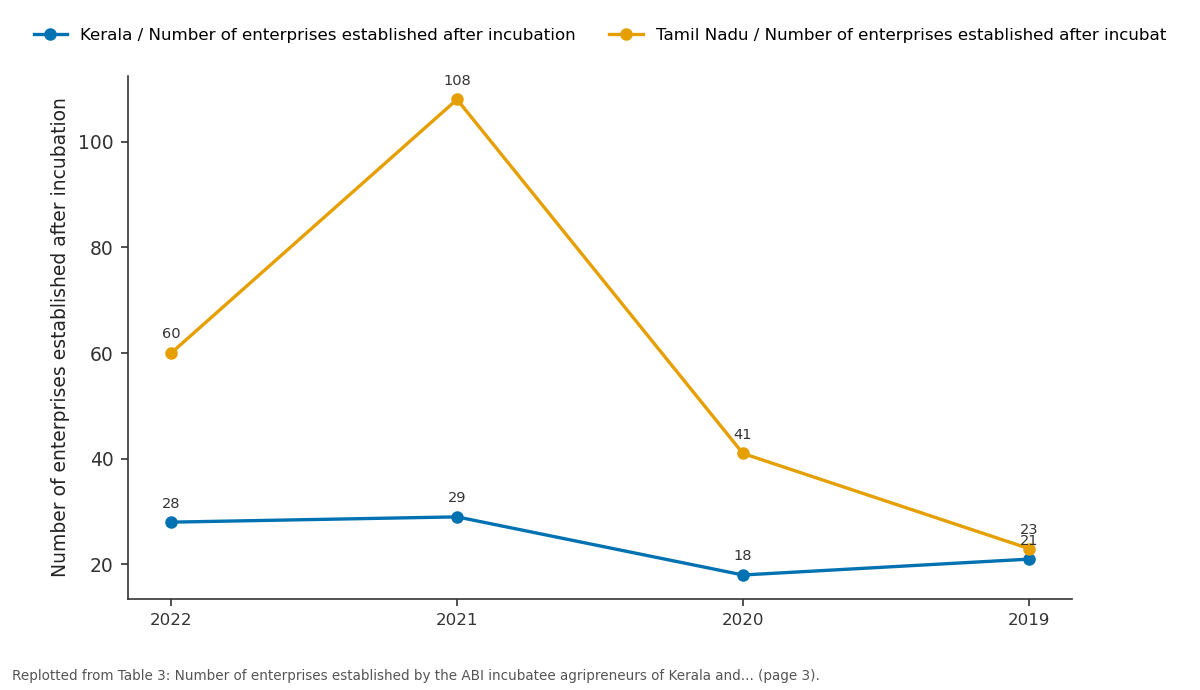
Kerala / Number of enterprises established... and Tamil Nadu / Number of enterprises...: 2022 vs 2021 vs 2020 vs 2019
Replotted from Table 3 (page 3) of the original paper. Every bar is the paper's own table value.
View source evidence ↗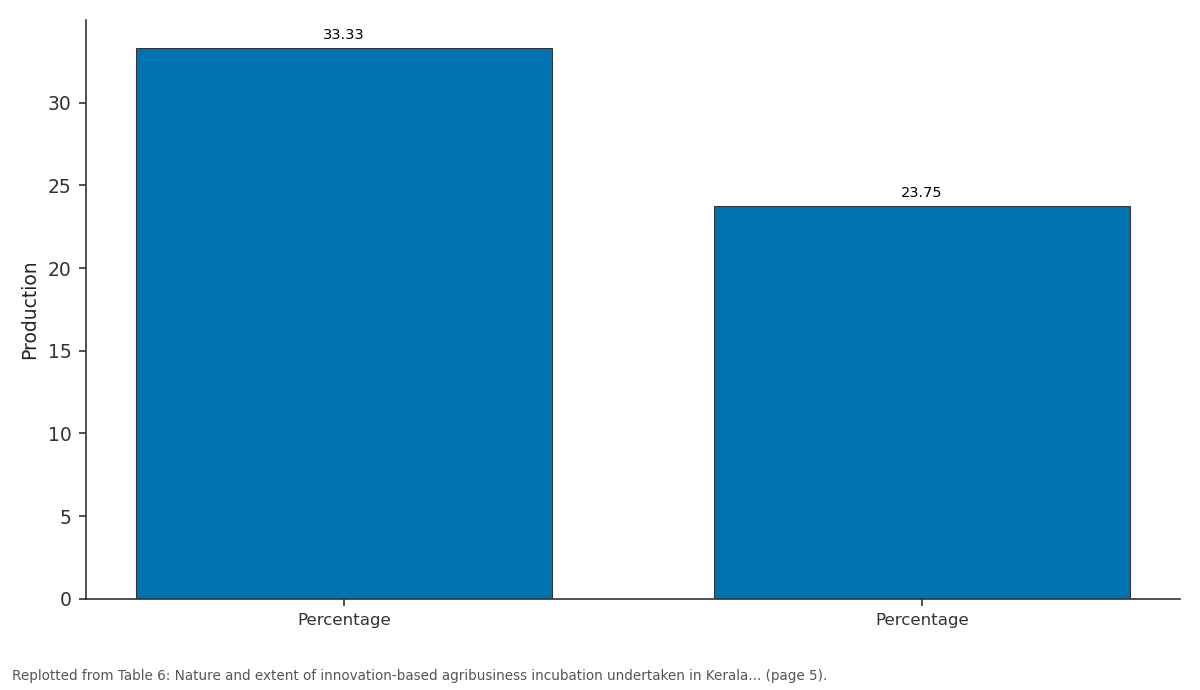
Production: Percentage vs Percentage
Replotted from Table 6 (page 5) of the original paper. Every bar is the paper's own table value.
View source evidence ↗Figures & tables
From the original paper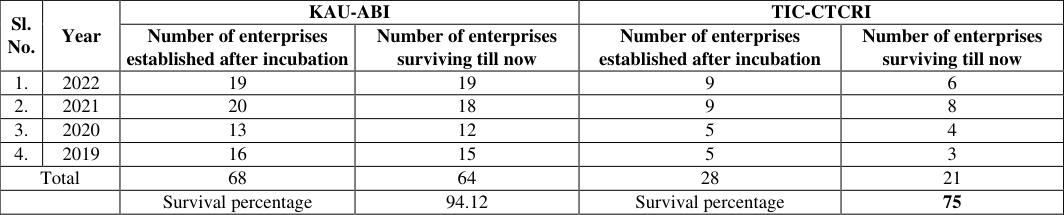 Table 1
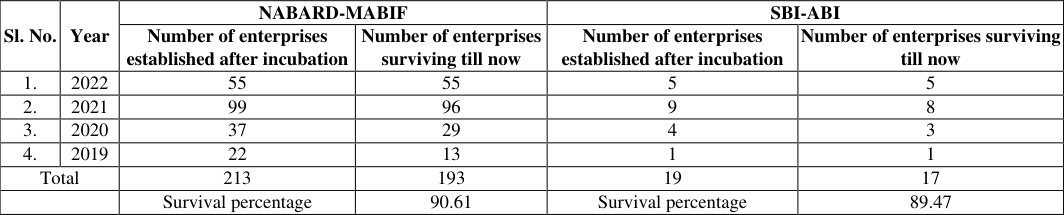 Table 2
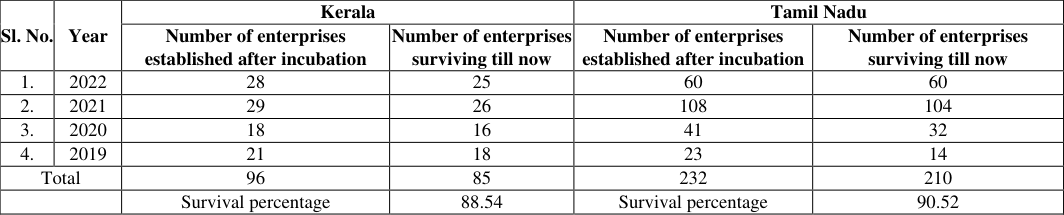 Table 3
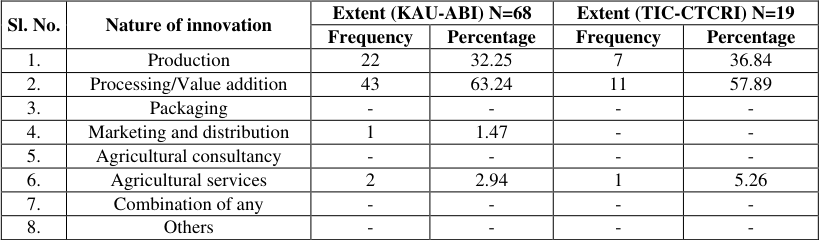 Table 4
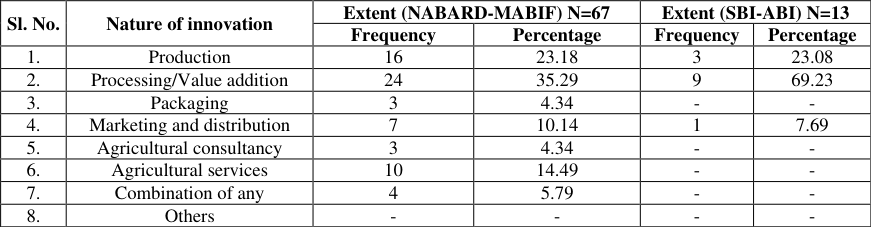 Table 5
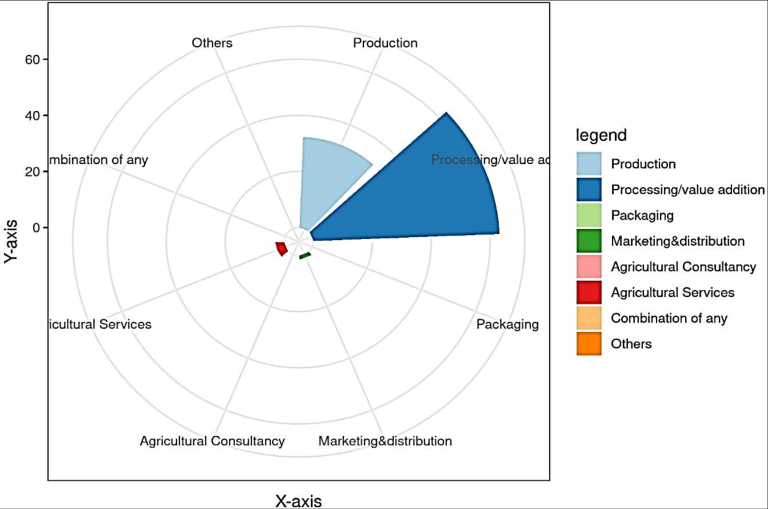 Figure 1
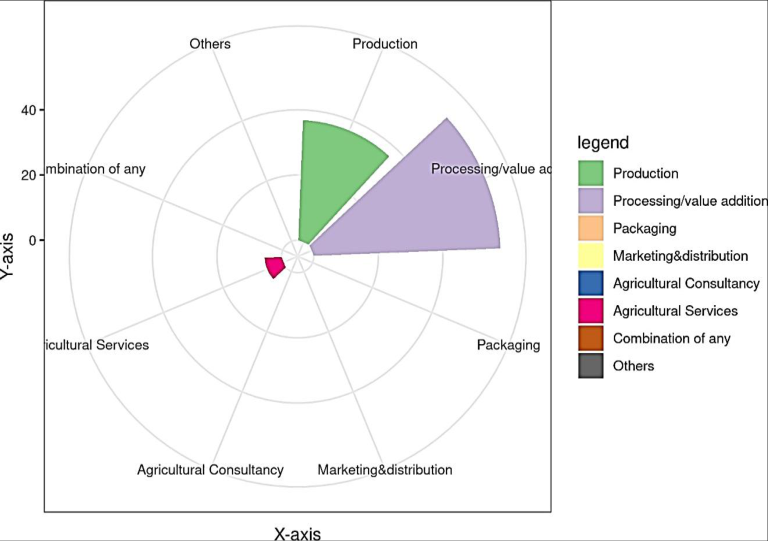 Figure 2
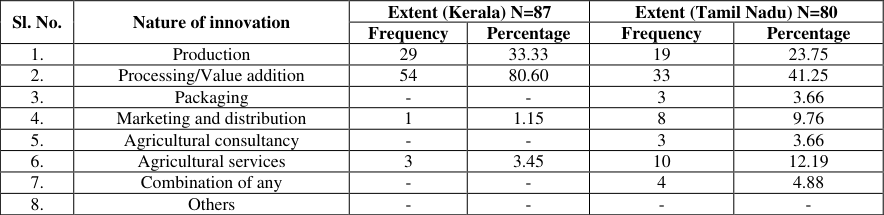 Table 6
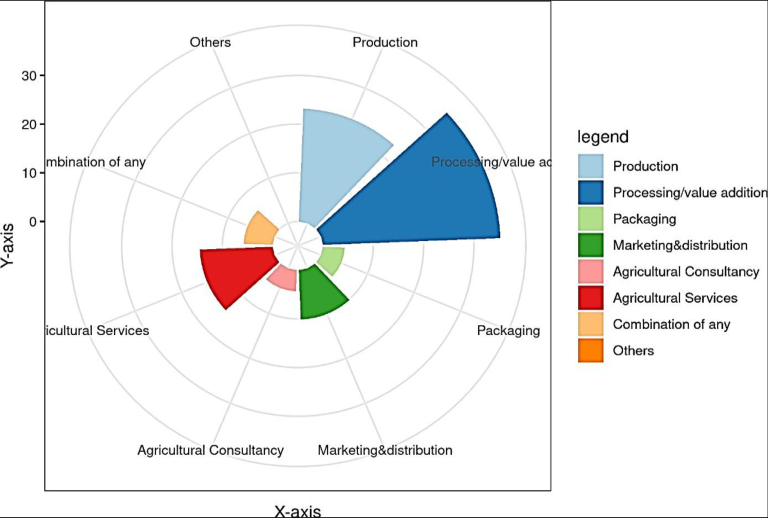 Figure 3
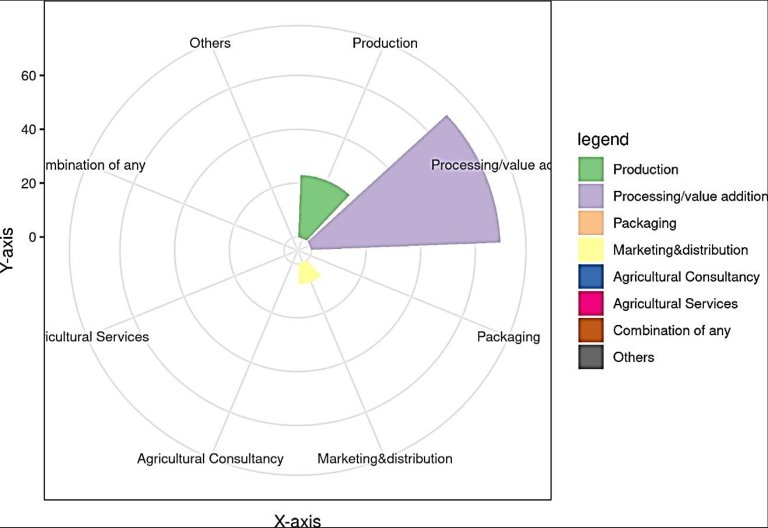 Figure 4
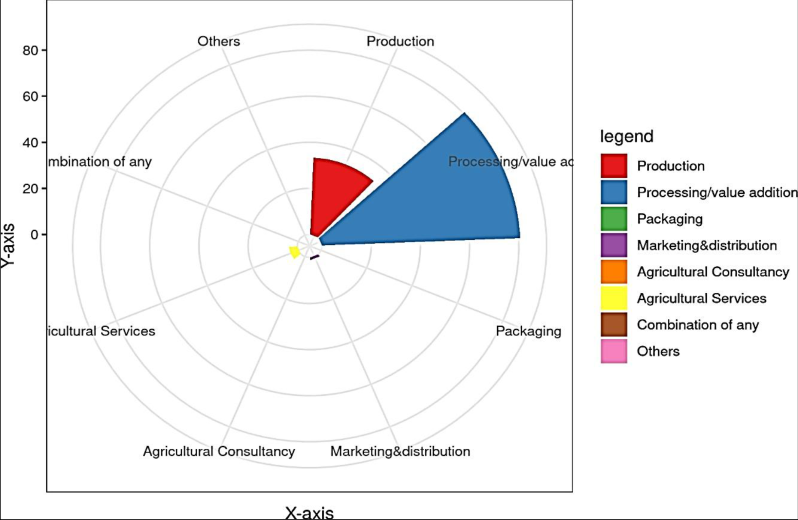 Figure 5
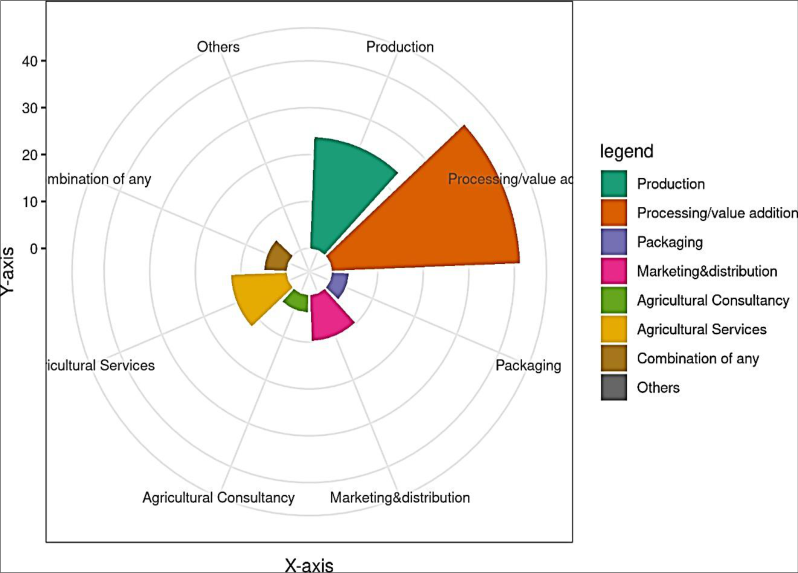 Figure 6
Introduction
India is one of the world's largest and oldest agrarian economies. Since economic liberalization in 1991-1992, the Indian agricultural industry has experienced a revival. The Indian economy is heavily reliant on the agricultural sector. As per the annual report of 2022-2023 by Department of Agriculture & Farmers Welfare, 54.6 of the total workforces is engaged in agriculture and allied sector activities and accounts for 18.6 % of India's GVA at current prices during 2021-22. India is rich in biodiversity, traditional indigenous knowledge, and human capital, all of which have enormous potential for fostering agri-based innovation. Innovation is the backbone of agro-entrepreneurship as it entails newer opportunities and higher profit for the entrepreneurs. The innovation can be commercialized only by transforming it into a marketable idea and in turn an enterprise. Many limitations like mismatch between the production and market demand, lack of technological support to address the production issues and lack of guidance for the farmers about the production still exists. To address these challenges, the long run solution is agribusiness. The lack of appropriate training, technological support, mentorship, credit and marketing facilities leads to the failure of the nascent agro-enterprises. Hence, there is a need of a system, which is dynamic and flexible, as it requires some kind of assistance, the agri-business incubators will provide opportunities to transcend the farming and involve in more meaningful mechanisms of economic contribution. Thus, Agri-Business Incubators (ABI) are seen as the 'magic bullet' that would arrest the failure of agribusiness enterprises and ensure them a soft launch in the society. This paper aims to infer the number of enterprises established after incubation and their survival rate, nature and extent of innovation-based agribusiness incubation undertaken by Agri-Business Incubators (ABIs) and the interventions made by the agribusiness incubators.
Materials and Methods
The study was conducted in two states -Kerala and Tamil Nadu. The Agri-business incubators in these two states which are attached to the State Agricultural Universities (SAU) and Research Institutes under ICAR were selected. Two Agribusiness incubators each from Kerala and Tamil Nadu has been selected purposively for this study. From Kerala, Agri-Business Incubator (ABI) of KAU at Thrissur and Technology Incubation Centre (TIC) of CTCRI at Thiruvananthapuram under ICAR has been selected purposively for the study, out of the six ABIs in the state. From Tamil Nadu, out of the nine ABIs, the Madurai Agri-Business Incubation Forum (MABIF) of NABARD at Madurai under TNAU and Agribusiness Incubator of ICAR Sugarcane Breeding Institute at Coimbatore under ICAR has been selected for the study. Thus, a total of four ABIs one each under the SAU and ICAR has been selected for the study from each state. The respondents were ABI officials; the data was collected from five officials working with the ABIs. Thus, a total of 20 officials from the two states constitute the sample for the study. The data were collected through personal interview using a well-structured and pre-tested interview schedule. Appropriate statistical tools were used for interpretation of the data and generation of results.
Results and Discussion
Results and Discussion
Number of enterprises established by the ABI incubatee agripreneurs and their survival rate
It refers to the number of enterprises established by the ABI incubatee agripreneurs excluding the present year which was collected from the ABI. The survival rate of enterprises established by ABI incubatee and non-incubatee agripreneurs was assessed by determining the number of agri-business units which are surviving till now and was calculated using percentage analysis. From the Table 1, it was found that in 2019, the number of enterprises established after incubation and the number of enterprises surviving till now under KAU-ABI was 16 and 15 respectively and TIC-CTCRI has 5 and 3 respectively. In the year 2020, the number of enterprises established after incubation and the number of enterprises surviving till now under KAU-ABI was 13 and 12 respectively, but in TIC-CTCRI, it was 5 and 4 respectively. For the year 2021, it was observed that the number of enterprises established after incubation and the number of enterprises surviving till now under KAU-ABI was 20 and 18 respectively, while TIC-CTCRI has 9 and 8 respectively.
| Sl. No. | Year | KAU-ABI | — | TIC-CTCRI | — |
|---|---|---|---|---|---|
| Number of enterprises established after incubation | Number of enterprises surviving till now | Number of enterprises established after incubation | Number of enterprises surviving till now | ||
| 1. | 2022 | 19 | 19 | 9 | 6 |
| 2. | 2021 | 20 | 18 | 9 | 8 |
| 3. | 2020 | 13 | 12 | 5 | 4 |
| 4. | 2019 | 16 | 15 | 5 | 3 |
| Total | 68 | 64 | 28 | 21 | |
| Survival percentage | 94.12 | Survival percentage | 75 |
Table text extracted from the original PDF; superscript letters are shown inline. The original table image is below.
View original table image
Finally, in the year 2022, the number of enterprises established after incubation and the number of enterprises surviving till now under KAU-ABI was 19 and 19 respectively, whereas for TIC-CTCRI it was 9 and 6 respectively.
It can be inferred that the number of enterprises established has been gradually increasing every year and in 2021 it has reached maximum and in 2022 it decreased a little but the survival number has been increasing every year. Thus, the survival percentage in KAU-ABI and TIC-CTCRI were 94.12 and 75 respectively. From the Table 2, it was found that in 2019, the number of enterprises established after incubation and the number of enterprises surviving till now under NABARD-MABIF was 22 and 13 respectively and SBI-ABI has 1 and 1 respectively.
| Sl. No. | Year | NABARD-MABIF | — | SBI-ABI | — |
|---|---|---|---|---|---|
| Number of enterprises established after incubation | Number of enterprises surviving till now | Number of enterprises established after incubation | Number of enterprises surviving till now | ||
| 1. | 2022 | 55 | 55 | 5 | 5 |
| 2. | 2021 | 99 | 96 | 9 | 8 |
| 3. | 2020 | 37 | 29 | 4 | 3 |
| 4. | 2019 | 22 | 13 | 1 | 1 |
| Total | 213 | 193 | 19 | 17 | |
| Survival percentage | 90.61 | Survival percentage | 89.47 |
Table text extracted from the original PDF; superscript letters are shown inline. The original table image is below.
View original table image
In the year 2020, the number of enterprises established after incubation and the number of enterprises surviving till now under NABARD-MABIF was 37 and 29 respectively, but in SBI-ABI, it was 4 and 3 respectively.
For the year 2021, it was observed that the number of enterprises established after incubation and the number of enterprises surviving till now under NABARD-MABIF was 99 and 96 respectively, while SBI-ABI has 9 and 8 respectively. Finally, in the year 2022, the number of enterprises established after incubation and the number of enterprises surviving till now under NABARD-MABIF was 55 and 55 respectively, whereas for SBI-ABI it was 5 and 5 respectively.
It can be inferred that the number of enterprises established has been gradually increasing every year and in 2021 it has reached maximum and in 2022 it decreased a little but the survival number has been increasing every year. Thus, the survival percentage in NABARD-MABIF and SBI-ABI were 90.61 and 89.47 respectively.
Nature and extent of innovation-based agribusiness incubation undertaken by ABIs
It refers to the nature of innovation-based agribusiness activity incubated by the incubator for the purpose of establishing an agribusiness unit. It was collected from the ABIs by asking the frequency of innovation-based incubation undertaken in each category. Extent of innovation refers to the extent to which the innovation-based agribusiness undertaken by the ABIs and incubated for the purpose of establishing an agribusiness unit. It was measured using percentage of response obtained in each category.
Conclusion
This research evaluates the working of each ABIs that is selected for the study. The number of enterprises established after incubation and their survival rate was collected from the ABIs and it was found that in Kerala (KAU-ABI and TIC-CTCRI), the agro-enterprises has a survival percentage of 94.12 per cent, whereas in case of Tamil Nadu (NABARD-MABIF and SBI-ABI), the agro-enterprises has a survival percentage of 90.52 per cent. The nature of innovations undertaken by the agripreneurs were classified under the broad areas as production, processing/value addition, packaging, marketing and distribution, agricultural consultancy, agricultural services and combination of any. Majority of the incubatees in Kerala (80.60) and Tamil Nadu (41.25) were found to undertake innovative agribusiness enterprises related to processing/value addition. The data indicates that incubators play a vital role in the establishment and survival of agro-enterprises by fostering innovation. Their support has proven effective in enabling agripreneurs to launch and sustain their ventures, particularly through innovative approaches in various aspects of agri-business. However, there are differences in the mindset of agripreneurs in each district, funding and policies of each incubator.
Figures and tables from the paper
| Sl. No. | Year | Kerala | — | Tamil Nadu | — |
|---|---|---|---|---|---|
| Number of enterprises established after incubation | Number of enterprises surviving till now | Number of enterprises established after incubation | Number of enterprises surviving till now | ||
| 1. | 2022 | 28 | 25 | 60 | 60 |
| 2. | 2021 | 29 | 26 | 108 | 104 |
| 3. | 2020 | 18 | 16 | 41 | 32 |
| 4. | 2019 | 21 | 18 | 23 | 14 |
| Total | 96 | 85 | 232 | 210 | |
| Survival percentage | 88.54 | Survival percentage | 90.52 |
Table text extracted from the original PDF; superscript letters are shown inline. The original table image is below.
View original table image
| Sl. No. | Nature of innovation | Extent (KAU-ABI) N=68 | — | Extent (TIC-CTCRI) N=19 | — |
|---|---|---|---|---|---|
| Frequency | Percentage | Frequency | Percentage | ||
| 1. | Production | 22 | 32.25 | 7 | 36.84 |
| 2. | Processing/Value addition | 43 | 63.24 | 11 | 57.89 |
| 3. | Packaging | - | - | - | - |
| 4. | Marketing and distribution | 1 | 1.47 | - | - |
| 5. | Agricultural consultancy | - | - | - | - |
| 6. | Agricultural services | 2 | 2.94 | 1 | 5.26 |
| 7. | Combination of any | - | - | - | - |
| 8. | Others | - | - | - | - |
Table text extracted from the original PDF; superscript letters are shown inline. The original table image is below.
View original table image
| Sl. No. | Nature of innovation | Extent (NABARD-MABIF) N=67 | — | Extent (SBI-ABI) N=13 | — |
|---|---|---|---|---|---|
| Frequency | Percentage | Frequency | Percentage | ||
| 1. | Production | 16 | 23.18 | 3 | 23.08 |
| 2. | Processing/Value addition | 24 | 35.29 | 9 | 69.23 |
| 3. | Packaging | 3 | 4.34 | - | - |
| 4. | Marketing and distribution | 7 | 10.14 | 1 | 7.69 |
| 5. | Agricultural consultancy | 3 | 4.34 | - | - |
| 6. | Agricultural services | 10 | 14.49 | - | - |
| 7. | Combination of any | 4 | 5.79 | - | - |
| 8. | Others | - | - | - | - |
Table text extracted from the original PDF; superscript letters are shown inline. The original table image is below.
View original table image
| Sl. No. | Nature of innovation | Extent (Kerala) N=87 | — | Extent (Tamil Nadu) N=80 | — |
|---|---|---|---|---|---|
| Frequency | Percentage | Frequency | Percentage | ||
| 1. | Production | 29 | 33.33 | 19 | 23.75 |
| 2. | Processing/Value addition | 54 | 80.60 | 33 | 41.25 |
| 3. | Packaging | - | - | 3 | 3.66 |
| 4. | Marketing and distribution | 1 | 1.15 | 8 | 9.76 |
| 5. | Agricultural consultancy | - | - | 3 | 3.66 |
| 6. | Agricultural services | 3 | 3.45 | 10 | 12.19 |
| 7. | Combination of any | - | - | 4 | 4.88 |
| 8. | Others | - | - | - | - |
Table text extracted from the original PDF; superscript letters are shown inline. The original table image is below.
View original table image
References
11 in the original paper- ACI, ETG. Agribusiness incubators assessment report. Bethesda (MD): infoDev; 2011.
- The World Bank Group. Agribusiness incubation trainee manual. Washington (DC): The World Bank Group; 2013.
- Ashwini T. Performance analysis of agribusiness incubators (ABIs) in entrepreneurship development [PhD thesis]. Vellanikkara: Department of Agricultural Extension, College of Horticulture; 2019. 69 p.
- Ashwini T, Bonny BP, Lokesh S. Performance analysis of coconut enterprises facilitated through agribusiness incubators. 2020.
- Ashwini T, Lokesh S, Bonny BP. Performance of spicebased enterprises facilitated through agri-business incubators (ABI). J Trop Agric. 2022;59(2):-
- Hackett SM, Dilts DM. A systematic review of business incubation research. J Technol Transf. 2004;29(1):5582.
- NASSCOM. Incubator/accelerators driving growth of Indian start-up ecosystem. New Delhi: NASSCOM; 2017.
- Ogutu VO, Kihonge E. Impact of business incubators on economic growth and entrepreneurship development. Int J Sci Res. 2016;5(5):231-41.
- Singh B. Technology-based entrepreneurship in agriculture -role of agribusiness incubators. Int J Manag Int Bus Stud. 2014; ISSN: 2277-3177.
- Startup India. Incubator framework [Internet]. Available from: https://www.startupindia.gov.in/content/sih/en/incubato r-framwork.html. Accessed 2023 Sep 18.
- Thomas B, Sudheer KP, Bonny BP. Performance analysis of agri-enterprises facilitated through KAUAgri Business Incubators. Curr J Appl Sci Technol. 2021;40(7):30-40.