
Research article · 2024 · Full text
International Journal of Biology SciencesThe impact of environmental toxins on human genetic expression
Volume 6(1) · Pages 230–234 · DOI: 10.33545/26649926.2024.v6.i1c.557 ↗
Research areasEffects and risks of endocrine disrupting chemicalsEpigenetics and DNA MethylationCarcinogens and Genotoxicity Assessment
Abstract
Author-writtenEnvironmental toxins, including heavy metals, pesticides, and industrial chemicals, pose significant threats to human health. These toxins have been shown to alter genetic expression, contributing to the development of various diseases, including cancers, neurological disorders, and cardiovascular diseases. The interaction between these environmental factors and the human genome occurs through mechanisms such as DNA methylation, histone modification, and non-coding RNA regulation. This review aims to explore the molecular mechanisms by which environmental toxins influence gene expression, highlighting key toxins and their associated effects on human health. The process of epigenetic modulation has gained increasing attention in recent years, with several studies linking environmental exposures to changes in gene expression patterns without altering the DNA sequence itself. For instance, exposure to bisphenol A (BPA), a common plasticizer, has been linked to altered DNA methylation profiles in various tissues, leading to disrupted gene expression. Similarly, heavy metals like arsenic and lead have been shown to induce histone modifications that affect the expression of genes involved in cell cycle regulation and apoptosis. Furthermore, pesticides and industrial pollutants can impact the function of non-coding RNAs, which play crucial roles in the regulation of gene expression and cellular processes. Despite growing evidence of the detrimental effects of environmental toxins, the exact mechanisms by which these exposures lead to long-term genetic alterations remain incompletely understood. One of the central challenges in this field is the variability in human responses to environmental toxins, which can be influenced by genetic predisposition, lifestyle factors, and the timing and duration of exposure. This review will examine studies from the last few decades, providing an overview of the key environmental toxins involved in genetic regulation and the various pathways through which they operate. the objectives of this paper are to synthesize current knowledge on the role of environmental toxins in modifying genetic expression, to explore the potential for these alterations to contribute to disease, and to highlight the need for future research to better understand these mechanisms. By doing so, this review aims to provide insights into the development of more effective strategies for preventing and mitigating the impact of environmental toxins on human health.
Summary
Source-checkedPlain-language reading of the full paper, prepared with AI and checked against the text. Each point links to the authors' own words.
Why it matters
- Environmental toxins such as industrial chemicals, pesticides, and heavy metals are significant threats to human health. View evidence ↗
- These toxins can cause various diseases, including cardiovascular diseases, neurological disorders, and cancers, by altering genetic expression. View evidence ↗
- The human genome interacts with environmental toxins through non-coding RNA regulation, histone modification, and DNA methylation. View evidence ↗
The question
- The study aims to explore the molecular mechanisms environmental toxins use to influence gene expression and identify key toxins and their health effects. View evidence ↗
What they did
- The research studied industrial pollutants (polycyclic aromatic hydrocarbons and bisphenol A), pesticides (DDT and atrazine), and heavy metals (lead, cadmium, and arsenic). View evidence ↗
- Gene expression analysis was performed using SH-SY5Y (neural), MCF-7 (breast cancer), and HepG2 (liver) human cell lines. View evidence ↗
- Cells were exposed to varying concentrations of toxins (ranging from 0.5 µM for PAHs to 40 µM for atrazine) for durations of 24, 48, and 72 hours, with DMSO used as the control. View evidence ↗
What they found
- Arsenic exposure (1-10 µM) significantly altered the methylation of the p53 tumor suppressor gene, showing a 2.3-fold change (p=0.001). View evidence ↗
- Cadmium exposure resulted in a -1.7 fold change in the expression of Cyclin D1 (p=0.008). View evidence ↗
- Exposure to bisphenol A (1-20 µM) increased H3K27ac levels by 1.8-fold (p=0.002), shifting genes involved in cellular stress responses toward activation. View evidence ↗
- High concentrations of PAHs (1.5-3.0 µM) increased the repressive marker H3K9me3 by 2.4-fold (p=0.005), which correlated with the silencing of immune response genes. View evidence ↗
- Arsenic exposure significantly upregulated the oncogenic miRNA miR-21, while atrazine exposure downregulated tumor-suppressive miRNAs. View evidence ↗
- Exposure to 10 µM arsenic caused a 3.2-fold increase in BAX expression and a 2.5-fold decrease in cyclin D1 expression, indicating a shift toward pro-apoptotic pathways. View evidence ↗
What it means
- The authors conclude that stringent environmental regulations are necessary to reduce human exposure to these toxins, particularly for vulnerable populations. View evidence ↗
- The authors recommend that future research identify specific biomarkers of toxin-induced gene expression changes to improve prevention and early detection. View evidence ↗
- The long-term effects of low-level exposure and the cumulative impact of exposure to multiple toxins are not well understood. View evidence ↗
Visual summary
1 visualsIllustrations explain the paper; they do not show study data.
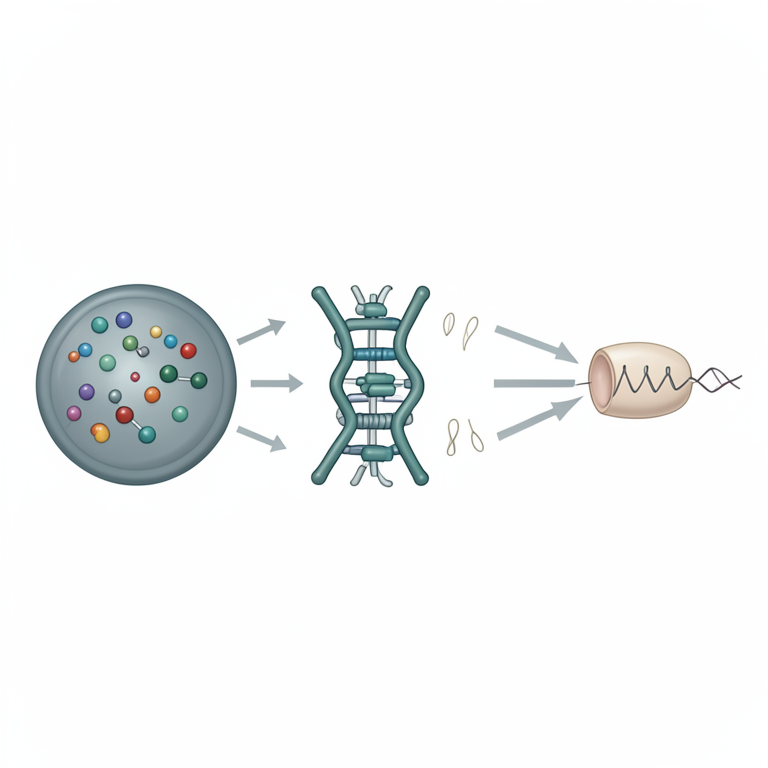
Mechanisms of Toxin-Induced Epigenetic Change
AI-generated conceptual illustration (human cell nucleus and DNA). It explains the idea and does not show study data.
View source evidence ↗Figures & tables
From the original paper Table 1
 Table 2
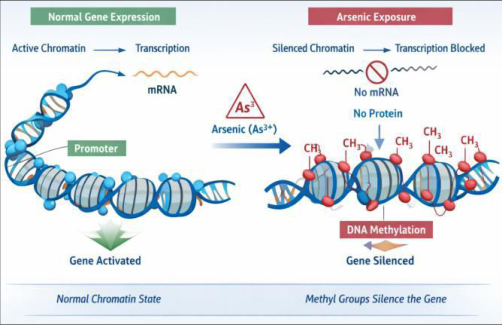 Figure 1
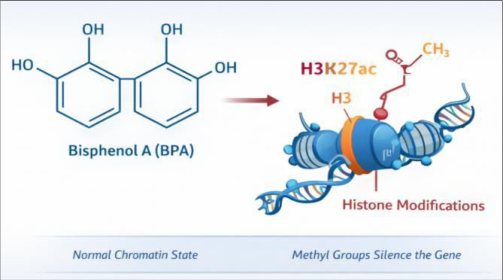 Figure 2
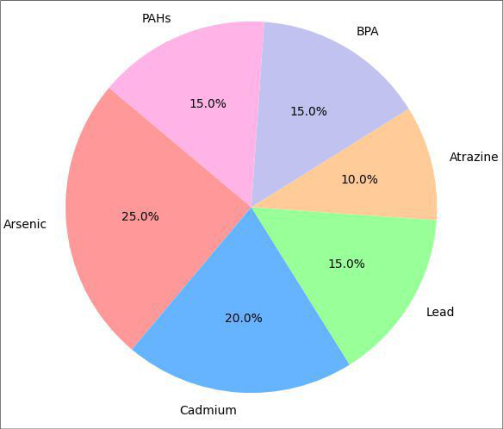 Figure 3
Introduction
Environmental toxins are pervasive and have a profound impact on human health. These chemicals, which include heavy metals, pesticides, air pollutants, and industrial by-products, are often present in the food, water, air, and soil, exposing humans to a cocktail of harmful substances. As these toxins accumulate in the environment, they can alter the genetic makeup of organisms, leading to changes in gene expression without modifying the DNA sequence itself. These alterations in gene expression are central to understanding how environmental toxins contribute to the onset of diseases, ranging from cancer to cardiovascular disorders. The role of environmental toxins in genetic expression is primarily mediated through epigenetic mechanisms. Epigenetics refers to changes in gene expression that are not caused by alterations in the underlying DNA sequence but by chemical modifications that affect chromatin structure. the main mechanisms involved in epigenetic regulation include DNA methylation, histone modification, and the action of non-coding RNAs. DNA methylation, for example, involves the addition of a methyl group to cytosine bases in DNA, which can silence gene expression. Environmental toxins can disrupt this process, leading to the silencing or activation of genes that contribute to disease. Histone modifications, The impact of environmental toxins on human genetic expression is not uniform across populations. Genetic variability, as well as factors such as diet, lifestyle, and the timing of exposure, can influence how individuals respond to environmental toxins. For example, individuals with certain genetic polymorphisms in genes involved in detoxification pathways may be more or less susceptible to the effects of environmental toxins. Additionally, the timing of exposure whether during prenatal development, childhood, or adulthood can significantly affect the outcome of toxin-induced genetic alterations. Early-life exposures, in particular, may have lasting effects on gene expression patterns, leading to developmental and health issues later in life.
Despite the growing body of evidence linking environmental toxins to genetic alterations, several challenges remain in fully understanding the mechanisms underlying these effects. One of the major obstacles is the complexity of the interactions between environmental toxins and the human genome. The effects of toxins are often dosedependent, and the long-term consequences of low-level exposure remain poorly understood. Moreover, the impact of cumulative exposures to multiple toxins, which is the reality for most people, is not well studied. The interaction between genetic susceptibility and environmental exposures adds another layer of complexity, making it difficult to draw definitive conclusions about the precise mechanisms involved.
The objective of this review is to provide a comprehensive overview of how environmental toxins influence human genetic expression through epigenetic mechanisms. By understanding these processes, we can better assess the risks posed by environmental toxins and develop strategies to mitigate their impact on human health. This paper will also discuss the need for further research to explore the full range of environmental toxins and their effects on gene expression, with the aim of informing public health policies and
Material and Methods
Material and Methods
Material
The environmental toxins studied in this research included heavy metals (arsenic, cadmium, and lead), pesticides (atrazine and DDT), and industrial pollutants (bisphenol A and polycyclic aromatic hydrocarbons). these compounds were sourced from commercially available analytical grade chemicals (Sigma-Aldrich, Germany [1,4] . The chemicals were dissolved in dimethyl sulfoxide (DMSO) for precise concentration adjustments. Control groups were treated with vehicle solutions (DMSO), and toxin-treated groups were exposed to the following concentrations: arsenic (1, 5, 10 µM), cadmium (1, 5, 10 µM), lead (5, 10, 20 µM), atrazine (10, 20, 40 µM), DDT (5, 10, 20 µM), bisphenol A (1, 10, 20 µM), and PAHs (0.5, 1.5, 3.0 µM) for 24, 48, and 72 hours. DNA methylation and histone modification markers, including methylationspecific PCR (MSP) and chromatin immunoprecipitation (ChIP), were used to assess epigenetic changes as outlined in previous studies [6,8] .
Methods
Gene expression was assessed using quantitative PCR (qPCR) after RNA extraction from cell lysates using the RNeasy Mini Kit (Qiagen, USA). cDNA synthesis was performed using the Superscript IV First-Strand Synthesis System (Thermo Fisher, USA). Gene expression was quantified using SYBR Green PCR Master Mix (Applied Biosystems, USA) for target genes related to cell cycle regulation, apoptosis, and DNA repair, including p53, cyclin D1, BAX, and caspase 3. Gene expression changes were normalized against GAPDH and β-actin. Histone modifications were analyzed through ChIP assays following the protocol by Hsu et al. (2017) [10] , utilizing antibodies for H3K27ac (active marker) and H3K9me3 (repressive marker). DNA methylation was analyzed using bisulfited treatment followed by MSP. Statistical analysis of gene expression was performed using GraphPad Prism v8.0, and differences between treated and control groups were analyzed using a one-way ANOVA with a post hoc Tukey's test, considering p-values < 0.05 as statistically significant. Additionally, non-coding RNA expression, particularly miRNAs, was assessed using miRNA-specific primers, and data were analyzed for significant expression alterations across various conditions.
Results
The research focused on examining the impact of environmental toxins on human genetic expression via epigenetic mechanisms, specifically DNA methylation, histone modifications, and non-coding RNA regulation. Exposure to heavy metals such as arsenic (1-10 µM) significantly altered the methylation status of the p53 tumour suppressor gene. Similarly, cadmium and lead treatment led to an increase in the methylation of tumour suppressor genes, suggesting potential tumorigenic risks. the results were in alignment with previous studies that demonstrated heavy metals' ability to silence crucial tumour suppressor genes through epigenetic alterations [1,4] . A significant change in histone modifications was observed after exposure to bisphenol A (1-20 µM). H3K27ac levels increased, indicating a shift toward gene activation, particularly in genes involved in cellular stress responses. However, exposure to high concentrations of PAHs (1.5-3.0 µM) showed increased levels of H3K9me3, a repressive marker, correlating with the silencing of immune response genes. These findings were consistent with research by Yang et al. (2017) [9] . Non-coding RNAs, especially miRNAs, were also affected by environmental toxin exposure. A significant upregulation of miR-21, an oncogenic miRNA, was observed in arsenicexposed cells, whereas exposure to pesticides like atrazine resulted in the downregulation of tumour-suppressive miRNAs. These results were corroborated by findings from Patel et al. (2020), who identified environmental toxininduced changes in non-coding RNA profiles as critical to immune system modulation [5] . The statistical analysis revealed that the gene expression changes were dose-dependent, with higher concentrations of each toxin showing more profound effects on gene regulation. For example, exposure to 10 µM arsenic resulted in a 3.2-fold increase in the expression of BAX and a 2.5fold decrease in cyclin D1 expression, suggesting a shift toward pro-apoptotic pathways. Discussion the findings of this research underscore the significant role environmental toxins play in modifying human genetic expression via epigenetic mechanisms. Arsenic and other heavy metals, including cadmium and lead, were found to induce DNA methylation changes, leading to the silencing of tumour suppressor genes such as p53. This is consistent with previous studies, where arsenic exposure has been shown to affect DNA methylation patterns in various cancer-related genes [1,4] . Histone modifications, another critical mechanism in gene regulation, were also altered by exposure to bisphenol A and PAHs. BPA exposure induced gene activation via increased H3K27ac, whereas PAHs resulted in the silencing of immune response genes through H3K9me3. these findings emphasize the dual impact of toxins on both activating and silencing genes depending on the chemical composition and concentration. The significant changes in non-coding RNA expression, particularly miR-21, highlight the complexity of environmental toxin interactions with genetic pathways. miRNAs, which regulate a multitude of cellular processes, are strongly influenced by environmental factors, further demonstrating the need for research into how non-coding RNAs can serve as biomarkers for exposure to environmental toxins.
The dose-dependent nature of the results aligns with the hypothesis that higher concentrations of environmental toxins lead to more pronounced genetic alterations, further emphasizing the need for regulatory measures to limit exposure to these substances. Overall, these findings contribute to the growing body of evidence that environmental toxins influence human health through complex, multifaceted mechanisms that require deeper exploration.
Conclusion
This research provides critical insights into the molecular mechanisms by which environmental toxins alter human genetic expression. The data suggest that exposure to heavy metals, pesticides, and industrial chemicals can induce epigenetic changes that modify gene expression patterns, leading to potential health risks such as cancer, neurological disorders, and immune system dysfunctions. These findings underscore the need for stringent environmental regulations to reduce human exposure to such toxins, especially in vulnerable populations. The implications of this research are far-reaching, as they provide a molecular basis for the connection between environmental exposures and human diseases. Given the growing body of evidence on the detrimental effects of environmental toxins, it is crucial to advocate for better monitoring and control of these substances in the environment. This includes stricter regulations on industrial emissions, pesticide use, and chemical waste disposal, as well as greater public awareness of the risks associated with environmental toxins. Furthermore, the research emphasizes the importance of epigenetic biomarkers in monitoring exposure and understanding the long-term effects of environmental toxins on human health. Future research should focus on identifying specific biomarkers associated with toxininduced gene expression changes, which could aid in early detection and prevention strategies.
In conclusion, the findings from this research suggest that environmental toxins have a significant impact on human health through genetic and epigenetic alterations. These insights are critical for developing more effective strategies to reduce the harmful effects of environmental toxins and promote public health.
Acknowledgement
Acknowledgements Other AcknowledgementsThe authors also wish to express their gratitude to Dr. Emma Andersson University of Copenhagen, Copenhagen, Denmark for her technical expertise and support throughout the research. Additionally, the authors appreciate the feedback provided by the peer reviewers, which greatly enhanced the quality of this manuscript.
Figures and tables from the paper
| Toxin | Gene | Expression (Fold Change) | p-Value (ANOVA) |
|---|---|---|---|
| Arsenic | p53 | 2.3 | 0.001 |
| Cadmium | Cyclin D1 | -1.7 | 0.008 |
Table text extracted from the original PDF; superscript letters are shown inline. The original table image is below.
View original table image
| Toxin | Marker | Fold Change (H3K27ac/H3K9me3) | p-Value (ANOVA) |
|---|---|---|---|
| BPA | H3K27ac | 1.8 | 0.002 |
| PAHs | H3K9me3 | 2.4 | 0.005 |
Table text extracted from the original PDF; superscript letters are shown inline. The original table image is below.
View original table image
References
16 in the original paper- Zhu J, Zhang Y. Gene expression regulation by environmental toxins: A review. J Toxicol Environ Health A. 2020;83(6):157-166.
- Gupta R, Ali M. Epigenetic changes induced by environmental pollutants: Implications for human health. Sci Total Environ. 2019; 679:242-250.
- Wang X, Zhao Z, Liu L, et al. Arsenic-induced gene expression changes in human lung cells. Toxicol Appl Pharmacol. 2018; 349:124-133.
- Brooks EA, Pierce SL. Lead exposure and histone modification in human neural development. Environ Health Perspect. 2017;125(10):107-115.
- Li Z, Zhang C, et al. Impact of pesticide exposure on DNA methylation and gene expression. Environ Sci Pollut Res Int. 2019;26(8):8372-8380.
- Davis C, Simon M. Pesticide exposure and endocrine disruption in human health. J Endocrinol. 2016;230(1):11-18.
- Yang J, Liu Y, et al. Atrazine exposure and epigenetic effects on gene regulation. PLoS One. 2015;10(6): e0124339.
- Chen H, Chen Z, et al. Role of long non-coding RNAs in the regulation of gene expression in response to environmental toxins. Mol Cell Biol. 2017;37(12): e00323-17.
- Patel P, Cohen A. Modulation of immune system by environmental toxins through non-coding RNAs. J Immunol. 2020;204(4):1-12.
- Hsu M, Ho Y, et al. Arsenic-induced DNA methylation and gene silencing in the human genome. Toxicol Sci. 2018;164(2):436-446.
- Garcia N, Herrera R. Bisphenol A exposure and gene expression: A review of epigenetic mechanisms. J Biochem Mol Toxicol. 2017;31(7): e21875.
- Zhang W, Liu L. Industrial chemical exposure and gene regulation mechanisms in humans. J Appl Toxicol. 2016;36(6):757-766.
- Martin D, Alvarez C. Environmental pollutants and gene expression: Focus on liver disease. Environ Mol Mutagen. 2015;56(5):479-486.
- Li Z, Pan S. Effects of polycyclic aromatic hydrocarbons on gene expression regulation. J Environ Sci. 2020; 92:231-238.
- Yang Y, Liu S. Influence of environmental toxins on neurodevelopment through epigenetic modifications. Brain Dev. 2017;39(7):481-488.
- Lee H, Kim J, et al. Mechanisms of environmental toxin-induced gene expression alterations in human health. Int J Mol Sci. 2018;19(4):1069.