
Research article · 2026 · Full text
International Journal of Biology SciencesExploration of ethnomedicinal plants of family Fabaceae used by the tribes of Bodla Block, Kabir Dham District, (C.G.) India
Volume 8(1) · Pages 101–106 · DOI: 10.33545/26649926.2026.v8.i1b.551 ↗
Research areasEthnobotanical and Medicinal Plants StudiesPharmacology and Nanomedicine ResearchBioactive natural compounds
Abstract
Author-writtenThe current study deals with certain plants of the family Fabaceae, which are Ethnomedicinally exploited by local tribal people of Bodla Block, Kabir Dham District, (C.G) India. In the world's largest Family of flowering plants, Fabaceae is the third largest group of plants, having around 19,400 species and is classified in about 730 genera. A large number of crude drugs used in the Ayurvedic system employ plants of the family Fabaceae. It is also divided into three sub-families: Papilionaceae, Caesalpinioideae, and Mimosoideae. The present study deals with the study of medicinal plants initiated to get information and report the medicinal plants of the family Fabaceae of Bodla Block during field observation in 2023-24. It is observed that a total of 55 Medicinal plant species belonging to 40 genera were utilised by the local health healers/people for the treatment of different disorders. Conventional medicinal plants were mostly used for different diseases like diabetes, asthma, cough and colds, dysentery, inflammation, wound healing, skin diseases, ulcers, Toothache etc. The medicinal plants used by the traditional users of Bodla Block are arranged alphabetically, followed by their botanical name, local name, parts used and medicinal uses separately.
Summary
Source-checkedPlain-language reading of the full paper, prepared with AI and checked against the text. Each point links to the authors' own words.
Why it matters
- The Fabaceae family is the third largest group of flowering plants globally, comprising approximately 19,400 species across 730 genera. View evidence ↗
- Plants from the Fabaceae family are frequently used as crude drugs within the Ayurvedic system of medicine. View evidence ↗
- Documenting the traditional knowledge of indigenous healers is important for biodiversity conservation, cultural preservation, and local community healthcare. View evidence ↗
The question
- The study aimed to identify and report the medicinal plants of the Fabaceae family used in the Bodla Block during 2023-24. View evidence ↗
What they did
- Research was conducted through field observations and interviews at regular intervals in randomly selected areas of Bodla Block, Chhattisgarh, India, between 2023 and 2024. View evidence ↗
- Data was collected via a preliminary door-to-door survey using semi-structured questionnaires administered to Baiga and Gond tribal healers. View evidence ↗
- The study recorded the botanical and local names of the plants, the specific parts used, and their traditional medicinal applications. View evidence ↗
What they found
- Local healers in the Bodla Block utilize 55 medicinal plant species from 40 different genera. View evidence ↗
- Among the 55 recorded plants, herbs were the most common (reported as 24 species in text and 19 in Table 2), followed by trees (16), shrubs (15), and climbers (5). View evidence ↗
- The most frequently used plant parts for medicinal purposes were leaves combined with seeds (7 species) and seeds alone (7 species). View evidence ↗
- The identified plants are primarily used to treat conditions such as diabetes, asthma, coughs, colds, dysentery, inflammation, skin diseases, ulcers, and toothaches. View evidence ↗
What it means
- The authors conclude that the Fabaceae family significantly promotes general health and that these ethnomedicinal uses must be documented to prevent the loss of traditional knowledge. View evidence ↗
- The authors state that the traditional medicinal information provided by the tribes requires further scientific validation. View evidence ↗
Visual summary
3 visualsIllustrations explain the paper; charts are replotted from the paper's own table values.
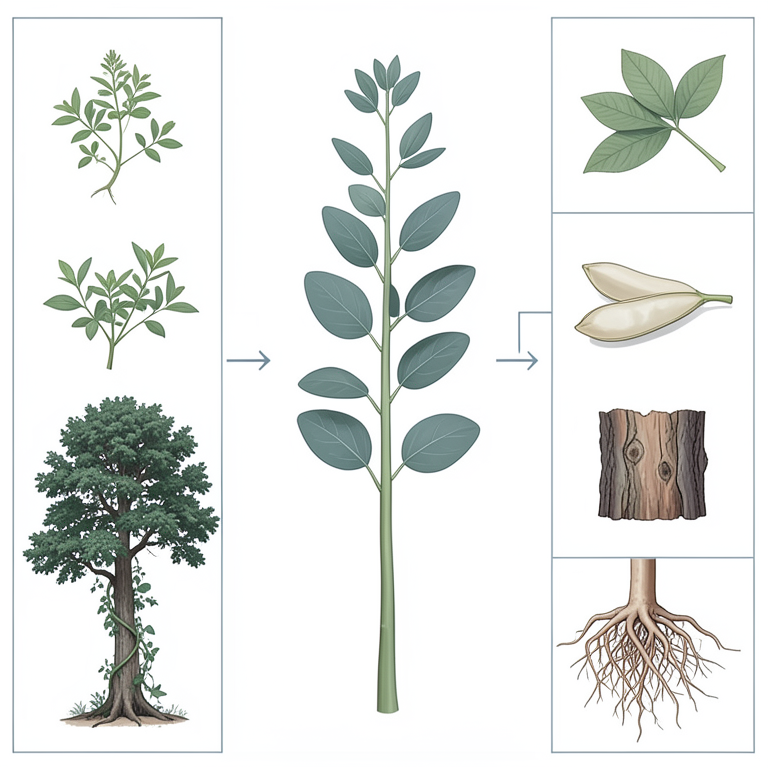
Composition of Ethnomedicinal Fabaceae
AI-generated conceptual illustration (Fabaceae medicinal plants (herbs, shrubs, trees, and climbers)). It explains the idea and does not show study data.
View source evidence ↗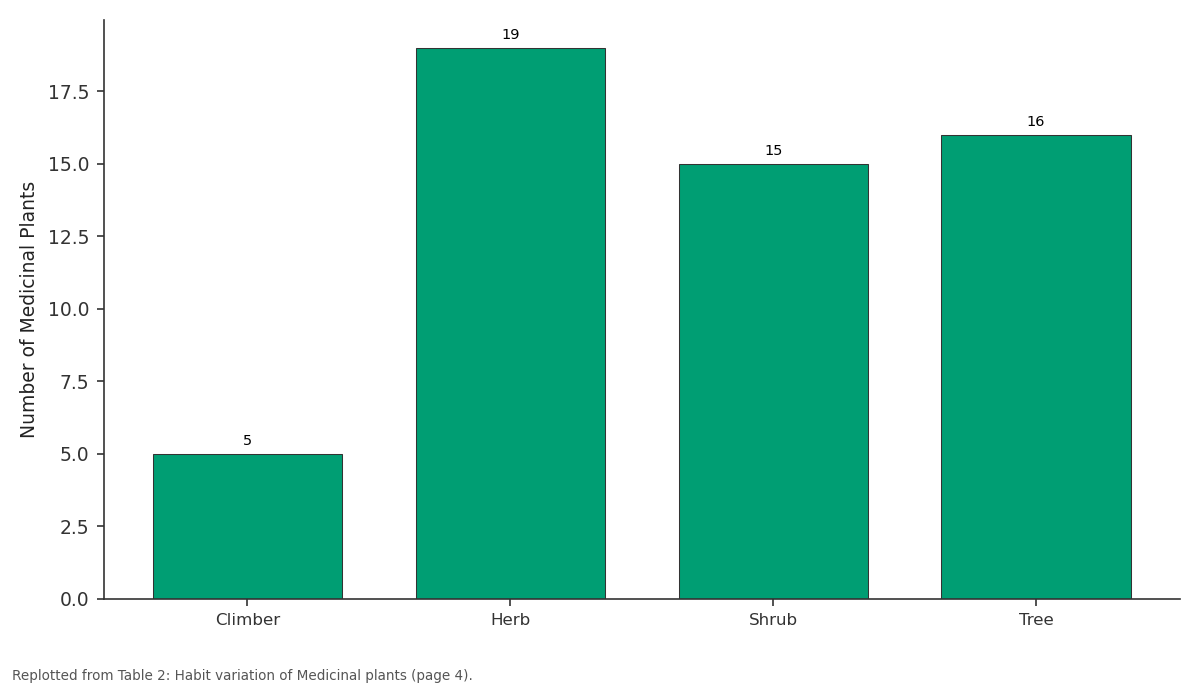
Number of Medicinal Plants: Climber vs Herb vs Shrub vs Tree
Replotted from Table 2 (page 4) of the original paper. Every bar is the paper's own table value.
View source evidence ↗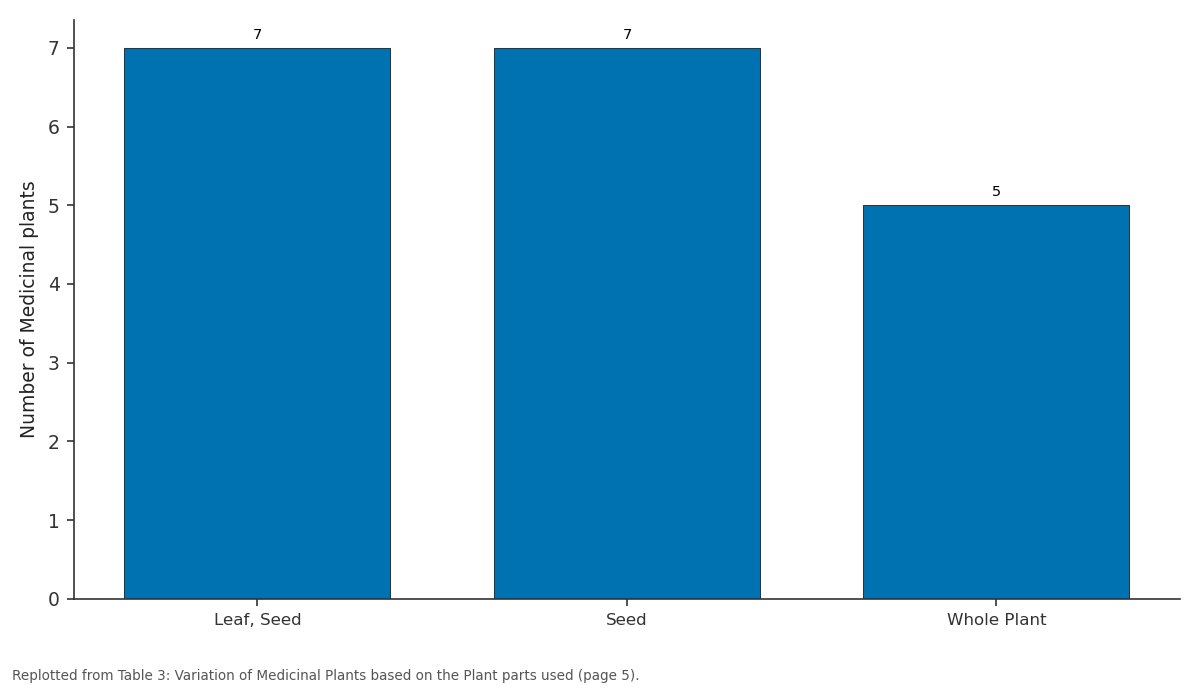
Number of Medicinal plants: Leaf, Seed vs Seed vs Whole Plant
Replotted from Table 3 (page 5) of the original paper. Every bar is the paper's own table value.
View source evidence ↗Figures & tables
From the original paper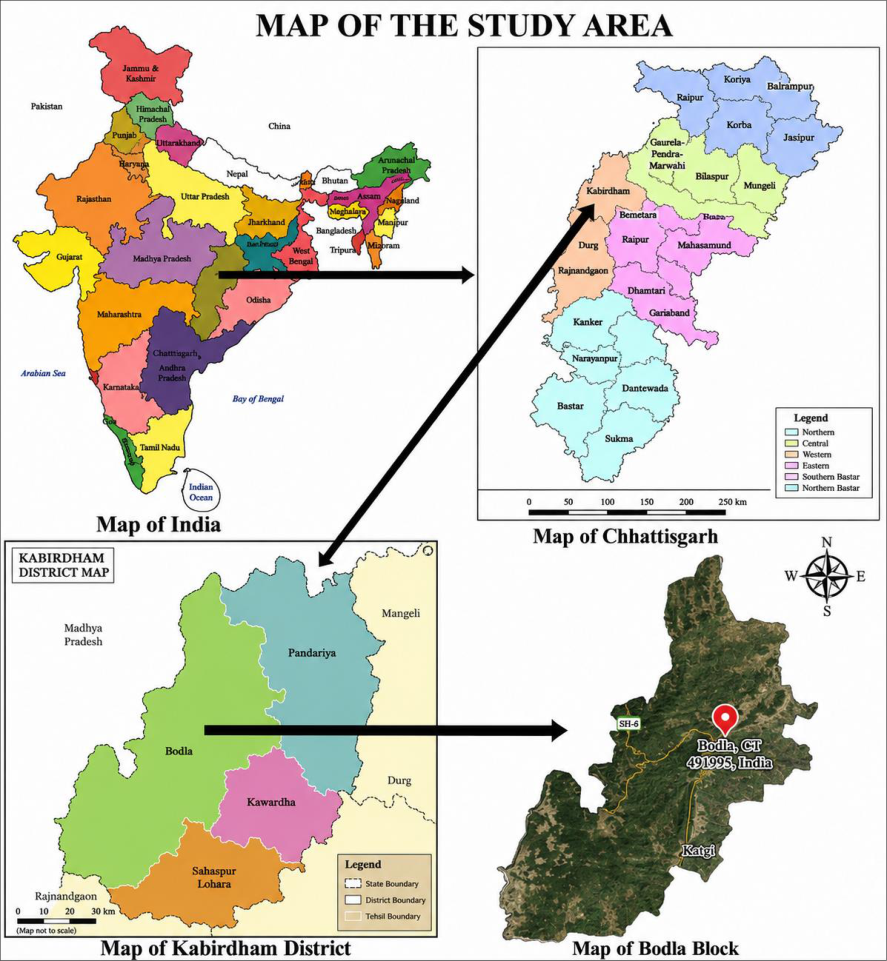 Figure 1
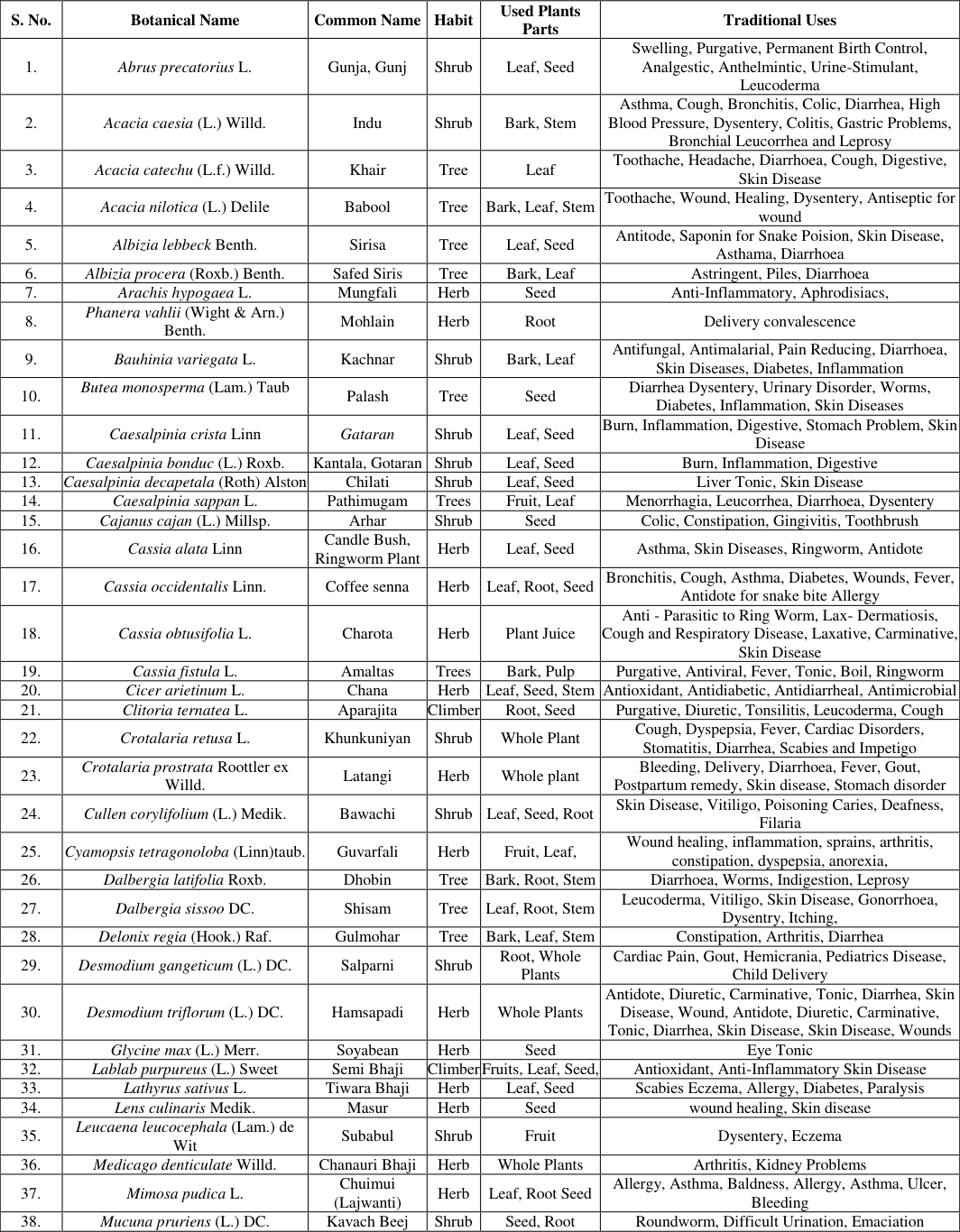 Table 1
 Table 2
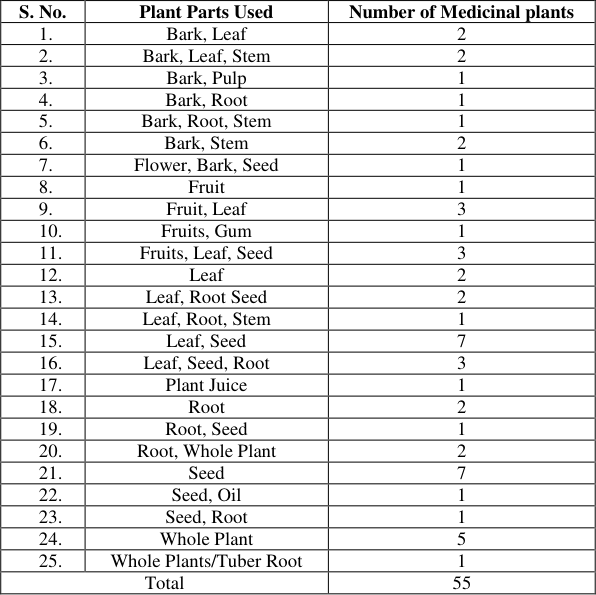 Table 3
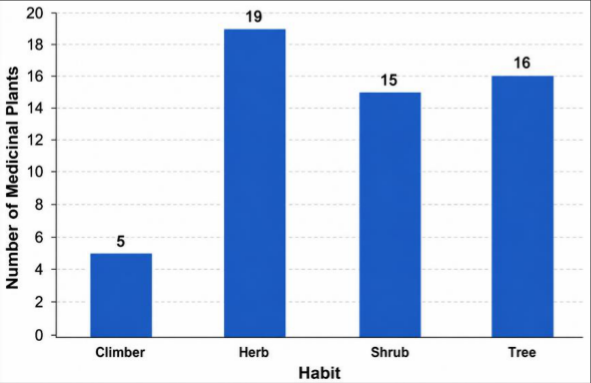 Figure 2
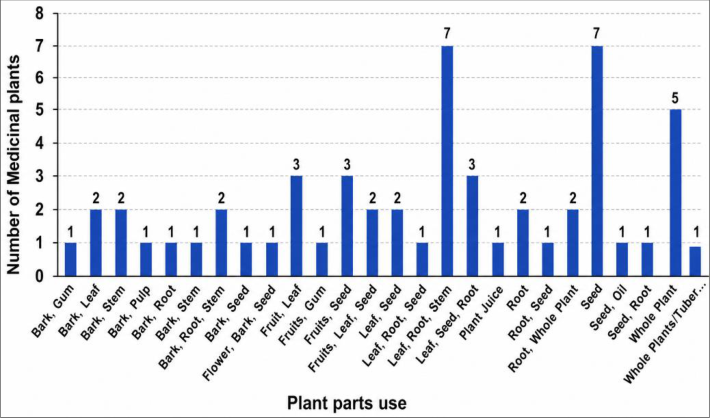 Figure 3
Introduction
The Fabaceae or Leguminosae, commonly known as the legume, pea, or bean family, is a large and economically important family of flowering plants. It includes trees, shrubs, herbaceous plants, perennials, or annuals, which are easily recognized by their fruits (legumes) and their compound, stipulate leaves. The group is widely distributed and is the third-largest land plant family in terms of number of species, behind only the Orchidaceae and Asteraceae, with 730 genera and over 19,400 species [1] . The largest genera are Astragalus (over 2,400 species), Acacia (over 950 species), Indigofera (around 700 species), Crotalaria (around 700 species), and Mimosa (around 500 species), which contain around 9.4% of all flowering plant species [2] . This family has extremely diverse characteristics, which make it one of the most important groups of plants; because they are used by humans as crops, green manures, and forages. These plants are also used to synthesize a large range of natural products, including flavours, poisons, and dyes, and also have great importance in medicinal purposes. Many species of plants belonging to multiple families are catalogued as medicinal plants based on the presence of specific chemical constituents and their effects on the biological systems [3] . Traditional knowledge of medicinal plants and their uses by indigenous healers and drug development in the present is not only useful for the conservation of cultural tradition and biodiversity but also for community health care and drug development in the local people. The indigenous knowledge of medicinal plants appeared when humans started to learn how to use the traditional knowledge of medicinal plants [4] .
Characteristics of the Fabaceae:
A main and unique feature of this family is its legumes which are the fruit of the plant. Species of this family range from dwarf herbs of arctic and alpine vegetation to massive trees of tropical forest. The family Leguminosae is also divided into 3 sub-families Papilionoidea, Caesalpiniaceae, and Mimosoid [5] .
Sometimes these sub-families are also recognized as a separate and independent family. Identification of these subfamilies is done by their flowers. Legumes of this family are also used economically for nitrogen fixation, as legumes can convert atmospheric nitrogen into useful nitrogenous compounds, which are used for the growth of plants. This is done by the bacteria of the genus Rhizobium present in the root nodules. There is a developed symbiotic relationship between bacteria and legumes, so they can fix free nitrogen for plants and in return, legumes can provide fixed carbon produced by photosynthesis. The tendency of legumes for semi-arid to arid habitat is related to a nitrogen-demanding metabolism and this is thought to be an adaptation for unpredictable habitats [6] .
Study Area
Kabirdham district is one of the 33 administrative districts of Chhattisgarh state in central India. The district was earlier known as Kawardha District. The district is located between 21.32' to 22.28' north latitude and 80.48' to 81.48' east longitude. The district covers an area of 4,447.5 km 2 (1,717.2 sq m). The city of Kawardha is its administrative headquarters. This district is known for the Bhoramdeo temple (which is also known by the sobriquet, "the Khajuraho of Chhattisgarh") located at a distance of 18 km from the district headquarters, Kawardha. The boundaries of the district are the Dindori District of Madhya Pradesh to the north, the Mungeli and Bemetara Districts to the east, the Rajnandgaon District to the south, Balaghat and Mandla Districts of Madhya Pradesh to the west. The northern and western parts are surrounded by the Maikal mountain ranges of Satpura [7] . Kabirm dham district consists of 4 blocks that are 1. Sahaspur Lohara, 2. Pandariya, 3. Kawardha, 4. Bodla. Bodla is a Block situated in Kabir dham district in Chhattisgarh. It is one of the 4 blocks of the Kabir dham district. It is located 20 km North of the District headquarters Kawardha. As per the government records, the block number of Bodla is 66. The block has 343 villages and there is a total of 42026 homes in this Block. According to the census 2011 information, the Total area of Bodla Tehsil is 1,880 km² including 1,871.54 km² rural area and 7.99 km² urban area [8] . (Fig. 1)
Materials and Methods
The current study is based on field observation in 2023 -2024. The field visit and interview were conducted at regular intervals in randomly selected areas of the Bodla Block, Kabirdham District, Chhattisgarh, India. In the preliminary stage door-to-door survey based on a semistructured questionnaire was conducted and necessary data has been collected from local traditional healers i.e.; Baiga and Gond tribals.
Results and Discussion
On the basis of an extensive collection of medicinal plants from the Bodla block region of the Kabirdham district, it was found that a total of 55 Medicinal Plants species belonging to 40 Genera are reported (Table 1). For each species, the following ethnobotanical information is provided: taxon name, vernacular name, habit of plant, used plant parts and traditional uses. Out of 55 plants recorded from the study area, the highest number of plants belongs to herb (24 species) and tree (16 species) followed by shrubs (15 species) and (climber 5) Figure 2. A comparison of the plant parts used as a medicinal source indicates that the leaf seed & seed (7-7 species) predominates followed by whole plant, bark, roots, fruit, flower, and seed oil Figure 3
| S. No. | Botanical Name | Common Name | Habit | Used Plants Parts | Traditional Uses |
|---|---|---|---|---|---|
| 1. | Abrus precatorius L. | Gunja, Gunj | Shrub | Leaf, Seed | Swelling, Purgative, Permanent Birth Control, Analgestic, Anthelmintic, Urine-Stimulant, Leucoderma |
| 2. | Acacia caesia (L.) Willd. | Indu | Shrub | Bark, Stem | Asthma, Cough, Bronchitis, Colic, Diarrhea, High Blood Pressure, Dysentery, Colitis, Gastric Problems, Bronchial Leucorrhea and Leprosy |
| 3. | Acacia catechu (L.f.) Willd. | Khair | Tree | Leaf | Toothache, Headache, Diarrhoea, Cough, Digestive, Skin Disease |
| 4. | Acacia nilotica (L.) Delile | Babool | Tree | Bark, Leaf, Stem | Toothache, Wound, Healing, Dysentery, Antiseptic for wound |
| 5. | Albizia lebbeck Benth. | Sirisa | Tree | Leaf, Seed | Antitode, Saponin for Snake Poision, Skin Disease, Asthama, Diarrhoea |
| 6. | Albizia procera (Roxb.) Benth. | Safed Siris | Tree | Bark, Leaf | Astringent, Piles, Diarrhoea |
| 7. | Arachis hypogaea L. | Mungfali | Herb | Seed | Anti-Inflammatory, Aphrodisiacs, |
| 8. | Phanera vahlii (Wight & Arn.) Benth. | Mohlain | Herb | Root | Delivery convalescence |
| 9. | Bauhinia variegata L. | Kachnar | Shrub | Bark, Leaf | Antifungal, Antimalarial, Pain Reducing, Diarrhoea, Skin Diseases, Diabetes, Inflammation |
| 10. | Butea monosperma (Lam.) Taub | Palash | Tree | Seed | Diarrhea Dysentery, Urinary Disorder, Worms, Diabetes, Inflammation, Skin Diseases |
| 11. | Caesalpinia crista Linn | Gataran | Shrub | Leaf, Seed | Burn, Inflammation, Digestive, Stomach Problem, Skin Disease |
| 12. | Caesalpinia bonduc (L.) Roxb. | Kantala, Gotaran | Shrub | Leaf, Seed | Burn, Inflammation, Digestive |
| 13. | Caesalpinia decapetala (Roth) Alston | Chilati | Shrub | Leaf, Seed | Liver Tonic, Skin Disease |
| 14. | Caesalpinia sappan L. | Pathimugam | Trees | Fruit, Leaf | Menorrhagia, Leucorrhea, Diarrhoea, Dysentery |
| 15. | Cajanus cajan (L.) Millsp. | Arhar | Shrub | Seed | Colic, Constipation, Gingivitis, Toothbrush |
| 16. | Cassia alata Linn | Candle Bush, Ringworm Plant | Herb | Leaf, Seed | Asthma, Skin Diseases, Ringworm, Antidote |
| 17. | Cassia occidentalis Linn. | Coffee senna | Herb | Leaf, Root, Seed | Bronchitis, Cough, Asthma, Diabetes, Wounds, Fever, Antidote for snake bite Allergy |
| 18. | Cassia obtusifolia L. | Charota | Herb | Plant Juice | Anti - Parasitic to Ring Worm, Lax- Dermatiosis, Cough and Respiratory Disease, Laxative, Carminative, Skin Disease |
| 19. | Cassia fistula L. | Amaltas | Trees | Bark, Pulp | Purgative, Antiviral, Fever, Tonic, Boil, Ringworm |
| 20. | Cicer arietinum L. | Chana | Herb | Leaf, Seed, Stem | Antioxidant, Antidiabetic, Antidiarrheal, Antimicrobial |
| 21. | Clitoria ternatea L. | Aparajita | Climber | Root, Seed | Purgative, Diuretic, Tonsilitis, Leucoderma, Cough |
| 22. | Crotalaria retusa L. | Khunkuniyan | Shrub | Whole Plant | Cough, Dyspepsia, Fever, Cardiac Disorders, Stomatitis, Diarrhea, Scabies and Impetigo |
| 23. | Crotalaria prostrata Roottler ex Willd. | Latangi | Herb | Whole plant | Bleeding, Delivery, Diarrhoea, Fever, Gout, Postpartum remedy, Skin disease, Stomach disorder |
| 24. | Cullen corylifolium (L.) Medik. | Bawachi | Shrub | Leaf, Seed, Root | Skin Disease, Vitiligo, Poisoning Caries, Deafness, Filaria |
| 25. | Cyamopsis tetragonoloba (Linn)taub. | Guvarfali | Herb | Fruit, Leaf, | Wound healing, inflammation, sprains, arthritis, constipation, dyspepsia, anorexia, |
| 26. | Dalbergia latifolia Roxb. | Dhobin | Tree | Bark, Root, Stem | Diarrhoea, Worms, Indigestion, Leprosy |
| 27. | Dalbergia sissoo DC. | Shisam | Tree | Leaf, Root, Stem | Leucoderma, Vitiligo, Skin Disease, Gonorrhoea, Dysentry, Itching, |
| 28. | Delonix regia (Hook.) Raf. | Gulmohar | Tree | Bark, Leaf, Stem | Constipation, Arthritis, Diarrhea |
| 29. | Desmodium gangeticum (L.) DC. | Salparni | Shrub | Root, Whole Plants | Cardiac Pain, Gout, Hemicrania, Pediatrics Disease, Child Delivery |
| 30. | Desmodium triflorum (L.) DC. | Hamsapadi | Herb | Whole Plants | Antidote, Diuretic, Carminative, Tonic, Diarrhea, Skin Disease, Wound, Antidote, Diuretic, Carminative, Tonic, Diarrhea, Skin Disease, Skin Disease, Wounds |
| 31. | Glycine max (L.) Merr. | Soyabean | Herb | Seed | Eye Tonic |
| 32. | Lablab purpureus (L.) Sweet | Semi Bhaji | Climber | Fruits, Leaf, Seed, | Antioxidant, Anti-Inflammatory Skin Disease |
| 33. | Lathyrus sativus L. | Tiwara Bhaji | Herb | Leaf, Seed | Scabies Eczema, Allergy, Diabetes, Paralysis |
| 34. | Lens culinaris Medik. | Masur | Herb | Seed | wound healing, Skin disease |
| 35. | Leucaena leucocephala (Lam.) de Wit | Subabul | Shrub | Fruit | Dysentery, Eczema |
| 36. | Medicago denticulate Willd. | Chanauri Bhaji | Herb | Whole Plants | Arthritis, Kidney Problems |
| 37. | Mimosa pudica L. | Chuimui (Lajwanti) | Herb | Leaf, Root Seed | Allergy, Asthma, Baldness, Allergy, Asthma, Ulcer, Bleeding |
| 38. | Mucuna pruriens (L.) DC. | Kavach Beej | Shrub | Seed, Root | Roundworm, Difficult Urination, Emaciation |
Table text extracted from the original PDF; superscript letters are shown inline. The original table image is below.
View original table image
Conclusion
It is concluded that the numerous ways in which members of the Fabaceae family can promote general health. Such ethnomedical use of plants must be documented before they are forgotten. Nonetheless, scientific validation is required for the information that the tribes are aware of on the medical use of plants. Such data may contribute to biodiversity conservation efforts and offer a significant lead for drug development.
Figures and tables from the paper
| S. No. | Habit | Number of Medicinal Plants |
|---|---|---|
| 1. | Climber | 5 |
| 2. | Herb | 19 |
| 3. | Shrub | 15 |
| 4. | Tree | 16 |
| Total | 55 |
Table text extracted from the original PDF; superscript letters are shown inline. The original table image is below.
View original table image
| S. No. | Plant Parts Used | Number of Medicinal plants |
|---|---|---|
| 1. | Bark, Leaf | 2 |
| 2. | Bark, Leaf, Stem | 2 |
| 3. | Bark, Pulp | 1 |
| 4. | Bark, Root | 1 |
| 5. | Bark, Root, Stem | 1 |
| 6. | Bark, Stem | 2 |
| 7. | Flower, Bark, Seed | 1 |
| 8. | Fruit | 1 |
| 9. | Fruit, Leaf | 3 |
| 10. | Fruits, Gum | 1 |
| 11. | Fruits, Leaf, Seed | 3 |
| 12. | Leaf | 2 |
| 13. | Leaf, Root Seed | 2 |
| 14. | Leaf, Root, Stem | 1 |
| 15. | Leaf, Seed | 7 |
| 16. | Leaf, Seed, Root | 3 |
| 17. | Plant Juice | 1 |
| 18. | Root | 2 |
| 19. | Root, Seed | 1 |
| 20. | Root, Whole Plant | 2 |
| 21. | Seed | 7 |
| 22. | Seed, Oil | 1 |
| 23. | Seed, Root | 1 |
| 24. | Whole Plant | 5 |
| 25. | Whole Plants/Tuber Root | 1 |
| Total | 55 |
Table text extracted from the original PDF; superscript letters are shown inline. The original table image is below.
View original table image
References
8 in the original paper- Jadhvar P, Institutions D. Recent updates on medicinal potentiality of Fabaceae family: critical review. Int J Pharma Bio Sci. 2022;13(3):32-41. doi:10.22376/Ijpbs.2022.13.3.b32-41
- Rahman AHMM, Parvin MIA. Study of medicinal uses on Fabaceae family at Rajshahi, Bangladesh. Res Plant Sci. 2014;2(1):6-8. doi:10.12691/plant-2-1-2
- Asfaw MM, Bekele F. Traditional medicinal plant species belonging to Fabaceae family in Ethiopia: a systematic review. Int J Plant Biol. 2021;12. doi:10.4081/pb.2021.8473
- Sahu AR, Sahu M, Mishra S. A preliminary report on traditional use of selected plants of Fabaceae family at Bargarh district, Western Odisha. Int J Herb Med. 2020;8(3):109-113.
- Jean G, Ketcha M. Medicinal plants of the Fabaceae family used to treat various ailments: classification, nutrient composition and health benefits. 2015.
- Ahmad S, Anwar F, Hira, Riphah. Review on medicinal importance of Fabaceae family. 2016;3:151-156.
- Chandravanshi S. Ethnobotanical observation of Bhoramdeo Wildlife Sanctuary, Kabeerdham, Chhattisgarh. World J Pharm Res. 2019;8(6):15921602. doi:10.20959/wjpr20196-15061
- Satruhan, Patel DK. Traditional practices of ethnomedicinal plants used for wound healing in Bodla block, Kabirdham. 2023;11(6):133-140.