
Research article · 2026 · Full text
International Journal of Horticulture and Food ScienceRole of LED lighting and light spectrum management in growth, flowering, and quality of ornamental plants
Volume 8(2) · Pages 11–21 · DOI: 10.33545/26631067.2026.v8.i2a.478 ↗
Research areasLight effects on plantsFlowering Plant Growth and CultivationGreenhouse Technology and Climate Control
Abstract
Author-writtenFloriculture is a prosperous horticultural sector that depends on meticulous control of development, flowering, and aesthetic quality to satisfy continuous market demand. Light serves as an energy source for photosynthesis and as a developmental signal regulating photomorphogenesis, flowering, pigmentation, and postharvest performance in ornamental plants. The constraints of natural sunlight and traditional lighting systems, along with climate-induced fluctuations, have raised the demand for sophisticated light management solutions in controlled environments. Light-emitting diode (LED) technology offers unique advantages through high energy efficiency, low thermal emission, and precise control over spectral composition, intensity, and photoperiod. This review consolidates existing knowledge on lighting principles, plant physiological reactions to light, and the functions of spectral bands in influencing ornamental crop structure, flowering, coloration, and quality. The physiological mechanisms of photosynthesis, photoreceptor signaling, and photoperiodic regulation are examined concerning LED spectrum management. Species-specific reactions and commercial utilizations of LED systems are highlighted emphasizing their potential to enhance productivity, aesthetic value, sustainability in modern floriculture.
Summary
Source-checkedPlain-language reading of the full paper, prepared with AI and checked against the text. Each point links to the authors' own words.
Why it matters
- Floriculture is a high-value industry that requires precise control over plant growth and aesthetics to meet constant market needs. View evidence ↗
- Traditional lighting and natural sunlight are often insufficient or inconsistent, especially during winter or overcast weather in greenhouses. View evidence ↗
- Conventional artificial lights like high-pressure sodium and fluorescent lamps are limited by low energy efficiency, high heat, and a lack of spectral control. View evidence ↗
The question
- The review aims to examine how light intensity and spectral quality affect the growth, flowering, and quality of ornamental plants through physiological and molecular mechanisms. View evidence ↗
What they did
- The authors consolidated existing research on lighting principles and the effects of different spectral bands on ornamental crops. View evidence ↗
- The analysis focuses on how light quantity and spectral composition impact growth, flowering timing, and quality traits like flower size and stem strength. View evidence ↗
What they found
- Blue light (400-500 nm) promotes compact plant growth, increases stomatal conductance, and enhances pigmentation in flowers and foliage. View evidence ↗
- Red light (600-700 nm) is highly effective for driving photosynthesis and regulating biomass and blooming through phytochrome signaling. View evidence ↗
- Far-red light (700-750 nm) can trigger stem elongation via shade avoidance and accelerate flowering in long-day plants when combined with red light. View evidence ↗
- Blue-enriched light extends the vase life of carnations and other ornamentals by improving antioxidant systems and sugar retention. View evidence ↗
- In species like Hypoestes and Guzmania, blue light is necessary for color intensity and anthocyanin accumulation, while red-only light degrades foliage quality. View evidence ↗
- In Rosa hybrida, mixed LED lighting improved growth, flower count, and vase life compared to high-pressure sodium (HPS) or metal halide (MH) lamps. View evidence ↗
- In Hippeastrum hybridum, high-blue LED spectra promoted early flowering and photosynthesis, whereas high-red spectra favored vegetative growth but delayed flowering. View evidence ↗
- Postharvest use of blue LEDs can reduce decay caused by Penicillium fungi by suppressing sporulation and activating plant defenses. View evidence ↗
What it means
- The authors conclude that tailored LED 'light recipes' can improve flower quality and efficiency while reducing energy use and chemical regulators. View evidence ↗
- Integrating LED systems into protected cultivation is recommended to create sustainable, climate-resilient, and economically viable production for year-round demand. View evidence ↗
Visual summary
1 visualsIllustrations explain the paper; they do not show study data.
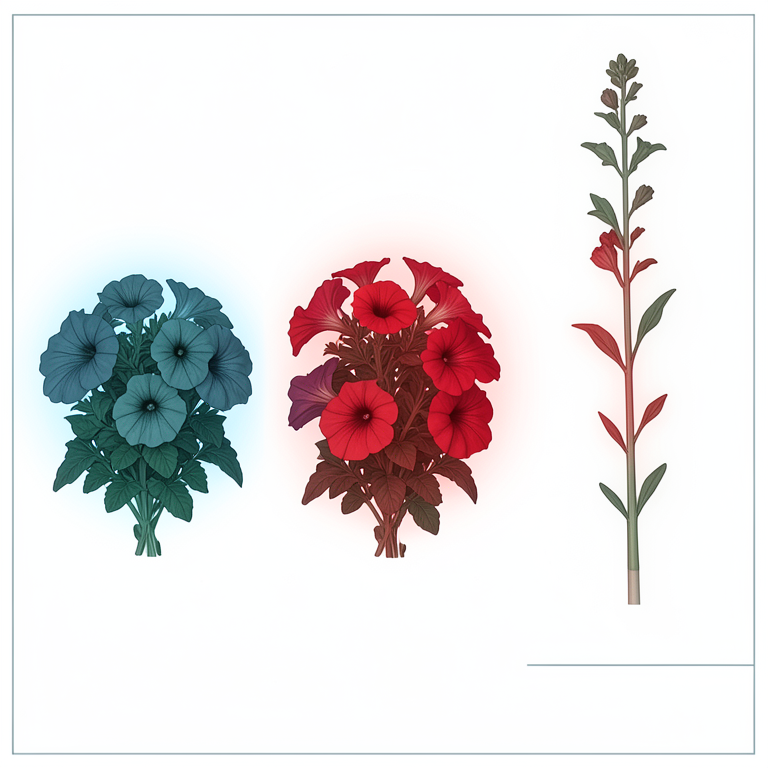
Spectral Effects on Plant Morphology
AI-generated conceptual illustration (ornamental petunia plants). It explains the idea and does not show study data.
View source evidence ↗Figures & tables
From the original paper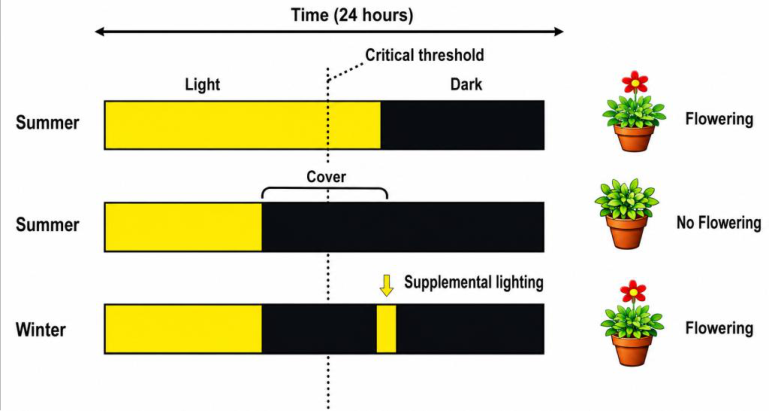 Figure 1
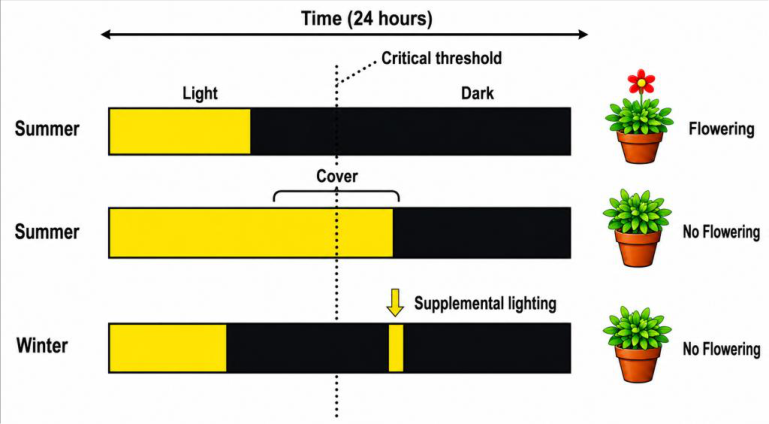 Figure 2
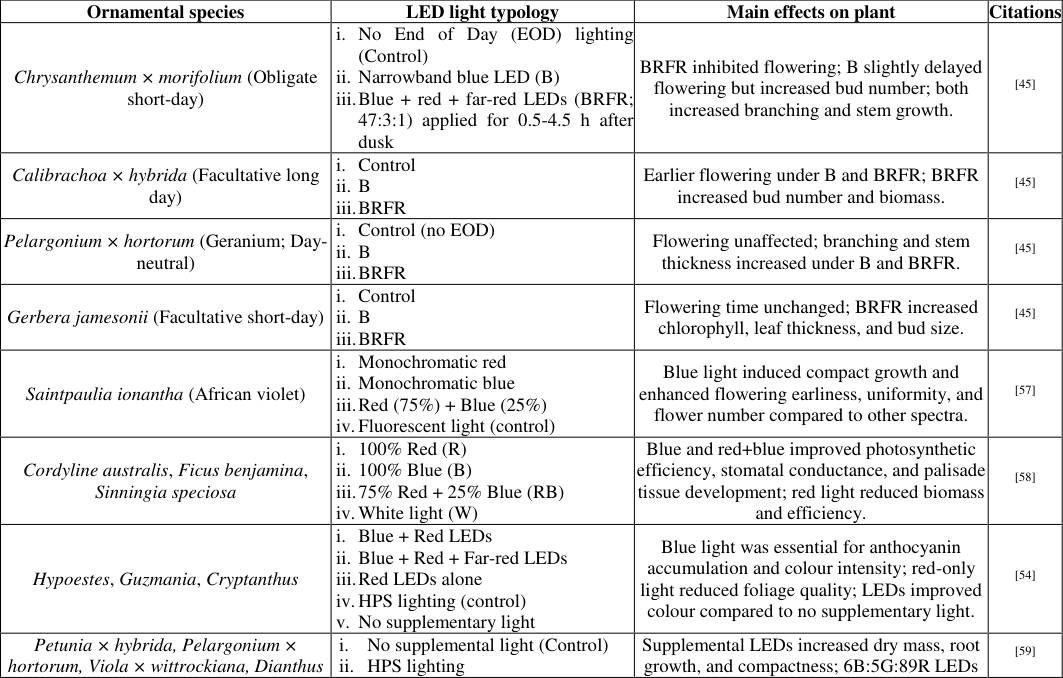 Table 1
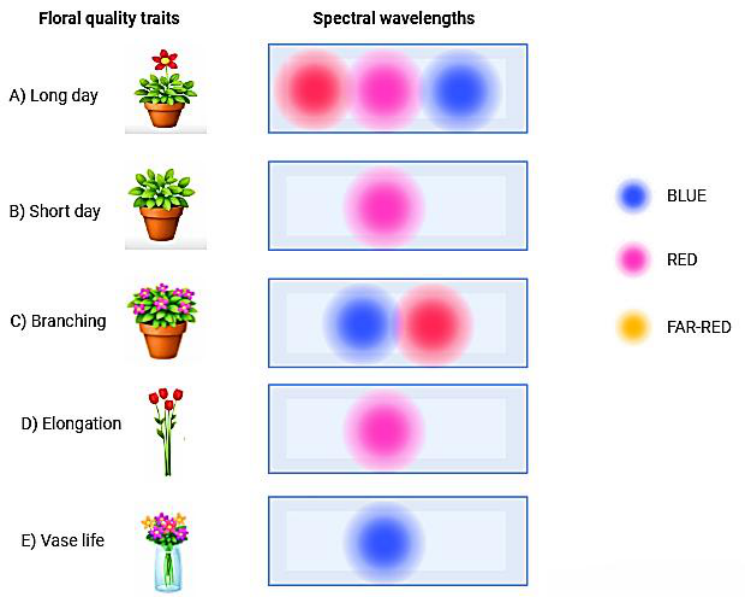 Figure 3
Introduction
Floriculture is a rapidly expanding, high-value industry that strengthens revenue, employment, and rural lives. Ornamental plants boost aesthetics, cultural well-being, biodiversity, and ecosystem services, including habitat provision and urban environmental enhancement. Meeting year-round market needs for uniform, high-quality flowers are increasingly vital to the economic survival of this business. Light is a crucial environmental element, serving as the energy source for photosynthesis and as a developmental signal that governs photomorphogenesis, influencing plant structure, flowering time, pigmentation, and overall quality in ornamental species [1,2,3] . Conventional systems depend on natural sunlight and traditional lamps for output; however, solar radiation is subject to seasonal and diurnal variability, frequently resulting in inadequate daily light integral during winter or overcast conditions, particularly in greenhouses. High pressure sodium and fluorescent lights constrain production due to their fixed, suboptimal spectra, inadequate spectrum control, excessive heat output, and comparatively low energy efficiency, hence increasing costs and complicating the exact regulation of development and flowering [1,4] . Due to climate change, characterized by increasingly erratic weather and variable light availability, alongside the swift proliferation of greenhouses, polyhouses, and plant factories, there is an escalating demand for dependable, regulated lighting to ensure uniform growth and flower quality. LED technology directly mitigates these difficulties by providing high efficiency, extended lifespan, less radiant heat, and, importantly, precise control over spectrum, intensity, and photoperiod [5] . Customized LED "light recipes" can influence photosynthesis and developmental responses, facilitating year-round cultivation, precise flowering timelines, compact plant morphology, preferred colour, and enhanced postharvest quality in ornamental crops, while minimizing agrochemical and energy consumption [1,4,5] .
This review examines the physiological and molecular mechanisms through which light intensity and spectral quality influence growth, flowering, and quality characteristics in ornamental plants; Contemporary and innovative LED technologies and spectrum management techniques applicable to protected floriculture; Speciesspecific reactions of ornamental crops to LED lighting regarding productivity and aesthetic quality; and the role of LED-based light management in fostering sustainable, climate-resilient, and economically viable floricultural systems.
Lighting fundamentals for ornamental crops
Cultivating flowers for commercial purposes, cut flowers, potted plants, or specialist ornamentals requires light not just as an ambient backdrop, but as a potent instrument for regulating plant development and quality. To effectively implement contemporary research and establish consistent, replicable production methods, cultivators and researchers must possess a clear and pragmatic comprehension of the essential terminology and metrics utilized in plant illumination investigations. The extensive implementation of Light-Emitting Diode (LED) technology has facilitated an unparalleled degree of control over both light intensity and light quality, permitting separate manipulation of these elements. Research has unequivocally shown that the quantity of light and its spectral composition significantly affect vegetative growth, flowering timing, and uniformity, as well as critical quality attributes such as flower size, colouration, stem strength, and post-harvest longevity [6,7] . Proficiency in these lighting principles converts ornamental crop production from an empirical approach into a systematic, science-driven methodology, enhancing crop uniformity, efficiency, and overall market worth.
Photosynthetically Active Radiation (PAR)
PAR refers to the segment of sunlight (or artificial light) utilized by plants for photosynthesis, specifically including wavelengths from 400 to 700 nm. This segment of the visible spectrum, ranging from blue to red, is essential for driving critical physiological processes such as leaf growth, stem development, flowering, and overall plant health in ornamental plants. PAR is delineated independently from "visible light" as plants do not react to light in the same manner as human vision or electrical systems. Plants react to the quantity of photons that reach the photosynthetic tissues instead of responding to light energy in terms of heat or brightness. PAR is quantified by the number of photons present in the 400-700 nm spectrum, focusing on photon flux instead of radiant energy, so offering a biologically relevant assessment of light accessible for photosynthesis [8] . In practical terms, PAR refers to "usable light fuel" for plants. Although wavelengths outside the 400-700 nm range, such as ultraviolet or far-red/infrared, may affect many processes like plant shape or developmental signaling, they do not directly facilitate photosynthesis as PAR does. This emphasis on photon-based plant light response informs contemporary lighting guidelines in floriculture, particularly for LEDs, which prioritize PAR above conventional metrics like lux or foot-candles. It provides a significantly more precise understanding of what the plant perceives and utilizes for optimal growth and flowering [8,9] .
Photosynthetic Photon Flux Density (PPFD)
Photosynthetic Photon Flux Density (PPFD) quantifies the amount of PAR photons incident on the plant canopy per unit area per second, reflecting the immediate light intensity available for photosynthesis. Consequently, it is quantified in micromoles of photons per square meter per second (µmol m⁻² s⁻¹) [8] . PPFD directly influences the rate of photosynthesis, with increased photon flux augmenting CO2 assimilation until a crop-specific light saturation threshold is reached, beyond which further light yields declining returns and may cause photoinhibition or physiological stress in sensitive ornamental plants. Due to the quick decline of light intensity within dense canopies caused by self-shading, measuring PPFD at the canopy surface and at various heights yields a more precise evaluation of the crop's light environment. In floriculture production systems, PPFD is a crucial metric for controlling the height, intensity, and spatial distribution of LED fixtures to ensure uniform growth, coordinated flowering, and superior floral characteristics [8,10] .
Daily Light Integral (DLI)
The Daily Light Integral (DLI) quantifies the total PAR absorbed by plants over a 24-hour timeframe, computed by integrating the PPFD over time, and is given in moles of photons per square meter per day (mol m⁻² d⁻¹) [11] . Although PPFD indicates instantaneous light intensity, DLI more precisely forecasts overall plant development as it represents entire daily carbon uptake [12] . In ornamental crops, DLI is significantly associated with biomass accumulation, stem diameter, leaf expansion, branching, and flowering responses, with most floriculture species demonstrating specific optimal DLI ranges contingent on crop type and developmental stage [11] . Inadequate DLI often leads to stunted growth, diminished flower size, and inferior plant quality, especially under low-light seasonal settings. Hence DLI is an essential factor for regulating supplemental illumination in controlled environments [12] .
Photoperiod
Photoperiod refers to the duration of the light period within a 24-hour cycle and serves as a key environmental signal regulating flowering and developmental transitions in many ornamental species. Photoperiodic responses categorize plants as short-day, long-day, or day-neutral, with flowering often controlled by night length rather than total light quantity, as observed in crops such as chrysanthemum and poinsettia (short-day) and campanula or rudbeckia (longday) [13] . Advances in LED technology allow precise photoperiod manipulation through day extension, nightinterruption lighting, and spectral control, enabling reliable regulation of flowering time and uniform crop scheduling in floriculture systems [13] . This level of control is particularly important for synchronizing flowering with market demand, thereby improving production efficiency and economic returns.
Low-Intensity lighting vs. Supplemental lighting
Low-Intensity (LI) lighting is primarily used to manipulate photoperiod rather than to enhance photosynthesis and is typically applied at very low PPFD levels, below 10 µmol m⁻² s⁻¹ (often 1-5 µmol m⁻² s⁻¹). The low photon flux is inadequate for significantly enhancing carbon assimilation but suffices to modulate flowering responses, as numerous ornamental species detect day duration via photoreceptors, especially phytochromes responsive to red and far-red light ratios. Thus, LI illumination is frequently employed for night-interruption or day-extension treatments to regulate flowering in photoperiodic crops like chrysanthemum and poinsettia, where accurate timing, rather than enhanced biomass, is the principal aim [13] . Conversely, supplementary lighting delivers significantly elevated PPFD levels during times of inadequate natural light to enhance the DLI and directly facilitate photosynthesis. Supplemental lighting intensities typically vary from around 50 to over 300 µmol m⁻² s⁻¹, contingent upon crop species and developmental stage, aimed at augmenting biomass accumulation, stem strength, leaf area, branching, and the quantity and quality of flowers [11,14] .
3. Light spectrum and functional bands: Blue, Red, Far-Red, Green, and UV-A Light quality, determined by the spectral composition of radiation absorbed by plants, is essential in influencing plant morphology, physiology, and flowering via the activation of particular photoreceptors, and contemporary LED technology enables precise control of these wavelength bands [7] . Blue light (B; 400-500 nm) facilitates compact development, increases stomatal conductance, and elevates chlorophyll and anthocyanin production, leading to darker foliage and enhanced flower pigmentation [15] . Red light (R; 600-700 nm) is particularly effective in promoting photosynthesis and, via phytochrome signaling, governs blooming and biomass accumulation in numerous ornamental species [8,13] . Far-red light (FR; 700-750 nm) alters red:far-red ratios, triggering shade avoidance responses such as stem elongation and can hasten flowering in long-day plants when suitably paired with red light [16] . Green light (G; 500-600 nm) penetrates more profoundly into dense canopies than blue or red light, hence increasing photosynthesis in lower leaves and enhancing overall canopy light-use efficiency [17] . Subminimal levels of UV-A light (315-400 nm) promote the synthesis of secondary metabolites, including flavonoids and anthocyanins, enhancing pigmentation and stress resilience; however, excessive exposure may result in photodamage [18] . The strategic integration of various spectral bands allows cultivators to accurately regulate plant structure, blooming schedules, and aesthetic quality to enhance market value [19] .
Types of LED systems used in floriculture
LED technology has revolutionized floriculture by facilitating precise spectral control, great energy efficiency, and extended operational lifespans, enabling cultivators to customize lighting techniques for individual crops, canopy structures, and production objectives [14] . Fixed-spectrum LED fixtures, characterized by a stable blend of red (≈660 nm) and blue (≈450 nm) wavelengths, are the predominant systems utilized in commercial floriculture due to their efficacy in supporting photosynthesis, sustaining compact plant morphology, and providing consistent PAR during low natural light conditions, such as winter or overcast weather [9] . Tunable or dynamic-spectrum LED systems facilitate realtime modification of spectral composition across various growth stages, permitting enhanced blue light during vegetative growth to regulate plant height and increased red or far-red light during reproductive phases to affect flowering and internode elongation. This dynamic management enhances the modulation of phytochrome mediated responses and flowering synchronization, which is especially advantageous for aligning ornamental crops with specific market windows [7,13] . Interlighting and intracanopy LED systems enhance light penetration in tall or dense ornamental crops by directing photons to shaded lower leaves, hence minimizing self-shading inside the canopy. Research indicates that these methods enhance whole canopy photosynthesis, increase stem strength, and elevate floral yield and uniformity in comparison to top lighting alone [19] . Ultimately, photoperiod or night interruption LED modules emit minimal light (<10 µmol m⁻² s⁻¹) designed to alter photoperiod without facilitating photosynthesis. By modifying phytochrome signaling during the nocturnal phase, these systems are extensively employed to postpone or trigger flowering in photoperiod sensitive ornamental species like chrysanthemum and poinsettia, facilitating exact regulation of flowering timing to align with seasonal market requirements [13,20] .
Plant physiological basis of light response and its importance in LED
Understanding plant reactions to LED illumination necessitates two interconnected dimensions of plant biology: (A) photosynthetic light absorption and energy transformation (the influence of light intensity and spectrum on carbon fixation and biomass accumulation) and (B) photomorphogenesis and photoreception (the detection of specific wavelengths by photoreceptors to regulate development, morphology, and flowering) [21] . Both layers engage with temperature and environmental factors to ascertain the ultimate crop production and quality.
Photosynthesis as the primary light-driven process
Photosynthesis commences when light is absorbed by antenna pigments, chiefly chlorophyll a, chlorophyll b, and auxiliary carotenoids, which are arranged within protein complexes in the thylakoid membranes of chloroplasts [22] . Chlorophylls optimally absorb light in the blue (≈430-470 nm) and red (≈640-680 nm) parts of the spectrum, rendering these wavelengths the most efficacious for facilitating photochemical reactions [8] . Carotenoids absorb blue-green light (≈450-550 nm) and serve a vital photoprotective function by dissipating excess excitation energy and preventing photooxidative damage in high light circumstances [23] . The clearly delineated absorption pattern elucidates the prevalent application of red and blue dominant LED lighting in floriculture, as these spectra closely correspond with pigment absorption maxima and facilitate efficient photosynthesis, robust vegetative growth, and superior flower production [7] .
Photosystem II (PSII) and Photosystem I (PSI)
Photosynthesis occurs via two interconnected reaction centers, Photosystem II (PSII) and Photosystem I (PSI), which operate in succession to transform light energy into chemical energy. PSII commences the process by cleaving water molecules through the oxygen evolving complex, liberating molecular oxygen and providing high-energy electrons to the photosynthetic electron transport chain, whereas PSI utilizes these electrons to reduce NADP⁺ to NADPH, an essential reductant for carbon fixation [24] . Effective photosynthesis necessitates the balanced stimulation of PSII and PSI, given that each photosystem has unique light-harvesting antenna complexes with varying pigment compositions and spectral sensitivities [25] . Imbalanced spectrum excitation can restrict electron transport, diminish quantum efficiency, and trigger photoprotective mechanisms such non-photochemical quenching to remove surplus energy [22] . In floriculture, LED lighting strategies prioritize customized spectral compositions predominantly red with regulated blue to sustain excitation equilibrium between PSII and PSI, improve electron transport efficiency, and promote substantial biomass accumulation and superior flower production while avoiding undue stress responses [7] .
Photosynthetic pathways: C3, C4, and CAM
Majority of ornamental crop species employ the C3 (Calvin-Benson) photosynthetic pathway, wherein CO2 is directly fixed by Rubisco in mesophyll cells. C3 plants typically thrive in moderate light intensities and temperatures; nevertheless, they are prone to photorespiration under elevated temperatures or low CO2 conditions, which can diminish photosynthetic efficiency and biomass production. C4 photosynthesis, by contrast, entails the spatial segregation of initial CO2 fixation from the Calvin cycle, concentrating CO2 in bundle-sheath cells, which reduces photorespiration and improves photosynthetic efficiency in high light and temperature environments. Despite the limited number of ornamental C4 species, understanding C4 physiology enhances the interpretation of crop responses in warm, high-radiation conditions, particularly with increased light demands and enhanced heat resilience [26] . Crassulacean acid metabolism (CAM) involves a temporal segregation of carbon fixation, wherein stomata open at night to absorb CO2 and close during the day to minimize water loss. Numerous decorative succulents, notably Kalanchoe and Phalaenopsis, have CAM or facultative CAM behavior, leading to specific diurnal gas-exchange patterns and distinctive reactions to nocturnal illumination and spectral composition [27] . Recent research indicates that nocturnal illumination and spectral characteristics can affect CAM expression and carbon equilibrium, with consequences for LED lighting approaches in CAM ornamentals [28] . From a floriculture standpoint, the majority of high-value ornamental crops are C3 species, prompting LED lighting strategies to concentrate on optimizing DLI for biomass and floral production while employing spectral cues to influence morphology and flowering. Conversely, CAM and C4 ornamentals necessitate customized lighting strategies due to variations in carbon assimilation timing and temperature preferences [29] .
Photomorphogenesis and Photoreceptors -How plants sense spectrum
Photomorphogenesis involves plant developmental responses influenced by light quality, amount, direction, and photoperiod, mediated by specialized photoreceptors that detect specific wavelength bands [30] . Phytochromes are photoreceptors that detect red and far-red light, interconverting reversibly between two photoactive forms, Pr and Pfr, which absorb red (~660 nm) and far-red (~730 nm) wavelengths, respectively. The phytochrome photoequilibrium (Pfr:Pr ratio) conveys to plants the red:farred (R:FR) ratios and photoperiod, thus governing seedling de-etiolation, shade-avoidance mechanisms such as stem elongation, and photoperiodic flowering in various ornamental species, including chrysanthemum and poinsettia [31] . Phytochrome signaling interacts with the circadian clock and flowering integrator genes like FLOWERING LOCUS T (FT), So connecting spectral perception to developmental time [32] . In floriculture, LED lighting facilitates the exact modulation of phytochrome responses via focused regulation of R:FR ratios. The incorporation of far-red light or end-of-day farred treatments can enhance stem elongation or expedite flowering in specific crops, whereas elevated R:FR conditions inhibit shade avoidance and encourage compact plant structure. This spectral accuracy enables cultivators to intentionally manipulate plant morphology and flowering timelines without increasing total light intensity [13,33] .
Cryptochromes and Phototropins: Blue/UV-A, UV-B light perception and integration of photoreceptor signaling
Cryptochromes (CRY1 and CRY2) are blue/UV-Aabsorbing photoreceptors that govern essential photomorphogenic processes, such as hypocotyl elongation, photoperiodic blooming, and circadian clock entrainment. Cryptochrome signaling tightly interacts with phytochromes and the COP1 E3 ubiquitin ligase complex to regulate lightresponsive gene expression, thereby converting blue-light perception into alterations in blooming competence and plant morphology [34,35] . In floriculture, blue-light components from LED spectrum affect morphology and blooming timing via cryptochrome-mediated regulation of developmental pathways. Phototropins (phot1 and phot2) are blue-light receptors that facilitate directional growth responses and physiological modifications to enhance light absorption and gas exchange. They facilitate phototropism, chloroplast movement inside cells, stomatal aperture, and leaf orientation, all of which improve photosynthetic efficiency and water control [36] . LED-generated blue light induces stomatal opening via phototropin and cryptochrome mediated pathways, enhancing CO2 transport into leaves and facilitating elevated photosynthetic capability when adequate DLI is present [37] . The incorporation of blue wavelengths in LED lighting fosters compact development, optimizes leaf function, and enhances postharvest performance in ornamental crops. Perception of UV-B radiation is facilitated by the UV RESISTANCE LOCUS 8 (UVR8) photoreceptor, which triggers protective acclimation responses such as flavonoid and anthocyanin biosynthesis, the activation of DNA repair mechanisms, and morphological modifications that alleviate UV-induced stress [18] . Suboptimal amounts of UV-A or UV-B radiation can increase floral pigmentation and secondary metabolite production, hence enhancing ornamental quality, while excessive exposure leads to oxidative stress and growth suppression. Meticulously regulated UV supplementation using LEDs provides a focused approach to increase flower colour intensity and antioxidant levels while preserving plant health. Photoreceptor signaling networks exhibit significant integration, with phytochromes, cryptochromes, phytotropins, and UVR8 interacting with one another, the circadian clock, and hormonal pathways including auxin, gibberellin, and cytokinin signaling. Red and far-red light perception through phytochromes regulates shade avoidance responses by promoting auxin mediated elongation, whereas cryptochromes affect flowering time through the CONSTANS (CO) and FLOWERING LOCUS T (FT) pathways [31,32] . Phytotropin induced stomatal opening connects blue-light detection to carbon absorption, while UVR8 regulated flavonoid production influences floral pigmentation and stress resilience. These interrelated pathways convert spectrum signals into synchronized structural, physiological, and developmental results in ornamental plants.
Interaction of light with temperature and the environment
Plant reactions to light are significantly influenced by temperature and other environmental variables, as both photoreceptor signaling and photosynthetic metabolism are contingent upon temperature. The dynamics of phytochrome, particularly the thermal reversion of the active Pfr form, intensify at elevated temperatures, affecting shade-avoidance responses and the regulation of flowering [31] . Temperature similarly influences Rubisco activity and photorespiration rates, so modifying the equilibrium between photosynthesis and respiration, which impacts biomass and flower output [38] . Environmental factors like Vapor Pressure Deficit (VPD), relative humidity, food availability, and CO2 concentration interact with light to govern stomatal conductance, carbohydrate distribution, and assimilate allocation to flowers. Therefore, LED illumination techniques in floriculture must be combined with meticulous regulation of temperature, humidity, and ambient CO2 to ensure consistent, high-quality flowering results.
Spectral Regulation of Ornamental Quality Attributes 6.1 Flowering regulation
Flowering of ornamental plants is regulated by photoperiod, which is interpreted as the duration of darkness and processed by light quality dependent signaling pathways [39] . Red and far-red light are pivotal within spectrum ranges due to the phytochrome system, which has two interconvertible states: the inert Pr form and the physiologically active Pfr form. Red light (about 660 nm) transforms Pr into Pfr, while far-red light (approximately 730 nm) reverts Pfr to Pr [40] . In darkness, Pfr progressively converts back to Pr, and the concentration of Pfr at night's assumption dictates the induction or inhibition of flowering [41] . The phytochrome photo equilibrium sets a crucial threshold that varies among short-day, long-day, and day-neutral plants, as seen in the Pfr time connections outlined in photoperiodic flowering models. In long-day plants, flowering is stimulated when the night duration is brief or when the Pfr level exceeds a crucial threshold at the termination of the dark phase [42] . Night time exposure to red light, even for a limited duration, elevates Pfr levels and stimulates flowering by simulating a shortened night. Far-red light can stimulate flowering in long-day plants by prolonging the perceived duration of daylight or by altering phytochrome signaling when administered at day's end. Blue light enhances flowering in long-day species by maintaining circadian rhythms and engaging phytochrome mediated pathways, whereas green light facilitates flowering by reaching deeper into the canopy and regulating blue-light responses. Red, far-red, blue, and green light collaboratively function in long-day plants to sustain adequate Pfr levels and facilitate floral induction under regulated illumination conditions [42,43,44] . Conversely, short-day plants necessitate prolonged, uninterrupted nights for flowering, with floral induction occurring just when Pfr levels fall below a key threshold by the termination of the dark phase. Exposure to red light at night, even at low intensity, transforms Pr to Pfr and suppresses flowering by disrupting the necessary long night, a phenomenon termed night-break inhibition. Far-red light serves a counteractive function in short-day plants; when introduced at day's end or after a red night-break, far-red light reverts Pfr to Pr, facilitating the process of flowering. Blue light typically suppresses flowering in short-day plants by enhancing photoperiodic signals that reduce the perceived duration of night, whereas green light postpones floral induction by disrupting cryptochrome signaling and altering the plant's assessment of night length. These interactions elucidate the necessity of complete darkness or spectral exclusion at night for the flowering of short-day ornamental plants [42,45] . Day-neutral plants are distinct from long-day and short-day species in that their flowering is unaffected by night duration and photoperiod [46] . In these plants, red and blue light indirectly affect flowering by increasing photosynthesis, carbon availability, and overall plant vitality, rather than modifying phytochrome thresholds. Farred light exerts negligible direct effects on flower induction in day-neutral species, however it can affect plant architecture by inducing stem elongation responses. Blue and green light enhance canopy photosynthesis and physiological equilibrium, influencing flower yield and quality rather than the timing of floral initiation [43,44,47] . Overall, the regulation of flowering in ornamental plants results from the interplay between spectral quality and photoperiod perception. Red and far-red light influence the phytochrome photo equilibrium and crucial Pfr thresholds that regulate flowering in short-day and long-day plants, whereas blue and green light refine these responses via cryptochrome signaling, circadian regulation, and photosynthetic assistance. LED lighting systems capacity to accurately adjust wavelength bands facilitates focused control of flowering period, synchronization of crop development, and enhancement of ornamental quality in commercial production settings. Phytochromes detect the red:far red (R:FR) ratio and facilitate shade avoidance and flowering via PIFs and FTlike integrators [48] . Reduced R:FR ratio (increased FR) promotes flowering and elongation in numerous long-day ornamental species, including petunia and calibrachoa [46] . Conversely, nocturnal interruption with red or far-red light challenges the prolonged darkness essential for short-day plants, hence inhibiting flowering, as demonstrated in chrysanthemum [1] . Blue light can enhance flowering in both long-day and certain short-day ornamental plants when utilized as night extension or end-of-day lighting, frequently serving as a shade like signal during low phytochrome activity [49] .
Branching and architecture
Branching is shaped by shade avoidance networks integrating phytochrome (R/FR) and cryptochrome/blue signals with auxin and ABA [50] . Low R:FR (high FR) elevates BRANCHED1 and ABA levels in buds while inhibiting branching [51] . Increasing the blue portion and the ratio of red to far-red light in ornamental plants (e.g., poinsettia, rose) diminishes elongation and enhances compactness and branching. FR can stimulate branching in some roses but often at the cost of strong internode elongation, mediated by GA4 and reduced Jasmonic acid /Salicylic acid [52] .
Stem elongation
Low red to far-red light ratio (R:FR) is the traditional catalyst for shade avoidance elongation, mediated via phytochrome B inactivation and PIF-driven gibberellin/auxin pathways [1,53] . FR additives significantly enhance internode length in numerous ornamental and leafy crops, even under elevated total light conditions. Blue light serves a dual function: in a red-rich, high PPE spectrum, it restricts elongation, yet in a practically pure blue spectrum with low phytochrome activity, it can facilitate elongation similar to that observed in shaded conditions [49] .
Flower and leaf colour
Supplemental R+B LEDs enhance anthocyanin and carotenoid synthesis in colored foliage ornamentals; in Guzmania, Hypoestes, and Cryptanthus, LED treatments at the end of the cycle markedly intensified red/pink leaf and bract pigmentation compared with High-pressure sodium or the absence Supplemental lighting [2] . A minimal fraction of blue is essential: under R only LEDs, Hypoestes leaves became curly and pale, and Guzmania bracts lost red coloration [54] . In numerous potted ornamental plants, B+R or broad W spectra enhance chlorophyll index and leaf thickness, intensifying green pigmentation [45] .
Vase life and postharvest quality
Blue-enriched light improves antioxidant systems, enhances photosystem II performance, and increases sugar retention, hence prolonging vase life in carnations and other ornamental plants during display or storage. Carnations exhibited elevated activities of Superoxide dismutase (SOD), Catalase (CAT), Peroxidase (POD), and Ascorbate peroxidase (APX), reduced lipid peroxidation, enhanced membrane integrity, and increased petal sugars, all associated with prolonged vase life when exposed to blue light compared to red or white light [55] . Hippeastrum hybridum (Red Lion) i. LED with Red:Blue = 1:9 (RB, high blue) ii. LED with Red:Blue = 9:1 (RB, high red) iii. White LED (control) High blue promoted photosynthesis, carbohydrate accumulation, and early, prolonged flowering; high red enhanced vegetative growth but delayed flowering.
Pathogens and disease control
Blue LEDs postharvest mitigate decay induced by Penicillium spp. through direct suppression of fungal sporulation and activation of plant defense mechanisms (lipid signaling, ethylene, octanal). Red LEDs can limit lesion progression and activate defense related genes and stilbene type phytoalexins, hence enhancing resistance to certain infections [56] . LEDs emphasize as a possible nonchemical method for managing some greenhouse infections while enhancing crop quality [1] .
Commercial use of LED lighting in horticulture
LEDs currently prevail in controlled environment and greenhouse horticulture, propelled by energy efficiency, longevity, and spectral tunability [64,65] . Europe and North America collectively account for around 70% of horticultural LED producers, indicative of the swift commercialization and worldwide distribution of fixtures for greenhouses, vertical farms, and plant factories. LED systems provide precise regulation of flowering, plant structure, pigmentation, and postharvest durability, which is particularly advantageous in the ornamental and floriculture sectors that need uniform, high-quality visual products [2] . Intelligent luminaires equipped with sensor-AI control for optimizing plant health and production efficiency are emerging in the market [66] .
Landscape gardening and aesthetics in horticulture
In ornamental cultivation, customizing light spectra (notably red, blue, and far red) enables producers to create compact, well-branched plants with improved leaf and flower pigmentation, thereby effectively "engineering aesthetics" for commercial landscaping and potted plant markets [1,67] . Light spectra can be utilized to increase secondary metabolites that influence colour, gloss, and perceived quality, while concurrently enhancing stress tolerance and disease suppression. Aesthetic demands, including tidiness and visual order, continue to prevail in public and community gardens, however they are progressively reconciled with ecological and sustainability principles. LED-based gardening enhances these values by reducing energy consumption and facilitating year-round, aesthetically pleasing plantings [68] .
LED garden stick lights and architectural garden lighting
While the majority of research emphasizes crop performance over specific "stick light" form factors, the compact dimensions, minimal heat emission, and high efficiency of LEDs facilitate close canopy and intra-canopy lighting designs that are well-suited for slender garden fixtures, pathway illumination, and integrated landscape components. Concentrated beams and precise distributions provide accent lighting for focal plants and features, minimizing light spill and reducing power consumption, so enhancing both functional visibility and attractive nighttime aesthetics [6] .
Submersible water-garden LED lights
In aquatic and water feature applications, LEDs facilitate underwater or near-water usage due to their cool photonemitting surfaces and small, sealed constructions. An LED illuminator featuring a dedicated red-blue spectrum, specifically engineered for submerged aquatic plants in aquaria or urban water gardens, using a 40×40 matrix of alternating red and blue LEDs. The spectral ratio and intensity were calibrated to align with the photosynthetic needs of the plants while reducing electrical waste. Recent research integrates submerged LEDs with aquatic plants to enhance water quality: the combination of Vallisneria natans with red or blue LEDs improved allelopathic suppression of detrimental cyanobacteria, effectively utilizing underwater LED supplementation to enhance ecological function and water garden clarity [66] .
Full-spectrum red and blue grow lights
Commercial horticulture lights generally integrate red (~660 nm) and blue (~450 nm) wavelengths, frequently alongside white and occasionally far red, as these wavelengths significantly enhance photosynthesis and photomorphogenesis [2,69] . Initial LED plant systems utilized red and blue fluorescence supplements; contemporary multicolor arrays now offer adjustable "full spectrum" outputs. Combinations of red and blue: Optimize photosynthetic efficacy and output within the 400-700 nm PAR spectrum while minimizing energy use. Regulate stem elongation, leaf expansion, flowering time, and branching, essential for both vegetable and ornamental morphology. Impact the synthesis of bioactive and chromatic chemicals (anthocyanins, flavonoids, antioxidants), enhancing both nutritional quality and aesthetic coloration [1] . Research highlights the necessity of species and stage-specific "light recipes, " indicating that no universal red-blue combination is beneficial for all crops; yet, red-dominant spectra with a blue component are commonly employed in commercial grow lights.
Solar garden LED lights
Decreasing LED costs and good efficacy (often 2-3 μmol J⁻¹ in horticultural applications) render low-power, solarpowered garden fixtures viable, especially for ornamental and low-intensity landscape illumination. The extended lifespans of LEDs (10-30% light degradation after about 45, 000-60, 000 hours in standard horticultural luminaires) diminish maintenance requirements, which is crucial for distributed solar path lights, accent up lights, and other autonomous devices in gardens and parks [64,70] . Their directed output and minimal radiant heat facilitate insertion into plantings without harming foliage or significantly altering microclimates.
LED-lit sea urchins, lanterns, and decorative objects
Research specifically on "LED-lit sea urchins and lanterns" is lacking; however, the features of LEDs immediately facilitate innovative decorative garden objects. The miniaturization and low voltage of LEDs facilitate their integration into sculptural items (such as shells, urchin testing, and lanterns), allowing for placement among plants, water features, or paths with little safety concerns. Narrow spectrum and color-tunable packages let designers use intense colours (e.g., deep blue or violet highlights) or warm/neutral whites that enhance plant foliage and flower hues, thereby improving nighttime garden aesthetics and the perceived quality of attractive displays. The efficient operation and durability facilitate repeated seasonal utilization, according to sustainable, reusable decorative motifs for festivals and events in botanical gardens and public landscapes [66] .
Conclusion
Light-emitting diode (LED) technology has fundamentally reshaped modern floriculture by enabling precise control of light intensity, spectral composition, and photoperiod. A strong understanding of plant physiological processes, including photosynthesis, photoreceptor signaling, and photoperiodic regulation, allows LED lighting to be used as a powerful tool to regulate growth, flowering, architecture, pigmentation, and postharvest quality of ornamental crops. Species-specific LED light recipes can enhance flower uniformity, aesthetic value, and production efficiency while reducing reliance on chemical growth regulators and excess energy use. Integration of LED systems within protected cultivation supports climate-resilient, sustainable, and economically viable ornamental production, meeting yearround market demands for high-quality flowers and ornamental plants.
Disclosure Data
Disclosure Data
Acknowledgement
AcknowledgementsThe authors would like to express their sincere gratitude to their friends, especially Shravani, Khushal for their constant support and encouragement during the preparation of this manuscript. Special thanks are extended to the College of Agriculture, Vellanikkara, and Kerala Agricultural University for providing an academic environment and guidance that contributed significantly to this work.
Figures and tables from the paper
References
70 in the original paper- Trivellini A, Toscano S, Romano D, Ferrante A. LED lighting to produce high-quality ornamental plants. Plants. 2023;12(8):1667.
- Paradiso R, Proietti S. Light-quality manipulation to control plant growth and photomorphogenesis in greenhouse horticulture: the state of the art and the opportunities of modern LED systems. J Plant Growth Regul. 2022;41(2):742-780.
- Al Murad M, Razi K, Jeong BR, Samy PMA, Muneer S. Light emitting diodes (LEDs) as agricultural lighting: impact and its potential on improving physiology, flowering, and secondary metabolites of crops. Sustainability. 2021;13(4):1985.
- Ganesh S, Jawaharlal M, Rajamani K, Visalakshi M, Karthikeyan S, Ganga M, et al. Investigating the physiological effects of LEDs with combined spectral emittances in floriculture. Appl Ecol Environ Res. 2024;22(1):17-40.
- Grazziotin N, Silveira GR, Buriol G, Thomas DH, Dalla Costa MA. LED lighting systems with dedicated light spectra applied to flower cultivation. IEEE Trans Ind Appl. 2025;61(3):4482-4493.
- Mitchell CA, Dzakovich MP, Gomez C, Lopez R, Burr JF, Hernandez R, et al. Light-emitting diodes in horticulture. Hortic Rev. 2015;43:1-88.
- Ouzounis T, Rosenqvist E, Ottosen CO. Spectral effects of artificial light on plant physiology and secondary metabolism: a review. Hortic Res. 2015;2:15024.
- McCree KJ. The action spectrum, absorptance and quantum yield of photosynthesis in crop plants. Agric Meteorol. 1971;9:191-216.
- Both AJ, Bugbee B, Kubota C, Lopez RG, Mitchell C, Runkle ES, Wallace C. Proposed product label for electric lamps used in the plant sciences. HortTechnology. 2017;27(4):544-549.
- Evans JR. Photosynthesis and nitrogen relationships in leaves of C3 plants. Oecologia. 1989;78(1):9-19.
- Faust JE, Holcombe V, Rajapakse NC, Layne DR. The effect of daily light integral on bedding plant growth and flowering. HortScience. 2005;40(3):645-649.
- Torres AP, Lopez RG. Measuring daily light integral in a greenhouse. West Lafayette: Purdue Extension; 2011. p. 1-10.
- Runkle ES, Heins RD. Specific functions of red, far red, and blue light in flowering and stem extension of long-day plants. J Am Soc Hortic Sci. 2001;126(3):275282.
- Mitchell CA, Both AJ, Bourget CM, Burr JF, Kubota C, Lopez RG, et al. LEDs: the future of greenhouse lighting. Chron Hortic. 2012;52(1):6-12.
- Hogewoning SW, Trouwborst G, Maljaars H, Poorter H, van Ieperen W, Harbinson J. Blue light doseresponses of leaf photosynthesis, morphology, and chemical composition of Cucumis sativus grown under different combinations of red and blue light. J Exp Bot. 2010;61(11):3107-3117.
- Zhen S, Bugbee B. Far-red photons have equivalent efficiency to traditional photosynthetic photons: implications for redefining photosynthetically active radiation. Plant Cell Environ. 2020;43(5):1259-1272.
- Smith HL, McAusland L, Murchie EH. Don't ignore the green light: exploring diverse roles in plant processes. J Exp Bot. 2017;68(9):2099-2110.
- Jenkins GI. The UV-B photoreceptor UVR8: from structure to physiology. Plant Cell. 2014;26(1):21-37.
- Nelson JA, Bugbee B. Economic analysis of greenhouse lighting: light emitting diodes vs high intensity discharge fixtures. PLoS One. 2014;9(6):e99010.
- Thomas B, Vince-Prue D. Photoperiodism in plants. New York: Academic Press; 1997. p. 1-26.
- Perez M, Teixeira da Silva JA, Lao MT. Light management in ornamental crops. Floric Ornam Plant Biotechnol. 2006;4:683-695.
- Croce R, van Amerongen H. Natural strategies for photosynthetic light harvesting. Nat Chem Biol. 2014;10(7):492-501.
- Demmig-Adams B, Adams WW. The role of xanthophyll cycle carotenoids in the protection of photosynthesis. Trends Plant Sci. 1996;1(1):21-26.
- Nelson N, Yocum CF. Structure and function of photosystems I and II. Annu Rev Plant Biol. 2006;57:521-565.
- Caffarri S, Tibiletti T, Jennings RC, Santabarbara S. A comparison between plant photosystem I and photosystem II architecture and functioning. Curr Protein Pept Sci. 2014;15(4):296-331.
- Sage RF, Zhu XG. Exploiting the engine of C4 photosynthesis. J Exp Bot. 2011;62(9):2989-3000.
- Holtum JA, Smith JAC, Neuhaus HE. Intracellular transport and pathways of carbon flow in plants with crassulacean acid metabolism. Funct Plant Biol. 2005;32(5):429-449.
- Winter K, Holtum JA. Facultative crassulacean acid metabolism plants: powerful tools for unravelling the functional elements of CAM photosynthesis. J Exp Bot. 2014;65(13):3425-3441.
- Gowik U, Westhoff P. The path from C3 to C4 photosynthesis. Plant Physiol. 2011;155(1):56-63.
- Chen M, Chory J, Fankhauser C. Light signal transduction in higher plants. Annu Rev Genet. 2004;38:87-117.
- Franklin KA, Quail PH. Phytochrome functions in Arabidopsis development. J Exp Bot. 2010;61(1):11-24.
- Andres F, Coupland G. The genetic basis of flowering responses to seasonal cues. Nat Rev Genet. 2012;13(9):627-639.
- Park Y, Runkle ES. Far-red radiation promotes growth of seedlings by increasing leaf expansion and wholeplant net assimilation. Environ Exp Bot. 2017;136:4149.
- Lin C, Todo T. The cryptochromes. Genome Biol. 2005;6(5):220.
- Liu H, Liu B, Zhao C, Pepper M, Lin C. The action mechanisms of plant cryptochromes. Trends Plant Sci. 2011;16(12):684-691.
- Christie JM. Phototropin blue-light receptors. Annu Rev Plant Biol. 2007;58:21-45.
- Shimazaki KI, Doi M, Assmann SM, Kinoshita T. Light regulation of stomatal movement. Annu Rev Plant Biol. 2007;58:219-247.
- Sage RF, Kubien DS. The temperature response of C3 and C4 photosynthesis. Plant Cell Environ. 2007;30(9):1086-1106.
- Li J, Li G, Wang H, Deng XW. Phytochrome signaling mechanisms. Arabidopsis Book. 2011;9:e0148.
- Nagano S, von Stetten D, Guan K, Chen PY, Song C, Barends T, et al. Pr and Pfr structures of plant phytochrome A. Nat Commun. 2025;16(1):5319.
- Kim SH, Jo EJ, Choi DM, Kim JI. Plant light signaling mediated by phytochrome photoreceptors. Trends Agric Life Sci. 2020;58:1-10.
- Kusuma P, Bugbee B. Improving the predictive value of phytochrome photoequilibrium: consideration of spectral distortion within a leaf. Front Plant Sci. 2021;12:596943.
- Meng Q, Runkle ES. Moderate-intensity blue radiation can regulate flowering, but not extension growth, of several photoperiodic ornamental crops. Environ Exp Bot. 2017;134:12-20.
- Eskins K. Light-quality effects on Arabidopsis development: red, blue and far-red regulation of flowering and morphology. Physiol Plant. 1992;86(3):439-444.
- Kong Y, Li Q, Llewellyn D, Zheng Y. Flowering and morphology responses of greenhouse ornamentals to end-of-day blue-dominant lighting with different phytochrome photostationary states. Agronomy. 2025;15(7):1649.
- Park Y, Runkle ES. Blue radiation attenuates the effects of the red to far-red ratio on extension growth but not on flowering. Environ Exp Bot. 2019;168:103871.
- Modarelli GC, Arena C, Pesce G, Dell Aversana E, Fusco GM, Carillo P, et al. The role of light quality of photoperiodic lighting on photosynthesis, flowering and metabolic profiling in Ranunculus asiaticus L. Physiol Plant. 2020;170(2):187-201.
- Pierik R, Ballaré CL. Control of plant growth and defense by photoreceptors: from mechanisms to opportunities in agriculture. Mol Plant. 2021;14(1):6176.
- Kong Y, Zheng Y. Phototropin is partly involved in blue-light-mediated stem elongation, flower initiation, and leaf expansion. Environ Exp Bot. 2020;171:103967.
- Wang X, Gao X, Liu Y, Fan S, Ma Q. Progress of research on the regulatory pathway of the plant shadeavoidance syndrome. Front Plant Sci. 2020;11:439.
- Holalu SV, Finlayson SA. The ratio of red light to far red light alters Arabidopsis axillary bud growth and abscisic acid signalling. J Exp Bot. 2017;68(5):943952.
- Crespel L, Le Bras C, Dubuc B, Perez-Garcia MD, Carrera E, Rolland A, et al. Divergent mechanisms of internode elongation in response to far-red in two rose genotypes. Plants. 2025;14(7):1115.
- Wang S, Liu X, Liu X, Xue J, Ren X, Zhai Y, Zhang X. The red/blue light ratios from LEDs affect growth and flower quality of Hippeastrum hybridum 'Red Lion'. Front Plant Sci. 2022;13:1048770.
- De Keyser E, Dhooghe E, Christiaens A, Van Labeke MC, Van Huylenbroeck J. LED light quality intensifies leaf pigmentation in ornamental pot plants. Sci Hortic. 2019;253:270-275.
- Aalifar M, Aliniaeifard S, Arab M, Zare Mehrjerdi M, Dianati Daylami S, Serek M, et al. Blue light improves vase life of carnation cut flowers. Front Plant Sci. 2020;11:511.
- Livadariu O, Maximilian C, Rahmanifar B, Cornea CP. LED technology applied to plant development for promoting the accumulation of bioactive compounds: a review. Plants. 2023;12(5):1075.
- Ahamadi L, Matloobi M, Motallebi-Azar A. Light source spectrum influences long-term flowering cycles and visual appearance in African violet (Saintpaulia ionantha Wendl.). Light Res Technol. 2024;56(8):817834.
- Zheng L, Van Labeke MC. Long-term effects of redand blue-light emitting diodes on leaf anatomy and photosynthetic efficiency. Front Plant Sci. 2017;8:917.
- Collado C, Hernandez R. Effects of light intensity, spectral composition, and paclobutrazol on ornamental transplants. J Plant Growth Regul. 2022;41:461-478.
- Rezaei S, Zarei H, Nikbakht A, Sabzalian M. Supplementary top LED lighting improved physiological parameters and postharvest life of cut rose flowers. J Plant Growth Regul. 2024;43:122-134.
- Mah JJ, Llewellyn D, Zheng Y. Morphology and flowering responses of four bedding plant species to a range of red to far-red ratios. HortScience. 2018;53(4):472-478.
- Lee J, Nam S. Vegetative propagation of six Pachyphytum species as influenced by different LED light qualities. Korean J Hortic Sci Technol. 2023;41(3):237-249.
- Roh Y, Yoo Y. Light quality of LEDs affects growth, chlorophyll fluorescence and phytohormones of Tulip 'Lasergame'. Hortic Environ Biotechnol. 2023;64:245255.
- Paucek I, Appolloni E, Pennisi G, Quaini S, Gianquinto G, Orsini F. LED lighting systems for horticulture: business growth and global distribution. Sustainability. 2020;12(18):7516.
- Morrow RC. LED lighting in horticulture. HortScience. 2008;43(7):1947-1950.
- Singh MC. LED lighting in landscape gardening. In: Sindhu SS, editor. Ornamental horticulture. New Delhi: New India Publishing Agency; 2016. p. 171-186.
- Johitha K, Naik MR, Sumathi T, Kumar NV. Artificial light: sustainable lighting conditions for ornamental plants. Plant Arch. 2025;25(2):507-513.
- Sena S, Kumari S, Kumar V, Husen A. Light emitting diode lights for improvement of plant performance and production: a comprehensive review. Curr Res Biotechnol. 2024;7:100184.
- Kusuma P, Pattison PM, Bugbee B. From physics to fixtures to food: current and potential LED efficacy. Hortic Res. 2020;7:56.
- Sipos L, Boros IF, Csambalik L, Szekely G, Jung A, Balázs L. Horticultural lighting system optimization: a review. Sci Hortic. 2020;273:109631.