
Research article · 2023 · Full text
International Journal of Horticulture and Food ScienceResponse of gerbera cultivars to different growing media and fertigation levels under protected cultivation
Volume 5(1) · Pages 133–138 · DOI: 10.33545/26631067.2023.v5.i1b.466 ↗
Research areasFlowering Plant Growth and CultivationComposting and Vermicomposting TechniquesGrowth and nutrition in plants
Abstract
Author-writtenNearly 78% of commercial gerbera production worldwide now occurs under protected structures where environmental control enables year-round flowering. This research evaluated the performance of five gerbera cultivars grown in different soilless media combinations under varying fertigation regimes in a naturally ventilated polyhouse. The experiment was laid out in factorial randomized block design with three replications, testing five cultivars (Stanza, Balance, Goliath, Savannah, and Tremolo), five growing media combinations (cocopeat alone, cocopeat with perlite at 1:1 ratio, cocopeat with vermiculite at 1:1 ratio, perlite with vermiculite at 1:1 ratio, and soil with farmyard manure as control), and four fertigation levels (100%, 125%, 150%, and 175% of recommended dose of fertilizers). Observations were recorded on vegetative parameters including plant height, leaf number, and leaf area, along with flowering characteristics such as days to first flowering, flower yield per plant, stalk length, stalk diameter, flower diameter, and vase life. Results revealed significant interaction effects among cultivars, growing media, and fertigation levels for most parameters evaluated. The cultivar Stanza exhibited superior performance with maximum flower yield of 12.8 flowers per plant per month when grown in cocopeat plus perlite medium at 150% fertigation level. This combination also produced the longest stalks measuring 58.4 cm and extended vase life to 14.6 days compared to 9.4 days in conventional soil-based cultivation. Growing media physical properties significantly influenced root development and nutrient uptake efficiency, with cocopeat-based mixtures providing optimal air-water balance for gerbera root systems. Excessive fertigation at 175% RDF resulted in nutrient imbalance symptoms and reduced flower quality despite maintaining adequate vegetative growth. The economic analysis indicated that despite higher input costs for soilless media and enhanced fertigation, the increased flower yield and superior quality fetched premium market prices resulting in 43.7% higher net returns compared to traditional cultivation methods. Cultivar Balance ranked second in overall performance, particularly excelling in flower diameter measurements averaging 11.8 cm. Tremolo showed the earliest flowering but produced comparatively smaller flowers affecting its market grade. The perlite-vermiculite combination without cocopeat performed poorly due to inadequate water retention capacity requiring more frequent irrigation cycles. Nutrient solution electrical conductivity maintained between 1.8 to 2.2 dS/m appeared optimal for gerbera cultivation in these media types. Root zone temperature fluctuations were moderated effectively by cocopeat-based media, contributing to consistent flowering throughout the observation period. These findings provide evidence-based recommendations for commercial gerbera growers transitioning to protected cultivation systems, emphasizing the importance of matching cultivar selection with appropriate growing media and precise fertigation management to achieve optimal productivity and profitability.
Summary
Source-checkedPlain-language reading of the full paper, prepared with AI and checked against the text. Each point links to the authors' own words.
Why it matters
- Most commercial gerbera production globally is now done in protected structures to allow for year-round flowering through environmental control. View evidence ↗
- Traditional soil cultivation for gerbera is limited by soil-borne diseases, inconsistent physical properties, and difficulties in managing nutrients precisely. View evidence ↗
- Soilless media are preferred alternatives because they provide uniformity, are free from pathogens, and offer reproducible conditions. View evidence ↗
The question
- The study aimed to evaluate how five different gerbera cultivars perform when grown in various soilless media combinations and under different fertigation levels. View evidence ↗
What they did
- The researchers used a factorial randomized block design with three replications, testing five cultivars, five media types, and four fertigation levels. View evidence ↗
- The growing media tested were cocopeat alone, cocopeat with perlite (1:1), cocopeat with vermiculite (1:1), perlite with vermiculite (1:1), and a soil-manure control (3:1). View evidence ↗
- Fertigation was delivered via a drip system at four levels: 100%, 125%, 150%, and 175% of the recommended dose of fertilizers (RDF). View evidence ↗
- The study measured vegetative growth (height, leaf number, leaf area) and flowering quality (yield, stalk length/diameter, flower diameter, and vase life). View evidence ↗
What they found
- The cocopeat plus perlite medium was the most effective for growth, increasing plant height to 31.8 cm and leaf area to 182.6 cm², which were 29.2% and 34.1% improvements over the soil control. View evidence ↗
- The highest flower yield of 12.8 flowers per plant per month was achieved using the Stanza cultivar in cocopeat plus perlite medium with 150% fertigation. View evidence ↗
- Increasing fertigation to 175% RDF led to nutrient imbalances and lower flower quality, even though vegetative growth remained adequate. View evidence ↗
- Using soilless media and enhanced fertigation resulted in 43.7% higher net returns than traditional methods due to higher yields and premium quality prices. View evidence ↗
What it means
- The authors conclude that 150% of the recommended fertilizer dose is optimal for soilless production, providing a 56.8% increase in flower yield over standard doses. View evidence ↗
- The authors recommend that commercial growers invest in precision fertigation and appropriate soilless media to maximize productivity and economic returns. View evidence ↗
- The study was limited to a single location, meaning the results may not apply to all gerbera production regions. View evidence ↗
- The researchers did not assess how the growing media degrade over multiple cropping cycles, which is important for long-term economic viability. View evidence ↗
Visual summary
3 visualsIllustrations explain the paper; charts are replotted from the paper's own table values.
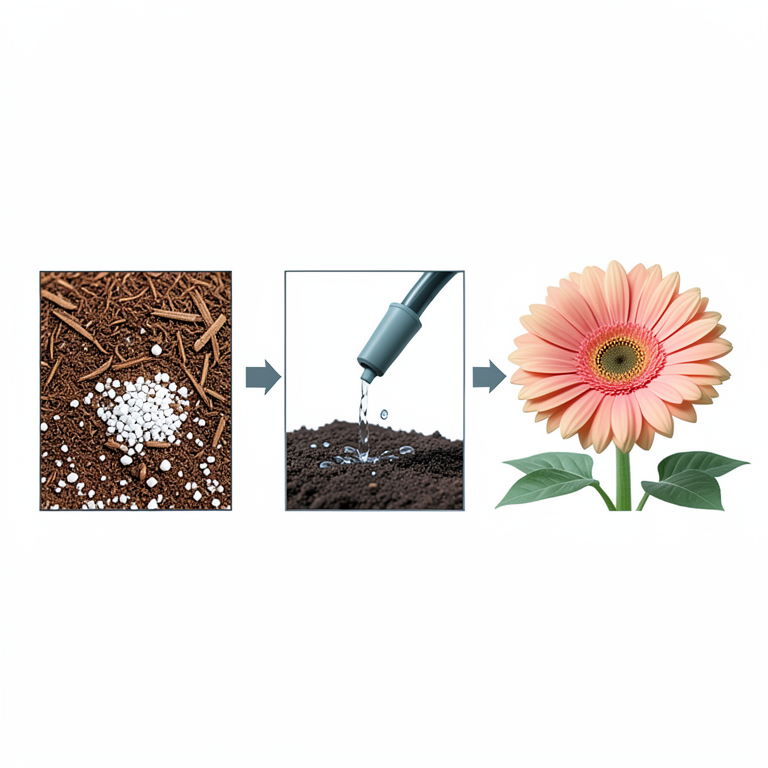
Optimal Growth Combination
AI-generated conceptual illustration (Gerbera flowers in cocopeat and perlite growing media). It explains the idea and does not show study data.
View source evidence ↗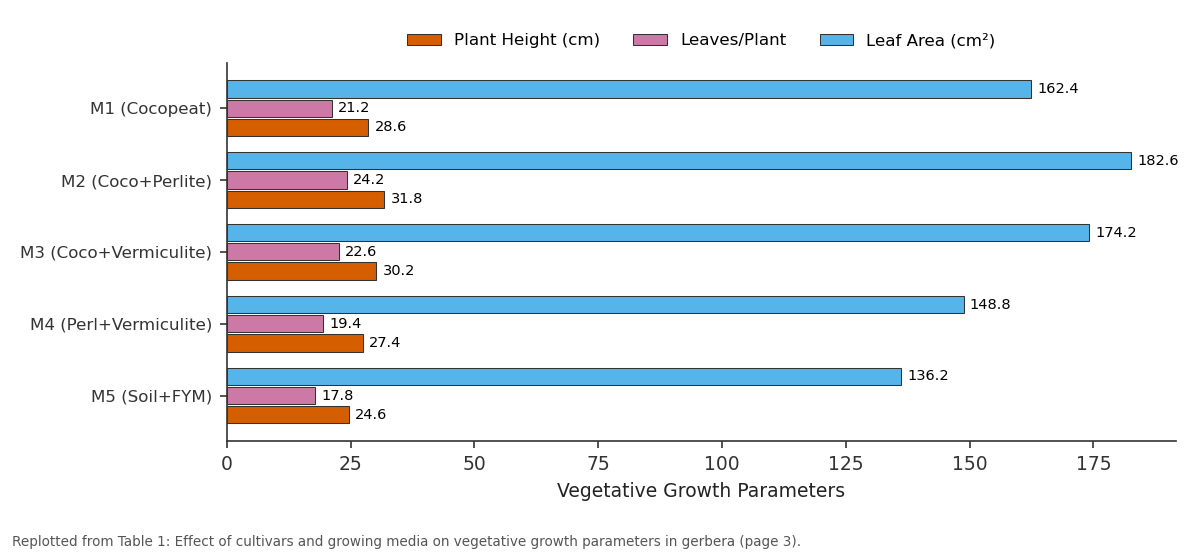
Plant Height (cm) and Leaves/Plant and more: M1 (Cocopeat) vs M2 (Coco+Perlite) vs M3 (Coco+Vermiculite) vs M4 (Perl+Vermiculite) vs M5 (Soil+FYM)
Replotted from Table 1 (page 3) of the original paper. Every bar is the paper's own table value.
View source evidence ↗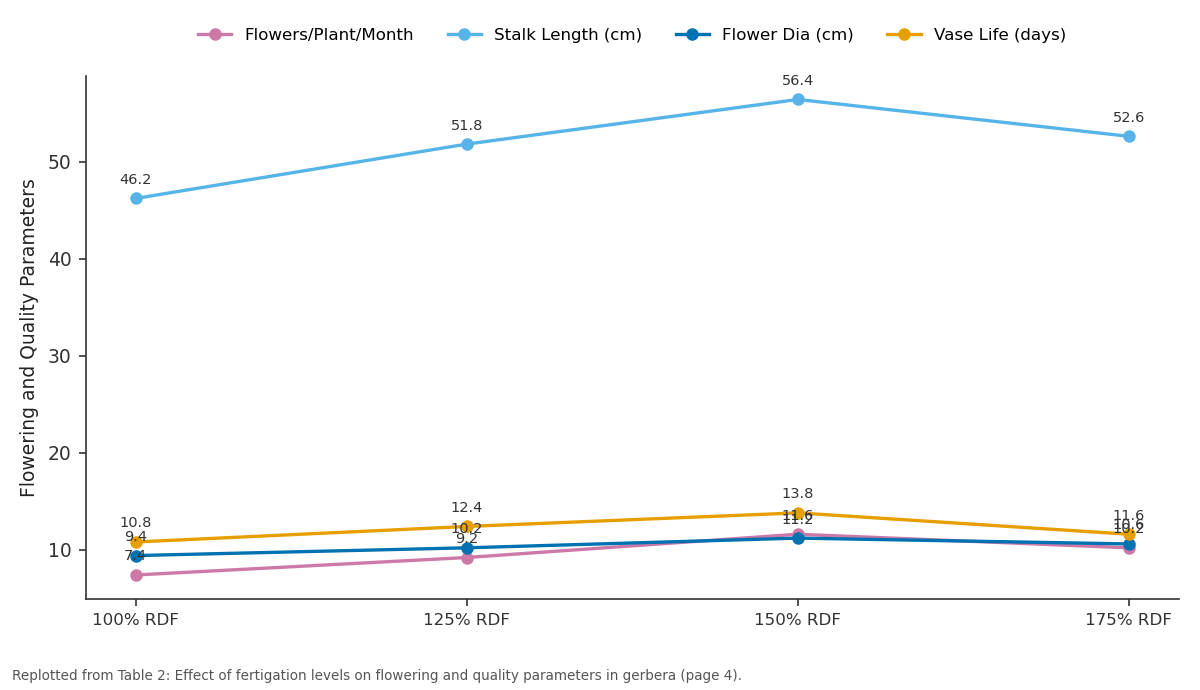
Flowers/Plant/Month and Stalk Length (cm) and more: 100% RDF vs 125% RDF vs 150% RDF vs 175% RDF
Replotted from Table 2 (page 4) of the original paper. Every bar is the paper's own table value.
View source evidence ↗Figures & tables
From the original paper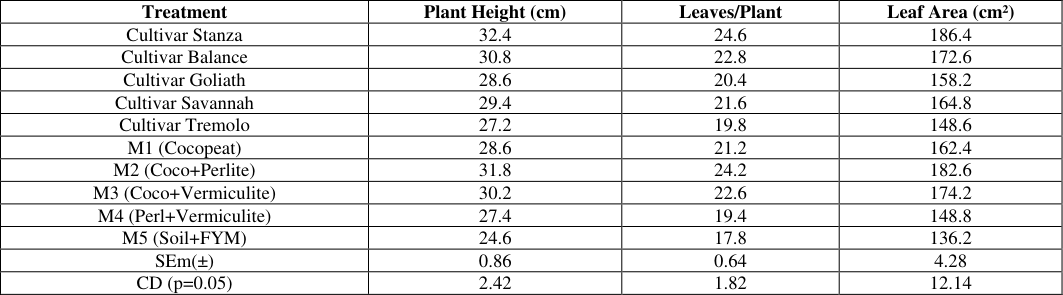 Table 1
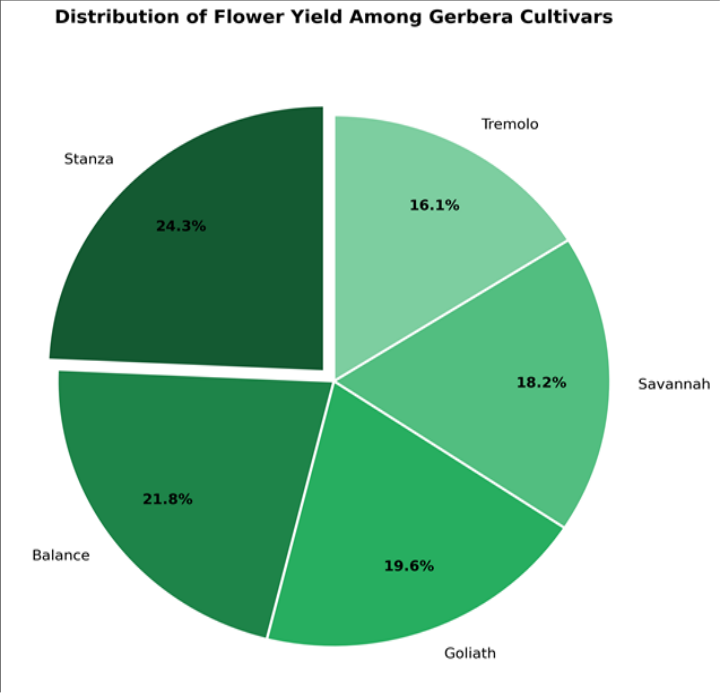 Figure 1
 Table 2
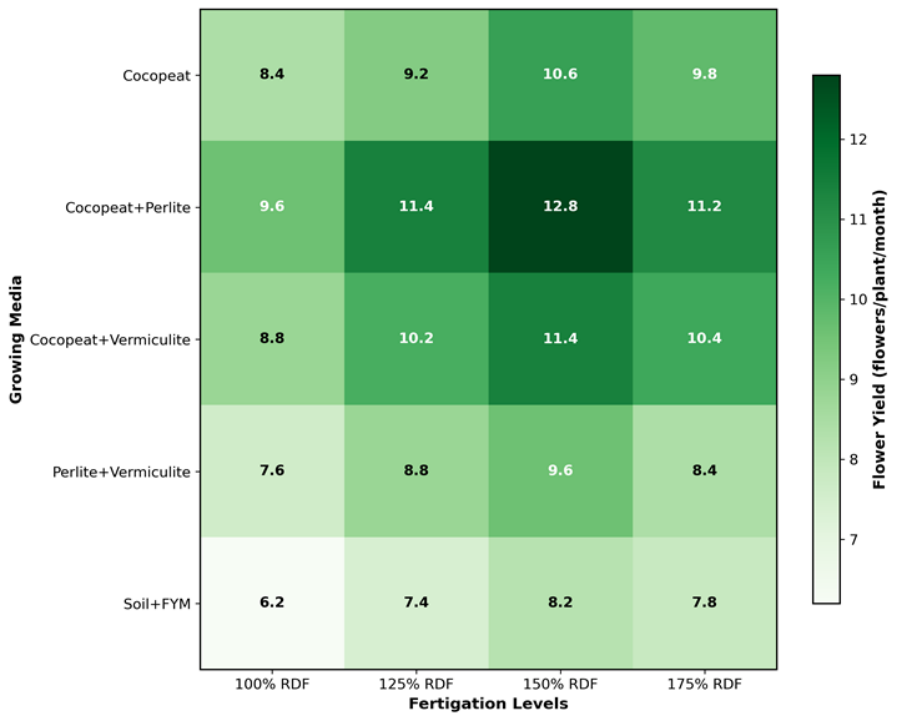 Figure 2
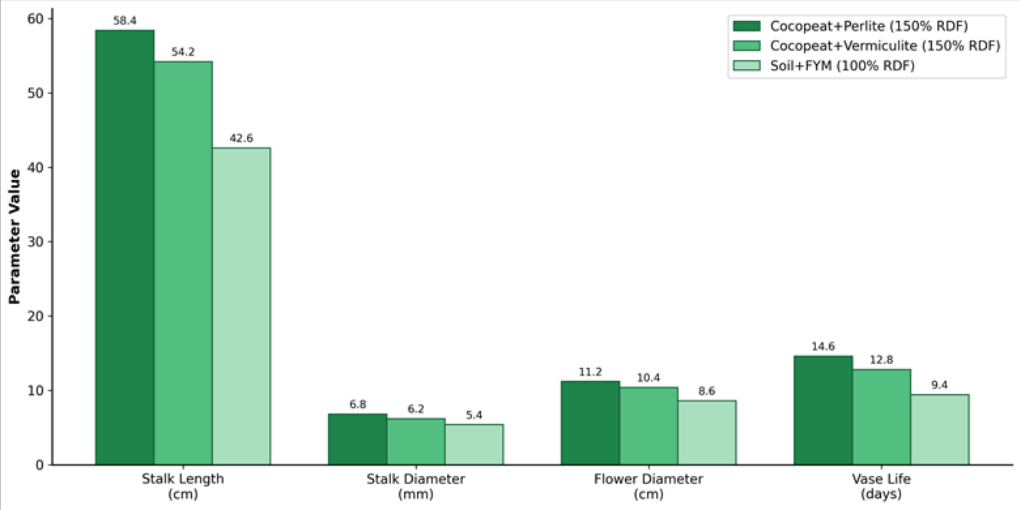 Figure 3
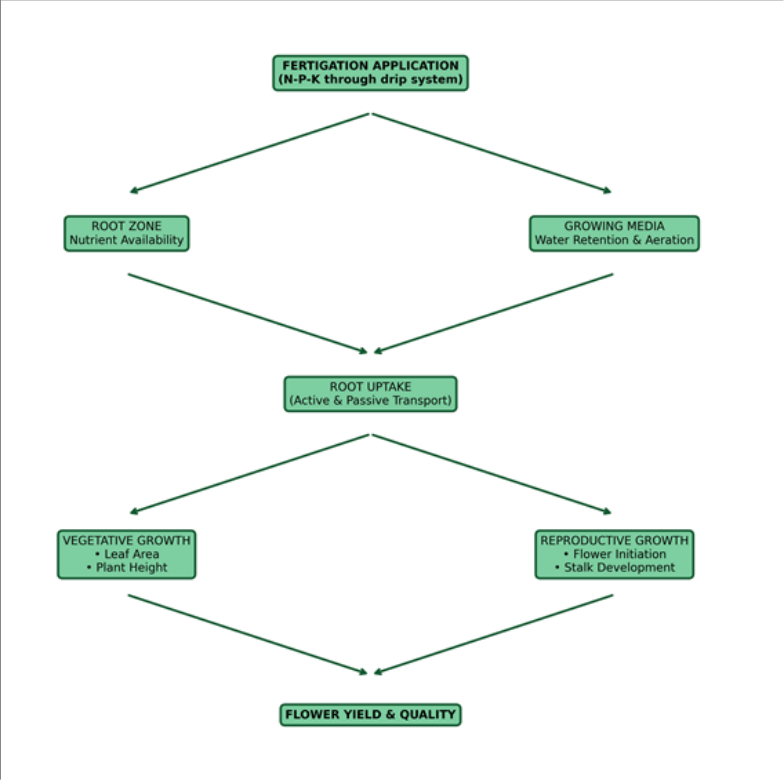 Figure 4
Introduction
Statistics from international floriculture markets indicate that gerbera ranks among the top five cut flowers traded globally, with annual production exceeding 900 million stems valued at approximately 280 million dollars [1] . This Asteraceae family member has gained tremendous popularity owing to its diverse color range, excellent keeping quality, and suitability for both bouquet arrangements and single stem presentations. The transition from open field to protected cultivation has revolutionized gerbera production, enabling growers to overcome seasonal limitations and environmental constraints that previously restricted commercial viability [2] .
Protected structures including polyhouses, greenhouses, and shade net houses provide controlled environments where temperature, humidity, and light intensity can be manipulated to favor optimal plant growth and flowering [3] . Within these structures, the choice of growing medium becomes particularly significant as it directly influences root health, water availability, nutrient uptake efficiency, and ultimately crop productivity [4] . Traditional soil-based cultivation faces challenges including soil-borne disease accumulation, inconsistent physical properties, and difficulty in precise nutrient management that modern soilless systems can effectively address [5] . Soilless growing media have emerged as preferred alternatives offering several advantages including uniformity, freedom from pathogens, and reproducible growing conditions across production cycles [6] . Cocopeat derived from coconut husk processing has become increasingly popular due to its excellent water holding capacity, favorable cation exchange properties, and sustainability as a renewable agricultural byproduct [7] . Perlite contributes enhanced aeration and drainage characteristics, while vermiculite improves moisture retention and provides some cation exchange capacity for nutrient buffering [8] . Combinations of these materials in appropriate proportions can create customized growing environments suited to specific crop requirements. Fertigation technology integrating fertilizer application with irrigation water delivery has transformed nutrient management in protected cultivation systems [9] . This approach enables precise control over nutrient concentrations reaching the root zone, timing of applications, and adjustment according to crop growth stages. Research has demonstrated that fertigation efficiency in soilless systems can exceed 90% compared to 40-50% achievable through conventional soil application methods [10] . However, determining optimal fertigation levels requires consideration of growing medium characteristics, crop nutrient demands, and environmental factors affecting evapotranspiration rates. Gerbera cultivars display considerable genetic variation in growth habit, flower characteristics, and environmental adaptability that influences their suitability for different production systems and market segments [11] . European breeding programs have released numerous cultivars optimized for cut flower production, while some Asian markets prefer cultivars with specific color preferences and stem characteristics [12] . Understanding cultivar-specific responses to growing conditions helps producers select appropriate varieties and fine-tune management practices for their particular circumstances. Previous investigations have examined individual aspects of gerbera production including media comparisons, fertilizer rates, and cultivar evaluations, but comprehensive research integrating all three factors under protected conditions remains limited [13] . The interaction between cultivar genetic potential, growing medium physical and chemical properties, and nutrient supply dynamics determines the ultimate expression of yield and quality characteristics. Systematic evaluation of these interactions would provide valuable guidance for producers establishing or optimizing gerbera production facilities [14] . This research was therefore undertaken to evaluate the response of promising gerbera cultivars to different growing media formulations and fertigation levels under naturally ventilated polyhouse conditions. Specific objectives included identifying superior cultivar-media combinations for maximum flower production, determining optimal fertigation levels for soilless gerbera cultivation, and assessing cut flower quality parameters influencing market acceptability [15] . The findings would contribute to developing standardized production protocols for commercial gerbera cultivation in protected environments.
Material and Methods
Material and Methods
Material
The experiment was conducted in a naturally ventilated polyhouse covered with 200-micron UV-stabilized polyethylene film at a horticultural research facility. Five commercial gerbera cultivars namely Stanza (red), Balance (yellow), Goliath (orange), Savannah (pink), and Tremolo (white) were procured as tissue culture raised plantlets from a certified nursery [16] . Growing media components included processed cocopeat with electrical conductivity below 0.5 dS/m, horticultural grade perlite with particle size 2-4 mm, and expanded vermiculite of medium grade. Raised beds measuring 1 m width and 30 cm height were prepared at 60 cm spacing between beds. Water-soluble fertilizers including calcium nitrate, potassium nitrate, mono-ammonium phosphate, magnesium sulfate, and micronutrient mixture were used for preparing fertigation solutions. The recommended dose of fertilizers for gerbera cultivation comprising 200:100:200 mg/L of N:P:K served as the baseline for calculating treatment levels. Drip irrigation system with inline emitters at 30 cm spacing delivered fertigation solutions directly to the root zone of individual plants [17] .
Methods
The experiment followed a factorial randomized block design with three factors: cultivars at five levels, growing media at five levels, and fertigation at four levels, replicated three times. Each experimental unit comprised five plants with observations recorded from three central plants.
Growing media treatments included M1-cocopeat alone, M2-cocopeat plus perlite (1:1 v/v), M3-cocopeat plus vermiculite (1:1 v/v), M4-perlite plus vermiculite (1:1 v/v), and M5-soil plus farmyard manure (3:1 v/v) as control. Fertigation levels were F1-100% RDF, F2-125% RDF, F3-150% RDF, and F4-175% RDF applied through drip system.
Transplanting was done at 30 × 30 cm spacing with plants established for four weeks before initiating differential fertigation treatments. Fertigation was applied twice daily during summer months and once daily during winter, with quantities adjusted based on pan evaporation data. Growing media physical properties including bulk density, water holding capacity, and air-filled porosity were determined using standard procedures. Plant growth parameters were recorded at monthly intervals while flowering observations continued throughout the production period. Vase life was assessed by placing harvested flowers in distilled water at room temperature and recording days to petal wilting [18] . Data were analyzed using analysis of variance and treatment means compared using least significant difference at 5% probability.
Field Experimental Design
The polyhouse measuring 28 m length and 8 m width was divided into three blocks running perpendicular to the prevailing wind direction to account for potential environmental gradients within the structure. Each block contained all 100 treatment combinations randomly assigned to individual plots. Raised beds were constructed using galvanized iron frames to contain growing media and prevent lateral movement of irrigation water between treatments. Buffer plants were maintained at bed ends to minimize edge effects on experimental plants.
Climatic and Environmental Conditions
Inside the polyhouse, temperature ranged from 18.4 °C to 32.6 °C during the experimental period with relative humidity between 55% and 85%. Shade net providing 50% light reduction was deployed during peak summer months when light intensity exceeded 60,000 lux. Natural ventilation through roll-up side curtains maintained adequate air circulation while foggers provided evaporative cooling during hot afternoons. These environmental modifications maintained conditions within the optimal range for gerbera cultivation as recommended in literature [19] .
Results
Results
Comprehensive Interpretation
The interaction effects between cultivars, growing media, and fertigation levels proved statistically significant for flower yield and quality parameters. Maximum flower production of 12.8 flowers per plant per month was achieved with cultivar Stanza in cocopeat plus perlite medium receiving 150% RDF. This represented 73.0% higher productivity compared to the same cultivar grown in soil-based medium with 100% RDF. The heatmap visualization clearly demonstrates that 150% fertigation level consistently outperformed other levels across all growing media types.
Discussion
The superior performance of cocopeat-based growing media can be attributed to their favorable physical properties providing optimal balance between water retention and aeration for gerbera root systems. Cocopeat's high cation exchange capacity of 40-100 meq/100g enables effective nutrient buffering, reducing the risk of nutrient stress between fertigation events [6] . The addition of perlite to cocopeat improved drainage and prevented waterlogging conditions that can trigger root diseases in this crop. Similar beneficial effects of cocopeat-perlite combinations have been documented in rose and carnation production systems [7] . Fertigation at 150% of recommended dose emerged as optimal for soilless gerbera production, likely because standard fertilizer recommendations were developed for soil-based systems with different nutrient retention characteristics. Soilless media with lower buffering capacity and higher leaching potential require elevated nutrient supply to maintain adequate root zone concentrations [9] . However, the decline in performance at 175% RDF indicates that excessive nutrient supply creates osmotic stress and ionic imbalances detrimental to both growth and flower quality. Cultivar differences in response to growing conditions reflect underlying genetic variation in nutrient use efficiency, stress tolerance, and partitioning patterns between vegetative and reproductive growth [11] . Stanza's consistently superior performance suggests better adaptation to the environmental conditions and management practices employed in this research. The early flowering tendency of Tremolo, despite lower overall productivity, could be advantageous for market timing strategies targeting specific demand periods. Extended vase life observed in flowers from soilless media likely results from improved calcium and boron uptake facilitated by consistent nutrient supply and absence of soilborne antagonistic organisms [10] . These micronutrients are essential for cell wall integrity and membrane stability that determine post-harvest longevity. The practical significance of 55% improvement in vase life extends beyond farm gate value to encompass reduced losses during marketing chain and enhanced consumer satisfaction.
Limitations
This research was conducted in a single location with specific climatic conditions that may not fully represent other gerbera production regions. The cultivars evaluated represent only a subset of commercially available varieties, and newer introductions may perform differently under similar conditions. Media degradation over multiple cropping cycles was not assessed, though this factor significantly influences long-term economic viability of soilless systems. Water quality variations affecting nutrient availability were minimized through use of treated water, which may not be available to all commercial producers.
Conclusion
This research provides evidence that gerbera productivity and flower quality under protected cultivation can be substantially improved through appropriate selection of cultivars, growing media, and fertigation management. The cultivar Stanza demonstrated superior adaptability to soilless production systems, achieving maximum flower yields and maintaining excellent quality characteristics across different treatment combinations. Cultivar Balance emerged as a suitable alternative where larger flower diameter is prioritized for specific market requirements. Growing media composition profoundly influenced crop performance, with cocopeat plus perlite combination at 1:1 ratio consistently outperforming other formulations including conventional soil-based cultivation. This mixture provided optimal physical properties balancing water retention with adequate aeration essential for healthy gerbera root development. The perlite component prevented compaction issues that can develop in pure cocopeat over time while maintaining favorable moisture availability between irrigation events. Fertigation at 150% of recommended fertilizer dose proved optimal for soilless gerbera production, achieving 56.8% higher flower yield compared to standard recommendations. This enhanced nutrient supply compensated for the lower nutrient retention capacity of soilless media while remaining below levels causing toxicity symptoms. The response plateau beyond 150% RDF indicates diminishing returns from further nutrient increases and suggests this level as the practical optimum for commercial adoption. Flower quality improvements accompanying yield increases represent economically significant outcomes for commercial producers. Extended vase life reaching 14.6 days with optimal treatment combinations compared to 9.4 days under conventional cultivation substantially enhances marketability and reduces post-harvest losses. Stalk length and diameter improvements directly influence grading standards and price realization in wholesale markets where these parameters determine quality classifications. The three-way interaction between cultivars, growing media, and fertigation levels emphasizes the importance of integrated management approaches rather than optimizing individual factors in isolation. Recommendations derived from this research should be implemented as complete packages to realize full productivity potential. Commercial growers establishing new gerbera production facilities should prioritize investment in appropriate soilless media infrastructure and precision fertigation systems to achieve the documented productivity improvements and economic returns.
Figures and tables from the paper
| Treatment | Plant Height (cm) | Leaves/Plant | Leaf Area (cm²) |
|---|---|---|---|
| Cultivar Stanza | 32.4 | 24.6 | 186.4 |
| Cultivar Balance | 30.8 | 22.8 | 172.6 |
| Cultivar Goliath | 28.6 | 20.4 | 158.2 |
| Cultivar Savannah | 29.4 | 21.6 | 164.8 |
| Cultivar Tremolo | 27.2 | 19.8 | 148.6 |
| M1 (Cocopeat) | 28.6 | 21.2 | 162.4 |
| M2 (Coco+Perlite) | 31.8 | 24.2 | 182.6 |
| M3 (Coco+Vermiculite) | 30.2 | 22.6 | 174.2 |
| M4 (Perl+Vermiculite) | 27.4 | 19.4 | 148.8 |
| M5 (Soil+FYM) | 24.6 | 17.8 | 136.2 |
| SEm(±) | 0.86 | 0.64 | 4.28 |
| CD (p=0.05) | 2.42 | 1.82 | 12.14 |
Table text extracted from the original PDF; superscript letters are shown inline. The original table image is below.
View original table image
| Fertigation Level | Flowers/Plant/Month | Stalk Length (cm) | Flower Dia (cm) | Vase Life (days) |
|---|---|---|---|---|
| 100% RDF | 7.4 | 46.2 | 9.4 | 10.8 |
| 125% RDF | 9.2 | 51.8 | 10.2 | 12.4 |
| 150% RDF | 11.6 | 56.4 | 11.2 | 13.8 |
| 175% RDF | 10.2 | 52.6 | 10.6 | 11.6 |
| SEm(±) | 0.42 | 1.24 | 0.28 | 0.38 |
| CD (p=0.05) | 1.18 | 3.52 | 0.78 | 1.08 |
Table text extracted from the original PDF; superscript letters are shown inline. The original table image is below.
View original table image
References
19 in the original paper- Tejaswini RS. Gerbera cultivation under protected conditions. Floriculture Today. 2002;7(4):36-39.
- Singh MK, Sindhu SS. Floriculture development in India. Journal of Ornamental Horticulture. 2006;9(2):81-86.
- Gour HN, Joshi NK. Protected cultivation of vegetables and flowers. Agrobios Newsletter. 2008;6(9):34-36.
- Abad M, Noguera P, Bures S. National inventory of organic wastes for use as growing media. Bioresource Technology. 2001;77(1):83-92.
- Verdonck O, Gabriels R. Substrate requirements for plants. Acta Horticulturae. 1988;221:19-23.
- Konduru S, Evans MR, Stamps RH. Coconut coir dust as a growing medium component. HortTechnology. 1999;9(3):306-309.
- Fascella G, Zizzo GV. Effect of growing media on yield and quality of soilless cultivated rose. Acta Horticulturae. 2005;697:133-138.
- Raviv M, Chen Y, Inbar Y. Peat and peat substitutes as growth media. Acta Horticulturae. 1986;178:209-216.
- Sonneveld C, Voogt W. Plant nutrition in future greenhouse production. Acta Horticulturae. 2001;548:217-223.
- Bar-Tal A, Pressman E. Root restriction and potassium and calcium solution concentrations. Journal of Plant Nutrition. 1996;19(7):979-998.
- Dole JM, Wilkins HF. Gerbera production guide. Floriculture Principles and Species. 2005;2:401-408.
- Maloupa E, Gerasopoulos D. Quality production of gerbera in perlite culture. Acta Horticulturae. 1999;486:299-304.
- Papadopoulos AP, Hao X. Effects of day and night air temperature on growth and productivity. Canadian Journal of Plant Science. 1997;77(4):561-568.
- Paradiso R, De Pascale S. Effects of coco fiber addition to perlite on gerbera cultivation. Acta Horticulturae. 2008;779:313-320.
- Kumar R, Kumar S. Studies on gerbera cultivation under protected conditions. Haryana Journal of Horticultural Sciences. 2009;38(1-2):148-150.
- Aswath C, Anuradha M. Performance of gerbera cultivars in coastal areas. Journal of Ornamental Horticulture. 2005;8(3):215-217.
- Gupta YC, Sharma P. Effect of nitrogen and phosphorus on growth of gerbera. Journal of Ornamental Horticulture. 2006;9(1):66-68.
- Nair SA, Sujatha K. Post-harvest quality of gerbera flowers. South Indian Horticulture. 1999;47(1-6):113115.
- Khobragade RK, Jawaharlal M. Evaluation of gerbera varieties for growth and flower quality. Orissa Journal of Horticulture. 2011;39(2):92-96.