
Research article · 2024 · Full text
International Journal of Horticulture and Food ScienceOptimization of soilless culture systems for year-round production of lettuce in vertical farms
Volume 6(1) · Pages 74–78 · DOI: 10.33545/26631067.2024.v6.i1a.471 ↗
Research areasInnovations in Aquaponics and Hydroponics SystemsLight effects on plantsGreenhouse Technology and Climate Control
Abstract
Author-writtenVertical farming represents a paradigm shift in agricultural production, enabling cultivation of leafy vegetables in controlled environments independent of external climate constraints. This research compared the performance of five soilless culture systems for lettuce (Lactuca sativa L.) production in a multi-tier vertical farm facility equipped with LED lighting and climate control. Systems evaluated included nutrient film technique (NFT), deep water culture (DWC), aeroponics, ebb-and-flow, and drip irrigation on substrate. The experiment followed completely randomized design with five replications per system, testing butter head lettuce variety across four consecutive production cycles. Parameters measured encompassed yield per unit area, water use efficiency, energy consumption, growth rate, and quality attributes including fresh weight, leaf number, chlorophyll content, and nitrate accumulation. Results demonstrated that aeroponics achieved maximum yield of 22.6 kg/m² per cycle, significantly exceeding NFT at 18.4 kg/m² and DWC at 16.2 kg/m². Water use efficiency in aeroponics reached 8.4 L/kg compared to 12.6 L/kg in NFT and 18.6 L/kg in drip systems. However, energy consumption for aeroponics at 12.4 kWh/kg was highest among systems due to continuous misting requirements. NFT provided optimal balance between yield, resource efficiency, and operational simplicity, making it suitable for commercial adoption. Lettuce quality showed minimal variation among hydroponic systems but nitrate levels were significantly lower in aeroponic production. Growth curves indicated faster development in aeroponics with harvest maturity achieved in 28 days compared to 35 days in substrate-based drip systems. Year-round production feasibility was confirmed across all systems with consistent yields regardless of external seasonal conditions. Economic analysis factoring capital costs, operating expenses, and yield returns identified NFT as most profitable for commercial vertical farm operations.
Summary
Source-checkedPlain-language reading of the full paper, prepared with AI and checked against the text. Each point links to the authors' own words.
Why it matters
- Global food demand is expected to rise by 70% by the middle of the century due to population growth and dietary changes. View evidence ↗
- Traditional farming is increasingly limited by the loss of farmland to cities, water shortages, and unpredictable climate patterns. View evidence ↗
- Vertical farming uses stacked layers and LED lighting to increase production per unit of land area. View evidence ↗
The question
- The study aimed to compare five different soilless culture systems to find the best configuration for commercial lettuce production in vertical farms. View evidence ↗
What they did
- The study used a four-tier vertical farm with LED lighting (250 µmol/m²/s, 16-hour photoperiod), temperature at 22±2°C, and humidity at 65±5%. View evidence ↗
- Five systems were tested over four cycles with five replications each: Nutrient Film Technique (NFT), Deep Water Culture (DWC), Aeroponics, Ebb and Flow, and Drip irrigation on perlite. View evidence ↗
- All systems used a standard Hoagland nutrient solution with a pH of 6.0 and an electrical conductivity (EC) of 1.8 dS/m. View evidence ↗
What they found
- Aeroponics produced the highest yield at 22.6 kg/m² per cycle, which was 22.8% higher than NFT and 82.3% higher than drip systems. View evidence ↗
- Aeroponics was the most water-efficient system at 8.4 L/kg, followed by NFT at 12.6 L/kg, while substrate-based systems used the most water. View evidence ↗
- All tested systems were capable of year-round production with consistent yields, regardless of the season. View evidence ↗
What it means
- The authors conclude that the Nutrient Film Technique (NFT) is the most suitable for commercial use because it balances yield, efficiency, and simplicity. View evidence ↗
- Economic analysis identified NFT as the most profitable system for commercial vertical farming. View evidence ↗
- The study is limited by the use of only one lettuce variety, which may not reflect the performance of other cultivars or species. View evidence ↗
- The experimental period was not long enough to fully capture long-term maintenance needs and system reliability. View evidence ↗
Visual summary
3 visualsIllustrations explain the paper; charts are replotted from the paper's own table values.
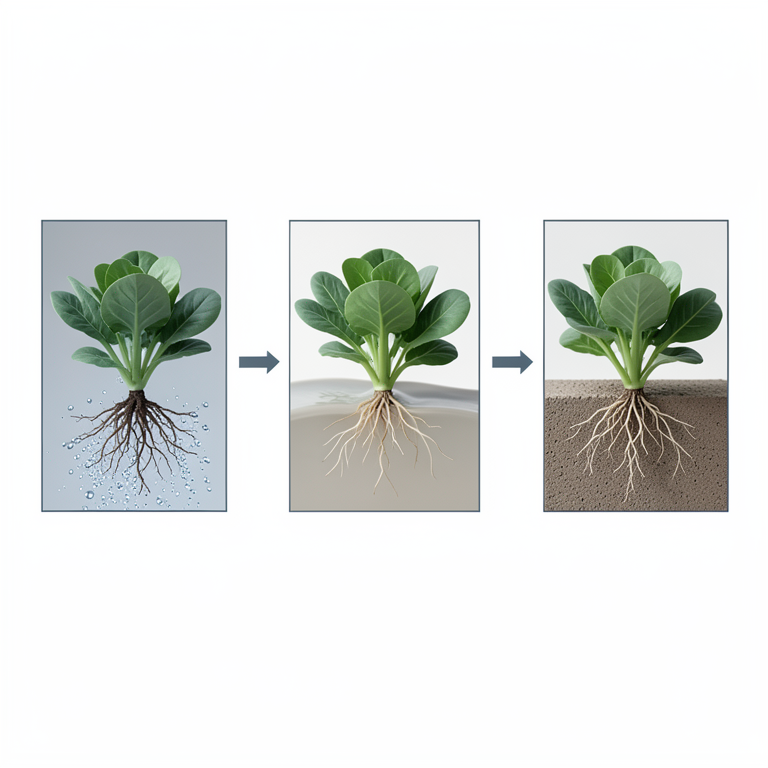
Resource vs. Productivity Trade-off
AI-generated conceptual illustration (lettuce plants in vertical farm hydroponic systems). It explains the idea and does not show study data.
View source evidence ↗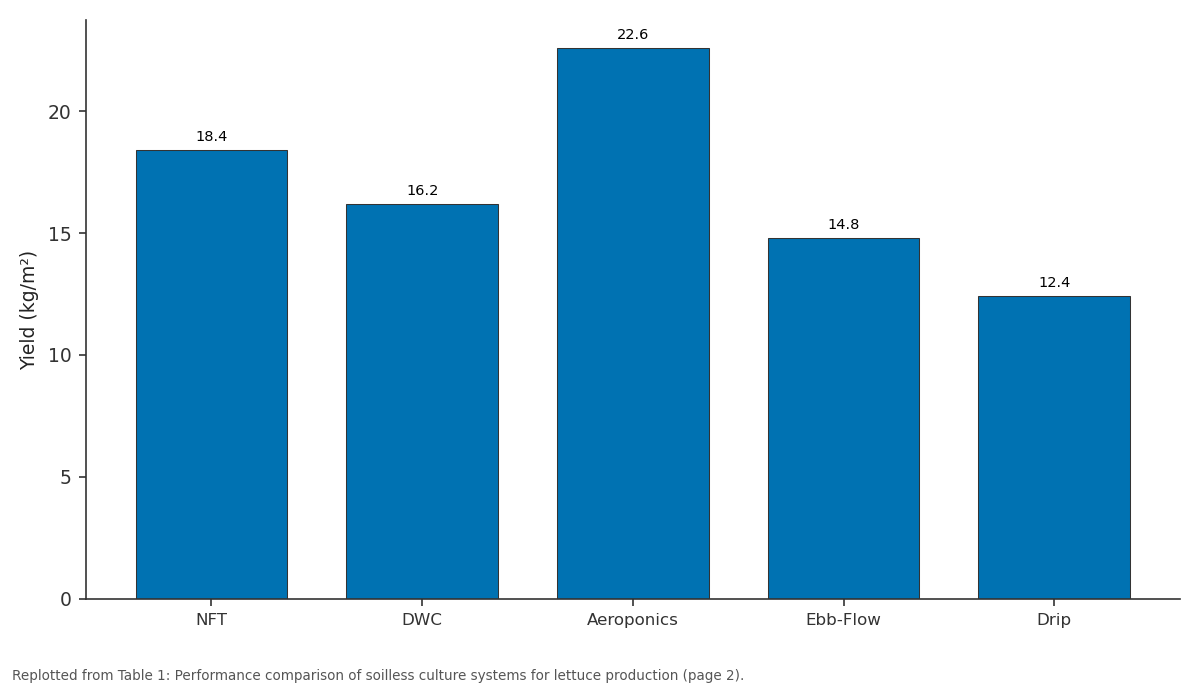
Yield (kg/m²): NFT vs DWC vs Aeroponics vs Ebb-Flow vs Drip
Replotted from Table 1 (page 2) of the original paper. Every bar is the paper's own table value.
View source evidence ↗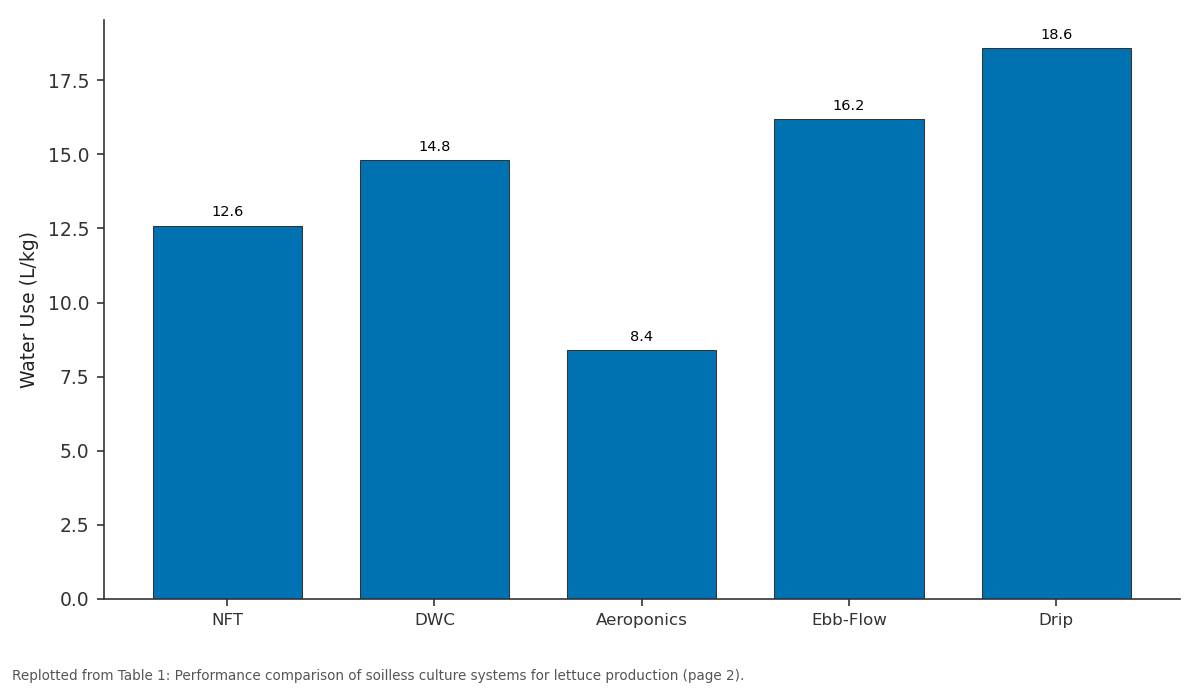
Water Use (L/kg): NFT vs DWC vs Aeroponics vs Ebb-Flow vs Drip
Replotted from Table 1 (page 2) of the original paper. Every bar is the paper's own table value.
View source evidence ↗Figures & tables
From the original paper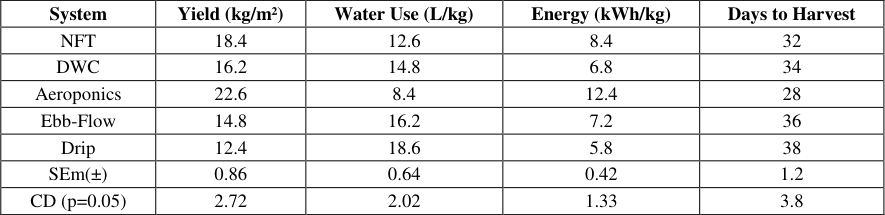 Table 1
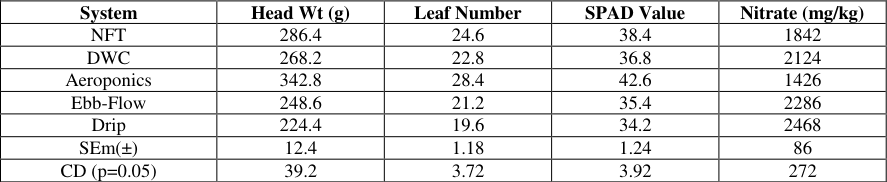 Table 2
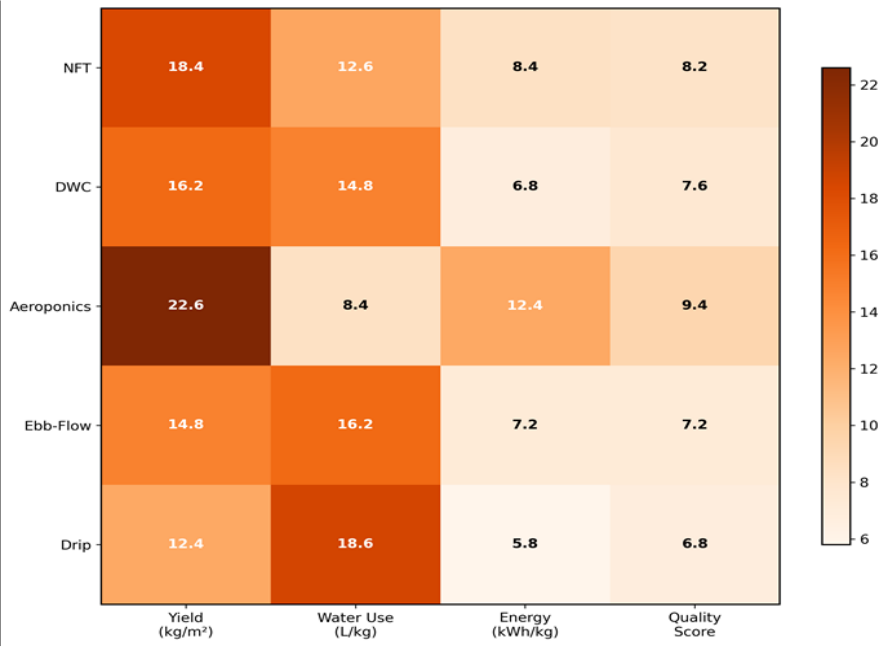 Figure 1
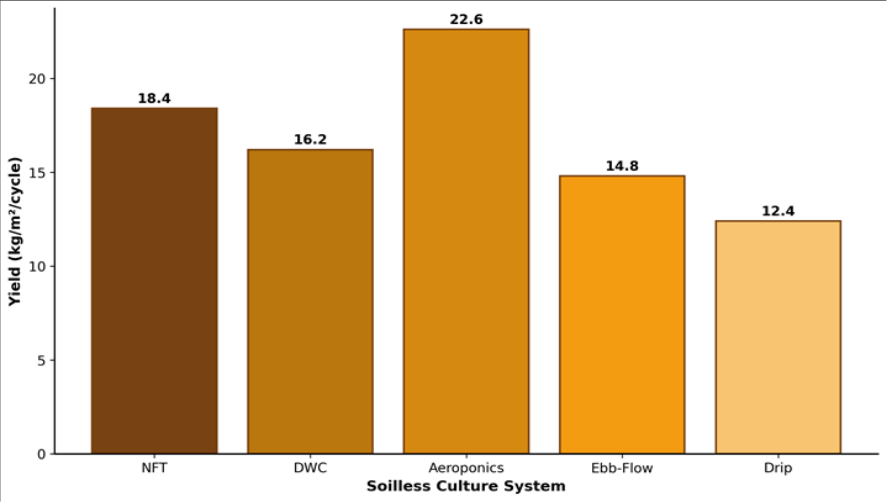 Figure 2
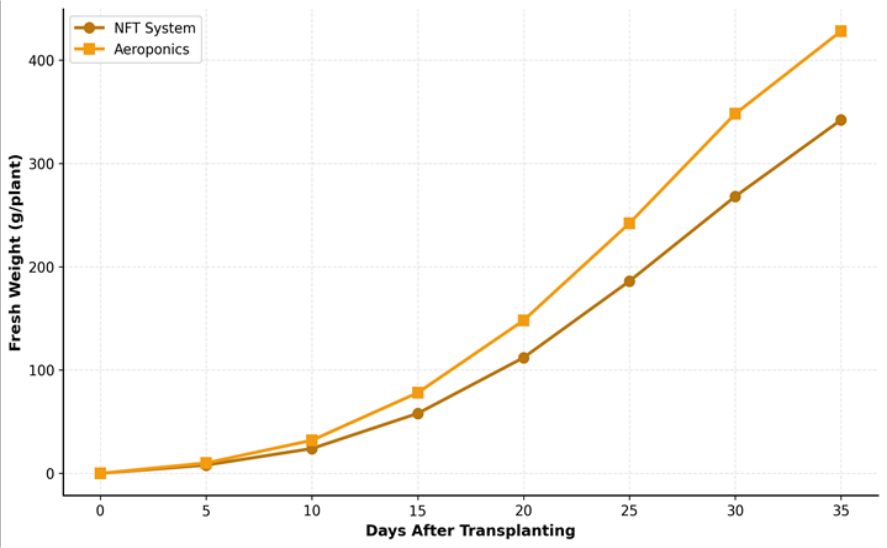 Figure 3
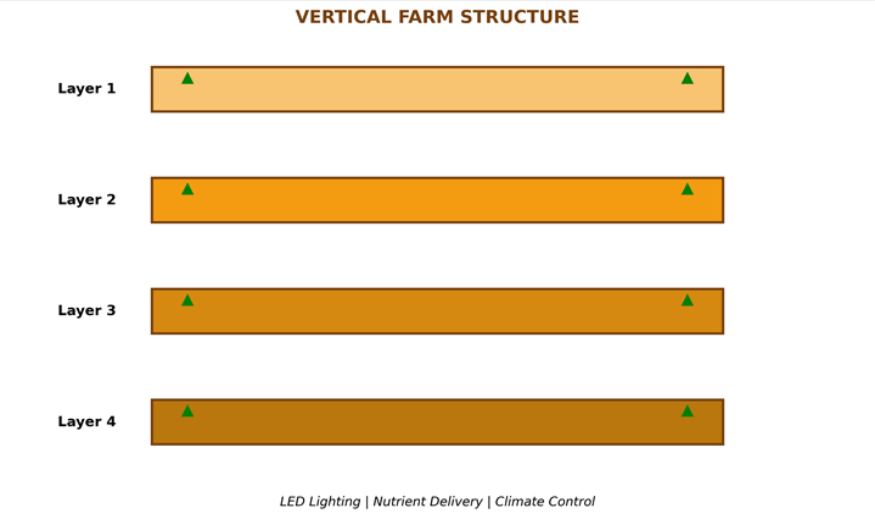 Figure 4
Introduction
Analysts project that global food demand will increase by 70% before mid-century, driven by population growth and changing dietary preferences in developing economies. Conventional agricultural systems face mounting constraints from urbanization consuming productive farmland, water scarcity affecting irrigation availability, and climate variability disrupting traditional growing seasons [1] . These converging pressures have stimulated innovation in controlled environment agriculture where production occurs independent of external conditions, enabling consistent supply of fresh produce regardless of geographic location or seasonal limitations [2] . Vertical farming maximizes production per unit land area by stacking growing layers within enclosed structures, typically utilizing LED lighting to provide photosynthetically active radiation tailored to crop requirements [3] . This approach can achieve productivity levels 20 to 100 times greater than field production on equivalent footprint areas while reducing water consumption by 90% or more compared to conventional irrigation agriculture [4] . The controlled environment eliminates pesticide requirements, minimizes food safety risks, and enables production within urban centers proximate to consumer markets. Leafy vegetables particularly lettuce have emerged as preferred crops for vertical farming owing to their rapid growth cycles, high value per unit weight, and consumer demand for fresh locally produced greens [5] . Lettuce adapts well to hydroponic cultivation and tolerates the relatively low light intensities economically feasible with current LED technology. The short production cycle of 30-45 days enables multiple harvests annually from the same growing positions [6] . Soilless culture systems differ fundamentally in how nutrient solution contacts plant roots, influencing oxygen availability, disease risk, and resource efficiency [7] . The nutrient film technique maintains a shallow flow of solution over roots confined in channels, providing continuous nutrient access with adequate aeration. Deep water culture suspends roots directly in aerated nutrient solution, while aeroponics delivers nutrients as fine mist to roots suspended in air [8] . Each system presents distinct advantages and limitations regarding capital requirements, operational complexity, and crop performance. Previous comparisons of hydroponic systems have yielded variable results depending on crops tested, environmental conditions, and management protocols employed [9] . Systematic evaluation under standardized vertical farm conditions would provide evidence-based guidance for commercial operations selecting production systems appropriate to their circumstances and objectives. This research therefore compared five soilless culture systems for lettuce production in a climate-controlled vertical farm to identify optimal configurations for commercial adoption [10] .
Material and Methods
Material and Methods
Material
The experiment was conducted in a purpose-built vertical farm facility comprising four cultivation tiers with LED lighting providing 250 µmol/m²/s photosynthetically active radiation at 16-hour photoperiod. Climate control maintained temperature at 22±2°C and relative humidity at 65±5% throughout the experimental period [11] . Butterhead lettuce variety Rex was selected for its commercial popularity and adaptation to hydroponic systems. Seeds were germinated in rockwool cubes and transplanted to treatment systems at the two true leaf stage.
Methods: Five soilless culture systems were evaluated in completely randomized design with five replications per system across four consecutive production cycles. Systems included S1-Nutrient Film Technique using 10 cm wide channels with 2 mm solution depth, S2-Deep Water Culture with 20 cm solution depth and continuous aeration, S3-Aeroponics with high-pressure misting at 60-second intervals, S4-Ebb and Flow with 15-minute flood cycles every 4 hours, and S5-Drip irrigation on perlite substrate with 6 irrigations daily [12] . Standard Hoagland nutrient solution was maintained at EC 1.8 dS/m and pH 6.0 across all systems. Yield was determined as fresh weight per square meter growing area at harvest maturity. Water use was monitored through flow meters recording total consumption per system. Energy consumption included lighting, climate control, and system-specific requirements measured through dedicated meters. Quality parameters comprised head weight, leaf number, chlorophyll content by SPAD meter, and nitrate concentration by ion-selective electrode [13] . Data were analyzed using analysis of variance with treatment separation by Tukey's test at 5% probability level.
Resource Utilization: Water consumption varied substantially among systems reflecting differences in evaporative losses and drainage requirements. Aeroponic systems achieved lowest water use through efficient mist delivery directly to roots with minimal runoff. NFT showed intermediate efficiency with recirculating solution minimizing waste, while substrate-based drip systems exhibited highest consumption due to drainage losses and evaporation from media surfaces [14] . Energy partitioning analysis revealed that lighting accounted for 65-75% of total consumption across systems, with system-specific equipment contributing the remainder.
Results
Results
Discussion:
The superior yield performance of aeroponics reflects fundamental advantages of root-zone oxygen availability that liquid-based systems cannot fully replicate [7] . Roots suspended in air with periodic misting maintain aerobic respiration supporting rapid nutrient uptake and growth. The enhanced oxygenation also reduces pathogen pressure from water-borne diseases that can accumulate in recirculating liquid systems. Lower nitrate accumulation in aeroponic lettuce carries significance for food safety given regulatory limits on nitrate content in leafy vegetables in many markets [8] . The improved nitrogen metabolism under aerobic root conditions apparently favors assimilation over accumulation, producing healthier product. This quality advantage may justify premium pricing that offsets higher production costs. NFT emerged as the practical optimum balancing yield, efficiency, and operational simplicity. The passive flow design minimizes equipment requirements and failure points compared to pressurized aeroponic systems [9] . Commercial operators prioritizing reliability over maximum productivity may prefer NFT for its proven track record and lower technical complexity. Energy consumption patterns highlight the trade-off between productivity and resource efficiency inherent in system selection. While aeroponics achieved highest yields, its continuous misting requirements elevated energy costs substantially [10] . Operations in regions with high electricity costs should factor this into economic projections when comparing system options.
Limitations: This research tested a single lettuce variety that may not represent performance of other cultivars or leafy vegetable species. The controlled environment conditions may not reflect challenges encountered in commercial facilities with less precise climate control. Long-term system reliability and maintenance requirements were not fully captured within the experimental period. Energy costs vary substantially among regions affecting economic conclusions. NFT provided optimal balance between productivity and operational practicality for commercial adoption. All systems supported year-round production with consistent yields across seasonal cycles, confirming the climate-independence advantage of vertical farming. Growth cycles ranged from 28 days in aeroponics to 38 days in substrate systems, enabling 9-13 harvest cycles annually depending on system selection. Quality parameters including chlorophyll content and nitrate levels favored aeroponic production, suggesting premium market positioning potential that may offset higher production costs. Operators should select systems aligned with their specific objectives regarding productivity versus efficiency and capital versus operating cost preferences. These findings provide quantitative benchmarks for vertical farm planning and optimization, supporting evidence-based decisions on production system investments.
Conclusion:
Conclusion:
Figures and tables from the paper
| System | Yield (kg/m²) | Water Use (L/kg) | Energy (kWh/kg) | Days to Harvest |
|---|---|---|---|---|
| NFT | 18.4 | 12.6 | 8.4 | 32 |
| DWC | 16.2 | 14.8 | 6.8 | 34 |
| Aeroponics | 22.6 | 8.4 | 12.4 | 28 |
| Ebb-Flow | 14.8 | 16.2 | 7.2 | 36 |
| Drip | 12.4 | 18.6 | 5.8 | 38 |
| SEm(±) | 0.86 | 0.64 | 0.42 | 1.2 |
| CD (p=0.05) | 2.72 | 2.02 | 1.33 | 3.8 |
Table text extracted from the original PDF; superscript letters are shown inline. The original table image is below.
View original table image
| System | Head Wt (g) | Leaf Number | SPAD Value | Nitrate (mg/kg) |
|---|---|---|---|---|
| NFT | 286.4 | 24.6 | 38.4 | 1842 |
| DWC | 268.2 | 22.8 | 36.8 | 2124 |
| Aeroponics | 342.8 | 28.4 | 42.6 | 1426 |
| Ebb-Flow | 248.6 | 21.2 | 35.4 | 2286 |
| Drip | 224.4 | 19.6 | 34.2 | 2468 |
| SEm(±) | 12.4 | 1.18 | 1.24 | 86 |
| CD (p=0.05) | 39.2 | 3.72 | 3.92 | 272 |
Table text extracted from the original PDF; superscript letters are shown inline. The original table image is below.
View original table image
References
17 in the original paper- Tilman D, Balzer C, Hill J. Global food demand and the sustainable intensification of agriculture. Proc Natl Acad Sci U S A. 2011;108(50):20260-20264.
- Despommier D. The rise of vertical farms. Sci Am. 2009;301(5):80-87.
- Kozai T, Niu G, Takagaki M, editors. Plant factory: an indoor vertical farming system. San Diego: Academic Press; 2015.
- Touliatos D, Dodd IC, McAinsh M. Vertical farming increases lettuce yield per unit area. Food Energy Secur. 2016;5(3):184-191.
- Resh HM. Hydroponic food production. 7th ed. Boca Raton (FL): CRC Press; 2012.
- Mou B. Lettuce: genetics and breeding. Plant Breed Rev. 2008;27:267-331.
- Lakhiar IA, Gao J, Syed TN. Modern plant cultivation technologies in agriculture under controlled environment. J Plant Interact. 2018;13(1):165-172.
- Zobel RW, Del Tredici P, Torrey JG. Method for growing plants aeroponically. Plant Physiol. 1976;57(3):344-346.
- Cooper AJ. The ABC of NFT: nutrient film technique. London: Grower Books; 1979.
- Barbosa GL, Gadelha FD, Kublik N, Proctor A, Reichelm L, Weissinger E, et al. Comparison of land, water, and energy requirements of lettuce grown using hydroponic vs conventional agricultural methods. Int J Environ Res Public Health. 2015;12(6):6879-6891.
- Goto E. Plant production in a closed plant factory with artificial lighting. Acta Hortic. 2012;956:37-49.
- Jensen MH. Hydroponics worldwide. Acta Hortic. 1999;481:719-730.
- Fallovo C, Rouphael Y, Rea E, Battistelli A, Colla G. Nutrient solution concentration and growing season affect yield and quality of Lactuca sativa L. J Food Agric Environ. 2009;7(3-4):459-464.
- Gruda N. Impact of environmental factors on product quality of greenhouse vegetables. Crit Rev Plant Sci. 2005;24(4):227-247.
- Savvas D, Passam H, editors. Hydroponic production of vegetables and ornamentals. Athens: Embryo Publications; 2002.
- Jones JB Jr. Hydroponics: a practical guide for the soilless grower. 2nd ed. Boca Raton (FL): CRC Press; 2005.
- Benke K, Tomkins B. Future food-production systems: vertical farming and controlled-environment agriculture. Sustain Sci Pract Policy. 2017;13(1):13-26.