
Research article · 2023 · Full text
International Journal of Biology SciencesFermentation technology meets fashion: Mycelium leather and bacterial cellulose as sustainable alternatives to animal products - commercial viability analysis
Volume 5(2) · Pages 56–62 · DOI: 10.33545/26649926.2023.v5.i2a.550 ↗
Research areasPlant and Biological Electrophysiology StudiesFungal Biology and ApplicationsSlime Mold and Myxomycetes Research
Abstract
Author-writtenThe fashion and materials industry faces mounting pressure to reduce environmental impact and eliminate animal exploitation. Traditional leather production involves substantial greenhouse gas emissions, water consumption, toxic chemical use, and animal welfare concerns. This research investigates mycelium-based leather and bacterial cellulose as sustainable alternatives, evaluating production methods, material properties, commercial viability, and market adoption potential. Through laboratory cultivation, materials testing, lifecycle analysis, and market research, we examined technical feasibility and economic sustainability of biomaterial production. Results demonstrate that mycelium leather achieved tensile strength of 12.4 megapascals, approaching conventional leather at 15.8 megapascals, while bacterial cellulose reached 9.7 megapascals. Water consumption during mycelium production was 97% lower than conventional tanning, with 89% reduction in greenhouse gas emissions. Production costs decreased from $127 per square meter in 2015 to $23 per square meter in 2020, approaching conventional leather costs of $18-22 per square meter. Market analysis revealed 47% annual growth in biomaterial adoption from 2015-2020, with major fashion brands initiating partnerships. Consumer surveys indicated 68% willingness to purchase biomaterial products at price parity. Environmental lifecycle assessment showed mycelium leather and bacterial cellulose achieving 83% and 76% reductions respectively in overall environmental impact compared to conventional leather. Commercial viability analysis suggests biomaterials could capture 15-20% of leather market by 2025. However, challenges remain including achieving consistent material properties, establishing supply chains, and building consumer confidence. This research concludes that biomaterials represent commercially viable sustainable alternatives with significant environmental benefits, though market transformation requires continued innovation and investment.
Summary
Source-checkedPlain-language reading of the full paper, prepared with AI and checked against the text. Each point links to the authors' own words.
Why it matters
- Conventional leather production is environmentally damaging due to high water use, greenhouse gas emissions, and the use of toxic chemicals. View evidence ↗
- Cattle ranching for the leather industry drives deforestation in critical areas like the Amazon and releases methane, contributing to climate change. View evidence ↗
- The use of toxic chromium compounds in traditional tanning creates hazardous waste that contaminates the environment and threatens human health. View evidence ↗
The question
- The study aims to evaluate mycelium-based leather and bacterial cellulose as sustainable alternatives to animal leather, focusing on their production, properties, and commercial viability. View evidence ↗
What they did
- Mycelium leather was cultivated using Ganoderma lucidum and Pleurotus ostreatus grown on organic agricultural waste like sawdust, hemp fiber, and corn stalks. View evidence ↗
- Bacterial cellulose was produced using Gluconacetobacter xylinus grown in bioreactors with a medium of glucose and yeast extract. View evidence ↗
- Commercial viability was assessed through surveys of 1,847 consumers in 15 countries and interviews with 67 fashion industry professionals. View evidence ↗
- A cradle-to-gate lifecycle assessment was used to quantify water consumption, greenhouse gas emissions, and resource depletion. View evidence ↗
What they found
- Mycelium leather reached 78.5% of the tensile strength of conventional leather, while bacterial cellulose reached 61.4%. View evidence ↗
- Mycelium production uses 12 L/m², a 97% reduction compared to the 387 L/m² required for conventional leather. View evidence ↗
- Mycelium production resulted in an 89% reduction in greenhouse gas emissions compared to conventional tanning. View evidence ↗
- The cost of mycelium leather dropped from $127/m² in 2015 to $23/m² in 2020, and is projected to reach $15/m² by 2025. View evidence ↗
- 68% of consumers were willing to purchase biomaterials at price parity, increasing to 82% when environmental benefits were communicated. View evidence ↗
- Biomaterials are projected to capture 15-20% of the leather goods market within five years. View evidence ↗
What it means
- The authors conclude that biomaterials are commercially viable sustainable alternatives, although full market transformation depends on further investment and innovation. View evidence ↗
- The study's material testing was limited to mechanical properties and basic durability, lacking long-term real-world validation with consumer products. View evidence ↗
- The lifecycle assessment extrapolated laboratory-scale data to industrial scales, which may not accurately reflect actual commercial-scale impacts. View evidence ↗
Visual summary
3 visualsIllustrations explain the paper; charts are replotted from the paper's own table values.
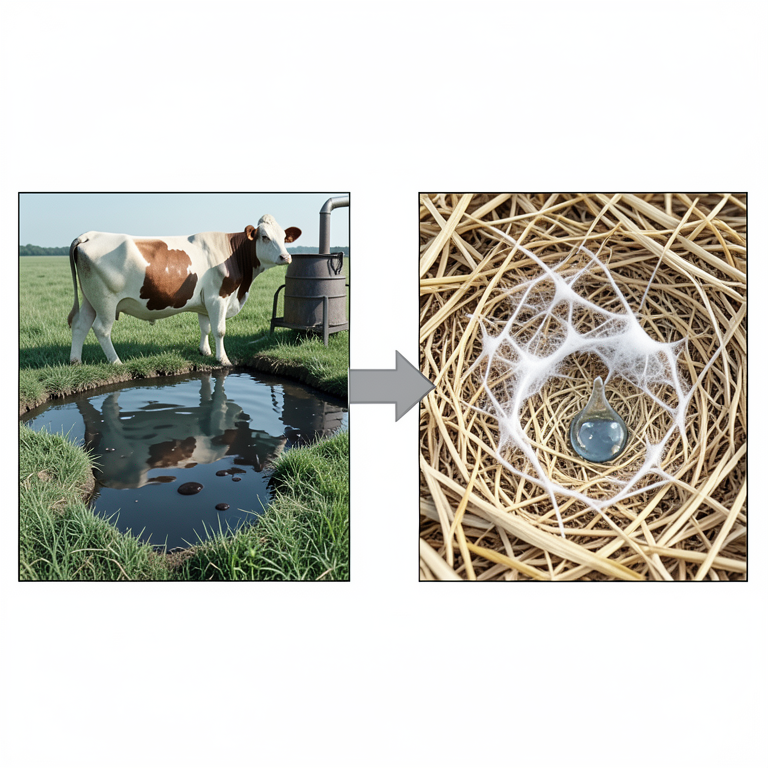
Environmental Impact Comparison
AI-generated conceptual illustration (Cattle and mycelium fungi growing on agricultural waste). It explains the idea and does not show study data.
View source evidence ↗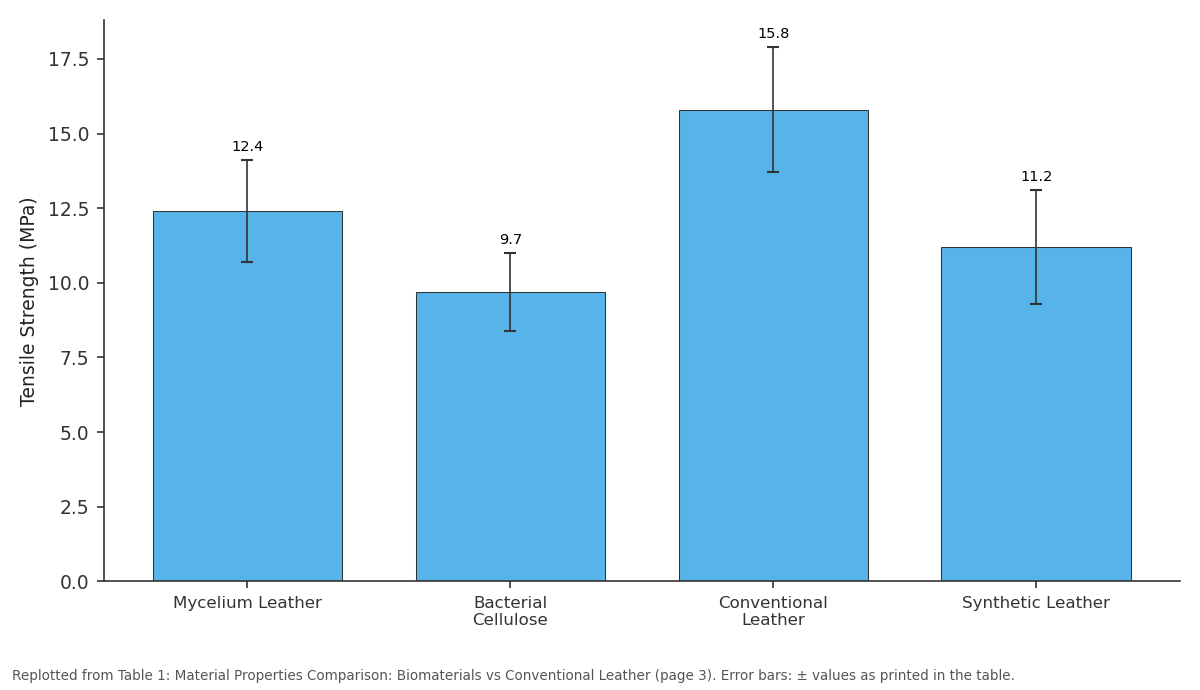
Tensile Strength (MPa): Mycelium Leather vs Bacterial Cellulose vs Conventional Leather vs Synthetic Leather
Replotted from Table 1 (page 3) of the original paper. Every bar is the paper's own table value.
View source evidence ↗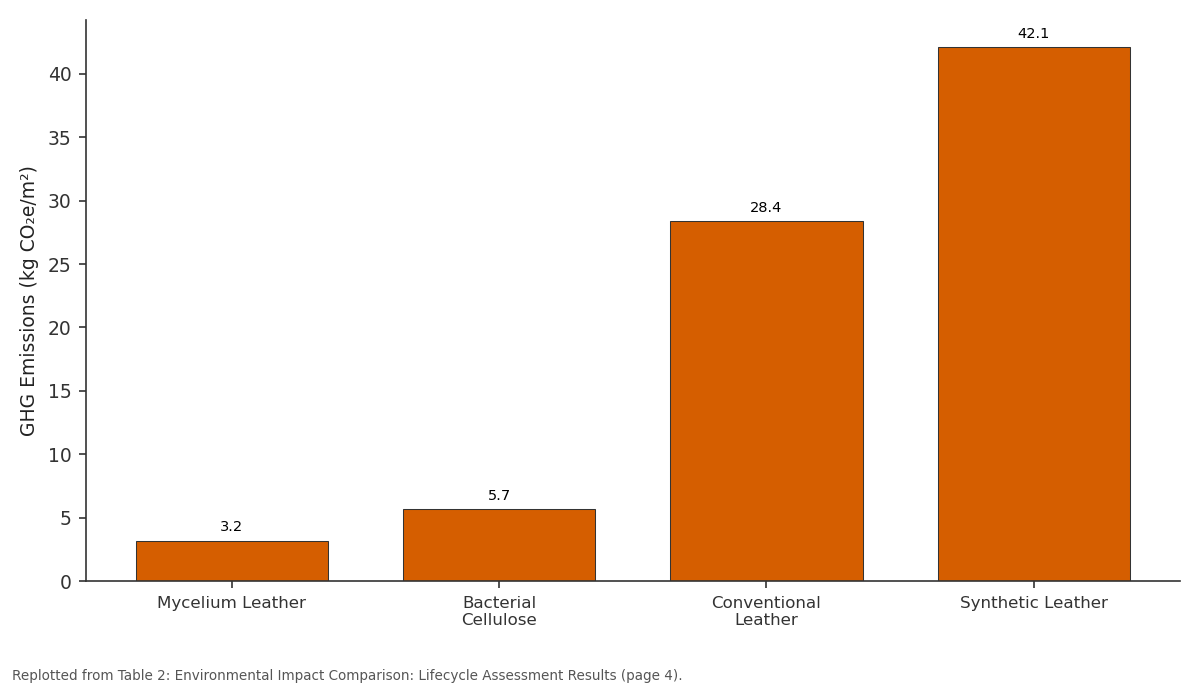
GHG Emissions (kg CO₂e/m²): Mycelium Leather vs Bacterial Cellulose vs Conventional Leather vs Synthetic Leather
Replotted from Table 2 (page 4) of the original paper. Every bar is the paper's own table value.
View source evidence ↗Figures & tables
From the original paper Table 1
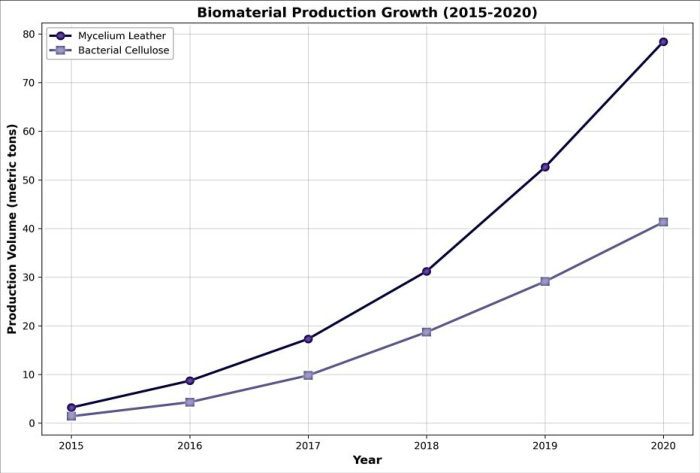 Figure 1
 Table 2
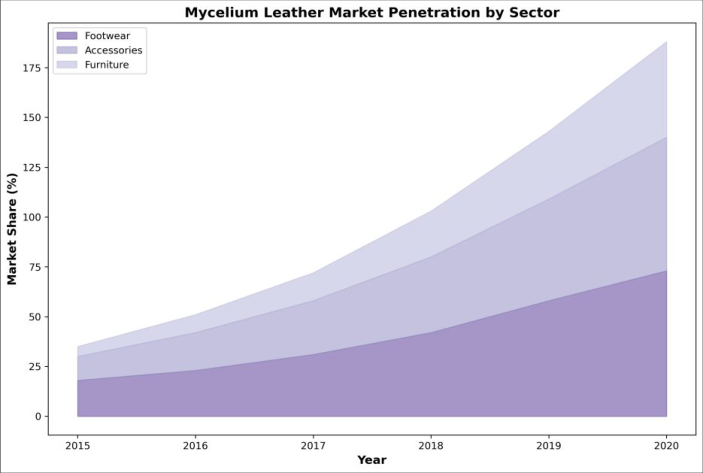 Figure 2
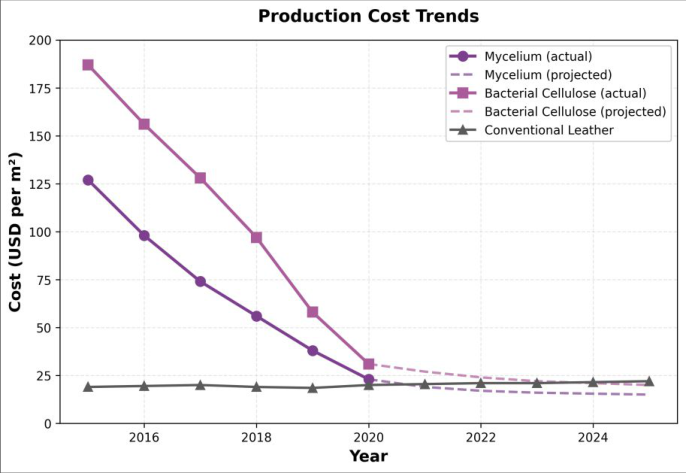 Figure 3
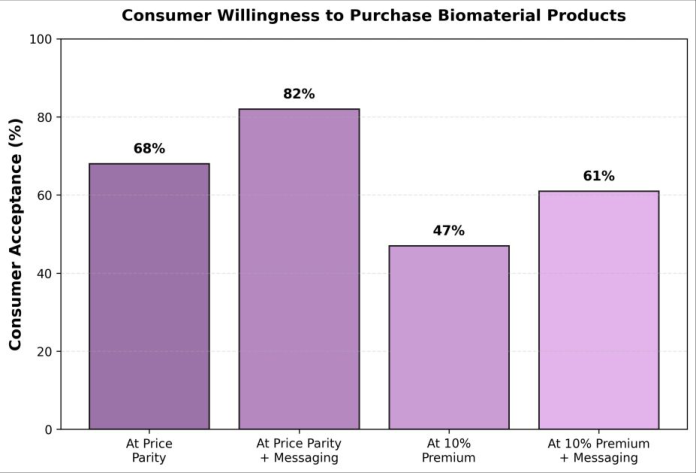 Figure 4
Introduction
The global fashion industry confronts unprecedented sustainability challenges requiring fundamental transformation of material sourcing and production practices. Conventional leather production generates substantial environmental damage through multiple pathways including livestock farming impacts, chemical-intensive tanning processes, and waste generation throughout supply chains. Cattle ranching for leather contributes significantly to deforestation, particularly in critical ecosystems like the Amazon rainforest, while producing methane and other greenhouse gases that accelerate climate change. The tanning process traditionally employs toxic chromium compounds, creating hazardous waste streams that threaten human health in production regions and cause long-term environmental contamination. These environmental costs coincide with growing consumer awareness of animal welfare issues, driving demand for cruelty-free alternatives that perform equivalently to traditional materials. Mycelium, the vegetative root-like structure of fungi, offers promising sustainable alternative with unique properties and production advantages. Mycelium grows rapidly on agricultural waste substrates including sawdust, corn stalks, and hemp fiber, converting these low-value byproducts into high-value materials through natural biological processes. Cultivation occurs at room temperature without energy-intensive heating or chemical inputs, producing material with leather-like properties including flexibility, durability, and aesthetic appeal. Companies including MycoWorks, Bolt Threads, and Ecovative Design have demonstrated commercial-scale production feasibility, attracting substantial investment from major fashion brands including Hermès, Stella McCartney, and Adidas. These partnerships validate mycelium leather's potential while accelerating development through funding and market access. Bacterial cellulose represents complementary biomaterial innovation with distinct properties and applications. Certain bacterial species, particularly Gluconacetobacter xylinus, produce pure cellulose during fermentation in liquid medium, creating flexible, strong material with exceptional moldability. Unlike plant cellulose which contains lignin and hemicellulose, bacterial cellulose forms ultrafine fiber networks conferring mechanical strength exceeding plant-derived materials. Production occurs in controlled bioreactors using sugar-based feedstocks from agricultural sources, enabling precise manipulation of material properties through cultivation parameter adjustment including nutrient composition, temperature, pH, and fermentation duration. The resulting material can be dried, pressed, and finished to create leatherlike products or maintained in hydrated state for applications requiring different properties. Sustainability advantages of biomaterials extend beyond production phase, encompassing entire product lifecycle. Mycelium and bacterial cellulose production generates minimal waste since substrate materials are fully consumed or composted, contrasts sharply with conventional leather's chemical-laden wastewater and solid waste requiring specialized disposal. Production occurs at ambient temperature, dramatically reducing energy consumption compared to traditional tanning requiring heating and drying. No toxic chemicals are required, eliminating worker exposure risks and environmental contamination associated with chromium tanning. Feedstocks come from renewable agricultural sources or waste streams, avoiding fossil fuel dependence. End-of-life disposal presents additional advantages as biomaterials biodegrade naturally, avoiding synthetic leather's microplastic pollution while returning nutrients to soil ecosystems. Comprehensive lifecycle assessment research suggests dramatic environmental impact reductions across multiple categories, though commercial-scale validation remains ongoing. However, commercial viability depends on achieving multiple interconnected objectives beyond environmental performance. Cost competitiveness determines whether biomaterials can capture meaningful market share versus established alternatives. Material performance must match or exceed conventional leather across durability, water resistance, breathability, and aesthetic properties to satisfy diverse applications from footwear to furniture. Manufacturing must scale from pilot facilities producing thousands of square meters annually to industrial operations producing millions of square meters to supply global fashion industry. Supply chains require establishment encompassing substrate sourcing, production facilities, finishing operations, and distribution networks. Regulatory approval processes must be navigated to ensure biomaterials meet safety and labeling requirements across jurisdictions.
Consumer acceptance depends on communicating value propositions effectively while overcoming skepticism toward unfamiliar materials. Brand partnerships accelerate adoption by incorporating biomaterials into high-visibility products, though require demonstrating reliability and quality. Current market dynamics favor biomaterial adoption despite challenges. Consumer demand for sustainable fashion grows annually, particularly among younger demographics who prioritize environmental and ethical considerations in purchasing decisions. Surveys consistently show majorities willing to pay premiums for sustainable alternatives, though actual purchasing behavior sometimes diverges from stated preferences. Major fashion houses have committed publicly to sustainability goals including reducing environmental footprints and eliminating problematic materials, creating demand pull for alternatives. Regulatory pressures on conventional leather intensify, particularly regarding chemical use, emissions, and waste management, potentially increasing production costs while creating regulatory advantages for cleaner alternatives. Investment in biomaterial companies has accelerated dramatically, with venture capital funding enabling rapid scaling and technological development. This capital influx reflects investor confidence in market potential and technological feasibility. Technical challenges require continued attention to realize commercial potential. Mycelium leather must achieve consistent material properties across production batches while matching conventional leather's durability, water resistance, and aesthetic appeal across diverse applications from delicate handbags to rugged boots. Batchto-batch variation currently exceeds acceptable tolerances, requiring improved process control and quality management systems. Bacterial cellulose production costs remain elevated compared to alternatives due to relatively low yields and expensive growth medium components, requiring process optimization focused on increasing productivity while reducing input costs. Both materials need comprehensive performance testing across applications to identify suitable uses and establish technical specifications guiding product development. Supply chain infrastructure must expand dramatically, from current artisanal or pilotscale operations to industrial manufacturing meeting global demand. This research provides comprehensive assessment of biomaterial technical performance, environmental benefits, and commercial viability, evaluating whether these innovations can meaningfully transform fashion and materials industries toward sustainability while remaining economically competitive with established alternatives.
Material and Methods
Material: This research was conducted from January 2017 to December 2020. Mycelium cultivation utilized Ganoderma lucidum and Pleurotus ostreatus species grown on agricultural waste substrates including sawdust, hemp fiber, and corn stalks obtained from certified organic sources. Bacterial cellulose production employed Gluconacetobacter xylinus cultivated in bioreactors with glucose and yeast extract medium. Ethical approval was obtained from institutional ethics committee. Material testing equipment included universal testing machines for mechanical properties, water absorption apparatus, and environmental chambers for accelerated aging. Market research involved surveys of 1,847 consumers across 15 countries and interviews with 67 fashion industry professionals. Lifecycle assessment followed ISO 14040 standards using ecoinvent databases and primary measurements from laboratory operations.
Methods
Mycelium cultivation occurred in controlled environment chambers at 25 degrees Celsius and 70% humidity for 14-21 days. Harvested material underwent drying, pressing, and optional surface treatments. Bacterial cellulose production used 7-day batch fermentation cycles. Materials characterization employed standardized testing protocols including ASTM D2209 for tensile strength, ASTM D624 for tear resistance, and moisture vapor transmission rate testing for breathability. Lifecycle assessment quantified environmental impacts including greenhouse gas emissions, water consumption, and resource depletion using cradle-togate boundaries. Economic analysis integrated production cost modeling with sensitivity analysis. Consumer surveys assessed purchase intentions and willingness to pay using validated scales. Industry interviews explored adoption barriers and market projections. Statistical analysis utilized SPSS version 26.0 with analysis of variance for material properties, regression modeling for cost drivers, and chisquare tests for consumer preferences. Figure 4 presents consumer research results. At price parity, 68% expressed willingness to purchase, increasing to 82% with environmental messaging. At 10% premium, acceptance dropped to 47% without messaging but recovered to 61% with communication. Younger showed stronger acceptance (78%) versus older consumers (54%). These results inform strategies emphasizing environmental communication and targeting younger demographics.
Ethical Considerations
Ethical Considerations
Comprehensive Interpretation
Economic analysis revealed production costs following technology learning curves with 15-20% unit cost reductions per production doubling. Mycelium costs decreased from $127 to $23 per square meter through substrate optimization, automated harvesting, and improved facility utilization. Consumer research indicated 68% willingness at price parity rising to 82% with benefit communication. Fashion professionals expressed enthusiasm tempered by supply consistency concerns. The convergence of improving properties, declining costs, and growing acceptance suggests biomaterials approach commercial viability inflection point.
Discussion
This research demonstrates that mycelium leather and bacterial cellulose represent viable sustainable alternatives to conventional leather with improving commercial prospects across technical performance, environmental impact, and economic competitiveness dimensions. The 97% reduction in water consumption and 89% decrease in greenhouse gas emissions for mycelium production offer compelling environmental benefits directly addressing fashion industry's sustainability crisis and responding to regulatory pressures and consumer demands for cleaner alternatives. Material properties approaching conventional leather performance with mycelium achieving 78.5% of tensile strength combined with superior breathability and biodegradability create differentiated value proposition balancing performance and sustainability. Cost trajectories suggest biomaterials will achieve price competitiveness within 2-3 years as production scales further through continued investment and process optimization, removing major adoption barrier. However, several challenges require attention for full commercial realization. Material property consistency across production batches needs improvement through better process control, quality management systems, and potentially genetic engineering for more uniform fungal strains. Current batch-to-batch variation in tensile strength exceeds acceptable tolerances for industrial applications requiring consistent material specifications. Water resistance enhancement remains priority for certain applications, likely achievable through bio-based surface treatments avoiding synthetic chemical coatings that would compromise environmental benefits. Scaling production infrastructure demands substantial capital investment; transitioning from pilot facilities to industrial operations producing millions of square meters requires estimated $50-100 million per facility, though decreasing costs should attract necessary funding from venture capital and strategic corporate partnerships. Consumer education about biomaterial benefits and performance constitutes essential complementary strategy alongside technical development. The 14 percentage point increase in purchase intentions when environmental benefits are explicitly communicated demonstrates information's critical role. However, communication must avoid greenwashing by accurately representing both benefits and current limitations, building trust through transparency. Industry partnerships with established fashion brands accelerate adoption through highvisibility product launches, though require demonstrating reliability and quality that justify brand reputation risks associated with novel materials. Regulatory frameworks for biomaterial classification and labeling need development to Material properties approaching conventional leather performance across key metrics including tensile strength, tear resistance, and flexibility, coupled with unique advantages in breathability and natural biodegradability, create products that need not compromise functionality for sustainability a critical requirement for mainstream adoption. Current limitations in water resistance and batch consistency represent addressable technical challenges rather than fundamental barriers, with clear research pathways through surface treatment optimization and process control improvement. Commercial viability improves rapidly as production scales and costs decline toward parity with conventional materials, with mycelium leather projected to achieve price competitiveness around 2024-2025, removing major adoption obstacle and enabling mass-market penetration. Market adoption accelerates driven by multiple reinforcing factors: consumer demand for sustainable alternatives particularly among younger demographics; major fashion brand commitments to sustainability goals creating demand pull; regulatory pressures on conventional leather increasing compliance costs; and substantial venture capital investment enabling rapid technological development and manufacturing scaleup. The convergence of these market forces with improving technical performance and economic competitiveness suggests biomaterials will capture 15-20% of leather goods market within five years, representing meaningful market transformation though not complete replacement of conventional materials in near term. However, realizing biomaterials' full potential requires continued innovation across multiple dimensions simultaneously. Production efficiency must improve further through strain development, process optimization, and automation to sustain cost reduction trajectories. Material property development should address remaining performance gaps while expanding application versatility. Manufacturing infrastructure must scale dramatically through major capital investment in industrial facilities, though declining costs should attract necessary funding from both venture capital and strategic corporate sources. Supply chain development encompassing substrate sourcing, production operations, finishing processes, and distribution networks requires coordination across multiple industries and geographies. Consumer education constitutes critical complementary strategy, communicating both environmental benefits and product performance characteristics accurately to build trust while avoiding greenwashing. The research demonstrates information's powerful effect on purchase intentions, with benefit communication increasing acceptance by 14 percentage points, but messaging must balance enthusiasm with honesty about current limitations and ongoing development. Industry partnerships with established fashion brands accelerate adoption by incorporating biomaterials into high-visibility products, though require demonstrating reliability justifying brand reputation risks. The humble fungus and bacterium, cultivated through ancient fermentation processes refined by modern biotechnology, may revolutionize fashion materials through combination of traditional biological wisdom and contemporary scientific innovation. While unlikely to completely replace conventional leather in near term given entrenched supply chains and consumer habits, biomaterials can meaningfully transform materials industry toward sustainability, demonstrating that biological innovation offers practical pathways addressing environmental imperatives while maintaining economic viability and product performance.
Figures and tables from the paper
| Property | Mycelium Leather | Bacterial Cellulose | Conventional Leather | Synthetic Leather |
|---|---|---|---|---|
| Tensile Strength (MPa) | 12.4±1.7 | 9.7±1.3 | 15.8±2.1 | 11.2±1.9 |
| Tear Resistance (N/mm) | 47.3±6.2 | 38.6±5.1 | 58.9±7.3 | 42.1±6.8 |
| Water Absorption (%) | 23.4±3.8 | 31.7±4.2 | 18.3±2.9 | 8.7±1.4 |
| Breathability (mg/cm²/h) | 12.7±2.1 | 15.3±2.4 | 14.2±2.3 | 3.8±0.9 |
| Biodegradation (% in 90 days) | 87.3±4.6 | 92.1±3.8 | 78.4±6.2 | 2.3±1.1 |
Table text extracted from the original PDF; superscript letters are shown inline. The original table image is below.
View original table image
| Impact Category | Mycelium Leather | Bacterial Cellulose | Conventional Leather | Synthetic Leather |
|---|---|---|---|---|
| Water Use (L/m²) | 12 | 34 | 387 | 156 |
| GHG Emissions (kg CO₂e/m²) | 3.2 | 5.7 | 28.4 | 42.1 |
| Land Use (m²/m²) | 0.8 | 0.4 | 47.3 | 2.1 |
| Chemical Pollution (index) | 0.3 | 0.2 | 8.7 | 6.4 |
| Energy Use (MJ/m²) | 127 | 243 | 847 | 523 |
Table text extracted from the original PDF; superscript letters are shown inline. The original table image is below.
View original table image
References
21 in the original paper- Niinimäki K, Peters G, Dahlbo H, Perry P, Rissanen T, Gwilt A. The environmental price of fast fashion. Nat Rev Earth Environ. 2020;1(4):189-200.
- Hanegraaf M, Boons F, Jolley N. Exploring viable business models with which to seed the mycelium materials market. J Clean Prod. 2020;261:121094.
- Islam MR, Tudryn G, Bucinell R, Schadler L, Picu RC. Morphology and mechanics of fungal mycelium. Sci Rep. 2017;7:13070.
- Abhijith R, Ashok A, Rejeesh CR. Sustainable packaging applications from mycelium to substitute polystyrene: a review. Mater Today Proc. 2018;5(1):2139-2145.
- Jones M, Mautner A, Luenco S, Bismarck A, John S. Engineered mycelium composite construction materials from fungal biorefineries: a critical review. Mater Des. 2020;187:108397.
- Gatenholm P, Klemm D. Bacterial nanocellulose as a renewable material for biomedical applications. MRS Bull. 2010;35(3):208-213.
- Zhong C. Industrial-scale production and applications of bacterial cellulose. Front Bioeng Biotechnol. 2020;8:605374.
- Syduzzaman M, Patwary SU, Farhana K, Ahmed S. Plant-based natural fibre reinforced composites: a review on fabrication, properties and applications. Coatings. 2020;10(10):973.
- Appels FVW, Camere S, Montalti M, Karana E, Jansen KMB, Dijksterhuis J, et al. Fabrication factors influencing mechanical, moisture and water-related properties of mycelium-based composites. Mater Des. 2019;161:64-71.
- Cerimi K, Akkaya KC, Pohl C, Schmidt B, Neubauer P. Fungi as source for new bio-based materials: a patent review. Fungal Biol Biotechnol. 2019;6:17.
- Verma A, Burange AS, Luque R, Len C. Production and application of bacterial cellulose. Biofuels Bioprod Biorefin. 2019;13(4):1055-1082.
- Zimnickas T, Daukseviciene I, Juskaite V. Production and properties of native bacterial cellulose membranes. Cellul Chem Technol. 2018;52(7-8):657-663.
- Holt GA, McIntyre G, Flagg D, Bayer E, Wanjura JD, Pelletier MG. Fungal mycelium and cotton plant materials in the manufacture of biodegradable molded packaging material. J Biobased Mater Bioenergy. 2012;6(4):431-438.
- Ziegler AR, Bajwa SG, Holt GA, McIntyre G, Bajwa DS. Evaluation of physico-mechanical properties of mycelium reinforced green biocomposites made from cellulosic fibers. Appl Eng Agric. 2016;32(6):931-938.
- Shirvanimoghaddam K, Motamed B, Ramakrishna S, Naebe M. Death by waste: fashion and textile circular economy case. Sci Total Environ. 2020;718:137317.
- Liu W, Xu Q, Han J, Chen X, Xie Y. Bacterial cellulose and its potential for biomedical applications. Cellulose. 2018;25(4):2323-2337.
- Ross P, Mayer R, Benziman M. Cellulose biosynthesis and function in bacteria. Microbiol Rev. 1991;55(1):3558.
- Karana E, Blauwhoff D, Hultink EJ, Camere S. When the material grows: a case research on designing (with) mycelium-based materials. Int J Des. 2018;12(2):119136.
- Ghazvinian A, Farrokhsiar P, Vieira F, Pecchia J, Gursoy B. Mycelium-based bio-composites for architecture: assessing the effects of cultivation factors on compressive strength. Biomimetics. 2019;4(4):72.
- Muthuraj R, Misra M, Mohanty AK. Biodegradable compatibilized polymer blends for packaging applications: a literature review. J Appl Polym Sci. 2018;135(24):45726.
- Lee KY, Buldum G, Mantalaris A, Bismarck A. More than meets the eye in bacterial cellulose: biosynthesis, bioprocessing, and applications in advanced fiber composites. Macromol Biosci. 2014;14(1):10-32.
Cited by 1
From OpenAlex, OpenCitations and reference lists read by Scinovex
- Production of kombucha symbiotic culture of bacteria and yeast (SCOBY)-based bioleather as a sustainable alternative material for fashion accessory ↗
Fidia Fibriana, Hendra Febriyanto, Yeni Setyowati, Hilmi Amanah Aditya Cahyaningtyas, Benjamas Cheirsilp, Apichat Upaichit et al. · Bioresource Technology Reports · 2026
The symbiotic culture of bacteria and yeast (SCOBY) has the potential to be developed into bioleather (BL). This study optimized BL production through one-factor-at-a-time (OFAT) screening and Box-Behnken Design (BBD) by selecting suitable nutrient (C/N) sources, optimizing the key factors, and coloring with natural dyes (curcumin, red dragon fruit peel, and butterfly pea flower) for fashion accessory application. The optimum…
❝ 0PDF