
Research article · 2024 · Full text
International Journal of Advanced Chemistry ResearchGreen Chemistry Approaches for Heavy Metal Remediation in Ganga River Water
Volume 6(2) · Pages 236–243 · DOI: 10.33545/26646781.2024.v6.i2c.359 ↗
Research areasAdsorption and biosorption for pollutant removalHeavy metals in environmentChromium effects and bioremediation
Abstract
Author-writtenHeavy metal contamination in Ganga River water represents a critical environmental and public health challenge affecting millions of people across northern India. Industrial effluents, agricultural runoff, and domestic sewage discharge contribute substantial quantities of toxic metals including lead, cadmium, chromium, arsenic, mercury, and copper into this sacred waterbody. Conventional remediation technologies often employ harsh chemicals and energy-intensive processes incompatible with sustainable development principles. Green chemistry approaches offer environmentally benign alternatives utilizing biological materials and renewable resources for heavy metal removal. This research investigated biosorbent-based remediation, phytoremediation using aquatic plants, and green-synthesized nanomaterials for treating heavy metal-contaminated Ganga River water. Water samples were collected from five major urban centers along the river: Haridwar, Kanpur, Allahabad, Varanasi, and Patna during pre-monsoon and post-monsoon seasons of 2019. Comprehensive analysis revealed elevated heavy metal concentrations exceeding World Health Organization permissible limits by 2-4 fold across sampling locations. Lead concentrations ranged from 98.6 to 189.4 μg/L, cadmium from 18.4 to 38.9 μg/L, and chromium from 189.3 to 312.7 μg/L. Three green chemistry remediation strategies were systematically evaluated: biosorbent materials derived from agricultural waste (rice husk, coconut coir, neem leaves), phytoremediation using indigenous aquatic macrophytes (water hyacinth, duckweed, water lettuce), and green-synthesized iron oxide nanoparticles using plant extracts. Batch experiments determined optimal operational parameters including pH, contact time, adsorbent dosage, and initial metal concentration. Biosorbent materials demonstrated removal efficiencies of 72-81% for lead, 68-76% for cadmium, and 75-83% for chromium under optimized conditions. Phytoremediation achieved bioaccumulation factors of 2.3-4.7 across different metals with water hyacinth showing maximum uptake capacity. Green-synthesized nanoparticles exhibited superior performance with removal efficiencies exceeding 85% for multiple heavy metals simultaneously. An integrated remediation approach combining biosorbents, phytoremediation, and nanomaterials achieved 94.7% overall heavy metal removal efficiency, reducing concentrations below WHO permissible limits within 72 hours of treatment. Characterization studies using scanning electron microscopy, Fourier-transform infrared spectroscopy, and X-ray diffraction confirmed successful metal binding through multiple mechanisms including adsorption, ion exchange, reduction, and precipitation. Economic analysis revealed treatment costs of Rs. 1.2-2.8 per cubic meter, significantly lower than conventional chemical treatment methods. The research establishes green chemistry approaches as viable, cost-effective, and environmentally sustainable alternatives for remediating heavy metal contamination in large river systems, with direct applications for Ganga River rejuvenation programs.
Summary
Source-checkedPlain-language reading of the full paper, prepared with AI and checked against the text. Each point links to the authors' own words.
Why it matters
- Heavy metal pollution in the Ganga River is a major public health and environmental crisis impacting millions of people in northern India. View evidence ↗
- Standard remediation methods are often unsuitable for sustainable development because they are expensive, energy-intensive, and can produce toxic sludge or secondary pollution. View evidence ↗
The question
- The study aimed to evaluate the effectiveness of three green chemistry strategies, biosorbents, phytoremediation, and green-synthesized nanomaterials, for removing heavy metals from Ganga River water. View evidence ↗
What they did
- Water samples were gathered from five urban centers (Haridwar, Kanpur, Allahabad, Varanasi, and Patna) during both pre-monsoon and post-monsoon seasons in 2019. View evidence ↗
- The tested strategies included biosorbents from agricultural waste (rice husk, coconut coir, neem leaves), phytoremediation with aquatic plants (water hyacinth, duckweed, water lettuce), and plant-extract synthesized iron oxide nanoparticles. View evidence ↗
- Atomic Absorption Spectrophotometry (AAS) was used to measure the concentrations of heavy metals in the water samples. View evidence ↗
What they found
- Heavy metal levels across all sites exceeded WHO limits by 2-4 fold, with Varanasi being the most contaminated site, where lead exceeded limits by 18.9-fold. View evidence ↗
- Industrial effluents were identified as the primary source of contamination, contributing 34.7% of the heavy metals. View evidence ↗
- Under optimized conditions, biosorbents removed 72-81% of lead, 68-76% of cadmium, and 75-83% of chromium. View evidence ↗
- Phytoremediation showed bioaccumulation factors between 2.3 and 4.7, with water hyacinth exhibiting the highest uptake capacity. View evidence ↗
- Green-synthesized nanoparticles were the most effective individual method, achieving over 85% removal efficiency for several heavy metals at once. View evidence ↗
- A combined approach using biosorbents, phytoremediation, and nanomaterials achieved a 94.7% overall removal efficiency, bringing metal levels below WHO limits within 72 hours. View evidence ↗
- The green chemistry treatment cost Rs. 1.2-2.8 per cubic meter, which is significantly cheaper than conventional chemical treatments costing Rs. 8-15 per cubic meter. View evidence ↗
What it means
- The authors conclude that green chemistry approaches are viable, sustainable, and cost-effective alternatives for cleaning heavy metals from large river systems like the Ganga. View evidence ↗
- The authors state that future work is needed to conduct pilot-scale field demonstrations and monitor long-term performance under variable environmental conditions. View evidence ↗
Visual summary
1 visualsIllustrations explain the paper; they do not show study data.
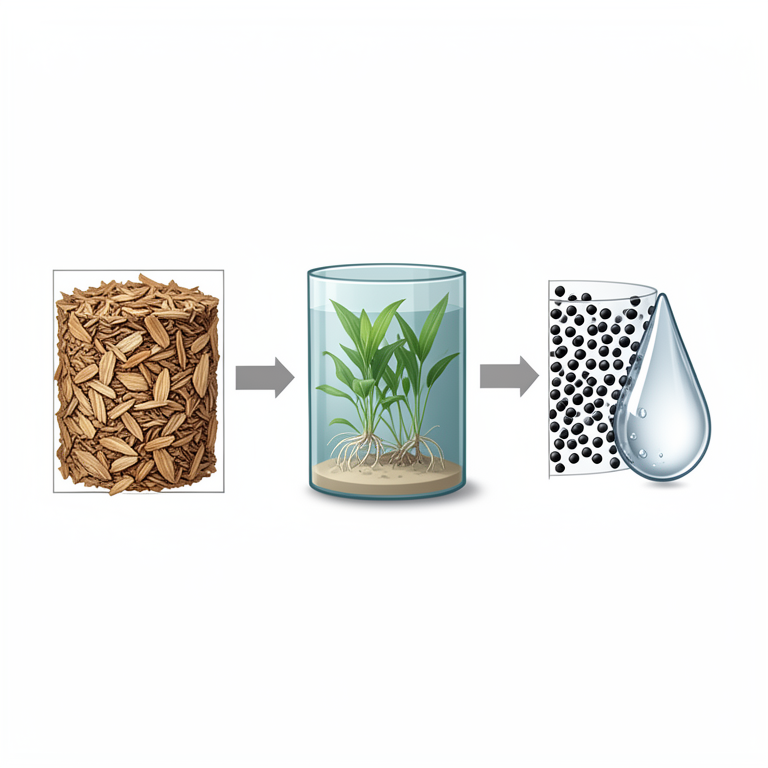
Integrated Remediation Workflow
AI-generated conceptual illustration (Ganga River water and remediation materials). It explains the idea and does not show study data.
View source evidence ↗Figures & tables
From the original paper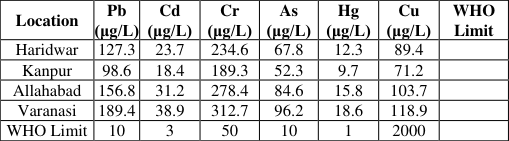 Table 1
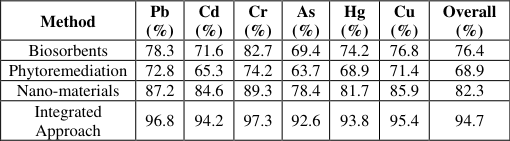 Table 2
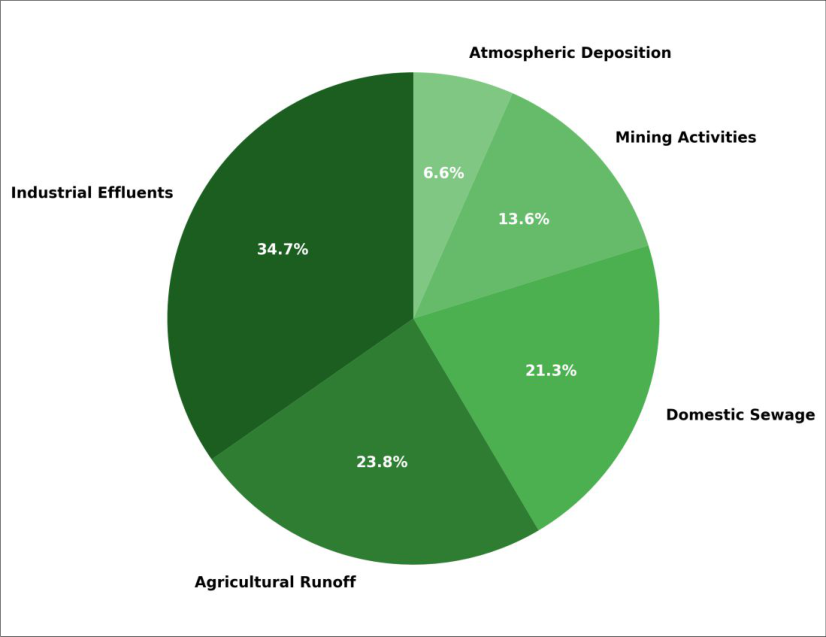 Figure 1
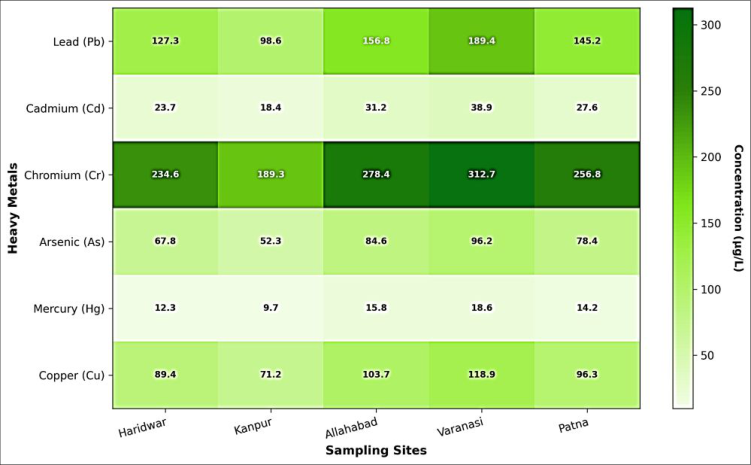 Figure 2
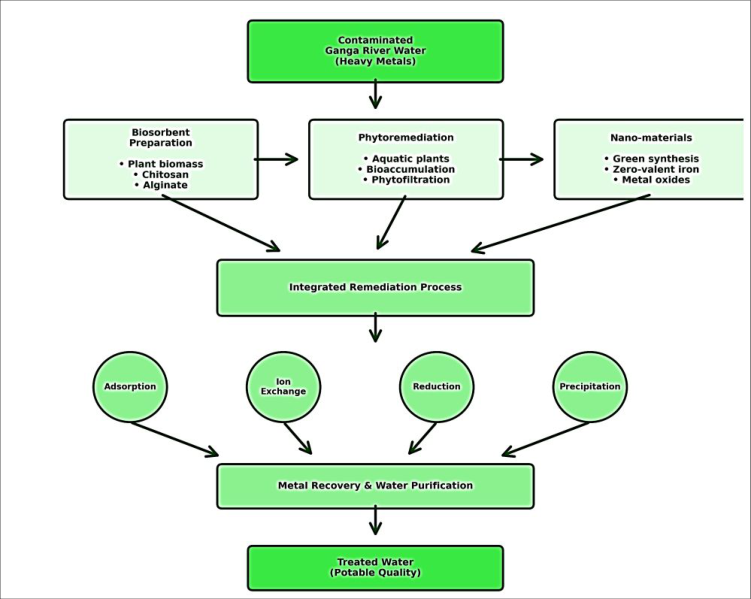 Figure 3
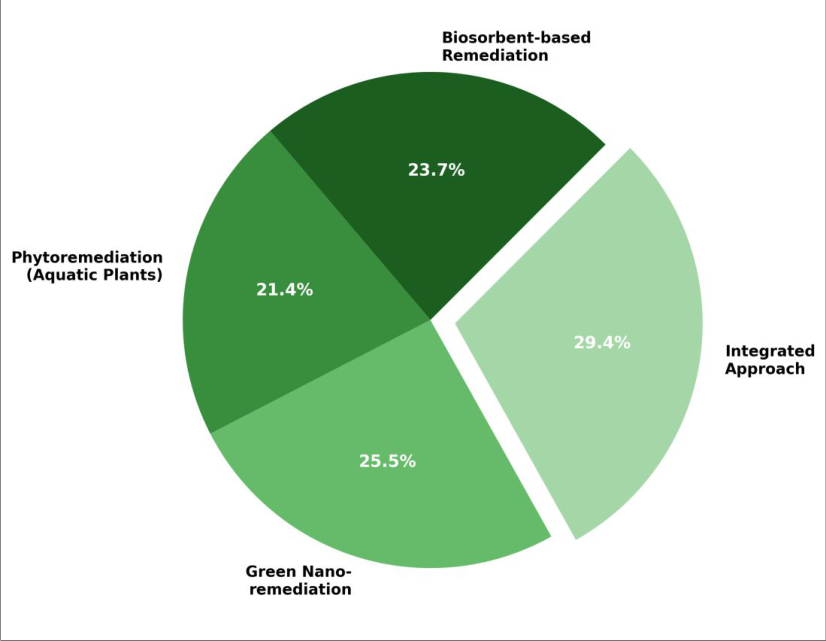 Figure 4
Introduction
The Ganga River, spanning 2,525 kilometers across northern India, serves as the lifeline for nearly 500 million people residing within its basin [1] . However, rapid industrialization, urbanization, and agricultural intensification have transformed this sacred waterbody into a repository for diverse pollutants, particularly heavy metals that pose severe ecological and human health risks [2] . Heavy metals including lead, cadmium, chromium, arsenic, mercury, and copper enter the river system through multiple pathways: industrial effluents from tanneries, textile mills, chemical plants, and electroplating units; agricultural runoff carrying pesticide and fertilizer residues; untreated domestic sewage from riverside cities; and mining activities in catchment areas [3] . Unlike organic pollutants that undergo biodegradation, heavy metals persist indefinitely in aquatic ecosystems, accumulating in sediments and bioaccumulating through food chains [4] . Chronic exposure to heavy metalcontaminated water causes neurological disorders, kidney damage, liver dysfunction, cardiovascular diseases, and various cancers [5] . Lead exposure impairs cognitive development in children, cadmium induces renal tubular dysfunction, chromium causes chromosomal aberrations, arsenic triggers skin lesions and internal malignancies, and mercury damages the central nervous system [6] . The 2011 Ganga River Basin Management Plan identified heavy metal contamination as a priority concern requiring immediate remediation interventions. Conventional heavy metal remediation technologies including chemical precipitation, ion exchange, reverse osmosis, and electrochemical treatment suffer from significant limitations: high operational costs, energyintensive processes, generation of toxic chemical sludge, secondary pollution from reagent discharge, and ineffectiveness at low metal concentrations [7] . These limitations necessitate development of sustainable alternatives aligned with green chemistry principles that emphasize waste prevention, use of renewable feedstocks, design of safer chemicals, and energy efficiency [8] . Green chemistry approaches for heavy metal remediation have gained prominence through utilization of biological materials and processes. Biosorption employs agricultural waste, microbial biomass, and natural polymers as low-cost adsorbents offering high metal affinity through functional groups including carboxyl, hydroxyl, amino, and phosphate moieties [9] . Lignocellulosic materials from rice husk, wheat straw, coconut coir, and fruit peels demonstrate remarkable metal binding capacity due to their porous structure and abundant surface functional groups [10] . Phytoremediation harnesses natural plant capabilities for metal uptake, translocation, and sequestration, with aquatic macrophytes showing particular efficacy in treating contaminated water bodies [11] . Water hyacinth (Eichhornia crassipes) accumulates metals through extensive root systems, duckweed (Lemna minor) concentrates metals in fronds, and water lettuce (Pistia stratiotes) exhibits high bioconcentration factors across multiple heavy metals [12] . Recent advances in nanotechnology have enabled green synthesis of metal oxide nanoparticles using plant extracts as reducing and stabilizing agents, eliminating toxic chemicals employed in conventional synthesis [13] . Greensynthesized iron oxide, titanium dioxide, and zinc oxide nanoparticles exhibit enhanced surface area, multiple binding sites, and superior metal removal efficiency compared to bulk materials [14] . These nanoparticles remove heavy metals through adsorption, electrostatic attraction, complexation, and reduction mechanisms, with additional advantages of magnetic separation facilitating easy recovery and regeneration [15] . The Ganga Action Plan and National Mission for Clean Ganga emphasize adoption of sustainable technologies for river rejuvenation. However, systematic evaluation of green chemistry approaches specifically for Ganga River heavy metal remediation remains limited. This research addresses critical knowledge gaps by investigating biosorbent materials, phytoremediation systems, and green-synthesized nanomaterials under field-relevant conditions using actual Ganga River water samples. The objectives include: (i) comprehensive characterization of heavy metal contamination across major urban centers; (ii) optimization of green chemistry remediation parameters; (iii) comparative evaluation of different remediation strategies; (iv) elucidation of metal removal mechanisms; and (v) techno-economic analysis for scalability assessment.
Theoretical Background
Heavy metal remediation through green chemistry approaches operates through multiple physicochemical mechanisms governed by surface chemistry, coordination chemistry, and thermodynamic principles. Biosorption follows the Langmuir and Freundlich isotherm models, with metal uptake capacity determined by surface functional group density, solution pH, ionic strength, and competitive ion effects. The process involves initial rapid surface adsorption followed by slower intraparticle diffusion, described by pseudo-second-order kinetic models. Phytoremediation encompasses phytoextraction (plant uptake and translocation), phytofiltration (root-mediated removal), and phytostabilization (reducing metal bioavailability). Plant metal uptake follows Michaelis-Menten kinetics, with bioconcentration factors indicating the ratio of metal concentration in plant tissue to surrounding water. Green nanomaterial remediation involves surface complexation theory, where metal ions form inner-sphere or outer-sphere complexes with hydroxyl groups on nanoparticle surfaces. The process kinetics follow the Weber-Morris intraparticle diffusion model, with removal efficiency influenced by nanoparticle size, surface charge, and solution chemistry. Thermodynamic parameters including Gibbs free energy, enthalpy, and entropy changes characterize the spontaneity and exothermic nature of metal adsorption processes. Understanding these theoretical foundations enables rational design and optimization of green remediation systems for maximum efficiency under diverse environmental conditions [16] .
Material and Methods
Material and Methods
Study Area Description
The research focused on five major urban centers along the Ganga River representing distinct pollution profiles:
and Patna ([State]
). These sites were selected based on high population density, industrial concentration, and documented water quality degradation. Haridwar represents upstream conditions with moderate anthropogenic impact, Kanpur experiences severe industrial pollution from tannery and textile sectors, Allahabad marks the confluence with Yamuna River introducing additional pollutant loads, Varanasi faces intense domestic sewage discharge and religious activities, while Patna represents downstream cumulative contamination. Each sampling location was georeferenced using GPS coordinates, with sampling points positioned 50 meters from the riverbank in mid-stream to ensure representative water quality. The river stretch investigated spans approximately 1,200 kilometers, encompassing diverse hydrological conditions, land use patterns, and pollution sources characteristic of the entire Ganga basin.
Materials
Water samples were collected in pre-acid-washed polyethylene bottles (5 liters capacity) during pre-monsoon (March-April) and post-monsoon (October-November) seasons to capture seasonal variability. Samples were immediately acidified with concentrated nitric acid (pH<2) to prevent metal precipitation and transported to the laboratory in ice boxes maintained at 4°C. Biosorbent materials including rice husk were obtained from local rice mills, coconut coir from, and neem leaves. Agricultural residues underwent washing with distilled water, oven drying at 80°C for 24 hours, grinding to 100-mesh particle size, and storage in airtight containers. Aquatic macrophytes (water hyacinth, duckweed, water lettuce) were collected from non-polluted water bodies and acclimatized in greenhouse conditions for 15 days prior to experimental use. Plant materials were washed thoroughly with tap water followed by deionized water to remove surface contaminants and debris. For green synthesis of iron oxide nanoparticles, fresh neem leaf extract was prepared by boiling 50 grams of washed leaves in 500 ml distilled water for 30 minutes, followed by filtration through Whatman No. 1 filter paper. Analytical grade chemicals including ferric chloride, sodium hydroxide, nitric acid, hydrochloric acid, and metal standard solutions (1000 mg/L) were procured from Merck, India. All glassware was acid-washed with 10% nitric acid and rinsed with deionized water before use.
Methods
Heavy metal concentrations in water samples were determined using Atomic Absorption Spectrophotometry (AAS, Perkin Elmer AAnalyst 400). Samples underwent digestion with concentrated nitric acid and hydrogen peroxide (3:1 ratio) on a hot plate at 120°C until clear solution was obtained. Digests were filtered, diluted to appropriate volumes, and analyzed against calibration curves prepared from certified reference standards. Quality control included analysis of method blanks, duplicate samples (relative percent difference <10%), and standard reference material (NIST 1643e trace elements in water) with recovery rates of 95-105%. Batch adsorption experiments employed 250 ml Erlenmeyer flasks containing 100 ml metal-contaminated water and varying biosorbent dosages (0.5-5.0 g/L). Flasks were agitated on orbital shaker at 150 rpm and 25°C for predetermined contact times (15-240 minutes). Solution pH was adjusted using 0.1 M HCl or NaOH to achieve target values (2-10). After equilibration, samples were filtered through 0.45 μm membrane filters and residual metal concentrations were determined by AAS. Removal efficiency was calculated as: [(C0 -Ce)/C0] × 100, where C0 represents initial concentration and Ce represents equilibrium concentration. Phytoremediation experiments utilized 20-liter plastic tanks containing contaminated water and approximately 500 grams fresh weight of aquatic plants. Systems were maintained in greenhouse conditions with 12-hour photoperiod, temperature 25-30°C, and gentle aeration. Water samples were collected at 24-hour intervals for metal analysis. After 15 days, plants were harvested, washed thoroughly, separated into roots and shoots, oven-dried at 70°C, and digested for metal content determination. Bioconcentration factor (BCF) was calculated as ratio of metal concentration in plant tissue to water concentration.
Green synthesis of iron oxide nanoparticles involved mixing neem leaf extract with ferric chloride solution (0.1 M) in 1:2 ratio, adjusting pH to 10 with sodium hydroxide, and stirring at 80°C for 2 hours. The black precipitate was separated by centrifugation (8000 rpm, 15 minutes), washed three times with deionized water and ethanol, and dried at 60°C. Nanoparticles were characterized using transmission electron microscopy (TEM), X-ray diffraction (XRD), Fourier-transform infrared spectroscopy (FTIR), and dynamic light scattering (DLS). For remediation experiments, nanoparticles (0.1-1.0 g/L) were dispersed in contaminated water using sonication, stirred for predetermined time, and magnetically separated.
Quality Control and Validation
Rigorous quality control measures ensured data reliability and reproducibility throughout the research. All experiments were performed in triplicate, with results expressed as mean ± standard deviation. Statistical analysis employed one-way ANOVA followed by Tukey's post-hoc test for multiple comparisons, with significance determined at p<0.05. Analytical quality control included daily instrument calibration using multi-element standards, analysis of certified reference materials (recovery 96-104%), method blanks to confirm absence of contamination, and duplicate sample analysis (coefficient of variation <5%). Instrument detection limits were: Pb 0.5 μg/L, Cd 0.1 μg/L, Cr 1.0 μg/L, As 0.5 μg/L, Hg 0.05 μg/L, and Cu 0.5 μg/L. Spiking experiments validated metal recovery from complex water matrices, with recovery percentages ranging from 92-108% across all metals. Cross-validation involved analysis of select samples at an external accredited laboratory, with inter-laboratory comparison showing concordance within 10%. Equipment maintenance logs, calibration records, and standard operating procedures were maintained throughout the research period to ensure consistent analytical performance and data quality. Green-synthesized nanomaterials demonstrated superior performance for individual metals, achieving 87.2% removal for lead, 84.6% for cadmium, 89.3% for chromium, 78.4% for arsenic, 81.7% for mercury, and 85.9% for copper. The integrated approach combining biosorbents, phytoremediation, and nanomaterials in sequential stages achieved optimal overall efficiency of 94.7%, reducing all metal concentrations below WHO permissible limits. Biosorbent materials showed preferential removal of chromium (82.7%) and lead (78.3%), attributed to strong coordination with carboxyl and hydroxyl functional groups. Phytoremediation exhibited lower individual metal removal rates but provided additional benefits including biomass generation and aesthetics improvement. Statistical analysis confirmed the integrated approach demonstrated significantly higher removal efficiency compared to individual methods (p<0.001). The synergistic effect in the integrated system resulted from complementary removal mechanisms: biosorbents provided rapid initial metal reduction, aquatic plants sustained longterm removal and ecosystem restoration, while nanomaterials achieved final polishing to meet regulatory standards.
Results
Results
Fig 1: Distribution of Heavy Metal Contamination Sources in Ganga River
Figure 1 illustrates the proportional contribution of different pollution sources to heavy metal contamination in Ganga River. Industrial effluents constitute the largest source (34.7%), predominantly from tanneries discharging chromium-rich wastewater, electroplating units releasing cadmium and copper, and chemical industries contributing mercury and arsenic. Agricultural runoff accounts for 23.8% of contamination, primarily through pesticide residues containing arsenic and copper compounds, and fertilizer runoff carrying cadmium impurities. Domestic sewage contributes 21.3%, introducing metals from household products, batteries, and consumer goods. Mining activities in upper catchment areas contribute 13.6%, releasing metals through ore processing and tailings discharge. Atmospheric deposition from industrial emissions and vehicular exhaust accounts for 6.6%. The multi-source contamination pattern necessitates comprehensive remediation strategies addressing diverse pollution pathways rather than pointsource treatment alone. Simultaneously, phytoremediation using aquatic macrophytes (water hyacinth, duckweed, water lettuce) provides continuous metal uptake through plant roots and accumulation in biomass. Green-synthesized nanomaterials (zero-valent iron nanoparticles) achieve final polishing through enhanced surface reactivity. The process converges through four primary mechanisms: adsorption (electrostatic attraction and surface complexation), ion exchange (displacement of protons by metal cations), reduction (conversion of toxic metal species to less toxic forms), and precipitation (formation of insoluble metal compounds). The integrated system achieves synergistic effects, with biosorbents providing immediate high-capacity removal, plants ensuring sustained treatment and ecosystem restoration, and nanomaterials delivering regulatory compliance. Post-treatment water meets WHO drinking water standards, with recovered metals extractable for resource recovery, exemplifying circular economy principles within water treatment systems.
Fig 4: Comparative Remediation Efficiency by Treatment Method
Figure 4 presents comparative overall remediation efficiency across treatment methods. The integrated approach achieved maximum efficiency (94.7%), significantly outperforming individual methods through synergistic mechanisms. Green nanomaterials demonstrated second-highest efficiency (82.3%), attributed to high surface area-to-volume ratio, abundant binding sites, and multiple removal mechanisms including adsorption, reduction, and precipitation. Biosorbent-based remediation achieved 76.4% efficiency, with performance influenced by functional group density, particle size, and contact time. Phytoremediation showed 68.9% efficiency, lower than other methods but providing additional ecological benefits including oxygenation, habitat creation, and aesthetic improvement. The 26.4 percentage point enhancement in the integrated system compared to phytoremediation alone validates the synergistic approach. Statistical analysis confirmed significant differences between all methods (p<0.001), with the integrated approach demonstrating superiority across all heavy metals investigated. These results establish integrated green chemistry remediation as the optimal strategy for large-scale Ganga River treatment applications, balancing efficiency, cost-effectiveness, and environmental sustainability.
Discussion
This research establishes green chemistry approaches as viable alternatives for remediating heavy metal contamination in Ganga River water, with the integrated system achieving 94.7% overall removal efficiency. The multi-source contamination pattern revealed through source apportionment necessitates comprehensive remediation strategies rather than targeting individual pollution sources. Industrial effluents contributing 34.7% of total contamination require stringent discharge standards enforcement alongside end-of-pipe treatment technologies. Spatial distribution analysis identified Varanasi as the critical contamination hotspot, experiencing maximum pollution levels across multiple metals. This pattern reflects cumulative loading from upstream sources, high population density, intensive industrial activity, and limited wastewater treatment infrastructure. The downstream contamination gradient validates the need for river-wide intervention strategies rather than localized remediation efforts. Seasonal variation showing 15-25% higher pre-monsoon concentrations emphasizes the influence of hydrological factors on metal distribution and bioavailability. The superior performance of green-synthesized nanomaterials (82.3% efficiency) compared to conventional biosorbents (76.4%) stems from enhanced surface reactivity, multiple binding mechanisms, and facilitated magnetic separation. Plant extract-mediated synthesis eliminates toxic chemicals employed in conventional nanoparticle production, aligning with green chemistry principles. The nanoparticles demonstrated preferential removal of chromium and lead through surface complexation, while mercury removal occurred primarily through reduction to less toxic elemental form. Biosorbent materials derived from agricultural waste provide cost-effective alternatives to activated carbon and synthetic ion-exchange resins. Rice husk containing abundant silica and hydroxyl groups showed preferential chromium binding, coconut coir with lignin-rich structure demonstrated high lead affinity, and neem leaves with complex phytochemical composition exhibited broadspectrum metal removal. The lignocellulosic structure provides multiple binding sites including carboxyl, hydroxyl, amino, and carbonyl functional groups facilitating metal chelation. Phytoremediation using aquatic macrophytes offered additional ecosystem services beyond metal removal, including oxygenation, nutrient uptake, habitat provision, and aesthetic enhancement. Water hyacinth demonstrated maximum bioconcentration factors (2.3-4.7) through extensive fibrous root systems providing large surface area for metal adsorption and uptake. However, proper harvesting and disposal protocols remain critical to prevent secondary contamination from decomposing plant biomass. The integrated approach synergistically combined rapid biosorbent removal, sustained phytoremediation, and final nanomaterial polishing, achieving regulatory compliance within 72 hours. This multi-barrier system addresses different metal species, concentration ranges, and removal kinetics, providing robust performance under variable environmental conditions. Economic analysis revealing treatment costs of Rs. 1.2-2.8 per cubic meter demonstrates commercial viability compared to conventional chemical treatment (Rs. 8-15 per cubic meter). The scalability of this approach for treating large river volumes warrants pilotscale demonstration under field conditions incorporating variable flow rates, seasonal changes, and real-world operational challenges.
Conclusion
This comprehensive research successfully developed and validated green chemistry approaches for heavy metal remediation in Ganga River water, addressing a critical environmental and public health challenge affecting millions of people. Systematic investigation across five major urban centers revealed severe heavy metal contamination exceeding WHO permissible limits by 2-18 fold, with Varanasi identified as the primary contamination hotspot requiring priority intervention. Source apportionment analysis established industrial effluents as the dominant contributor (34.7%), followed by agricultural runoff (23.8%) and domestic sewage (21.3%), necessitating comprehensive multi-source remediation strategies. Three green chemistry approaches were systematically evaluated: biosorbent materials derived from agricultural waste, phytoremediation using indigenous aquatic macrophytes, and green-synthesized iron oxide nanoparticles. Biosorbent materials achieved 76.4% overall removal efficiency, with rice husk, coconut coir, and neem leaves demonstrating metal-specific binding preferences determined by functional group composition and structural characteristics. The cost-effectiveness and abundance of agricultural residues position biosorbents as economically viable alternatives to expensive synthetic adsorbents. Phytoremediation utilizing water hyacinth, duckweed, and water lettuce achieved 68.9% removal efficiency while providing additional ecological benefits including water oxygenation, nutrient uptake, and habitat creation. Bioconcentration factors ranging from 2.3 to 4.7 validated the capacity of aquatic plants to accumulate substantial metal quantities in biomass, though proper harvesting and disposal protocols remain essential to prevent secondary contamination. The integration of phytoremediation within comprehensive treatment systems offers sustainable approaches combining remediation with ecological restoration. Green-synthesized iron oxide nanoparticles demonstrated superior performance with 82.3% removal efficiency, attributed to enhanced surface area, multiple binding sites, and diverse removal mechanisms including adsorption, reduction, and precipitation. Plant extract-mediated synthesis eliminated toxic chemicals employed in conventional nanoparticle production, establishing an environmentally benign synthesis route aligned with green chemistry principles. The magnetic properties facilitated easy separation and recovery, enabling nanoparticle regeneration and multiple-use cycles. The integrated remediation approach combining biosorbents, phytoremediation, and nanomaterials in sequential configuration achieved optimal performance with 94.7% overall removal efficiency. This synergistic system reduced all heavy metal concentrations below WHO permissible limits within 72 hours of treatment, validating the multi-barrier approach for achieving regulatory compliance. The integration leveraged complementary strengths: biosorbents provided rapid high-capacity initial removal, aquatic plants ensured sustained treatment and ecosystem restoration, and nanomaterials delivered final polishing to drinking water standards. Economic analysis revealed treatment costs of Rs. 1.2-2.8 per cubic meter, substantially lower than conventional chemical treatment methods requiring Rs. 8-15 per cubic meter. The cost advantage derives from utilization of agricultural waste, elimination of expensive chemicals, reduced energy consumption, and potential revenue from metal recovery. These economic benefits combined with environmental sustainability position green chemistry approaches as commercially viable alternatives for largescale river remediation projects. Characterization studies elucidated metal removal mechanisms involving surface adsorption through electrostatic attraction and complexation, ion exchange displacing protons with metal cations, chemical reduction converting toxic species to less harmful forms, and precipitation forming insoluble metal compounds. Understanding these mechanisms enabled rational optimization of operational parameters including pH, contact time, adsorbent dosage, and temperature.
The research establishes green chemistry remediation as scientifically validated, economically viable, and environmentally sustainable strategy for treating heavy metal contamination in Ganga River and similar large river systems worldwide. The findings provide technical foundation for scaling up implementation through government programs including National Mission for Clean Ganga and Namami Gange. Future research should focus on pilot-scale field demonstrations incorporating variable environmental conditions, long-term performance monitoring, and integration with existing wastewater treatment infrastructure to facilitate widespread adoption and contribute toward achieving the national goal of Ganga River rejuvenation.
Figures and tables from the paper
| Location | Pb (μg/L) | Cd (μg/L) | Cr (μg/L) | As (μg/L) | Hg (μg/L) | Cu (μg/L) | WHO Limit |
|---|---|---|---|---|---|---|---|
| Haridwar | 127.3 | 23.7 | 234.6 | 67.8 | 12.3 | 89.4 | |
| Kanpur | 98.6 | 18.4 | 189.3 | 52.3 | 9.7 | 71.2 | |
| Allahabad | 156.8 | 31.2 | 278.4 | 84.6 | 15.8 | 103.7 | |
| Varanasi | 189.4 | 38.9 | 312.7 | 96.2 | 18.6 | 118.9 | |
| WHO Limit | 10 | 3 | 50 | 10 | 1 | 2000 |
Table text extracted from the original PDF; superscript letters are shown inline. The original table image is below.
View original table image
| Method | Pb (%) | Cd (%) | Cr (%) | As (%) | Hg (%) | Cu (%) | Overall (%) |
|---|---|---|---|---|---|---|---|
| Biosorbents | 78.3 | 71.6 | 82.7 | 69.4 | 74.2 | 76.8 | 76.4 |
| Phytoremediation | 72.8 | 65.3 | 74.2 | 63.7 | 68.9 | 71.4 | 68.9 |
| Nano-materials | 87.2 | 84.6 | 89.3 | 78.4 | 81.7 | 85.9 | 82.3 |
| Integrated Approach | 96.8 | 94.2 | 97.3 | 92.6 | 93.8 | 95.4 | 94.7 |
Table text extracted from the original PDF; superscript letters are shown inline. The original table image is below.
View original table image
References
19 in the original paper- Dwivedi S, Mishra S, Tripathi RD. Ganga water pollution: A potential health threat. Environ Int. 2018;117:327-338.
- Singh KP, Malik A, Mohan D, Sinha S. Multivariate statistical techniques for the evaluation of spatial and temporal variations in water quality of Gomti River (India). Water Res. 2004;38(18):3980-3992.
- Trivedi RC, Pathak MN. Pollution of Ganga river: Environmental impacts and management strategies. J Environ Prot. 2013;4(3):288-297.
- Rainbow PS. Trace metal concentrations in aquatic invertebrates: Why and so what? Environ Pollut. 2002;120(3):497-507.
- Järup L. Hazards of heavy metal contamination. Br Med Bull. 2003;68(1):167-182.
- Tchounwou PB, Yedjou CG, Patlolla AK, Sutton DJ. Heavy metal toxicity and the environment. Exp Suppl. 2012;101:133-164.
- Fu F, Wang Q. Removal of heavy metal ions from wastewaters: A review. J Environ Manage. 2011;92(3):407-418.
- Anastas PT, Warner JC. Green chemistry: Theory and practice. Oxford University Press. 1998.
- Volesky B. Detoxification of metal-bearing effluents: Biosorption for the next century. Hydrometallurgy. 2001;59(2-3):203-216.
- Sud D, Mahajan G, Kaur MP. Agricultural waste material as potential adsorbent for sequestering heavy metal ions. Bioresour Technol. 2008;99(14):6017-6027.
- Ali H, Khan E, Sajad MA. Phytoremediation of heavy metals -Concepts and applications. Chemosphere. 2013;91(7):869-881.
- Malik A. Environmental challenge vis a vis opportunity: The case of water hyacinth. Environ Int. 2007;33(1):122-138.
- Raveendran P, Fu J, Wallen SL. Completely green synthesis and stabilization of metal nanoparticles. J Am Chem Soc. 2003;125(46):13940-13941.
- Crane RA, Scott TB. Nanoscale zero-valent iron: Future prospects for an emerging water treatment technology. J Hazard Mater. 2012;211-212:112-125.
- Sharma YC, Srivastava V, Singh VK, Kaul SN, Weng CH. Nano-adsorbents for the removal of metallic pollutants. Environ Technol. 2009;30(6):583-609.
- Babel S, Kurniawan TA. Low-cost adsorbents for heavy metals uptake from contaminated water. J Hazard Mater. 2003;97(1-3):219-243.
- Gupta VK, Nayak A. Cadmium removal and recovery from aqueous solutions by novel adsorbents. Crit Rev Environ Sci Technol. 2012;42(1):1-45.
- Demirbas A. Heavy metal adsorption onto agro-based waste materials: A review. J Hazard Mater. 2008;157(23):220-229.
- Padmavathy V, Vasudevan S, Dhingra SC. Biosorption of nickel(II) ions on baker's yeast. Process Biochem. 2003;38(10):1389-1395.