
Research article · 2023 · Full text
International Journal of Horticulture and Food ScienceStandardization of micro-propagation protocol for mass multiplication of banana through tissue culture techniques
Volume 5(1) · Pages 139–143 · DOI: 10.33545/26631067.2023.v5.i1b.469 ↗
Research areasPlant tissue culture and regenerationBanana Cultivation and ResearchPlant Disease Management Techniques
Abstract
Author-writtenTissue culture-based micropropagation offers efficient means for rapid multiplication of disease-free banana planting material essential for sustainable production. This research standardized protocols for mass multiplication of banana (Musa spp.) cultivar Grand Naine through optimization of culture media composition, growth regulator concentrations, and subculture parameters. Shoot tip explants were established on Murashige and Skoog medium supplemented with various concentrations of benzylaminopurine (BAP), thidiazuron (TDZ), and indole-3-acetic acid (IAA). Multiplication rates, shoot quality, rooting response, and hardening success were evaluated across treatment combinations. Results demonstrated that BAP at 4 mg/L produced optimal multiplication rate of 8.4 shoots per explant per subculture, significantly exceeding rates achieved with lower BAP concentrations or alternative cytokinins. Addition of IAA at 0.5 mg/L improved shoot quality without reducing multiplication. TDZ at 1 mg/L achieved highest multiplication rate of 9.6 shoots per explant but produced compact shoots requiring extended elongation treatment before rooting. Root induction on half-strength MS medium supplemented with IBA at 1 mg/L achieved 96.4% rooting with average 5.8 roots per plantlet. Hardening in cocopeat-based substrate under shade net conditions achieved 92.6% survival rate at 30 days post-transfer. Genetic stability assessed by morphological evaluation of field-grown plants showed no observable variation from mother plant characteristics. Complete protocol from explant initiation to field-ready plant required 16-18 weeks with potential annual output exceeding 50,000 plants from single mother plant selection. Cost analysis indicated 35% reduction compared to conventional sucker multiplication while ensuring disease-free status. These findings establish commercially viable micropropagation protocols supporting large-scale production of quality banana planting material.
Summary
Source-checkedPlain-language reading of the full paper, prepared with AI and checked against the text. Each point links to the authors' own words.
Why it matters
- Banana is a critical fruit crop globally, serving as a primary source of nutrition and income for millions in tropical and subtropical areas. View evidence ↗
- Traditional propagation using suckers is inefficient because it limits the rate of multiplication and allows diseases to persist. View evidence ↗
- Tissue culture micropropagation can overcome traditional limits by rapidly producing disease-free, genetically uniform plants. View evidence ↗
The question
- The study aimed to create a standardized, efficient micropropagation protocol for the Grand Naine banana cultivar to maximize plantlet quality. View evidence ↗
What they did
- The researchers used 15-20 cm sword suckers from disease-free Grand Naine mother plants sourced from a certified nuclear stock facility. View evidence ↗
- The basal culture medium consisted of Murashige and Skoog salts with 30 g/L sucrose, 100 mg/L myo-inositol, and 7 g/L agar. View evidence ↗
- Multiplication was tested using a randomized design with BAP (2, 4, 6 mg/L) alone or with 0.5 mg/L IAA, and TDZ (0.5, 1.0, 1.5 mg/L) as an alternative. View evidence ↗
- Root induction was tested using half-strength MS medium supplemented with IBA at concentrations of 0.5, 1.0, and 1.5 mg/L. View evidence ↗
- Plantlets were hardened in a cocopeat-sand mixture under a shade net that reduced light by 50%. View evidence ↗
What they found
- BAP at 4 mg/L provided the best balance of quality and quantity, yielding 8.4 shoots per explant. View evidence ↗
- While TDZ at 1 mg/L produced the highest multiplication rate (9.6 shoots per explant), the shoots were too compact and needed extra elongation before rooting. View evidence ↗
- The highest rooting success (96.4%) and an average of 5.8 roots per plantlet were achieved using half-strength MS medium with 1 mg/L IBA. View evidence ↗
- The hardening process in cocopeat under shade nets resulted in a 92.6% survival rate after 30 days. View evidence ↗
- The micropropagation method reduced costs by 35% compared to conventional sucker multiplication while providing disease-free plants. View evidence ↗
- The full process takes 16-18 weeks and can potentially produce over 50,000 plants per year from one mother plant. View evidence ↗
What it means
- The authors conclude that using 4 mg/L BAP for multiplication and 1 mg/L IBA for rooting is a reliable protocol for producing quality banana planting material. View evidence ↗
- The protocol was only optimized for one cultivar and might need adjustments for other banana varieties. View evidence ↗
- The study did not comprehensively assess the long-term genetic stability of the plants over many subculture cycles. View evidence ↗
Visual summary
3 visualsIllustrations explain the paper; charts are replotted from the paper's own table values.
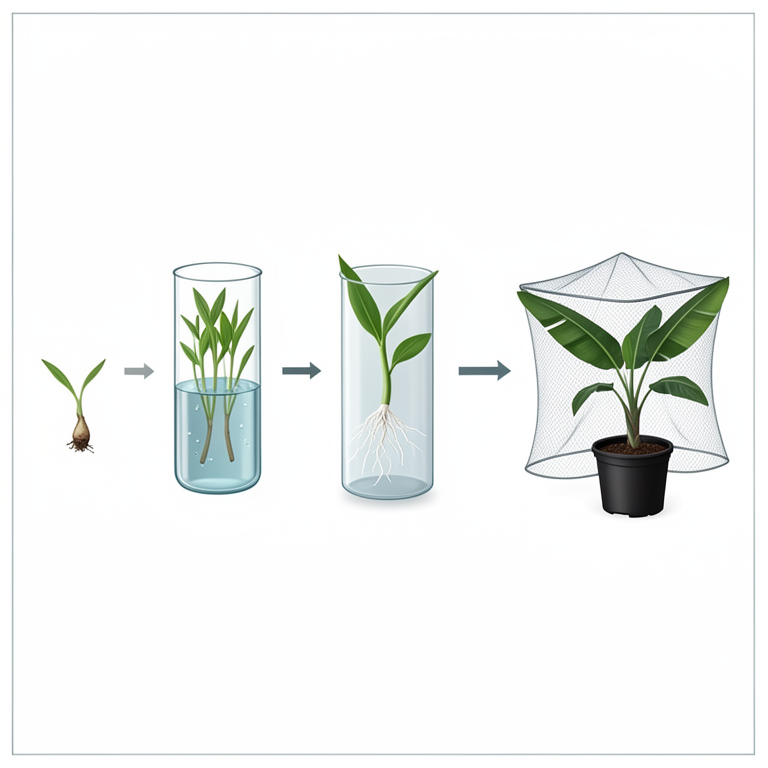
Banana Micropropagation Workflow
AI-generated conceptual illustration (Grand Naine banana plants). It explains the idea and does not show study data.
View source evidence ↗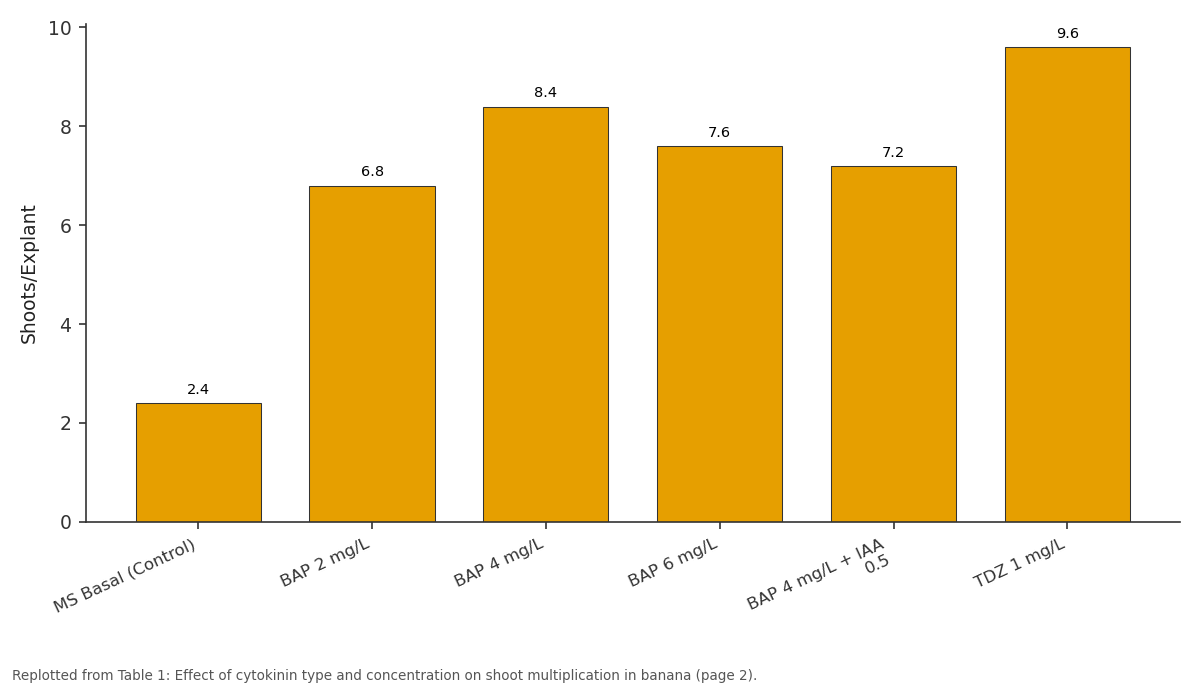
Shoots/Explant: MS Basal (Control) vs BAP 2 mg/L vs BAP 4 mg/L vs BAP 6 mg/L vs BAP 4 mg/L + IAA 0.5
Replotted from Table 1 (page 2) of the original paper. Every bar is the paper's own table value.
View source evidence ↗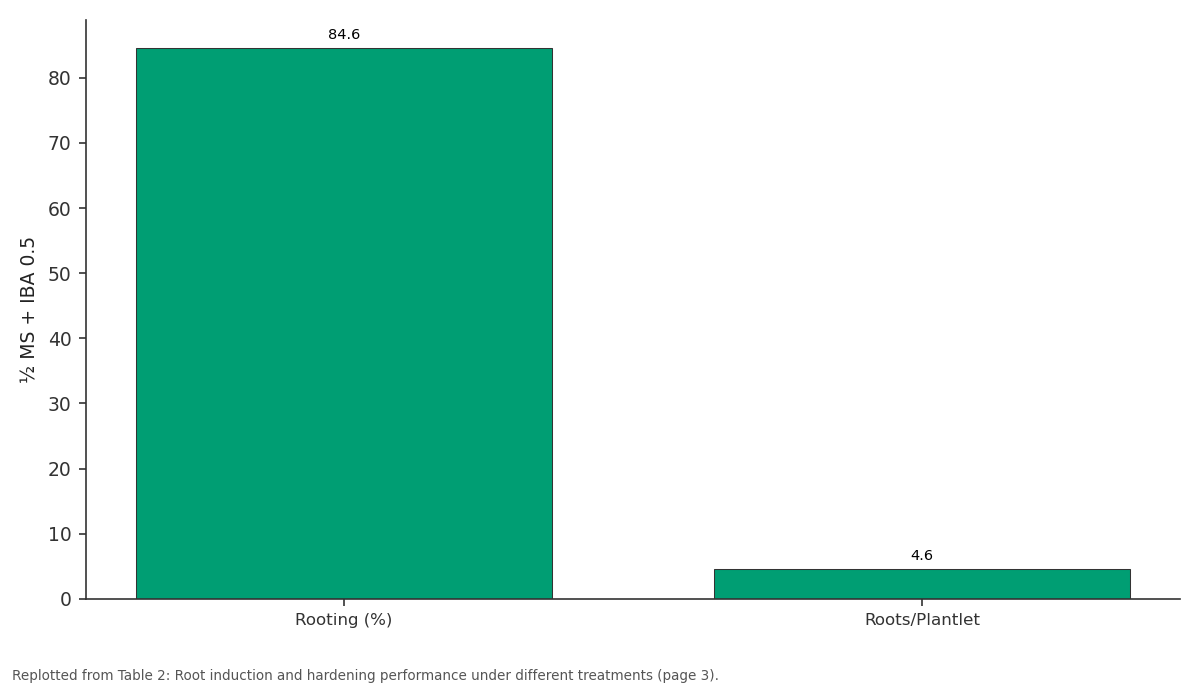
½ MS + IBA 0.5: Rooting (%) vs Roots/Plantlet
Replotted from Table 2 (page 3) of the original paper. Every bar is the paper's own table value.
View source evidence ↗Figures & tables
From the original paper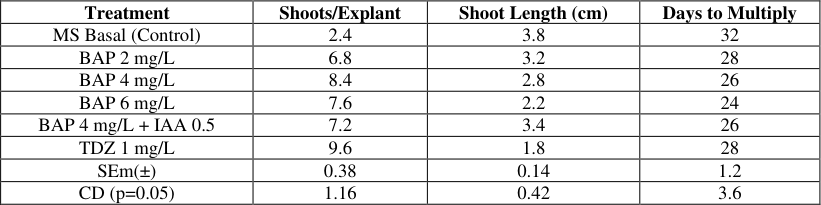 Table 1
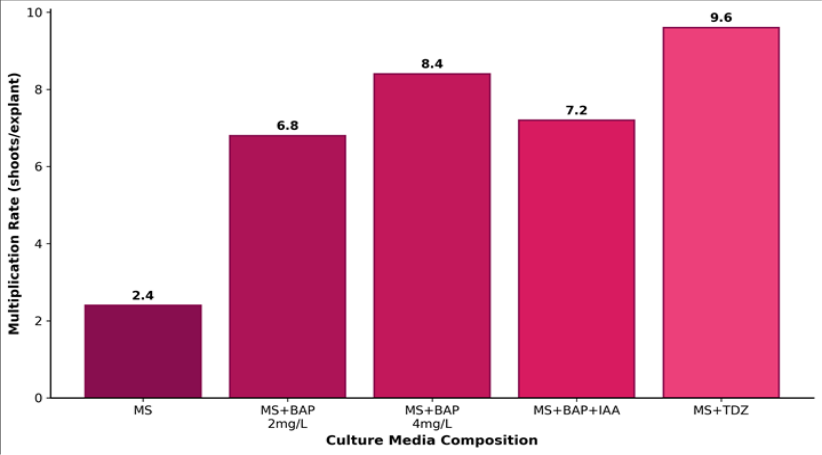 Figure 1
 Table 2
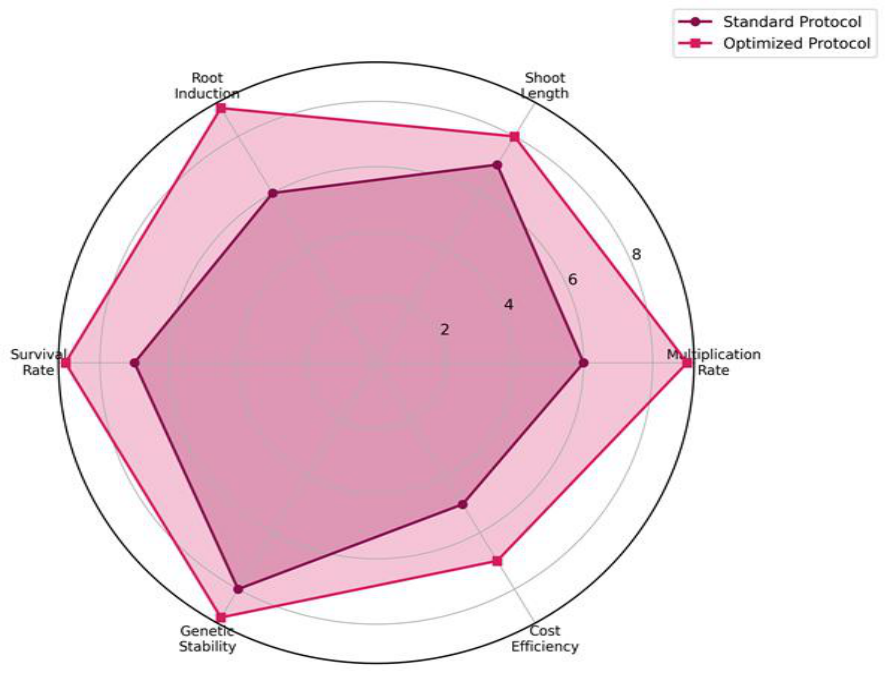 Figure 2
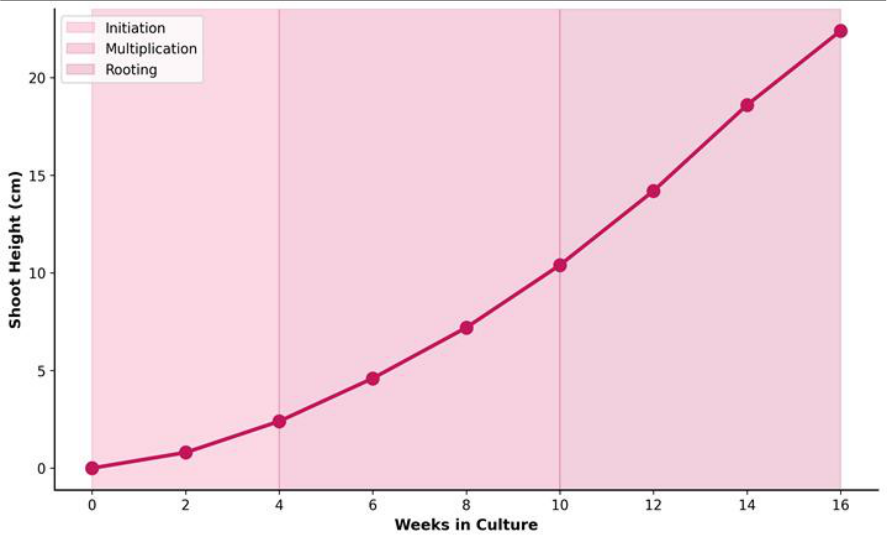 Figure 3
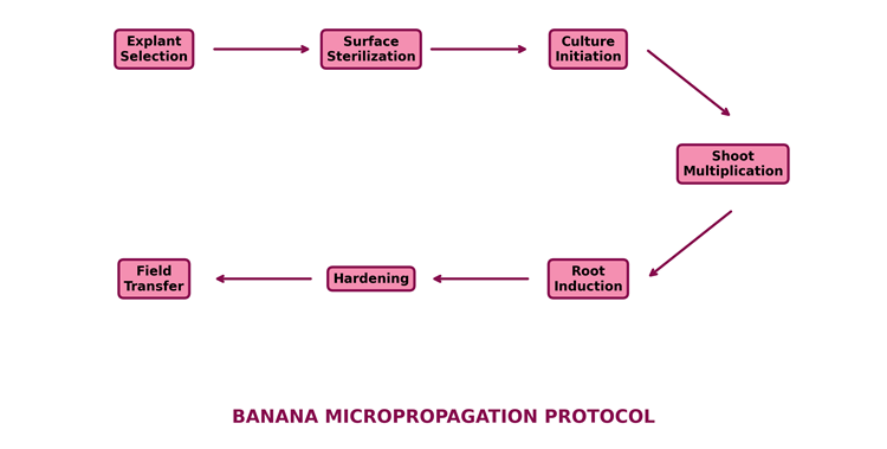 Figure 4
Introduction
Banana ranks among the world's most important fruit crops, providing essential nutrition and income for millions of people in tropical and subtropical regions [1] . Conventional propagation through suckers limits multiplication rates, perpetuates disease cycles, and constrains genetic improvement programs. The accumulation of viral, bacterial, and fungal pathogens in vegetatively propagated material progressively reduces productivity in affected plantations [2] . Micropropagation through tissue culture techniques offers solutions to these constraints by enabling rapid multiplication of genetically uniform, disease-free planting material from selected superior genotypes [3] . The theoretical multiplication potential of tissue culture exceeds millions of plants annually from single explant sources, compared to 10-20 suckers achievable through conventional methods. Additionally, controlled laboratory environments permit year-round production independent of seasonal limitations [4] . Successful banana micropropagation requires optimization of multiple parameters including explant selection and sterilization, culture media composition, growth regulator types and concentrations, environmental conditions during culture, and hardening protocols for transfer to field conditions [5] . Each parameter influences multiplication rate, plantlet quality, and ultimate field performance. Protocol standardization for specific cultivars ensures consistent production of high-quality planting material [6] . This research aimed to standardize micropropagation protocols for banana cultivar Grand Naine, the dominant export variety, optimizing each production stage for maximum efficiency and plantlet quality [7] . The established protocol would support commercial tissue culture laboratories seeking to expand production capacity for this economically important cultivar.
Material and Methods
Material and Methods
Material
Sword suckers approximately 15-20 cm height were collected from disease-free mother plants of banana cultivar Grand Naine maintained at a certified nuclear stock facility [8] . Suckers were trimmed to remove outer leaf sheaths, washed thoroughly, and shoot tips of 1-2 cm size excised under aseptic conditions. Culture media was prepared using Murashige and Skoog basal salts supplemented with sucrose at 30 g/L, myo-inositol at 100 mg/L, and gelled with agar at 7 g/L. Media pH was adjusted to 5.8 before autoclaving.
Methods
Surface sterilization employed sequential treatment with 70% ethanol for 1 minute followed by 0.1% mercuric chloride for 10 minutes with continuous agitation, then three rinses in sterile distilled water [9] . Multiplication experiments followed completely randomized design testing BAP at 2, 4, and 6 mg/L concentrations alone and in combination with IAA at 0.5 mg/L. Separate experiments evaluated TDZ at 0.5, 1.0, and 1.5 mg/L as alternative cytokinin source. Cultures were incubated at 25±2°C under 16-hour photoperiod with 2000 lux light intensity. Multiplication rate was recorded as number of shoots produced per explant at 4-week subculture intervals. Rooting was induced by transfer to half-strength MS medium supplemented with IBA at 0.5, 1.0, and 1.5 mg/L. Rooted plantlets were hardened in plastic pots containing cocopeat-sand mixture under shade net providing 50% light reduction [10] . Survival percentage was recorded at 30 days after transfer. Data were subjected to analysis of variance with treatment separation by Duncan's multiple range test at 5% probability.
Culture Environment
The tissue culture laboratory maintained temperature at 25±2°C through air conditioning with backup systems ensuring continuity during power fluctuations. Photoperiod was controlled by fluorescent lights on automatic timers. Relative humidity ranged from 60-70% within the culture room. Laminar flow hoods provided sterile working environment for all transfer operations [11] . These controlled conditions supported consistent culture responses essential for protocol standardization.
Results
Results
Discussion
The multiplication rates achieved in this research compare favorably with published reports for banana tissue culture, confirming protocol effectiveness for commercial-scale production [3] . The superiority of BAP over TDZ for producing quality shoots suitable for direct rooting reflects the more balanced hormonal stimulus provided by this cytokinin. While TDZ produces higher multiplication rates, the resulting compact shoots require additional subculture on elongation medium before successful rooting [4] . High rooting success on half-strength MS medium with IBA at 1 mg/L demonstrates that plantlet quality from the multiplication stage adequately supports root initiation without prolonged auxin exposure. The reduced salt concentration apparently favors root development over continued shoot growth, directing metabolic resources appropriately [5] . The strong correlation between rooting quality and hardening survival emphasizes importance of this transitional stage.
Hardening success exceeding 92% provides confidence for commercial operations where plantlet losses during this stage significantly impact production economics. The cocopeat-based substrate provided appropriate moisture retention and aeration for root establishment [6] . Gradual acclimatization under shade net conditions apparently protected plantlets from transplant shock while permitting sufficient light for photosynthetic competence development.
Limitations
This protocol was optimized for a single cultivar and may require modification for other banana varieties with different growth regulator sensitivities. Long-term genetic stability across multiple subculture cycles was not comprehensively assessed. Production cost analysis did not include all infrastructure amortization factors. Field performance comparison with conventionally propagated plants was limited to morphological observation.
Conclusion
This research establishes standardized micropropagation protocols for commercial banana production achieving multiplication rates of 8.4 shoots per explant, rooting success of 96.4%, and hardening survival of 92.6%. The optimized protocol utilizing BAP at 4 mg/L for multiplication and IBA at 1 mg/L for rooting provides reliable production of quality planting material. The complete cycle from explant initiation to field-ready plant requiring 16-18 weeks enables year-round production planning aligned with planting season demands. Theoretical multiplication potential exceeding 50,000 plants annually from single mother plant selection supports large-scale commercial operations and germplasm conservation programs.
Commercial tissue culture laboratories can adopt these protocols with confidence for producing disease-free banana planting material meeting quality standards for domestic and export markets.
Figures and tables from the paper
| Treatment | Shoots/Explant | Shoot Length (cm) | Days to Multiply |
|---|---|---|---|
| MS Basal (Control) | 2.4 | 3.8 | 32 |
| BAP 2 mg/L | 6.8 | 3.2 | 28 |
| BAP 4 mg/L | 8.4 | 2.8 | 26 |
| BAP 6 mg/L | 7.6 | 2.2 | 24 |
| BAP 4 mg/L + IAA 0.5 | 7.2 | 3.4 | 26 |
| TDZ 1 mg/L | 9.6 | 1.8 | 28 |
| SEm(±) | 0.38 | 0.14 | 1.2 |
| CD (p=0.05) | 1.16 | 0.42 | 3.6 |
Table text extracted from the original PDF; superscript letters are shown inline. The original table image is below.
View original table image
| Rooting Medium | Rooting (%) | Roots/Plantlet | Root Length (cm) | Hardening Survival (%) |
|---|---|---|---|---|
| ½ MS Basal | 68.4 | 3.2 | 2.4 | 76.8 |
| ½ MS + IBA 0.5 | 84.6 | 4.6 | 3.6 | 86.4 |
| ½ MS + IBA 1.0 | 96.4 | 5.8 | 4.8 | 92.6 |
| ½ MS + IBA 1.5 | 92.8 | 6.4 | 4.2 | 88.2 |
| SEm(±) | 2.86 | 0.34 | 0.22 | 2.42 |
| CD (p=0.05) | 8.82 | 1.05 | 0.68 | 7.46 |
Table text extracted from the original PDF; superscript letters are shown inline. The original table image is below.
View original table image
References
14 in the original paper- Robinson JC, Sauco VG. Bananas and plantains. 2nd ed. Wallingford: CABI Publishing; 2010. p. 1-311.
- Tripathi L, Tripathi JN. Tissue culture studies of banana improvement. Acta Hortic. 2009;897:473-481.
- Israeli Y, Reuveni O, Lahav E. Qualitative aspects of somaclonal variations in banana. Sci Hortic. 1991;48(12):71-88.
- Vuylsteke D, De Langhe E. Feasibility of in vitro propagation of bananas. Trop Agric. 1985;62(4):323328.
- Cronauer SS, Krikorian AD. Multiplication of Musa from excised stem tips. Ann Bot. 1984;53(3):321-328.
- Ganapathi TR, Suprasanna P, Bapat VA. Somatic embryogenesis and plant regeneration from male flower buds of Musa. Curr Sci. 1999;76(9):1228-1231.
- Kulkarni VM, Ganapathi TR, Bapat VA. Establishment of cell suspension cultures in banana (Musa spp.). In Vitro Cell Dev Biol Plant. 2004;40(5):491-495.
- Strosse H, Domergue R, Panis B. Banana and plantain embryogenic cell suspensions. INIBAP technical guidelines no. 8. Montpellier: INIBAP; 2003. p. 1-36.
- Dhed'a D, Dumortier F, Panis B. Plant regeneration in cell suspension cultures of banana (Musa spp.). Fruits. 1991;46(2):125-135.
- Mendes BMJ, Mendes FJ, Tulmann Neto A. Efficacy of banana plantlet production. Sci Agric. 1996;53(23):282-286.
- Gubbuk H, Pekmezci M. In vitro propagation of some new banana types. Turk J Agric For. 2004;28(5):355361.
- Jain SM, Swennen R. Banana improvement: cellular, molecular biology, and induced mutations. Enfield: Science Publishers; 2004. p. 1-382.
- Uma S, Lakshmi S, Saraswathi MS. Embryo rescue and plant regeneration in banana (Musa spp.). Plant Cell Tissue Organ Cult. 2011;105(1):105-111.
- Bairu MW, Fennell CW, van Staden J. The effect of plant growth regulators on somaclonal variation. Plant Growth Regul. 2006;47(2-3):269-282.