
Research article · 2026 · Full text
International Journal of Biology SciencesExploring the biochemical constituents of goat milk
Volume 8(1) · Pages 85–89 · DOI: 10.33545/26649926.2026.v8.i1b.547 ↗
Research areasMilk Quality and Mastitis in Dairy CowsAnimal Diversity and Health StudiesAnimal health and immunology
Abstract
Author-writtenGoat milk is a healthy food for both young and old. It plays a prominent role in maintenance of health and normal physiological functions. The advantages of goat milk over cow milk are due to its superior composition and variations in lipids, casein, and other micro-constituents. Compared to cow's milk, goat's milk is possessing higher essential nutrients. Its nutritional value is enhanced by the package of micronutrients such as vitamin A, thiamine, riboflavin, vitamin B5, calcium, phosphorus, zinc, potassium, selenium and potassium in greater amounts than cow's milk. Fascinatingly goat milk is found easily digestible in the infants and less allergic than cow’s milk, making it perfect to them. Easier digestibility can be attributed to the presence of higher short and medium-chain fatty acids and for the absence of agglutinin. These will prevent the fat globules from accumulating and clustering. Goat milk has been recommended as an alternative for patients allergic to cow milk. The lower lactose content in goat milk makes it to get easily absorbed by the human digestive system than cow's milk. The milk of the goat has got more remarkable lactose absorption ability than cow's milk, fewer people experience the discomfort of lactose intolerance by drinking it. This review also emphasizes on the anti-cancerous effects of goat milk on human colorectal, mammary gland, and skin cancer cells; treating them has been shown to reduce cancer cell viability by 70% to 90%. In addition to it goat milk is exhibiting anti-inflammatory, immunostimulatory and anti-microbial properties. So, there is a need to create awareness to the consumers on the nutritional and healthier properties of goat milk and thereby promoting goat farmers in India.
Summary
Source-checkedPlain-language reading of the full paper, prepared with AI and checked against the text. Each point links to the authors' own words.
Why it matters
- Goats serve as critical sources of milk and nutrition, particularly in tropical regions and underdeveloped nations. View evidence ↗
- Goat milk is often preferred over cow milk due to its distinct flavor and a composition that provides health benefits for digestion and lipid metabolism. View evidence ↗
- There is a pressing need to improve infrastructure and financial support for goat milk production and processing to benefit farmers and meet urban demand. View evidence ↗
The question
- The review aims to explore the biochemical constituents of goat milk and highlight its nutritional, anti-cancer, and health-promoting properties to increase consumer awareness. View evidence ↗
What they did
- The authors conducted a review of existing literature to synthesize information on the biochemical components and biological properties of goat milk. View evidence ↗
What they found
- Goat milk has smaller fat globules than cow milk, which results in a softer texture for products and improved digestibility. View evidence ↗
- Goat milk contains a higher proportion of medium-chain triglycerides, specifically caproic, caprylic, and capric acids. View evidence ↗
- Goat milk contains 250-300 mg/L of oligosaccharides, which is significantly higher than in cow or sheep milk; sheep milk has ten times fewer oligosaccharides than goat milk. View evidence ↗
- Between 40% and 100% of patients with cow milk protein allergies are able to tolerate goat milk. View evidence ↗
- Goat milk is a better option for lactose-intolerant individuals because its lactose content (22-27%) is lower than that of cow milk (33-40%). View evidence ↗
- The caproic, caprylic, and capric acids in goat milk can reduce the viability of human skin, mammary gland, and colorectal cancer cells by 70% to 90%. View evidence ↗
- Goat milk contains significantly more selenium than cow milk, which may help strengthen the immune system. View evidence ↗
- Goat milk fat globules are ten times smaller than those in cow milk, which prevents inflammation in the digestive tract. View evidence ↗
What it means
- The authors conclude that government regulatory support and consumer awareness campaigns are essential to promote the production and processing of goat milk. View evidence ↗
- The acceptability of goat milk among consumers is limited by prejudices and myths stemming from its characteristic 'goaty odour'. View evidence ↗
Visual summary
1 visualsIllustrations explain the paper; they do not show study data.
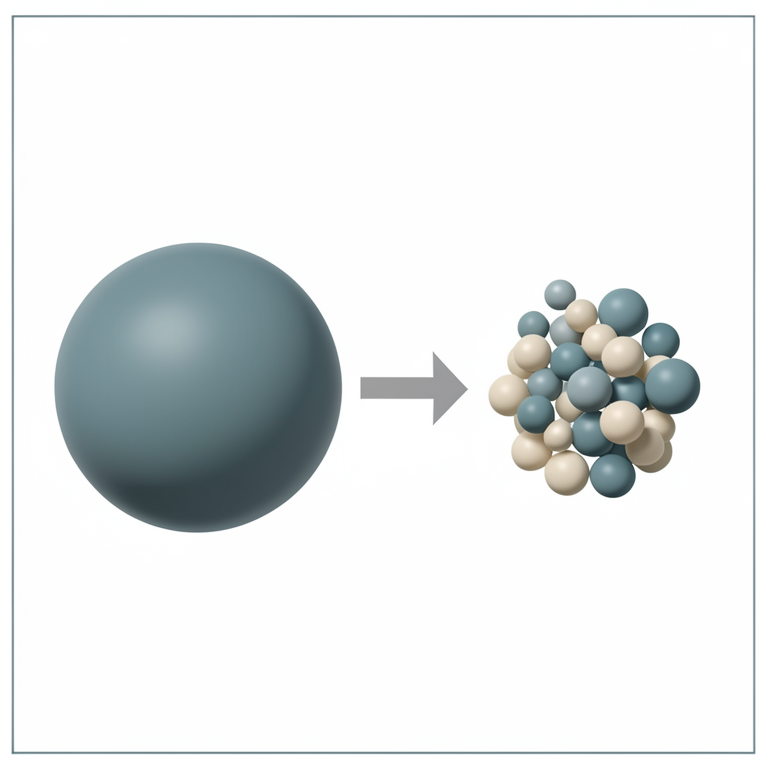
Fat Globule Size Comparison
AI-generated conceptual illustration (cow and goat milk fat globules). It explains the idea and does not show study data.
View source evidence ↗Introduction
In many tropical regions, goats are vital milk providers, and in many underdeveloped nations, they play a major role in human nutrition (Devendra, 1999) [10] . The phrase "poor man's cow" is used globally to describe goats (Iqbal et al., 2008) [13] . According to Singh et al. (2006) [36] , developing nations in Asia and Africa are home to 65 percent and 29 percent of the world's goat populations, respectively. About 80% of goat milk is produced in Asia alone (Iqbal et al., 2008) [13] . Goats benefit the environment in many aspects like weed control, fire prevention, the biodiversity maintenance and mitigation of side effects of climate change. This can be related to their eating behaviors and selection of the diet. Since the 1960s, goat populations have been on the rise worldwide, mostly because of shifting dietary habits and finances among people as well as a shortage of space for raising the massive dairy animals (Miller et al., 2019) [20] . Globally, dairy goat populations have also been increasing consistently, with a considerable uptick during the 1990s. Products made from dairy goats are constantly in demand in both developed and developing markets. Goat milk and milk products are chosen over cow milk not only because of their superior flavour but also because of their unique composition, which offers nutritional and health advantages such as better lipid metabolism and digestion (Haenlein, 2004) [11] . There is an urgent need to uplift milk production and provide suitable infrastructure and financial assistance to the farmers and entrepreneurs in goat milk processing and its value addition. This will not only provide a regular source of income, better nutrition to the local farmers but also meet the demand of urban India (Verma and Rajkumar, 2021) [39] .
Goat milk has a freezing point of roughly -0.580 °C, a viscosity of 13.4 mP at 27 °C, and a titratable acidity of 0.11 to 0.18 percent due to lactic acid (Roy and Vadodaria, 2006) [34] . Goat milk has 14 nitrogenous elements that dissolve well in fluid milk, along with 11 fatty acids in its butter fat, 19 amino acids in its protein, six vitamins, 25 minerals, eight enzymes, one sugar, and five phosphorus compounds. Goat milk has got electric conductivity is 0.0112-to-0.0191ohm -1 cm -1 and Viscosity at 27 °C is 13.4 mP. It is having average value with pepsin-HCL test of 36 (Roy and Vadodaria, 2006) [34] .
Characteristics
Goat milk has an alkaline pH compared to cow milk. It has an 85% Protein Digestibility co-efficient. Its fat globules are easily assimilated as they have a small size of 2 microns. Goat milk contains lesser cholesterol and higher calcium, phosphorus and vitamins A and B content in it. Goats convert all β carotene in their food into vitamin A making it richer in vitamin A and imparts whiter colour to it than cow milk. Goat milk has a surface tension that is comparable to that of cow milk (Juarez and Ramos, 1986). It has got eleven essential amino acids and zero gamma-globulin factor. It contains 3.4% of protein (Park et al., 2007) [28] . Goats spend their maximum time in browsing than grazing unlike cows and sheep. As the goat milk contains or lacks certain proteins, vitamins, lipids, minerals, glycerol ethers, enzymes, fat globule size, orotic acid, and casein polymorphisms, it can significantly impact human nutrition. This is the reason why goat milk tastes different from sheep and cow milk (Deepak et al., 2020; Chandran et al., 2021) [9,6] .
Biochemical Constituents of milk
Goat milk's composition varies according to the food, breed, individuals, parity, season, feeding, management, locality, environmental circumstances, stage of lactation, and udder health Park et al., 2007) [28] . Goat milk is a healthy food for both young and old. It plays a prominent role in maintenance of health and normal physiological functions. Despite not having any allergies, it is least consumed by people. The advantages of goat milk over cow milk are due to its superior composition and variations in lipids, casein, and other micro-constituents. Compared to cow's milk, goat's milk is possesses higher essential nutrients. Its nutritional value is enhanced by the presence of micronutrients such as vitamin A, thiamine, riboflavin, vitamin B5, calcium, phosphorus, zinc, potassium, selenium and potassium in greater amounts than cow's milk. Even the mineral content of cow and goat's milk is found almost similar, the goat milk contains 25%, 13%, 47%, 134% of calcium, vitamin B6, vitamin A, and potassium, respectively. It contains three times more niacin than cow milk formula. It is having four times higher copper "cu" and 27% of the selenium of cow's milk. (Abdulhadi Al Mazroea et al., 2018) [1] . Here is a brief overview of the components and health-promoting qualities of goat's milk.
Lipid content
Goat and cow milk have relatively equal percentages of total fat; however, the fatty acid makeup varies depending on the species' diet. There are differences across reports, however lipids in goat milk have higher physical features than those in cow milk (Anifantakis, 1986; Park, 2006) [2,25] . There are two characteristics of goat milk fat that will show its impact on health and milk product manufacturing. In that, the first one is size of the fat globules which is smaller than the milk of the cow. This imparts softer texture to goat milk products. But it causes difficulties in butter processing. Smaller fat globules in the milk helps in the betterment of digestibility. The second characteristics is the presence of a higher proportion of Capric (C10:0) acids, caprylic (C8:0) and caproic (C6:0) acids which belong to medium chain triglycerides group. These medium-chain triglycerides (MCT) provide direct energy to the system without getting accumulated in the form of adipose tissues. They aid in reducing serum cholesterol and prevention from their deposition. Medium-chain triglycerides are considered as good healthy fat that may be burned for fuel instead of deposition as fat. Goat milk also contains higher amount of polyunsaturated fatty acids (PUFA) and monounsaturated (MUFA) fatty acids than cow's milk. The unsaponifiable matter of milk fat and acid values are showing similarity between goat and cow milk. However, goat milk has lower iodine values reflecting the presence of greater amount of lower and unsaturated fatty acids (Park, 2006) [25] . Cow milk consists of greater saponification number and slightly more refractive index compared to goat milk indicating the presence of lengthy carbon chains and saturated fatty acids (Park, 2006) [25] . Medium-chain triglycerides are used to treat a variety of digestive disorders, including those that result from abnormal food absorption, such as diarrhea, steatorrhea (fat indigestion), celiac disease, liver illness, digestive problems caused by the removal of a portion of the stomach (gastrectomy) or intestine through surgery and short bowel syndrome (Collard et al., 2021) [7] . Goat milk possesses a greater number of minor branched-chain fatty acids and less trans-C18:1 fatty acids than cow milk under typical feeding conditions which are considered as beneficial for cardiac patients.
Free amino acids
Goat milk has a higher taurine content than cow's milk. Osmoregulation, bile salt production, calcium transport, antioxidants, and central nervous system processes are all impacted by taurine. Taurine deficiency may develop in premature infants who lack the enzymes needed to convert cystathionine to cysteine. As a result, taurine is included in a lot of baby formulae as a necessary ingredient. According to Militante and Lombardini (2002) [19] , taurine is advantageous and aids in blood pressure regulation in adults, hence reducing other cardiovascular issues. Goat milk is therefore a good source of taurine for both adults and newborns.
Polyamines
Goat milk and colostrum contain the highest levels of polyamines when compared to milk from other animals (Ploszaj et al., 1997) [30] . The function of gastrointestinal tract (GIT) cells, the maturation of GIT enzymes, and the best possible growth in newborns are all thought to depend on these polyamines. It also helps to lessen food allergies in babies (Dandrifosse et al., 2000; Pegg and McCann, 1982) [8, 29] .
Oligosaccharides
Goat milk is made up of a greater number of oligosaccharides (250-300 mg/L) than cow or sheep milk.
Sheep milk is having ten times lower oligosaccharides than goat milk. But this amount is more in human milk (5-8 g/L). Goat milk has got a complex profile of oligosaccharides similar to human milk. Lactose-derived oligosaccharides are much more prominent in goat milk than in cow's milk. As the oligosaccharides of human milk has got prebiotic and anti-infective properties, they are considered as very much vital in nature. Goat milk oligosaccharides can also contribute to important functional properties, including antimicrobial, anti-adhesive and intestinal epithelial cell response modulation. They help in boosting the immunity by supplementing the nutrients for the development of the neonatal brain and growth of healthy beneficial gut microflora. Thus, goat milk seems to be an attractive alternative source of human-like oligosaccharides for the neonates.
Health benefits of goat milk
Goat milk is more appealing and healthier due to a few unique qualities. It's healthy and nutritional components have been uncovered in recent years. As customers' acceptance of goat milk as a functional food has increased recently, notable increase in the number of goats and their milk production was also found. Additionally, goat milk offers users higher-quality animal protein, lactose, better lipids, and fatty acids, as well as vitamins and minerals. Goat milk has been shown to have medicinal benefits in Indian Ayurveda, Bhav Prakash, and Nepalese Ayurveda (Nepalese Traditional Medicine), (Bajracharya et al., 2010) [3] . It was also suggested as a useful food for patients with TB, dysentery, colds, coughs, and some gynaecological conditions (Pal et al., 2011) [23] . Goat milk provides significant surpluses of thiamine, riboflavin, and pantothenate, and is sufficient for human infants in terms of vitamin A and niacin (Jenness, 1980; Haenlein, 2004) [14,11] . It is, however, deficient in vitamins D, C, folic acid, B12 and pyridoxine (Park, 1994). Thus, goat milk needs to be corrected by appropriate fortification whenever it is used for feeding the infants. Goat milk contains about 1.2 g calcium and 1 g phosphate per liter similar to cow milk. Human milk contains only one-fourth as much calcium and one-sixth as much phosphate as goat milk. Calcium and phosphorus of goat milk are easily absorbed by the human infant (Jenness, 1980) [14] . The chemical structural composition, secondary protein units and amino acid profile of goat milk differ from cow milk, making it hypoallergenic. Due to its richer nutrient content and functional components, such as prebiotic chemicals and probiotic microorganisms, goat milk can be readily used in various product preparations. People who are lactose intolerant or who have gastrointestinal disorders like colitis or ulcers, goat's milk may be a suitable substitute (Sousa et al., 2019; Rai et al., 2022) [37,32] .
Biological properties Easy digestibility property
Goat milk fat is made up of a greater number of medium and short chain (C4:0-C12:0) fatty acids than cow milk. Goat's milk absorbs more easily since it has a smaller number of fat globules. Unique protein profile of goat milk allows for forming of a milder curd, which is easier on the digestive system and more comfortable to eat (Roy et al., 2021) [33] . This milk is found easily digestible in the infants and less allergic than cow's milk, making it perfect for them. Easier digestibility can be attributed to the presence of higher short and medium-chain fatty acids and for the absence of agglutinin. These will prevent the fat globules from accumulating and clustering. Goat milk curd is finer than cow milk curd after acidification which mimics the conditions of the stomach and enhances the digestibility.
Hypoallergenic property
Goat's milk is safe for people with cow's milk allergies since its proteins are different. Cow milk allergy (CMA) affects many babies; however, the cause is yet unknown. The most common whey protein in cow's milk, beta lactoglobulin, which is absent from human breast milk, has been linked to CMA. Numerous cow's milk proteins, such as caseins, betalactoglobulin, and beta-lactalbumin, have been found to have the potential to cause allergies (Ballabio et al. 2011) [4] . Recent studies have proved immunomodulatory effects by goat milk through in-vitro and human research methodology. It might be proved better option for those are having issues of cow milk allergy and looking for an alternative. Goat milk has been recommended as an alternative for patients allergic to cow milk. Around 40-100% of patients who are allergic to cow milk proteins can tolerate goat milk without any issues (Park, 1994) [24] . Goat milk contains lower levels of αs1-casein and higher amount of β-casein like human milk. The increased digestion of βlactoglobulin may be attributed to the relative absence of αs1-casein. The prevalence of cow milk allergy is found 2.5% among children during their initial three years of lifespan. When these children were chosen for treatment with goat milk, 30 to 40% of the children got benefitted and in one case up to 49-55% of children had shown the positive result. The lack or reduced amount of αs1-casein in goat milk is most likely the cause of its low allergenicity. Because goat milk has less lactose (22-27%) than cow milk (33-40%), it is a preferable option for those who are lactose intolerant. (Lund and Ahmad 2021; Martemucci and D'Alessandro 2013) [17,18] .
Alleviation of lactose intolerance
The lower lactose content in goat milk makes it easily absorbed by the human digestive system than cow's milk. The milk of the goat has got more remarkable lactose absorption ability than cow's milk, fewer people experience the discomfort of lactose intolerance by drinking it. Few people may get allergic symptoms to cow's milk despite not being lactose intolerant but because of the presence of the protein as1-casein in it which is uncommon in goat's milk or non-existent in some cases. Patients with lactose intolerance find difficulty in digesting the lactose because the sugar is absorbed by the large intestine undigested. Microbes which facilitate fermenting the unhydrolyzed lactose in the large intestine produce free fatty acids and gas, which in turn cause bloating, cramping, and other gastrointestinal symptoms (Lund and Ahmad 2021) [17] . Goat milk is often advised as an alternative to the milk of the cow by virtue of its softer curd. Higher casein content in goat's milk facilitates lactose digestion and reduces the chance of lactose intolerance by hastening the process by which the sugar is absorbed by the large intestine (Quigley et al. 2013; Rai et al. 2022) [31,32] .
Anti-cancerous property
Caproic, caprylic, and capric acids, which are found in greater amounts in goat milk, have anti-cancerous effects on human colorectal, mammary gland, and skin cancer cells; treating them has been shown to reduce cancer cell viability by 70% to 90%. Goat milk also plays a significant role in preventing inflammatory bowel disease (IBD). Studies have shown that oligosaccharides in goat milk exhibit antiinflammatory properties. Weight loss predicted progression of necrotic lesion and colon enlargement are halted by the oligosaccharides. The clinical symptoms (diarrhea, and bloody stools) and the immune response were found less (less neutrophil infiltration) severe. (Lund and Ahmad 2021) [17] . Goat milk has very high levels of conjugated linoleic acid (CLA). CLA has been shown to reduce tumour growth in animal studies of mammary and colon cancer, as well as in vitro studies of colorectal, human melanoma and breast cancer. The tumour-inhibitory effects of CLA may be related to fermented goat milk's antioxidative qualities, disruption of eicosanoid-dependent cell signalling systems, and interference with estrogen's receptor-mediated functional actions (Lund and Ahmad 2021; Mirzaei et al., 2022) [17,21] .
Immunostimulatory property
An essential element for preserving a robust immune system is selenium. Goat milk has significantly greater quantities of selenium than cow milk, indicating that it and its derivatives may help people maintain their health by strengthening their immune systems. and human research reports have shown that goat milk has immunomodulatory effects; thus, it may act as better choice for those have cow milk allergy and seeking for an alternative. In recent research, goat milk has been demonstrated to have several impacts on human blood cells, including inducing NO release and driving cytokine production (IL-10, TNF-α, and IL-6). Nitric oxide (NO) release may protect milk consumers' hearts in addition to demonstrating antibacterial activity that could help them avoid getting sick (Van Leeuwen et al., 2020; Kazimierz and Kalinowska-Lis 2021) [38,16] .
Anti-inflammatory property
Because goat milk's fat globules are ten times smaller than those of cow milk, it does not cause inflammation in the digestive tract (Novac and Andrei 2020) [22] . By stimulating intestinal T cells, the microbiota in goat milk has protective benefits at intestinal mucosal locations, restoring normalcy to the human intestinal microbiome. Goat milk is therefore strongly advised for the elderly as well as those with inflammatory and allergic diseases.
Anti-microbial property
According to Quigley et al., (2013) [31] the lactoperoxidase protein found in goat milk is effective against a variety of bacteria, including those that cause food poisoning (Staphylococcus aureus), cholera (Vibrio cholerae), dysentery (Shigella dysenteriae), typhoid (Salmonella typhi), and pneumonia (Klebsiella pneumoniae).
Anti-diarrheal property
According to Novac and Andrei (2020) [22] , goat milk oligosaccharides have anti-inflammatory qualities because they can bind to and eliminate a wide range of pathogens, inhibit the heat-stable enterotoxin that Escherichia coli produces, and stop leukocytes from contacting endothelial cells. Diarrhoea caused by E. coli is a serious issue in developing nations. Scientists created transgenic goats whose milk contains lysozymes. When the animals were fed transgenic goat milk, they recovered from their E. coli infection quite quickly. Therefore, it is anticipated that children who consume transgenic goat milk containing lysozyme may recover from diarrhoea more quickly. Adult humans with ulcers and gastrointestinal disorders may benefit from the soft curd of goat milk (Bhattarai, 2012) [5] . The higher protein, phosphate and nonprotein nitrogen in caprine milk give it greater buffering capacity than cow milk. Goat milk's high buffering capacity suggests that it may be helpful in treating stomach ulcers (Park, 1994) [24] .
Amelioration of malabsorption syndrome
Goat milk supplementation dramatically increases the intestinal fat absorption rate in infants with malabsorption syndrome. In experimental animals with artificially generated ferropenic anemia, goat milk enhanced the bioavailability of iron and increased the amount of iron deposited in the target organs. Medium Chain Triglycerides (MCT) are more in goat milk and have been recognized as unique lipid with peculiar health benefits in the cases of mal-absorption syndromes, chyluria, steatorrhea, hyperlipoproteinemia. It also benefited in the intestinal resection, premature infant feeding, coronary bypass, childhood epilepsy, gallstones and cystic fibrosis. Additionally, MCT dissolves cholesterol gallstones, prevents or restricts cholesterol deposition, and supports a baby's healthy growth (Roy and Vadodaria, 2006) [34] .
Conclusion
The goat, often known as the "poor man's cow," must be used to its best potential to reap the greatest benefits, especially from its milk and healthful products. According to numerous studies, it has a vital role in both human health and the rural economy. Numerous bioactive substances that mediate essential physiological processes have been found in goat milk. However, "goaty odour" has created lots of myths and prejudice in the consumers' mind, affecting their acceptability. Creating awareness to the consumers on the nutritional and healthier properties of goat milk, regulatory support from the government for the production and processing of goat milk products are very much essential. Establishment of market network to get premium price for goat products need to be done on priority basis to improve the industry. Thus, additional research to determine the benefits of goat milk will shift the goat industry raising the rural economy in India.
References
38 in the original paper- Al Mazroea A, Maryam AA, Arwa AA, Al-Remaithi SM, Ruba MS, Anfal FA, et al. Comparison between nutritional values in cow's milk, and goat milk infant formulas. Int J Pharm Res Allied Sci. 2018;7(4):190195.
- Anifantakis EM. Comparison of the physico-chemical properties of ewe's and cow's milk. In: Proceedings of the IDF Seminar Production and Utilization of Ewe's and Goat's Milk; 1986; Athens, Greece. Bulletin No. 202, p. 42-53.
- Ballabio C, Chessa S, Rignanese D, Gigliotti C. Goat milk allergenicity as a function of αs₁-casein genetic polymorphism. J Dairy Sci. 2011;94(2):998-1004.
- Bhattarai J. Importance of goat milk. Food Sci Technol. 2012;7:107-11.
- Chandran D. Veterinary phytomedicine in India: A review. Int. J Sci. Res Sci. Eng. Technol. 2021;8(3):598-605.
- Collard KM, McCormick DP. A nutritional comparison of cow's milk and alternative milk products. Acad Pediatr. 2021;21(6):1067-1069.
- Dandrifosse G, Peulen O, Khefif EN, Deloyer P, Dandrifosse AC, Grandfils C. Are milk polyamines preventive agents against food allergy? Proc Nutr Soc. 2000;59(1):81-86.
- Deepak C, Uma R, Linu E. Characterization of Malabari goat lactoferrin and its pepsin hydro-lysate. J Vet Anim Sci. 2020;51(1):40-47.
- Devendra C. Goats: Challenges for increased productivity and improved livelihoods. Outlook Agric. 1999;28:215-26.
- Haenlein GFW. Goat milk in human nutrition. Small Rumin Res. 2004;51(2):155-163.
- Hirsiger JR, Heijnen IA, Hartmann K, Berger CT. Anaphylaxis to goat's and sheep's milk in an adult who tolerated cow's milk: A sensitization profile study. J Investig Allergol Clin Immunol. 2022;32(2):154-156.
- Iqbal A, Khan BB, Tariq M, Mirza MA. Goat-a potential dairy animal: Present and future prospects. Pak J Agri Sci. 2008;45(2):227-30.
- Jenness R. Composition and characteristics of goat milk: Review. J Dairy Sci. 1980;63:1605-1630.
- Juárez M, Ramos M. Physico-chemical characteristics of goat milk as distinct from those of cow milk. In: Proceedings of the IDF Seminar Production and Utilization of Ewe's and Goat's Milk; 1986; Athens, Greece. Bulletin No 202, p. 54-67.
- Kazimierska K, Kalinowska-Lis U. Milk proteins, their biological activities and use in cosmetics and dermatology. Molecules. 2021;26(11):3253.
- Lund A, Ahmad M. Production potential, nutritive value and nutraceutical effects of goat milk. J Anim Health Prod. 2021;9(1):65-71.
- Martemucci G, D'Alessandro AG. Progress in nutritional and health profile of milk and dairy products: A novel drug target. Endocr Metab Immune Disord Drug Targets. 2013;13(3):209-33.
- Militante JD, Lombardini JB. Treatment of hypertension with oral taurine: Experimental and clinical studies. Amino Acids. 2002;23:381-393.
- Miller BA, Lu CD. Current status of global dairy goat production: An overview. Asian-Australas J Anim Sci. 2019;32(8):1219-1232.
- Mirzaei H, Sharafati CR. Role of fermented goat milk as a nutritional product to improve anemia. J Food Biochem. 2022;46(6):e13969.
- Novac CS, Andrei S. The impact of mastitis on the biochemical parameters, oxidative and nitrosative stress markers in goat's milk: A review. Pathogens. 2020;9(11):882.
- Pal UK, Mandal PK, Rao VK, Das CD. Quality and utility of goat milk with special reference to India: An overview. Asian J Anim Sci. 2011;5:56-63.
- Park YW. Hypo-allergenic and therapeutic significance of goat milk. Small Rumin Res. 1994;14:151-161.
- Park YW. Goat milk-chemistry and nutrition. In: Park YW, Haenlein GFW, editors. Handbook of Milk of Non-bovine Mammals. Oxford: Blackwell Publishing; 2006, p. 34-58.
- Park YW. Impact of goat milk and milk products on human nutrition. CAB Rev. 2007;2(081).
- Prakash S, Jenness R. The composition and characteristics of goat milk: Review. Dairy Sci Abstr. 1968;30:67-72.
- Park YW, Juárez M, Ramos M, Haenlein GFW. Physico-chemical characteristics of goat and sheep milk. Small Rumin Res. 2007;68:88-113.
- Pegg AE, McCann PP. Polyamine metabolism and function. Am J Physiol. 1982;243:C212-21.
- Ploszaj T, Ryniewicz Z, Motyl T. Polyamines in goat's colostrum and milk. Comp Biochem Physiol B Biochem Mol Biol. 1997;118(1):45-52.
- Quigley L, O'Sullivan O, Stanton C, Beresford TP, Ross RP, Fitzgerald GF, et al. The complex microbiota of raw milk. FEMS Microbiol Rev. 2013;37(5):664-98.
- Rai DC, Rathaur A, Yadav AK. Nutritional and nutraceutical properties of goat milk for human health: A review. Indian J Dairy Sci. 2022;75(1):1-10.
- Roy D, Ye A, Moughan PJ, Singh H. Structural changes in cow, goat, and sheep skim milk during dynamic in vitro gastric digestion. J Dairy Sci. 2021;104(2):1394411.
- Roy SK, Vadodaria VP. Goat milk and its importance. Indian Dairyman. 2006;58(3):65-69.
- Sahoo A, Rahaman H. Donkey & non-bovine milk. In: Souvenir cum Proceeding Stakeholder Meet; 2022 Dec 13; Bikaner, India. ICAR-National Research Centre on Camel; 2023, p. 81-93.
- Singh SK, Singh MK, Singh NP. Role of goats in sustainable rural livelihoods in India. In: GoatsUndervalued Assets in Asia. Proceedings of the AphcaIlri Regional Workshop on Goat Production Systems and Markets; 2006 Oct 24-25; Luang Prabang, Lao PDR.
- Sousa YRF, Araújo DFS, Pulido JO, Pintado MME, Férez MA, Queiroga RCRE. Composition and isolation of goat cheese whey oligosaccharides by membrane technology. Int J Biol Macromol. 2019;139:57-62.
- Leeuwen VSS, Poele TEM, Chatziioannou AC, Benjamins E, Haandrikman A, Dijkhuizen L. Goat milk oligosaccharides: Their diversity, quantity, and functional properties in comparison to human milk oligosaccharides. J Agric Food Chem. 2020;68(47):13469-85.
- Verma R. Production, processing and marketing of goat milk in India: Reality and scope. Indian J Small Ruminants. 2021;27(2):152-159.