
Research article · 2026 · Full text
International Journal of Biology SciencesImportance of plant genetic resources in sustainable agricultural development
Volume 8(1) · Pages 90–95 · DOI: 10.33545/26649926.2026.v8.i1b.548 ↗
Research areasGenetic and Environmental Crop StudiesGenetically Modified Organisms ResearchAgricultural pest management studies
Abstract
Author-writtenPGR are the foundation of global food and nutritional security, providing the raw material required for crop improvement and adaptation. The term genetic resources comprises landraces, wild relatives, traditional cultivars, and improved varieties that contribute to genetic diversity within agricultural systems. With climate change, emerging pests and diseases, and increase in demand for high-quality food, the importance of PGR is evident. The three key building blocks of sustainable agricultural development are the conservation, characterization, and use of genetic resources for the development of resilient, productive, and climate-smart crop varieties. PGR provide a basis for breeders to incorporate such traits as drought tolerance, disease resistance, nutritional enhancement, and stress adaptation. Both in-situ and ex-situ conservation strategies, including gene banks, field repositories, and community seed systems, play a vital role in safeguarding this diversity for future generations. Generally, management, documentation, and policy support should be further strengthened to ensure long-term availability and use. Therefore, plant genetic resources will play a crucial role in achieving sustainable agricultural growth, environmental resilience, and global food security.
Summary
Source-checkedPlain-language reading of the full paper, prepared with AI and checked against the text. Each point links to the authors' own words.
Why it matters
- Plant Genetic Resources (PGR) serve as the essential raw materials for adapting and improving crops, which is fundamental for global nutritional and food security. View evidence ↗
- The importance of PGR is heightened by global agricultural pressures, including a growing population, soil degradation, climate change, and new pests and diseases. View evidence ↗
- Wild species and traditional cultivars are highly valuable for breeding because they often possess adaptive traits that modern crop varieties have lost. View evidence ↗
The question
- The paper focuses on how the conservation, characterization, and utilization of PGR can be used to develop productive, climate-smart, and resilient crop varieties. View evidence ↗
What they did
- The comprehensive approach to managing PGR involves a cycle of exploration, collection, characterization, evaluation, documentation, conservation, and sustainable use. View evidence ↗
- Germplasm for characterization is sourced from international centers (CIMMYT, IRRI, ICRISAT), regional gene banks, and the National Bureau of Plant Genetic Resources in New Delhi. View evidence ↗
- Materials are also collected from traditional farming communities, specifically targeting landraces adapted to high temperatures, salinity, floods, and drought. View evidence ↗
- Conservation strategies include in situ methods, such as protecting wild relatives in their natural habitats and supporting on-farm conservation of landraces by farmers. View evidence ↗
- Ex situ conservation is achieved through the use of seed storage facilities, DNA banks, botanical gardens, and gene banks. View evidence ↗
What they found
- PGR provide the genetic variability necessary to breed new varieties with improved yield potential and resistance to pests, diseases, salinity, drought, and temperature extremes. View evidence ↗
- Expanding the genetic base of crops via PGR allows for the creation of biofortified varieties that can help reduce micronutrient deficiencies and malnutrition in developing nations. View evidence ↗
- Genetic diversity serves as a natural insurance mechanism that protects against total crop failure during disease epidemics, pest outbreaks, or extreme weather. View evidence ↗
- Advanced tools like CRISPR/Cas genome editing, whole-genome sequencing, and high-throughput phenotyping can unlock hidden diversity in underutilized crops, wild relatives, and landraces. View evidence ↗
- The 1992 Convention on Biological Diversity provides a legal framework that recognizes national sovereignty over biological resources and promotes equitable benefit sharing. View evidence ↗
What it means
- The authors conclude that protecting PGR requires an integrated approach combining community-based conservation, biotechnological tools, institutional support, and policy frameworks. View evidence ↗
- The authors state that the future resilience and stability of global agriculture depend on the sustainable management and use of plant genetic resources. View evidence ↗
- The authors identify a need for more research into genotype-environment interactions, better conservation methods for recalcitrant seeds, and improved digital bioinformatics for germplasm cataloging. View evidence ↗
Visual summary
1 visualsIllustrations explain the paper; they do not show study data.
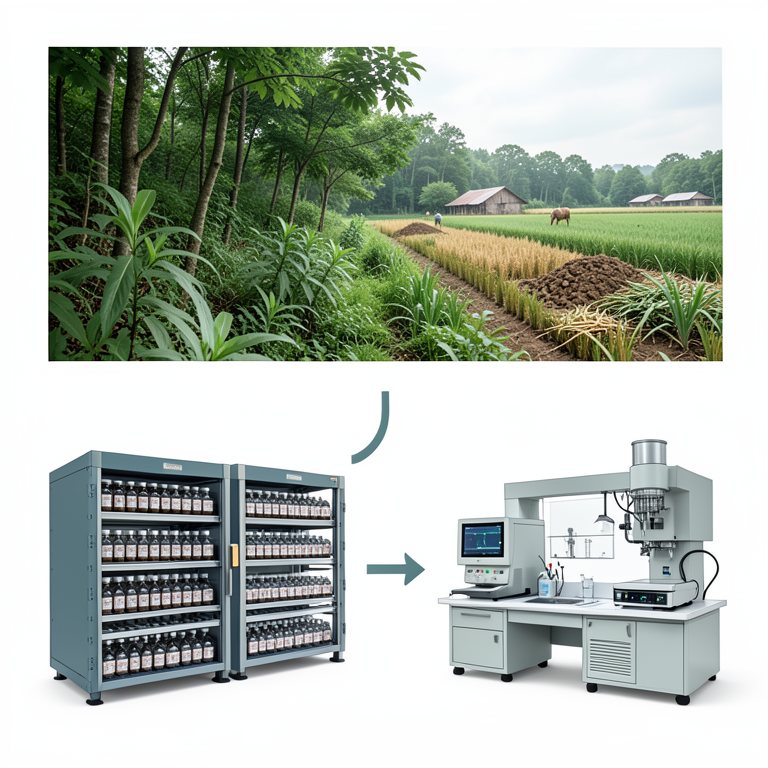
PGR Conservation Strategies
AI-generated conceptual illustration (diverse crop plants and wild relatives). It explains the idea and does not show study data.
View source evidence ↗Introduction
PGR are the heritable materials contained within and among plant species that are of actual or potential value for food, agriculture, and environmental sustainability. They range from landraces, wild relatives, improved cultivars, breeding lines, and traditional varieties that together form the genetic diversity necessary for crop improvement. With global agriculture facing increasing challenges in the form of climate change, soil degradation, emerging pests and diseases, and a rapidly growing population, the importance of PGR has become more critical than ever. Sustainable agricultural development relies heavily on the availability, conservation, and effective utilization of diverse genetic resources. Genetic variability within crops allows breeders to develop improved varieties that are high-yielding, nutrient-rich, and resilient to climate and other biotic and abiotic stresses. Traditional cultivars and wild species often hold unique adaptive attributes that may be lacking in modern varieties, making them invaluable for breeding programs with objectives of enhancement of resilience and sustainability. Conservation of PGR is done both in situ and ex situ to prevent genetic erosion that threatens the long-term stability of agricultural systems. Both the in-situ and ex-situ methods of PGR conservation include gene banks, field gene banks, seed banks, botanical gardens, and community seed systems for safeguarding diversity for future generations. Simultaneously, the documentation, characterization, and evaluation of germplasm ensure its effective use in breeding and research. Thus, Plant Genetic Resources form the backbone of sustainable agricultural development as raw materials for innovation in crop improvement, ensuring food security and ecological balance. Protecting and promoting the use of PGR is one of the key methods to meet present and future agriculture-related challenges.
Concept and Scope of Plant Genetic Resources (PGR)
Plant Genetic Resources (PGR) are heritable materials contained within and among plant species that possess actual or potential value for present and future generations. These resources include the entire spectrum of diversityfrom primitive landraces, wild relatives, traditional cultivars, improved varieties, hybrids, and genetically modified crops to specialized breeding lines conserved in gene banks. PGR comprise the basic biological foundation for crop improvement, food security, and ecological robustness in agriculture. The concept of PGR is more than the genetic material itself but also involves knowledge, practices, and cultural heritage associated with the identification, selection, and use of the resources. It includes a traditional knowledge system of farming communities, indigenous methods for seed selection, and localized management of crop diversity, which all make a significant contribution to resources conservation and sustainable use.
Diversity of PGR:
The diversity of PGR is expressed through variations in morphology, physiology, biochemistry, and genetic makeup across plant populations. This diversity can be categorized into:
Wild relatives of crops: Possess valuable genes for tolerance to drought, salinity, pests, and diseases.
Landraces:
Locally adapted traditional varieties that exhibit broad genetic bases and resilience under marginal environments.
Modern cultivars and hybrids:
Improved varieties developed through scientific breeding, offering high yield and uniformity.
Underutilized and minor crops: Provide nutritional and ecological benefits, contributing to diversified farming systems.
Genetically modified and biotech-derived materials:
Contain targeted traits introduced through advanced technologies.
Conservation of PGR:
The conservation of plant genetic resources aims to safeguard genetic variability for present and future use. It involves both strategies: In situ Conservation. This refers to the preservation of genetic diversity within natural habitats or traditional farming systems. Key approaches include: Conservation of wild relatives in protected areas. On-farm conservation of landraces by local farmers. Maintenance of diverse agroecosystems that support natural selection and adaptation. In situ conservation allows dynamic evolution of plant populations under changing environmental conditions.
Utilization of PGR-Crop improvement:
Breeding programs rely on genetic diversity to incorporate traits such as high yield, stress tolerance, resistance to pests and diseases, and improved quality.
Pre-breeding and genetic enhancement: Introduction of useful genes from wild relatives or landraces into breeding lines to broaden genetic bases.
Biotechnology applications: Genomics, marker-assisted selection, and genetic engineering utilize PGR to accelerate variety development.
Development of climate-resilient varieties: PGR provide adaptive genes essential for coping with heat, drought, salinity, and erratic rainfall.
Promotion of diversified cropping systems: Utilization of underutilized crops and landraces supports ecological sustainability and nutritional diversity.
Restoration of degraded ecosystems: PGR help in reintroducing native species that enhance soil health and agro-ecological stability.
Policy Framework and Institutional Support for PGR Conservation
The conservation and sustainable utilization of Plant Genetic Resources (PGR) are strongly influenced by national and international policy frameworks, as well as institutional support systems dedicated to safeguarding agricultural biodiversity. These policies and institutions provide legal, financial, and technical mechanisms that ensure the long-term availability, equitable access, and responsible use of genetic resources essential for sustainable agricultural development.
International Policy Framework a. Convention on Biological Diversity (CBD), 1992 CBD
recognizes the sovereign rights of countries over their biological resources and promotes their conservation, sustainable use, and equitable sharing of benefits arising from their utilization. It provides the legal foundation for national biodiversity strategies and action plans. b. International Treaty on Plant Genetic Resources for Food and Agriculture (ITPGRFA), 2001 also known as the Plant Treaty, it ensures the conservation and free access of key food and fodder crops under a Multilateral System (MLS). It promotes farmers' rights, including seed saving, exchange, and traditional knowledge preservation. c. Nagoya Protocol on Access and Benefit Sharing (ABS), 2010.The protocol establishes clear conditions for access to genetic resources and ensures fair and equitable sharing of benefits with the providers, thereby encouraging responsible utilization of PGR. d. Global Plan of Action (GPA) for PGRFA.
National Policy
National Policy
Conclusion
Plant Genetic Resources form the foundational building block of sustainable agricultural development because they provide the fundamental genetic diversity needed to improve crop productivity, resilience, and nutritional quality. Their role is imperative in finding sustainable solutions for emerging global challenges such as climate change, pest and disease outbreaks, soil degradation, and increasing food insecurity. Agricultural systems can be enhanced to better cope with environmental stresses and to sustain long-term productivity through the conservation and effective utilization of rich plant genetic materials, which include wild relatives, landraces, and modern cultivars, including underutilized crops. Integration of appropriate policy frameworks, institutional support, advanced biotechnological tools, and community-based conservation approaches will be crucial in protecting these resources. Further investments in research, conservation infrastructure, and capacity-building will ensure that PGR remain available to future generations. Ultimately, it is the sustainable management and use of plant genetic resources that will dictate the resilience, stability, and sustainability of global agriculture and place plant genetic resources at the center of efforts geared toward achieving food and nutritional security in the coming decades.
References
75 in the original paper- FAO. Second report on the world's plant genetic resources for food and agriculture. Rome, Italy: FAO; 2010. p. 299.
- McCouch SR, McNally KL, Wang W, et al. Genomics of gene banks: a case study in rice. Am J Bot. 2012;99(2):407-423.
- Treuren R, Hintum TJL. Next-generation genebanking: plant genetic resources management and utilization in the sequencing era. Plant Genet Resour. 2014;12:298307.
- Thudi M, Li Y, Jackson SA, et al. Current state-of-art of sequencing technologies for plant genomics research. Brief Funct Genomics. 2012;11(1):3-11.
- Jason DM, Aaron MW, Tam S, et al. Long-read genome sequencing identifies causal structural variation in a Mendelian disease. Genet Med. 2018;20(1):159163.
- Illumina TruSeq synthetic long-reads empower de novo assembly and resolve complex, highly-repetitive transposable elements. PLoS One. 2014;9(9):e106689.
- Lee H, Gurtowski J, Yoo S, et al. Error correction and assembly complexity of single molecule sequencing reads. bioRxiv. 2014. DOI: 10.1101/006395.
- Wambugu P, Furtado A, Waters D, et al. Conservation and utilization of African Oryza genetic resources. Rice. 2013;6(1):29.
- Bordoni P, Hodgkin T. Climate change and the conservation of plant genetic resources. J Crop Improv. 2012;26(3):329-345.
- Sharma S, Upadhyaya HD, Varshney RK, et al. Prebreeding for diversification of primary gene pool and genetic enhancement of grain legumes. Front Plant Sci. 2013;4:309.
- Wambugu PW, Muthamia ZK. Second report on the state of plant genetic resources for food and agriculture in Kenya. Rome, Italy: FAO; 2009.
- Khoury C, Laliberte´ B, Guarino L. Trends in ex situ conservation of plant genetic resources: a review of global crop and regional conservation strategies. Genet Resour Crop Evol. 2010;57(4):625-639.
- Chase MW, Fay MF. Barcoding of plants and fungi. Science. 2009;325(5941):682-683.
- CBOL Plant Working Group. A DNA barcode for land plants. Proc Natl Acad Sci USA. 2009;106:1279412797.
- Lahaye R, van der Bank M, Bogarin D, et al. DNA barcoding the floras of biodiversity hotspots. Proc Natl Acad Sci USA. 2008;105(8):2923-2928.
- Nock CJ, Waters DLE, Edwards MA, et al. Chloroplast genome sequences from total DNA for plant identification. Plant Biotechnol J. 2011;9(3):328-333.
- Parks M, Cronn R, Liston A. Increasing phylogenetic resolution at low taxonomic levels using massively parallel sequencing of chloroplast genomes. BMC Biol. 2009;7(1):84.
- Yang JB, Tang M, Li HT, et al. Complete chloroplast genome of the genus Cymbidium: lights into the species identification, phylogenetic implications and population genetic analyses. BMC Evol Biol. 2013;13(1):84.
- Erickson DL, Spouge J, Resch A, et al. DNA barcoding in land plants: developing standards to quantify and maximize success. Taxon. 2008;57(4):1304-1316.
- Waters DLE, Nock CJ, Ishikawa R, et al. Chloroplast genome sequence confirms distinctness of Australian and Asian wild rice. Ecol Evol. 2012;2(1):211-217.
- McPherson H, van der Merwe M, Delaney SK, et al. Capturing chloroplast variation for molecular ecology studies: a simple next generation sequencing approach applied to a rainforest tree. BMC Ecol. 2013;13(1):8.
- Wambugu PW, Brozynska M, Furtado A, et al. Relationships of wild and domesticated rices (Oryza AA genome species) based upon whole chloroplast genome sequences. Sci Rep. 2015;5(1):13957.
- Brozynska M, Omar ES, Furtado A, et al. Chloroplast genome of novel rice germplasm identified in Northern Australia. Trop Plant Biol. 2014;7(3-4):111-120.
- Orjuela J, Sabot F, Che´ron S, et al. An extensive analysis of the African rice genetic diversity through a global genotyping. Theor Appl Genet. 2014;127(10):2211-2223.
- Li S, Xie K, Li W, et al. Re-sequencing and genetic variation identification of a rice line with ideal plant architecture. Rice. 2012;5(1):18.
- Huang X, Huang T, Dong G, et al. High-throughput genotyping by whole-genome resequencing. Genome Res. 2009;19(6):1068-1076.
- Arai-Kichise Y, Shiwa Y, Nagasaki H, et al. Discovery of genome-wide DNA polymorphisms in a landrace cultivar of japonica rice by whole-genome sequencing. Plant Cell Physiol. 2011;52(2):274-282.
- Xu X, Liu X, Ge S, et al. Resequencing 50 accessions of cultivated and wild rice yields markers for identifying agronomically important genes. Nat Biotechnol. 2012;30(1):105-111.
- Wang MH, Yu Y, Haberer G, et al. The genome sequence of African rice (Oryza glaberrima) and evidence for independent domestication. Nat Genet. 2014;46(9):982-988.
- Li J, He W, Yang G, et al. Resequencing of 31 wild and cultivated soybean genomes identifies patterns of genetic diversity and selection. Nat Genet. 2010;42(12):1053-1059.
- Lu Y, Li J, Buckler ES, et al. Genome-wide association studies of 14 agronomic traits in rice landraces. Nat Genet. 2010;42(11):961-967.
- Huang X, Zhao Y, Wei X, et al. Genome-wide association study of flowering time and grain yield traits in a worldwide collection of rice germplasm. Nat Genet. 2012;44(1):32-39.
- Haseneyer G, Sharma R, Graner A, et al. Genome-wide association studies for Agronomical Traits in a world wide Spring Barley Collection. BMC Plant Biol. 2012;12:16.
- Munoz-Amatriain M, Hayes PM, Muehlbauer GJ, et al. The USDA barley core collection: genetic diversity, population structure, and potential for genome-wide association studies. PLoS One. 2014;9(4):e94688.
- Zhang T, Yu LX, Zheng P, et al. Identification of loci associated with drought resistance traits in heterozygous autotetraploid alfalfa (Medicago sativa L.) using genome-wide association studies with genotyping by sequencing. PLoS One. 2015;10(9):e0138931.
- Mora F, Castillo D, Lado B, et al. Genome-wide association mapping of agronomic traits and carbon isotope discrimination in a worldwide germplasm collection of spring wheat using SNP markers. Mol Breed. 2015;35(2):69.
- Tadesse W, Ogbonnaya FC, Jighly A, et al. Association mapping of resistance to yellow rust in winter wheat cultivars and elite genotypes. Crop Sci. 2014;54(4):1905-1616.
- Yu J, Buckler ES. Genetic association mapping and genome organization of maize. Curr Opin Biotechnol. 2006;17(2):155-160.
- Flint-Garcia SA, Thornsberry JM, Buckler ES, IV. Structure of linkage disequilibrium in plants. Annu Rev Plant Biol. 2003;54:357-374.
- Utomo H, Wenefrida I, Linscombe S. Progression of DNA Marker and the next generation of crop development. In: Goyal A, editor. Crop Plant. Croatia: InTech; 2012.
- Jia G, Huang X, Zhi H, et al. A haplotype map of International Journal of Biology Sciences https://www.biologyjournal.net genomic variations and genome-wide association studies of agronomic traits in foxtail millet (Setaria italica). Nat Genet. 2013;45:957-961.
- Wu B, Han Z, Xing Y. Genome mapping, markers and QTLs. In: Zhang Q, Wing R, editors. Genetics and Genomics of Rice. New York, NY: Springer-Verlag; 2013.
- Kilian B, Graner A. NGS technologies for analyzing germplasm diversity in genebanks. Brief Funct Genomics. 2012;11(1):38-50.
- Schlotterer C, Tobler R, Kofler R, et al. Sequencing pools of individuals-mining genome-wide polymorphism data without big funding. Nat Rev Genet. 2014;15(11):749-763.
- Harakalova M, Mokry M, Hrdlickova B, et al. Multiplexed array-based and in-solution genomic enrichment for flexible and cost-effective targeted nextgeneration sequencing. Nat Protoc. 2011;6(12):18701886.
- Rohland N, Reich D. Cost-effective, high-throughput DNA sequencing libraries for multiplexed target capture. Genome Res. 2012;22(5):939-946.
- Michelmore RW, Paran I, Kesseli RV. Identification of markers linked to disease-resistance genes by bulked segregant analysis: a rapid method to detect markers in specific genomic regions by using segregating populations. Proc Natl Acad Sci USA. 1991;88(21):9828-9832.
- Giovannoni J, Wing R, Ganal M, et al. Isolation of molecular markers from specific chromosomal intervals using DNA pools from existing mapping populations. Nucleic Acids Res. 1991;19(23):6553-6558.
- Yang J, Jiang H, Yeh CT, et al. Extreme-phenotype genomewide association study (XP-GWAS): a method for identifying trait-associated variants by sequencing pools of individuals selected from a diversity panel. Plant J. 2015;84(3):587-596.
- Illa-Berenguer E, Van Houten J, Huang Z, et al. Rapid and reliable identification of tomato fruit weight and locule number loci by QTL-seq. Theor Appl Genet. 2015;128(7):1329-1342.
- Han Y, Lv P, Hou S, et al. Combining next generation sequencing with bulked segregant analysis to fine map a stem moisture locus in sorghum (Sorghum bicolor L. Moench). PLoS One. 2015;10(5):e0127065.
- Das S, Upadhyaya HD, Bajaj D, et al. Deploying QTLseq for rapid delineation of a potential candidate gene underlying major trait-associated QTL in chickpea. DNA Res. 2015;22:193-203.
- Lu H, Lin T, Klein J, et al. QTL-seq identifies an early flowering QTL located near flowering locus T in cucumber. Theor Appl Genet. 2014;127(7):1491-1499.
- Yang Z, Huang D, Tang W, et al. Mapping of quantitative trait loci underlying cold tolerance in rice seedlings via high-throughput sequencing of pooled extremes. PLoS One. 2013;8(7):e68433.
- Singh VK, Khan AW, Saxena RK, et al. Nextgeneration sequencing for identification of candidate genes for Fusarium wilt and sterility mosaic disease in pigeonpea (Cajanus cajan). Plant Biotechnol J. 2015;14:1183-1194.
- Henry RJ. Genomics strategies for germplasm characterization and the development of climate resilient crops. Front Plant Sci. 2014;5:68.
- Stillman JH, Armstrong E. Genomics are transforming our understanding of responses to climate change. BioScience. 2015;65(3):237-246.
- Vigouroux Y, Ali A, Ndjeunga J, et al. Selection for earlier flowering crop associated with climatic variations in the Sahel. PLoS One. 2011;6(5):e19563.
- Nevo E. Evolution of wild barley and barley improvement. In: Zhang G, Li C, Liu X, editors. Advance in Barley Sciences: Proceedings of 11th International Barley Genetics Symposium. Dordrecht: Springer; 2012. p. 1-23.
- Franks SJ, Hoffmann AA. Genetics of climate change adaptation. Annu Rev Genet. 2012;46:185-208.
- Urano K, Kurihara Y, Seki M, et al. 'Omics' analyses of regulatory networks in plant abiotic stress responses. Curr Opin Plant Biol. 2010;13(2):132-138.
- Frankel OH. Genetic perspectives of germplasm conservation. In: Arber WK, Llinensee K, Peacock WJ, editors. Genetic Manipulation: Impact on Man and Society. Cambridge: Cambridge University Press; 1984.
- McCouch S, Baute GJ, Bradeen J, et al. Agriculture: feeding the future. Nature. 2013;499(7456):23-24.
- Li JY, Wang J, Zeigler RS. The 3,000 rice genomes project: new opportunities and challenges for future rice research. Gigascience. 2014;3:8.
- Harlan JR, de Wet JMJ. Toward a rational classification of cultivated plants. Taxon. 1971;20(4):509-517.
- Saka N. A rice (Oryza sativa L.) breeding for field resistance to blast disease (Pyricularia oryzae) in Mountainous Region Agricultural Research Institute. Plant Prod Sci. 2006;9:3-9.
- Fukuoka S, Saka N, Koga H, et al. Loss of function of a proline containing protein confers durable disease resistance in rice. Science. 2009;325(5943):998-1001.
- Xu Y. Plant genetic resources: management, evaluation and enhancement. In: Molecular Plant Breeding. Wallingford, UK: CABI; 2010. p. 151-194.
- Henry RJ, Rice N, Waters DLE, et al. Australian Oryza: utility and conservation. Rice. 2010;3(4):235-241.
- McNally KL, Bureau TE, Stokowski R, et al. Genomewide SNP variation reveals relationships among landraces and modern varieties of rice. Proc Natl Acad Sci USA. 2009;106(30):12273-12278.
- Hospital F. Size of donor chromosome segments around introgressed loci and reduction of linkage drag in marker-assisted backcross programs. Genetics. 2001;158(3):1363-1379.
- Lau WCP, Rafii MY, Ismail MR, et al. Review of functional markers for improving cooking, eating and the nutritional qualities of rice. Front Plant Sci. 2015;6:832.
- Varshney RK, Terauchi R, McCouch SR. Harvesting the promising fruits of genomics: applying genome sequencing technologies to crop breeding. PLoS Biol. 2014;12(6):e1001883-1001888.
- Hirakawa H, Shirasawa K, Ohyama A, et al. Genomewide SNP genotyping to infer the effects on gene functions in tomato. DNA Res. 2013;20(3):221-233.
- Frousios K, Iliopoulos CS, Schlitt T, et al. Predicting the functional consequences of non-synonymous DNA sequence variants-evaluation of bioinformatics tools and development of a consensus strategy. Genomics. 2013;102(4):223-228.