
Research article · 2026 · Full text
International Journal of Biology SciencesImpact of Nano plastics on the physiological and metabolic integrity of mangrove ecosystems
Volume 8(1) · Pages 38–46 · DOI: 10.33545/26649926.2026.v8.i1a.544 ↗
Research areasMicroplastics and Plastic PollutionCoastal wetland ecosystem dynamicsbiodegradable polymer synthesis and properties
Abstract
Author-writtenMangrove forests represent a critical ecological interface, providing indispensable services such as coastal stabilization, nutrient cycling, and massive carbon sequestration. However, the pervasive influx of plastic debris into these intertidal zones has introduced a significant environmental stressor: Nano plastics. These particles, typically defined as plastic fragments smaller than 1000 nanometers, exhibit unique physicochemical properties that allow them to bypass biological barriers and interact with plant physiology at the cellular and molecular levels. This research examines the effects of Nano plastics on mangrove physiology, examining the mechanisms of uptake, translocation, and subsequent systemic disruption. Evidence suggests that Nano plastics induce a cascade of physiological impairments, including the inhibition of photosynthesis through both light-shielding and genetic downregulation, the promotion of oxidative stress, and the alteration of ionic and hormonal homeostasis. Furthermore, the specialized morphological adaptations of mangroves, such as salt glands and complex aerial root systems, serve as hotspots for Nano plastic accumulation, fundamentally altering the plant’s adaptive responses to salinity and nutrient acquisition. By synthesizing data from multiple species-specific studies, this report elucidates the profound threat Nano plastic pollution poses to the long-term survival and ecological function of mangrove forests.
Summary
Source-checkedPlain-language reading of the full paper, prepared with AI and checked against the text. Each point links to the authors' own words.
Why it matters
- Mangrove forests are essential ecological interfaces that provide critical services, including carbon sequestration, nutrient cycling, and coastal stabilization. View evidence ↗
- Nano plastics, defined as fragments smaller than 1000 nanometers, can bypass biological barriers to interact with plant physiology at molecular and cellular levels. View evidence ↗
- Due to their root structures and complex geomorphology, mangrove forests act as significant global sinks for plastic debris. View evidence ↗
The question
- The research aims to examine how nano plastics affect mangrove physiology, specifically focusing on their uptake, translocation, and the resulting systemic disruptions. View evidence ↗
What they did
- The study uses a systematic review methodology to synthesize qualitative and quantitative data from various species-specific studies. View evidence ↗
- The analysis compares uptake mechanisms, distinguishing between foliar capture and root-mediated absorption in salt-excluding versus salt-secreting species. View evidence ↗
What they found
- In certain coastal estuaries, nano plastic abundance in mangrove sediments is three to five times higher than in nearby bare mudflats. View evidence ↗
- Interior forest zones show significantly higher plastic accumulation (e.g., 292 items/kg) compared to edge zones (e.g., 142 items/kg) due to root trapping and lower wave energy. View evidence ↗
- In salt-secreting species such as Aegiceras corniculatum, salt glands serve as hotspots with particle densities over 50% higher than adjacent epidermal cells. View evidence ↗
- Inhibited photosynthesis caused by nano plastics can lead to a decrease in plant biomass of more than 30%. View evidence ↗
- Internalized nano plastics in salt-secreting mangroves cause a 35% to 68% downregulation of carbon fixation genes, including FDX3, PQL2, and OEE1. View evidence ↗
- Nano plastic internalization can deplete intracellular Fe2+ levels by about 25%, triggering a 9.7-fold increase in siderophore synthesis to compensate. View evidence ↗
- The 'Trojan Horse' effect, where nano plastics carry heavy metals, is evidenced by aggravated root necrosis in seedlings exposed to both cadmium and nano plastics. View evidence ↗
- Rhizophora mucronata experienced a 78% decrease in survival rate when subjected to dual stress. View evidence ↗
What it means
- The authors conclude that the degradation of chlorophyll and downregulation of carbon fixation genes directly threaten the carbon storage capacity of mangrove ecosystems. View evidence ↗
- The authors recommend developing an integrated understanding of microscopic interactions between plastics and plant biology to create effective preservation and mitigation strategies. View evidence ↗
Visual summary
1 visualsIllustrations explain the paper; they do not show study data.
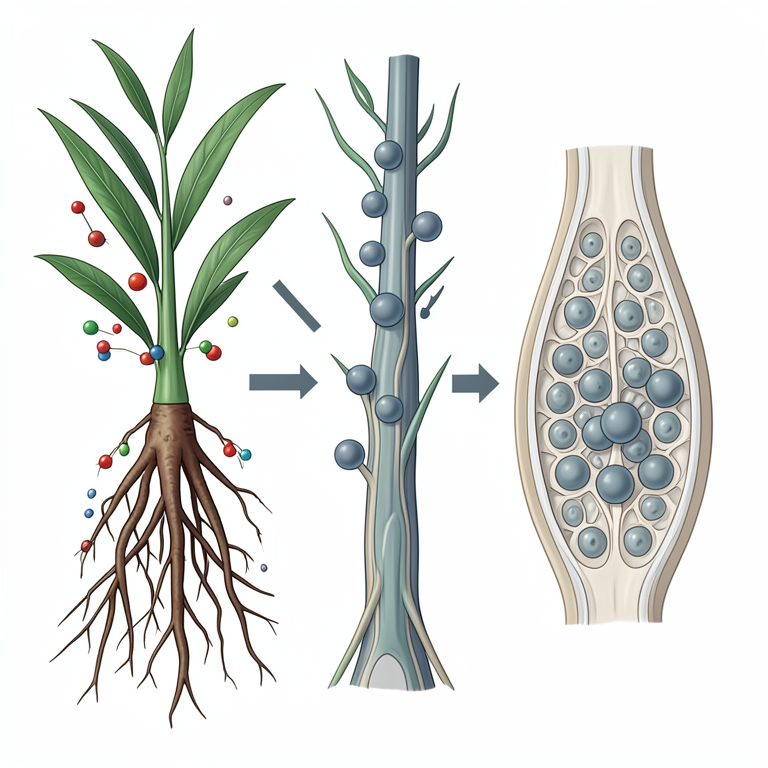
Nano Plastic Pathway and Disruption
AI-generated conceptual illustration (Aegiceras corniculatum mangrove plant). It explains the idea and does not show study data.
View source evidence ↗Figures & tables
From the original paper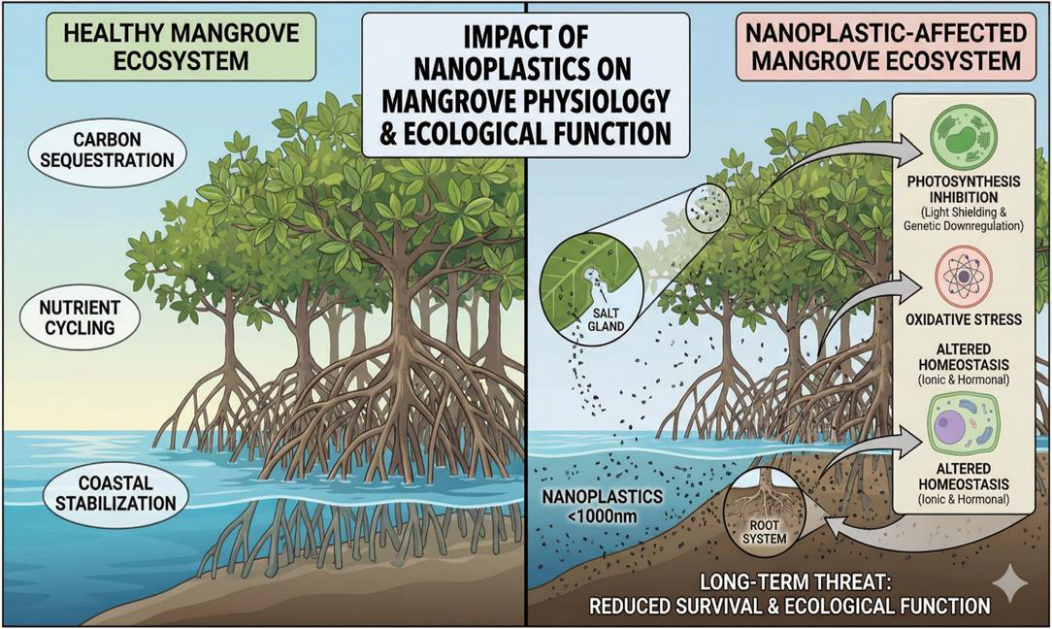 Figure 1
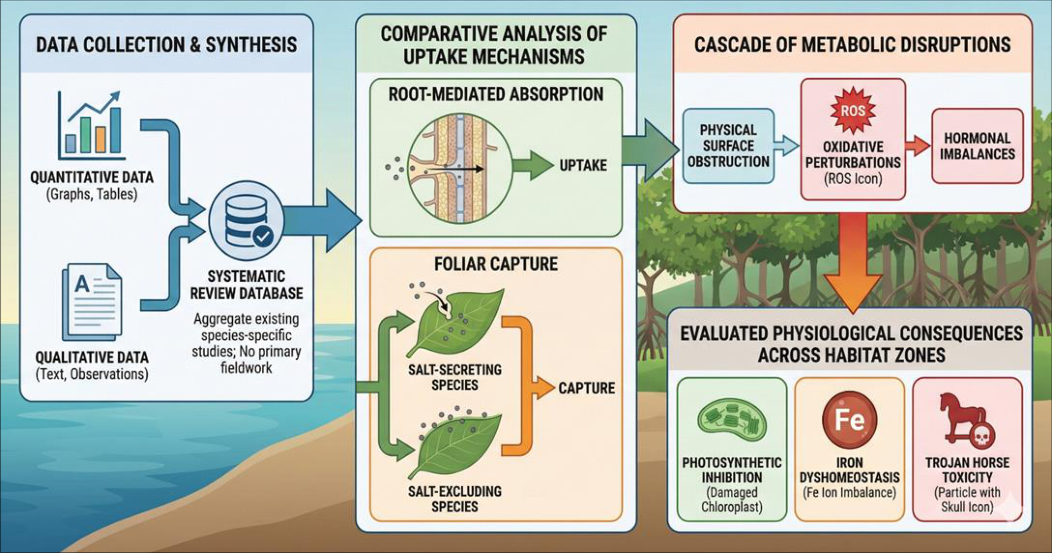 Figure 2
 Table 1
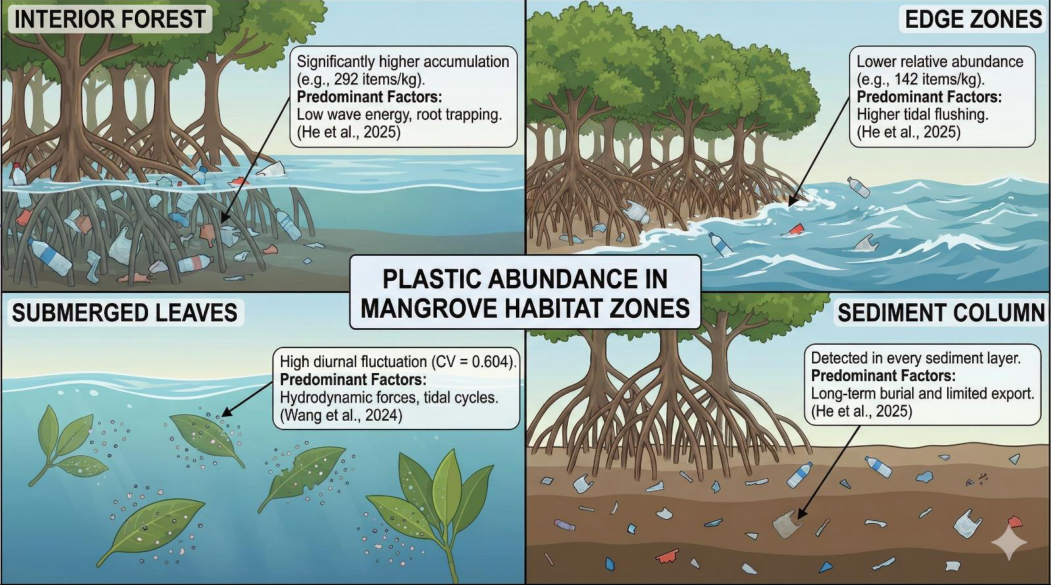 Figure 3
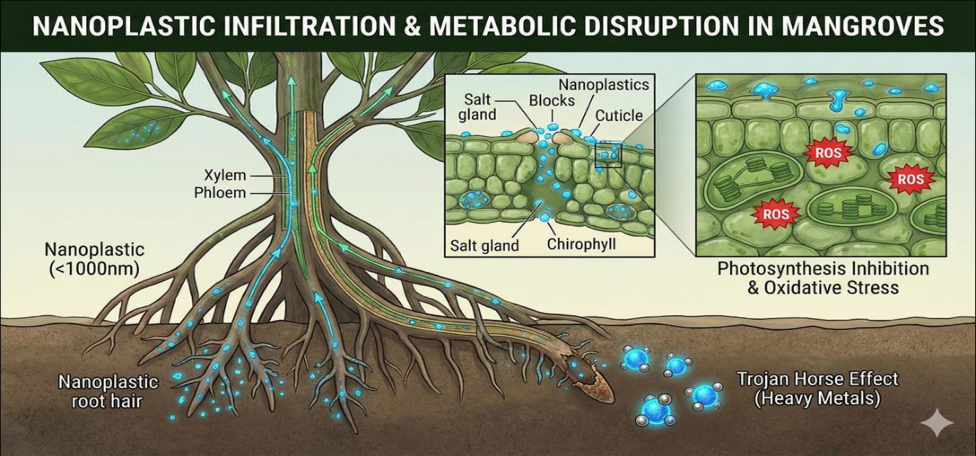 Figure 3
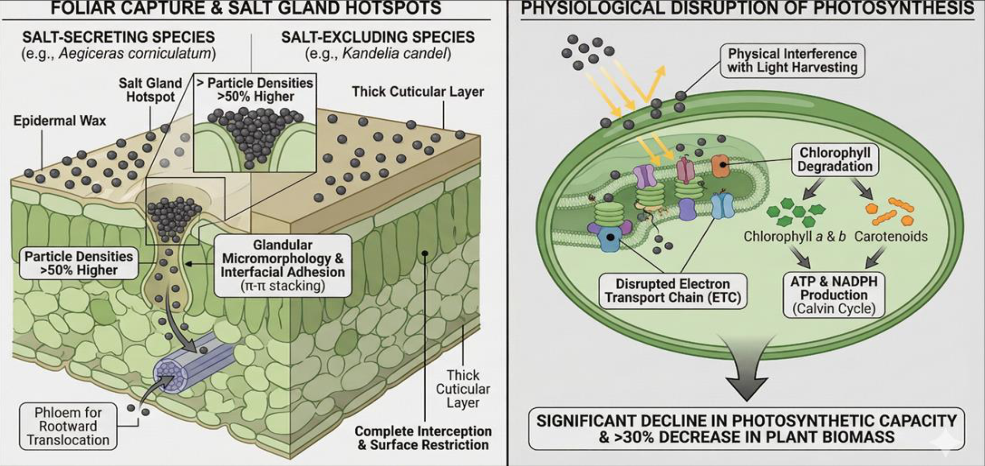 Figure 4
 Table 2
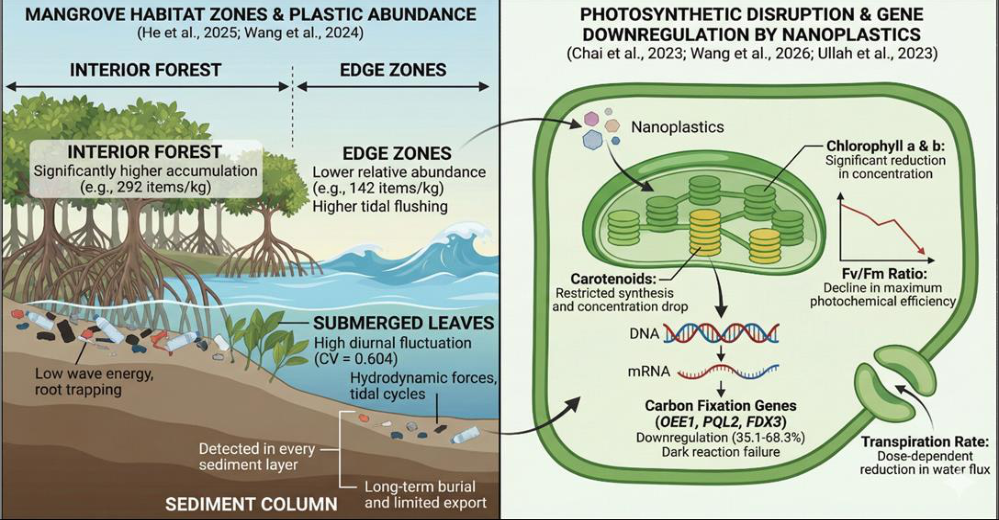 Figure 5
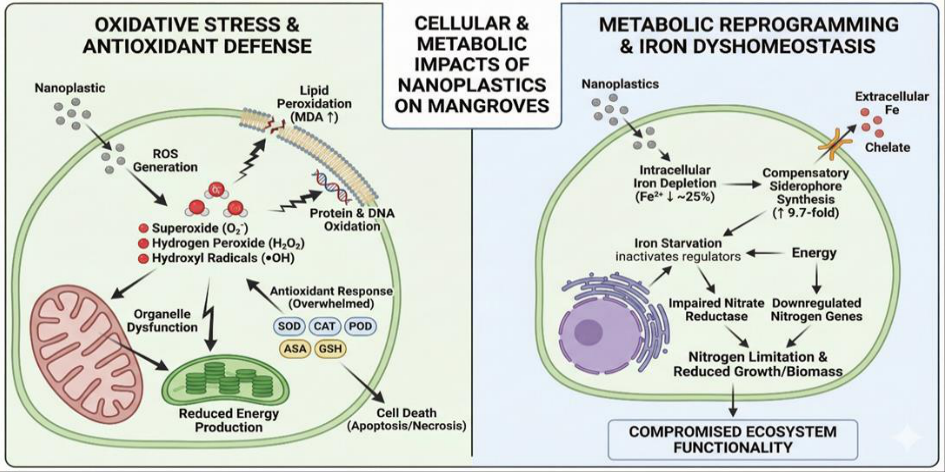 Figure 6
 Table 3
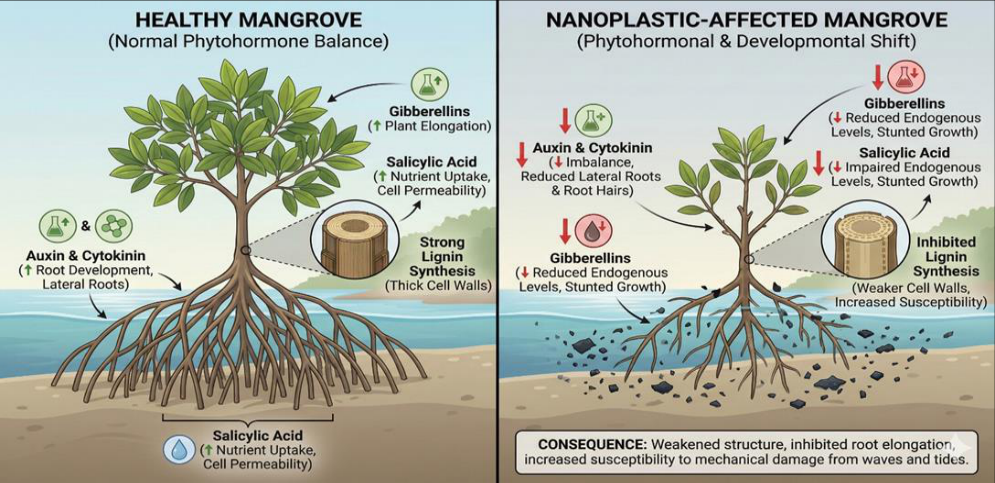 Figure 7
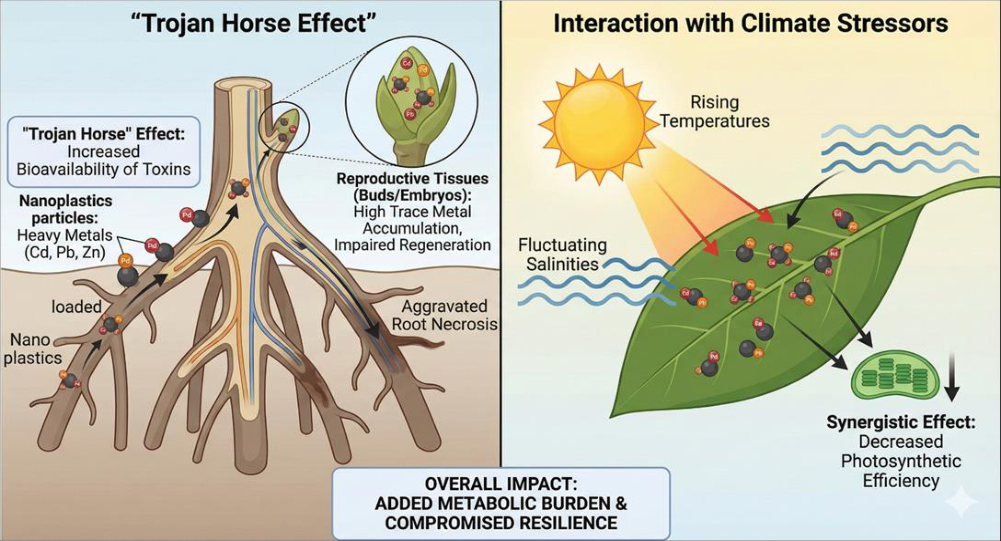 Figure 8
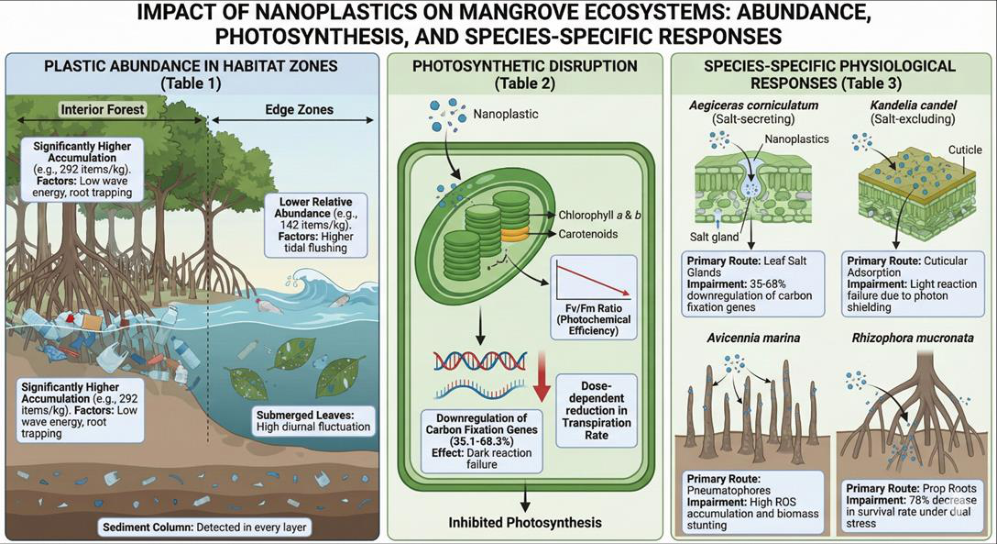 Figure 9
Introduction
Plastic pollution has emerged as one of the most critical global environmental challenges, threatening the sustainability of both aquatic and terrestrial ecosystems (Pulusu et al., 2025) [12] . Mangrove forests are recognized as significant global sinks for plastic debris due to their complex geomorphology and the physical filtering capacity of their root structures (He et al., 2025) [6] . Within these environments, larger plastic items undergo continuous degradation through a combination of physical, chemical, and biological processes (Wang et al., 2026) [15] . This fragmentation leads to the formation of microplastics and, ultimately, Nano plastics, which are defined as particles smaller than 1000 nm (Wang et al., 2026) [15] . Nano plastics are particularly concerning because their small size and high surface area-to-volume ratio increase their chemical reactivity and bioavailability (Arini et al., 2023) [4] . These minute particles can easily penetrate biological barriers that usually exclude larger debris (Pulusu et al., 2025) [12] . Once internalized, Nano plastics interfere with a wide range of metabolic, physiological, and biochemical processes (He et al., 2025) [6] . The pervasive presence of Nano plastics in mangrove sediments poses a fundamental threat to the physiological integrity of these essential coastal forests (Aguirre-Sanchez et al., 2024) [1] . Understanding the specific interactions between Nano plastics and mangrove plant systems is vital for predicting ecosystem health in the Anthropocene (Wang et al., 2026) [15] . oxidative perturbations and hormonal imbalances. The methodology involves a comparative analysis of uptake mechanisms specifically distinguishing between rootmediated absorption and foliar capture in salt-secreting versus salt-excluding species and evaluates physiological consequences such as photosynthetic inhibition, iron dyshomeostasis, and "Trojan Horse" toxicity across varied mangrove habitat zones.
Environmental fragmentation and distribution dynamics
The transition from Macro plastics to Nano plastics in mangrove swamps is accelerated by intense environmental exposure (Wang et al., 2026) [15] . Ultraviolet radiation from sunlight, combined with high temperatures, causes the photo-oxidation and weakening of polymer bonds (Lin & Yu, 2025) [8] . Mechanical stress from tidal reciprocating currents further facilitates the physical abrasion of plastics against sand and other debris (He et al., 2025) [6] . Chemical weathering in the brackish environment degrades the molecular weight of the plastics, making them brittle and prone to fragmentation (Arini et al., 2023) [4] . Biological activity also contributes to this fragmentation, as microorganisms colonize plastic surfaces and utilize hydrocarbons as energy sources (Ma et al., 2025) [9] . The resulting nanoplastics possess high mobility, allowing them to distribute throughout all layers of the sediment column (He et al., 2025) [6] . In some coastal estuaries, the abundance of these particles in mangrove sediments is three to five times higher than in adjacent bare mudflats (He et al., 2025) [6] . Interior forest habitats often exhibit higher accumulation rates than edge zones due to reduced wave energy and complex root trapping (He et al., 2025) [6] . Submerged leaves also act as dynamic sinks, showing diurnal fluctuations in particle abundance driven by hydrodynamic forces (Wang et al., 2024) [16] . [6] Edge Zones Lower relative abundance (e.g., 142 items/kg) Higher tidal flushing (He et al., 2025) [6] Submerged Leaves High diurnal fluctuation (CV = 0.604) Hydrodynamic forces, tidal cycles (Wang et al., 2024) [16] Sediment Column Detected in every sediment layer Long-term burial and limited export (He et al., 2025) [6] Mechanisms of Nano plastic Uptake and Internal Translocation Mangrove plants have evolved specialized pathways for managing salt and water, which nanoplastics exploit to enter the plant system (Wang et al., 2026) [15] . These pathways involve both root-mediated absorption from the soil and foliar-mediated capture from the atmosphere or water column (Wang et al., 2026) [15] .
Root Absorption and Movement
Mangrove roots are the primary site for the uptake of nanoplastics found in the rhizosphere (Chai et al., 2023) [5] .
Particles can be adsorbed onto root hairs, where they interact with the hydrophobic surfaces of the epidermis (He et al., 2025) [6] . Internalization occurs via two main routes: the apoplastic and symplastic pathways (Zhao et al., 2024) [21] . The apoplastic pathway involves passive transport through the cell wall and intercellular spaces (Qin et al., 2024) [13] . In contrast, the symplastic pathway requires particles to cross the plasma membrane, often through endocytosis or specialized transporter proteins (Zhao et al., 2024) [21] . Nano plastics can also enter the vascular system through "crack-entry" modes, where mechanical damage or lateral root emergence creates temporary openings in the endodermis (Yin et al., 2021) [18] . Once inside the root cortex, the particles move into the xylem and are translocated upward to the stems and leaves by transpirational pull (He et al., 2025) [6] . The surface charge of the nanoparticles significantly influences these uptake rates (Zhao et al., 2024) [21] . Positively charged particles show higher initial attraction to cuticles but may have restricted movement compared to negatively charged ones (Zhao et al., 2024) [21] .
Fig 3: Overview of Nano infiltration & metabolic disruption in mangroves
Foliar Capture and Salt Gland Hotspots Foliar uptake is a critical pathway for Nano plastics, particularly for species that utilize salt glands for ion regulation (Wang et al., 2026) [15] . Atmospheric Nano plastics are deposited on leaf surfaces, where they adhere to the epidermal wax (Wang et al., 2026) [15] . In salt-secreting species like Aegiceras corniculatum, the salt glands act as accumulation hotspots (Wang et al., 2026) [15] . These glands exhibit particle densities over 50% higher than adjacent epidermal cells (Wang et al., 2026) [15] . This preferential retention is driven by the glandular micromorphology and interfacial adhesion mediated by π-π stacking (Wang et al., 2026) [15] . Importantly, these glands provide entry points for Nano plastic internalization, facilitating rootward translocation through the phloem (Wang et al., 2026) [15] . In contrast, salt-excluding species such as Kandelia candel experience complete interception by the thick cuticular layer, restricting the particles to the leaf surface (Wang et al., 2026) [15] .
Physiological Disruption of Photosynthesis: Nano plastic exposure leads to a significant decline in the photosynthetic capacity of mangroves (Chai et al., 2023) [5] . This impairment is caused by a combination of physical interference with light harvesting and the metabolic disruption of enzymatic processes (Chai et al., 2023) [5] .
Chlorophyll Degradation
Nano plastics accumulated within tissues cause a decline in chlorophyll a and b concentrations, as well as carotenoid levels (Chai et al., 2023) [5] . In Kandelia obovata, polyethylene and polypropylene Nano plastics have been shown to restrict chlorophyll synthesis and alter photochemical efficiency (Chai et al., 2023) [5] . The reduction in chlorophyll content is often dose-dependent, leading to lower maximum photochemical efficiency (Fv / Fm) (Chai et al., 2023) [5] . These changes disrupt the Electron Transport Chain (ETC) and limit the production of ATP and NADPH required for the Calvin cycle (Chai et al., 2023) [5] . In some cases, Nano plastics cause more than a 30% decrease in plant biomass due to inhibited photosynthesis (Chai et al., 2023) [5] .
Downregulation of carbon fixation genes
Beyond physical interference, Nano plastics cause deepseated metabolic changes by altering the expression of genes involved in carbon fixation (Wang et al., 2026) [15] . In saltsecreting mangroves, internalized Nano plastics trigger "dark reaction failure" (Wang et al., 2026) [15] . This is characterized by the 35% to 68% downregulation of genes responsible for carbon fixation, such as OEE1, PQL2, and FDX3 (Wang et al., 2026) [15] . This molecular disruption prevents the plant from effectively converting atmospheric CO2 into organic matter (Wang et al., 2026) [15] . Furthermore, Nano plastics can alter leaf ionomers, particularly reducing magnesium and iron levels (Chai et al., 2023) [5] . Magnesium is essential for chlorophyll synthesis, and its depletion directly hinders light absorption (Chai et al., 2023) [5] . Significant reduction in concentration (Chai et al., 2023) [5] Fv /Fm Ratio Decline in maximum photochemical efficiency (Chai et al., 2023) [5] Carbon Fixation Genes Downregulation (35.1-68.3%) (Wang et al., 2026) [15]
Carotenoids
Restricted synthesis and concentration drop (Chai et al., 2023) [5] Transpiration Rate Dose-dependent reduction in water flux (Ullah et al., 2023) [14]
Induction of oxidative stress and antioxidant defense
The most common biochemical response to Nano plastic stress in mangroves is the excessive production of reactive oxygen species (ROS) (He et al., 2025) [6] . This oxidative burst is a primary driver of Nano plastic-induced phytotoxicity (He et al., 2025) [6] .
ROS Generation and Lipid Peroxidation
Nano plastic particles stimulate the production of superoxide anions (O2 -), hydrogen peroxide (H2O2), and hydroxyl radicals within plant tissues (He et al., 2025) [6] . These ROS molecules are highly reactive and cause the oxidation of lipids, proteins, and DNA (He et al., 2025) [6] . Lipid peroxidation, measured by levels of malondialdehyde (MDA), is a hallmark of membrane damage (He et al., 2025) [6] . Studies have shown that both root and leaf tissues of mangrove-like model systems exhibit significantly increased MDA levels upon exposure (He et al., 2025) [6] . This oxidative damage can compromise organelle function, particularly in mitochondria and chloroplasts, leading to a decline in energy production (He et al., 2025) [6] . In Avicennia marina, ROS accumulation in the roots is a primary symptom of polyethylene and polyamide stress (He et al., 2025) [6] .
Enzymatic Antioxidant Response
Mangroves attempt to neutralize ROS through an array of antioxidant defense mechanisms (Yildiztugay et al., 2022) [17] . This involves the upregulation of enzymes such as superoxide dismutase (SOD), catalase (CAT), and peroxidase (POD) (Yildiztugay et al., 2022) [17] . Nonenzymatic antioxidants like ascorbic acid (ASA) and glutathione (GSH) also play a vital role (Yildiztugay et al., 2022) [17] . However, the response of these systems is often overwhelmed at high nanoplastic concentrations (Yildiztugay et al., 2022) [17] . Chronic exposure eventually leads to a decrease in total antioxidant capacity and subsequent apoptosis or necrosis (Zhao et al., 2024) [21] .
Metabolic Reprogramming and Iron Dyshomeostasis
The internalization of Nano plastics has been shown to fundamentally rewire microbial and plant metabolic priorities (Zhao et al., 2024) [21] . This is particularly evident in the disruption of iron and nitrogen cycles (Zhao et al., 2024) [21] .
Depletion of Intracellular Iron
Nano plastic internalization can deplete intracellular Fe 2+ levels by approximately 25% (Zhao et al., 2024) [21] . This triggers a compensatory 9.7-fold increase in siderophore synthesis to chelate extracellular iron (Zhao et al., 2024) [21] . This iron starvation inactivates key regulators and diverts cellular energy away from nitrogen metabolism pathways (Zhao et al., 2024) [21] . In mangroves, this disruption can lead to a decline in leaf and root ionomers (Chai et al., 2023) [5] . Impaired synthesis of iron-dependent enzymes, such as nitrate reductase, further compromises plant health (Zhao et al., 2024) [21] . This cascade establishes iron dyshomeostasis as a pivotal mechanism of Nano plastic toxicity (Zhao et al., 2024) [21] .
Impact on nitrogen metabolism: Nitrogen limitation, resulting from nanoplastic-induced shifts, slows down plant growth (Chai et al., 2023) [5] . Nanoplastics interfere with the abundance of nitrogen-metabolizing genes (Zhou et al., 2024). This leads to a decreased efficiency in the assimilation of nitrogen from the soil (Zhao et al., 2024) [21] . Such metabolic shifts compromise the overall ecosystem functionality and biomass production (Zhao et al., 2024) [21] . In Rhizophora mucronata, propagules exposed to HDPE-MPs showed significantly higher protein carbonyl content (Alfafara et al., 2025) [3] .
Phytohormonal and Developmental Shifts
Phytohormones are the primary messengers controlling plant growth and stress responses (Ullah et al., 2023) [14] . Their concentrations are frequently altered by Nano plastic exposure, affecting overall plant architecture (Ullah et al., 2023) [14] .
Auxin and Cytokinin Imbalance
Nano plastics interfere with the production and transport of auxin and cytokinin (Yin et al., 2021) [18] . These hormones are essential for the regulation of root development (Yin et al., 2021) [18] . Polystyrene Nano plastics have been reported to decrease the levels of these hormones, leading to a reduction in the formation of lateral roots and root hairs (Yin et al., 2021) [18] . In mangroves, where specialized root structures are vital for stability in anoxic mud, this disruption can severely weaken the plant (Chai et al., 2023) [5] . The inhibition of root elongation is a common morphological indicator of Nano plastic-induced stress (Chai et al., 2023) [5] .
Gibberellins and Lignin Synthesis
Other key hormones, such as gibberellins and salicylic acid, are also affected by Nano plastic exposure (Ullah et al., 2023) [14] . Gibberellins, which regulate plant elongation, show reduced endogenous levels in the presence of Nano plastic stress (Ullah et al., 2023) [14] . Salicylic acid is critical for maintaining cell permeability and nitrogen uptake, and its reduction leads to impaired nutrient use efficiency (Ullah et al., 2023) [14] . Additionally, Nano plastics can inhibit the synthesis of lignin, a crucial component of cell wall strength (Ullah et al., 2023) [14] . Such changes in mangroves could lead to increased susceptibility to mechanical damage from waves and tides (Magdayo, 2024) [10] .
Synergistic Toxicities and the "Trojan Horse" Effect
Nano plastics exhibit a high capacity to adsorb and transport other environmental pollutants (Arini et al., 2023) [4] . This leads to synergistic toxic effects that are more severe than the impacts of the particles alone (Arini et al., 2023) [4] .
Heavy Metal Co-transport
The large surface area of Nano plastics allows them to serve as carriers for heavy metals such as cadmium, lead, and zinc (Arini et al., 2023) [4] . In mangrove sediments, these contaminants are adsorbed onto the surface of Nano plastics and transported into plant tissues through the "Trojan Horse" effect (He et al., 2025) [6] . This mechanism significantly increases the bioavailability of toxins (He et al., 2025) [6] . For example, the combined exposure of mangrove seedlings to Nano plastics and cadmium resulted in aggravated root necrosis (He et al., 2025) [6] . In Avicennia marina, trace metal accumulation is particularly high in reproductive tissues such as buds and embryos (He et al., 2025) [6] . This may impair long-term population regeneration (He et al., 2025) [6] . . Ocean warming has been shown to work synergistically with Nano plastic pollution to decrease photosynthetic efficiency (Li et al., 2024) [7] . Mangroves surviving in extreme environments are already near their physiological limits (Akram et al., 2023) [2] . The added metabolic burden of Nano plastic-induced oxidative stress may compromise their overall resilience (Akram et al., 2023) [2] . [15]
Kandelia candel
Cuticular Adsorption Light reaction failure due to photon shielding (Wang et al., 2026) [15] Avicennia marina Pneumatophores High ROS accumulation and biomass stunting (He et al., 2025) [6]
Rhizophora mucronata
Prop Roots 78% decrease in survival rate under dual stress (Alfafara et al., 2025) [3]
Kandelia obovata
Root Epidermis Energy charge deficit and restricted root growth (Chai et al., 2023) [5]
Conclusion
Nano plastic pollution represents a multifaceted threat to the physiological health and ecological integrity of mangrove forests. These particles infiltrate mangrove tissues through specialized root and foliar pathways, where they initiate a complex series of metabolic disruptions. The impairment of photosynthesis, characterized by both chlorophyll degradation and the genetic downregulation of carbon fixation pathways, directly threatens the carbon storage capacity of these vital ecosystems. Furthermore, Nano plastic-induced oxidative stress, hormonal imbalances, and the disruption of ionic homeostasis-particularly regarding iron and salt regulation-compromise the plants' ability to withstand the harsh conditions of the intertidal zone. The role of Nano plastics as vectors for heavy metals and their impact on sediment biogeochemistry further extend these risks to the broader ecosystem. As mangroves are critical nodes in global carbon cycles and coastal protection, the physiological degradation of these forests by Nano plastics could have far-reaching consequences for biodiversity and climate resilience. Addressing this challenge requires an integrated understanding of the microscopic interactions between plastics and plant biology to develop effective mitigation and preservation strategies for these essential coastal landscapes.
Figures and tables from the paper
| Habitat Zone | Plastic Abundance Characteristics | Predominant Factors | Reference |
|---|---|---|---|
| Interior Forest | Significantly higher accumulation (e.g., 292 items/kg) | Low wave energy, root trapping | (He et al., 2025) [6] |
| Edge Zones | Lower relative abundance (e.g., 142 items/kg) | Higher tidal flushing | (He et al., 2025) [6] |
| Submerged Leaves | High diurnal fluctuation (CV = 0.604) | Hydrodynamic forces, tidal cycles | (Wang et al., 2024) [16] |
| Sediment Column | Detected in every sediment layer | Long-term burial and limited export | (He et al., 2025) [6] |
Table text extracted from the original PDF; superscript letters are shown inline. The original table image is below.
View original table image
| Photosynthetic Parameter | Effect of Nano plastic Exposure | Reference |
|---|---|---|
| Chlorophyll a & b | Significant reduction in concentration | (Chai et al., 2023) [5] |
| Fv /Fm Ratio | Decline in maximum photochemical efficiency | (Chai et al., 2023) [5] |
| Carbon Fixation Genes | Downregulation (35.1-68.3%) | (Wang et al., 2026) [15] |
| Carotenoids | Restricted synthesis and concentration drop | (Chai et al., 2023) [5] |
| Transpiration Rate | Dose-dependent reduction in water flux | (Ullah et al., 2023) [14] |
Table text extracted from the original PDF; superscript letters are shown inline. The original table image is below.
View original table image
| Species | Primary Absorption Route | Major Physiological Impairment | Reference |
|---|---|---|---|
| Aegiceras corniculatum | Leaf Salt Glands | 35-68% downregulation of carbon fixation genes | (Wang et al., 2026) [15] |
| Kandelia candel | Cuticular Adsorption | Light reaction failure due to photon shielding | (Wang et al., 2026) [15] |
| Avicennia marina | Pneumatophores | High ROS accumulation and biomass stunting | (He et al., 2025) [6] |
| Rhizophora mucronata | Prop Roots | 78% decrease in survival rate under dual stress | (Alfafara et al., 2025) [3] |
| Kandelia obovata | Root Epidermis | Energy charge deficit and restricted root growth | (Chai et al., 2023) [5] |
Table text extracted from the original PDF; superscript letters are shown inline. The original table image is below.
View original table image
References
21 in the original paper- Sanchez AA, et al. Prevalence of microplastics in Peruvian mangrove sediments and edible mangrove species. Mar Pollut Bull. 2024;210:117105.
- Akram M, et al. Adaptation and resilience mechanisms of mangroves in semi-arid regions. J Arid Environ. 2023;208.
- Alfafara PAM, et al. Physiological responses of Gutweed Ulva intestinalis and Rhizophora mucronata to high-density polyethylene microplastics. Mar Pollut Bull. 2025;212:118282.
- Arini A, et al. Origin, exposure routes and xenobiotics impart nanoplastics with toxic effects on freshwater bivalves. Environ Sci Nano. 2023;10:1500-15.
- Chai M, Wu H, et al. Responses of mangrove (Kandelia obovata) growth, photosynthesis, and rhizosphere soil properties to microplastic pollution. Mar Pollut Bull. 2023;189:114827.
- He G, Xie H, Tan B, Chen M, Wu Z, Dai Z, et al. Effects of microplastics and heavy metal stress on the growth and physiological characteristics of pioneer plant Avicennia marina. Mar Pollut Bull. 2025;216:117929.
- Li J, et al. Microplastic pollution as an environmental risk exacerbating the greenhouse effect and climate change. Carbon Res. 2024;3:9.
- Lin M, Yu JZ. Oxidative potential of atmospheric particulate matter: A review of the role of metal-organic interactions. Environ Sci Technol; 2025.
- Ma Y, et al. Nanoplastics as an emerging factor influencing microbial communities in various ecosystems. Front Microbiol. 2025;16:1679160.
- Magdayo ED. Macroplastic pollution in mangrove forests of Tangub City, Panguil Bay, Philippines. Nusantara Biosci. 2024;16:251-262.
- Perri S, et al. Understanding the ecohydrology of mangroves: A simple SPAC model for Avicennia marina. J Hydrol; 2025.
- Pulusu VS, Chilamula S, Holkunde A, Gunturi R, Vidiyala P, Bashetty SR. Microplastics and Nanoplastics: Environmental Pathways, Ecological Impacts, and Regulatory Perspectives. Open Access Libr J. 2025;12:1-31.
- Qin C, et al. Research progress and hotspots analysis of apoplastic barriers in plants under adversity stress. Plant Signal Behav; 2024.
- Ullah H, et al. Microplastic stress in plants: Effects on plant growth and their remediations. Environ Geochem International Journal of Biology Sciences https://www.biologyjournal.net Health; 2023.
- Wang L, Guan T, Lin B, Liu B, Wang X, Lin Y, et al. Interspecific difference in foliar retention and translocation of nanoplastics by typical salt-secreting and salt-excluding mangrove drives species-specific photosynthetic impairment mechanisms. Mar Pollut Bull; 2026.
- Wang X, et al. Secreted salt and hydrodynamic factors combine to affect dynamic fluctuations of microplastics on mangrove leaves. J Hazard Mater. 2024;467:133698.
- Yildiztugay E, et al. The hormetic dose-risks of polymethylmethacrylate nanoplastics on chlorophyll a fluorescence transient, lipid composition, and antioxidant system in Lactuca sativa. Environ Pollut. 2022;308:119641.
- Yin L, et al. Reductions in stem length and aboveground biomass of plants growing under elevated concentrations of microplastics. Sci Total Environ. 2021;782.
- Zhao X, et al. Iron dyshomeostasis: A pivotal mechanism underpinning nanoplastics' inhibition of biogeochemical cycling. Environ Chem Ecotoxicol; 2025.
- Zhou X, et al. Effects of microplastics on carbon release and microbial community in mangrove soil systems. J Hazard Mater. 2024;465:133152.
- Zhao H, Chen H, Yang F, Liu N, Deng H, Cai H, et al. Explainability for large language models: A survey. ACM Transactions on Intelligent Systems and Technology. 2024 Feb 22;15(2):1-38.