
Research article · 2026 · Full text
International Journal of Advanced Chemistry ResearchSpatio-temporal assessment of heavy metal contamination and water quality indices in coal mining-affected river basins: A comprehensive review
Volume 8(1) · Pages 16–22 · DOI: 10.33545/26646781.2026.v8.i1a.353 ↗
Research areasMine drainage and remediation techniquesHeavy metals in environmentTailings Management and Properties
Abstract
Author-writtenCoal mining stands among the most resource-intensive extractive industries, yet its contribution to regional water degradation remains a critical environmental challenge worldwide. Heavy metals released during excavation, overburden weathering, mine drainage, and coal washing enter river basins, where they accumulate, persist and gradually reshape the chemical identity of flowing water. Their behaviour is strongly influenced by pH, dissolved oxygen, seasonal discharge, redox potential, suspended solids and watershed geology. Consequently, assessing pollution only spatially is insufficient; a temporal dimension becomes essential to capture fluctuation patterns driven by monsoonal runoff, lean-flow seasons, mining intensity variation and hydrological alterations. Over the last two decades, Water Quality Indices (WQI), Heavy Metal Pollution Index (HPI), Metal Pollution Index (MPI), and Heavy Metal Evaluation Index (HEI) have become vital tools for quantifying river health and comparing pollution trends across regions. This review synthesizes global research to evaluate how spatio-temporal monitoring frameworks can reveal contamination gradients in coal-mining-affected rivers. Case studies from India, China, South Africa, the United States, and Indonesia illustrate patterns where rivers downstream of mines consistently exhibit elevated concentrations of iron, manganese, lead, cadmium, chromium, nickel, mercury, and arsenic. The paper concludes that long-term monitoring, integration of GIS-based modelling, biomonitoring, and sustainable mine-water treatment technologies are necessary to restore ecological balance and ensure safe water accessibility for communities dependent on these river ecosystems.
Summary
Source-checkedPlain-language reading of the full paper, prepared with AI and checked against the text. Each point links to the authors' own words.
Why it matters
- Coal mining is a resource-intensive industry that causes significant regional water degradation globally. View evidence ↗
- Heavy metals enter river basins through processes like excavation, mine drainage, and coal washing, where they persist and alter the water's chemical composition. View evidence ↗
- There is a high risk of chronic human exposure to metals via bioaccumulation in fish and vegetables, as well as through contaminated sediments. View evidence ↗
The question
- The review aims to map research on heavy metal pollution in coal-mining river basins, identify key metals, evaluate index-based systems, and compare temporal fluctuations. View evidence ↗
What they did
- The authors synthesized global research to evaluate the effectiveness of spatio-temporal monitoring frameworks in revealing contamination gradients. View evidence ↗
- The analysis utilized case studies from India, China, South Africa, the United States, and Indonesia to identify patterns of metal elevation. View evidence ↗
- The review examines the use of quantitative indices (WQI, HPI, MPI, and HEI) to condense complex chemical data into single health metrics for rivers. View evidence ↗
What they found
- In the Damodar Basin, stations within 2-5 km of coal washery discharge points showed higher concentrations of Fe, Mn, Pb, Zn, and Cd than headwater controls. View evidence ↗
- In the Talcher Coalfield, stations near mine outfalls had nearly three times the heavy-metal contamination levels of upstream regions. View evidence ↗
- In the Damodar River Basin, Heavy Metal Pollution Index (HPI) values frequently reach 200-250, which is well above safe consumption limits. View evidence ↗
- Wet seasons increase the total metal load due to erosion and mobilization, but the high water volume often dilutes the concentration of dissolved metals. View evidence ↗
- Dry seasons lead to higher dissolved metal concentrations and electrical conductivity due to reduced flow, evaporation, and constant mine drainage. View evidence ↗
- In the Olifants River of South Africa, iron (Fe) and sulfate (SO₄²⁻) levels remained critically high even ten years after the mines were abandoned. View evidence ↗
- In Indonesia's Kutai and Mahakam Rivers, cadmium (Cd), lead (Pb), and zinc (Zn) concentrations spike during the dry season, while monsoons increase turbidity. View evidence ↗
What it means
- The authors conclude that restoring ecological balance and ensuring water safety requires long-term monitoring, GIS modelling, biomonitoring, and sustainable treatment technologies. View evidence ↗
Visual summary
1 visualsIllustrations explain the paper; they do not show study data.
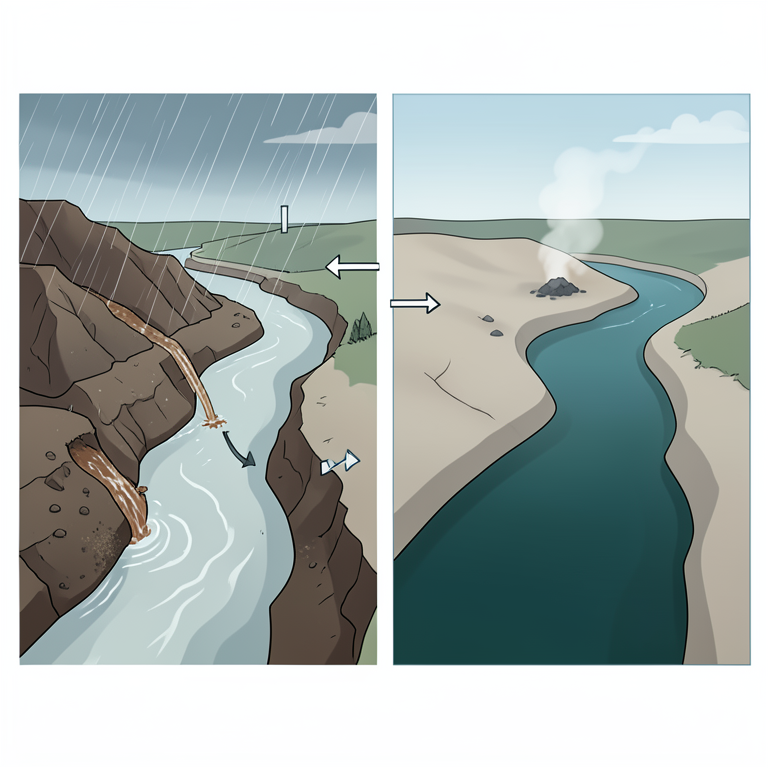
Seasonal Metal Dynamics
AI-generated conceptual illustration (a river basin adjacent to a coal mine). It explains the idea and does not show study data.
View source evidence ↗Figures & tables
From the original paper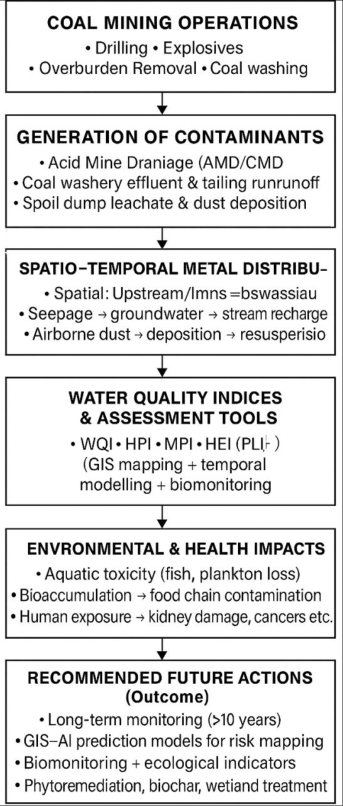 Figure 1
 Table 1
Introduction
Freshwater ecosystems form the backbone of human civilization, agricultural productivity, industrial development and biodiversity conservation. Yet, rivers that traverse mining belts often carry the heaviest burden of economic progress. Coal mining, in particular, alters drainage patterns, disturbs geological formations and exposes sulfide-rich strata that release dissolved metals into surrounding waterways. Once mobilized, metals do not break down like organic pollutants; instead, they accumulate within sediments, biofilms and food webs, persisting for years even after mining ceases (Briffa et al., 2020; Nachana'a & Williams, 2019) [2,11] . Their slow turnover and toxicological relevance make heavy metals one of the most persistent environmental stressors affecting river basins globally. The pressing concern in recent decades is not merely the presence of metals, but the manner in which they distribute unevenly across space and time. Spatial variation reflects proximity to mining units, tailing ponds, overburden dumps, waste channels and tributary inflow points. Upstream zones, where anthropogenic influence is minimal, often display acceptable purity, while downstream stretches may reveal exponential increases in metal load. Temporal variability too plays a decisive role. Concentrations typically fluctuate between seasons; for instance, monsoonal floods may dilute pollutants, whereas dry months may intensify metal accumulation due to reduced flow, increased evaporation, and sustained effluent discharge. These oscillations cannot be captured by one-time sampling, hence spatio-temporal assessment becomes indispensable for realistic environmental diagnosis (Lotfi et al., 2020; Badeenezhad et al., 2023) [8,1] .
Equally important is the use of scientifically sound evaluative tools. Water Quality Indices condense multiple parameters -pH, conductivity, turbidity, dissolved oxygen, and metal concentrationinto a single numerical value that reflects the overall health category of a river. The HPI further narrows the evaluation to metal-centric contamination intensity, facilitating rapid comparison between sampling stations and seasons (Majhi et al., 2016; Badeenezhad et al., 2023) [9,1] . When used repeatedly across long durations, these indices reveal trend lines: whether contamination is worsening, stabilising or improving under proposed mitigation strategies. Without such indices, waterquality reports remain fragmented, descriptive, and difficult to translate into policy decisions. The urgency of this review stems from a stark reality: river basins linked to coalfields face increasing stress as global energy demands continue to rely heavily on coal, particularly in developing nations. Many communities living along these rivers use the water directly for irrigation, livestock rearing, household chores and sometimes even drinking. The risk of chronic metal exposure through bioaccumulation in fish, vegetables irrigated with contaminated water, and sediments transported during floods remains disturbingly high. Lead and mercury impair neurological development; cadmium damages kidneys and bones; arsenic triggers carcinogenic pathways. The absence of visible immediate effects often masks long-term toxicity until irreversible biological harm sets in. Moreover, the influence is not restricted to humans alone. Aquatic organisms experience physiological stress, disrupted reproduction, altered enzyme regulation and habitat decline. Benthic invertebrates, which serve as sensitive bioindicators, often disappear from heavily polluted river stretches, signalling ecosystem destabilisation long before human health outcomes become evident. Sediment-bound metals may re-mobilise during floods, extending the affected zone further downstream with each seasonal cycle. This combination of persistence, transportability and food-chain integration makes heavy metals exceptionally hazardous (Sa'eed et al., 2023; Ondrasek et al., 2025) [14,12] . Given these concerns, synthesising past research becomes a necessary academic exercise. Individual case studies exist widely, yet an integrated spatio-temporal perspective is still developing. By reviewing global patterns, identifying region-specific anomalies and assessing methodological approaches, one can formulate a more refined understanding of contamination dynamics. Such synthesis not only strengthens theoretical insight but also supports practical policy interventionsenvironmental regulations, mine drainage treatment, waste-handling protocols, and restoration planning. The present review, therefore, aims to map the evolution of heavy metal pollution research in coal-mining-linked river basins, highlight major metals of concern, examine indexbased evaluation systems, and compare temporal fluctuations across river systems. It also identifies critical gaps in monitoring, modelling and rehabilitation, offering future research pathways that align environmental protection with mining-driven economic frameworks.
Major Sources of Heavy Metal Pollution
Heavy metal contamination in water bodies associated with coal mining arises from multiple anthropogenic and natural processes. Among the primary anthropogenic sources are mining operations (both open-cast and underground), overburden/waste-rock dumps, coal washery effluents, coaldust deposition, and mine tailings seepage (Briffa, Sinagra & Blundell, 2020; Goyal et al., 2022) [2,5] . Mining overburden and waste dumps: When coal seams are exploited, associated rocks containing sulfide minerals (notably pyrites) are exposed to air and water.
Oxidation of these minerals leads to the generation of acidic drainage, dissolving heavy metals from host rocks and releasing them into nearby surface-and groundwater systems (Wu et al., 2025; Rouhani et al., 2023) [18,13] . Acid Mine Drainage (AMD) / Coal-Mine Drainage (CMD): The process of AMD (or CMD in case of coal) is one of the most significant mechanisms by which heavy metals enter rivers and groundwater. Water percolating through mine wastes picks up acidity (from sulfide oxidation) and mobilizes metals like Fe, Mn, Pb, Cd, As, Cr, among others (Mohanty et al., 2018; Wu et al., 2025) [10,18] . [13] .
Such sources may act singly or in combination. Often abandoned coal mines or legacy spoil dumps continue to leach metals decades after mining activity has ceased (Gaikwad & Gupta, 2008; Wu et al., 2025) [4,18] .
Geochemical Conditions & Metal Mobilization
The mobilization and fate of heavy metals in miningaffected river basins depend heavily on physicochemical conditions such as pH, redox potential (Eh), dissolved oxygen, and the presence of sulfates, carbonates or other mineral phases (Mohanty et al., 2018; Rouhani et al., 2023) [10, 13] .
Acidification and pH lowering: Sulfide oxidation reduces pH drastically. This fosters the dissolution of metal-bearing minerals, releasing metals into water. In case of coal-bearing strata rich in pyrite, the pH of leachate may drop to 2.5 or lower under strong oxidation conditions. Such acidic goaf or mine-drainage waters have been documented in recent studies. Redox potential (Eh) and dissolved oxygen: Under oxidizing conditions, metals remain in dissolved ionic forms (e.g., Fe²⁺/Fe³⁺, Mn²⁺, Cd²⁺, Pb²⁺), which are mobile and bioavailable. Under reducing or anoxic conditions, some metals may precipitate (e.g., as metal sulfides), or adsorb onto sediments/organic matter; however, subsequent changes (flooding, oxygenation) may cause re-mobilization. Role of sulfate and sulfide chemistry: AMD waters typically have high sulfate concentrations alongside heavy metals, reflecting sulfide oxidation. The high sulfate may further influence metal speciation, complexation, and precipitation behaviour. Suspended solids, particulates and coal-dust transport: Heavy metals often adsorb onto particulates. Runoff, storms, mining discharge or dredging may mobilize these particulates, distributing metals across spatial gradients downstream. Basin) [15,5] . Iron (Fe) and Manganese (Mn): Among the most common metals in mine drainage, due to the abundance of iron-bearing minerals in coal seams and surrounding strata. Their mobility increases sharply under acidic conditions. High Fe and Mn concentrations have been reported in mine-influenced waters of coal mining areas.
Typical Metals of Concern & Their Behaviour
Lead (Pb), Cadmium (Cd), Zinc (Zn), Chromium (Cr), Nickel (Ni), Copper (Cu): These trace metals often occur as minor constituents in coal or host rocks, or are adsorbed onto coal/ash particles. Their toxicity, even at low concentrations, makes them especially dangerous for aquatic life and humans. Their behaviour in water depends on pH, redox, particulate load, and seasonal flow conditions. Arsenic (As) and other metalloids/heavy metals: In some coal basins, arsenic or other toxic metalloids are found, especially where geological conditions favor their enrichment. Under acidic, oxidizing drainage conditions, As may be mobilized and travel downstream, potentially impacting both water and sediment quality.
Long-Term Persistence, Sediment Interaction & Secondary Pollution
Once heavy metals enter river water, they do not necessarily stay dissolved. Many are adsorbed to suspended particles or settle into the sediment, especially under conditions of changing flow, redox shifts, or when pH increases downstream. Over time, sediments become reservoirs of metal pollution acting as secondary sources when conditions change. This long-term persistence leads to chronic contamination, rather than episodic spikes. Furthermore, weathering of spoil-dump soils continues to release metals over decades, especially under alternating wet-dry cycles typical of monsoon climates (Rouhani et al., 2023) [13] .
Role of Coal Waste, Fly Ash, and Atmospheric Deposition
In regions where coal is transported or processed (washery, power plants), coal dust and fly ash often contain adsorbed heavy metals. These particles may settle on land, water surfaces or be washed by rain into rivers and streams, contributing to non-point source pollution. Additionally, atmospheric deposition from coal combustion and dust emissions may slowly contaminate soil and surface water around mining, extending the pollution zone beyond immediate mine drainage channels.
Implications for Spatio-Temporal Contamination Patterns
Given the combination of multiple sources and geochemical dynamics, heavy metal contamination in coal-mining basins tends to exhibit pronounced spatial gradients (higher near mines, overburden dumps, washery effluent discharge points; lower upstream and in non-impacted tributaries) and strong temporal fluctuations (seasonal, post-monsoon, dry vs monsoon vs mining-intensity cycles). During rainy seasons, runoff mobilizes dust, tailings, and waste from spoil dumps, increasing metal loading and turbidity. But simultaneous high flow may dilute concentrations downstream. In dry seasons or lean flow periods, dissolved metals may concentrate due to reduced dilution, lower flowrelated flushing, and sustained discharge of mine drainage or effluents. Over long time spans (years-decades), continuous leaching from spoil dumps or tailings -even abandoned ones -acts as persistent sources, gradually increasing background heavy-metal levels in water, sediments, and groundwater depending on connectivity. [15,13] . The Damodar Basin in eastern India provides a clear example. Research has indicated that sampling stations located within 2-5 km of coal washery discharge points reported higher Fe, Mn, Pb, Zn and Cd concentrations compared to headwater controls (Shylla et al., 2016) [16] . Similar spatial trends have been documented in the Talcher Coalfield, where stations adjacent to mine outfalls recorded nearly three-fold higher heavy-metal contamination levels relative to upstream regions (Sahoo et al., 2022) [15] . The phenomenon is not limited to Indian basins. [10,19] . Spatial variability is also influenced by land slope, drainage density, sediment availability and flow regime, which alter the transport and settlement of metal-rich particulates.
Spatio-temporal dynamics of heavy metal contamination in coal
Spatio-temporal dynamics of heavy metal contamination in coal
Temporal Variations -Seasonal and Annual Fluctuation
Temporal patterns in heavy-metal contamination are strongly linked to hydrological cycles. Most coal mining belts receive monsoonal or seasonal rainfall, generating fluctuating flow conditions across the year. During the wet season, high discharge enhances erosion, mobilization of spoil-dump sediments, and transport of coal dust, increasing the total metal load. However, the large water volume may simultaneously dilute dissolved metal concentration, resulting in a paradoxical ratio: higher total load but lower concentration per litre. In contrast, dry-season conditions favour the accumulation of metals in the water column. Reduced flow, high evaporation rates, and uninterrupted mine drainage inputs cause an increase in electrical conductivity and dissolved metal concentration (Briffa et al., 2020) [2] . Seasonal variations in pH and redox potential further modulate mobility. For instance, post-monsoon sediment oxygenation may release previously bound metals into circulation, amplifying dry-season contamination. [9,3] .
Water
Water
Heavy Metal Pollution Index (HPI)
HPI is the most frequently applied index in mine-affected waters. It assigns weightage to individual metals based on toxicity, maximum allowable limits, and observed concentration. An HPI value >100 typically indicates serious contamination unsuitable for domestic use (Majhi et al., 2016) [9] .
Heavy Metal Evaluation Index (HEI)
HEI simplifies contamination assessment by summing the ratio of observed metal concentration to standard permissible values. It is particularly useful in systems with multiple pollution contributors (industrial + mining). Rivers near mixed industrial-mining clusters often report HEI >10, indicating high chronic toxicity potential.
Metal Pollution Index (MPI) & Pollution Load Index (PLI)
MPI tracks individual metal concentration relative to background levels, making it beneficial for mapping spatiotemporal shifts. Meanwhile, PLI measures overall pollution status in sediments, revealing zones of accumulated longterm contamination (Rouhani et al., 2023) [13] .
Sediment-linked indices are crucial because heavy metals stored in benthic layers often remobilize during floods, creating secondary pollution waves.
GIS-Modelling in Index Interpretation
Modern studies integrate WQI/HPI with GIS-based spatial interpolation (kriging, IDW) to create visual heat-maps of contamination (Badeenezhad et al., 2023) [1] . This transformation strengthens environmental prediction capacity and enables decision makers to identify critical intervention hotspots.
Ecological & Human Health Impacts of Heavy Metals in Coal-Mining Basins 5.1 Ecological Consequences on River Biota
Rivers draining coalfields function as ecological lifelines, yet they often become sinks for persistent contaminants. Heavy metals interfere with biological processes at molecular, cellular, and trophic levels. Their toxicity is intensified when exposure is chronic and multi-metallic, which is often the case in coal-mining landscapes (Briffa et al., 2020) [2] . Impact on primary producers (algae, phytoplankton): High levels of Fe, Mn, Cd and Pb hinder photosynthesis, reducing chlorophyll content and oxygen production. Algal community composition often shifts from diverse assemblages to metal-tolerant species, signalling ecological stress. This decline propagates upward, affecting grazing invertebrates and higher consumers.
Effects on zooplankton & macroinvertebrates:
Macroinvertebrates -dragonfly larvae, mayflies, caddisflies -serve as bioindicators. Their population density in mining-polluted rivers decreases drastically, often replaced by pollution-tolerant worms and chironomids (Mohanty et al., 2018) [10] . Metals like Cd, As and Cr disrupt hemolymph biochemistry, enzyme function, and reproductive success. Fish toxicity and bioaccumulation: Fish accumulate metals in gills, liver, kidneys and muscle tissues. Iron and manganese precipitates can clog gills, impairing respiration. Lead interferes with calcium metabolism, affecting skeletal development, while mercury and arsenic trigger neurotoxicity and oxidative stress (Gaikwad & Gupta, 2008) [4] . Field studies report deformities, reduced egg hatchability, slow growth and mortality surges in mining-basin fish populations (Zhang et al., 2023) [19] .
Sediment as a secondary pollution reservoir: Sediments store metals for decades and release them during floods, dredging or pH shifts. Thus, even after mines close, rivers continue to experience ecological stress (Majhi et al., 2016) [9] . This prolonged cycling makes remediation challenging and necessitates continuous monitoring.
Human Health Risks from Metal-Contaminated Rivers
Mining-affected rivers support agriculture, drinking-water extraction, livestock use and fisheries. This brings metals into close interaction with human health. Arsenic is classified as a Group-1 carcinogen, known to cause lung, skin and bladder cancers even at prolonged low doses (Briffa et al., 2020) [2] . Cadmium accumulates in kidneys, triggering renal dysfunction and bone demineralization. Mercury affects neurological development, posing severe risks for children and pregnant women (Nachana'a & Williams, 2019) [11] . Communities dependent on mining-zone rivers frequently exhibit anemia, hepatic stress, gastrointestinal issues and muscle weakness symptoms correlated with chronic metal exposure (Rouhani et al., 2023) [13] . Unfortunately, symptoms often appear only after years of consumption, making early monitoring vital.
Global Case-Study Analysis of Spatio-Temporal Metal Pollution
Documented cases worldwide illustrate consistent patterns: metal concentration rises near mines, peaks downstream, and fluctuates seasonally. Below are representative examples.
Damodar River Basin, India
The Damodar Basin, often called the "Coal Capital Belt" of India, houses major collieries. Studies indicate Fe, Mn, Pb and Cd levels consistently higher downstream of washery discharge zones (Shylla et al., 2016) [16] . HPI values here frequently exceed 200-250, far above safe consumption thresholds. Seasonal monitoring revealed: Post-monsoon → high suspended solids & particulatebound Zn, Pb Dry months → peak dissolved Fe, Mn, Cd due to reduced dilution Sediment cores show elevated contamination even 20-30 km away
Talcher & Jharia Coalfields, India
Groundwater and river samples from Talcher show Mn and Fe several times above WHO limits during peak mining activity (Sahoo et al., 2022) [15] . Jharia monitoring found winter metal concentration highest due to low discharge and constant drainage inflow.
Yellow River Tributaries, China
Shanxi and Inner Mongolia coal belts discharge significant metal loads. Studies highlight seasonal Cd & Pb peaks, with summer floods mobilizing mining waste but diluting concentration, while winter stagnation increases dissolved ion levels. GIS-based HPI maps reveal intense pollution pockets near colliery clusters.
Olifants River, South Africa
A major case of long-term acid mine drainage. Even a decade after mine abandonment, Fe and SO₄²⁻ remain critically high. Bioaccumulation in fish muscle has been documented, leading to consumption advisories (Gaikwad & Gupta, 2008) [4] . Index-based evaluation recognized this basin as ecologically stressed with high biomagnification risk.
Appalachian Coalfields, United States
Historical mines release acidic drainage rich in Fe, Mn and Al. Long-term studies show rivers continue to register elevated metal loads decades after closure (Badeenezhad et al., 2023) [1] . Seasonal snowmelt events trigger remobilization of sediment-stored metals.
Kutai & Mahakam Rivers, Indonesia
Coal barging and overburden dumping impact river clarity and metal load. Dry season Cd, Pb and Zn concentrations spike sharply, whereas monsoon-induced runoff increases turbidity load (Zhang et al., 2023) [19] . River-dependent communities show higher urinary metal biomarkers.
Research Gaps
Research Gaps
Recommended future actions
Future management of heavy metal contamination in coalmining river basins demands a holistic combination of scientific monitoring, ecological restoration, technology integration, and policy reforms. A first essential step is the establishment of long-term and continuous monitoring networks, ideally structured as five-year rolling programs across upstream, midstream, and downstream stretches. Monitoring should encompass both water-column and sediment-bound metals, as well as seasonal sampling to capture monsoon-driven dilution and dry-season concentration peaks. This long-term dataset would enable governments and researchers to track contamination trajectories, evaluate remediation success, and anticipate emerging risks. Second, future work must prioritize biomonitoring-integrated assessment. Traditional indices like WQI and HPI reveal chemical status but fall short of reflecting biological health. Integrating bioindicatorsfish histopathology, macroinvertebrate diversity, tissue metal load, and biomarker enzymatic responsescan offer deeper ecological insight and early-warning diagnostics. Techniques such as passive bioaccumulator cages and periphyton monitoring could strengthen risk interpretation. Third, remediation strategies must evolve toward naturebased and low-maintenance solutions, including biocharamended wetlands, phytoextraction using hyperaccumulator plants, mycorrhizal-assisted rhizoremediation and microbial consortia for metal immobilization. These approaches are cost-effective for developing regions and provide cobenefits such as biodiversity restoration and carbon sequestration. Another major opportunity lies in the deployment of GIS, machine learning and remote sensingbased prediction models. Real-time IoT water-quality sensors, paired with AI-based forecasting, can detect contamination surges and guide proactive rather than reactive interventions. Predictive models would also support climate change resilience planning. Finally, a strong regulatory and community-inclusive governance framework is essential. Policies should enforce effluent limits, mandate restoration of abandoned mines, and incentivize ecological mining practices. Community participation, awareness training, and integration with local livelihoods will improve compliance and ensure sustainability. Without bridging science, technology, and governance, remediation will remain fragmented.
Figures and tables from the paper
| Pathway | Risk Description |
|---|---|
| Drinking contaminated water | Direct ingestion of Pb, Cd, As causes organ damage and cancer. |
| Fish consumption | Bioaccumulated Hg & Pb impact brain and nervous system. |
| Irrigation of crops | Metals enter vegetables via roots, creating long-term dietary exposure. |
| Dermal contact/household use | Skin lesions & dermatitis possible at high concentrations. |
Table text extracted from the original PDF; superscript letters are shown inline. The original table image is below.
View original table image
References
19 in the original paper- Badeenezhad A, Salmanzadeh M, Zare H. Comprehensive health-risk analysis of heavy metal pollution in surface water using WQI and Monte-Carlo estimation. Sci Rep. 2023;13:8794.
- Briffa J, Sinagra E, Blundell R. Heavy metal pollution in the environment and their toxicological impacts on humans. Heliyon. 2020;6(9):e04691.
- Eldaw E, El Mophty A, Hassan MM. A novel heavymetal indexing approach for water quality classification. Environ Sci Pollut Res. 2020;27:3951439529.
- Gaikwad RW, Gupta DV. Removal of heavy metals from acid mine drainage: A review. Appl Ecol Environ Res. 2008;6(3):81-98.
- Goyal VC, Kumar R. Heavy metal load in miningaffected water bodies of India: A geochemical review. Environ Qual J. 2022;51:1-15.
- Haghshenas SM. Ecological and sedimentary behaviour of heavy metals in riverine environments. Mar Pollut Bull. 2020;157:104813.
- Hoque MM, Islam MS, Das A. Ecological risk assessment of heavy metals in Damodar River agrisoils. Sci Rep. 2023;13:552.
- Lotfi S, Rezaei M, Akhavan S. Groundwater heavy metal assessment using Water Quality Index. Environ Monit Assess. 2020;192:88.
- Majhi A, Patel P, Singh R. Application of Heavy Metal Pollution Index in groundwater quality assessment. J Water Chem Technol. 2016;38(3):165-173.
- Mohanty AK, Samal NR, Behera S. Hydro-geochemical mechanisms controlling mine-drainage metal load. Mine Water Environ. 2018;37:697-710.
- Nachana'a T, Williams ET. Heavy-metal toxicity and environmental pathways: a scientific overview. Int J Environ Chem. 2019;3(2):72-82.
- Ondrasek G, Zhang H, Chen W. Metal-induced toxicity under changing climatic conditions: A global threat. Ecotoxicol Rep. 2025;2(1):1-12.
- Rouhani A, Alavi N, Sharifinia M. Water-soil heavy metal accumulation trends in mining areas: A remediation-centric review. Minerals. 2023;13(8):1064.
- Sa'eed O, Farahani M, Idris A. Ecological and health impacts of heavy metals in mined river basins. J Hazard Mater Adv. 2023;6:100189.
- Sahoo BP, Pradhan U, Panigrahi S. Heavy metal contamination in Talcher-Angul coal belt using WQI and HPI. Appl Water Sci. 2022;12:43.
- Shylla L, Bhowmick B, Das S. Mine-water metallic burden in Damodar River Basin. NEHU J. 2016;8(2):67-82.
- Singh V, Ahmed G, Vedika S, Kumar P, Chaturvedi SK, Rai SN. Sustainable removal of toxic heavy metals from aqueous systems. Sci Rep. 2024;14:7595.
- Wu Z, et al. Genesis of acidic mine-goaf leachate and metal release mechanism. Minerals. 2025;15(7):753.
- Zhang P, Liu C, Yuan J. Spatio-temporal variability of heavy metals in mining-affected basins. Environ Pollut. 2023;322:121165.