
Research article · 2026 · Full text
International Journal of Biology SciencesSkill enhancement of frontline fisheries employees as a driver of sustainable aquaculture development
Volume 8(1) · Pages 24–30 · DOI: 10.33545/26649926.2026.v8.i1a.541 ↗
Research areasMarine and Coastal EcosystemsFisheries and Aquaculture StudiesAdolescent Health and Behaviors
Abstract
Author-writtenFrontline fisheries workers are becoming more and more important to the success of aquaculture as a whole due to the critical roles they play in transferring technology, advising farmers, and implementing best management practices. Sustainable aquaculture development is the focus of this study, which looks at how training frontline fisheries workers might help. Using a systematic and verified questionnaire, 110 frontline fisheries employees provided primary data for a descriptive and analytical research study. The study examined various aspects of skill development, such as technical fish farming, digital competencies, managerial abilities, communication and extension, and environmental management. Research showed that those working on the front lines of the fishing industry had a decent to excellent set of abilities, with an emphasis on technical and environmental knowledge. Improving one's general skill set was positively correlated with the results of sustainable aquaculture development. According to the research, sustainable aquaculture development is greatly aided by programs that systematically improve aquaculturists' skills. Improving aquaculture productivity, resource efficiency, and long-term ecological balance can be achieved through strengthening training programs, particularly in digital technologies and environmental sustainability. The results provide important information for fisheries departments, extension agencies, and legislators who are trying to promote sustainable aquaculture by developing human resources.
Summary
Source-checkedPlain-language reading of the full paper, prepared with AI and checked against the text. Each point links to the authors' own words.
Why it matters
- Sustainable aquaculture development is a priority for the fisheries sector because of climate issues, environmental decay, decreasing natural resources, and increasing fish consumption. View evidence ↗
- Frontline fisheries staff are essential for implementing policies, best management practices, and scientific discoveries at the local level. View evidence ↗
- Training the skills of frontline staff is a key driver for sustainable aquaculture because it directly affects livelihoods, environmental stewardship, and production. View evidence ↗
The question
- The study aims to investigate how the training of frontline fisheries workers can support sustainable aquaculture development. View evidence ↗
What they did
- The research sample consisted of 110 frontline employees within the fishing industry. View evidence ↗
- A stratified random selection method was used to ensure the sample included a representative mix of field supervisors, technical assistants, and extension officers. View evidence ↗
- Primary data was collected using a structured questionnaire featuring Likert-scale and open-ended questions covering demographics, proficiency, training participation, and the impact of skill development. View evidence ↗
What they found
- Technical fish farming skills were ranked highest among employees, with a mean score of 3.82 (SD = 0.64). View evidence ↗
- Digital and ICT-based skills were the lowest ranked, with a mean score of 3.21 (SD = 0.76), suggesting a lack of proficiency in this area. View evidence ↗
- The most common level of training exposure was one to two programs, reported by 41.8% of the respondents. View evidence ↗
- Among sustainability indicators, the adoption of best aquaculture practices had the highest mean score of 3.76 (SD = 0.65). View evidence ↗
- There is a significant positive correlation between overall skill enhancement and sustainable aquaculture development (r = 0.64, p < 0.01). View evidence ↗
- Technical competence showed the strongest positive correlation with sustainability among all specific skill dimensions (r = 0.68, p < 0.01). View evidence ↗
- Digital skills also showed a statistically significant, though more moderate, positive correlation with sustainability (r = 0.49, p < 0.05). View evidence ↗
What it means
- The authors recommend strengthening skill enhancement for frontline employees, particularly in environmental management, climate-resilient practices, and digital technologies. View evidence ↗
- Policymakers and extension agencies are advised to prioritize long-term skill development programs to ensure ecological balance, improved livelihoods, and sustainable aquaculture. View evidence ↗
Visual summary
3 visualsIllustrations explain the paper; charts are replotted from the paper's own table values.
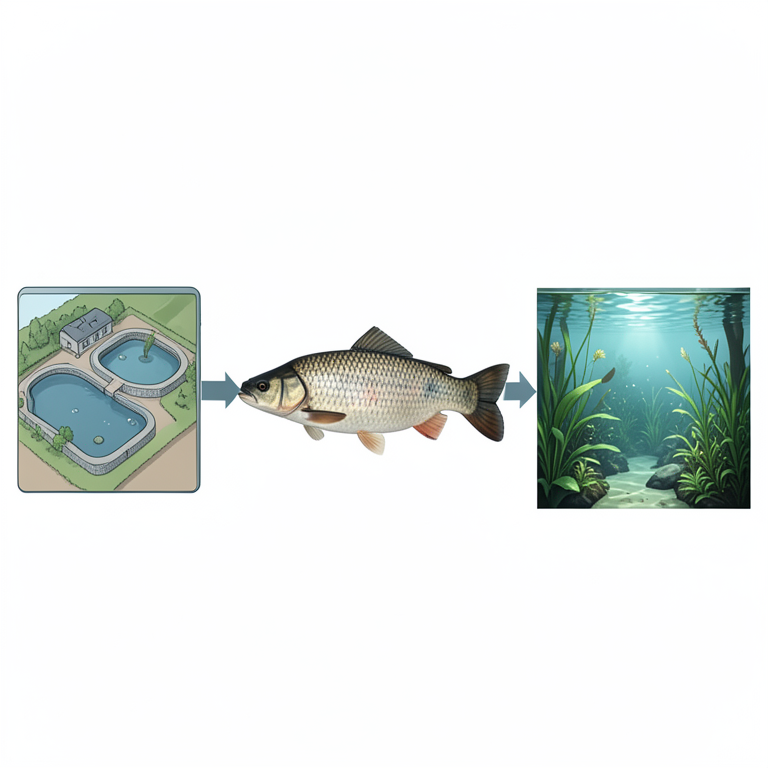
Correlation of Skills to Sustainability
AI-generated conceptual illustration (aquaculture fish ponds and digital monitoring equipment). It explains the idea and does not show study data.
View source evidence ↗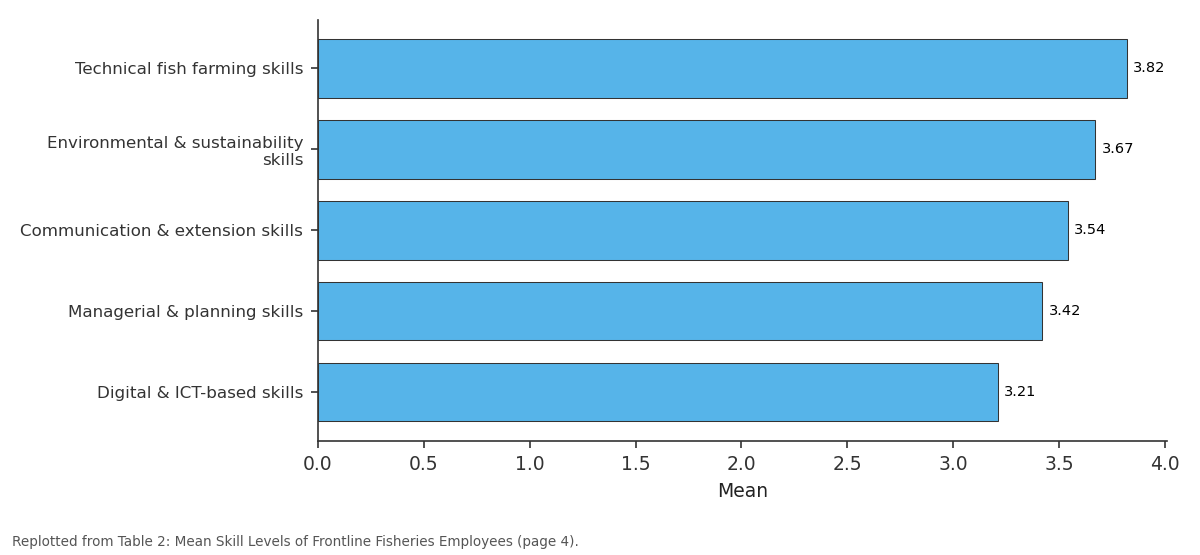
Mean: Technical fish farming... vs Environmental &... vs Communication &... vs Managerial & planning... vs Digital & ICT-based...
Replotted from Table 2 (page 4) of the original paper. Every bar is the paper's own table value.
View source evidence ↗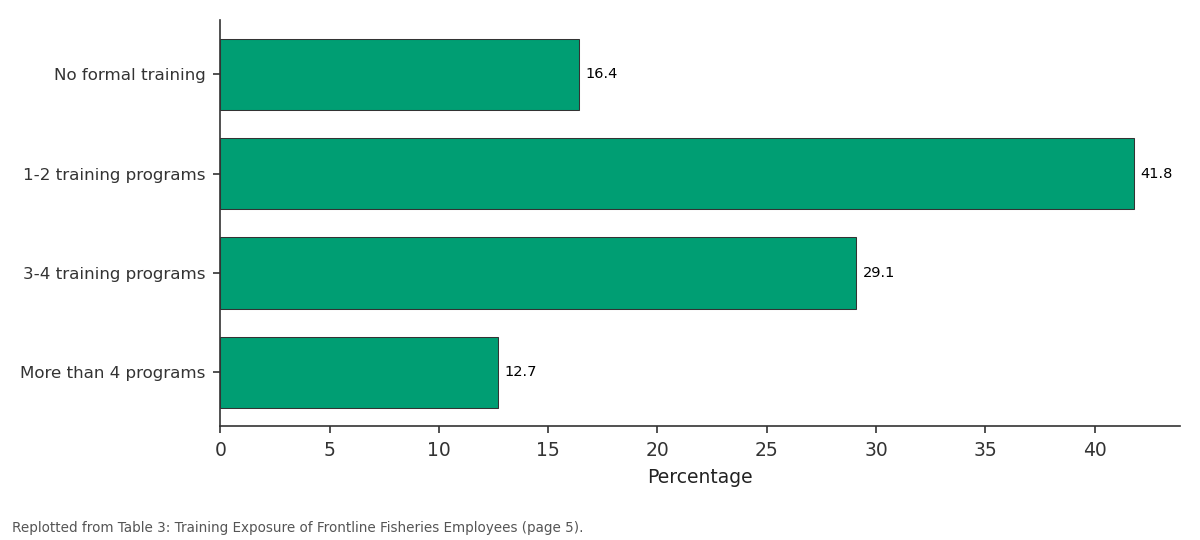
Percentage: No formal training vs 1-2 training programs vs 3-4 training programs vs More than 4 programs
Replotted from Table 3 (page 5) of the original paper. Every bar is the paper's own table value.
View source evidence ↗Figures & tables
From the original paper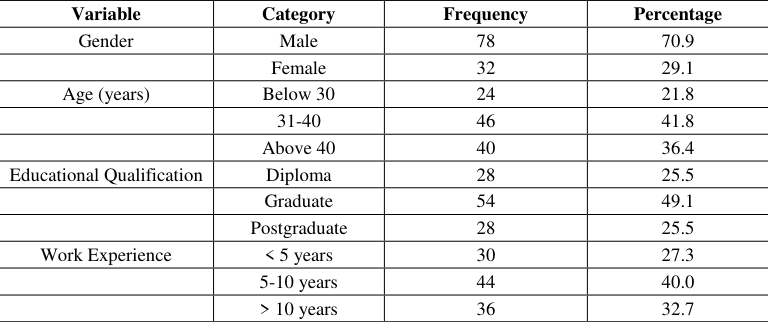 Table 1
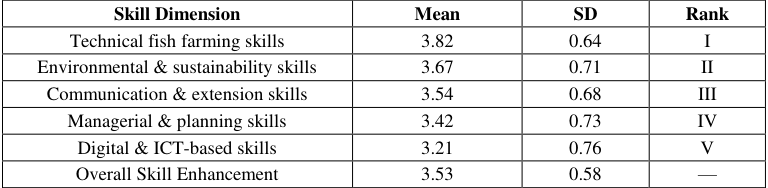 Table 2
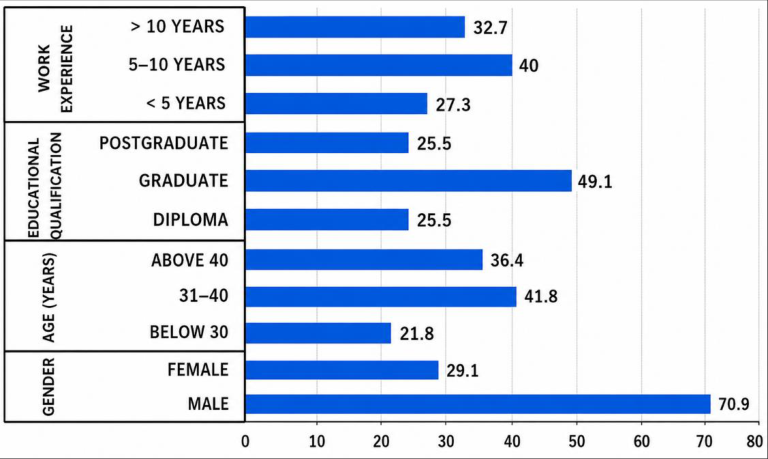 Figure 1
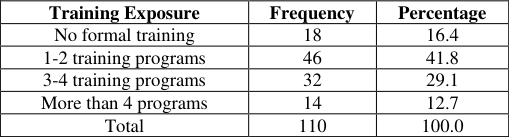 Table 3
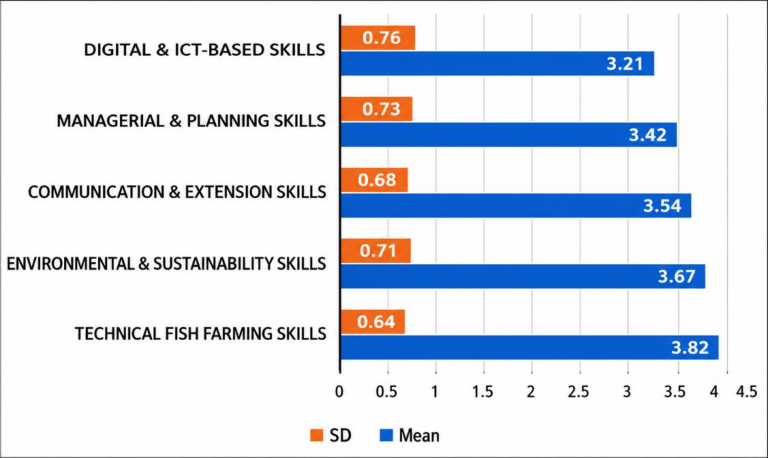 Figure 2
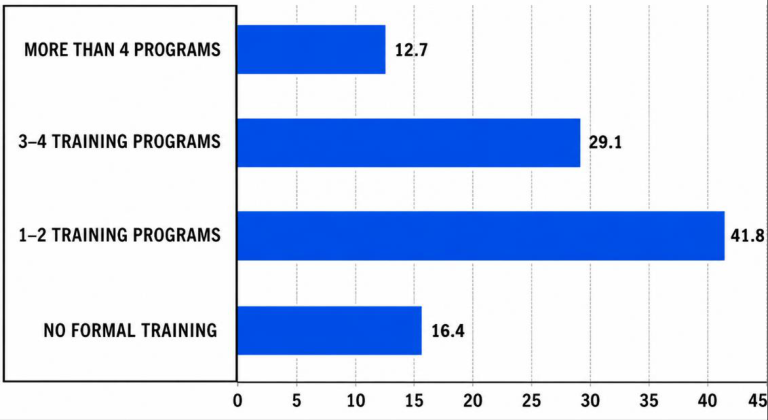 Figure 3
 Table 4
 Table 5
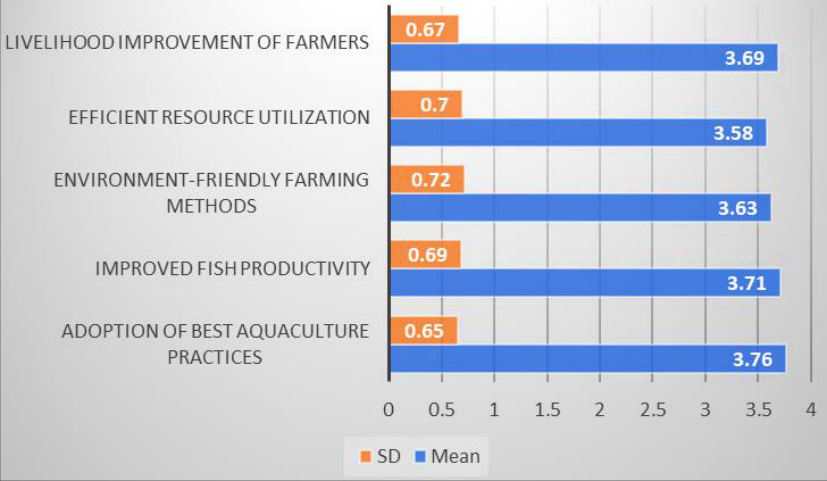 Figure 4
Text
staff should possess. Employees and farmers are more likely to trust one another, innovations are adopted more quickly, and joint action for sustainable resource management is encouraged when skills in interpersonal communication and participatory extension approaches are enhanced. Similarly, frontline workers with administrative and planning abilities may better oversee aquaculture systems as a whole by implementing development schemes, monitoring progress, and coordinating with various stakeholders. The need for skill enhancement is further highlighted by the increasing use of digital technology in fisheries management. Workers in the field of fisheries who are proficient in digital and ICT-based skills are better able to make use of resources such as online training platforms, data management systems, mobile advisory services, and decision-support tools. These abilities improve the timeliness, accuracy, and reach of extension services, especially in places with limited resources. Decisions, transparency, and resilience in aquaculture growth can be enhanced by combining digital capabilities with traditional technical expertise. By bolstering human capital in the fisheries sector, training frontline workers' skills is a key driver of long-term aquaculture development. By improving their abilities, frontline workers can better connect theory with reality, advocate for more environmentally friendly production methods, and boost the financial and social standing of aquaculture producers. So, to achieve sustainability, productivity, and inclusivity in aquaculture in the long run, it is vital to engage in the capacity-building and CPD of frontline fisheries staff.
Review of Literature
Tosun, Deniz et al., (2025) [13] . Aquaculture in Turkey's İzmir Province's Karaburun-Ildır Bay Special Environmental Protection Area (SEPA) is the subject of this socio-economic and ecological study. The SEPA, which includes a wide variety of marine and terrestrial ecosystems, is vital for the preservation of biodiversity and for economic pursuits, especially aquaculture. Important players in the aquaculture business in the area, such as fish farms, processing facilities, and feed providers, are the subject of the study's purposive sampling. Structured interviews were used to gather survey data that assessed economic impacts, community development, job creation, and job security. In 2021, the Karaburun-SEPA contributed 14.44% of Turkey's total marine fish production and 33.23% of İzmir's marine fish output, mainly through its aquaculture operations with European sea bass (Dicentrarchus labrax), gilthead seabream (Sparus aurata), meagre (Argyrosomus regius), and Atlantic bluefin tuna (Thunnus thynnus). This sector contributed 37% to İzmir's GDP and 10% to Türkiye's marine aquaculture sector in 2021, with an estimated economic value of 174.17 million USD. Including family members, an estimated 1,864 persons in the area profit from the region's fish farms, which employ 486 people according to the employment statistics. Floating cages and feed manufacturing facilities are examples of the substantial infrastructure investments that highlight the capital intensity of the sector. The results show how important the area is to Türkiye's aquaculture sector and how important it is to find a way to grow economically while protecting the environment. In order to guarantee ecological and economic stability in the long run, the study highlights the significance of incorporating sustainability into aquaculture development and gives useful insights into the socio-economic benefits of aquaculture in a protected region. Bunting, Stuart. (2024) [2] . This article provides a critical analysis of a toolbox of ideas that could aid in the development of sustainable aquaculture by drawing on realworld instances and written reports. To help promote sustainable and healthful meals on a worldwide scale, we present the ideas of aquatic food systems and systems thinking. Methods for evaluating stakeholders, institutions, and markets in order to promote fair and suitable aquaculture development are examined. The article summarizes the main points of a participatory evaluation of desirable qualities, outlines the future of genetic enhancement programs, and discusses some of the problems that might occur from gene editing. A critical study of participatory action planning is conducted in order to enhance shared assessment and decision-making for the management of peri-urban wetland areas in West Bengal, India. Possibilities and limitations are examined while seven tenets of participatory action planning are laid out. This section explains the STEPS method of conducting stakeholder feasibility studies: social, technical, environmental, political, and sustainability. We take a look at the arguments for aquaculture planning based on consensus and evaluate the stakeholder Delphi method for reaching consensus and measuring agreement levels. Social, economic, and environmental ramifications are examined in light of stakeholder Delphi assessment conclusions pertaining to the use of tiny pelagic fish species as feed ingredients in sub-Saharan Africa. We take a look at the potential for improved environmental impact assessments with stakeholders and highlight promising ways to collaborative economic and financial appraisals. Komlatsky, Grigory. (2024) [7] . A comprehensive assessment of the Russian and Krasnodar Territory fishing complex was conducted by extrapolating a wide range of statistical and analytical data. We now know how much of an impact the industry can have in addressing food security. It has been observed that Russians produce a good amount of fish items on their own. The present status and characteristics of the functioning of the fishing sector on a global and Russian scale are ascertained. The United Nations Food and Agriculture Organization's Blue Transformation initiative has revealed a worldwide trend toward more commercial aquaculture production, and it has also identified the conditions necessary for this trend to emerge in Russia. Meanwhile, it seems that Russia's aquaculture development level is out of line with the country's natural capabilities. Research into aquaculture in Russia's southern regions has led to the identification of factors that have contributed to a drop in commercial fish production in the region's freshwater bodies. Pond farms and lake-type farms' potential for reviving and expanding commercial fish farming has been identified. In this document, the Krasnodar Territory's coastal Black Sea coast aquaculture reserves, including mariculture, are detailed. The necessity to update the sector and the practicability of establishing commercial aquaculture in RAS systems with little management are both proven. There have been suggestions to explore ways to speed up the growth of fish feed production and to further increase government support measures in order to decrease reliance on imports. It is now established that aquaculture is the engine that drives the fishing complex in the modern era. A conducive investment climate, state financial backing, and the formation of publicprivate partnerships in the execution of pertinent projects are essential for the industry's continued successful development. As the aquaculture business continues to grow, more fish products will be available, more people will eat them, and more people will work and earn money. Paruğ, Şenol et al., (2024) [10] . Examining the fisheries and aquaculture industries in five North African nations-Egypt, Morocco, Algeria, and Tunisia-this research draws attention to the vital significance these industries play in ensuring economic stability and food security in the face of rising regional needs for animal protein. Inadequate international collaboration, a lack of information, and inadequate institutional frameworks make fisheries management a struggle in most of these locations, despite the rich marine ecosystems and large contributions to national economies and jobs. In order to maintain natural fish supplies and increase food production capacities, the article stresses the importance of moving towards sustainable aquaculture practices. This analysis primarily focuses on the ability of aquaculture to fulfill the demands of a growing population without worsening the stresses on marine ecosystems, while acknowledging the continued need for legal and sustainable capture fisheries. This paper takes stock of where fisheries management is at the moment, lists the obstacles to aquaculture's expansion, and then delves into some novel approaches that may provide better, more long-term results. In order to protect marine biodiversity, increase economic growth, and guarantee food security, the study recommends better management practices, better research and training, and substantial investment in aquaculture. Frankic, Anamarija & Hershner, Carl. (2003) [4] . More and more, as aquaculture becomes more commonplace around the world, people are starting to realize that sustainable aquaculture takes into account not just the physical aspects of the ecosystem, but also the economic and social factors that affect it over time. Professionals in the field have learned that in order for aquaculture to be sustainable, it must not only maximize advantages but also reduce negative effects on society and the environment. Consequently, society should prioritize protecting the quality of the environment for aquaculture, and sustainable aquaculture development should be pursued in a way that is ecologically sustainable and maintains the quality of the environment for other users. Sustainable aquaculture activities in coastal locations that utilize natural coastal habitats and ecosystems are highlighted in this study, which also offers a brief overview of the global development of aquaculture in the last decade. There are some important suggestions made, including what should be done next, based on the current national and international initiatives to encourage sustainable aquaculture.
Research Methodology 3.1 Research Design
To investigate how improving the skills of frontline fisheries workers can aid in the promotion of sustainable aquaculture development, this study used a descriptive and analytical research strategy based on a survey approach. Given its suitability for use in real-world fisheries extension settings, this methodology allows for the systematic gathering of data pertaining to skills, training exposure, and perceived sustainability outcomes.
Population and Sample
Staff members working in aquaculture-related roles (e.g., fish farming extension, hatchery management, pond supervision, farmer advisory services, etc.) made up the study's population. The study's sample size was 110 people working in the fishing industry on the front lines. To ensure a representative cross-section of frontline workers (such as technical assistants, field supervisors, and fisheries extension officers), stratified random selection was used to choose the sample. The findings were more representative and applicable to a wider context because of this method.
Variables of the Study
Variables of the Study
Tools and Techniques of Data Collection
A structured questionnaire created for the research was used to gather primary data. The following sections made up the questionnaire, which included both open-ended and Likertscale questions:
1. Respondents' demographics 2. Current proficiency in aquaculture and fish farming 3. Participation in training and skill development programs 4. The effect of skill development on long-term success in aquaculture
Data Collection Procedure
Subject availability dictated the method of data collection, which included both in-person visits and online surveys. Everyone who took part in the study gave their prior informed consent, and their answers would remain private. Consistency was ensured by carrying out the data collection process throughout a set period.
Statistical Techniques Used
Data was coded and analyzed with the use of suitable statistical programs. We used the following statistical methods: Descriptive Statistics: Statistical measures that characterize the traits and proficiency levels of the respondents (frequency, percentage, mean, and standard deviation). Correlation Analysis: To investigate how skill development relates to the advancement of sustainable aquaculture. The gender, age, education level, and years of experience of 110 frontline fishery workers are detailed in Table 1. There is a clear gender gap in the frontline responsibilities of the fisheries industry, as 70.9% of the respondents are male and 29.1% are female. Employees seem to be mostly mature and experienced, with the largest age group being those between 31 and 40 years old (41.8% of the total), followed by those over 40 (36.4%). The comparatively low proportion of younger staff is reflected in the 21.8% of employees who are under the age of 30. In terms of educational qualifications, we have a reasonably well-qualified workforce with over half of the respondents being graduates (49.1%), and an equal number of diploma holders and postgraduates (25.5%). The frontline staff has significant professional exposure, as the highest share of employees (40.0%) have 5-10 years of experience, followed by 32.7% with more than 10 years. There appears to be a healthy mix of seasoned pros and fresh faces in the fishing industry, as 27.3% of the sample consists of employees with less than five years of experience. Frontline fishery professionals generally have moderate to high levels of abilities, according to the overall skill enhancement mean score of 3.53 (SD = 0.58). However, there is definitely room for improvement, especially in digital and managerial competence.
| Variable | Category | Frequency | Percentage |
|---|---|---|---|
| Gender | Male | 78 | 70.9 |
| Female | 32 | 29.1 | |
| Age (years) | Below 30 | 24 | 21.8 |
| 31-40 | 46 | 41.8 | |
| Above 40 | 40 | 36.4 | |
| Educational Qualification | Diploma | 28 | 25.5 |
| Graduate | 54 | 49.1 | |
| Postgraduate | 28 | 25.5 | |
| Work Experience | < 5 years | 30 | 27.3 |
| 5-10 years | 44 | 40.0 | |
| > 10 years | 36 | 32.7 |
Table text extracted from the original PDF; superscript letters are shown inline. The original table image is below.
View original table image
Conclusion
The current research shows that improving the skills of frontline fisheries workers is essential for promoting sustainable aquaculture development. Frontline workers have a major impact on the adoption of sustainable farming methods, better aquaculture practices, and effective use of resources because they are the main link between fisheries institutions and fish farmers.
Figures and tables from the paper
| Skill Dimension | Mean | SD | Rank |
|---|---|---|---|
| Technical fish farming skills | 3.82 | 0.64 | I |
| Environmental & sustainability skills | 3.67 | 0.71 | II |
| Communication & extension skills | 3.54 | 0.68 | III |
| Managerial & planning skills | 3.42 | 0.73 | IV |
| Digital & ICT-based skills | 3.21 | 0.76 | V |
| Overall Skill Enhancement | 3.53 | 0.58 | — |
Table text extracted from the original PDF; superscript letters are shown inline. The original table image is below.
View original table image
| Training Exposure | Frequency | Percentage |
|---|---|---|
| No formal training | 18 | 16.4 |
| 1-2 training programs | 46 | 41.8 |
| 3-4 training programs | 32 | 29.1 |
| More than 4 programs | 14 | 12.7 |
| Total | 110 | 100.0 |
Table text extracted from the original PDF; superscript letters are shown inline. The original table image is below.
View original table image
| Sustainability Indicator | Mean | SD |
|---|---|---|
| Adoption of best aquaculture practices | 3.76 | 0.65 |
| Improved fish productivity | 3.71 | 0.69 |
| Environment-friendly farming methods | 3.63 | 0.72 |
| Efficient resource utilization | 3.58 | 0.70 |
| Livelihood improvement of farmers | 3.69 | 0.67 |
| Overall Sustainability Score | 3.67 | 0.61 |
Table text extracted from the original PDF; superscript letters are shown inline. The original table image is below.
View original table image
| Variable | r-value | p-value | Significance |
|---|---|---|---|
| Overall skill enhancement vs sustainability | 0.64 | <0.01 | Significant |
| Technical skills vs sustainability | 0.68 | <0.01 | Significant |
| Environmental skills vs sustainability | 0.61 | <0.01 | Significant |
| Digital skills vs sustainability | 0.49 | <0.05 | Significant |
Table text extracted from the original PDF; superscript letters are shown inline. The original table image is below.
View original table image
References
14 in the original paper- Bychkov V. Power and management in the East of Russia. Power and Management in the East of Russia. 2008;4(45):180-185.
- Bunting S. Enhancing prospects for sustainable aquaculture development. 2024.
- Khrustalev EI, Goncharenko OE, Kuropatova TM, et al. Journal of NP "TPPP APK". 2014;1:54-60.
- Frankic A, Hershner C. Sustainable aquaculture: developing the promise of aquaculture. Aquaculture International. 2003;11:517-530.
- Sklyarov GA. Fish farming. Rostov-on-Don: Phoenix; 2011.
- Kolonchin KV, Truba MA, Kuzicheva NY. Food policy and security. Food Policy and Security. 2023;10(3):533-546.
- Komlatsky G. Aquaculture-driver of the fisheries industry. E3S Web of Conferences. 2024;541:03006.
- Antipova LV, Dvornikova ON, Vasilenko OA. Basics of breeding, catching and processing fish in artificial reservoirs. St. Petersburg: GIORD; 2009.
- Avarsky N, Kolonchin K, Seregin S. Economics, labor, management in agriculture. Economics, Labor, Management in Agriculture. 2020;8:67-74.
- Paruğ Ş, Jabbr A, Lazrag F. Sustainable development of fisheries and aquaculture in North Africa: current status and future prospects. Menba Kastamonu Üniversitesi Su Ürünleri Fakültesi Dergisi. 2024;10:90-105.
- Ryzhkina SM, Kruchinina VA. Vestnik VGUIT. 2020;82(2):181-189.
- Food and Agriculture Organization of the United Nations. The state of world fisheries and aquaculture: towards a blue transformation. Rome: FAO; 2022.
- Tosun D, Yildiz M, Doğan K, Demircan Akyasan M. Economic and employment implications of fish farming in the Karaburun-Ildır Special Protection Area, Turkish Aegean Sea. Turkish Journal of Fisheries and Aquatic Sciences. 2025;25.
- Komlatsky I, Komlatsky GV, Velichko VA. Fish farming. St. Petersburg: Lan; 2020.