
Research article · 2026 · Full text
International Journal of Advanced Chemistry ResearchIsolation of a bronchodilator molecule from Ficus trichopoda (Baker, 1883) (MORACEAE) leaves
Volume 8(1) · Pages 08–12 · DOI: 10.33545/26646781.2026.v8.i1a.351 ↗
Research areasPhytochemistry and biological activities of Ficus speciesChemical synthesis and alkaloidsNatural Antidiabetic Agents Studies
Abstract
Author-writtenThe present work was undertaken to isolate a bronchodilator compound from Ficus trichopoda leaves used in traditional medicine to manage asthma symptoms in Madagascar. Isolated guinea pig trachea was used as experimental model. Bioassays fractioning followed by purification on preparative chromatography plate were used to isolate the active molecule. Bioassays reveal that the ethyl acetate fraction induced relaxation of histamine-contracted isolated trachea with an EC₅₀ of 61.31 µg/mL. Elution with dichloromethane-hexane-methanol (90:9:1 v/v/v) of this fraction gives 7 spots at Rf 0.24, 0.28, 0.37, 0.50, 0.61, 0.69, and 0.78. The molecule at Rf 0.50 relaxes isolated trachea precontracted with histamine (10 µM), with an EC₅₀ of 1.581 10-4 M. Chemical shifts (δH) and spin-spin coupling constants (JHH) data were compared with literature to identify the isolate as 2-(2,3-dihydroxyphenyl)- 4-ethylchroman-3,5,6-triol (MR23), belonging to the flavonoid family.
Summary
Source-checkedPlain-language reading of the full paper, prepared with AI and checked against the text. Each point links to the authors' own words.
Why it matters
- Medicinal plants are important as they provide unique sources for new therapeutic agents used to treat various diseases. View evidence ↗
- In Madagascar, the leaves of Ficus trichopoda are traditionally used to manage the symptoms of asthma. View evidence ↗
- Prior research showed that hydroalcoholic extracts from F. trichopoda leaves can significantly relax airways constricted by histamine. View evidence ↗
The question
- The study aimed to isolate and identify the specific secondary metabolites in Ficus trichopoda leaves responsible for its bronchodilatory activity. View evidence ↗
What they did
- Researchers used Soxhlet extraction on 1180 g of pulverized dried plant material using a sequence of solvents: hexane, dichloromethane, ethyl acetate, and methanol. View evidence ↗
- The experimental model consisted of guinea pigs of either sex weighing between 250 and 300 g. View evidence ↗
- Tracheal strips were prepared by cutting the guinea pig trachea into 2-3 mm wide rings and opening them longitudinally. View evidence ↗
- The active compound was isolated from the ethyl acetate fraction using preparative silica gel chromatography plates. View evidence ↗
- The chemical structure of the isolate was determined using UV spectroscopy, 1D and 2D NMR (Bruker FT-NMR Avance-500), and Q-TOF mass spectroscopy. View evidence ↗
What they found
- The ethyl acetate fraction induced 100% relaxation of histamine-contracted trachea at 120 µg/mL, with an EC₅₀ of 61.31 µg/mL. View evidence ↗
- Out of seven compounds identified in the ethyl acetate fraction, only the molecule with an Rf value of 0.50 showed bronchorelaxant activity. View evidence ↗
What it means
- The authors conclude that they have identified a bronchodilator molecule from Ficus trichopoda leaves for the first time. View evidence ↗
- A limitation of the study is that it only performed preliminary screening against histamine-mediated constriction without exploring the detailed pharmacodynamics of the relaxation. View evidence ↗
Visual summary
1 visualsIllustrations explain the paper; they do not show study data.
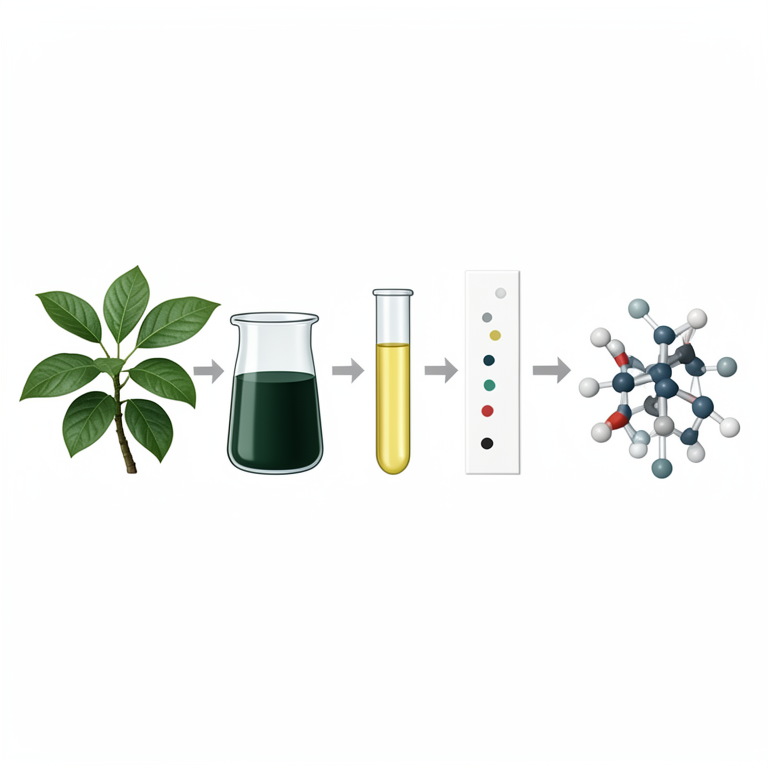
Bioactivity-Guided Isolation Workflow
AI-generated conceptual illustration (Ficus trichopoda leaves and a chemical molecule). It explains the idea and does not show study data.
View source evidence ↗Figures & tables
From the original paper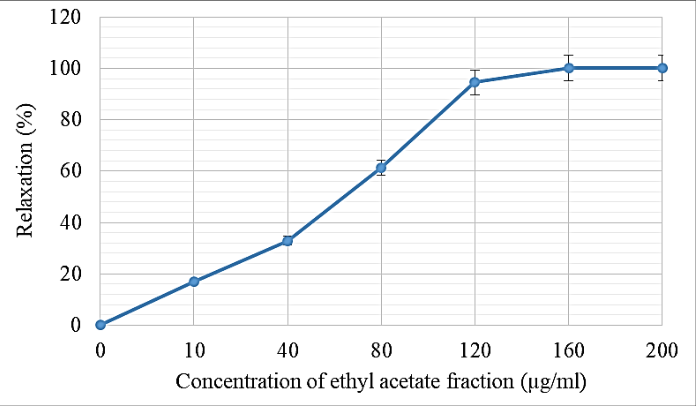 Figure 1
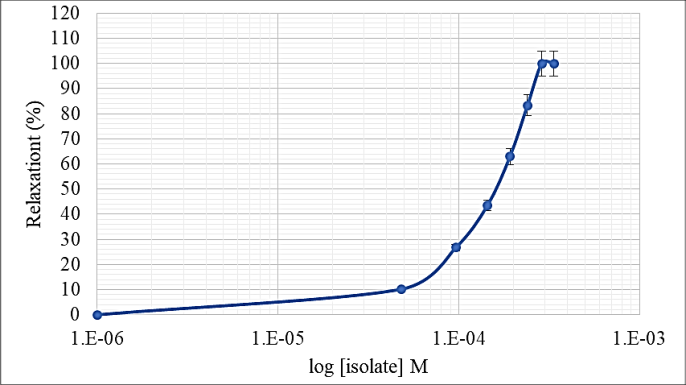 Figure 2
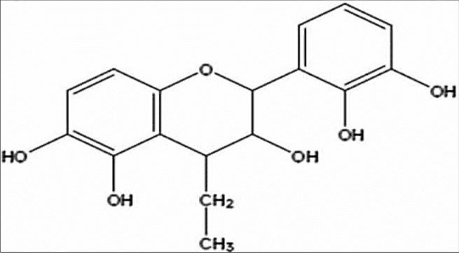 Figure 3
Introduction
Asthma The genus Ficus is popular in the traditional medicine of many Asian and Middle Eastern countries. Triterpenes, flavonoids, polyphenols, alkaloids, sterols, coumarins, and other secondary metabolites present in the genus Ficus are responsible for its various pharmacological activities, like anti-diabetic, anti-microbial, antioxidant, anti-inflammatory and analgesic [1,2] . Compared to other species of the genus Ficus that have been the subject of broader reviews of their general pharmacological properties, studies on Ficus trichopoda remain limited. The few pharmacological studies in vitro and in vivo conducted on this species indicate that extracts from different parts of the plant, notably the leaves and bark, have shown notable efficacy against certain pathologies. As with other species of the same genus, F. trichopoda also possesses antioxidant, anti-inflammatory, and analgesic properties. Ajay A. M. et al. (2011) reported the anti-inflammatory and analgesic activities of the hydroalcoholic extract of F. trichopoda bark [3] . The bark extract also shows anti-bacterial activity [4] . Medicinal plants constitute valuable and distinctive sources of new therapeutic agents and are widely used in the treatment of various diseases. Many currently used bronchodilator drugs are of natural origin and mainly fall into three categories: anticholinergic agents such as tropane alkaloids and their semisynthetic derivatives, β₂-adrenergic receptor agonists, and xanthine derivatives, particularly theophylline [5,6] . In the search for plant-derived bronchodilator secondary metabolites from Malagasy flora, we have conducted an ethnobotanical survey in the High Plateau of Madagascar. This investigation revealed the traditional use of Ficus trichopoda leaves for the management of asthma symptoms. Furthermore, our previous studies demonstrated that the hydroalcoholic extract of F. trichopoda leaves exhibits a significant bronchodilatory effect against histamine-induced bronchoconstriction [7] . Therefore, the present study focuses on a bioactivity-guided phytochemical investigation aimed at the isolation and identification of bronchodilator secondary metabolites from the leaves of Ficus trichopoda.
Materials and Methods
Materials and Methods
Chemicals
All chemicals such as hexane, chloroform, ethanol, methanol and ethyl acetate (analytical grade) were purchased from LABOSI, 141 Rue de JAVEL, Paris 75. Deuterated methanol (MeOD), deuterated chloroform (CDCl3) and ingredients for making Kreb's Henseleit solution were obtained from Sigma-Aldrich Inc. (St. Louis, MO, USA). Standard 5 mm, 7′′ NMR tubes (XR-55 series) were from Norell Inc. (Landisville, NJ, USA). Chromatographic preparative plates (Ref 4856-840) were purchased from Merck (39 Rte Industrielle de la Hardt, 67120 Molsheim, France).
Plant Materials
The leaves of Ficus trichopoda used in this work were collected from the high plateau region of Madagascar (Ambendrana in Amoron'i Mania Region and Sadabe in Analamanga Region). The authentication of the plant material was done by the taxonomist of the Botany Department of Botanical and Zoological Parc of Tsimbazaza (PBZT) Antananarivo, Madagascar. Sample preparation.
Animal Experimentations
Guinea pigs, of either sex, weighing between 250 and 300 g were used in this work. They were kept at the animal house of LPGPC, in standard conditions: 12/12 hours cycle of light and darkness and room temperature of 22 °C. Animals were supplied with tap water Ad libitum and commercial standard diet. Care and use of the animals were approved by the bioethics committee of the Sciences Faculty, University of Antananarivo, Antananarivo, Madagascar, registered as CE/Fac Sciences/04/2025.
Bioassays Fractioning
The plant material was dried under shade, at room temperature. The dried material was pulverized, and the powder (1180 g) was successively extracted by percolation in Soxhlet with hexane, dichloromethane, ethyl acetate and methanol till exhaustion. The different solvents were evaporated to dryness under reduced pressure using rotary vacuum evaporator. Each fraction obtained was then tested on isolated trachea precontracted with histamine to assess their bronchodilating activity [8] .
Isolation of a Bronchodilator Compound
The active compound was isolated from ethyl acetate fraction, using precoated preparative silica gel (GF254) glass base plates (Merck, 107747) of 1 mm thickness. Ethyl acetate fraction was deposited on preparative chromatographic plates and developed with dichloromethane-hexane-methanol (90:9:1 v/v/v) solvent system [9,10] . The plates were dried and separated compounds were detected under UV lamp (254 nm), retention factor (Rf) was calculated, and the compounds of each band were scraped off. The purity of the molecules was assured using 2-dimension-TLC on aluminium base Precoated Silica gel GF254 (Merck), developed with dichloromethane-methanol (92:8 and 98:2) (v/v) solvents. The different isolated molecules were tested on isolated trachea precontracted with histamine 10 µM to determine an active compound. The active compound dissolved in ethyl acetate was allowed to crystallize at room temperature and kept in hermetic container in dry environment.
Structural Determination
The structure of the isolated compound was elucidated using NMR spectral data (UV, 1D and 2D Nuclear Magnetic Resonance (NMR) using Bruker FT-NMR Avance-500 spectrometer (Ettlingen, Germany), and by mass spectroscopy using Q-TOF at the Department of Pharmacognosy and Herbal Medicine, School of Pharmacy, University of Ghana, Legon, Accra, Ghana. The experiment was conducted at a temperature of 300 K to ensure consistency and accuracy throughout the analysis. The 1H NMR spectrum was recorded at a frequency of 400 MHz, employing the "zg30" pulse sequence optimized for proton spectroscopy. Deuterated methanol (MeOD) from Sigma-Aldrich Inc. (St. Louis, MO, USA) and standard 5 mm, 7′′ NMR tube (XR-55 series) from Norell Inc. (Landisville, NJ, USA) were used. Measurement was taken on a 500 MHz Bruker spectrometer with AVANCE console and equipped with 5 mm TXI and TCI triple resonance inverse detection cryoprobes with z-axis pulse field gradient. The structure of the isolate was identified by concerted analysis of the 1H, 13C, HSQC, HMBC, NOESY, COSY NMR spectra and by comparison with data from the literature [11] .
Assessment of Broncho Dilating Activity of the Ethyl Acetate Fraction and the Isolate
Guinea pigs were sacrificed under thiopental sodium at the dose of 50 mg/kg, injected intramuscularly (Pentothal Sodium, Abbott, Turkey) and the tracheas were dissected out and immediately kept in Krebs-Henseleit solution, at room temperature (composition in mM: NaCl: 118, KCl: 4.7, MgSO4: 1.2, KH2PO4: 1.2, NaHCO3: 25, CaCl2: 2.5, and D-Glucose: 10.6) [12] . The tracheal tube was cut into small rings of 2-3 mm wide; each ring was opened by a longitudinal cut on the ventral side opposite to the smooth muscle layer to form tracheal strip with a central part of smooth muscle in between the cartilaginous portions on the edges. These tissues were mounted, under a tension of 1 g, in 5 mL tissue bath containing Kreb's solution, maintained at 37 °C and aerated with carbogen (a mixture of 95 % O2 and 5% CO2) prior to the experiments. Equilibration time of 1 hr elapsed before the addition of the used drugs. During this period, the organ bath was renewed every 15 min, and the tension was adjusted to 1 g. Histamine was injected in the bath to reach 10 µM to test the viability of the organ and to sensitize it. The preparation was rinsed and allowed to stabilize for 30 minutes, during which the bath was renewed twice. After this second period of stabilization, the organ was then contracted with histamine at 10 µM. After the sustained contraction was obtained, the relaxant effect of the ethyl acetate or isolate was assessed by cumulative addition till complete relaxation [13] . Isometric responses were recorded with software IOGA, developed by the Physics Department of the Sciences Faculty, University of Antananarivo, Antananarivo, Madagascar, to obtain concentration-dependent relaxation responses.
Structural Determination of the Bioactive Isolate
The chemical structure of the isolated compound was elucidated using spectroscopic methods including UV spectroscopy, 1D-and 2D-Nuclear Magnetic Resonance (NMR) spectroscopy (Bruker FT-NMR Avance-500 spectrometer, Ettlingen, Germany), and mass spectrometry (Q-TOF) at the Department of Pharmacognosy and Herbal Medicine, School of Pharmacy, University of Ghana, Legon, Accra, Ghana. All NMR experiments were conducted at a temperature of 300 K to ensure consistency and accuracy throughout the analysis. The 1 H NMR spectra were acquired at 500 MHz using the "zg30" pulse sequence optimized for proton spectroscopy. Measurements were performed using a 500 MHz Bruker spectrometer with AVANCE console equipped with 5 mm TXI and TCI triple resonance inverse detection cryoprobes with z-axis pulse field gradient. Spectral data processing was conducted using Bruker TopSpin software (version 3.6.3).
Data Analysis
The bronchodilation due to the isolate is expressed as a percentage relaxation in response to contraction induced by histamine. All results are expressed as Mean ± standard error mean (SEM) per experimental group, where 'n' represents the number of trachea strips used in the experiment. were then analysed by one way ANOVA (analysis of variance) followed by Student's 't' test to evaluate the significant differences between relaxation obtained with the different concentrations of the isolate. Differences were considered as significant when the 'p' value was less than 0.05.
Results and Discussion
In our search for bronchodilator natural compounds, we have carried out ethnobotanical surveys focused on plant used in the management of asthma symptoms. The ethanolic extract of F. trichopoda protects the animals against the dyspnoea induced by histamine pulverised in their cages, and relaxes isolated guinea pig tracheal muscles precontracted with histamine [9] . To identify a compound responsible for this bronchodilating activity, a bioassayguided fractionation followed by chromatographic purification on a preparative plate with silica gel was undertaken.
Bronchodilator Effect of the Ethyl Acetate Fraction
When injected cumulatively in the organ bath containing isolated guinea pig trachea precontracted with histamine at a concentration of 10 µM, the ethyl acetate fraction induced a concentration-dependent relaxation of the tissue. Complete (100%) relaxation was achieved at a concentration of 120 µg/mL. The EC₅₀ value, calculated by linear regression of the linear portion of the concentration-effect curve, is equal to 61.31 µg/mL (Figure 1). These results indicate that the ethyl acetate fraction contains bronchodilator compounds [14,15] . Multiple mechanistic pathways could be responsible for the bronchodilation induced by the isolate. Earlier studies conducted on natural products using guinea-pig trachea have reported the mechanisms involved in this bronchodilation such as anticholinergic [16,17] , Ca++ channel inhibition [18] phosphodiesterase inhibition [19,20] , potassium channel activation [21] , and/or leukotriene receptor blockade [22] . One of the limitations of the current finding is the preliminary screening of the isolate tested against histamine mediated tracheal constriction without exploring the detailed pharmacodynamics involved in the observed tracheal smooth muscle relaxation. In our future studies, we plan to study the detailed pharmacodynamics and draw more meaningful conclusions.
Conclusion
The current biologically guided chromatographic study enabled the identification of a bronchodilator compound from the ethyl acetate fraction of Ficus trichopoda leaves. Purification steps using different techniques enabled us to isolate a pure compound from a very complex fraction. Biological activity was very critical in tracking the active molecule belonging to the flavonoid family. This bronchodilator molecule from Ficus trichopoda leaves is reported here for the first time.
Acknowledgement
AcknowledgmentsThe authors acknowledge the laboratory of the Department of Pharmacognosy and Herbal Medicine, University of Ghana, Legon Accra, Ghana for enabling us to carry out the International Journal of Advanced Chemistry Research https://www.chemistryjournals.net structural determination of our sample, and the laboratory of pharmacology of the Pharmacology Department of Sciences Faculty of the University of Antananarivo, Madagascar for the pharmacological investigation, and all the staff of the two laboratories for their contribution.
Figures and tables from the paper
References
22 in the original paper- Shukla A, Kansal P. Traditional uses, medicinal properties and phytoconstituents of some Indian Ficus species: a review. International Journal of Biology, Pharmacy and Allied Sciences. 2024;13(12):6267-6281.
- Madrigal-Santillán E, Portillo-Reyes J, MoralesGonzález JA, Sánchez-Gutiérrez M, Izquierdo-Vega JA, Valadez-Vega C, et al. A review of Ficus L. genus (Moraceae): a source of bioactive compounds for health and disease. American Journal of Translational Research. 2024;16(11):6236-6273.
- Ajay AM, Tanayena JK, Balogun SO, Ibrahim A, Ezeonwumelu JOC, Kiplagat D, et al. Antiinflammatory and analgesic properties of ethanolic stem bark extract of Ficus trichopoda in rats. Pharmacognosy Journal. 2011;2(18):43-47.
- Joseph JI, Shagal MH, Mukhtar H. Preliminary phytochemical and antimicrobial screening of some medicinal plants used in tuberculosis treatment and its related symptoms. Journal of Complementary and Alternative Medical Research. 2017;4(1):1-9.
- Barnes PJ. Bronchodilators: basic pharmacology. Proceedings of the American Thoracic Society. 1995;2(4):334-340.
- Barnes PJ. Drugs for asthma. British Journal of Pharmacology. 2006;147(1):297-303.
- Randrianavony P, Tsirimaminiaina HLJ, Quansah N, Randrianjafitrimo N, Randimbivololona F. Antiasthmatic activity of hydroalcoholic extract of Ficus trichopoda Bak. leaves in guinea pig. American Journal of Pharmaceutical Technology. 2015;5(6):115123.
- Azmir J, Zaidul ISM, Rahman MM, Sharif KM, Mohamed A, Sahena F, et al. Techniques for extraction of bioactive compounds from plant materials: a review. Journal of Food Engineering. 2013;117(4):426-436.
- Hostettmann K, Marston A, Hostettmann M. Preparative chromatography techniques: applications in natural product isolation. New York: Springer-Verlag; 1998. p. 10-268.
- Wagner H, Bladt S. Plant drug analysis: a thin layer chromatography atlas. 2 nd Ed. Berlin: Springer-Verlag; 1996. p. 195-196.
- Julio HA, Volasoa HVR, Anne W, Amelie R, Lea HR. Biflavonoids isolated from the stem bark of Garcinia chapelieri H. Perr. (Clusiaceae). American Journal of Innovative Research and Applied Sciences. 2021;12(5):181-187.
- Kitchen I. Textbook of in vitro practical pharmacology. Oxford: Blackwell Scientific Publications; 1984. p. 1-6.
- Boskabady MH, Ramazani-Assari M. Relaxant effect of Pimpinella anisum in isolated guinea pig tracheal chains and its possible mechanisms. Journal of Ethnopharmacology. 2001;74(1):83-88.
- Abdel-Kader MS, Alqarni MH, Foudah AI. New flavonoids from Saudi collection of Tephrosia purpurea L. (Pers.). Records of Natural Products. 2021;15:293300.
- Jing G, Jingze Z, Zhuo Q, Hong Z, Yongling T, Dan L, et al. Study on the mechanisms of the bronchodilator effects of Folium Eriobotryae and the selected active ingredient on isolated guinea pig tracheal strips. Pharmaceutical Biology. 2016;54(11):2742-2752.
- Jaybhaye DJ, Chaudhary PS, Chandra S, Johar S. Evaluation of anti-asthmatic and anti-cholinergic activity of ethanolic extract of Tectona grandis Linn. bark. International Journal of Basic and Clinical Pharmacology. 2020;9(4):572-576.
- Buels KS, Fryer AD. Muscarinic receptor antagonists: effects on pulmonary function. Handbook of Experimental Pharmacology. 2012;208:317-341.
- Tinkelman DG. Calcium channel blocking agents in the prophylaxis of asthma. The American Journal of Medicine. 1985;78(2):35-38.
- Matera MG, Ora J, Cavalli F, Rogliani P, Cazzola M. New avenues for phosphodiesterase inhibitors in asthma. Journal of Experimental Pharmacology. 2021;13:291-302.
- Armani E, Amari G, Rizzi A, Fanti RD, Ghidini E, Capaldi C. Novel class of benzoic acid ester derivatives as potent PDE4 inhibitors for inhaled administration in the treatment of respiratory diseases. Journal of Medicinal Chemistry. 2014;57:793-816.
- Malerba M, Radaeli A, Mancuso S, Polosa R. The potential therapeutic role of potassium channel modulators in asthma and chronic obstructive pulmonary disease. Journal of Biological Regulators and Homeostatic Agents. 2010;24(2):123-130.
- Blake KV. Montelukast: Data from clinical trials in the management of asthma. Annals of Pharmacotherapy. 1999;33(12):299-314.