
Research article · 2026 · Full text
International Journal of Horticulture and Food ScienceInbreeding is a path towards homogeneity to develop a pure date palm varieties: A review
Volume 8(1) · Pages 81–91 · DOI: 10.33545/26631067.2026.v8.i1b.458 ↗
Research areasDate Palm Research StudiesGenetic diversity and population structureOil Palm Production and Sustainability
Abstract
Author-writtenThe extent of the reduction in the percentage of hybrid or heterozygous genotypes can be measured by the inbreeding coefficient. The percentage of hybrid decreases 12.5% when mating half-siblings and 50% when mating full-siblings after 3-4 generations of inbreeding. Inbreeding increases genetic homogeneity and stabilizes desired traits when the quality factor is present in closely related or semi-dissimilar families within a lineage that contains the traits of the parent. Once a lineage of a purebred parent is obtained, all the effort and years of work spent on annual seed propagation are minimized. The appearance of phenotypic and fruit traits different from the parent is likely due to the association of one of the genes or factors responsible for the targeted trait with an unknown gene. Pure genetic traits are transmitted from parents to seedling with a high degree of accuracy. Values close to zero indicate random mating. Large positive values indicate inbreeding or undetected dormant alleles. Negative values indicate high mixing between the parents inheriting the trait, resulting from negative selective mating or natural selection. Therefore, the initial evaluation of palm seedling in their early growth stages, the adoption of phenotypic characterization, molecular markers and identification of the type factor are important. Determining the type and effect of some linked dominant alleles is also essential for palm tree breeding programs.
Summary
Source-checkedPlain-language reading of the full paper, prepared with AI and checked against the text. Each point links to the authors' own words.
Why it matters
- Date palm genotypes typically exhibit high genetic and phenotypic heterogeneity, which is caused by mutations over centuries and continuous random cross-pollination. View evidence ↗
- Genetic variance in date palms affects most productivity and growth traits, often resulting in offspring that do not closely resemble their parents. View evidence ↗
- Inbreeding allows for the creation of a pure lineage by passing specific traits down through multiple generations. View evidence ↗
The question
- The objective of this study is to develop a method for producing pure date palm varieties that can be continuously propagated via seeds, eliminating the need for tissue culture or offshoot removal. View evidence ↗
What they did
- The study proposes using the inbreeding coefficient to measure the reduction of heterozygous or hybrid genotypes. View evidence ↗
- The proposed breeding approach includes first-degree relative inbreeding, which involves mating selected seedlings from the same family to form pure offspring. View evidence ↗
What they found
- After 3-4 generations of inbreeding, the percentage of hybrids decreases by 12.5% when mating half-siblings and by 50% when mating full-siblings. View evidence ↗
- Predicting segregation rates is difficult because date palm varieties have varying chromosome numbers, ranging from 28 to 64. View evidence ↗
- Inbreeding may lead to a loss of growth vigor and a deficiency in fertility, which can result in poor fruit quality and less fertile seeds. View evidence ↗
- When the gender factor is present in related families, inbreeding increases genetic homogeneity and stabilizes desired traits. View evidence ↗
What it means
- The authors recommend adopting an integrated breeding program led by a team with extensive experience in genetics, breeding, and production. View evidence ↗
- The authors recommend the early evaluation of seedlings through anatomical studies of leaves and pollen grains to identify them during early growth. View evidence ↗
Visual summary
2 visualsIllustrations explain the paper; charts are replotted from the paper's own table values.
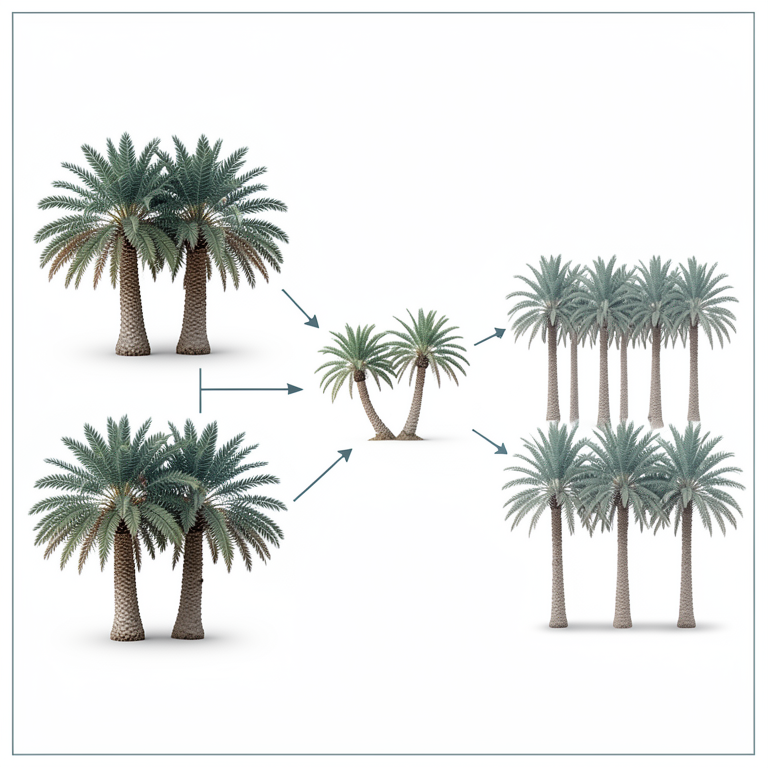
Inbreeding Degrees
AI-generated conceptual illustration (Date palm trees (Phoenix dactylifera)). It explains the idea and does not show study data.
View source evidence ↗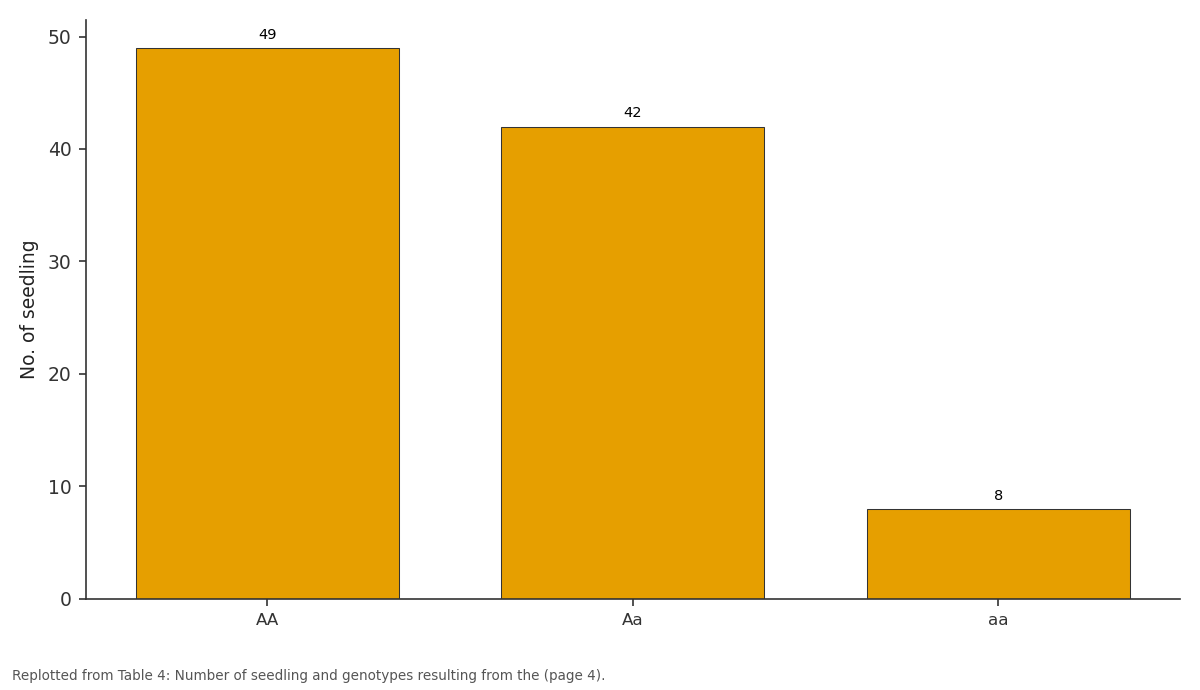
No. of seedling: AA vs Aa vs aa
Replotted from Table 4 (page 4) of the original paper. Every bar is the paper's own table value.
View source evidence ↗Figures & tables
From the original paper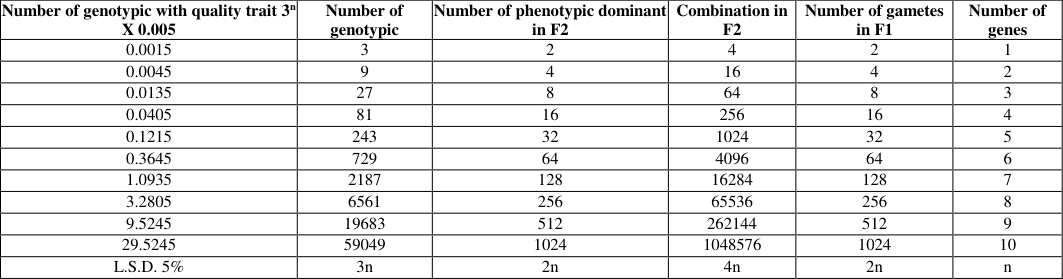 Table 1
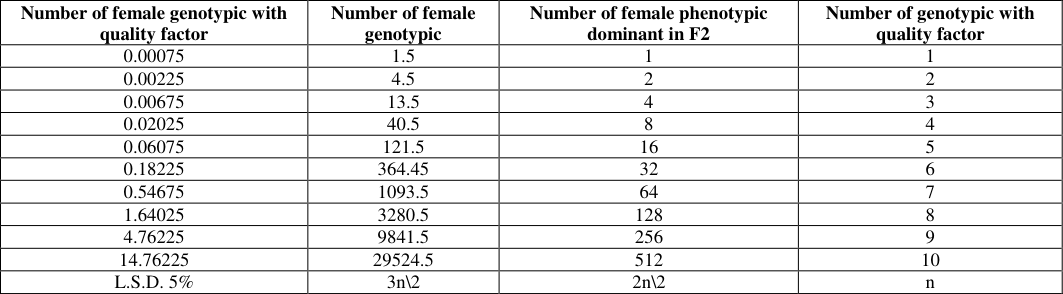 Table 2
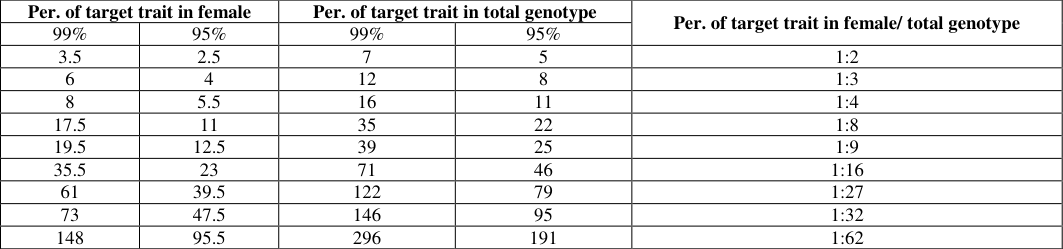 Table 3
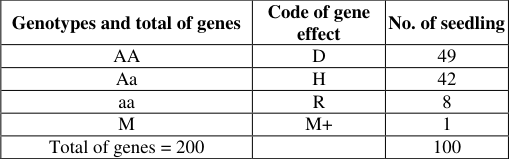 Table 4
 Table 5
 Table 6
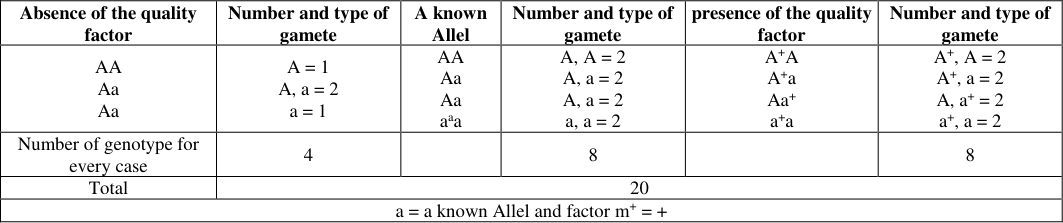 Table 7
 Table 8
 Table 9
 Table 10
 Table 11
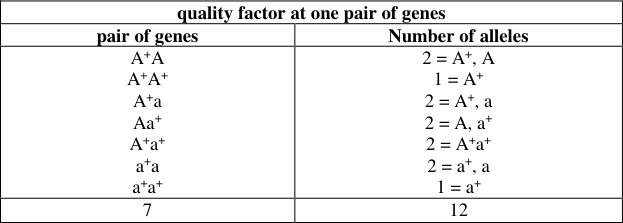 Table 12
 Table 13
 Table 14
Introduction
The ability to obtain an inbred of date palms is achieved through a carefully planned breeding process that involves selecting individual plants with consistent traits that can be propagated over multiple generations. This process, when repeated, gradually eliminates genetic variation within individuals and populations, resulting in a genetically homogeneous plant lineage with consistent and predictable traits. Genetic and phenotypic heterogeneity is common in all date palm genotypes, due to continuous random cross-pollination or as a result of mutations occurring over centuries [1,2,3] . The genetic makeup of any date palm carries genes accumulated for long periods across generations, in addition to the different environmental influences on it over time, resulting in a variety of factors affecting phenotypic and functional traits [4,5,6,7] . These traits may not be consistent with the sudden change resulting from directed or undirected (random) pollination. The differences appear large between and within male and female individuals and between varieties, and they are distinct in most date palm genotypes [8,9] . Variation occurs in most genotypes regardless of whether the individuals belong to the same variety, specific varieties, or other varieties [10,11] . Date palm breeders have noted that genetic and phenotypic variance affects most growth and productivity traits, and that most traits do not closely resemble one parent or may even be outside the parental specification. However, phenotypic variances may be lower among most hybrids produced from closely related parents through directed crossbreeding than among hybrids produced from different parents [12,13] . The appearance of a progeny is often linked to its type, and when these traits are passed down through many generations as a result of inbreeding, a pure lineage is created. Therefore, an even-parenting index (API) can be used, a visual indicator that measures the likelihood of seedling inheriting the same genetic traits from both parents, given that they share a common ancestor. It is a measure of inbreeding [14] . In date palm breeding, the term "half-brother" or "half-sister" can only be used to describe palms descended from the same mother but from different parents.
As for the seedling that descend from the same father but from different mothers, they are said to be from the same father, and this does not mean any kinship. As for the siblings (brothers), they are from the same mother and father. The hypothesis of our current study is to increase the varietal purity of date palm, which will lead to the possibility that some varieties within a certain species will possess more similarity to preferred alleles than the parents from which they were produced. Therefore, they will be more likely to produce pure seeds with the characteristics of the targeted varietal type, without radical changes in their type in subsequent generations, provided that their breeding is true breeding resulting from close crossing (sibling or backcrossing). Therefore, the goal of the current study is to produce pure date palm (inbred or pure varieties) that can be propagated by seeds, producing desirable varieties continuously without the need for tissue culture or removing seedling from the mothers, and to use phenotypic indicators and use them to identify the resulting individuals early, as many date palm crossings produce diverse individuals like those that occur between different varieties, as they depend to a large extent on the nature of the genetic combination of the parental chromosomes.
Pollination and Genetic Diversity in Palm Trees
Cross-pollination is common in date palm, i.e., the transfer of pollen from male pollen to female, either by wind, insects, manual, or mechanical means [15,16] . Wind and insects do not guarantee pollination and fertilization for most date palm varieties. However, some varieties, particularly those with good ovaries, may achieve good pollination and fruit set without the need for forced pollination. To ensure production, manual or mechanical pollination is necessary. If pollination or fertilization occurs between identical or fraternal individuals, it is considered internal pollination or fertilization, equivalent to selfpollination [17,18] . Most palm breeding programs have relied on traditional methods of planting offshoots of well-known excellent varieties or adopting tissue culture methods by selecting the distinguished varieties [19] . The males are chosen as pollinating parents based on their high ability to fertilize and produce the highest number of fruits. Since the seedling (offshoots) resulting from seed cultivation vary greatly in their vegetative and fruit characteristics from their rootstocks, they are propagated vegetatively, as all offshoots have a genetic composition similar to the mother or the rootstocks descended from it, unless some changes occur as a result of certain mutations [20,21] . This is what will be focused on when producing pure strains of date palm. The phenomenon of genetic and phenotypic diversity is widespread in palm [2,7] , which complicates breeding methods and the results obtained. In the world and in Iraq, there are a very large number of palm species whose genetic origins cannot be recovered by planting seeds. The results indicate that many of the resulting offshoots that reach the fruiting stage are half or more male, and the rest are females of poor quality, and very few of them produce high-quality species [11] . Each seed is different from the other seeds growing on the same mother palm and pollinated by the same father. It is very rare for it to carry the characteristics of the mother, so restoring the characteristics of the original mother cannot be predicted. Various studies have not been able to restore the original characteristics accurately, as success in this regard may be non-existent due to the long period of growth and production on the one hand and the increase in genetic variation and production costs on the other hand [16,21] . It was also found that the father can sometimes affect the characteristics of the resulting offspring, either towards improving the quality of the fruit or producing new, distinct varieties, as very wide differences were observed in the same variety, in the same location, or between different locations over time [22,23] . Without a doubt, there are internal and external factors that affect these characteristics, but there is a degree of stability of the characteristic in certain proportions within one varieties, controlled by specific genetic characteristics, and the extent of the influence of environmental factors on the expression of this characteristic also cannot be ignored.
Complex Segregation
Date palm breeders deal with highly complex segregations compared to segregation in monohybrid and double or trihybrids of other species. This is because most traits are governed by polygenic inheritance, or may be under the control of multiple alleles. In this case, it is not necessary for a single gene to have two alleles, but rather several alleles [17,24] . Therefore, palm breeders will face multiple and complex segregation cases, particularly in the inheritance of growth vigor, yield, and fruit quality. Predictions of their occurrence do not simply and clearly provide specific segregation rates, due to the variation in the number of chromosomes of palm varieties in their true and false groups, which range between 28-64 chromosomes. This means that some palm varieties have Polyploid chromosome numbers [6,25] . Some cases of multiple inheritance can be illustrated with a chessboard diagram and become more complex when studying interaction, but it is very important to know the effect of a pair of genes, for example, is it a case of full dominance or full recessive? The case in which genes are independent in their effect and the appearance of full dominance (Table 1). 1 that the number of genetic structures in F2 will have at least one pure recessive individual and its ratio will be 1:3 or 3:9:1:3 or 27:9:9:9:3:3:1:3 when dealing with one, two or three genes in sequence. If we deal with five genes, 32 individuals will carry the complete dominant genes, while one individual will be completely recessive and appear in every 1024 F2 plants. If we assume that the species trait in palm trees is controlled by recessive genes, the species trait targeted here will be under the control of sub-recessive genes, as it appears at a very small percentage ranging between 0.0015 -29.5245 of the number of different genetic combinations, on the one hand, but the percentage of probability of its appearance increases with the increase in the number of genetic combinations that carry the targeted trait in subsequent generations by continuing pollination of relatives or backcrosses. It is noted from Table 2 that the number of genetic combinations of females will represent half the total number of the total phenotypic and genetic combinations in F2 carrying the trait. To ensure the highest probability of producing pure offspring carrying the desired trait, they must be fully recessive, accompanied by back-or sibling-pollination of some F1 offspring with their parents, among themselves, or with F2 individuals that exhibit the least possible dominant traits in F2. This will result in a lower percentage of recessive segregations in F3 compared to both F1 and F2. From this, we can observe how inbreeding through back and sibling cross helps increase the number of individuals carrying recessive genes for the target trait, despite the potential for complex segregation in individuals with the highest number of genes, especially if there are more than five genes controlling the trait. At least 243 different genotypes will appear, and the number of different genotypes increases with the increase in the number of genes controlling the trait. Thus, we can understand the complexity of obtaining pure offspring as a result of genetic dominance and its interactions in such cases.
| Number of female genotypic with quality factor | Number of female genotypic | Number of female phenotypic dominant in F2 | Number of genotypic with quality factor |
|---|---|---|---|
| 0.00075 | 1.5 | 1 | 1 |
| 0.00225 | 4.5 | 2 | 2 |
| 0.00675 | 13.5 | 4 | 3 |
| 0.02025 | 40.5 | 8 | 4 |
| 0.06075 | 121.5 | 16 | 5 |
| 0.18225 | 364.45 | 32 | 6 |
| 0.54675 | 1093.5 | 64 | 7 |
| 1.64025 | 3280.5 | 128 | 8 |
| 4.76225 | 9841.5 | 256 | 9 |
| 14.76225 | 29524.5 | 512 | 10 |
| L.S.D. 5% | 3n\2 | 2n\2 | n |
Table text extracted from the original PDF; superscript letters are shown inline. The original table image is below.
View original table image
| Number of genotypic with quality trait 3n X 0.005 | Number of genotypic | Number of phenotypic dominant in F2 | Combination in F2 | Number of gametes in F1 | Number of genes |
|---|---|---|---|---|---|
| 0.0015 | 3 | 2 | 4 | 2 | 1 |
| 0.0045 | 9 | 4 | 16 | 4 | 2 |
| 0.0135 | 27 | 8 | 64 | 8 | 3 |
| 0.0405 | 81 | 16 | 256 | 16 | 4 |
| 0.1215 | 243 | 32 | 1024 | 32 | 5 |
| 0.3645 | 729 | 64 | 4096 | 64 | 6 |
| 1.0935 | 2187 | 128 | 16284 | 128 | 7 |
| 3.2805 | 6561 | 256 | 65536 | 256 | 8 |
| 9.5245 | 19683 | 512 | 262144 | 512 | 9 |
| 29.5245 | 59049 | 1024 | 1048576 | 1024 | 10 |
| L.S.D. 5% | 3n | 2n | 4n | 2n | n |
Table text extracted from the original PDF; superscript letters are shown inline. The original table image is below.
View original table image
Inbreeding and Mating Coefficient
The inbreeding coefficient is the relative decrease in genetic variance in a population that randomly mates at the same frequency. Inbreeding results in homozygosity (all or most of the genetic loci being homozygous) and a near-complete absence of heterozygosity (all or most of the genetic loci being homozygous) [13] . When date palm are inbred for several generations through inbreeding between relatives or through what is known as Sib or backcrossing, the resulting offspring become more homogeneous and are likely to carry a desirable trait as a result of the increased frequency of the targeted genes in the population with continued inbreeding according to the Hardy-Weinberg law. Since the generations resulting from inbreeding combine some beneficial genes on one hand and sex-linked genes on the other hand, we expect a loss of some growth vigor, which may also be accompanied by a deficiency in fertility, resulting in poor fruit set and quality and the formation of less fertile seeds as a result of inbreeding [24] . However, the possibility of the emergence of beneficial genes during successive isolations is very likely, especially in the advanced generations [12,26] , because their individuals are at a lower degree of heterosis. The purity of the trait increases with the progress of inbreeding between relatives and can be calculated according to the following equation:
Where m = number of self-pollination and n = number of segregating gene pairs. This equation applies under the condition of complete compatibility, survival of all individuals, uniform number of chromosome sets, and non-association. Since inbreeding involves the mating of closely related selected individuals, the genes of the lineage or family are concentrated, leading to a significant convergence of phenotypic and productive traits. This method is used to stabilize traits in the lineage. Since the number of selected seedling is usually large, re-selection can be used to achieve selective progress in productive and phenotypic traits, using inbreeding at two levels: 1. Inbreeding first-degree relative, i.e., the mating of selected seedling from the same family. This mating method can be used to form pure offspring within the variety. 2. Inbreeding second-degree relative, i.e., the mating of selected individuals from related families. This helps create differentiated seedling within the lineage. Through continued selection within the lineage, distinct families can be produced within each lineage.
According to the rule of a simple factor having a large effect, and vice versa, the type factor is a proposed indicator that carries distinct genes and has a positive effect on the expression of the target trait and its genetic transmission through inbreeding generations. It also has a relative inhibitory effect to prevent the expression of some negative effects of foreign and harmful genes in the individual. The type factor is symbolized by (m + , as an abbreviation for Mujahid+). In all cases, there is a remaining portion of its value in the genetic makeup or genetic locus. That is, when the quantities of the genetic makeup (m + m + ) are isolated, this combination or individual transmits m + , and the remainder is the other quantity (m + ). This remaining portion is called the recessive variation of the type, symbolized by M. This variation is specific to recessive genes between alleles of a single genetic locus. In the absence of recessive variations, it will appear in all resulting generations. This does not occur in seed-produced palms, as it depends on the genetic replication of the type factor. It can exist with other genes without any effect, but it has the ability to show the target trait relatively because it is affected by genetic antagonism, which is the condition that causes a negative effect on genes located at different gene sites or at the same gene site, which results in a new external appearance, i.e. it outperforms the stronger (dominant) gene of one or a group of weaker (recessive) genes as a type of recessive epistasis, preventing the expression of the gene with the dominant trait and thus overpowering it. Token genes carry the trait of the species, and when found in a pure form, they have a beneficial effect (a unique effect) on the individual that carries them and have the ability to preserve the species (unique), and are able to influence the rates of isolation. These genes are usually recessive in their natural state, and are only observed in recessive individuals during genetic isolation, as only hybrid and dominant individuals can produce new varieties, due to the presence of genetic alternatives Genetic Redundancy after pollination and fertilization, which leads to the emergence of complex isolations of fertile nucleus seeds. However, in the case of the presence of the type factor gene with the symbol m + , all individuals that carry the genetic composition m + m + alone carry the desired or targeted trait, and individuals whose composition is Mm+ and MM show new genetic compositions that carry the type factor but are not clearly visible for the targeted trait. Therefore, all individuals resulting from the crossing Mm + X MM are able to show new traits that do not carry the targeted trait. However, in the case of the crossing Mm + X Mm + , only individuals with the composition m + m + show the original targeted maternal type, so the segregation ratio is 2Mm + :1MM, noting that all of these individuals carry the dominant phenotype instead of the ratio usual isolation 1:3. In rare cases, if the species gene is not completely dominant, individuals carrying the MM gene will produce a new, desirable species, and the segregation is at a ratio of 1m + m + :2Mm + , where two-thirds of the resulting genetic compositions are hybrid and heterozygous. Here, genes are described as semi-favorite genes because they show new, desirable traits, have a beneficial effect or cause the appearance of new, distinct traits. However, these genes do not lead to the appearance of the desired trait of the original species, even if they are present in the pure dominant form. However, in the case of the species gene being completely dominant, individuals with the MM composition are not the only ones that show the trait, but those carrying the Mm + composition also give the desired trait. The M allele has no effect when present, as most of the resulting palm offshoots, whether male or female, have poor traits. This confirms the prevalence of the phenomenon of varietal diversity in palm trees, as we may find individuals that are poor or differ in the type, shape, and appearance of the fruit, some of which belong to families of different species.
Where: m + = Mujahid+ Favorite Species Factor is responsible for the desired or targeted trait a, b, c…n = Alleles Genetic Variation (Heterogeneity). For example, if we have 100 female offspring produced from the brotherly crossing of individuals of the first generation, and among them we find 49 of poor quality AA, 42 of average quality Aa, and 9 of high quality aa, what is the genetic frequency of the alleles a and A? Assuming that p = A and q = a, and the symbol D represents the number of offspring of poor quality dominant, H the number of hybrid offspring of average quality, R the number of recessive good offspring, and M the number of high quality offspring that carry the M + type factor. The total number of offspring is symbolized by the symbol N, as in Table 4. Assuming random mating occurs:
| Genotypes and total of genes | Code of gene effect | No. of seedling |
|---|---|---|
| AA | D | 49 |
| Aa | H | 42 |
| aa | R | 8 |
| M | M+ | 1 |
| Total of genes = 200 | 100 |
Table text extracted from the original PDF; superscript letters are shown inline. The original table image is below.
View original table image
The genetic makeup of the population is: q = 1 -p If allele a represents the female gametes, allele A represents the male gametes, and the type allele m represents the quality factor, the results will be as follows: From these proportions it is clear that society consists of only three genetic structures: p 2 : 2pq: q 2 The structure of population according to the Hardy-Weinberg law: p 2 AA + 2pq Aa + q 2 aa Therefore, the Hardy-Weinberg law must be modified in the event that the resulting offspring contains the genetic factor as an additional trait, as it will consist of four genetic compositions, of which are: M p 2 : 2pq : q 2 The composition of population after addition M will be called the modified Hardy-Weinberg law.
We can confirm the occurrence of inbreeding and identify the alleles by pedigree, by looking at the frequency of the genotype in the F population from the table above, as the equation of the modified gene frequencies of the genotypes will be in several possibilities: If p: 0: q, then the ratio of homozygotes to heterozygotes is reduced. If F = 0, then pollination is random and there is no inbreeding. If F = 1, then the alleles are identical in proportion. If pq2, then each homozygous group is equal to the other half of the heterozygous group. If m + in F1, then the population is inbreeding and maintains a balanced genotype in the population.
Cases of the presence of the m + factor
The likelihood of the desired trait appearing in individuals of the first, second, and subsequent generations depends on the number of alleles carried by the genes, whether the m+ factor is present or absent, whether influenced by one or more pairs of genes. Therefore, it can be divided into three cases:
Case 1: Absence of the gender factor
In this case, it is obvious that no genetic combination will appear in the F1 bearing the targeted maternal traits due to the absence of the gender factor m+, and the ratio of males to females is 1:1. However, the F1 individuals carry half the genes of their parents and are genetically heterogeneous. Therefore, any sibling cross, directional cross, backcross, or random cross will also certainly result in no genetic combination bearing the gene for the targeted trait due to the absence of the gender factor m + , which is responsible for expressing the targeted trait present in the mother. Since the gene frequency for any gene ranges between zero and one (0 ≤ p ≤ 1), if the gene responsible for the gender factor is rare, i.e., its value is close to zero, the process of inbreeding and backcrossing will increase its frequency to close to one in the palm population (Table . 2). The results of Tables [27,28] indicate that full-dial crosses in all directions with the presence of the gender factor on the father or mother or both can yield 46 genetic combinations, i.e. about 92 alleles, 29 of which the targeted trait randomly, and only two genetic combinations carry the targeted gender trait in a pure form, one of which is dominant A + A + and the other is recessive (a + a + ). This facilitates the possibility of concentrating the targeted trait in some individuals of the second generation when carrying out sibling or backcrossing to increase the number of individuals carrying the targeted gender trait, and then obtaining offspring carrying the targeted gender trait in a greater proportion, which increases with the progress of selection and hybridization after each election cycle. Random cross of a pair of genes in the presence of the factor m + P A + A X A + a A + A X Aa + A + A X a + a gene expression for M + factor G A + , A X A + , a A + , A, A, a + A + A, a + a F1 A + A, A + a, AA, Aa A + A, A + a + , AA, Aa + A + a + , A + a, Aa + , AA Random cross of a pair of genes in the presence of the factor m + P A + a X A + a A + a X Aa + Aa + X Aa + gene expression for M + factor G A + , a, A + , a A + , a, A, a + A, a + A, a + F1 A + A + , A + a, A + a, aa AA + , A + a + , Aa, aa + AA, Aa + , Aa + , aa +
Random cross of a pair of genes in the presence of the factor m + P
A + a X a + a Aa + X aa + a + a X aa aa + X aa + gene expression for M + factor G A + , a a + , a A, a + a, a + a + , a a, a a, a a, a + F1 A + a + , A + a, a + a, aa Aa, Aa + , a + a, a + a + aa, a + a aa, a + a, a + a, a + a +
The presence of the gender factor on the second gene corresponding to the other allele leads to the emergence of 12 different genetic combinations, whether the genes are (dominant AA, recessive aa homogenous, or hybrid Aa heterogeneous). Twenty-four different alleles were also shown in all resulting individuals. Since each gene or more is responsible for one or more traits, this explains the phenotypic diversity over the years of pollination and random fertilization and the emergence of genetic combinations with different or new traits from the mothers in each generation of sexual reproduction by seeds.
The matter becomes more complicated when performing sibling crosses between individuals of the first generation resulting from sibling (brother-sister mating) of some F2 individuals that show the least possible of the dominant trait, as this will result in a higher rate of recessive segregations because they are carried by F1. Indeed, the results of sibling crosses will result in a female-to-male ratio of 1:1, meaning that the percentage of individuals carrying the desired trait factor is 50% for both males and females, as the number of males carrying the type 6 factor and the number of females carrying the type 6 factor, of which 6 are carriers of the type trait. However, the targeted trait does not necessarily appear in F2 during this generation as well, as the remaining dominant, additional, and recessive genes control the traits, resulting in a high genetic diversity, but less than that found in F1. However, increasing the number of individuals carrying the M + trait increases its genetic frequency in the population, which increases the possibility of obtaining offspring carrying the targeted trait.
Calculating the gene frequency in the presence of the M + gender factor and more than two alleles
The gene frequency was previously calculated in the presence of only two alleles, with the presence and absence of the gender factor. Note that the dominant trait was determined by the dominant allele, the lesser trait by the recessive allele, and the lesser trait by the gender factor. Dominance was either complete or neutral according to the Hardy-Weinberg law modification: 1 = P + Q + M However, there are more complex cases with the presence of three or more, as in the case of multiple alleles in various palm varieties according to the modified Hardy-Weinberg equation pqm, where the dominance is shared between allele A and B, and both are dominant over the recessive allele m, and according to the dominance sequence m < A -B. Likewise, the genetic frequency of the species factor can be calculated where there are multiple alleles and according to the dominance sequence m < Am < ABm. To calculate the genetic frequency of the population according to the pqm system, we modify the Hardy-Weinberg law and apply the following equation:
Where p represents the frequency of gene A, q represents the frequency of gene B, and m represents the frequency of gene M. If we return to the phenotype, the A varieties have the genotype AA and AM, and the B varieties have the genotype BM, BB, and ABM. Therefore, it is difficult, and even impossible, to rely on the phenotype AM, BM, and ABM. To calculate the genetic frequency, we rely on the recessive M phenotype, i.e., we calculate the genetic frequency m first, and then we calculate the genetic frequency of the remaining alleles, as in the following equations: p+ q + m + = 1 Calculate the frequency of m + from the following equation:
Calculate the frequency of AA from the equation:
Calculate the frequency of BB from the equation:
The symbols A, B, and M represent the percentage of different varietal groups A, B, and M, respectively. They are then converted to a decimal fraction and the square root representing the frequency of each allele is taken. They may be recorded as percentages for each group, then converted directly to a decimal fraction and the square root representing each frequency is taken. The equation is applied to find the frequency for each allele. To take an example, in a palm population consisting of 1000 seedlings containing three varietal groups A, B, and M, it was found that the number of seedlings carrying the dominant trait A was 450 seedlings, the number of seedlings carrying the other dominant trait B was 360 seedlings, and the group carrying the type factor M was 130 seedlings. To calculate the frequency of multiple alleles for each of the alleles BB, AA, and M, and the frequency of the expected genotypes after mutation for this population, we will obtain the following results:
Frequency of allele m + p = 1 -√ M + B = frequency of allele AA AA = p = 0.3 q = 1 -√ M + A = frequency of allele BB BB = q = 0.1
Another way round: 1.0 = 3.0 + 6.0 -1 = q p + q + m + = 1 0.3 + 0.1 + 0.6 = 1 It is clear that the genetic frequency of any known gene can be increased by selection for it, elimination against it, or recovery when it carries a characteristic of it, after identifying the recessive trait m + m + , and by conducting the first directed mating according to the genetic frequency and eliminating the heterozygous genetic combinations, to reach the required percentage of offspring carrying the gene m + m + such that its frequency is as high as possible after three generations of random mating, and eliminating individuals carrying the BB and AA alleles before pollination and fertilization, and thus the desired trait can be controlled even if the trait is quantitative or less than recessive by eliminating the undesired combinations in it. Continued directed interbreeding between individuals increases the number of desired genes in the target population. The speed of change in the gene frequency of any population depends on the speed and precision of selection and elimination, which determines the genetic differences between the target individuals and the original population. Therefore, inbreeding breaks the mechanism of isolation enjoyed by the parents, affecting the percentage of targeted gene frequencies and increasing them in the selected individuals compared to the original population. Selection for a specific trait or gene will favor increasing the frequency of the m + m + allele at the expense of other alleles. When the number of offspring in the population is small, the gene frequency will shift in their favor, as the targeted genes can produce more effective quantities of the M gene than other genes with continued selection, which changes the gene frequency in the resulting offspring.
Table 14:
The effect of selection intensity in the case of epistasis -dominance and complete dominance on the resulting hybrids Aa AA aa 1-s 1 0 1 Aa epistasis vs. AA Epistasis and select vs. Aa AA Aa aa 1 0 1-s Aa = AA Complete dominance and select vs. a gene For benefit A gene s is the intensity of selection or coefficient of selection against a gene and h is the intensity of selection against hybrid
Breeding Program First Stage: Selection and the Characterization
The most important considerations that those implementing palm breeding and improvement programs must pay attention to are summarized as follows: 1. Select and cultivate preferred varieties (parents) with high fertility, which produce large quantities of fruit of high quality, and little or no fruit formation. 2. Select parents with the highest fertility rates to obtain fertile hybrid seeds or nuclei, increasing the chances of producing individuals genetically similar or close to the parent. 3. Phenotypic characterization of parents capable of good fertility to obtain a distinctive external trait (trunk, fronds, leaves, thorns, etc.) is very important, as this will provide good evidence for identifying similar parents and identifying the resulting hybrids. 4. Direct selection here will target the trait that is the focus of improvement, while indirect selection will rely on positive genetic correlation between the trait being improved and another trait. Consequently, selection for the trait that is not the target will improve the targeted trait, based on its phenotypic or genetic values. 5. Selection of varieties with high heritability for desired traits, even if there is a gradual or unsustainable transmission of these traits from parents to offspring in the first generation and subsequent generations.
From these considerations, it is possible to obtain good traits whose inheritance is likely to be dominant and desirable, but predicting the characteristics of the resulting generations remains difficult in the early stages of breeding.
Stage Two: Selection and Hybridization 1. Select 10-15 fruit-bearing palms of the same variety, or select 3-5 fruit-bearing palms of several different varieties, provided their productive type is known, i.e., they carry the M + factor. They are given special symbols or numbers indicating the dates of pollen emergence, flowering, and pollination, as well as the name or symbol of the pollinating parent. 2. Select a group of parents (5-10 parents) with high combining ability (general and specific) and are given their own symbols, numbers, and names. 3. After pollen formation (before or at the beginning of flowering), the pollen or pollen grains of each selected parent are collected separately from the other selected parents. The same information is recorded in paragraph 2, with the addition of the pollen emergence and flowering dates. to the parent plants or parents are used as an early test to determine the type of offspring produced and compare them to the selected stocks. 4. Evaluate the offspring's ability to withstand biotic and abiotic stresses during their various growth stages, and record their general growth characteristics. 5. Record the time of pollen emergence, the beginning of the splitting of the male and female inflorescences, their emergence, and their various phenotypic characteristics. The male pollen is wrapped and the parent is numbered or coded. The female inflorescence is wrapped before opening and also numbered with a special code. 6. The pollen grains from the opened pollen are collected and used to pollinate the opened and wrapped female inflorescences, and then re-wrapped. It is preferable to collect the pollen and store it in small bottles, sealing the mouths with a piece of cotton. Store the pollen dry until ready for use, especially when transporting pollen over long distances or when the opening dates of the female inflorescences are later than those of the male inflorescences used for hybridization. 7. Pollination (cross-pollination) can be performed immediately upon cracking of the female inflorescence to ensure the highest pollination rate. It is not recommended to delay pollination except in exceptional environmental conditions that coincide with the pollination process, such as rainfall and strong winds. 8. For varieties that are incompatible with pollination and fertilization, pollination can be repeated several times, provided that the same pollinating parent is used each time. 9. The bags are removed after at least two weeks to prevent cross-pollination. Distinctive marks are placed on each parent, mother, and hybrid. 9. After fruiting, the fruit characteristics and quality are compared, as well as the genetic diversity of the parent plants that produced them. The fruit nuclei are then planted in special nurseries to determine their compatibility with the pollinating parents. The effect of the parents on the mother plants is then evaluated in terms of vegetative growth characteristics, as well as the quantitative and qualitative traits of the fruit. 10. Re-pollination, selection, and inbreeding of offspring that yield the highest number of desirable traits, particularly yield traits, are carried out to continue transmitting these traits, using the same procedures as above. 11. The growth and development period for this stage takes approximately 4-5 years or more, from the initial growth phase until fruiting and fruit ripening.
Conclusion
Based on the above, we can conclude the following: 1. Inbreeding increases genetic homogeneity and stabilizes desired traits when the gender factor is present in closely related or semi-disparate families within the lineage and contains the original parent's traits. 2. It is an important method for concentrating any trait in an individual or population, making it easy to detect and preserve. 3. Once a lineage with a pure parent and a genetically pure parent is obtained, all the effort and years of annual seed propagation will be saved, without the expense, effort, or need for long-term breeding and propagation periods. 4. Several forms of phenotypic and fruit traits will appear that differ from the original parent, due to the possibility of a link between one of the genes responsible for the targeted trait and an unknown gene. 5. Pure genetic traits are highly heritable, meaning they are transmitted from parents to offspring with a high degree of accuracy. 6. Pure lines are characterized by remarkable stability, maintaining their desired traits even under varying environmental conditions. 7. Values are expected to be close to zero in cases of random mating, while large positive values indicate inbreeding or undetected dormant alleles, while negative values indicate the presence of high mixing between the heterozygotes, as a result of negative selective mating or natural selection.
Therefore, we can recommend the following: 1. Adopt an integrated breeding program by a team with extensive experience in genetics, breeding, improvement, and production. 2. Early evaluation of palm seedling and conduct anatomical studies of both leaves and male and female pollen grains to identify palm seedling in their early growth stages. 3. Adopt phenotypic characterization, especially if both parent used in the hybridization exhibit certain distinctive characteristics. 4. Molecular markers for the variety factor can be used and established as a guide to identifying the target trait. 5. Apply cytological methods by examining the chromosome set (chromosome numbers or shapes) to evaluate and identify the resulting hybrid palm seedling.
Acknowledgement
AcknowledgementsWe would like to express our deep gratitude and appreciation to the College of Agriculture/ University of Anbar. Their valuable contributions were essential in achieving the objectives of this study.
Figures and tables from the paper
| Per. of target trait in female | — | Per. of target trait in total genotype | — | Per. of target trait in female/ total genotype |
|---|---|---|---|---|
| 99% | 95% | 99% | 95% | |
| 3.5 | 2.5 | 7 | 5 | 1:2 |
| 6 | 4 | 12 | 8 | 1:3 |
| 8 | 5.5 | 16 | 11 | 1:4 |
| 17.5 | 11 | 35 | 22 | 1:8 |
| 19.5 | 12.5 | 39 | 25 | 1:9 |
| 35.5 | 23 | 71 | 46 | 1:16 |
| 61 | 39.5 | 122 | 79 | 1:27 |
| 73 | 47.5 | 146 | 95 | 1:32 |
| 148 | 95.5 | 296 | 191 | 1:62 |
Table text extracted from the original PDF; superscript letters are shown inline. The original table image is below.
View original table image
| Genotype | Dominant | Recessive |
|---|---|---|
| P = A = 0.7 | 26.0 = q = a | |
| P = A = 0.7 | P2 = AA = 0.49 | pq = Aa = 0.21 |
| 26.0 = q = a | pq = Aa = 0.21 | q2 = aa = 0.06 |
| M = m+ = 0.04 | M = m+ = p + q -1 = 0.4 | M = p + q -1 = 0.04 |
| genetic balance modified by the presence of the quality factor in F1 | G.F.M = p + q + M = 1 |
Table text extracted from the original PDF; superscript letters are shown inline. The original table image is below.
View original table image
| Random cross of one Allel | — | Sibling Hybridization | — | Back cross direction to Male or Female |
|---|---|---|---|---|
| factor m+ = 0 | ||||
| P | AA X AA | Aa X Aa | aa X aa | Failure gene expression for M+ factor |
| G | A, A X A, A | A, a, A, a | a, a | |
| F1 | AA | AA, Aa, Aa, aa | aa |
Table text extracted from the original PDF; superscript letters are shown inline. The original table image is below.
View original table image
| Random cross of a pair of genes in the presence of the factor m+ | — | — | — | — |
|---|---|---|---|---|
| P | A+A X AA | A+a X Aa | Aa+ X Aa | gene expression for M+ factor |
| G | A+, A X A, A | A+, a, A, a | A, a+, A, a | |
| F1 | A A+, AA | A A+, A+a, Aa, aa | AA, Aa, Aa+, a+a |
Table text extracted from the original PDF; superscript letters are shown inline. The original table image is below.
View original table image
| Random cross of a pair of genes in the presence of the factor m+ | — | — | — | — |
|---|---|---|---|---|
| P | A+A X A+a | A+A X Aa+ | A+A X a+a | gene expression for M+ factor |
| G | A+, A X A+, a | A+, A, A, a+ | A+ A, a+ a | |
| F1 | A+A, A+a, AA, Aa | A+A, A+a+, AA, Aa+ | A+a+, A+a, Aa+, AA |
Table text extracted from the original PDF; superscript letters are shown inline. The original table image is below.
View original table image
| Random cross of a pair of genes in the presence of the factor m+ | — | — | — | — |
|---|---|---|---|---|
| P | A+a X A+a | A+a X Aa+ | Aa+X Aa+ | gene expression for M+ factor |
| G | A+, a, A+, a | A+, a, A, a+ | A, a+ A, a+ | |
| F1 | A+A+, A+a, A+a, aa | AA+, A+a+, Aa, aa+ | AA, Aa+, Aa+, aa+ |
Table text extracted from the original PDF; superscript letters are shown inline. The original table image is below.
View original table image
| Random cross of a pair of genes in the presence of the factor m+ | — | — | — | — | — |
|---|---|---|---|---|---|
| P | A+a X a+a | Aa+X aa+ | a+a X aa | aa+ X aa+ | gene expression for M+ factor |
| G | A+, a a+, a | A, a+ a, a+ | a+, a a, a | a, a a, a+ | |
| F1 | A+a+, A+a, a+a, aa | Aa, Aa+, a+a, a+a+ | aa, a+a | aa, a+a, a+a, a+a+ |
Table text extracted from the original PDF; superscript letters are shown inline. The original table image is below.
View original table image
| Genotypes of Parents | Genotype | Genotype Frequency |
|---|---|---|
| (♀) A | A A | P2 = (0.3)2 = 0.09 |
| A m+ | 2pr = 2(0.3) (0.6) = 0.36 | |
| (♂) B | BB | r2 = (0.6)2 = 0.36 |
| AB | AB | 2pq = 2(0.3) (0.q) = 0.06 |
| M | m+m+ | q2 = (0.1)2 = 0.01 |
| Bm+ | 2qr = 2(0.1) (0.6) = 0.12 |
Table text extracted from the original PDF; superscript letters are shown inline. The original table image is below.
View original table image
| Epistasis and select vs. Aa | Aa epistasis vs. AA | Aa AA aa 1-s 1 0 1 |
|---|---|---|
| Complete dominance and select vs. a gene For benefit A gene | Aa = AA | AA Aa aa 1 0 1-s |
| s is the intensity of selection or coefficient of selection against a gene and h is the intensity of selection against hybrid |
Table text extracted from the original PDF; superscript letters are shown inline. The original table image is below.
View original table image
References
28 in the original paper- Al-Karmadi A, Okoh AI. An overview of date (Phoenix dactylifera) fruits as an important global food resource. Foods. 2024;13:1024:1-19. https://doi.org/10.3390/foods13071024
- Jahromi AR, Mosallanezhad Z, Hosini FS, Jamali S, Sharifi N. The effect of date palm on sexual function in infertile couples: a double-blind controlled clinical trial. BMC Research Notes. 2022;15:55:1-7. https://doi.org/10.1186/s13104-022-05945-0
- Pérez-Escobar OA, Bellot S, Przelomska NAS, Flowers JM, Nesbitt M, Ryan P, et al. Molecular clocks and archeogenomics of a late period Egyptian date palm leaf reveal introgression from wild relatives and add timestamps on the domestication. Molecular Biology and Evolution. 2021;38(10):4475-4492. https://doi.org/10.1093/molbev/msab188
- Chao CT, Krueger RR. The date palm (Phoenix dactylifera L.): overview of biology, and cultivation. HortScience. 2007;42(5):1077-1082. https://doi.org/10.21273/HORTSCI.42.5.1077
- Hanieh AA, Hasan A, Assi M. Date palm trees supply chain and sustainable model. Journal of Cleaner Production. 2020;258:120951. https://doi.org/10.1016/j.jclepro.2020.120951
- Mathew LS, Seidel MA, George B, Mathew S, Spannagl M, Haberer G, et al. A genome-wide survey of date palm cultivars supports two major subpopulations in Phoenix dactylifera. G3: Genes, Genomes, Genetics. 2015;5(7):1429-1438. https://doi.org/10.1534/g3.115.018341
- Luna R, Epperson BK, Oyama K. High levels of genetic variability and inbreeding in two Neotropical dioecious palms with contrasting life histories. Heredity. 2007;99(4):466-476. https://doi.org/10.1038/sj.hdy.6801027
- Zemni N, Slama F, Bouksila F, Bouhlila R. Simulating and monitoring water flow, salinity distribution and yield production under buried diffuser irrigation for date palm tree in Saharan Jemna oasis (North Africa). Agriculture, Ecosystems and Environment. 2022;325:107772. https://doi.org/10.1016/j.agee.2021.107772
- Racchi ML, Camussi A. The date palms of Al JufrahLibya: a survey on genetic diversity of local varieties. Journal of Agriculture and Environment for International Development. 2018;112(1):161-184. https://doi.org/10.12895/jaeid.20181.776
- Carassale A, Dore MN, Castellana R, Veziano P. The historic phoeniciculture in Italy: description of the medieval palm grove of Bordighera (Sanremo-Liguria) and of the Italian palms craft. Acta Horticulturae. 2013;994:39-52. https://doi.org/10.17660/ActaHortic.2013.994.2
- Świąder K, Białek K, Hosoglu I. Varieties of date palm fruits (Phoenix dactylifera L.), their characteristics and cultivation. Technology Progress in Food Processing. 2020;1:173-179.
- El Hadrami A, Al-Khayri JM. Socioeconomic and traditional importance of date palm. Emirates Journal of Food and Agriculture. 2012;24(5):371-385.
- Vieira FG, Fumagalli M, Albrechtsen A, Nielsen R. Estimating inbreeding coefficients from NGS data: impact on genotype calling and allele frequency estimation. Genome Research. 2013;23(11):1852-1861.
- Hammouda H, Alvarado C, Bouchet B, KalthoumChérif J, Trabelsi-Ayadi M, Guyot S. Tissue and cellular localization of tannins in Tunisian dates (Phoenix dactylifera L.) by light and transmission electron microscopy. Journal of Agricultural and Food Chemistry. 2014;62(29):6650-6654. https://doi.org/10.1021/jf5013715
- Vayalil PK. Date fruits (Phoenix dactylifera Linn): an emerging medicinal food. Critical Reviews in Food Science and Nutrition. 2012;52:249-271. https://doi.org/10.1080/10408398.2010.499824
- Salmani R, Nasiri K, Javadzadeh Y, Salmani R, Clark CCT, Aghamohammadi V. Effect of date palm pollen supplementation on female sexual function in nonmenopausal women: a double-blind randomized clinical trial. Chinese Herbal Medicines. 2022;14(4):643-648. https://doi.org/10.1016/j.chmed.2022.02.004
- Manikandan SK, Jenifer DA, Gowda NK, Nair V, AlRuzouq R, Gibril MBA, et al. Advancing date palm cultivation in the Arabian Peninsula and beyond: addressing stress tolerance, genetic diversity, and sustainable practices. Agricultural Water Management. 2025;307:109242. https://doi.org/10.1016/j.agwat.2024.109242
- Salomón-Torres R, Krueger R, García-Vázquez JP, Villa-Angulo R, Villa-Angulo C, Ortiz-Uribe N, et al. Date palm pollen: features, production, extraction and pollination methods. Agronomy. 2021;11:504:1-21. https://doi.org/10.3390/agronomy11030504
- Farag KM, Elsabagh AS, ElAshry HA. Fruit characteristics of "Zaghloul" date palm in relation to metaxenic influences of used pollinator. AmericanEurasian Journal of Agriculture and Environmental Sciences. 2012;12(7):842-855. https://doi.org/10.5829/idosi.aejaes.2012.12.07.1803
- Alnaim MA, Mohamed MS, Mohammed M, Munir M. Effects of automated irrigation systems and water regimes on soil properties, water productivity, yield and fruit quality of date palm. Agriculture. 2022;12:343:121. https://doi.org/10.3390/agriculture12030343
- Markhand GS, Abul-Soad AA, Mirbahar AA, Kanhar NA. Fruit characterization of Pakistani dates. Pakistan Journal of Botany. 2010;42(6):3715-3722.
- Omar AK, El-Ashry HA. Impact of pollen source on yield and fruit quality of Hayany date palm (Phoenix dactylifera L.). Egyptian Journal of Horticulture. 2015;42(1):355-365. https://doi.org/10.21608/ejoh.2015.1303
- Ahmed W, Feyissa T, Tesfaye K, Farrakh S. Genetic diversity and population structure of date palms (Phoenix dactylifera L.) in Ethiopia using microsatellite markers. Journal of Genetic Engineering and Biotechnology. 2021;19:64:1-14. https://doi.org/10.1186/s43141-021-00168-5
- Mujahid IH, Naeem AM, Mothehir AS. Allelic homolog harmonize theory explain hybrid vigor. Basra Journal of Agricultural Sciences. 2025; Special Issue of International Conference of Agricultural Sciences Research in Progress.
- Li H. Toward better understanding of artifacts in variant calling from high-coverage samples. Bioinformatics. 2014;30(20):2843-2851. https://doi.org/10.1093/bioinformatics/btu356
- Elshibli S, Korpelainen H. Biodiversity of date palms (Phoenix dactylifera L.) in Sudan: chemical, morphological and DNA polymorphisms of selected cultivars. Plant Genetic Resources. 2014;7(2):194-203. https://doi.org/10.1017/S1479262108197489
- Flowers JM, Hazzouri KM, Gros-Balthazard M, Mo Z, Koutroumpa K, Perrakis A, Ferrand S, Khierallah HSM, Fuller DQ, et al. Cross-species hybridization and the origin of North African date palms. Proceedings of the National Academy of Sciences of the United States of America. 2019;116(5):1-8. https://doi.org/10.1073/pnas.1812865116
- Hammouda H, Alvarado C, Bouchet B, KalthoumChérif J, Trabelsi-Ayadi M, et al. Tissue and cellular localization of tannins in Tunisian dates (Phoenix dactylifera L.) by light and transmission electron microscopy. Journal of Agricultural and Food Chemistry. 2014;62(28):6650-6654. https://doi.org/10.1021/jf5015892