
Research article · 2026 · Full text
International Journal of Horticulture and Food ScienceImpact of the edible coating during low-temperature storage on plum (Prunus domestica L.) quality and postharvest life
Volume 8(1) · Pages 50–56 · DOI: 10.33545/26631067.2026.v8.i1a.456 ↗
Research areasNanocomposite Films for Food PackagingPostharvest Quality and Shelf Life ManagementFood Drying and Modeling
Abstract
Author-writtenThis research sought to assess the impact of edible coatings on the quality characteristics and shelf life of plum fruits. In the current study, different food additives, such as sodium alginate (SA) and chitosan (CH), were used to coat plums, and qualitative parameters were analysed alongside uncoated fruits. Their effects on the plum fruits dipped for 5 minutes in different concentration solutions were assessed, and these fruits were stored at 4 ℃. The findings of the research indicated that edible coating, particularly chitosan (1.5%), had a positive influence on plum quality during storage. Moreover, the use of edible coatings improved plum quality and extended shelf life. Consequently, it can be concluded that post-harvest edible coating treatment has the potential to control decay rates, prolong shelf life, maintain valuable plum traits, and provide reliable benefits to both consumers and the fruit industry due to the effect of chitosan (1.5%).
Summary
Source-checkedPlain-language reading of the full paper, prepared with AI and checked against the text. Each point links to the authors' own words.
Why it matters
- Plums (Prunus domestica L.) are valued for their flavor and nutritional content. View evidence ↗
- Plums are highly perishable and suffer from rapid quality deterioration after harvest, including rotting, weight loss, and softening. View evidence ↗
- Edible coatings made from proteins, lipids, or polysaccharides act as semipermeable barriers to help maintain fruit freshness. View evidence ↗
The question
- The study aimed to evaluate if chitosan coatings could maintain the quality and extend the postharvest life of plums during refrigerated storage. View evidence ↗
What they did
- Plums were divided into five groups of 30 fruits each: 1.5% chitosan (CH), 1% CH, 1.5% sodium alginate (AL), 1% AL, and an uncoated control. View evidence ↗
- Fruits were dipped in coatings for 5 minutes, air-dried, and stored at 27 ± 4 °C for 30 days, with measurements taken at 6-day intervals. View evidence ↗
- The researchers measured weight loss percentage, visual decay percentage, pH levels, and titratable acidity. View evidence ↗
What they found
- Coatings significantly reduced decay; while 92.57% of uncoated plums spoiled by day 24, the 1.5% CH treatment had the lowest decay rate at 25.93 ± 0.41% at day 24. View evidence ↗
- The 1.5% chitosan coating significantly slowed the decline of titratable acidity, which indicates a delay in the fruit's senescence process. View evidence ↗
- Plums coated with 1.5% chitosan maintained the lowest overall sugar levels throughout the study compared to other treatments. View evidence ↗
- At 8 days of storage, 1.5% chitosan coating resulted in the lowest carotenoid levels, while untreated plums had the highest. View evidence ↗
- Both 1.5% alginate and 1.5% chitosan coatings were effective in maintaining high phenolic levels through day 30. View evidence ↗
- Chitosan coatings specifically delayed the rate of anthocyanin synthesis in the plums. View evidence ↗
What it means
- The authors conclude that 1.5% chitosan and 1.5% alginate coatings are particularly effective at improving plum quality and extending shelf life. View evidence ↗
Visual summary
3 visualsIllustrations explain the paper; charts are replotted from the paper's own table values.
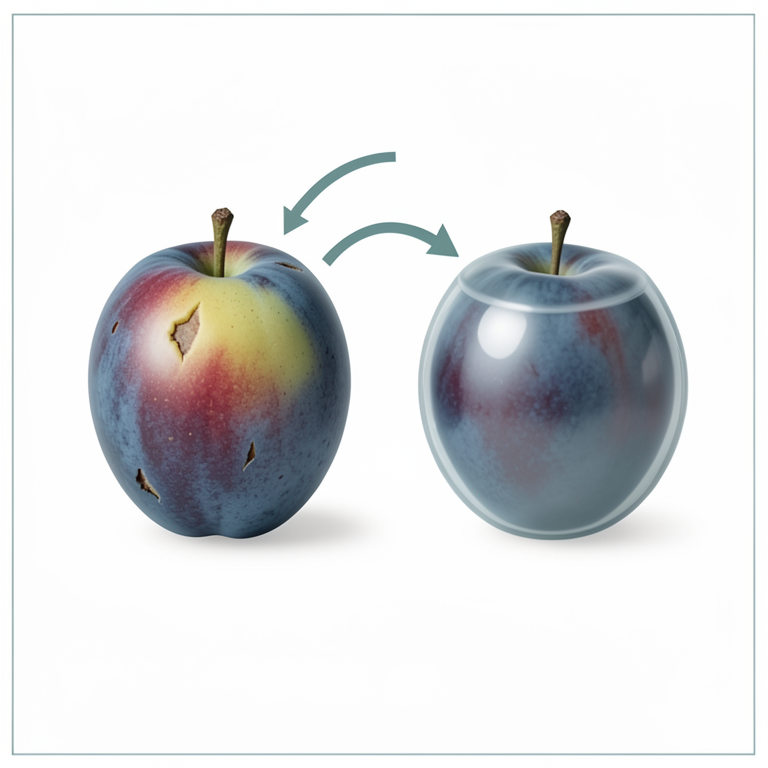
Mechanism of Edible Coatings
AI-generated conceptual illustration (plum fruits (Prunus domestica L.)). It explains the idea and does not show study data.
View source evidence ↗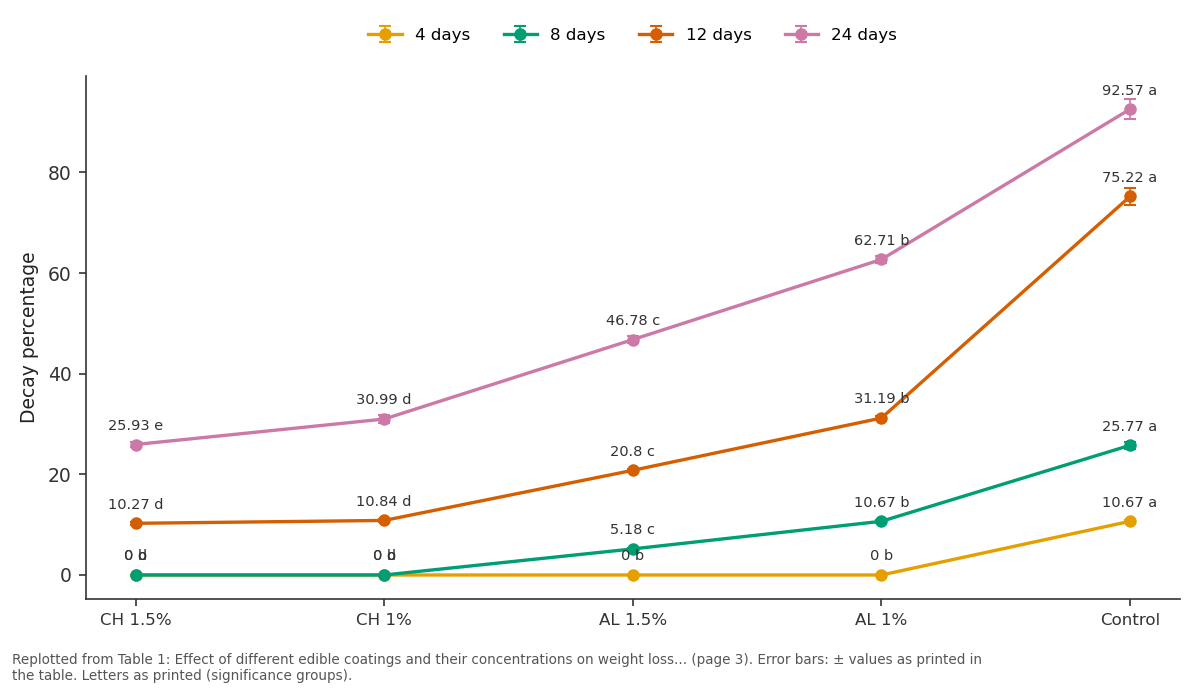
4 days and 8 days and more: CH 1.5% vs CH 1% vs AL 1.5% vs AL 1% vs Control
Replotted from Table 1 (page 3) of the original paper. Every bar is the paper's own table value.
View source evidence ↗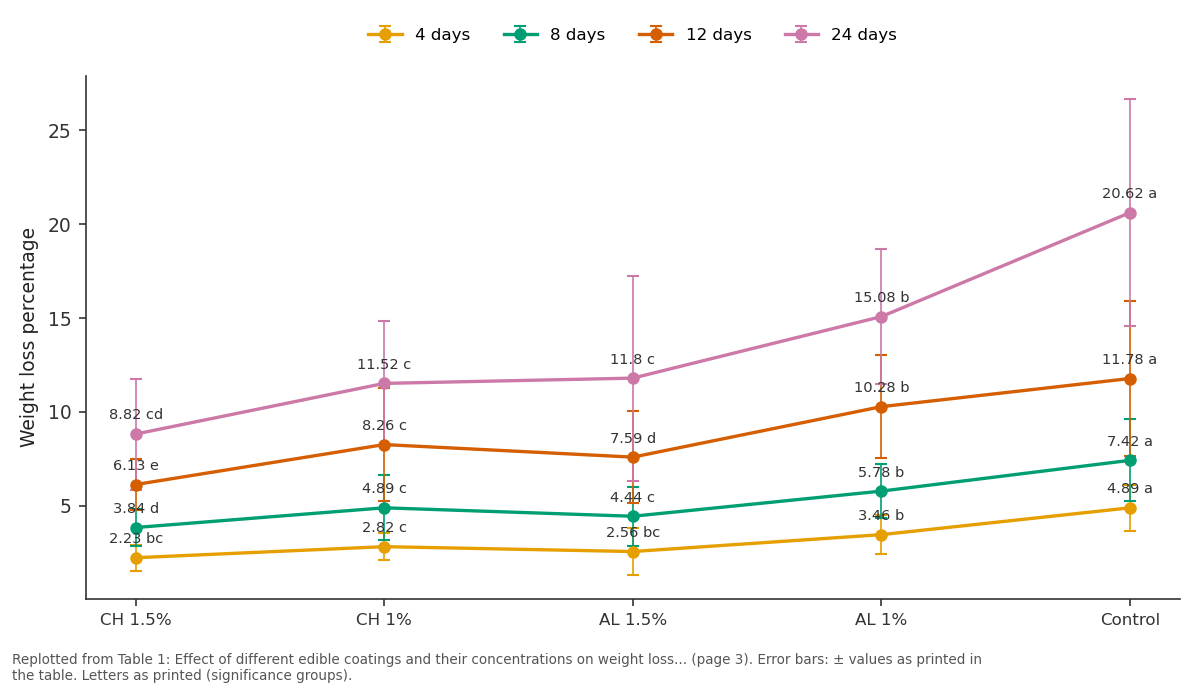
4 days and 8 days and more: CH 1.5% vs CH 1% vs AL 1.5% vs AL 1% vs Control
Replotted from Table 1 (page 3) of the original paper. Every bar is the paper's own table value.
View source evidence ↗Figures & tables
From the original paper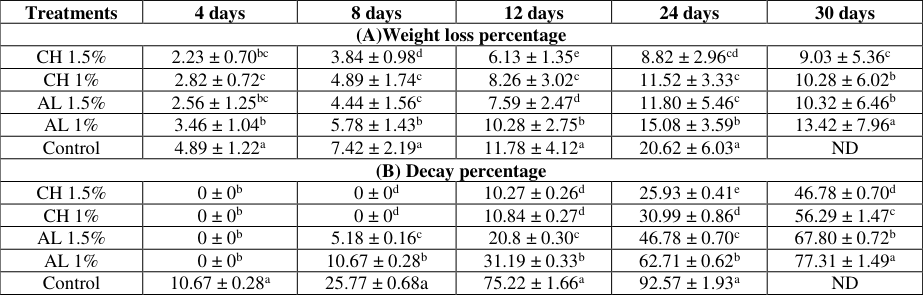 Table 1
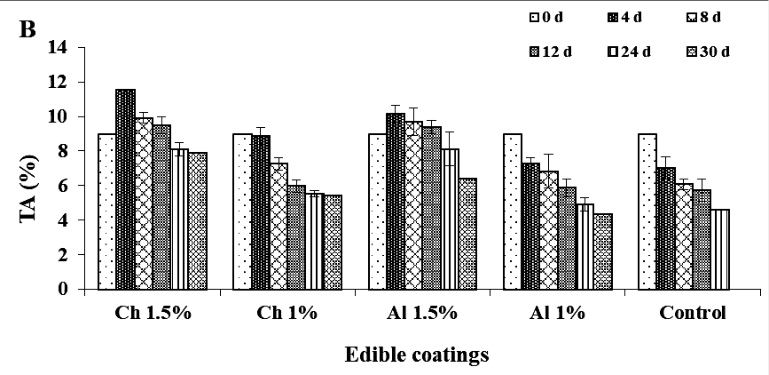 Figure 1
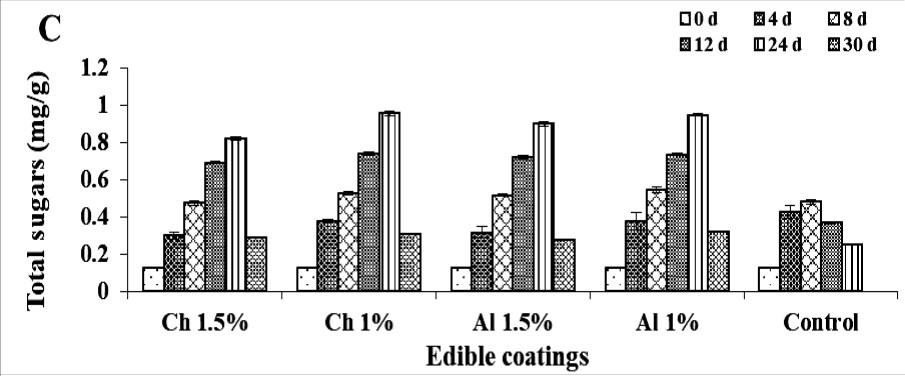 Figure 2
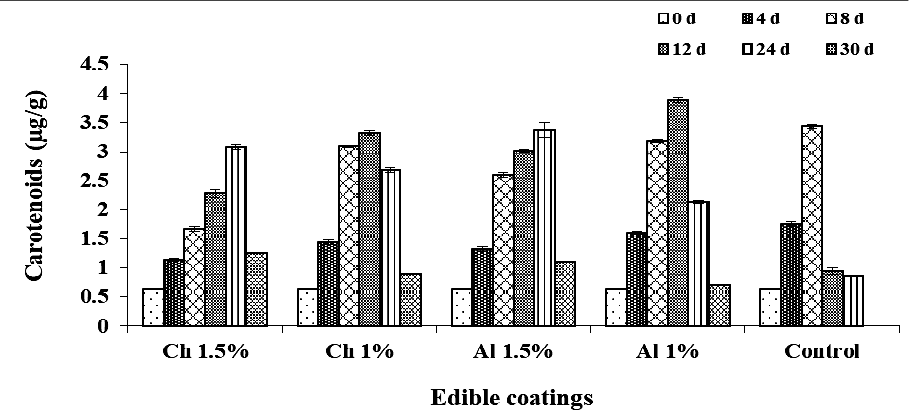 Figure 3
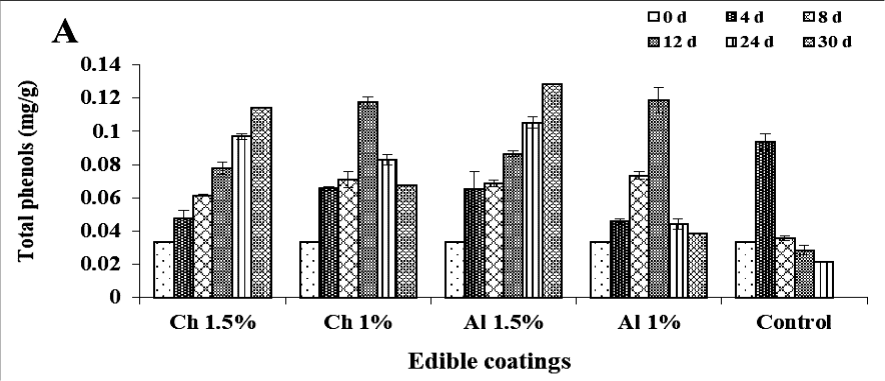 Figure 3
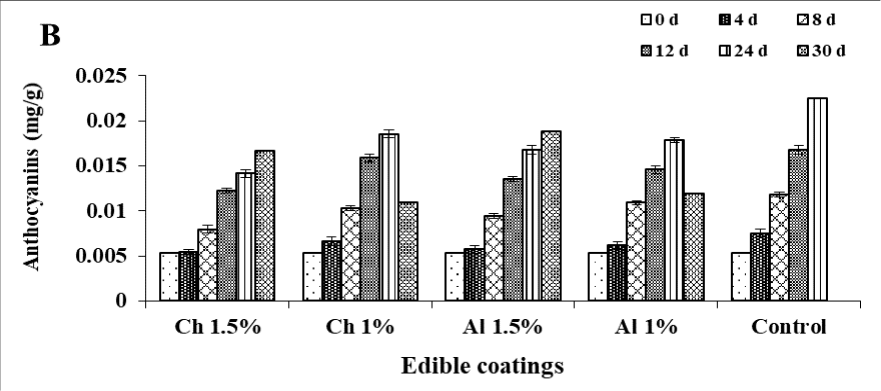 Figure 4
Introduction
The climacteric fruit known as the plum (Prunus domestica L.), which belongs to the Rosaceae family, is prized for both its nutritional content and its flavour. However, because its quality deteriorates quickly after harvest, it has a limited postharvest life and is highly perishable. After harvest, plums frequently experience unfavourable changes such as softening, weight loss, rotting, and flavour loss. These changes, along with extended marketing and transportation, make it impossible for consumers to receive fruits in their best possible condition. Although their delicate nature restricts their marketability, plums are well-known for being a rich source of antioxidants. Several postharvest solutions have been investigated to improve quality and prolong storage life to address these issues. These include low-temperature storage, modified environment packing, edible coatings, and chemical preservatives. Their respective goals are to delay ripening, minimise mechanical damage, reduce physicochemical changes, and extend shelf life (Chen and Zhu et al., 2011; Sharma and Sharma et al., 2016) [6,22] . Edible coatings have become one of the most promising approaches among these (Kumar et al., 2017) [14] . Coatings serve as semipermeable barriers that aid in preserving freshness and are often made of polysaccharides, proteins or lipids (Dhall et al., 2012) [7] . Coatings based on polysaccharides, such as chitosan (a biopolymer made from crab shells) and alginate (produced from brown algae, which makes up about 40% of dry weight), are being researched extensively. Particularly, chitosan has garnered interest because of its compatibility, non-toxicity, and biodegradability, which enable it to prolong the shelf life of fruits like guava, apricots, and strawberries (Jayakumar et al., 2005; Gol et al., 2013; Algarni et al., 2022; Nair et al., 2018) [13, 10, 1, 20] . However, little research has been done on its use on low-temperature-stored plums. The current study aims to investigate the potential of chitosan coating to maintain plum quality and extend postharvest life during refrigerated storage.
Materials and Methods
Materials and Methods
Fruit source:
The fresh plums (Prunus domestica L.) belong to the Rosaceae family and were purchased from the local market in Tharad, Gujarat, India. The plums were selected for uniformity in size, shape, and colour, ensuring they were free from infection and damage.
2.2 Chemicals: Alginate (AL) was obtained from Himedia (Mumbai, India), while high molecular weight CH (deacetylation degree of 82.7%) was procured from Sigma-Aldrich (MO, USA). All other solvents and chemicals were sourced from Himedia (Mumbai, India).
Preparation of coating solutions:
CH (1% and 1.5%, w/v) was made by dissolving 2 g and 3 g of CH in 200 ml of distilled water with 0.5 ml (v/v) of glacial acid as a dissolving medium. The solution was heated on a magnetic stirrer at room temperature continuously for 24 hours. The pH was adjusted to 5.6 with NaOH (1 N), and 0.1 ml of Tween-80 was included as an emulsifier (Ali et al., 2011) [2] . An AL (1% and 1.5%, w/v) solution was prepared by mixing 2 g and 3 g of powder in 200 ml of distilled water while stirring. A 2% (w/v) calcium chloride solution was added (Maftoonazad et al., 2008) [17] .
Coating application:
The plum fruit was surface disinfected with 2% sodium hypochlorite (2 min), then washed and air-dried (30 min). The fruits were randomly divided into five groups, each containing 30 fruits (three replicates). Coating applied: CH 1.5% (T1), CH 1% (T2), AL 1.5% (T3), and AL 1% (T4), and control uncoated fruit (T5). The plum fruit was dried before being dipped in the coating solutions for 5 minutes. The fruit was then air-dried at room temperature for 1 hour and stored in plastic boxes at 27 ± 4 °C. The experiment was conducted over a duration of 30 days, with assessments at 0, 6, 12, 18, 24, and 30 days, after which decomposition began.
Weight loss percentage:
Plum samples (30 fruits per replication) were weighed at the beginning of the experiment (0 days) and at the end of each storage interval. The weight loss percentage was calculated by measuring the difference between the initial weight and the final weight of the fruit, which was then divided by the initial weight, with results expressed as a percentage loss according to the standard method of AOAC (1994) [3] .
Decay percentage:
The decay (%) of fruits was determined through visual observations. The number of decayed fruits due to fungal and microbial infection was recorded at 6-day intervals and calculated as a percentage. The decay (%) of both coated and uncoated fruits was determined by dividing the number of decayed fruits by the initial number of all fruits and multiplying by 100 (ElAnany et al., 2009) [8] .
pH and titratable acidity (TA):
The pH level of the fruit samples was measured using a digital pH meter, following the procedure outlined in AOAC (1994) [3] . To determine the titratable acidity (expressed as citric acid%), 2 ml of fruit juice was titrated with 0.1 N NaOH, using phenolphthalein as an indicator, as per the method described by Mazumdar and Majumder (2003) [18] .
Total sugars (TS):
Fruit sample (2 g) was extracted with 10 ml of hot 80% ethanol, evaporated at room temperature, and redissolved in 10 ml of distilled water. After adjusting the aliquots to 3 ml, they were reacted with 3 ml of dinitrosalicylic acid (DNS) reagent, heated in a boiling water bath, treated with 40% SPT, and their absorbance measured at 510 nm using a spectrophotometer (Miller, 1972) [19] . For non-reducing sugar (NRS), 1 ml extract was hydrolysed with 1 ml of 1N H2SO4 at 50 °C for 30 min, neutralised with 1N NaOH using methyl red as indicator, and then estimated by the DNS method (Thimmaiah, 1999) [23] . The formula for total sugars (TS) was RS + NRS.
Total phenols:
The Method followed was given by Bray & Thorpe (1954) [4] . Total phenols were tested using the Folin-Ciocalteu reagent, and absorbance at 650 nm was compared to a standard curve for catechol (100 μg ml -1 ).
Pigment:
The carotenoids were determined by homogenising 2 g of fruit pulp tissue with 10 ml of acetone and n-hexane (4:6). The upper organic layer was transferred to a capped tube kept on ice. In the remaining aqueous layer, 5 ml of the same solvent was used for re-extraction. The supernatant was taken from the total volume of the organic extract, and the optical density of the solution was measured at 450 nm on a spectrophotometer (Wang et al., 2005) [24] .
Total anthocyanins:
The content of total anthocyanin was measured by following the Lees & Francis (1972) [15] method. Briefly, 1 g of fruit pulp was blended with 20 ml of the extraction solvent [95% ethanol: 1.5 N HCl, (85:15)] and allowed to stand overnight at 4 °C. Samples were filtered into a volumetric flask covered with aluminium foil. The residue was washed with the extraction solvent to remove 80% of the pigments. The total volume was adjusted to 100 ml with the same solvent, and absorbance was measured at 535 nm to quantify the anthocyanin content.
Results and Discussion
Results and Discussion
Weight loss percentage:
A significant increase in weight loss during extended storage periods, with the highest losses occurring in the uncoated samples (Table 1A). The use of edible coatings led to a considerable reduction in weight loss, particularly with sodium alginate, and there was a significantly (p < 0.05) greater reduction compared with CH (1.5%). Chitosan coating reduced weight loss in coated plums by 60% compared to non-coated plums, demonstrating its effectiveness in minimising weight loss. The reduced weight loss reported in the plum fruit coated with CH indicates that chitosan coatings have better barrier qualities that reduce moisture loss and keep the fruit from becoming dehydrated, which effectively reduces weight loss (Gull et al., 2021) [12] . Previous studies have also shown that using chitosan on bananas effectively delays weight loss (Gol and Rao et al., 2011) [11] .
Decay percentage:
It was observed that the decay percentage increased with the storage period for all treatments. However, the coatings significantly (p < 0.05) reduced the decay percentage of plums throughout the entire storage period compared to the uncoated control (Table 1B). Chitosan (CH) was more effective than alginate (AL) in reducing decay. CH (1.5%) and AL (1.5%) both were more effective than AL (1%). The initial decay percentage of uncoated plums was 10.67% and after 24 days of storage, 92.57% of the uncoated plums had spoiled. In contrast, the decay percentage for the coated fruit ranged from 25.93% to 62.71% after 24 days of storage. The chitosan treatment significantly decreased the decay percentage. Chatkitanan et al. (2021) [5] noted that the antibacterial properties of the coating layers efficiently delayed the deterioration by inhibiting microbial growth on the contact surface.
Changes in pH:
It was noted that the pH of plum fruit increased during the storage period. CH was more effective than AL coating in maintaining lower pH levels. Fruit coated with CH 1.5% exhibited a lower pH than those with CH 1% (Figure 1A). A flaxseed polysaccharide-based coating applied to apples preserved pH levels (Rashid et al. 2024) [21] .
Changes in TA:
The results indicate that both coated and uncoated samples experienced a decline in TA throughout the storage period (Figure 1). However, the coated fruits showed a slower rate of acidity reduction compared to the uncoated ones. The application of CH (1.5%) significantly (p < 0.05) delayed the rate of TA decline, thereby slowing down the overall senescence process. According to the applied study on apples preserved pH levels, as reported in a similar study to Farhat et al.
(2023) [9] , the respiration rate reduces and the utilisation of organic acids is delayed when coated products with edible coatings retain their acidity. The study's findings revealed that sugar levels, specifically reducing sugars (RS), non-reducing sugars (NRS), and total sugars (TS), were at their lowest at the time of harvest (0 days). As the ripening process progressed over time, these levels increased significantly across all treatments (Figure 2A, B, andC). Among the various sets, the CH 1.5% (Chitosan) coated fruits consistently maintained the lowest overall sugar levels compared to other treated and untreated fruits. While the coated fruits (both CH and AL) showed a steady increase in sugar content up to the 24-day mark, a sharp decline was observed thereafter. In contrast, the uncoated (control) fruits reached their peak sugar levels much earlier and experienced a more rapid decrease. The superior performance of the CH 1.5% coating can be attributed to its ability to form a relatively thick and effective physical barrier on the fruit's surface. The eventual decline in sugar levels after 24 days in coated fruits (and much earlier in the control) is likely due to senescence, a stage where the fruit begins to consume its own stored sugars as an energy source for cellular respiration. Thus, the 1.5% Chitosan coating successfully extended the shelf life. The fruits coated with CH, AL, and untreated plums exhibited an increase in carotenoids during storage (Figure 3). In 8 days, the untreated samples had the highest level of carotenoid content, whereas the plum coated with 1.5% CH had the lowest level, similar results were recorded in apricot (Algarni et al. (2022) [1] . After 12 days of storage, the control plum fruit exhibited the maximum carotenoid content. After another 24 days, the fruit became brown due to easier ripening. Fruits coated with AL 1% showed the highest carotenoid concentration after 12 days of storage, while those coated with CH 1.5% and AL 1.5% exhibited the slowest accumulation of carotenoids among all coatings. 4A). In the control group (uncoated), Total phenol reached its peak on day 4, followed by a sharp and significant decline, reaching the lowest levels by day 30. Fruits coated with CH and AL exhibited a much slower rate of phenolic degradation compared to the control. CH 1.5% and AL 1.5% were more effective in retaining phenols. Notably, AL 1.5% and CH 1.5% exhibited a sustained presence of high phenolic levels even at day 30, whereas lower concentrations (1%) began to decline after day 12 or 24. Phenolic compounds are vital secondary metabolites that contribute to the antioxidant capacity of fruits. The higher retention in 1.5% treatments suggests that a thicker or more uniform coating layer provides a better modified atmosphere, delaying the aging process and preserving the nutritional quality of the fruit for a longer duration. Similar results regarding total phenolics in chitosan-coated plums were previously reported by Kumar et al. (2017) [14] .
Total anthocyanins:
The anthocyanin content (Figure 4B) in the plums increased steadily during storage. However, coating the fruit enhanced anthocyanin levels, with the highest concentrations observed at the end of storage. A higher concentration of anthocyanins was found in the control fruits among all. The increase in anthocyanin concentration during storage may be due to ripening, which causes a deepening of colour. The anthocyanin levels in both coated and control samples rose significantly during storage, our findings are in consistent consistent with findings by Kumar et al. (2017) [14] . The rate of anthocyanin synthesis was especially delayed in plums coated with chitosan. According to Liu et al. (2014) [16] , plums coated with chitosan and ascorbic acid had a significantly reduced anthocyanin level than uncoated fruits.
Conclusion
The study demonstrated that coatings containing chitosan and alginate significantly improved the quality and prolonged the shelf life of plums (Prunus domestica L.). Particularly effective were the 1.5% chitosan and 1.5% alginate coatings. The most effective method for maintaining plum fruit quality significantly delays weight loss, decay percentage, pH, TA, sugar accumulation and pigment degradation, while positively affecting total phenolic and anthocyanin content. Overall, applying these coatings presents a promising strategy for enhancing plum quality, benefiting consumers and the fruit industry by providing extended shelf life and improved nutritional qualities.
Acknowledgement
AcknowledgementsAuthors are thankful to Smt. GB Pavaya & Smt. PS Pavaya Science College, Palanpur, for providing the necessary facilities for carrying out this work. I am highly grateful to the Education Department, Government of Gujarat, for providing financial assistance through the SHODH fellowship. This support has played a vital role in my research journey.
Figures and tables from the paper
| Treatments | 4 days | 8 days | 12 days | 24 days | 30 days |
|---|---|---|---|---|---|
| (A)Weight loss percentage | |||||
| CH 1.5% | 2.23 ± 0.70bc | 3.84 ± 0.98d | 6.13 ± 1.35e | 8.82 ± 2.96cd | 9.03 ± 5.36c |
| CH 1% | 2.82 ± 0.72c | 4.89 ± 1.74c | 8.26 ± 3.02c | 11.52 ± 3.33c | 10.28 ± 6.02b |
| AL 1.5% | 2.56 ± 1.25bc | 4.44 ± 1.56c | 7.59 ± 2.47d | 11.80 ± 5.46c | 10.32 ± 6.46b |
| AL 1% | 3.46 ± 1.04b | 5.78 ± 1.43b | 10.28 ± 2.75b | 15.08 ± 3.59b | 13.42 ± 7.96a |
| Control | 4.89 ± 1.22a | 7.42 ± 2.19a | 11.78 ± 4.12a | 20.62 ± 6.03a | ND |
| (B) Decay percentage | |||||
| CH 1.5% | 0 ± 0b | 0 ± 0d | 10.27 ± 0.26d | 25.93 ± 0.41e | 46.78 ± 0.70d |
| CH 1% | 0 ± 0b | 0 ± 0d | 10.84 ± 0.27d | 30.99 ± 0.86d | 56.29 ± 1.47c |
| AL 1.5% | 0 ± 0b | 5.18 ± 0.16c | 20.8 ± 0.30c | 46.78 ± 0.70c | 67.80 ± 0.72b |
| AL 1% | 0 ± 0b | 10.67 ± 0.28b | 31.19 ± 0.33b | 62.71 ± 0.62b | 77.31 ± 1.49a |
| Control | 10.67 ± 0.28a | 25.77 ± 0.68a | 75.22 ± 1.66a | 92.57 ± 1.93a | ND |
Table text extracted from the original PDF; superscript letters are shown inline. The original table image is below.
View original table image
References
24 in the original paper- Algarni EHA, Elnaggar IA, Abd El AN, Taha IM, AlJumayi HA, Elhamamsy SM, et al. Effect of chitosan nanoparticles as edible coating on the storability and quality of apricot fruits. Polymers (Basel). 2022;14(11):2227.
- Ali A, Muhammad MTM, Sijam K, Siddiqui Y. Effect of chitosan coatings on the physicochemical characteristics of Eksotika II papaya (Carica papaya L.) fruit during cold storage. Food Chem. 2011;124:620-6.
- AOAC. Official methods of analysis. 16 th Ed. Virginia: Association of Official Analytical Chemists; 1994.
- Bray HC, Thorpe W. Analysis of phenolic compounds of interest in metabolism. Methods Biochem Anal. 1954;1:27-52.
- Chatkitanan T, Harnkarnsujarit N. Effects of nitrite incorporated active films on the quality of pork. Meat Sci. 2021;172:108367.
- Chen Z, Zhu C. Combined effects of aqueous chlorine dioxide and ultrasonic treatments on postharvest storage quality of plum fruit (Prunus salicina L.). Postharvest Biol Technol. 2011;61(2):117-23.
- Dhall RK. Advances in edible coatings for fresh fruits and vegetables: a review. Crit Rev Food Sci Nutr. 2012;53(5):435-50.
- El-Anany AM, Hassan GFA, Ali RFM. Effects of edible coatings on the shelf-life and quality of Anna apple (Malus domestica Borkh) during cold storage. J Food Technol. 2009;7:5-11.
- Farhat R, Zaheed A, Ifra F, Tahir M, Saba L, Mohammed MG, et al. Effect of fenugreek and flaxseed polysaccharide-based edible coatings on the quality attributes and shelf life of apple fruit during storage. Food Sci Nutr. 2023; [Epub ahead of print].
- Gol NB, Patel PR, Rao TVR. Improvement of quality and shelf-life of strawberries with edible coatings enriched with chitosan. Postharvest Biol Technol. 2013;85:185-95.
- Gol NB, Rao TVR. Banana fruit ripening as influenced by edible coatings. Int. J Fruit Sci. 2011;11(2):119-35.
- Gull A, Bhat N, Wani SM, Masoodi FA, Amin T, Ganai SA. Shelf life extension of apricot fruit by application of nanochitosan emulsion coatings containing pomegranate peel extract. Food Chem. 2021;349:129149.
- Jayakumar R, Prabaharan M, Reis RL, Mano JF. Graft copolymerized chitosan-present status and applications. Carbohydr Polym. 2005;62:142-58.
- Kumar P, Sethi S, Sharma RR, Srivastav M, Varghese E. Effect of chitosan coating on postharvest life and quality of plum during storage at low temperature. Sci Hortic. 2017;226:104-9.
- Lees DH, Francis FJ. Standardization of pigment analysis in cranberries. HortScience. 1972;7:83-84.
- Liu K, Yuan C, Chen Y, Li H, Liua J. Combined effects of ascorbic acid and chitosan on the quality maintenance and shelf life of plums. Sci Hortic. 2014;176:45-53.
- Maftoonazad N, Ramaswamy HS, Marcotte M. Shelflife extension of peaches through sodium alginate and methyl cellulose edible coatings. Int J Food Sci Technol. 2008;43:951-957.
- Mazumdar BC, Majumder K. Methods on physicochemical analysis of fruit. New Delhi: Daya Publishing House; 2003. p. 112-5.
- Miller GL. Use of dinitrosalicylic acid reagent for determination of reducing sugars. Anal Chem. 1959;31:426-428.
- Nair MS, Saxena A, Kaur C. Effect of chitosan and alginate-based coatings enriched with pomegranate peel extract to extend the postharvest quality of guava (Psidium guajava L.). Food Chem. 2018;240:245-52.
- Rashid A, Qayum A, Bacha SAS, Liang Q, Liu Y, Kang L, et al. Preparation and functional characterization of pullulan-sodium alginate composite film enhanced with ultrasound-assisted clove essential oil nanoemulsions for effective preservation of cherries and mushrooms. Food Chem. 2024;457:140048.
- Sharma S, Sharma RR. Impact of staggered treatments of novel molecules and ethylene absorbents on postharvest fruit physiology and enzyme activity of 'Santa Rosa' plums. Sci Hortic. 2016;198:242-248.
- Thimmaiah SK. Standard methods of biochemical analysis. New Delhi: Kalyani Publication; 1999, p. 519.
- Wang ZF, Ying TJ, Bao BL, Huang XD. Characteristics of fruit ripening in tomato mutant epi. J Zhejiang Univ Sci B. 2005;6(6):502-507.