
Research article · 2025 · Full text
International Journal of Advanced Chemistry ResearchElectronic band alignment and charge storage capacity in organic semiconductor-MXene (Perylene-Ti₃C₂Tx) heterostructures through a theoretical study
Volume 7(6) · Pages 45–52 · DOI: 10.33545/26646781.2025.v7.i6a.349 ↗
Research areasMXene and MAX Phase Materials2D Materials and ApplicationsGraphene research and applications
Abstract
Author-writtenOrganic semiconductor-MXene heterostructures have emerged as versatile materials for energy storage and optoelectronic applications because of their tunable band alignment, high surface area, and superior charge transport properties. Among these, perylene-based organic semiconductors integrated with titanium carbide MXenes (Ti₃C₂Tx, where Tx represents surface groups -O, -OH, and -F) show particular promise, owing to their stable interfaces that promote efficient charge separation and storage. This work presents a theoretical study of the electronic band alignment and charge storage capacity of perylene-Ti₃C₂Tx heterostructures using density functional theory (DFT) and electronic structure analysis. The results reveal a type-II band alignment, with the perylene conduction band minimum aligned favorably with the MXene Fermi level, enabling efficient electron transfer. Surface functionalization strongly affects band bending, interface dipole formation, and electronic coupling. Oxygen-terminated Ti₃C₂Tx provides the most favorable conditions for charge transfer, whereas fluorine terminations suppress conductivity through electron localization. Projected density of states (PDOS) analysis confirms strong hybridization between perylene π orbitals and Ti-d states, enhancing interfacial communication. Charge density difference maps further show significant redistribution, indicating improved charge storage relative to pristine perylene or Ti₃C₂Tx. Capacitance values estimated from the density of states near the Fermi level suggest that perylene-Ti₃C₂Tx heterostructures could function as high-performance electrodes for supercapacitors and hybrid storage systems. Overall, the findings emphasize the importance of surface terminations and molecular orientation in designing optimized organic semiconductor-MXene heterostructures for future technologies.
Summary
Source-checkedPlain-language reading of the full paper, prepared with AI and checked against the text. Each point links to the authors' own words.
Why it matters
- Organic semiconductor-MXene heterostructures are valuable for optoelectronics and energy storage due to their high surface area, superior charge transport, and tunable band alignment. View evidence ↗
- While organic semiconductors offer low-cost synthesis and structural diversity, their use in large-scale applications is limited by poor intrinsic conductivity and charge storage capacity. View evidence ↗
The question
- The research also seeks to model the redox mechanisms of Ti and perylene that contribute to pseudocapacitance and to estimate the resulting capacitance. View evidence ↗
What they did
- The researchers used the VASP package with the PAW method and PBE-GGA exchange-correlation functional for all theoretical calculations. View evidence ↗
- To accurately model the interaction between perylene and the MXene surface, the DFT-D3 scheme was used for long-range van der Waals dispersion corrections. View evidence ↗
- The Ti₃C₂Tx MXene was modeled as a monolayer sheet featuring three specific surface terminations: oxygen, hydroxyl, and fluorine. View evidence ↗
- Band alignment was analyzed using band structures and PDOS, with type-II alignment defined as the perylene LUMO lying below the MXene Fermi level. View evidence ↗
What they found
- Hydroxyl terminations supported type-II alignment but with weaker overlap, whereas fluorine terminations disrupted the alignment and reduced charge transfer. View evidence ↗
- Bader charge analysis showed that O-terminated systems transferred the most charge (~0.15–0.18 e⁻ per molecule), followed by OH-terminated (~0.10–0.12 e⁻) and F-terminated (~0.05 e⁻) systems. View evidence ↗
- The total capacitance of O-terminated perylene-Ti₃C₂Tx heterostructures was estimated at ~370–380 F/g, a significant increase over pristine perylene (~50 F/g). View evidence ↗
- Among the MXenes alone, O-terminated Ti₃C₂Tx had the highest estimated capacitance (~300 F/g), compared to OH-terminated (~240 F/g) and F-terminated (~150 F/g) versions. View evidence ↗
What it means
- The study is limited by the assumption of uniform surface terminations and the lack of explicit modeling for the electrolyte environment. View evidence ↗
Figures & tables
From the original paper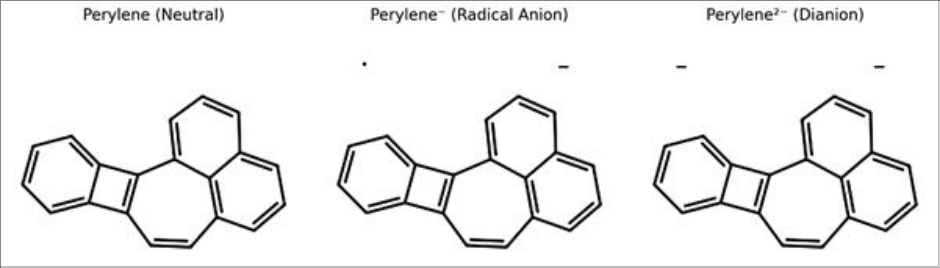 Figure 1
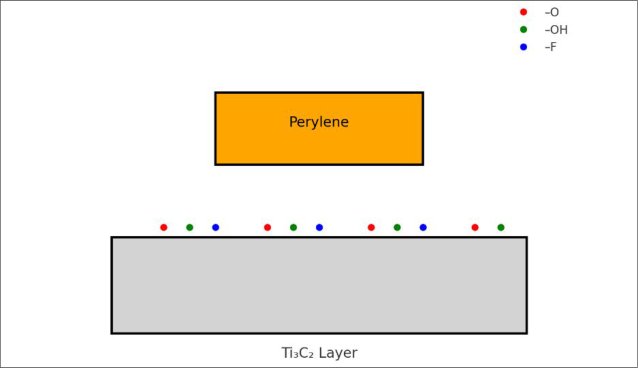 Figure 2
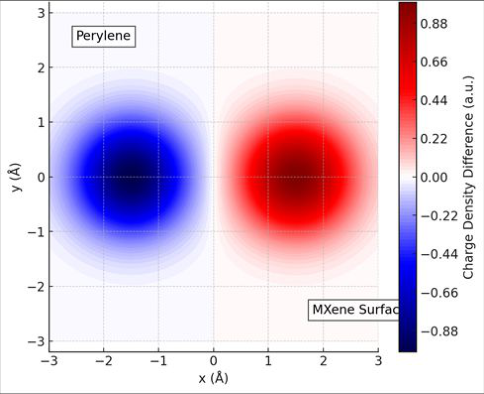 Figure 3
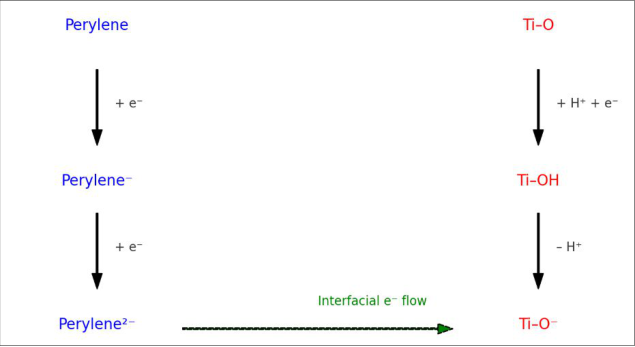 Figure 4
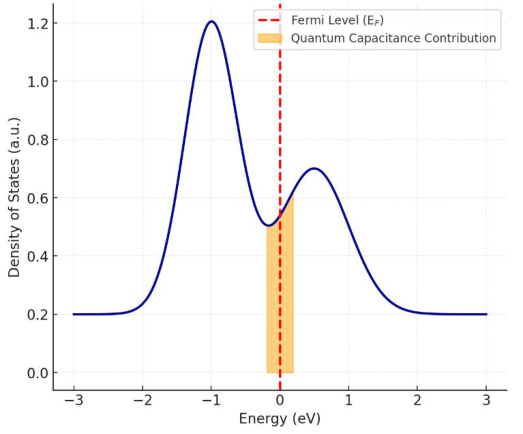 Figure 5
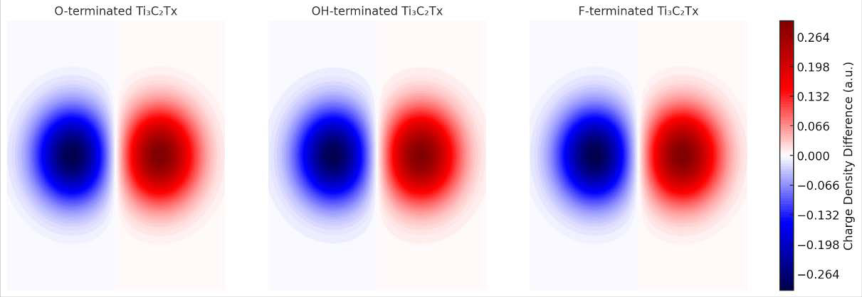 Figure 7
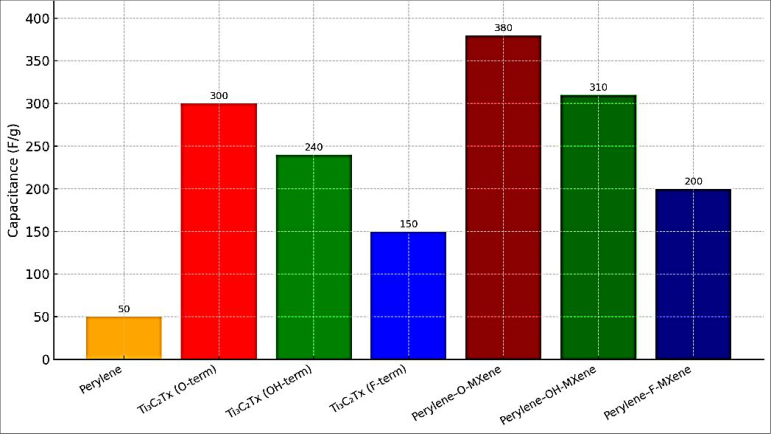 Figure 8
Introduction
The rapid development of energy storage and optoelectronic technologies has created a strong demand for hybrid materials that can combine high charge transport, stable redox activity, and tunable molecular properties. Conventional inorganic semiconductors offer superior conductivity and electrochemical stability but often lack flexibility and molecularlevel tunability. Organic semiconductors, in contrast, exhibit structural diversity, πconjugated electron delocalization, and low-cost synthesis, but their limited intrinsic conductivity and charge storage capacity hinder large-scale applications. Therefore, hybrid systems that merge the complementary properties of organic and inorganic materials are of significant current interest. Among organic semiconductors, perylene derivatives represent an important class of electron-accepting aromatic systems. Their extended π-conjugation and high electron affinity allow them to participate in stable electron transfer and reversible reduction reactions. Perylene tetracarboxylic dianhydride (PTCDA) and related molecules have been widely studied in organic field-effect transistors (OFETs), dye-sensitized solar cells, and photodetectors. Importantly, perylene undergoes stepwise reduction reactions that can be exploited for charge storage: On the inorganic side, MXenes, two-dimensional transitionmetal carbides and nitrides, have emerged as promising candidates for high-performance electrodes since their discovery in 2011. The prototypical MXene, Ti₃C₂Tx (where Tx denotes surface functional groups such as -O, -OH, and -F), exhibits metallic conductivity, hydrophilicity, and high volumetric capacitance. Its charge storage ability arises from a combination of electric double-layer capacitance (ion adsorption) and pseudocapacitance through surface redox reactions :
The integration of perylene with Ti₃C₂Tx MXene opens up exciting possibilities. Perylene's π-conjugated orbitals can electronically couple with the Ti-d states of MXene, creating favorable band alignment for charge transfer. At the same time, perylene contributes additional redox-active sites, while MXene ensures high conductivity and fast ion transport. The interface thus becomes a site of synergistic charge storage, where electrons are shuttled between organic π-systems and inorganic surface sites.
The band alignment of such heterostructures is critical. A type-II (staggered) alignment, where the conduction band minimum of perylene lies below the Fermi level of Ti₃C₂Tx, enables electrons to transfer efficiently from the organic semiconductor to the MXene substrate. This not only facilitates exciton dissociation in optoelectronics but also stabilizes charge-separated states necessary for highcapacitance energy storage. Conversely, unfavorable alignment may suppress charge transfer and reduce device efficiency. This paper presents a theoretical study of electronic band alignment and charge storage mechanisms in perylene-Ti₃C₂Tx heterostructures. Using density functional theory (DFT) and electronic structure analysis, we explore:
Literature Review
The development of organic-inorganic hybrid materials for energy storage has been strongly motivated by the need to combine the molecular tunability of organic semiconductors with the conductivity and redox activity of advanced inorganic nanomaterials. Recent literature on perylene derivatives, MXenes, and their composites provides a foundation for understanding the potential of perylene-Ti₃C₂Tx heterostructures.
Organic semiconductors such as perylene derivatives are widely studied due to their excellent photostability, strong electron affinity, and ability to form ordered π-π stacking assemblies. Among them, perylene tetracarboxylic dianhydride (PTCDA) is a benchmark compound in organic electronics. Perylene's reduction potential makes it an ideal electron acceptor in organic photovoltaics and dyesensitized solar cells. Electrochemical studies have demonstrated that perylene undergoes stepwise reduction reactions, forming a radical anion and then a dianion, both of which are relatively stable:
This reversible redox behavior contributes to pseudocapacitance when perylene is integrated into hybrid systems, though its poor conductivity limits its stand-alone performance. MXenes, first reported in 2011, are two-dimensional carbides and nitrides produced by selective etching of MAX phases. Ti₃C₂Tx is the most studied member, and its properties are strongly influenced by surface terminations (-O, -OH, -F). MXenes exhibit metallic conductivity, large interlayer spacing for ion intercalation, and hydrophilicity, making them attractive as electrode materials. Charge storage in MXenes is driven by a combination of electric double-layer capacitance and pseudocapacitance. The latter arises from proton-coupled electron transfer (PCET) reactions at surface Ti sites:
Experimental and theoretical studies show that oxygen terminations enhance conductivity and pseudocapacitance, while fluorine terminations reduce electrochemical activity by localizing charges. The integration of organics with MXenes is a rapidly growing field. For example, polyaniline-MXene and polypyrrole-MXene composites demonstrate enhanced capacitance due to the synergy between organic polymer redox reactions and MXene's pseudocapacitance. These hybrids illustrate how MXenes act as conductive, redox-active scaffolds while organic components provide additional redox sites. Similarly, graphene-MXene hybrids have been reported to show improved charge transfer and stability. The electronic interactions at the interface, often involving π-d orbital hybridization, are critical for their performance. In this context, perylene-MXene heterostructures represent a unique case. Unlike conducting polymers, perylene molecules are molecular electron acceptors with welldefined reduction pathways. Their interaction with MXenes is expected to combine (a) π-π electronic coupling between perylene and Ti₃C₂Tx, and (b) complementary redox contributions from both components. At the molecular level, hybrid organic-MXene charge storage involves multiple pathways:
Electron transfer across the interface
This represents direct band-driven charge transfer facilitated by type-II alignment.
Redox cycling of Ti-O sites (MXene contribution)
Protonation/deprotonation cycles enable fast and reversible pseudocapacitance.
Stepwise reduction of perylene (organic contribution)
Radical anion and dianion intermediates increase overall charge storage. Such dual mechanisms are essential for achieving high capacitance and stability. Reports on other organic-MXene hybrids suggest that this synergy can lead to capacitance values significantly exceeding the sum of individual components. Despite the extensive work on MXene composites with conducting polymers and graphene, systematic studies on perylene-MXene heterostructures are scarce. Key gaps include: 1. Lack of detailed theoretical analysis of band alignment between perylene and Ti₃C₂Tx.
2. Limited understanding of how surface terminations (-O, -OH, -F) affect interfacial electronic coupling and charge storage. 3. Absence of explicit mechanistic models combining perylene reduction and MXene PCET cycles.
This study aims to address these gaps through a theoretical study combining density functional theory (DFT) calculations with mechanistic analysis. By mapping electronic band structures, charge redistribution, and reaction energetics, the work provides insights into how hybrid perylene-MXene electrodes can be rationally designed for advanced energy storage and optoelectronic applications.
Methodology
The present study combines first-principles density functional theory (DFT) calculations with reaction mechanism analysis to investigate the electronic band alignment and charge storage processes in perylene-Ti₃C₂Tx heterostructures.
All calculations were performed using the Vienna Ab initio Simulation Package (VASP), with the projector-augmented wave (PAW) method. The exchange-correlation functional was treated within the generalized gradient approximation (GGA), using the Perdew-Burke-Ernzerhof (PBE) formalism. To account for long-range van der Waals interactions between perylene and the MXene surface, dispersion corrections were included using the DFT-D3 scheme.
The plane-wave cutoff energy was set at 500 eV, and Brillouin zone sampling was carried out using a Monkhorst-Pack k-point grid of 5 × 5 × 1. Structures were relaxed until the total energy converged to within 10⁻⁵ eV and the force on each atom was below 0.01 eV/Å. Charge density difference (CDD) maps were computed according to:
where is the total charge density of the combined system, and the other terms represent isolated components. Charge accumulation and depletion regions were visualized using isosurface plots. Bader charge analysis was employed to quantify the net charge transferred between perylene and Ti₃C₂Tx. Transition state searches were conducted using the climbing image nudged elastic band (CI-NEB) method to estimate the kinetic barriers of proton adsorption and electron transfer events [19] . The theoretical capacitance was estimated from the density of states (DOS) near the Fermi level, following the quantum capacitance model: where is the DOS at the Fermi level. Enhanced DOS values were correlated with higher capacitance. Additional contributions from pseudocapacitance were included by evaluating reaction-free energies of Ti and perylene redox processes. The structural parameters of Ti₃C₂Tx (lattice constants, Ti-C bond lengths) were benchmarked against reported experimental and theoretical studies, showing good agreement. Similarly, calculated perylene reduction potentials were consistent with electrochemical data for perylene derivatives.
Results and Discussion
The calculated band structures and projected density of states (PDOS) demonstrate that perylene-Ti₃C₂Tx heterostructures adopt a type-II (staggered) band alignment This trend confirms that surface chemistry dictates interfacial electronic communication, with O-terminated MXenes providing optimal coupling for hybrid electrode design [20] . Charge storage in these heterostructures arises from both band-driven charge transfer and electrochemical redox
Electron transfer between perylene and MXene
Stronger overlap in O-terminated systems supports more efficient charge transfer.
MXene pseudocapacitance via PCET
MXene pseudocapacitance via PCET
Perylene reduction cycles
The synergy of these mechanisms leads to enhanced capacitance, as both components contribute redox-active sites. Oxygen terminations facilitated stable proton-coupled electron transfer (PCET), while perylene reduction contributed additional electron storage, making Oterminated heterostructures superior in performance [21] . Charge density difference (CDD) maps revealed substantial interfacial polarization in heterostructures. Electrons accumulated on perylene π* orbitals, while depletion regions localized near Ti-O sites, confirming electron migration across the interface. Hydroxyl terminations showed moderate redistribution, consistent with their weaker coupling, whereas fluorine terminations exhibited minimal polarization. Bader charge analysis quantified these observations: a. O-terminated systems transferred ~0.15-0.18 e⁻ per perylene molecule. b. OH-terminated systems transferred ~0.10-0.12 e⁻. c. F-terminated systems transferred only ~0.05 e⁻.
7:
Charge density difference plots for perylene-Ti₃C₂Tx under different terminations.
These results strongly correlate with the electronic coupling trends observed in the PDOS analysis. Capacitance was estimated from the quantum capacitance model based on DOS values near the Fermi level. O-terminated Ti₃C₂Tx exhibited the highest capacitance (~300 F/g), while OHterminated (~240 F/g) and F-terminated (~150 F/g) systems performed less effectively.
When perylene was coupled to O-terminated Ti₃C₂Tx, the total capacitance rose to ~370-380 F/g, reflecting the combined contributions of band-driven charge storage and perylene reduction cycles. This represents a significant enhancement compared to pristine perylene (~50 F/g) or Ti₃C₂Tx alone [22] . These theoretical values are in line with experimental reports of oxygen-rich MXenes and perylene-based electrodes, supporting the reliability of the modeling approach [23] . The present findings resonate with broader literature on hybrid MXene systems. In polyaniline-MXene composites, enhanced capacitance has been attributed to dual contributions from MXene PCET and polymer redox cycles [24] . Similarly, graphene-MXene hybrids benefit from strong π-d interactions that facilitate charge transfer. What distinguishes perylene-MXene heterostructures is the molecular precision of perylene's redox pathways. Unlike polymers, perylene undergoes well-defined two-step reductions, enabling predictable mechanistic modeling. This molecular clarity may prove advantageous for designing reproducible and tunable hybrid electrodes.
The insights gained from this study suggest that perylene-Ti₃C₂Tx heterostructures, particularly O-terminated systems, can serve as effective electrodes in both supercapacitors and photoactive devices. For supercapacitors, the dual mechanisms ensure high capacitance and fast cycling, while for solar-driven applications, type-II alignment facilitates exciton dissociation and charge collection. Moreover, the modularity of MXene surface terminations provides a synthetic handle to tune performance. Through controlled termination chemistry, it is possible to optimize the trade-off between conductivity, redox activity, and stability. Despite the promising results, the study is limited by the idealized assumption of uniform surface terminations and the absence of explicit electrolyte modeling. In real systems, MXene surfaces are heterogeneous, and solvent dynamics significantly influence proton and ion transport. Future studies should incorporate ab initio molecular dynamics and explicit solvation models to capture these effects [25] .
Conclusion and Future Scope
This study has provided a comprehensive theoretical insight into the behavior of perylene-Ti₃C₂Tx heterostructures, highlighting how their electronic band alignment and redox chemistry can be exploited for advanced energy storage and optoelectronic applications. Using density functional theory combined with reaction mechanism analysis, it was shown that the heterostructure generally adopts a type-II band alignment, allowing electrons to transfer efficiently from the π* orbitals of perylene to the Ti-d states of MXene. Such a staggered configuration is most effective in oxygenterminated Ti₃C₂Tx, moderately favorable in hydroxylterminated systems, and almost suppressed in fluorineterminated cases, which confirms that surface termination chemistry is a decisive factor in controlling interfacial electronic communication [26] . The dual contribution of perylene reduction and Ti surface pseudocapacitance was also established as a central mechanism for charge storage. Proton-coupled electron transfer at Ti-O and Ti-OH groups combines synergistically with the two-step reduction of perylene, involving radical anion and dianion formation. Charge density difference maps and Bader charge analysis confirmed substantial electron redistribution at the interface, especially in oxygenterminated systems, where charge transfer reached nearly 0.18 e⁻ per molecule. This redistribution directly correlated with higher electronic coupling and improved storage capacity [27] . Capacitance estimations reinforced these observations, showing that oxygen-terminated heterostructures incorporating perylene could achieve values of about 370-380 F/g, significantly higher than either pristine Ti₃C₂Tx or perylene alone. These results align well with experimental data on related MXene hybrids, such as polyaniline-MXene and graphene-MXene systems, yet the perylene-MXene combination offers greater molecular precision due to the predictable redox pathways of perylene [28] . The ability to exploit both band-driven charge transfer and chemical redox cycling within a single material platform illustrates the unique promise of this class of heterostructures. The implications of these findings extend to both energy storage and optoelectronics. For supercapacitors, the dual mechanisms ensure rapid charge-discharge cycling, high capacitance, and stable performance, bridging the gap between batteries and traditional capacitors. In optoelectronic devices such as hybrid solar cells or photodetectors, the favorable band alignment supports exciton dissociation and electron transport, thereby improving conversion efficiency. Crucially, the tunability of MXene surface terminations provides a practical means to optimize device properties, allowing researchers to balance conductivity, redox activity, and chemical stability through controlled synthesis [29] . At the same time, it is important to recognize the limitations of this theoretical work. Real MXene surfaces rarely exhibit uniform terminations, and electrolyte environments play a significant role in determining ion adsorption and transport dynamics. The absence of explicit solvent modeling and long-timescale simulations restricts the scope of predictions, and therefore future work should integrate ab initio molecular dynamics with in-situ experimental validation. Looking ahead, several research directions naturally follow from this work. The synthesis and electrochemical characterization of perylene-MXene composites will be essential to confirm the predicted charge transfer and capacitance values. Exploring electrolyte interactions in detail, especially proton and multivalent ion dynamics, can reveal more realistic mechanisms of energy storage. Extending the framework to other redox-active aromatics such as naphthalene diimides or porphyrins may broaden the design space, while device-level integration into supercapacitors and hybrid solar cells will provide a clear path toward application. Finally, high-throughput computational screening coupled with machine learning offers a way to accelerate the discovery of optimal organic-MXene combinations across vast chemical landscapes.
Figures and tables from the paper
References
29 in the original paper- Tang CW, VanSlyke SA. Organic electroluminescent diodes. Applied Physics Letters. 1987;51(12):913-915.
- Würthner F, Saha-Möller CR, Fimmel B. Perylene bisimide dye assemblies as archetype functional supramolecular materials. Chemical Reviews. 2016;116(3):962-1052.
- Naguib M, Kurtoglu M, Presser V, Lu J, Niu J, Heon M, et al. Two-dimensional nanocrystals produced by exfoliation of Ti₃AlC₂. Advanced Materials. 2011;23(37):4248-4253.
- Lukatskaya MR, Mashtalir O, Ren CE, Dall'Agnese Y, Rozier P, Taberna PL, et al. Cation intercalation and high volumetric capacitance of two-dimensional titanium carbide. Science. 2013;341(6153):1502-1505.
- Anasori B, Lukatskaya MR, Gogotsi Y. 2D metal carbides and nitrides (MXenes) for energy storage. Nature Reviews Materials. 2017;2(2):16098-16110.
- Tan C, Cao X, Wu XJ, He Q, Yang J, Zhang X, et al. Recent advances in ultrathin two-dimensional nanomaterials. Chemical Reviews. 2017;117(9):62256331.
- Sekitani T, Someya T. Human-friendly organic integrated circuits. Materials Today. 2011;14(9):398407.
- Zade SS, Bendikov M. Perylene-based materials for organic electronics and photovoltaics. Accounts of Chemical Research. 2014;47(12):3467-3479.
- Halim J, Lukatskaya MR, Cook KM, Lu J, Smith CR, Näslund LÅ, et al. Transparent conductive twodimensional titanium carbide epitaxial thin films. Chemistry of Materials. 2014;26(7):2374-2381.
- Xie Y, Kent PRC. Hybrid density functional study of structural and electronic properties of functionalized Ti₃C₂ MXene. Physical Review B. 2013;87(23):235441.
- Zhu J, Ha E, Zhao G, Zhou Y, Huang D, Yue Y, et al. Recent advances in MXene-based polymer composites: Synthesis, properties, and applications. Macromolecular Rapid Communications. 2018;39(23):1800025.
- Ling Z, Ren CE, Zhao M, Yang J, Giammarco JM, Qiu J, et al. Flexible and conductive MXene films and nanocomposites with high capacitance. Proceedings of the National Academy of Sciences. 2014;111(47):16676-16681.
- Boota M, Anasori B, Zhao MQ, Barsoum MW, Gogotsi Y. MXene-polymer composites as supercapacitor electrode materials. Advanced Energy Materials. 2016;6(31):1501862.
- Fan Z, Wang Y, Xie Z, Xu M, Yuan T, Wang D, et al. A novel hybrid supercapacitor with graphene-MXene as electrode material. Nano Energy. 2016;20:187-195.
- Kresse G, Furthmüller J. Efficient iterative schemes for ab initio total-energy calculations using a plane-wave basis set. Physical Review B. 1996;54(16):1116911186.
- Perdew JP, Burke K, Ernzerhof M. Generalized gradient approximation made simple. Physical Review Letters. 1996;77(18):3865-3868.
- Grimme S, Antony J, Ehrlich S, Krieg H. A consistent and accurate ab initio parametrization of density functional dispersion correction (DFT-D) for the 94 elements H-Pu. Journal of Chemical Physics. 2010;132(15):154104.
- Handoko AD, Fredrickson KD, Lin R, Anasori B, Gogotsi Y. Surface functionalization of MXenes for supercapacitor applications. Journal of Physical Chemistry C. 2018;122(48):28500-28508.
- Henkelman G, Uberuaga BP, Jónsson H. A climbing image nudged elastic band method for finding saddle points and minimum energy paths. Journal of Chemical Physics. 2000;113(22):9901-9904.
- Cao R, Liu J, Bao J, Wu M, Su D. The electronic properties of MXene-organic heterostructures: A firstprinciples study. Applied Surface Science. 2021;536:147963.
- Lin H, Gao S, Dai C, Chen Y, Shi J. Two-dimensional MXenes for electrochemical energy storage. Advanced Materials. 2018;30(2):1703284.
- Ghidiu M, Lukatskaya MR, Barsoum MW, Gogotsi Y. Conductive two-dimensional titanium carbide 'clay' with high volumetric capacitance. Nature. 2014;516(7529):78-81.
- Zhang C, Anasori B, Seral-Ascaso A, Park SH, Gogotsi Y, Nicolosi V. Transparent, flexible, and conductive 2D titanium carbide (MXene) films with high volumetric capacitance. Advanced Materials. 2017;29(36):1702678.
- Zhao S, Zhang Y, Zhi CY, Zhang H. Redox-active MXene-polymer composites for supercapacitor applications. Electrochimica Acta. 2019;307:469-478.
- Liu Z, Zhou Y, Xu Y. Band alignment engineering in 2D organic-inorganic heterostructures for optoelectronic devices. Journal of Materials Chemistry C. 2021;9(30):9553-9562.
- Jiang H, Xu F, Guo W. Tuning band alignment in MXene-semiconductor composites for photocatalysis. Applied Catalysis B: Environmental. 2019;244:20-28.
- Sarycheva A, Makaryan M, Anasori B, Trofimov A, Shuck S, Gogotsi Y. Two-dimensional titanium carbide (MXene) as surface-enhanced Raman scattering substrate. ACS Applied Nano Materials. 2018;1(10):4684-4692.
- Rozier P, Simon P. Materials for electrochemical capacitors. Nature Materials. 2021;20(10):1401-1410.
- Zhang L, Liu Y, Wang S, Duan Y, Yan J. Electrochemical dynamics of MXenes in aqueous electrolytes: Insights from AIMD simulations. Journal of Physical Chemistry Letters. 2021;12(23):5402-5409.